
Last October, an IMG emailed me a screenshot from a mid-tier internal medicine program: “Your application is currently on hold.” He hadn’t received a single interview yet. His classmates were posting IV emojis in the group chat. His subject line to me was one word: “Dead?”
Let me tell you exactly what I told him — and what most people will not say out loud — that “on hold” status is not what you think it is. And it definitely does not mean the same thing at every program.
What “On Hold” Really Means Inside a Program
Here’s the unvarnished truth: “On hold” is a parking lot. Not the trash, not the VIP lane. A parking lot.
Inside a residency program, applications usually get sorted into three piles very early:
- Yes → invite (or “priority review”)
- No → rejection (immediate or delayed)
- Maybe → “hold,” “under review,” “waitlist for interview,” “no decision,” or complete silence
That “on hold” label is almost always a diplomatic way of saying:
“We’re not willing to reject you yet — but we are not using an interview slot on you right now either.”
It’s a hedge. It buys them flexibility while keeping you technically “alive” in the system.
Here’s how it plays out in real life at many programs:
- A coordinator runs filters: USMLE cutoffs, visa status, year of graduation, etc.
- Automated or semi-automated bins are created: auto-reject, auto-review, faculty-review, etc.
- The PD and faculty skim the “strong” pile first for early invites.
- The “borderline but not terrible” applicants get tagged or placed in a hold/secondary review bin.
So when you see “on hold,” it’s often code for: “You made it past the first guillotine. But you’re not in the first wave of people we’re excited about.”
Does that sound harsh? Good. Because if you misunderstand this, you’ll either be falsely relaxed or completely hopeless — and both are dangerous.
The Actual Path Your File Takes When It’s “On Hold”
You want the insider play-by-play? Here’s what actually happens in many programs, whether they admit it or not.

| Step | Description |
|---|---|
| Step 1 | Application Submitted |
| Step 2 | Initial Filter |
| Step 3 | Early Invite List |
| Step 4 | Soft Reject Bin |
| Step 5 | On Hold Bin |
| Step 6 | Interview Invitation |
| Step 7 | Late Rejection |
| Step 8 | Second Pass Review |
“On hold” usually means you’ve hit node E in that diagram.
What happens next depends on three things:
- Timing – When in the season you got “on hold”
- Program behavior – Aggressive early invites vs conservative programs
- Who you are on paper – Your scores, YOG, visa, USCE, and how you compare to the rest of the pile
At many internal medicine and family medicine programs with lots of IMG applicants, here’s the actual process:
- October: They invite the obvious top tier (strong USMLEs, recent YOG, US rotations, no visa issues).
- Early November: They realize how many accept their first wave of invites.
- Mid-November onward: They start dipping into the “on hold” bin—if they still have unfilled interview slots or if stronger applicants decline.
Some competitive programs never really return to hold files in a meaningful way. Others live in that bin from November to January because they know their first wave won’t all attend.
You need to understand which type you’re dealing with.
The Spectrum of “On Hold”: From Almost-Yes to Almost-No
Not all “holds” are created equal. Inside a program, there are layers of limbo.
I’ve sat in ranking and selection meetings where faculty literally categorized holds into “strong hold,” “neutral hold,” and “courtesy hold.” That last one is exactly what it sounds like.
Let’s break the reality down.
| Hold Type | Real Meaning | Chance of Interview |
|---|---|---|
| Strong Hold | Almost invite | Moderate to Good |
| Neutral Hold | True maybe | Low to Moderate |
| Courtesy Hold | Delayed rejection | Very Low |
| Administrative | File incomplete/logistic | Variable |
1. Strong Hold – The “Probable Backup”
This is the IMG with decent scores, recent YOG, some USCE, maybe needs a visa, maybe not a perfect fit but clearly trainable.
Inside discussion sounds like:
- “If we don’t fill with our first wave, we’ll go to these people.”
- “Keep them on our radar; if X declines, bump them up.”
These applicants absolutely do get interviews, especially mid-late season when programs realize their calendar isn’t full or their “dream” candidates are ignoring them.
2. Neutral Hold – The True Maybe
This is where most IMG applications land.
Typical file: Step 1 pass, Step 2 okay but not stellar, YOG 4–7 years ago, average LORs, maybe limited USCE or only observerships. No obvious red flags, but nothing that makes someone fight for you in a selection meeting.
Internal commentary:
- “Not bad, not great. If we’re desperate, we’ll come back.”
- “Keep them for a second look if our numbers drop.”
These people get occasional last-minute invites. Not many.
3. Courtesy Hold – The Soft No
Programs won’t admit this publicly, but I’ve watched it happen hundreds of times.
These are applicants that:
- Clearly miss score cutoffs
- Have very old YOG (8–10+ years)
- Require visas in programs already struggling with sponsorship
- Have failed attempts with no strong offsetting strengths
The system still keeps them “on hold” or “under review” because:
- They’re not ready to send mass rejections yet
- They don’t want to deal with complaint emails
- It’s politically easier to let the silence stretch
Real talk: A lot of you sitting on “on hold” since October 15 with no movement by December for moderately competitive programs? You’re in courtesy hold.
4. Administrative Hold – You’re Stuck in Limbo for Non-Merit Reasons
The less talked about one.
This happens when:
- They’re waiting on your Step 2 CK result if you didn’t have it at application
- Your documents look incomplete (missing MSPE, missing translation, unclear visa status)
- There’s an internal policy: “Do not invite anyone needing H-1B until we know our cap.”
This hold actually can be turned around quickly once the missing piece is resolved. I’ve seen IMGs go from nothing to interview invite within 72 hours after a Step 2 CK of 245+ posted and they sent a well-aimed update.
How Program Timelines Quietly Control Your Fate
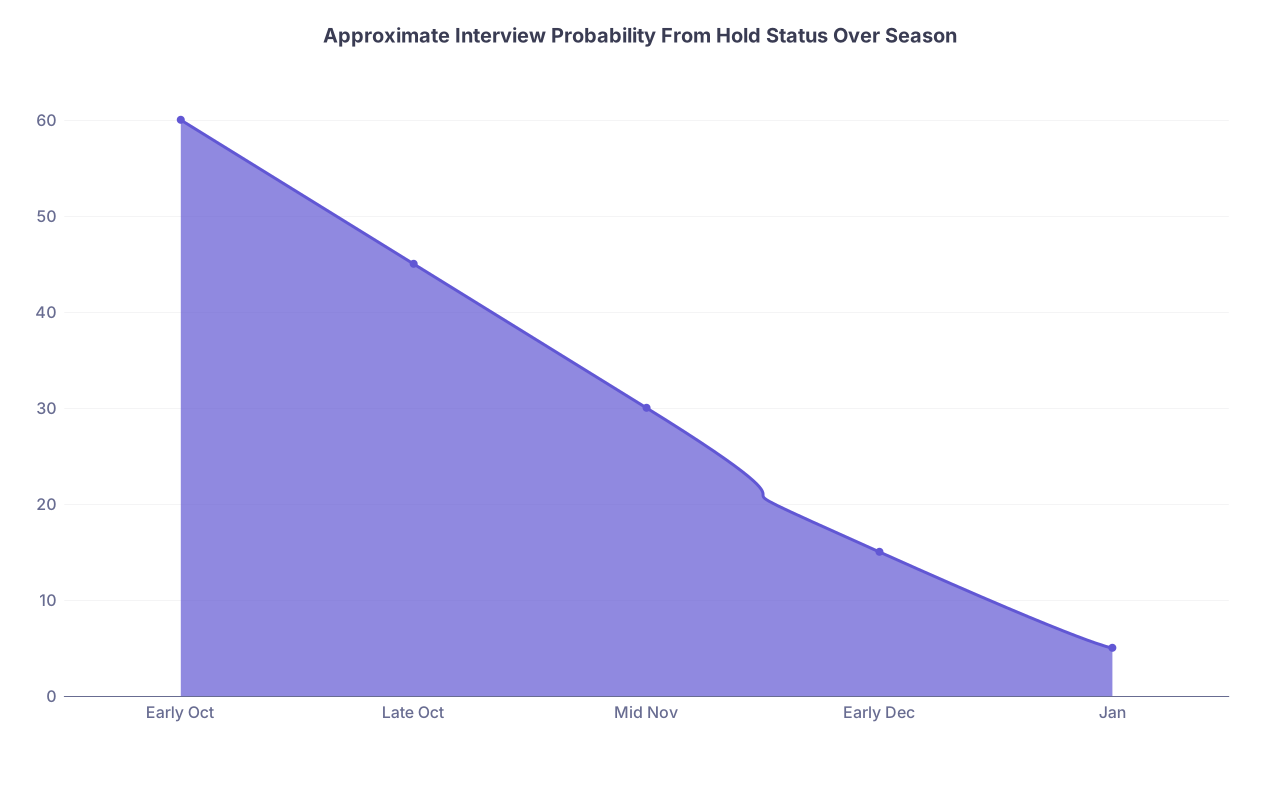
Your odds with an “on hold” status are not static. They change week to week as the program fills interview slots and analytics update.
| Category | Value |
|---|---|
| Early Oct | 60 |
| Late Oct | 45 |
| Mid Nov | 30 |
| Early Dec | 15 |
| Jan | 5 |
Those percentages aren’t official, but they’re realistic from what I’ve seen in internal dashboards and real program behavior.
Let me decode the season for you:
Early October – The Optimistic Phase
- Many programs haven’t finished their first pass yet.
- “On hold” can genuinely be a good sign here, especially if you’re early in the pile.
- Some PDs will mark strong IMGs as “hold” because they still want to see more of the pool.
If you get “on hold” very early, you’re not dead. You’re in the true maybe pile.
Late October to Mid November – The Sorting Phase
- By now, most programs have invited their obvious top group.
- They’re watching acceptance/decline rates of interviews.
- Strong-hold IMG candidates get pulled if there’s any slack.
If you’re “on hold” and the program is still actively sending new invites, you might be in their second tier.
Late November to December – The Reality Check
Most programs start to realize:
- How many interview days they’ll actually fill
- Whether their “top” candidates are responding
- If they can afford to take some risks and dip into the hold pool
For IMGs on genuine hold lists, this is when some late invites pop up, especially at community and mid-tier academic programs. But if a program is already booked solid and has a long internal list of “backup” US grads, your odds drop sharply.
January – The Token Invite Period
At this point, “on hold” means very little at most places.
You might get:
- The occasional last-minute cancellation invite
- An extra date added due to ACGME pressure or institutional politics
But if a program has not touched your file by January, I’ll be blunt: they are not ranking you. And they are not inviting you unless something unusual happens (mass cancellations, weather reschedule, etc.).
The Ugly Factor: Visas, YOG, and Unspoken Filters
IMGs love to obsess over “my application is on hold, what does it mean?” Here’s what quietly matters behind the status line.
Visa Status: The Filter That Rarely Gets Disclosed
Programs almost never say this in writing, but internal conversations sound like:
- “We’re limiting H-1Bs this year.”
- “We’ll consider J-1 only.”
- “Let’s first fill with non-visa or green card holders.”
If you require a visa and you’re “on hold” at a program that sponsors but is not enthusiastic about visas, you are often used as a backup of a backup.
Year of Graduation: The Silent Cutoff
Many IMGs on hold are older grads: 5, 7, 10 years out.
Reality inside the committee:
- “YOG >5? They better have something special.”
- “Too far from training; we’ll have to justify this.”
Your hold might not be about your interview performance potential at all, but about optics and perceived trainability.
USCE and Letters: The Tiebreakers
When programs go back to their hold bin, what gets you pulled?
- Real US clinical experience (not just observerships)
- Strong letters from US faculty that the PD or APD recognizes
- Any internal advocate: “This is the student I worked with; they did great.”
If your file is generic — foreign LORs, no real US inpatient time, vague MSPE — your hold is less likely to convert into an interview.
What You Should Actually Do When You’re “On Hold”
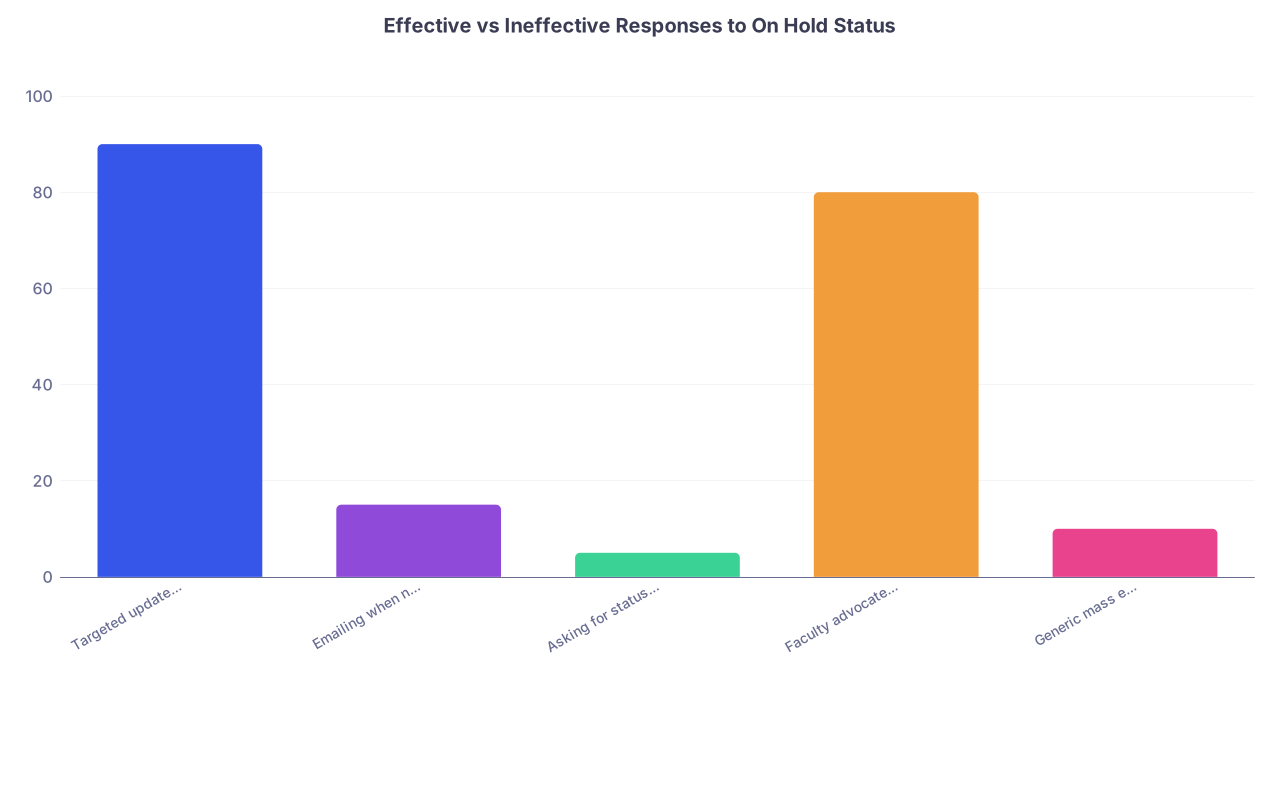
Here’s where a lot of IMGs mess up. They either spam every program weekly or they go completely radio silent in despair. Both are bad.
Your move should depend on what kind of hold you’re probably in and what new information you can actually offer.
| Category | Value |
|---|---|
| Targeted update with new Step 2 | 90 |
| Emailing when nothing changed | 15 |
| Asking for status repeatedly | 5 |
| Faculty advocate emailing PD | 80 |
| Generic mass email to all programs | 10 |
If You Have New, Strong Data
You:
- Passed Step 2 CK with a strong score
- Completed a US rotation and got a solid letter
- Gained ECFMG certification mid-season
Then a single, concise, targeted email can make sense.
One paragraph. Clear subject line. Directed to the program coordinator and, if appropriate, CC the PD.
Example structure:
- Subject: “Update to Application – ERAS AAMC# XXXXXX – New Step 2 CK Score”
- State your name, AAMC number, original application
- Mention concrete update: “Since submitting my ERAS application, I have now completed Step 2 CK with a score of 247 and obtained my ECFMG certification.”
- One sentence on continued interest in that specific program (not generic flattery)
- Attach updated score report or mention it’s in ERAS
This works only when what you’re offering changes your category. If you already had all scores in ERAS and nothing new has happened? You’re not “updating”; you’re just hoping.
If Nothing Substantial Has Changed
Then your best actions are:
- Do not pester the program with repeated status request emails. That irritates coordinators more than you think.
- Focus your energy on programs that have not rejected you and may still be sending invites.
- Strengthen your application for SOAP or next cycle rather than obsessing over a hold that won’t move.
The internal conversations are never: “This applicant emailed us three times asking for an update; let’s invite them.” It’s usually: “This person keeps emailing; please respond so they stop.”
The Only Time Persistence Actually Helps
When you have an internal advocate.
If a US attending who worked closely with you emails the PD or APD directly:
- “I strongly recommend this applicant; we’d be happy to have them here.”
- “They rotated with us and outperformed several US grads.”
That sometimes moves you from hold to interview. Because now there’s someone inside the building willing to attach their reputation to you.
You emailing weekly? That’s just noise.
How to Read Between the Lines of Program Communication
Programs are not going to send you: “We placed you in our courtesy hold for eventual rejection.” But they leak their true meaning if you know where to look.
Here’s the translation guide most IMGs never get:
“Your application is on hold / under review.”
→ You’re in the maybe bin. Odds depend heavily on time of season and your profile.“We were impressed with your credentials but cannot offer an interview at this time.”
→ You are in neutral or courtesy hold. They’re closing the door gently.“We are currently offering interviews on a rolling basis and will contact you if selected.”
→ Low probability. They already know who they’re inviting first.Total silence, but portal says “Received” or “Reviewed” for 2–3 months
→ De facto rejection or courtesy hold. Programs that want you do not sit on you for 90 days.
Pay more attention to behavior than words. Are they still sending new invites on forums, WhatsApp groups, or to your classmates? And you’re sitting on a hold email from October? That tells you more than any templated message.
The Harsh Math: Why Most “On Hold” IMGs Never Get the Call
To really understand what you’re up against, look at the numbers.
Many community internal medicine programs receive:
- 3,000–4,000 applications
- 60–120 interview spots
- A strong preference for domestic grads and non-visa candidates first
Even if they mark 400–800 applications as “possible” or “on hold” at some stage, they’re only ever going to invite a fraction of that.
Your job is not to pray that “on hold” magically becomes “invite.” Your job is to:
- Figure out where you actually stand in that internal ecosystem
- Make targeted moves when you have meaningful new information
- Emotionally detach your self-worth from a bureaucratic label in a broken system
Because here’s the real behind-the-scenes truth: the difference between many IMG applicants who get interviewed and those who sit “on hold” all season is not always merit. It’s timing, noise level of the pool, visa, YOG, and whether anyone is willing to speak your name out loud in the selection room.
Quick FAQ – What IMGs Ask Me Constantly About “On Hold”
1. Does “on hold” ever turn into an interview for IMGs, or is it just a polite no?
Yes, it can turn into an interview, especially at mid-tier or community programs that over- or under-estimate their first wave of acceptances. I’ve seen plenty of IMG candidates pulled from hold in late November and December. But statistically, most holds won’t convert. If a program is competitive, filled early, and heavy on US grads, “on hold” is more often a quiet no.
2. Should I email the program if my application is on hold?
Only if something new and substantial has happened: Step 2 CK score posted, ECFMG certification, a strong US letter, or a meaningful update to your visa/immigration status. One concise, professional email is enough. Repeated “just checking in” messages with no new data do not help and can hurt how you’re perceived by the coordinator and PD.
3. How long should I keep hope if I’m on hold at a program?
Hope is fine; paralysis is not. If you’re on hold in October, you’re still in the game. By late November, your odds start falling sharply if you haven’t heard anything while your peers are getting late invites. By January, “on hold” at most programs effectively means “not happening this year.” Use that timeline to emotionally reset and start strengthening your profile for SOAP or the next cycle instead of refreshing your email obsessively.
Key points to walk away with:
- “On hold” is a parking lot, not a promise — and often not a compliment.
- Your real odds depend on timing, your profile (scores/YOG/visa/USCE), and program behavior, not the comforting language of emails.
- Action only matters when you bring new, substantive information or an internal advocate; everything else is just noise in a very crowded system.