It is March. You just got your Match result. Or worse, your “Did Not Match” email. You go back to your notes from interviews. A few programs were kind enough to give you feedback:
“Communication not strong enough.”
“Answers lacked depth.”
“Concerns about fit and readiness.”
You close the email. Stare at the screen. And the thought hits: “So what do I actually do about this before the next cycle?”
This is where most people get stuck. They file the feedback away under “sad feelings,” tweak their personal statement, apply to more programs, and repeat the same interview mistakes next year.
You are not doing that.
You are going to treat this like a clinical problem. History. Assessment. Plan. Then reps and follow‑through.
Let us lay out exactly how.
Step 1 – Turn Vague Feedback Into a Clear Problem List
Bad feedback is usually vague. “Communication concerns.” “Not the right fit.” “Lack of confidence.” Useless if you leave it that way. You need to convert it into specific, testable issues.
1. Collect all feedback in one place
Make a single document and dump everything in:
- Emails from programs
- Comments from faculty mentors who mock‑interviewed you
- Your own memory of tough moments:
- Questions where you rambled
- Questions you could not answer
- Times you saw the interviewer’s face change (confused, bored, skeptical)
Then sort this into buckets. Typical buckets for IMGs:
- English / accent / clarity
- Structure of answers (rambling, off point)
- Content depth (weak examples, generic stories)
- Clinical readiness / US system understanding
- Personality / “fit” issues (too quiet, defensive, passive, overly aggressive)
- Red flag handling (gaps, attempts, visa, old grad)
2. Translate vague phrases into specific behaviors
You cannot fix “poor communication.” You can fix “I talk too fast when nervous” or “I do not answer the question directly.”
Take each comment and rewrite it like a problem list:
“Communication not strong enough” →
- Speech speed increases when anxious
- Sentences too long, difficult to follow
- Answers not structured (no clear beginning, middle, end)
“Not convinced about fit for our program” →
- Did not mention program‑specific features
- Gave generic answers like “good research and diverse patients”
- Did not connect personal goals to program strengths
“Concerns about readiness” →
- Weak discussion of ACGME competencies
- Limited examples of managing patients with supervision
- Did not mention recent clinical work or decision‑making
Write your list. 8–15 concrete issues is common. If you cannot write at least 5, you are still being too vague.
Step 2 – Build a Simple, Ruthless Interview Skills Plan
Once you have your “problem list,” you build a treatment plan. Not for your whole life. Just for one year: from now until next interview season.
Think in three domains:
- Language and delivery
- Content and structure
- Presence and professionalism
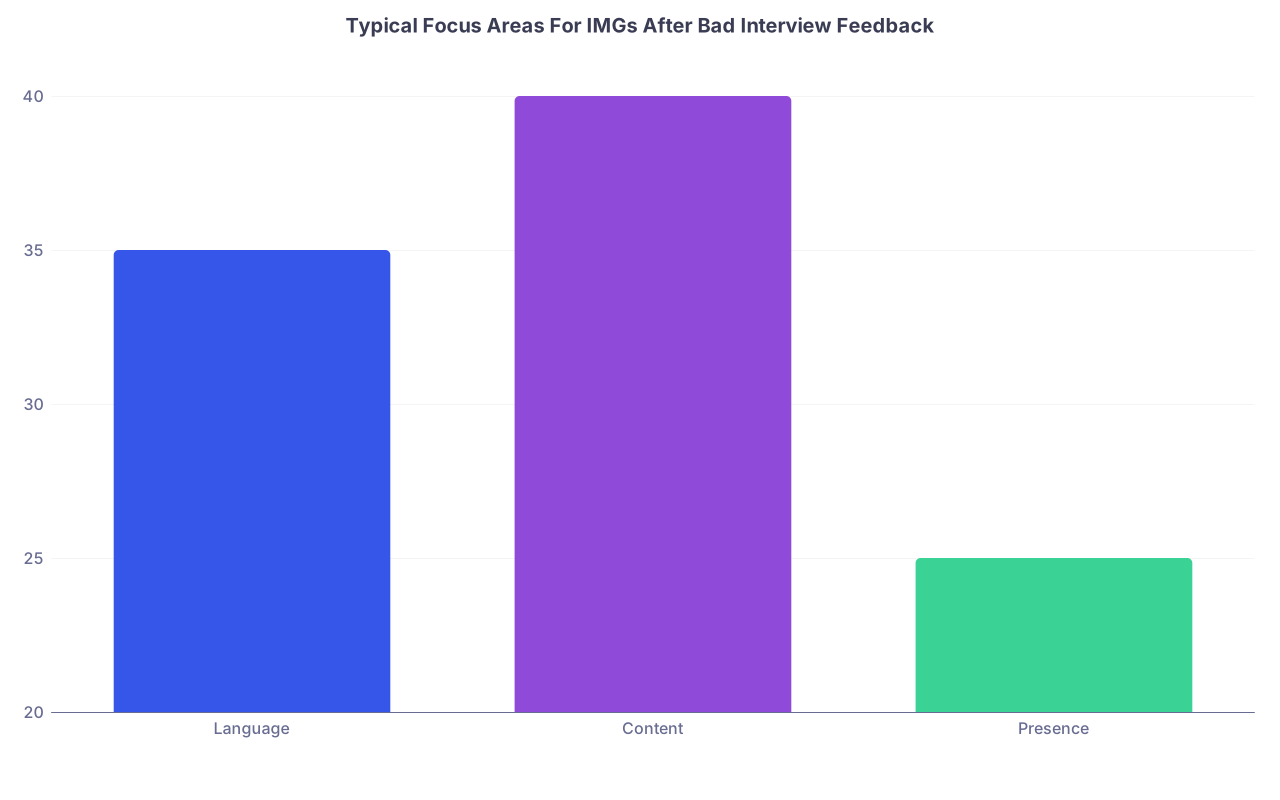
| Category | Value |
|---|---|
| Language | 35 |
| Content | 40 |
| Presence | 25 |
A. Language and delivery (especially for IMGs)
If any feedback touched “communication,” “hard to understand,” “accent,” or “not clear,” this is non‑negotiable.
Your goals:
- Slow, clear speech
- Short, direct sentences
- Confident volume and pacing
Concrete protocol:
Baseline recording (week 1)
- Choose 10 classic questions:
- Tell me about yourself.
- Why this specialty?
- Why this program?
- Strengths.
- Weaknesses.
- Conflict with a colleague.
- Difficult patient.
- Biggest mistake.
- Times you received critical feedback.
- Where do you see yourself in 5–10 years?
- Record yourself answering each one on video (phone is fine).
- Rewatch and grade yourself on:
- Clarity (1–5)
- Speed (1–5)
- Filler words (um, like, you know)
- Eye contact and posture (even just with your camera)
- Choose 10 classic questions:
Fix your speed and clarity (weeks 2–6)
- Read one page of medical English out loud daily:
- UpToDate summaries
- NEJM abstracts
- US guidelines
- Use a voice recording app:
- Record → listen → repeat slower and clearer
- Aim for:
- Shorter sentences
- Pauses between ideas
- One main point per sentence
- Read one page of medical English out loud daily:
Accent‑focused coaching (optional but powerful)
If people truly struggle to understand you, do not guess. Get help:- Speech language pathologist with accent modification experience
- Online accent reduction coaching (there are many; choose one with medical clients)
- English conversation partner (American, British, Canadian, etc.) at least 2x/week
I have seen IMGs raise their “understandability” dramatically in 3–4 months with consistent, boring practice.
B. Content and structure
Most IMGs are clinically decent but interview like this:
- Start too far back in the story
- Add irrelevant detail
- Never clearly state the “so what”
You need structure. Two core tools:
- The 60‑second frame for basic questions
For:
- Tell me about yourself
- Why this specialty
- Why this program
Use this pattern:
- 10–15 seconds: Who you are now (medical grad from X, interested in Y)
- 25–30 seconds: Key experiences that shaped that interest
- 15–20 seconds: What you want in residency
- 10–15 seconds: Why this program / specialty fits that direction
You should be able to say “Tell me about yourself” in under 75 seconds. If your answer takes 3 minutes, they stop listening at 45 seconds.
- STAR / SPIES for behavioral answers
Pick one and stick to it. I like STAR for simplicity:
- S – Situation
- T – Task (what needed to be done)
- A – Action (what you did)
- R – Result (what happened + what you learned)
Example question: “Tell me about a conflict with a colleague.”
Bad IMG answer: 5 minutes, name‑dropping, too much backstory.
Good answer: 60–90 seconds, clear story, you come out mature.
Practice protocol:
- List 15 behavioral questions (conflict, mistake, feedback, teamwork, leadership, ethics, stress, burnout, cultural issues).
- Write one bulletpoint STAR outline for each. Not a script. Just:
- Situation – 1 line
- Task – 1 line
- Action – 2–3 bullets
- Result – 1–2 bullets
- Practice out loud until each takes 60–90 seconds.
Step 3 – Run a Real Diagnostic: Mock Interviews With Brutal Scoring
Your self‑assessment is not enough. You need outside data.
1. Set up a mock interview schedule
Aim for:
- 1 serious mock per month from now until September
- Then 1 per week in the 4–6 weeks before interviews actually start
Sources:
- Your home institution (if you have one in the US)
- Teaching faculty from your rotations
- IMG‑friendly attendings you met on electives
- Alumni from your med school already in US residency
- Paid services (fine, but choose carefully; many are garbage and too “nice”)

2. Use a standardized scoring sheet
Do not accept “You were fine” as feedback. Useless.
Ask your interviewer to score you 1–5 in:
- Clarity of speech
- Structure of answers
- Depth of examples
- Professionalism and maturity
- Knowledge of US system / specialty
- “Fit” / Likability
- Overall impression (would I rank you?)
You can build a simple grid. Every mock goes into it. You want to see trends.
| Category | Target Score |
|---|---|
| Clarity of speech | 4–5 |
| Answer structure | 4–5 |
| Depth of examples | 4–5 |
| Professionalism / maturity | 4–5 |
| US system understanding | 4–5 |
| Program fit / likability | 4–5 |
3. Demand specific, behavior‑based feedback
After the mock, ask:
- “Which answers would you consider weak or concerning?”
- “Where did you stop believing what I was saying?”
- “Would you be comfortable working with me as an intern? If not, why?”
- “If I were your mentee, what 2–3 things would you tell me to fix before September?”
Then you:
- Write their comments down immediately
- Identify repeated messages across different interviewers
- Update your problem list
If three different attendings say “Your stories are too long,” believe them. That is your main target.
Step 4 – Fix US System and Clinical Readiness Concerns
Many IMGs get this line: “Concerns about readiness” or “Limited experience with US healthcare.”
Programs worry about:
- You not understanding US documentation, workflow, and safety culture
- You struggling with autonomy versus supervision
- You being too “student‑like” instead of “intern‑ready”
So you attack this.
A. Strengthen your US clinical experience
If you are not working clinically in the US right now, that is a problem. Fix what you can:
- Try for:
- Document:
- Exact dates
- Hours per week
- Responsibilities
- Any presentations, QI projects, or teaching you did
Mention this in future interviews:
- “Since last cycle, I have completed X months of US clinical exposure with responsibilities including Y and Z. This has helped me adapt to US documentation, EMR use, and multidisciplinary communication.”
B. Learn the language of ACGME competencies
If you talk like a student, they treat you like a student. You need to sound like someone who knows residency expectations.
Core competencies:
- Patient care
- Medical knowledge
- Practice‑based learning and improvement
- Interpersonal and communication skills
- Professionalism
- Systems‑based practice
Prepare 1–2 examples for each that show you working at an intern level: following up labs, calling consults with supervision, handling cross‑cover calls (if you have that experience), doing sign‑out properly.
Speak this way in interviews:
- “This experience helped me improve my communication with nursing staff and consultants.”
- “That project increased my understanding of systems‑based practice and resource use.”
- “I sought feedback regularly and used it to improve my notes and patient education, which reflects practice‑based learning.”
You are showing them: I know the expectations, I have lived some of them, and I am not coming in blind.
Step 5 – Fix “Fit” Problems That IMGs Rarely Admit
“Not the right fit” is often code for:
- Too quiet / passive
- Defensive when questioned
- Slight attitude issues
- Poor understanding of American workplace culture
- Or simply: they could not see themselves working with you at 2 a.m.
You cannot completely control this, but you can improve it.
A. Personality and presence tweaks
During interviews, programs want:
- Someone who listens
- Someone who can take feedback
- Someone who is curious and humble, but not timid
Practice:
- Active listening:
- When asked a follow‑up question, pause. Paraphrase briefly:
- “So you are asking how I handled the disagreement with my attending in that case.”
- Then answer. This makes you look thoughtful instead of reactive.
- When asked a follow‑up question, pause. Paraphrase briefly:
- Avoid defensive language:
- Bad: “That was not my fault, the nurse did not…”
- Better: “I realized I should have clarified expectations earlier. I now make sure to…”
- Show some warmth:
- Smile occasionally
- Use short, appropriate personal details when natural (hobbies, family, challenges overcome)
B. Cultural calibration
If you trained outside North America, some norms differ:
- Hierarchy is less rigid in US hospitals (but still present)
- Being too formal can make you seem distant
- Being too casual can make you seem unprofessional
Pay attention to:
- Email tone when communicating with programs (brief, polite, not overly emotional)
- How you talk about past conflicts:
- Never blame entire systems or cultures
- Never insult previous programs or countries
- Focus on what you learned and changed
Use US mentors honestly. Ask:
- “Does my communication style come across as too formal or too aggressive?”
- “Would you see any red flags in how I described this conflict?”
You are not trying to become someone else. You are just sanding off the sharp edges.
Step 6 – Document and Communicate Growth Before Next Cycle
Programs do not only care that you got bad feedback. They care what you did with it.
You need to be able to say, with specifics: “Here is what I changed since last time.”
A. Keep a simple “Growth Log”
One page. Running list. Date, change, result. For example:
- April–June: Weekly mock interviews with Dr. X → improved clarity scores from 3/5 to 4–5/5.
- May–August: Completed 3‑month observership at Y Hospital, IM → gained US documentation experience and presented 2 cases at morning report.
- June–September: Worked with ESL speaking coach weekly → reduced filler words and slowed speech; feedback from residents improved.
When you interview next time and get the “What have you done since last cycle?” question, you do not mumble. You give them a structured answer using that log.
B. Update your application materials strategically
Do not just rewrite your personal statement. Align everything:
- ERAS experiences:
- Emphasize US clinical exposure and responsibilities
- Highlight anything that shows teamwork, communication, QI
- Personal statement:
- 2–3 sentences on what you learned from previous cycle
- One clear example of growth (communication, US experience, maturity)
- LoRs:
- Try to get at least one new US‑based letter that directly comments on:
- Communication skills
- Reliability
- Readiness for residency
- Try to get at least one new US‑based letter that directly comments on:
If your prior feedback was “communication concerns,” and your new US attending writes:
“Dr. X’s communication with patients and staff is clear, respectful, and effective; I would trust them as an intern on my team,”
you just turned a weakness into a documented strength.
Step 7 – Build a Pre‑Interview Season Rehearsal Plan
The 6–8 weeks before interview invites start is not the time for vague preparation. Treat it like dedicated Step study, but for your mouth and your brain.
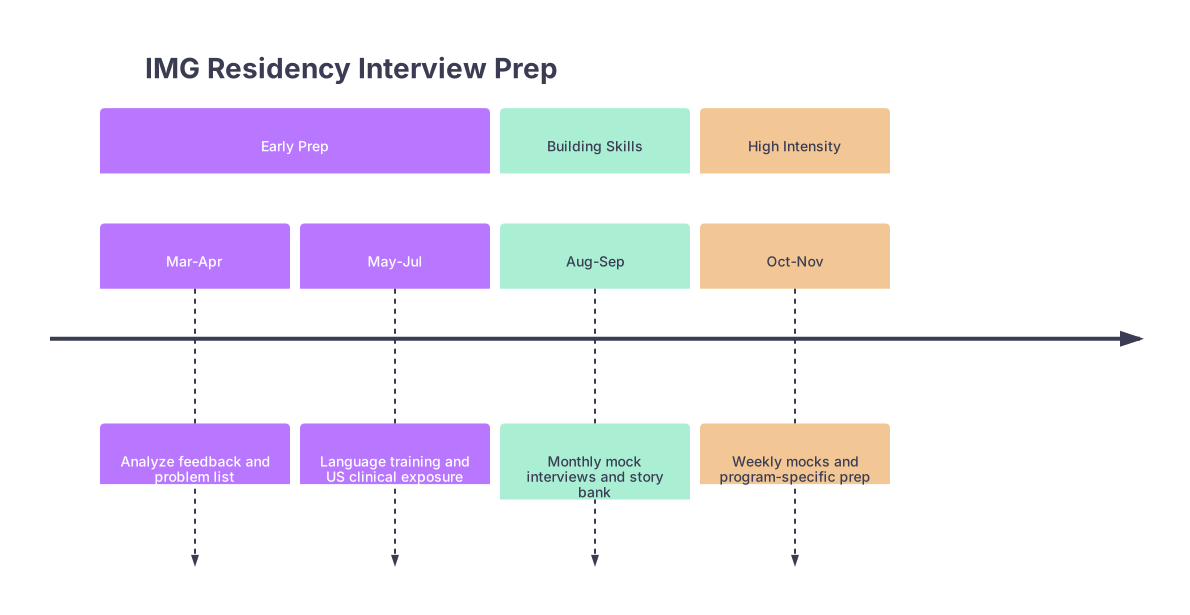
| Period | Event |
|---|---|
| Early Prep - Mar-Apr | Analyze feedback and problem list |
| Early Prep - May-Jul | Language training and US clinical exposure |
| Building Skills - Aug-Sep | Monthly mock interviews and story bank |
| High Intensity - Oct-Nov | Weekly mocks and program-specific prep |
Weekly structure (pre‑interview season)
- 3 days/week:
- 30–45 minutes of question practice alone (recorded)
- 1 day/week:
- Review recordings, rewrite 1–2 weak answers
- 1 day/week:
- Mock interview with another human (could be short: 30 minutes)
- Weekly goal:
- One specific improvement (e.g., “Shorten ‘tell me about yourself’ by 30 seconds.” “Add a stronger result to my conflict story.”)
Track everything. You are not “practicing interviews.” You are training specific skills.
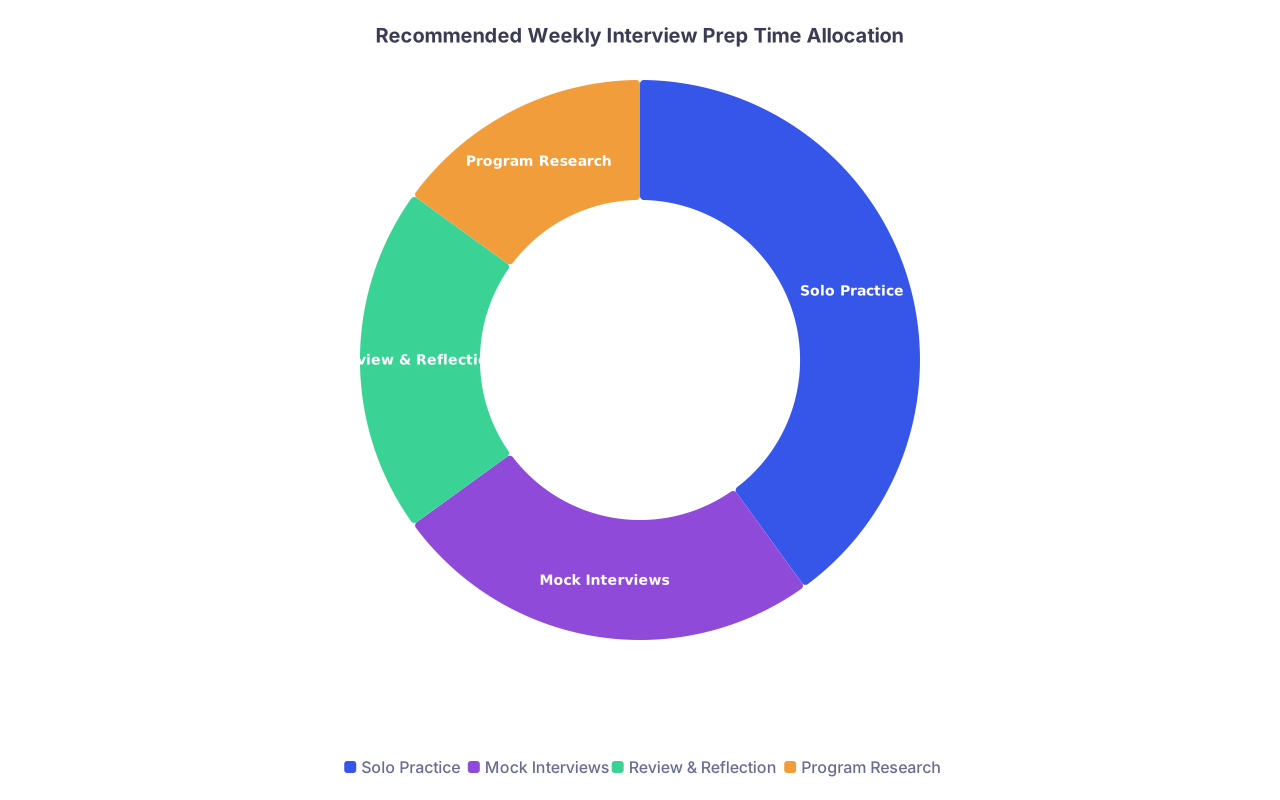
| Category | Value |
|---|---|
| Solo Practice | 40 |
| Mock Interviews | 25 |
| Review & Reflection | 20 |
| Program Research | 15 |
Step 8 – Decide Where (and Whether) To Re‑Apply
Last piece. You can fix your skills and still sabotage yourself by applying the same way as before.
You need an honest conversation with yourself or a trusted advisor:
- Were you under‑applying (too few programs)?
- Were you applying to the wrong set (too competitive, not IMG‑friendly enough)?
- Were red flags (multiple attempts, major gaps, very old grad year) never addressed head‑on?
Make an application strategy that matches your profile and your improvements:
- Increase applications to programs that:
- Are community‑based
- Historically take IMGs
- Match your Step/CK profiles
- Reduce fantasy applications that burn money and mental energy
- Have a clear script for your biggest red flag:
- Short, honest, reflective
- Ends with what changed and how you practice differently now
Quick Recap: What You Actually Do Next
If you skimmed, here is the stripped‑down protocol:
Convert feedback to a problem list.
No more “bad communication.” Instead: “I talk too fast, my answers are unstructured, my stories are too long.”Attack language + structure.
Daily speaking practice, weekly recordings, 60–90 second structured answers for common questions.Schedule mock interviews like appointments.
One per month off‑season, one per week pre‑season. Use a scoring sheet. Chase specific weaknesses.Prove US readiness.
Get fresh US clinical exposure if possible. Learn and use ACGME competency language. Speak like an intern, not a student.Fix “fit” and culture issues.
Calibrate your tone, your attitude in conflict stories, your level of formality. Use honest US mentors.Document growth.
Keep a growth log. Update ERAS, PS, and LoRs to show exactly what changed since last cycle.
You did not get bad feedback because you are hopeless. You got it because you were operating without a system. Now you have one.