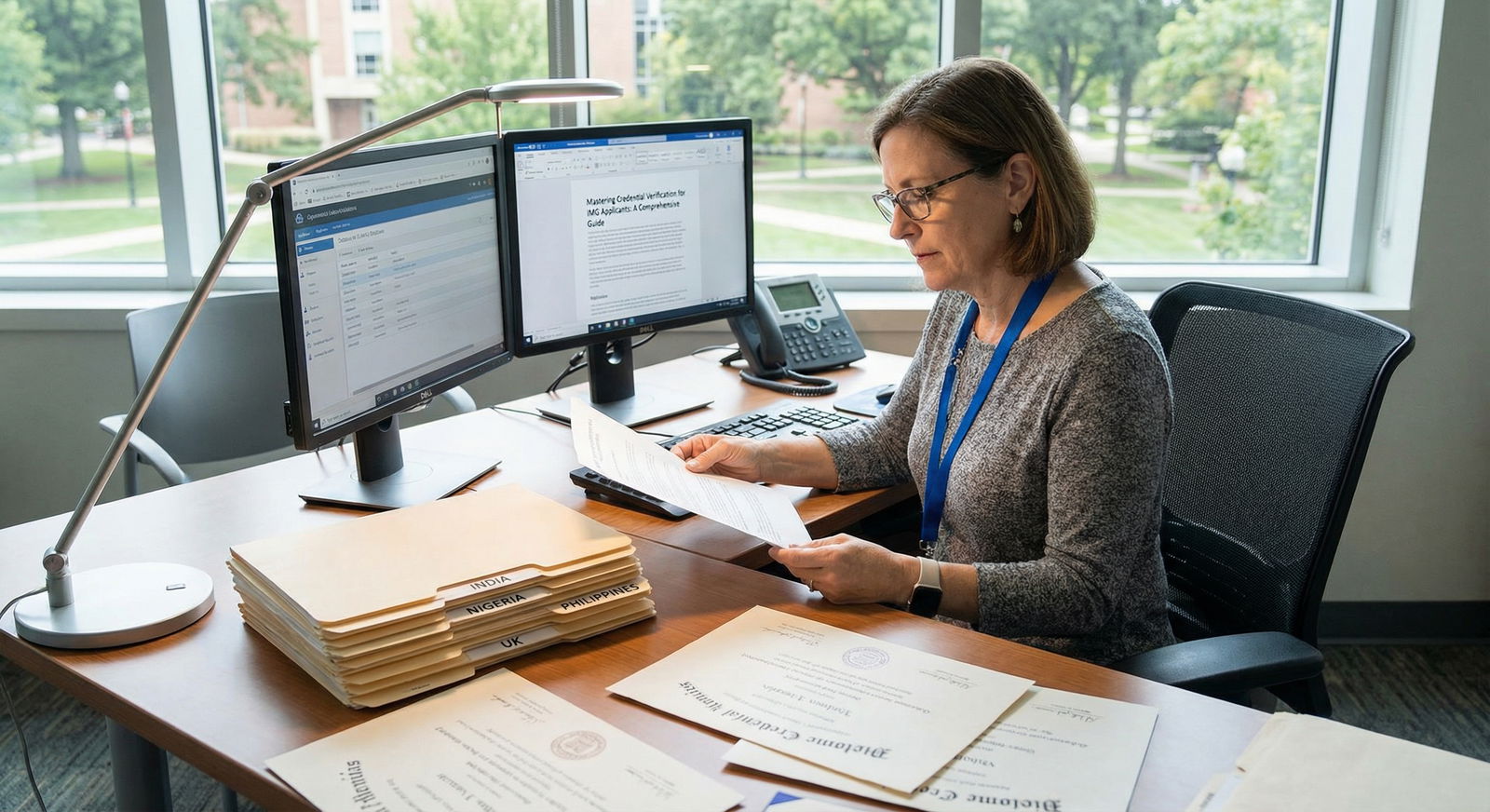
If Your Dean’s Office Is Unresponsive: Workarounds for IMG Documents
What do you actually do when ERAS is open, deadlines are creeping up, and your med school dean’s office simply stops replying?
I am not talking about a 48-hour delay. I mean weeks. Reads receipts, no responses. Generic “we are experiencing a high volume of emails” messages. Or worse: nothing.
If you’re an IMG, this is not a theoretical problem. I’ve watched people lose entire cycles because they assumed “they’ll get to it eventually.” Some schools are slow. Some are dysfunctional. Some genuinely do not understand what ERAS, MSPE, or ECFMG timelines mean for you.
You do not have time to be polite and passive. So here’s how to manage this like a grown-up who intends to match.

| Step | Description |
|---|---|
| Step 1 | Need documents |
| Step 2 | Confirm timeline in writing |
| Step 3 | Escalate politely |
| Step 4 | Use multiple channels |
| Step 5 | Escalate to higher admin |
| Step 6 | Document efforts for programs |
| Step 7 | Use alternate documents and explanations |
| Step 8 | Dean office replies in 5-7 days? |
| Step 9 | No response after 10-14 days? |
Step 1: Get brutally clear on which documents and who controls them
Before you panic, sort out exactly what you need and from where. “My school isn’t replying” is too vague. Programs and ECFMG care about specific items.
For IMGs in the residency application phase, the usual pain points:
- MSPE (Dean’s Letter)
- Medical school transcript
- Diploma / degree certificate
- ECFMG forms that require school stamp/signature (like Form 327-A/258-type equivalents depending on era)
- Letterhead or verification letters (graduation confirmation, enrollment status, expected date, etc.)
Now divide them in your head into two categories:
Things that must ultimately come from or be verified by your medical school
- Official transcript
- MSPE
- Graduation / enrollment verification
- Institutional forms for ECFMG
Things you can realistically generate or control yourself
- Personal statement
- CV
- LORs from US physicians (these do not go through your dean’s office)
- Explanatory letters to programs about document delays
You’re stuck on category 1. But you still have leverage. You just need to stop acting as if one person in one office is the only doorway to your future. They’re not.

Step 2: Stop sending random emails. Build a targeted escalation plan.
“I emailed them again” is not a strategy. It’s just flailing.
You need structure—who you contact, how, and in what sequence.
Here’s a practical escalation ladder that works better than endless “just checking in” messages:
| Step | Who to Contact | Typical Tools |
|---|---|---|
| 1 | Primary dean/registrar contact | Email, portal |
| 2 | Alternate staff in same office | Email, phone |
| 3 | Higher admin (associate dean, vice dean) | Email, phone |
| 4 | Rector/Dean main office or central admin | Email, phone |
| 5 | ECFMG support (for guidance, not pressure) | Email, phone |
Your first 5–7 days: Focused, polite, but firm
If you have 3–6 weeks before things get critical:
Send one clear, specific email
Subject line should scream exactly what this is about:- “URGENT: MSPE and Transcript Request for ECFMG / ERAS – [Your Full Name, Grad Year]”
In that email:
- Include your full name, date of birth, student ID, graduation year
- Specify exactly what you need (MSPE, official transcript, degree verification)
- Give the exact deadline you’re working with: “ERAS opens on X; programs begin reviewing applications around Y; I need these uploaded by Z.”
Within the same week, check the school website for alternate contacts:
- Other staff in student affairs / academic affairs
- General registrar email
- Phone numbers
If no answer within 3 business days, send a short, respectful follow-up—not a long essay. Two or three lines max:
- “Following up on the request below. These documents are required for my residency application with a deadline of [date]. I’d be very grateful for your help with an estimated timeline.”
In parallel: try a phone call
Time zone differences are brutal, but they matter. Call during their working hours, even if that means 4 a.m. your time.
Days 7–14: Widen the net
If you’re past a week with no meaningful response:
Email other staff using a “forwarded thread” so they see your attempts
- “Dear [Name], I’m forwarding my request below in case it reached the wrong office. I’m a graduate of [school, year], and I urgently need [documents] for my US residency application.”
Try:
- Department secretary (Internal Medicine, Surgery, your original department)
- Former faculty mentor or clerkship coordinator
- Student affairs or international office (if your school has one)
The trick here: people are more likely to act when they see you’ve been trying and ignored. That forwarded email chain is evidence.
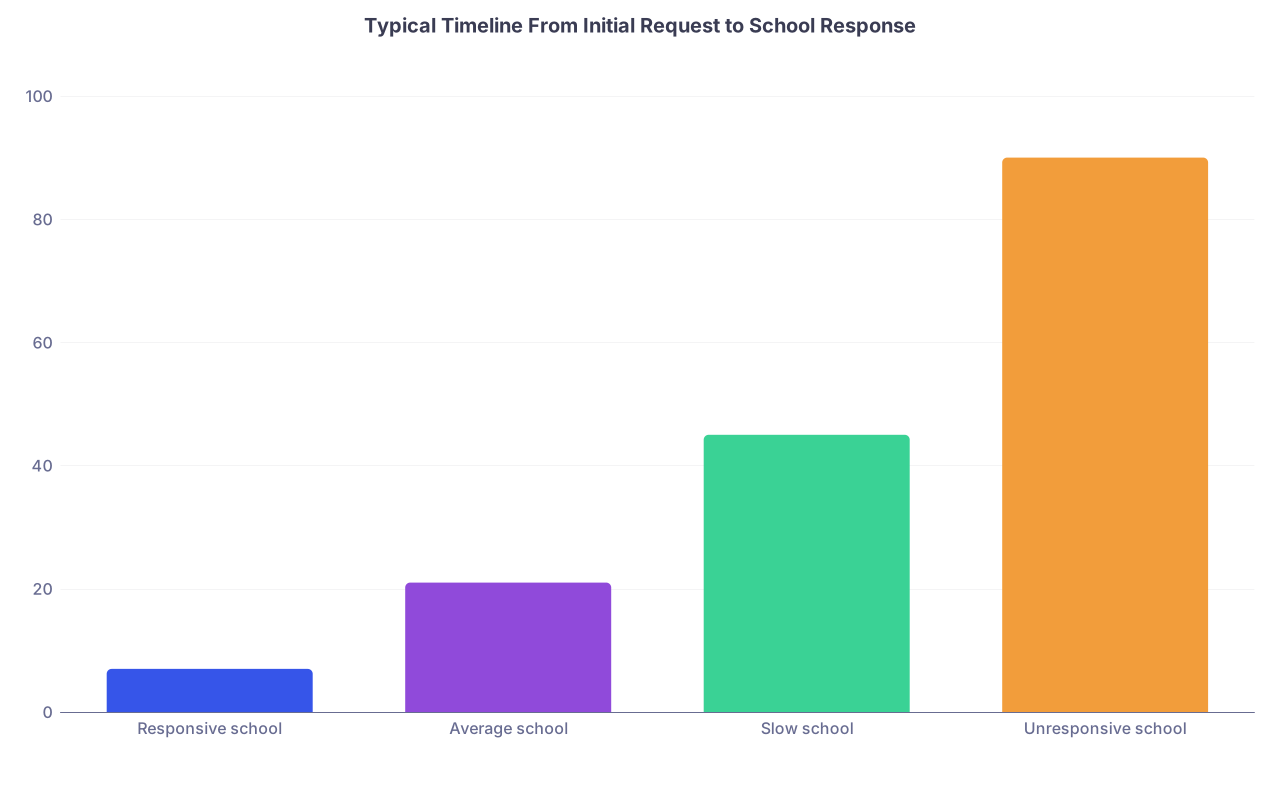
| Category | Value |
|---|---|
| Responsive school | 7 |
| Average school | 21 |
| Slow school | 45 |
| Unresponsive school | 90 |
Step 3: When the office is genuinely dysfunctional: escalate smart, not desperate
At some point you have to admit: this isn’t “busy,” this is broken.
If you are 2–4 weeks from key deadlines and still blocked, it is time for higher-level escalation.
Who to go to next
Look for:
- Associate Dean for Academic Affairs / Education
- Dean of the Faculty of Medicine
- University Rector / President office
- Central registrar (university level, not just med school)
Write a new message—not just a forward of your old one—with three parts:
Brief context:
- “I’m an MD graduate (Class of 20XX) currently applying for US residency through ERAS.”
Clear problem and risk:
- “Despite multiple attempts (see chain below), I have been unable to obtain [MSPE / official transcript / degree verification], which are mandatory for my licensure and residency application. This delay may cause me to lose an entire application cycle.”
Specific, actionable ask:
- “Could your office please assist in either:
a) Directing this request to the correct responsible staff, or
b) Providing a signed, official confirmation of my graduation and academic status that I can upload temporarily while the formal documents are processed.”
- “Could your office please assist in either:
Attach or quote your earlier attempts so they can see the pattern.
Use the phone strategically
If you can, call:
- The dean’s main office
- University switchboard
- Any direct line you can find
Talk like this:
“I’m a medical graduate from [year]. I need official documents for a licensing/residency process. I’ve tried emailing [X office] multiple times with no response. Could you please tell me who is responsible or give me an email where someone can actually help?”
Do not rant. They don’t care about your feelings. They care about tasks.

Step 4: Parallel track – secure what you can without them
While you’re fighting with your school, you cannot let the rest of your application stall. Programs will not wait because your dean’s office is asleep.
What you can move forward without school cooperation
- US clinical LORs (these go through ERAS LOR Portal, not your dean)
- Personal statement, CV, program list
- ECFMG certification steps that do not require new school documents (if you’re already certified, your school headache is mostly MSPE/transcript timing)
- USMLE scores, ERAS registration, token, etc.
For the MSPE specifically
Some programs care deeply about it. Others read it out of habit. For IMGs, the MSPE is often generic and late anyway. I’ve seen applicants match without an MSPE in place on day one—as long as everything else was strong and the delay was explained.
If your school simply does not produce MSPEs:
Confirm in writing:
Email them something like:- “Could you please confirm whether your institution prepares an MSPE/Dean’s Letter for graduates applying to US residency? If not, may I inform programs that my school does not issue this document?”
If they reply “we don’t do MSPEs”
- Save that email.
- You can mention in ERAS experiences or in communications with programs:
- “My medical school does not issue an MSPE for graduates. I have provided official transcripts and degree verification as available.”
If they do issue MSPEs but are late or unresponsive—different story. Now it’s incompetence, not policy. You keep escalating.
Step 5: Use “temporary proof” and backup documentation when you have to
Programs want to know: Are you real? Did you actually graduate? Are your scores legit?
If the dean’s office is blocking official documents, you may still have things you can upload or send that buy you time or partial credibility.
Possible backups:
- Old unofficial transcripts or grade reports from your student portal
- Scan of diploma or provisional certificate
- Graduation confirmation letter from a department head or faculty member (signed on official letterhead)
- Prior ECFMG-verified status (if applicable)
No, these do not replace official documents for ECFMG certification. But for programs reviewing ERAS, it may help them feel more comfortable ranking you while you keep chasing formal paperwork.
You might add in your ERAS “Additional Information” section or a brief program communication:
“My medical school’s administrative office is currently undergoing [staff changes/system transitions/etc.], and official updated documents have been delayed. I have attached [X, Y] as interim proof of graduation and will ensure the official documents are submitted as soon as they are released.”
Do not insult your school. State the situation, show you’re responsible, move on.
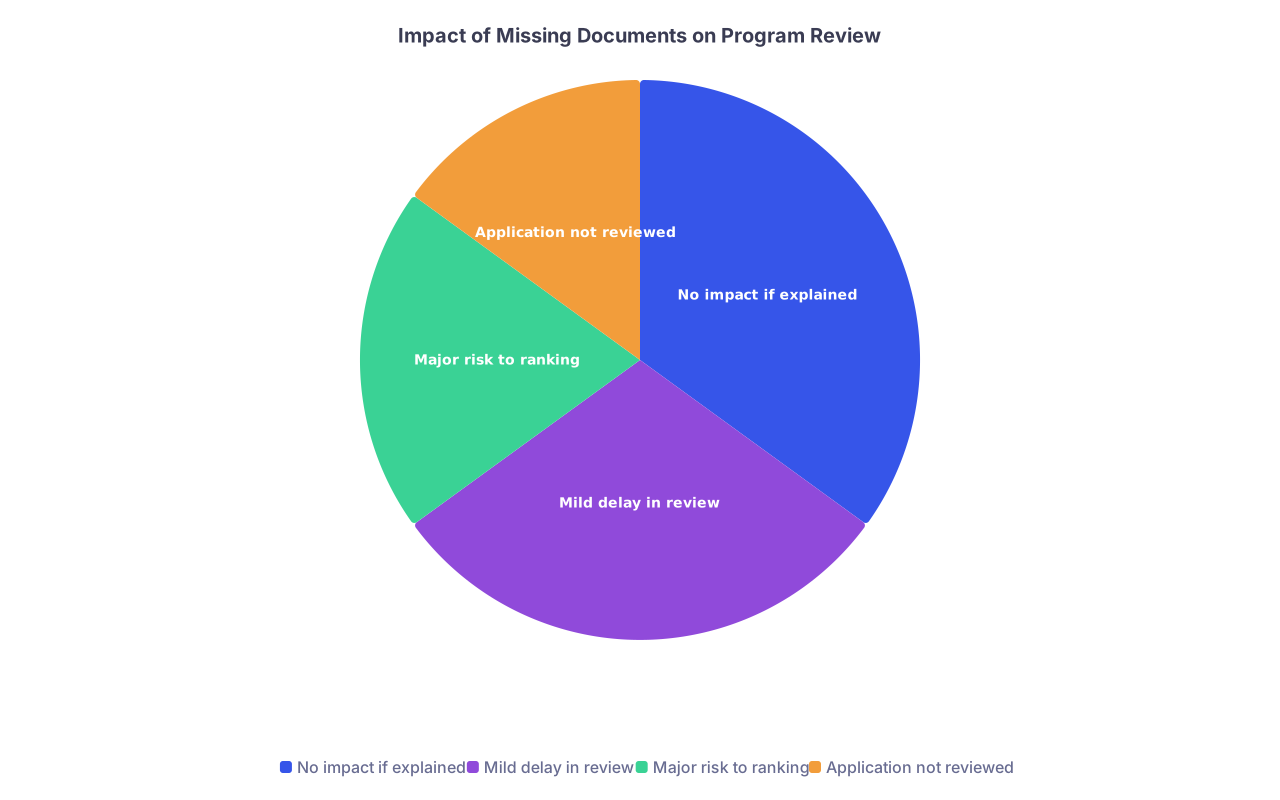
| Category | Value |
|---|---|
| No impact if explained | 35 |
| Mild delay in review | 30 |
| Major risk to ranking | 20 |
| Application not reviewed | 15 |
Step 6: Coordinate with ECFMG and ERAS instead of guessing
ECFMG and ERAS will not fix your dean’s office. But they can tell you what’s acceptable, what’s not, and where the hard lines are.
When to contact ECFMG
You should reach out if:
- Your school has to complete a form and hasn’t
- You’re stuck on primary-source verification steps
- You’re not sure if a certain alternate document is acceptable
Be specific:
- “I graduated from [school, country] in [year]. I am having difficulty obtaining [document] from my school. These are the attempts I’ve made: [brief summary]. Is there any alternative documentation or process available if the school is not responsive?”
They might say “no, we must hear from the school.” At least then you know this is non-negotiable and you stop wasting time on fantasy solutions.
When to contact programs directly
You do not send a mass sob story to every program on September 15.
You do:
- Prioritize your realistic top programs
- After submitting ERAS, send a short, professional email to the program coordinator (not the PD) when there’s a specific missing official piece (e.g., MSPE delayed):
Something like:
“Dear [Coordinator Name],
I’ve submitted my ERAS application for [Program Name]. I wanted to let you know that my medical school’s dean office has delayed release of my MSPE/official transcript despite repeated requests. ECFMG has my degree and exam scores on record, and I’ve attached an unofficial copy of my transcript for now.I’m continuing to push the school to release the official documents and will ensure they are uploaded as soon as possible. Please let me know if there’s anything additional you recommend from your side.”
Short, factual, no drama. Programs care about whether you’re proactive, not whether your school is chaotic.

Step 7: Use relationships inside your school (even old ones)
A random admin might ignore your fifth email. A professor they see in person every week? Harder.
If you had any decent relationship with:
- A former clerkship director
- A department chair
- A research mentor
- A class tutor who liked you
Email them directly:
“Dr. [Name],
I hope you’ve been well. I’m a graduate of [year] and am currently applying for US residency. I’ve had difficulty getting a response from the dean office/registrar regarding my MSPE and official transcript (see below).Would you be willing to either:
- Forward my request to the appropriate person with your endorsement, or
- Let me know who, in your experience, can actually move this forward?
I truly appreciate any help or guidance you can offer.”
Faculty leverage is real. They can walk into an office and say, “Can you please process this for my former student?” That’s infinitely more effective than your tenth email.
Step 8: If you’re late in the cycle, play the long game—without giving up this year
Harsh truth: if your school is deeply broken, you might not fix it in one season. But that doesn’t mean you throw away the current cycle completely.
Realistic approach:
- Still submit ERAS on time with everything you do control (scores, LORs, experiences, PS)
- Keep hammering at the school and higher admin for the formal documents
- If the documents land late (October–December), you might still:
- Get late-season interviews
- Improve your standing with programs that had you in “maybe” pile
- Be taken more seriously in SOAP
In parallel, assume you might be applying again next year. That’s not defeatist. It’s strategic.
Use the extra time to:
- Lock down US clinical experience
- Improve Step 2 (if still pending)
- Get stronger letters
- Build research or US-based projects
- Fix all document problems so the next cycle is clean
I’ve seen IMGs match on the second attempt with the same scores but better timing, complete documents, and a coherent explanation of what went wrong the first time.
Step 9: Keep a paper trail like a lawyer
If your school is dysfunctional now, it may be again when you need license verification, board certification forms, or hospital credentialing in the future.
Start acting like someone who will have to prove they tried.
Keep:
- Copies of all emails you send (in a dedicated folder)
- Screenshots of any online portal submissions
- Dates and times of phone calls and who you spoke with (even if they were useless)
- Any written confirmation like “we don’t issue MSPEs” or “we are working on it”
Why? Two reasons:
- If anyone (ECFMG, state board, program) ever questions delays or discrepancies, you have evidence.
- If your school leadership changes and you need to complain formally, you have a documented timeline.
You’re playing the long game now. Not just surviving ERAS.
Step 10: What not to do (but people keep trying)
Let me be blunt about the dumb moves I’ve seen:
Do not forge documents.
No “editing” PDFs, no homemade letterhead, no faking stamps. This is the one way you can permanently end your career.Do not threaten or insult admins in writing.
You will lose. They will forward your email. You will be “that graduate” forever.Do not send daily emails.
You become spam and get auto-ignored. Strategic follow-ups beat noise.Do not wait in silence hoping it resolves itself.
Programs don’t award points for “patiently waited while my application fell apart.”
You’re allowed to be frustrated. But you’re not allowed to be reckless.
Core takeaways
- Treat an unresponsive dean’s office as a problem to manage, not a fate to accept—escalate systematically, use multiple contacts, and get faculty allies.
- Move everything else forward in parallel, use temporary or backup documents when appropriate, and communicate calmly with programs and ECFMG about real constraints.
- Protect your future self: keep a detailed paper trail, avoid desperate shortcuts, and, if needed, use this cycle to set up a flawless one next year rather than blowing everything up in panic.