
The harsh truth: strong IMG applications are not rejected for “no reason.” They’re killed by red flags you did not realize you were sending.
You think it’s your Step score or your school name. Often, it isn’t. I’ve watched excellent IMGs with 250+ scores, solid research, and strong clinical exposure get quietly filtered out while weaker applications advanced. The difference? Subtle ERAS red flags that program directors recognize instantly—even if you’ve never heard of them.
Let’s walk through the landmines so you do not step on them.
1. The “Generic US-Interested” Personal Statement That Screams Red Flag
You can have perfect scores and still be dead on arrival if your personal statement looks like you pulled it off a Facebook group.
The quiet killers here:
Vague, copy-paste phrases
“I have always wanted to train in the United States because of the advanced healthcare system and diversity of pathology.”
I have seen this sentence, or a close cousin, hundreds of times. It tells a program: this applicant has no idea who we are, what we do, or why they belong here.No specialty-specific commitment
A red flag for any specialty:- You barely mention the actual specialty (IM, FM, Psych, etc.)
- You don’t reference core experiences that clearly anchor you in that field
- You could swap “internal medicine” with “pediatrics” and nothing would break
“IMG apology tour”
Some IMGs try to pre‑defend everything:- Over-explaining their school
- Justifying gaps
- Writing long paragraphs about visas, finances, or personal hardship
This makes your file feel like a problem to manage, not a solution to the team’s needs.
“I’ll take anything” energy
Program directors are allergic to this. Lines like:- “I would be honored to match into any residency position in the United States.”
- “My ultimate goal is simply to practice in the U.S. healthcare system.”
Translation to them: you are not truly committed to their specialty. Risky.
The fix:
Your personal statement must clearly show:
- Why this specialty, not just “medicine”
- Why training in the U.S. makes sense for your specific plans
- Evidence you understand what residency in that field actually looks like (call, continuity clinic, multidisciplinary work, etc.)
And keep the “I’m an IMG” explanation short and controlled. One tight sentence about your context is fine. A full paragraph of justification is not.
2. LORs That Look Strong to You but Are Weak to Programs
Letters of recommendation quietly destroy IMG applications all the time. You see “excellent,” “hardworking,” “team player” and think it’s good. The PD sees: red flag.
Common LOR disasters:
All letters from home country, no US letter in specialty
For many programs—especially community ones—this is a red flag. It suggests:- You haven’t actually functioned in the U.S. system
- Nobody here is willing to stake their name on you
Even excellent home letters cannot fully compensate for zero US clinical experience in many specialties.
Generic template language that signals “I barely know them”
Things like:- “I had the pleasure of working with Dr. X for a short period of time.”
- “He/she was punctual and professional.”
These are filler lines. PDs know what strong US letters sound like: specific cases, observed behaviors, and direct comparisons.
Letters from the wrong people
Silent red flags:- LOR from basic science faculty instead of clinicians (except for research-heavy programs)
- LOR from non-physicians (PhD, administrator) without also having strong physician letters
- LOR from a family friend, no matter how big their title is
Sloppy, inconsistent, or obviously edited letters
I have seen:- Letters where the writer clearly didn’t know your correct specialty
- Mixed pronouns from obvious copy-paste (“he/she,” “his/her”)
- File name as “Letter for another applicant – edited” showing in ERAS upload
That kind of sloppiness screams: this applicant is not taken seriously even by their own recommenders.

The fix:
- For most IMGs, at least 1–2 strong US clinical letters in your specialty are not optional. They’re currency.
- Make sure writers actually worked with you closely and can mention:
- Specific cases
- How you handled uncertainty
- How you functioned as part of a team
- Give them a short CV + bullet points of what you did with them so they have material.
- Don’t chase titles over content. A detailed letter from a community internist who watched you grind for a month is better than a vague one from a chair who met you twice.
3. ERAS Experiences Section: The “Red Flag by Neglect” Zone
Program directors read your Experiences section more than you think. Weak or bizarre entries are red flags, even if the rest of your file looks strong.
Big mistakes here:
Empty-looking application despite real experience
IMGs frequently undersell themselves:- “Observer” with no description
- Research with one vague bullet point
- Leadership roles described in one dry line
This makes you look like you just floated through things instead of engaging deeply.
Exaggerated or obviously fake entries
They see patterns:- Ten “leadership” roles that all sound identical
- “Founder and CEO” of three different organizations that clearly overlap
- Overinflated hours (e.g., 3000 hours of something that lasted 6 months)
These register as integrity red flags. Once they doubt your honesty, your scores no longer help you.
Sloppy, non-US-professional language
Not dramatic, but damaging:- Writing in all caps or strange formatting
- Grammar that sounds like a quick Google Translate job
- Mixing texting language with professional descriptions
This isn’t about being a native speaker. It’s about attention to detail and professionalism.
No continuity or theme
If your experiences read like random, disconnected fragments—short observerships all over the map, one-week this, two-week that—it can look like you are sampling everything with no real commitment.
The fix:
Treat each significant experience like a small, focused story:
- 2–4 concise bullet points
- What you actually did (not just “exposed to…”)
- A hint of impact or growth
And be realistic with hours and roles. Programs know what’s possible. They can smell fiction.
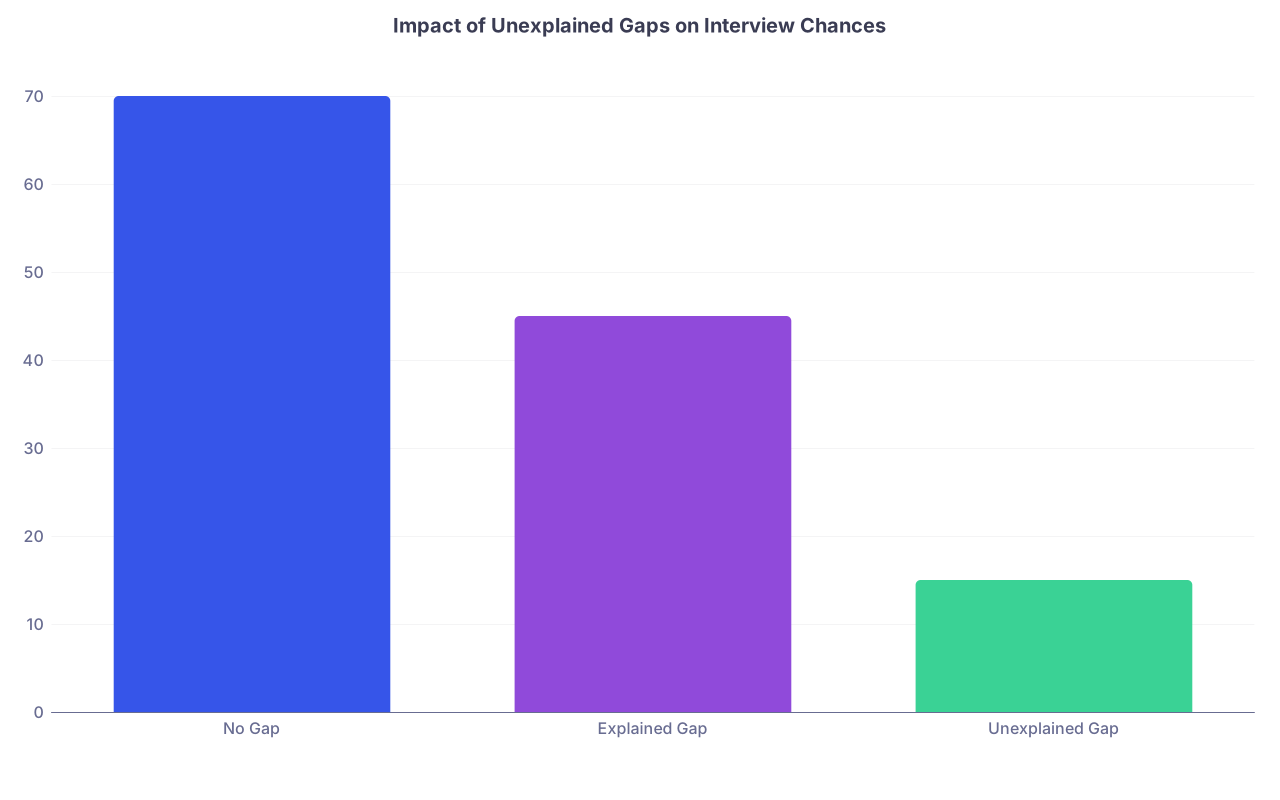
4. Unexplained Gaps and “Disappearing Years”
Big red flag: unexplained time between graduation and application.
IMGs often think, “I’ll just leave that blank and hope no one notices.” They notice.
Here’s how it kills you quietly:
2–3 year gap with nothing listed in ERAS → they assume:
- Repeated exam failures
- Failed attempts to match
- Personal/professional instability
Vague entries like “self-study,” “personal reasons,” or “family obligations” with zero detail make PDs uneasy. They worry about reliability. About how you’ll perform when life gets hard again.
Programs do not need your full life story. But a gap with no structure is a red flag.
| Category | Value |
|---|---|
| No Gap | 70 |
| Explained Gap | 45 |
| Unexplained Gap | 15 |
The fix:
Be brief, honest, and structured. For example:
- “07/2021–06/2022 – Family responsibilities; concurrently completed online coursework in X and prepared for Step 2.”
- “01/2020–12/2020 – Dedicated USMLE Step preparation after graduation; supplemented with part-time clinical volunteering at [place].”
The key:
Show that you were still functioning, learning, or contributing. Not just vanishing.
5. Subtle Exam and Attempt Red Flags You Think You Can Hide
Programs look at your exam history as a pattern, not just scores.
Hidden red flags:
USMLE attempts buried but not acknowledged emotionally
They will see:- Step 1: Pass (2nd attempt)
- Step 2 CK: Pass (1st attempt)
That second line matters less than you think. The red flag isn’t the fail itself. It’s when there is: - No improvement story
- No upward score trend
- Nothing in your performance elsewhere that shows “I learned and adapted”
Big score drop between Step 1 and Step 2
Example:- Step 1: 240
- Step 2: 221
That’s going to make people ask: What happened? Are you inconsistent? Burned out? Struggling with clinical thinking?
Delayed exams with no explanation
Being 5+ years out from graduation and still applying without clear reason for exam timing makes PDs nervous. They start thinking about knowledge decay and whether you’ll handle boards and in-training exams.
The fix:
You do not need to write a dramatic exam confessional, but you do need to:
- Show a clear upward or at least stable trend somewhere (CK better than Step 1, strong OET/IELTS if relevant, strong clinical evaluations)
- If you had an attempt or delay, support your application heavily with solid recent clinical performance and strong letters that speak to your reliability and growth
Programs forgive failed attempts more than they forgive unclear patterns.
6. Program Signaling Errors: Looking Disinterested or Confused
You can silently hurt your chances just by how you signal interest. Or fail to.
Red flag behaviors programs pick up:
No evidence you actually want them
Especially fatal for community and IMG-friendly programs:- No mention of region, population, or program type fit in your PS
- No real connection between your experiences and what they do (e.g., underserved care, immigrant communities, hospitalist track)
Using a “one-size-fits-all” ERAS strategy
Programs can tell when you:- Apply to IM, FM, and Psych all at once with the same story
- Have a personal statement that could apply to any of those
That screams: I just want a visa + residency. Not this specialty.
Sloppy communications
I’ve watched emails that killed an otherwise fine application:- “Dear Sir/Madam, I am very passionate for your esteemed institute…”
- Copy‑paste emails that accidentally mention the wrong program name
This doesn’t “just” look unpolished. It looks unserious.
| Behavior | How Programs Read It |
|---|---|
| Applying to 3+ specialties | Not committed to one field |
| No US letters in chosen specialty | Weak real-world exposure |
| Generic personal statement | Low interest in specific program |
| Wrong program name in email | Poor attention to detail |
| Zero mention of region or population | Likely mass-applying everywhere |
The fix:
- Pick a primary specialty. If you must apply to a backup, make sure each has its own coherent narrative.
- At minimum, adjust a paragraph in your PS to align with the kind of program you’re targeting (rural vs urban, academic vs community, specific patient populations).
- If you email programs, keep it short, specific, and spell-checked. If you’re unsure, don’t email at all instead of sending something embarrassing.
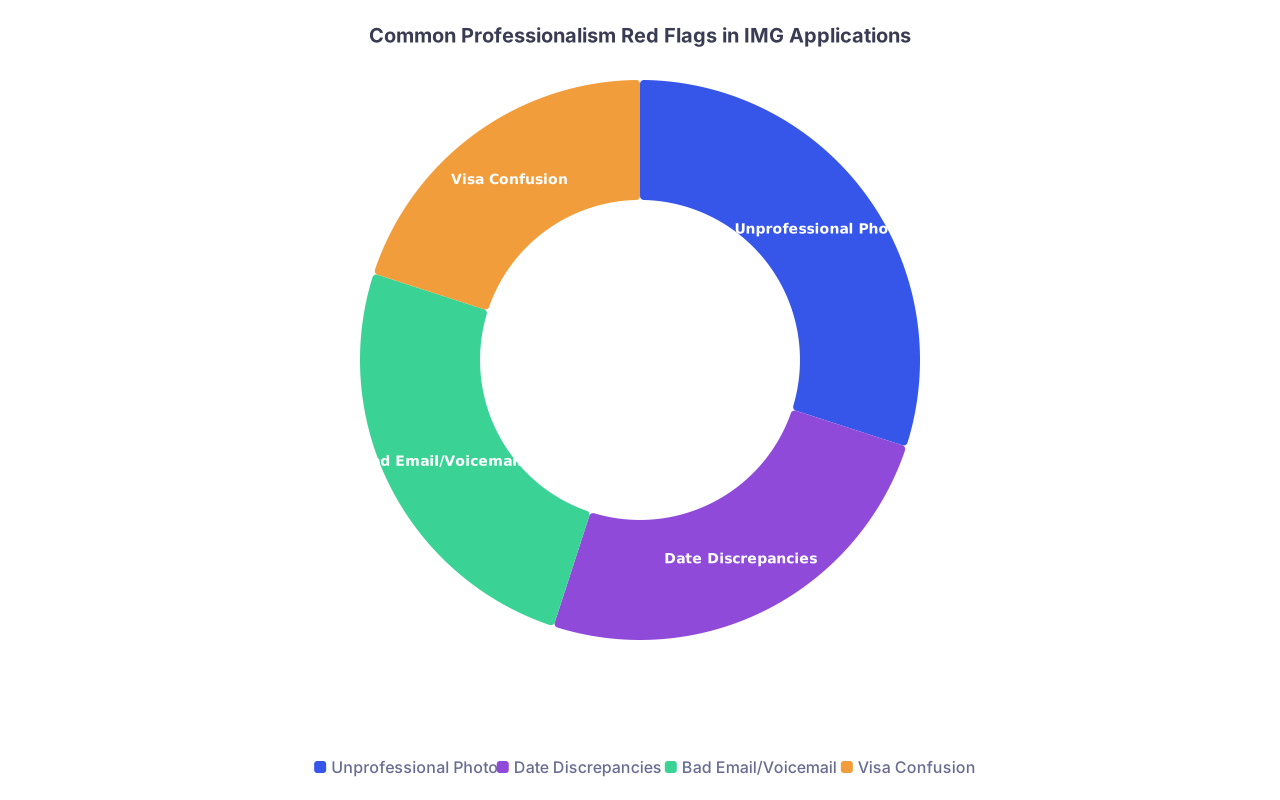
7. The Professionalism Trap: Tiny Things That Scream “Risky”
Some of the most damaging red flags are small. But they hit hard.
I’ve seen programs discard applications over:
Sloppy ERAS photos
- Casual selfies
- Unprofessional background (bed, closet, kitchen)
- Distracting clothing or accessories
This sounds superficial, but your photo is your first impression. You’re applying to be a physician in a conservative, hierarchical system. Look the part.
Inconsistent information across documents
- Different graduation dates between CV and ERAS
- Work experience dates that don’t line up
- Discrepancies between what’s in your PS and what’s in your Experiences section
These are integrity red flags. Sometimes it’s honest mistake, but programs don’t have time to investigate. They just move on.
Poor email/phone etiquette
- Unprofessional email addresses (e.g., “doctordreamer1994@…”)
- Missing voicemail greeting or full mailbox
- Casual text-style emails
Visa confusion
If you aren’t clear on your own visa needs and answer questions vaguely or incorrectly, programs feel like they’re stepping into a bureaucratic mess.
| Category | Value |
|---|---|
| Unprofessional Photo | 30 |
| Date Discrepancies | 25 |
| Bad Email/Voicemail | 25 |
| Visa Confusion | 20 |
The fix:
- ERAS photo: neutral background, professional attire, good lighting, no distractions. Think passport + LinkedIn hybrid.
- Triple‑check every date across CV, ERAS, PS, and letters.
- Use a clean email: first.last or similar. Set a simple, clear voicemail greeting.
- Know your visa situation cold. If you need J‑1 or H‑1B, be ready to say so clearly.
8. Research and “CV Padding” That Backfires
Many IMGs think more lines on the CV automatically help. Wrong. Padding your application can actually make you look worse.
Red flags:
- Questionable research entries
- “In progress” publications that never seem to appear anywhere
- Ten “submitted” abstracts to conferences you can’t name
- Inflated author positions or “co-first author” on multiple projects with no clear role
Programs have seen fake or exaggerated research too many times. They are skeptical by default.
- Overcrowded CV with meaningless roles
Listing:- Every single one-day workshop as “experience”
- Random memberships as if they were major achievements
- Ten different “coordinator” roles with vague descriptions
This creates a “noise” problem. PDs get annoyed and assume you’re trying to distract from gaps.
- Projects you cannot discuss comfortably in interviews
Dead giveaway that your CV is inflated. If you crumble when asked for:- Your exact contribution
- The main findings
- What you learned
You don’t just fail that question. You damage your credibility for the entire application.
The fix:
- List fewer, stronger, more honest entries. Quality over quantity.
- For each research item, be ready to explain:
- What the study was about
- Your exact role
- One thing you learned or changed because of it
If you cannot talk confidently about it, think hard before listing it.
9. Interview Red Flags That Confirm Their Doubts
Many IMGs assume the hardest part is getting the interview. That’s naive. Interviews are where subtle red flags either get confirmed or erased.
Things that quietly kill you on interview day:
Poor understanding of the program
If you can’t answer basic questions like:- “What interests you about our program?”
- “How do you see yourself fitting in here?”
PDs conclude: you mass-applied and don’t value them.
Overly visa-focused conversations
You absolutely can and should care about your visa. But if:- Your first or main questions are all about visas, moonlighting, or future sponsorship
- You barely ask about education, patient population, curriculum
They suspect you’re there for immigration first, training second.
Answering like a script, not a human
Over-rehearsed, robotic answers signal:- Poor communication skills
- Inability to adapt in real-time
- Possibly someone else wrote your PS and helped too much with your application
Inconsistent story with ERAS
If your interview answers contradict:- Your personal statement story
- Your explained gaps
- Your stated interests
You create doubt. Once PDs feel your story isn’t coherent, they pull back.

| Step | Description |
|---|---|
| Step 1 | Interview Starts |
| Step 2 | Low Interest Flag |
| Step 3 | Visa Priority Flag |
| Step 4 | Integrity/Clarity Flag |
| Step 5 | Stronger Impression |
| Step 6 | Understands Program? |
| Step 7 | Balanced Questions? |
| Step 8 | Consistent Story? |
The fix:
- Know at least 3 specific things about each program and how they match your own experiences or goals.
- Have a clear, honest story that aligns with your ERAS. Not a perfect script, just consistent.
- Ask some questions about training, learning, and patient care—not only logistics.
Final Takeaways: What Actually Protects a Strong IMG Application
If you’ve read this far, you’re already ahead of most applicants. Let me boil it down.
Strong numbers do not erase quiet red flags. A 250+ Step score can’t compensate for generic statements, weak letters, unexplained gaps, or sloppy professionalism. Programs are terrified of problem residents; anything that signals “risk” will kill you, silently.
Consistency beats perfection. You don’t need a flawless record. You do need a coherent story: your exams, experiences, letters, and interview answers should all sound like they belong to the same focused, reliable person.
Most IMGs lose interviews not because they’re weak—but because they underestimate the details. The ERAS photo, the LOR content, the way you explain a gap, how you describe an observership—these things either reassure programs or spook them.
Fix the quiet red flags, and your “strong on paper” application finally has a real chance to look strong where it matters: in the eyes of the people actually ranking you.