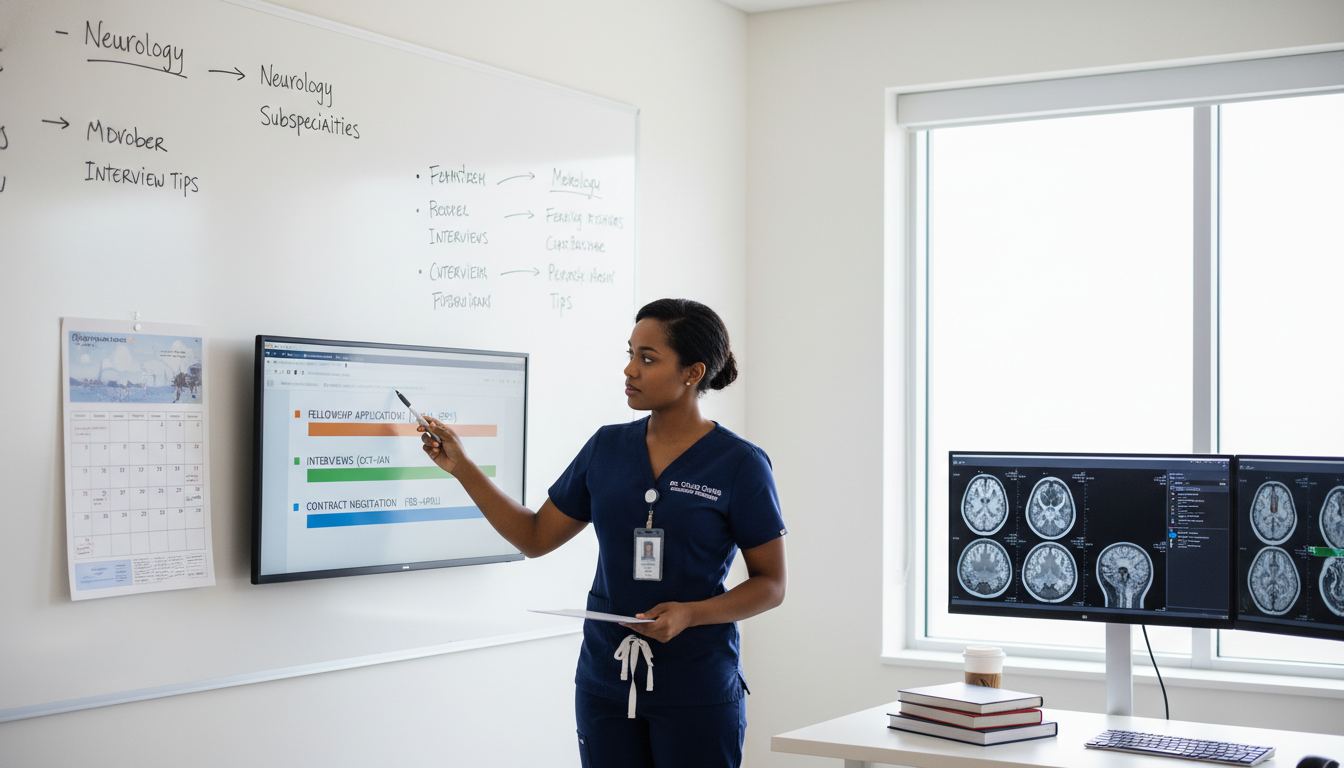
Starting neurology residency as a Caribbean IMG brings both opportunity and uncertainty—especially around when to start your job search. Timing is one of the most important strategic decisions you’ll make in the transition from trainee to attending. Move too late, and you may end up settling for a position that doesn’t fit your goals. Move too early, and you may feel rushed into a decision before you understand what you really want.
This guide is tailored specifically for Caribbean international medical graduates in neurology—especially those coming from schools like SGU, AUC, or Ross—who are thinking ahead to the physician job market. We’ll walk through how timing works, how being a Caribbean IMG affects your search, and how to structure your efforts from PGY‑1 to fellowship and beyond.
Understanding the Neurology Job Market for Caribbean IMGs
The first step in planning your timeline is understanding the physician job market in neurology, and where Caribbean IMGs typically fit into it.
The current physician job market in neurology
Neurology remains a high-demand specialty in the U.S.:
- Aging population and rising rates of stroke, dementia, and neurodegenerative disease
- Increasing need for subspecialty neurologists (stroke, epilepsy, neurocritical care, neuromuscular, movement disorders, MS, headache, neuro-oncology)
- Growth in teleneurology and hospital-employed neurology groups
Many regions—especially smaller cities, rural communities, and non-coastal states—have persistent neurology shortages. This is good news for Caribbean IMGs: there is real demand for neurologists willing to work in a range of practice environments.
How being a Caribbean IMG shapes your job search
Your path as a Caribbean IMG neurology resident often looks different from that of a U.S. graduate:
- Residency pedigree matters more: A strong neurology residency program and solid performance (evaluations, letters, research) can offset initial bias about Caribbean medical school training.
- Network starts later: Many U.S. grads have preexisting connections from undergraduate and U.S. med school; Caribbean IMGs often need to build networks more intentionally during residency and fellowship.
- Visa status can be a major factor: If you are on J‑1 or H‑1B, employers must be willing and able to sponsor you—this narrows the immediate pool of options and makes timing critical.
- Geographic flexibility is often higher: Caribbean IMGs are often more open to a wider range of locations, which can be a major advantage in the neurology job market.
Caribbean medical school residency and future job prospects
If you trained at a Caribbean medical school like SGU, AUC, or Ross, your SGU residency match (or similar) still influences job opportunities:
- Employers often look primarily at your U.S. residency and fellowship rather than your Caribbean MD alone.
- A strong neurology residency (solid board pass rates, good subspecialty exposure, reputable faculty) and potential fellowship training will usually matter more than your medical school.
- Still, you may encounter subtle bias, so obtaining strong letters and demonstrating clinical excellence is essential.
What this means for timing: you need to give yourself enough lead time to showcase your training, clarify your visa status, and leverage the strong parts of your CV.
The Ideal Timeline: Year‑by‑Year Job Search Strategy
The most common question is: When to start job search as a neurology resident? The answer depends on your path (going straight into practice vs. doing a fellowship) and your visa status, but you should think of it as a staged process rather than a single “start date.”
PGY‑1: Foundation and future options
In PGY‑1, your job search is indirect—your primary focus is securing a future neuro match for residency if you’re in a preliminary year or setting up for a future fellowship if you’re already in neurology.
Key priorities:
- Excel clinically: Strong evaluations and relationships with faculty matter later when they write your recommendation letters.
- Clarify your long-term goals:
- Academic vs. community practice
- Fellowship vs. general neurology
- Preferred geographic regions (coastal vs. Midwest/South, urban vs. suburban vs. rural)
- Start light networking:
- Attend neurology grand rounds and departmental events
- Introduce yourself to subspecialty attendings whose fields you might pursue (stroke, epilepsy, neurocritical care, etc.)
At this stage, you’re not doing an attending job search yet, but you’re laying the groundwork.
PGY‑2: Laying the groundwork for both fellowship and future jobs
PGY‑2 is when career direction starts to matter more concretely.
Focus on:
- Exposure to subspecialties: Identify what you enjoy—outpatient vs. inpatient, acute vs. chronic care, procedures (EMG, EEG, Botox, LPs), etc.
- Research and CV building:
- Join projects that align with potential subspecialty interests.
- Present posters at AAN or subspecialty meetings; this increases long-term visibility.
- Clarify fellowship vs. direct-to-practice:
- Some general neurology jobs accept residents directly after PGY‑4.
- Highly specialized or competitive roles often expect fellowship training.
Job search timing insight: If you plan to skip fellowship and go straight to practice, you’ll need to start your attending job search much earlier in PGY‑3 or early PGY‑4.
PGY‑3: Strategic decisions and early positioning
PGY‑3 is the decision year:
If you are planning a fellowship:
- You are now in the fellowship match window (which will influence when the attending search starts).
- Priorities:
- Complete and submit fellowship applications on time.
- Use interviews to expand your network and learn about long-term practice opportunities.
- Ask program directors and faculty where recent graduates have gone into practice—this can guide your future job search.
If you are planning to practice right after residency:
- This is when you should begin your attending job search planning:
- Identify preferred states and cities.
- Review licensing requirements and start any long-lead items (e.g., state licensure applications can take months).
- Update your CV and begin to track experiences, procedures, and case volumes.
- This is when you should begin your attending job search planning:
For Caribbean IMGs, PGY‑3 is also the right time to have clear conversations about visa strategy with your GME office and potential mentors. Your future job search timing will depend heavily on whether you will need J‑1 waiver jobs, H‑1B sponsorship, or a green card pathway.
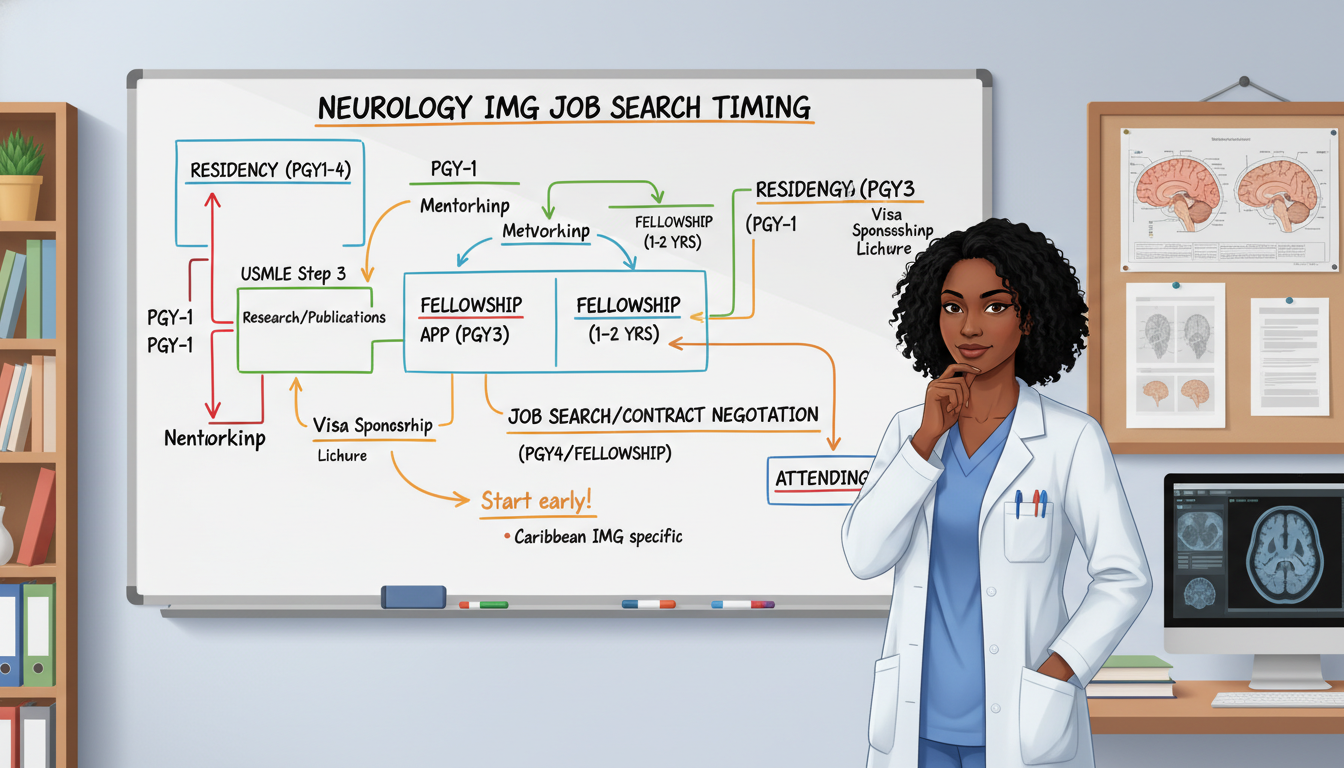
PGY‑4 and Beyond: When to Start the Attending Job Search
The most critical phase for job search timing comes in your final year of residency (PGY‑4 for neurology) or during fellowship. The key is to not underestimate how long the process takes.
General rule of thumb: 9–18 months before your start date
For a neurology attending job in the U.S., a realistic timeline from first contact to first day of work can be:
- 1–3 months: Initial exploration, calls, and interviews
- 1–2 months: Contract negotiation
- 3–9 months: Licensing, credentialing, hospital privileges, and immigration paperwork (if applicable)
Because of this, most neurology residents should begin actively exploring jobs about 12–18 months before their desired start date. For Caribbean IMGs, especially those needing visas, 15–18 months is safer.
If you are finishing residency without a fellowship
Timeline for a typical neurology resident going straight to practice:
Summer to Early Fall of PGY‑4 (July–October):
- Begin your formal job search:
- Update CV and personal statement/short bio.
- Reach out to your program’s alumni, especially other Caribbean IMGs, to ask about their jobs and introduce yourself.
- Register with 1–2 reputable neurology-focused recruiters (but do not rely only on them).
- Start browsing job boards, AAN Career Center, and large health system websites.
- Attend major conferences (e.g., AAN) with job search in mind—schedule informal meetings with potential employers.
- Begin your formal job search:
Mid PGY‑4 (November–February):
- Actively apply to positions that match your goals.
- Schedule interviews (virtual and in-person).
- Keep track of locations that are J‑1 waiver friendly or willing to offer H‑1B, if needed.
Late PGY‑4 (March–June):
- Compare offers, negotiate salary and terms, and finalize your contract.
- Begin licensing and credentialing processes immediately after signing.
If you are completing a fellowship before practice
The question of when to start job search becomes: during fellowship year or late residency?
General guidance:
If your fellowship is 1 year (e.g., vascular neurology, epilepsy, neurocritical care):
- Attendings typically start looking during their PGY‑4 year for fellowship positions, then
- Start the attending job search 9–15 months before the end of fellowship (often early to mid fellowship year).
If your fellowship is 2 years or longer:
- Use year 1 to network and clarify career interests.
- Start your serious attending job search around the start of your final fellowship year.
For Caribbean IMGs requiring visa support, start earlier within these ranges (e.g., 12–18 months before fellowship completion).
Special Timing Considerations for Caribbean IMGs
Being a Caribbean IMG in neurology doesn’t just affect whether you match or how you are perceived; it directly changes how early and how strategically you must approach your job search timing.
Visa status and job search timing
Your visa needs may have the greatest impact on when you start:
J‑1 visa holders
- Most J‑1 neurology residents and fellows must obtain a J‑1 waiver job after training, commonly in underserved areas.
- Waiver positions can involve:
- State Conrad 30 programs (each state can sponsor up to 30 J‑1 waiver physicians annually)
- Federal programs (e.g., VA, HHS)
- Timing implications:
- Many states have early application windows for their Conrad programs.
- You must secure a willing employer in a qualifying area before you can apply for the waiver slot.
- This often means J‑1 Caribbean IMGs should start actively searching 18–24 months before their planned start date, particularly if they have geographic preferences.
H‑1B visa holders
- You will need an employer willing to sponsor H‑1B or transfer your H‑1B.
- Some large institutions and academic centers are comfortable with this; some smaller groups are not.
- Legal and processing timelines can be long, so starting 12–18 months before anticipated start date is wise.
Permanent residents and U.S. citizens
- You have the most flexibility.
- You can often start 9–12 months before your anticipated start date and still have a good range of options, though starting earlier (12–15 months) is still beneficial.
Leveraging your Caribbean background strategically
Your identity as a Caribbean IMG can actually strengthen your position if you present it correctly:
- Emphasize resilience, adaptability, and breadth of experience working in different healthcare systems.
- Highlight your Caribbean medical school residency match story (e.g., SGU residency match leading to a strong neurology program) to demonstrate perseverance and upward trajectory.
- Use your international background as a selling point in diverse communities or patient populations.
Proper timing gives you space to tell this story through your CV, cover letters, and interviews, instead of feeling rushed into any available job that will handle your visa.

Practical Steps and Milestones: A Structured Timeline
Below is a practical, milestone-based framework you can adapt depending on whether you’re going straight into practice or doing a fellowship.
18–24 months before desired start date
Best for: Caribbean IMGs with J‑1 visas, those targeting competitive academic positions, or those with strict geographic preferences.
Actions:
- Clarify long-term goals (academic vs. community, inpatient vs. outpatient-heavy, subspecialty focus).
- Meet with your program director or mentor for career planning.
- Ask about alumni who can share their experiences in the neurology job market.
- Research states and regions that:
- Match your lifestyle and family needs
- Are more open to IMGs and visa sponsorship
- Have known neurology shortages
15–18 months before start date
This is when most Caribbean IMG neurologists should start serious exploration:
- Update your CV and create a standardized email introduction template.
- Make a list of:
- Health systems, academic centers, and private groups in your target areas
- J‑1 waiver-eligible employers (if applicable)
- Begin:
- Quietly contacting potential employers (emailing department chairs, group partners, or HR).
- Connecting on LinkedIn and via alumni networks.
- Exploring AAN Career Center and other neurology job boards.
12–15 months before start date
Transition from exploration to active search:
- Begin formal applications to selected positions.
- Start phone and video interviews.
- Visit practices in person when feasible:
- Tour the hospital, stroke unit, and EEG/EMG labs.
- Ask to meet potential partners and support staff.
- Early offer may appear—do not rush. Use this period to compare.
9–12 months before start date
You should be well into the decision phase:
- Narrow positions to a short list.
- Request written offers.
- Begin contract review:
- Consider having a physician contract attorney review major offers.
- Evaluate:
- Salary, bonus structure, and productivity expectations
- Call schedule and teleneurology responsibilities
- Non-compete clauses and geographic restrictions
- Visa sponsorship details and green card options, if relevant
6–9 months before start date
Most residents/fellows should have:
- Signed a contract or be in final negotiations.
- Submitted state licensure applications.
- Started hospital credentialing and oncology board or neurology board exam planning.
3–6 months before start date
- Finalize logistics of the move (if relocating).
- Communicate your start date to all stakeholders.
- Prepare clinically:
- Review common neurology order sets, stroke pathways, EEG/EMG protocols, etc.
- Clarify mentoring support at your new job.
Common Mistakes in Job Search Timing (and How to Avoid Them)
Caribbean IMGs in neurology frequently run into a set of predictable timing errors. Being aware of them helps you avoid unnecessary stress.
Mistake 1: Starting the job search too late
Consequence:
- Forced to accept suboptimal offers (undesirable locations, heavy call, poor support).
- Limited visa-sponsoring options remaining for J‑1/H‑1B holders.
Solution:
- As a Caribbean IMG, especially with visa needs, treat 12–18 months before start date as your active search window, not 6 months.
Mistake 2: Focusing only on advertised positions
Many of the best neurology jobs—especially in academic departments or stable private groups—are never widely posted.
Solution:
- Use relationship-based approaches:
- Ask attendings and former residents where they work and whether their group might be hiring.
- Email department chairs or section heads directly with a concise, professional introduction and CV.
- Network at AAN or subspecialty meetings.
Mistake 3: Ignoring alignment with long-term goals
In a tight job market, it’s tempting to take the first offer that works for your visa, but this can delay your long-term growth.
Solution:
- Even when flexibility is limited, ask:
- Will I be able to practice my subspecialty (e.g., stroke, epilepsy)?
- Is there mentorship or a path to leadership, research, or teaching?
- Does the patient population and practice style fit my personality?
Mistake 4: Underestimating licensing and credentialing time
State medical boards, hospital credentialing committees, and payor enrollment all take longer than you think.
Solution:
- As soon as you sign an offer, ask the employer’s credentialing team for a detailed timeline.
- Start paperwork immediately—don’t wait for exams or other milestones to finish.
FAQs: Job Search Timing for Caribbean IMG Neurologists
1. When should I start my attending job search as a neurology resident?
Most neurology residents should start serious job search activities 12–18 months before their desired start date. As a Caribbean IMG—especially if you need J‑1 waiver or H‑1B sponsorship—lean toward the earlier side of that range, and consider even 18–24 months if you have strict geographic preferences.
If you’re going straight into practice after residency, that typically means starting in early PGY‑4. If you’re doing a 1‑year fellowship, it usually means starting in the first half of your fellowship year.
2. Does coming from a Caribbean medical school (like SGU) hurt my chances in the neurology job market?
Employers primarily focus on:
- Your neurology residency and (if applicable) fellowship program
- Your clinical skills, professionalism, and references
- Your subspecialty training and procedural competence
- Your visa status and ability to start on time
Your SGU residency match or similar Caribbean medical school background matters far less than your recent performance in U.S. training. However, there may be some residual bias, so timing your job search to allow multiple options—and securing strong letters from respected neurologists—will help you overcome it.
3. How does pursuing a fellowship affect my job search timeline?
Fellowship shifts your attending job search later, but the same principles apply:
- Apply for fellowship during late PGY‑3 or early PGY‑4.
- Once in fellowship:
- For 1‑year fellowships: start attending job search 9–15 months before you finish (i.e., early to mid-fellowship year).
- For 2‑year fellowships: begin in the second year of fellowship, again starting around 12–18 months before your desired attending start date.
Because fellowships often expand your network and sharpen your subspecialty interests, they can make your job search more targeted—but you still must plan the timing deliberately.
4. Should I work with recruiters or only search on my own?
Recruiters can be helpful for:
- Identifying high-demand regions and hospital-employed positions
- Navigating large health systems
- Accelerating interviews once interest is established
However:
- Many recruiters have limited access to academic positions or smaller private neurology groups.
- They may not always understand complex visa issues, especially for J‑1 waiver positions.
Best approach:
- Use recruiters as one tool in your strategy, not your only source.
- Combine:
- Recruiters
- Direct outreach to departments and groups
- Alumni networks and conference networking
- AAN Career Center and specialty job boards
Planning your job search timing as a Caribbean IMG in neurology is ultimately about buying yourself options—time to compare offers, find visa-friendly employers, and choose a practice that aligns with your long-term goals. If you treat the job search as a staged, multiyear process rather than a last-minute scramble, you’ll be far better positioned when it’s time to make the leap from resident or fellow to attending neurologist.