
Most residents have no idea how naked they look to hiring committees. Academic or community, people are reading you in the first five minutes and the decision is usually 80% made before you walk out.
Let me walk you through what actually happens in those rooms, what’s said when you leave, and why some perfectly good candidates keep striking out while others with the same CV get multiple offers.
How the Money Really Drives the Decision
Let’s stop pretending this is just about “fit” and “mission.” On both sides, hiring is mostly about money and risk. The difference is whose money and what risk.
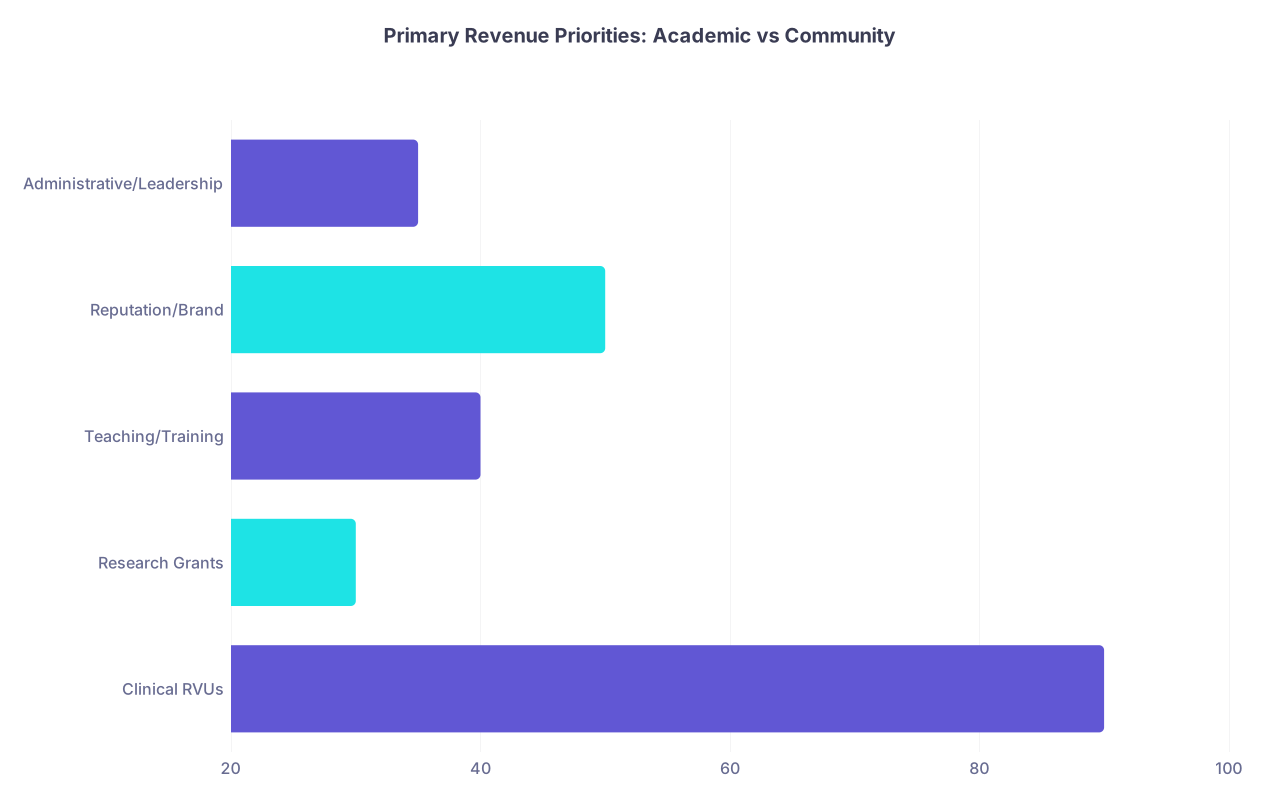
| Category | Value |
|---|---|
| Clinical RVUs | 90 |
| Research Grants | 30 |
| Teaching/Training | 40 |
| Reputation/Brand | 50 |
| Administrative/Leadership | 35 |
That chart is intentionally skewed. In academics, clinical RVUs matter, but they aren’t the only currency. In the community, they pretty much are.
Academic mindset
Behind closed doors at a department recruitment meeting, here’s the real conversation about you:
- “Can this person bring in grants or help someone who does?”
- “Will they cover the ugly call and still smile in front of residents?”
- “Are they going to leave in 2 years when they realize how little we pay?”
- “Can I put this person in front of the Dean or referring docs without embarrassment?”
Your FTE isn’t just “a doc to see patients.” On paper, chairs are balancing:
- RVU projections
- Grant potential
- Teaching coverage (didactics, clerkships, fellowship call)
- Institutional politics (“We promised oncology we’d hire them someone this year.”)
I’ve watched a truly stellar clinician get passed over because the chair already owed a favor to the research group. You won’t see that in any job posting, but it happens constantly.
Community mindset
Now walk into a community group hiring meeting. Different conversation:
- “Will this person generate enough RVUs to cover their salary and buy time off for the rest of us?”
- “Are they normal, or are we recruiting drama?”
- “Are they going to dump on partners or take care of their own patients?”
- “Are they going to bolt when they realize the nearest Whole Foods is 90 miles away?”
Their math is brutally simple: salary + benefits + malpractice vs projected RVUs + call coverage relief + growth potential.
If you sound like someone who’s still trying to build an academic CV, the partners are thinking, “This person is leaving in 18 months. Hard pass.”
What They’re Actually Looking For (Not What They Tell You)
Job descriptions are marketing documents. They’re written to avoid HR problems and to appeal to everyone and no one.
Here’s what the two worlds actually screen for, especially in the first pass.
| Factor | Academic Hiring Priority | Community Hiring Priority |
|---|---|---|
| RVU productivity | Medium-High | Very High |
| Research potential | High (for most divisions) | Low |
| Teaching enthusiasm | High | Low-Medium |
| Call coverage reliability | High | Very High |
| Long-term retention | High | Extremely High |
| Prestige of training | Very High | Medium |
Academic selection: What moves the needle
In academic hiring meetings, certain things carry outsized weight:
Where you trained and with whom.
I’ve watched a mediocre interview get rescued with a single line: “They trained with Dr. X at [prestige program].” Everyone at the table suddenly recalibrates. Connections buy you forgiveness.Evidence you understand the academic game.
If you say “I love teaching,” they hear nothing. Everyone says that.
If you say, “I’d like to help revamp the M3 clerkship evaluation process; I did similar work at my residency,” ears perk up. That sounds like free labor for a pain point.Research that is actually fundable.
A long list of poster presentations at regional meetings? They shrug.
One or two solid projects with a clear path to K/R funding or multi-site collaboration? Now you’re interesting.Whether you’re independent or high-maintenance.
They’re terrified of hires who need to be micromanaged. Phrases that kill you: “I’ll need strong mentorship to…” without any evidence you can move on your own.
Community selection: What makes them want (or reject) you
Community partners know they’re gambling six figures on you. They watch for three big things.
Do you sound like someone who will work?
Not “burn out,” but work. Translate that:
“I’m comfortable with a busy schedule and I like staying until things are wrapped up properly.”
vs
“I prioritize work-life balance and strict boundaries.”
One of those answers sounds like a person they can’t trust with Friday afternoons.Are you going to be loyal or a flight risk?
If you keep saying “I really want to be near a major academic center” while interviewing at a 200-bed hospital in the middle of nowhere, they hear “I’m gone as soon as I get an offer closer to the city.”Do you play well with staff?
Community docs live and die by relationship capital with nurses, office staff, and local PCPs. Stories where you sound condescending toward nurses or front-desk staff will kill your application faster than a minor malpractice issue.
How Decisions Actually Get Made: Inside the Rooms
Here’s the part nobody tells you: by the time you get a formal offer, three or four miniature political battles have already been fought over your head.

| Step | Description |
|---|---|
| Step 1 | Initial CV Review |
| Step 2 | Silent rejection |
| Step 3 | Screening interview |
| Step 4 | Internal debrief |
| Step 5 | Site visit |
| Step 6 | Post-visit meeting |
| Step 7 | Offer delayed or withdrawn |
| Step 8 | Formal offer |
| Step 9 | Meets basic needs |
| Step 10 | Support from key influencers |
| Step 11 | Financial sign off |
Academic: The invisible veto players
In academics, there are at least four people who can quietly kill your offer:
- The division chief (money and clinical politics)
- The department chair (strategy and Dean appeasement)
- The senior rainmaker (grant or RVU engine)
- The fellowship director or training director (teaching coverage)
What they argue about when you’re not there:
- “If we give them this protected time, we’ll have to give it to Dr. Y too.”
- “If we hire them with that title, so-and-so will be furious.”
- “If they come in at that salary, our existing people will see it and revolt.”
I’ve seen strong candidates get stalled for 9–12 months because of internal equity issues. The chair wanted them. The numbers didn’t work without triggering a mutiny.
When you sense bizarre delays or vague “we’re still working on approvals,” it’s usually not about you anymore. It’s about internal politics and spreadsheets.
Community: The partners’ gut feeling rules
Community hiring is more personal and more ruthless.
There’s usually a small group text among the partners or a hallway consult with whoever has been there the longest. It often sounds like this:
- “Smart, but feels academic. I give them two years.”
- “Nice person, but I don’t see them handling our volume.”
- “Honestly, I’d take extra call for a year if it means we don’t hire the wrong person.”
Their “gut feeling” is mostly pattern recognition from hires that burned them in the past. If their last new doc left after 14 months, you’re going to be grilled about long-term plans whether you realize it or not.
CV and Interview: What Signals You’re “Academic” vs “Community”
You telegraph more than you think. Your CV and your mouth tell them where you belong long before you formally decide.
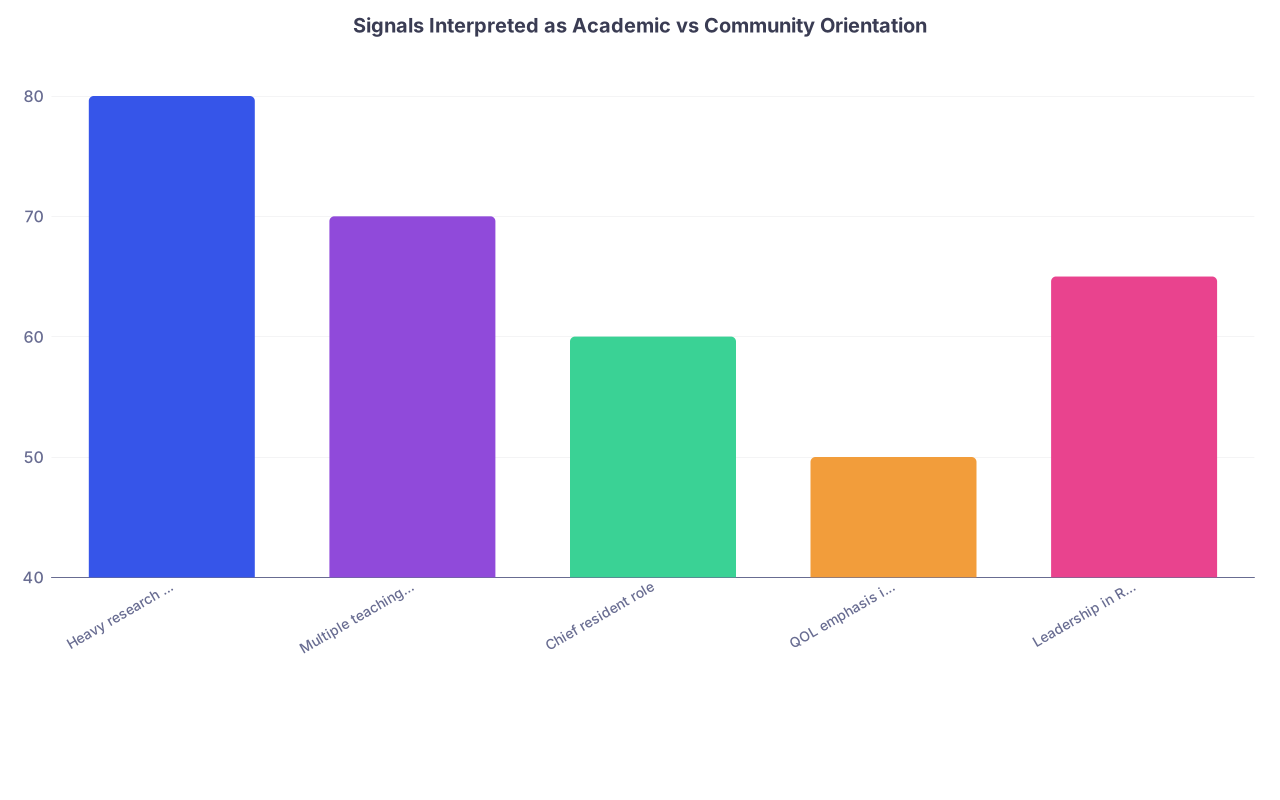
| Category | Value |
|---|---|
| Heavy research section | 80 |
| Multiple teaching awards | 70 |
| Chief resident role | 60 |
| QOL emphasis in interview | 50 |
| Leadership in RVU-heavy clinic | 65 |
On paper: what they see when they scan your CV
Academic readers skim in this order:
- Training pedigree and fellowships
- Publications and grants
- Teaching/leadership roles
- Any mention of quality improvement, curricula, committees
Community readers skim differently:
- Where you trained (mostly as a competence proxy)
- Chief resident? Good. “Probably can run a service.”
- Any red flags: gaps, multiple job changes, unexplained location switches
- Anything that screams “I’m too academic,” like a CV flooded with research and no obvious clinic volume
If your CV is 10 pages long, half of it posters and case reports, and you’re applying to a high-volume community practice, they’re already suspicious. You look like someone passing time until the K award hits.
In the room: language that helps or hurts you
There are phrases that ignite quiet enthusiasm, and phrases that shut doors.
For academic jobs, you win points with:
- “I’d like to build a niche in X that complements Dr. Y’s work rather than compete with it.”
- “I enjoy teaching on the wards and have experience developing small-group curricula.”
- “I’m interested in getting formal training in medical education/health services research.”
You lose points with:
- “I don’t see myself doing much research.” (They hear: no promotion path.)
- “I really plan to focus on work-life balance.” (You can want that; just don’t lead with it in a system that runs on mission-driven overwork.)
- “I’m not sure what I want my focus to be yet.” (They don’t have time to build your career for you.)
For community jobs, you win points with:
- “I like a busy practice and continuity; I enjoy seeing my own panel grow.”
- “I’m comfortable pitching in for partners when things get hectic.”
- “My ideal week would be primarily clinical with room to develop one or two focused interests.”
You lose points with:
- “I’m hoping for as much administrative/academic time as possible.” (They hear: “I don’t like seeing patients.”)
- “I’d like to keep my options open to return to academics soon.” (Translation: flight risk.)
- “I’m not comfortable with more than X patients a day.” when X is lower than their median.
Offers, Contracts, and Why Negotiations Feel So Different
After the dog-and-pony show comes the money discussion. Here’s why the two worlds feel like completely different planets.

Academic offers: low cash, high promises
Academic offers tend to come with:
- Lower base salaries
- Vague “protected time” often at the mercy of clinical demands
- Promotion tracks that look clear on paper and messy in real life
- Start-up packages for certain fields (research funds, lab space) that are finite and political
What they rarely tell you plainly:
- Your “protected” 40% research time will evaporate when someone leaves and service needs rise.
- The promotion criteria are elastic for superstars and rigid for everyone else.
- Salary compression is real. A new hire might earn close to what your mentors make, and that will quietly anger people.
You have more leverage than you think before you sign, especially if they’ve already paraded you in front of the Dean or fellowship. The secret: ask for resources, not just salary.
Chairs can often find:
- A small bump in protected time
- Startup research or education funds
- Support staff (coordinator, RA) that dramatically change your day-to-day life
They have a harder time justifying large salary jumps because of internal equity.
Community offers: more money, harder numbers
Community offers usually start higher and feel more concrete:
- Clear base + bonus structure tied to RVUs or collections
- Well-defined call responsibilities
- Often partnership track after X years, with buy-in
The trap is in the details:
- “Partnership” can mean anything from real ownership to just a nicer title
- RVU thresholds can be set based on the outlier high-producers, not the median
- Noncompetes can box you out of entire metro areas if you decide to leave
You have leverage here too, especially in high-need specialties or less desirable locations. Smart things to negotiate:
- Clear, written timeline and conditions for partnership
- Transparency around current partners’ average RVUs and take-home pay
- Malpractice tail coverage and who pays if things end early
- Reasonable noncompete radius and duration
I’ve seen more careers damaged by bad community contracts than by bad academic ones, simply because the financial stakes are higher and the escape routes fewer.
How to Choose: Matching Who You Really Are to Where You Go
Here’s the blunt truth: a lot of career misery comes from people picking the wrong ecosystem for who they actually are.

You’re built for academics if:
- You get genuine satisfaction from teaching, mentoring, or building curricula
- You’re willing to take home less money in exchange for titles, projects, and reputation
- You can tolerate institutional bureaucracy and slower decision-making
- You like having trainees around and don’t mind inefficiency in exchange for that energy
You’re built for community if:
- You want to see your work show up in your bank account quickly
- You value autonomy and the ability to change things without six committees
- You’re more excited by building a practice than building a CV
- You get irritated by meetings that produce slide decks instead of outcomes
The worst scenario is forcing yourself into academics because you think it’s “prestigious” while secretly caring most about income and control. Or jumping into a community job because of the paycheck when what you love is teaching and projects.
I’ve watched faculty who were miserable in academics move to a well-structured community group and suddenly become completely different people—lighter, happier, better physicians. And vice versa: burnt-out community docs who moved into education-heavy academic roles and felt like they finally found their people.
FAQ: Brutally Honest Answers
1. Will academics always pay less than community?
Almost always, yes. There are rare exceptions for procedural specialties or hybrid roles with heavy clinical loads, but as a rule, if you choose academics, you’re trading cash for non-monetary currency: prestige, influence, protected time (when it actually exists), and diversity of work.
2. Does heavy research on my CV hurt me for community jobs?
It can. Not because they dislike research, but because it screams “temporary.” You have to explicitly reassure them: “I’ve done research, but at this stage I’m looking for a long-term clinical home and don’t plan to pursue major grants.” If you don’t say this, they’ll assume you’re just killing time.
3. Are academic promotions as important as people make them sound?
Internally, yes. Your rank affects pay bands, committee eligibility, and how seriously leadership takes you. Externally, for most of clinical medicine, nobody cares if you’re assistant vs associate professor. Do not let title-chasing dictate your entire career if the job itself is making you miserable.
4. How much can I really negotiate my first job offer?
More than residents think, less than some blogs promise. You probably won’t move base salary by 20%, but you can absolutely shape schedule, start date, sign-on, relocation, tail coverage, and in academics, protected time and support resources. The silent rule: you get the most leverage before you sign and before they’ve moved on to the runner-up.
5. What’s the biggest red flag you see in offers from each side?
In academics: “Informal” promises about protected time or future leadership roles that are not in writing anywhere. In community: vague partnership tracks and aggressive noncompetes. If they dodge clear answers on those, assume the reality is worse than you imagine.
Remember three things.
First, both academic and community hiring are driven by money, politics, and risk—understand those, and you’ll understand their behavior. Second, your CV and your language scream “academic” or “community” long before you consciously choose; align them with where you actually want to land. Third, a slightly smaller paycheck in the right ecosystem is infinitely better than “big money” in a job that grinds you down; prestige and compensation mean nothing if you dread walking into the building.