The biggest financial mistakes doctors make in their careers don’t come from bad stock picks. They come from signing bad contracts.
If you are finishing residency or fellowship, you are walking into a minefield of noncompetes, call obligations, and RVU schemes that are absolutely designed to confuse you. Not by accident. By design.
Let me walk you through how those traps work and what to refuse before you put ink on anything.
The Noncompete: The Handcuffs You Don’t Feel Until Too Late
Noncompetes are the landmine most new doctors step on smiling.
You’re tired. You want a job. They say, “It’s standard.” You sign. Three years later you hate the job and realize “standard” means you cannot work within 20–50 miles of your current office for 1–2 years.
I’ve seen people with kids in school, a spouse with a local job, aging parents nearby—forced either to commute 90 minutes each way or move states entirely. Why? Because they signed a noncompete they barely read.
The common noncompete traps
Typical ugly patterns:
- Huge geographic radius (20–50 miles, sometimes “any clinic owned by Employer”)
- Long duration (18–24 months)
- Applies even if they fire you without cause
- Applies to all sites you ever work at for them, even a single clinic where you only covered once
- Vague or shifting “restricted area” tied to future acquisitions
Here’s what that looks like in practice:
| Clause Type | Red Flag Example | Safer Example |
|---|---|---|
| Radius | 35 miles from any employer facility | 5–10 miles from primary clinic only |
| Duration | 24 months | 6–12 months |
| Trigger | Applies regardless of who terminates | Only if you resign within 1–2 years |
| Scope | Any employer-owned location (current/future) | Specific listed addresses only |
| Specialty | Any clinical practice | Your exact specialty/subspecialty only |
If your contract language feels like it could be stretched in court, it probably can. Against you.
The “we never enforce it” lie
Another classic line: “We have this in all our contracts, but we never enforce it.”
Do not believe that. Ever.
If they truly don’t enforce it, they can take it out. Or at least significantly narrow it. The person telling you this now will not be the one deciding whether to sue you in three years.
What actually happens:
- You resign to join another practice across town.
- New employer gets a nasty letter: “Cease and desist or we’ll sue.”
- New employer backs out—because they don’t want the legal fight.
- You’re suddenly unemployed with a mortgage and student loans.
They might never go to court. They don’t need to. A strongly worded letter does the job.
How noncompetes get weaponized after you sign
Here’s the move I’ve watched more than once:
- Hire new grad with big noncompete.
- Promise partnership after 2–3 years.
- Slowly change compensation, call, or expectations.
- When physician complains, they’re reminded of the noncompete radius.
- Physician realizes they have no realistic options nearby, so they shut up.
It becomes leverage. Against you. Because you gave it to them.
Safer noncompete structures (if you must accept one)
Sometimes you cannot eliminate it, especially in private groups. But you can make it survivable. Push for:
- Radius: 5–10 miles from your primary work site, not every corporate location.
- Duration: 6–12 months, not 2 years.
- Trigger: Applies only if you voluntarily leave before a certain time frame (e.g., before partnership), and not if:
- They terminate you without cause
- You are forced out after a material breach by them
- Scope: Limited to your specific specialty (e.g., “adult endocrinology”) not “any clinical medicine.”
If they won’t budge on any of that, that’s not “standard.” That’s a warning.
Call Coverage: The Silent Killer of Your Lifestyle and Sanity
You know what residents underestimate? Call. Badly.
Everyone negotiates salary. Almost no one negotiates call. That’s how groups get you: they quote a clean 1:4 call on a slide deck then quietly slide “as assigned by Employer” into the contract.
Fast‑forward six months: the older partners are “slowing down,” the new hire is now 1:2 call, and it’s all technically “within the contract.”

Mistake: Believing verbal promises about call
If it’s not in writing, it does not exist. I don’t care how nice the group seems.
Common verbal lines I’ve heard:
- “You’ll only take call 1:4 once everyone’s hired.”
- “We rarely get called in.”
- “The older docs shoulder most of the burden.”
- “We’re hiring two more people soon, call will improve.”
What actually happens:
- Hiring freezes.
- A partner leaves unexpectedly.
- Hospital call coverage agreements change.
- New service lines open (e.g., stroke program, cath lab expansion).
And suddenly your “1:4 home call” becomes:
- 1:2 or 1:3
- With frequent call‑backs
- Plus mandatory post‑call clinic
Critical call questions you must force into writing
If it’s not explicit, assume the worst. At minimum, get clarity on:
- Weekday call: Exactly how often? In what form (home, in-house, backup)?
- Weekend call: Frequency and structure (q3 weekends? rounding vs admissions?).
- Post‑call clinic: Protected time? Or are you expected to see a full clinic after a 3 a.m. consult?
- Redistribution: If someone leaves, how is call redistributed and for how long?
- Cap on call: Is there a maximum number of call days per month?
You want specifics like:
- “Physician shall take primary call no more frequently than 1:4 weekdays and 1:4 weekends.”
- “Physician shall have no scheduled clinic the morning following in-house night call.”
- “If call frequency exceeds 1:3 for >90 days, parties shall renegotiate compensation or provide additional stipend.”
Vague language such as “as reasonably assigned” is not your friend. It’s theirs.
Call and money: Don’t miss the RVU interaction
Here’s the hidden problem: call usually doesn’t generate RVUs proportionate to the pain.
You might:
- Spend all night managing admits, codes, ICU issues
- Then slog through a zombie clinic the next day
- While older partners, who do less call, stack their schedules with high-RVU procedures
Result? You’re doing more sweaty, stressful work while producing fewer RVUs to “justify” your salary. It will come back to bite you in productivity models.
Insist on:
- Separate call stipends (flat amount per shift or per weekend)
- Or a minimum guaranteed salary that doesn’t get undercut by heavy call
If the group loves to talk “eat what you kill” but doesn’t value call in dollars, they are eating and you’re killing yourself for free.
RVU Contracts: The Beautiful Scam Wrapped in Productivity Language
RVUs are where hospitals and large groups quietly shift risk from them to you.
The pitch sounds great: “You’re a hard worker. With RVUs you can earn more than a straight salary.” And yes, a tiny fraction of physicians in well‑designed systems do. But you? New grad, no patient panel, no control over scheduling? You are the one subsidizing everyone else if you sign a bad deal.
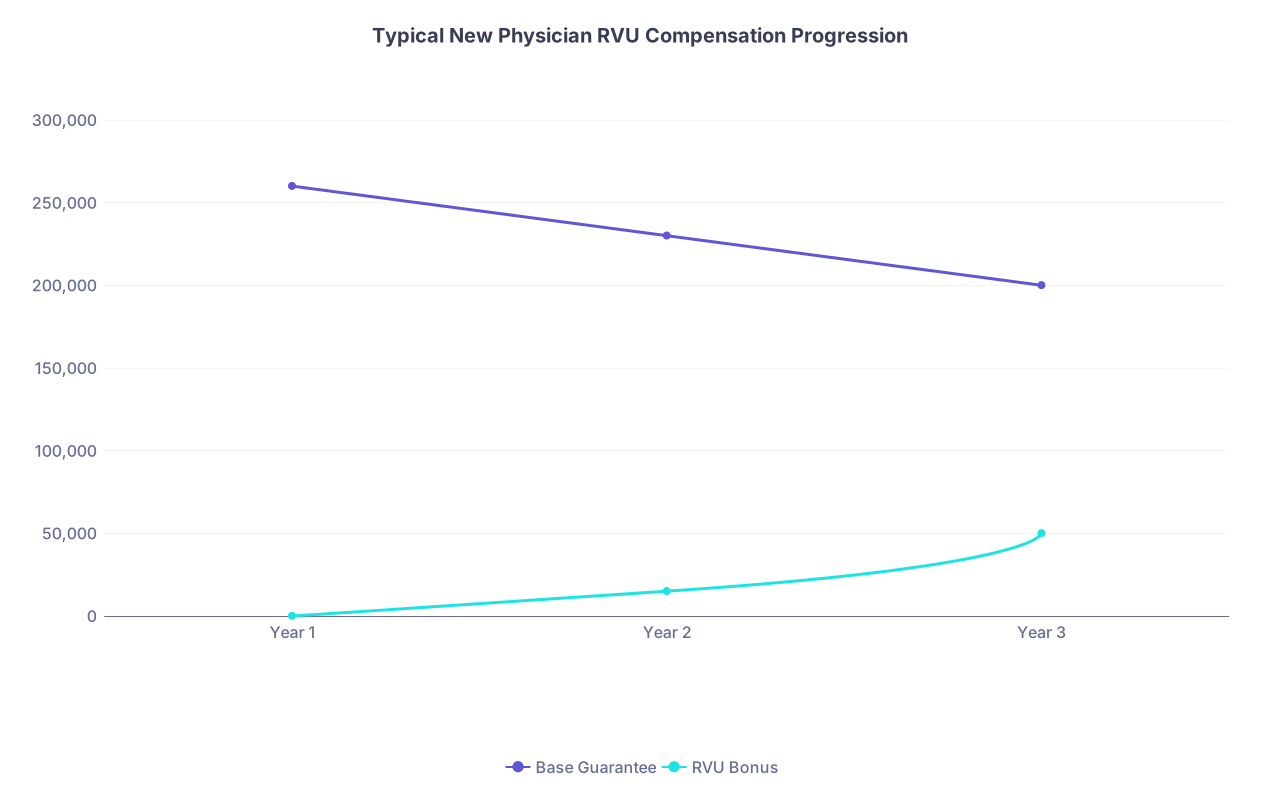
| Category | Base Guarantee | RVU Bonus |
|---|---|---|
| Year 1 | 260000 | 0 |
| Year 2 | 230000 | 15000 |
| Year 3 | 200000 | 50000 |
The classic RVU trap sequence
This is the pattern I’ve watched over and over:
- Year 1–2: Big “guaranteed” salary (often with a hidden clawback).
- They quote a generous RVU rate (e.g., $50–60 per RVU).
- They set your “expected RVUs” high—based on national 75th percentile data.
- You gradually shift to pure or majority RVU at Year 2–3.
- The guarantee drops or disappears. The RVU target remains.
- You discover:
- The clinic template is overbooked with low-RVU follow‑ups.
- Procedures are unevenly distributed (partners take the lucrative ones).
- You do a ton of non‑billable administrative work.
- Suddenly you’re below target. Your income falls. Or you owe clawbacks.
Watch for these specific RVU landmines
Here’s where people get ambushed:
High RVU thresholds
They quote numbers like 6,000–7,000 RVUs/year for outpatient specialties or 10,000–12,000+ for high‑volume procedure fields. As a new attending with no panel, that can be fantasy.
If your target is based on established docs’ production, you’re already behind.No control over schedule or support
You’re “100% RVU” but:- Templates are controlled by administration
- You have 15–20 minute visits for complex patients
- You get minimal MA/scribe support
- No-shows are high, and they don’t double book
You carry the productivity risk. They control the levers.
Clawbacks on guarantee
Read this twice:
“Any deficit between guaranteed salary and RVU‑based compensation shall be carried forward as a negative balance.”
Translation: if they guarantee $260k but your RVUs only “justify” $220k, that $40k becomes a debt you owe back via future productivity. It’s not really a guarantee. It’s a loan.No protection for non‑clinical time
You’re heavily RVU‑based, yet:- You’re told to be on 3–4 committees
- Do QI projects
- Take on program director or leadership roles
Those hours are RVU‑zero time. Unless you’re separately paid for them, they just dilute your hourly rate.
The “partner takes the procedures” maneuver
RVU models make procedures king. So what do senior docs do? They cherry‑pick:
- They keep the high‑RVU procedures and new consults.
- You get follow‑ups, chronic care, and low-reimbursement work.
- In surgery, they get elective cases, you get emergency add‑ons and call.
On paper, you’re “partners.” In reality, you’re feeding their RVUs while struggling to hit your own.

How to defuse the worst RVU problems before you sign
You’re not powerless. But you do need to be stubborn.
Non‑negotiables you should push for:
True salary floor for the first 2–3 years
Not a “guarantee with clawback,” but a true base that cannot be taken back later.Reasonable RVU targets
Ask directly what the:- Median RVUs are for current docs
- 25th and 75th percentile are in your group
If everyone else is at 5,000 and your target is 7,000, you’re the subsidy.
Control or at least input on templates
Can you:- Set your own new vs follow‑up mix?
- Increase visit length for complex panels?
- Protect procedure time?
Separate pay for non‑RVU work
Leadership, admin roles, teaching, committee work should be:- Stipends
- Or reduction in RVU expectation
If they refuse to write down RVU targets, or they can’t produce data on what other docs actually bill, they either don’t know what they’re doing or they do—and they’re hiding it.
The Deadly Combo: Noncompete + Call + RVU in One Ugly Package
The real danger isn’t any single clause. It’s the combination.
Here’s the nightmare scenario I’ve seen:
- You take a job with:
- A 25‑mile, 24‑month noncompete
- Vague “as assigned” call
- Year 1 guarantee with clawback, then pure RVU
- After 18 months:
- Two partners leave, your call jumps from 1:4 to 1:2.
- Administration tightens clinic templates; more follow‑ups, fewer new patients.
- Your RVUs stall; your “productivity” drops below target.
- They start talking about “right‑sizing” your compensation.
- You want to leave but:
- Noncompete blocks you from working anywhere within a reasonable commute.
- Your reputation locally is now tied to this group.
- You’re exhausted from call and barely have energy to job‑hunt.
That’s how people get stuck in miserable situations for years.
Noncompete limits your exit.
Call destroys your energy.
RVU structure caps your earnings.
You’re boxed in on all sides.
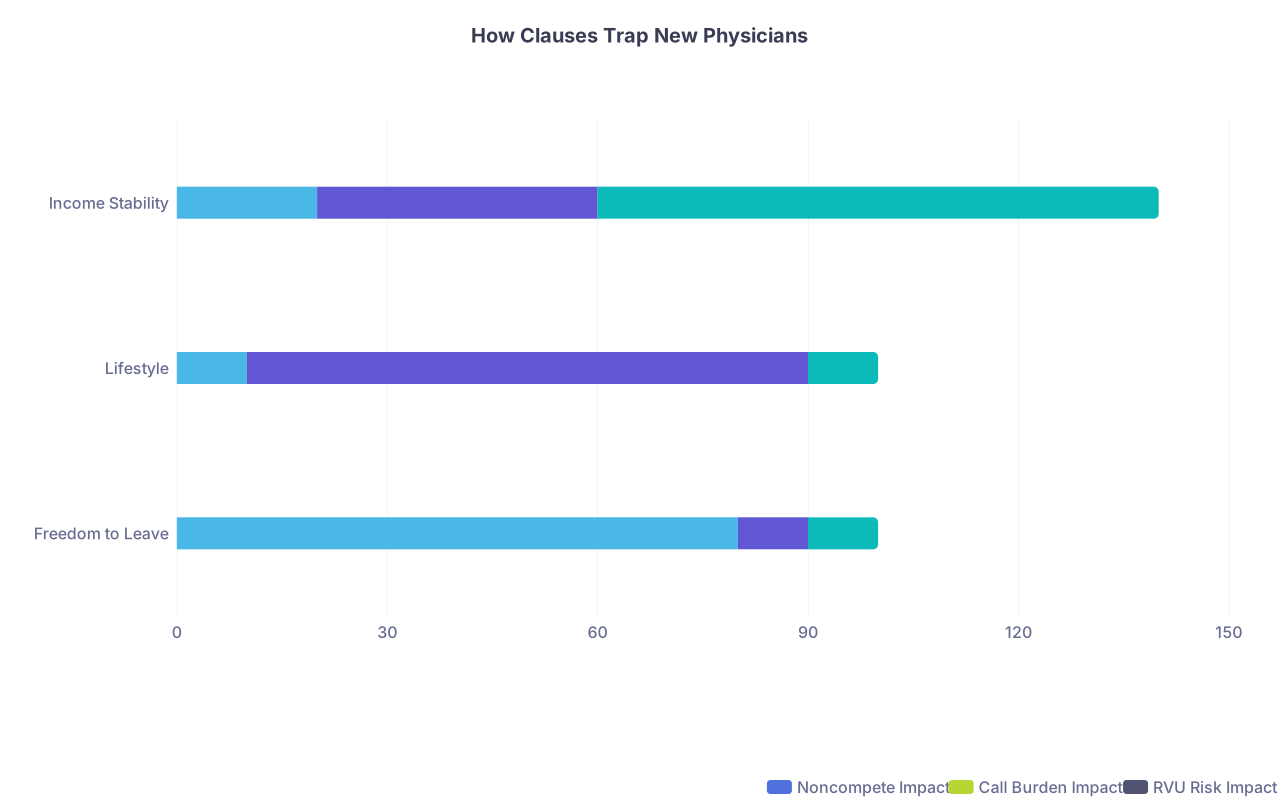
| Category | Noncompete Impact | Call Burden Impact | RVU Risk Impact |
|---|---|---|---|
| Freedom to Leave | 80 | 10 | 10 |
| Lifestyle | 10 | 80 | 10 |
| Income Stability | 20 | 40 | 80 |
How to Read and Negotiate Like Someone Who Has Been Burned Before
You are not a victim by default. But you will be if you behave like this is a student rotation checklist instead of the most important legal document of your early career.
Step 1: Stop being afraid to walk away
The most common mental trap: “This is my only offer; I shouldn’t push.”
No. Jobs are temporary. Contracts are enforceable. Walking away from a bad offer is not a failure; it’s a win.
If they pull an offer because you asked to modify a noncompete radius or clarify call? Bullet dodged. That’s exactly the kind of group that will nickel-and-dime and gaslight you for years.
Step 2: Get a real physician contract attorney
Not your uncle who does wills. Not your med school friend who “likes law stuff.”
You want someone who:
- Reviews physician contracts weekly
- Understands RVUs, Stark, and fair market value language
- Knows what’s standard for your specialty and region
Spend the $600–$1,500. People blink at that then casually light $50,000 on fire every year in bad comp structures.

Step 3: Force everything important into writing
Do not rely on:
- Recruiter promises
- Verbal handshake deals
- “Everyone gets partnership at year 2 or 3”
Your contract should explicitly spell out:
- Noncompete terms (radius, duration, triggers, scope)
- Exact call expectations and any stipends
- Salary, RVU rate, thresholds, and what happens after the guarantee
- Partnership track: time frame, buy‑in formula, what you actually get
If they say, “We don’t put that in writing, but trust us,” your answer is simple: “Then I can’t sign this.”
Step 4: Compare offers apples‑to‑apples
Your brain will want to focus on the top‑line salary. That’s the least important part long‑term. You’re better off with a $240k job and no noncompete than a “$300k” job handcuffing you to one zip code with terrible call and toxic RVUs.
Use a simple comparison approach:
| Factor | Offer A | Offer B |
|---|---|---|
| Base Salary | $260k | $300k |
| Noncompete | None | 25 mi / 18 mo |
| Call | 1:6, paid | 1:3, unpaid |
| RVU Structure | None first 3 yrs | Full RVU at yr 2 |
| Partnership Track | Clear, 2 yrs | Vague, “TBD” |
The naive doc picks Offer B. The experienced one takes Offer A and sleeps better.
Closing: What You Must Remember
Three things you cannot afford to forget:
- Noncompetes are not background noise. They are handcuffs. Narrow them aggressively or walk.
- Call and RVUs are where lifestyle and income actually live. Negotiate them like they matter more than base salary—because they do.
- If it’s not written, it’s fiction. Any group offended by you protecting yourself has already told you what kind of partner they’ll be.
You worked too hard to let one bad contract dictate the next 5–10 years of your life. Read it like your future depends on it—because it does.