
Understanding Job Search Timing for New Dermatology MDs
For an MD graduate in dermatology, the transition from residency or fellowship into your first attending role is one of the most strategically important phases of your career. Dermatology is a highly coveted specialty with a relatively favorable physician job market overall, but the timing of your job search still matters greatly—especially if you’re targeting competitive metropolitan areas, specific subspecialties, or academic positions.
This article focuses on job search timing for dermatology MD graduates, not the allopathic medical school match or derm match process. We’ll assume you’re either in a dermatology residency, finishing a dermatology fellowship, or recently completed training and are planning your first attending job search.
We’ll cover:
- A month‑by‑month timeline for when to start the job search
- Differences in timing for private practice, academic, and hospital-employed roles
- How fellowships, visas, and geography affect your timeline
- Practical, stepwise actions at each stage
- Common pitfalls and how to avoid timing mistakes
Throughout, consider how your own path—from MD graduate residency trainee to independent dermatologist—shapes your ideal timeline.
Big-Picture Timeline: When to Start Your Dermatology Job Search
In dermatology, you typically want to start your job search 12–18 months before your intended start date. That may sound early, but many of the most desirable positions—especially academic and high-demand urban jobs—are planned well in advance.
Here’s a general guide anchored around your planned last day of training (end of residency or fellowship).
18–24 Months Before You Finish Training
This is the exploration and positioning phase. You’re not actively applying yet, but you’re shaping the kind of opportunities you’ll be competitive for.
Key actions:
Clarify your career direction
Decide your broad trajectory:- Private practice (general medical dermatology, cosmetic, Mohs, mix)
- Academic (research, teaching, subspecialty focus)
- Hospital or multispecialty group employment
- Hybrid roles (e.g., academic appointment plus community practice)
Identify geographic “tiers”
- Tier 1: Ideal locations (e.g., specific cities, regions, near family)
- Tier 2: Acceptable, with some compromise
- Tier 3: Backup areas where the physician job market is especially favorable
Start focused networking
- Talk with faculty and recent graduates about their job search timelines.
- Attend dermatology conferences (e.g., AAD) and introduce yourself to leaders in your areas of interest.
- Join relevant committees or special interest groups.
At this stage, you’re building options. Thoughtful groundwork now prevents you from having to panic-apply later.
12–18 Months Before You Finish: Begin the Active Search
For many dermatology MD grads, this is the sweet spot to start a serious job search.
Why this window?
- Many practices and departments plan hiring 9–18 months ahead.
- Academic departments often have slower approval and hiring cycles.
- Desirable metros and coastal markets tend to recruit early.
What You Should Be Doing Now
Polish your application materials
- Update your CV with:
- Derm-specific rotation highlights
- Research, QI projects, and posters
- Leadership roles and teaching experiences
- Draft a flexible, customizable cover letter for:
- Academic roles
- Private practice roles
- Hospital-employed jobs
- Update your CV with:
Define your non-negotiables and flex points
- Non-negotiables:
- Minimum salary/compensation structure
- Visa needs (if applicable)
- Geographic limits (e.g., must be within X miles of partner’s job)
- Flex points:
- Academic vs community
- Cosmetic vs medical derm percentage
- Call responsibilities
- Full-time vs part-time starting structure
- Non-negotiables:
Start scanning the market weekly
- Use:
- AAD career center and specialty-specific job boards
- Hospital system career pages
- Large dermatology group websites
- Recruiters specializing in dermatology
- Note patterns:
- Regions with high dermatologist demand
- Common compensation ranges
- Typical expectations for productivity and procedures
- Use:
Soft outreach
- Send brief, targeted emails to:
- Chairs and program directors at institutions you’d like to join
- Group leaders of larger dermatology practices
- Alumni from your derm residency who are in your preferred locations
- Example:
“I’m a third-year dermatology resident at [Institution], planning to complete training in June [Year]. I’m very interested in general medical and surgical dermatology with the possibility of some cosmetic work and teaching. I’d love to connect to learn more about opportunities in [City/Region] and the ideal timeline for applying.”
- Send brief, targeted emails to:
This is the time when the question “when to start job search?” really matters—if you wait until 6 months before graduation, you may miss the best-aligned options.
9–12 Months Before Finishing: Actively Applying and Interviewing
This is when your job search usually becomes highly active.
By now, dermatology practices and departments:
- Have clearer projections of patient volume and financials for the coming year.
- Are finalizing positions for next summer/fall.
- Are moving serious candidates into interview stages.
Application Volume and Strategy
- Goal: Identify 5–15 positions or institutions of interest.
- Common mix:
- 2–5 “ideal” metro/academic roles (typically most competitive)
- 4–8 community or regional jobs in good markets
- 1–3 “safety” options in locations with high physician demand (e.g., smaller cities, underserved regions)
Tailor your materials:
For academic roles:
- Emphasize research, publications, teaching, and specific academic interests (e.g., complex medical derm, cutaneous lymphoma, derm-path, pediatric derm).
- Include a brief teaching or research statement if requested.
For private practice roles:
- Highlight:
- Efficiency
- Procedural comfort (biopsies, excisions, basic cosmetics)
- Interest in building a patient base
- Willingness to share call or cover multiple locations if needed
- Highlight:
For hospital-employed roles:
- Emphasize:
- Collaborative care with other departments
- Comfort managing complex medical patients
- Experience with EMR systems and quality metrics
- Emphasize:
Interviews and Site Visits
Interviews may start as early as 10–12 months out, especially in:
- Smaller markets with strong physician job market demand
- Rapidly growing private equity-backed dermatology groups
- Academic programs planning expansion
Expect:
- Initial remote interviews (video/phone)
- On-site visits including:
- Clinic tours
- Meetings with faculty/partners
- Discussions with clinic staff and advanced practice providers
- Dinner or informal meet-and-greets
Timing tip: Try to cluster on-site interviews within a 2–3 month window so you can compare offers and experiences side-by-side.
6–9 Months Before Finishing: Offers, Negotiations, and Final Decisions
This window is critical; it’s where timing and strategy intersect.
By 6–9 months before graduation:
- Many dermatology MD graduates should have at least one or two serious leads or offers.
- The number of open positions may start to narrow, especially in very competitive urban centers.
Evaluating Offers: Timing Considerations
When you receive an offer, ask:
How firm is their start date?
- Some employers can delay a start date by a few months to align with:
- Board exam timing
- Licensing delays
- Life events (move, marriage, family)
- Some employers can delay a start date by a few months to align with:
What is the deadline for your response?
- Clarify:
- Exact decision date
- Whether they’re open to short extensions
- This matters if you are juggling multiple interviews or waiting for academic decisions.
- Clarify:
How does this offer compare to others likely to materialize?
- If you have strong leads in your dream city or academic center, you may:
- Politely request more time
- Ask directly where they are in their hiring timeline
- If you have strong leads in your dream city or academic center, you may:
Negotiation Windows
Negotiation is easier before you sign:
- Compensation structure:
- Base salary
- RVU or productivity bonuses
- Signing bonus
- Loan repayment (if applicable)
- Schedule and call:
- Clinic hours
- Weekend or call expectations
- Professional development:
- Time for research or teaching (especially in academic roles)
- Support for conference attendance and CME
- Non-compete and restrictive covenants:
- Geographic radius
- Duration
- Impact if you or your partner need to relocate
Engage early with:
- A physician contract attorney familiar with dermatology and your state regulations.
- Mentors or senior dermatologists who can benchmark offers against the broader physician job market.
What If You’re Late to the Job Search?
If you’re only starting your attending job search at 6–9 months before completion:
Act quickly and strategically:
- Intensify networking—reach out to every relevant faculty mentor, program alumnus, and recruiter.
- Broaden your geographic range temporarily.
- Consider a 1-year position, locums, or a short-term academic role while you plan a longer-term move.
Recognize the trade-off:
- You may secure a job faster, but with less leverage and fewer choices.
- You can still pivot later—your first job is important, but rarely your last.

Timing Nuances: Practice Type, Fellowships, and Visas
Not all dermatology job searches follow the same pattern. Your optimal timeline depends on several variables.
Private Practice vs Academic vs Hospital-Employed
1. Private Practice (Traditional or PE-Backed)
- Typical recruitment window: 6–12 months before start date.
- Some groups will recruit earlier (12–18 months) if they know about future retirements or expansion.
- Timing flexibility:
- Often greater flexibility in start date and schedule.
- Faster decision cycles; you might go from first interview to offer within weeks.
2. Academic Dermatology
- Typical recruitment window: 9–18+ months before start date.
- Reasons for long lead time:
- Departmental and institutional approvals
- Budget cycles and faculty line allocations
- If you’re strongly interested in a specific academic center:
- Begin conversations 18–24 months out.
- Ask directly about the best time to apply for a faculty spot given your graduation date.
3. Hospital-Employed / Multispecialty Groups
- Typical recruitment window: 9–15 months.
- Often align hiring with:
- System growth
- New clinics or service lines
- Market analysis of physician supply/demand
- Processes may be more standardized but also slower due to multiple committee reviews.
How Fellowships Affect Job Search Timing
If you’re pursuing or finishing a dermatology fellowship (e.g., Mohs, pediatric derm, derm-path, cosmetic fellowship):
- Start even earlier, especially for highly specialized roles.
- Many employers want to lock in:
- A future Mohs surgeon 12–24 months ahead.
- A subspecialist to expand or establish a specific service line.
Typical approach:
- During your PGY-4/residency graduation year:
- Focus on derm match and fellowship applications.
- Once fellowship is secured:
- For a 1-year fellowship, begin attending job planning at the start of fellowship, especially in competitive markets.
You can:
- Explore jobs that blend general derm with your fellowship skill set.
- Use your advanced training as leverage in salary and resource negotiations.
Visa Issues (J-1, H-1B) and Timing
If you’re an international medical graduate (IMG) who completed an allopathic medical school match and derm residency on a visa, your job search timing has extra constraints.
Key implications:
J-1 waiver jobs (often in underserved areas) are limited and competitive:
- Start exploring 18–24 months ahead of training completion.
- Work with:
- Immigration-savvy recruiters
- Institutional legal teams
- Other physicians who have navigated J-1 waivers in dermatology
H-1B and other employment-based visas:
- Employers must understand the process and timeline.
- Clarify early in discussions:
- Whether they sponsor visas
- Past success sponsoring dermatologists
- Legal support available
In visa-linked searches, the “when to start job search” question is even more critical. Late starts can dramatically limit your options.
Leveraging the Physician Job Market: Strategic Timing Tips
Dermatology remains one of the more favorable specialties in the overall physician job market, but there are regional and sector differences that smart MD graduates can use to their advantage.
Understand Supply and Demand Cycles
Dermatology demand is high in:
- Many suburban and rural regions lacking sufficient specialists
- Sunbelt states with high skin cancer rates
- Rapidly growing metropolitan fringes
In these areas:
- Employers may recruit earlier and more aggressively.
- You might receive:
- Higher starting salaries
- Signing bonuses
- Relocation support
- Loan repayment incentives
In top-tier urban academic or coastal markets:
- More dermatologists are competing for fewer openings.
- Job posting and decision cycles can be slower and less predictable.
- You may need:
- More lead time (12–24 months)
- Stronger academic portfolio
- Greater willingness to compromise initially (e.g., split appointments, heavier clinical load at first)
Use Conferences and Meetings Strategically
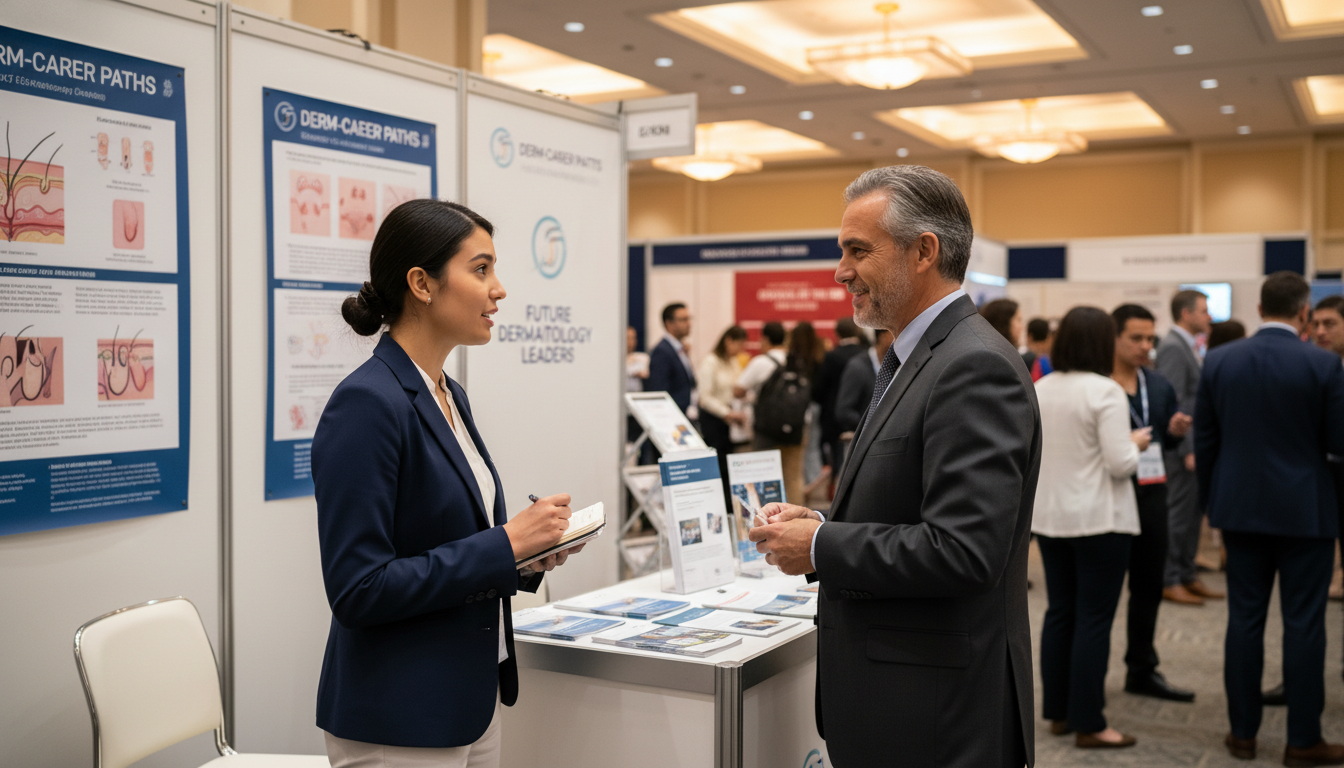
Conferences like the AAD Annual Meeting are prime opportunities to accelerate your job search timeline:
Before the meeting:
- Schedule informational chats with attendees from your target programs or groups.
- Let them know your expected completion date and career interests ahead of time.
At the meeting:
- Visit formal career fairs and informal networking events.
- Ask directly about hiring timelines:
- “When do you typically start recruiting for next year’s dermatology hires?”
- “If I’m finishing in [Month/Year], when should I apply to be considered for your next opening?”
After the meeting:
- Follow up within 1–2 weeks while conversations are fresh.
- Send tailored CVs and express interest in positions that align with what you learned.
Protecting Yourself from Timing Pitfalls
Avoid these common mistakes:
Waiting for the “perfect” job posting
- Many positions are never publicly posted, especially in academic departments.
- Proactive outreach often surfaces unadvertised opportunities.
Underestimating licensing and credentialing time
- State medical license acquisition can take 3–6+ months.
- Hospital credentialing and payer enrollment adds weeks to months.
- Build in buffer; don’t agree to unrealistic start dates.
Relying solely on recruiters
- Some excellent dermatology positions don’t use recruiters at all.
- Combine recruiter support with:
- Direct applications
- Networking
- Alumni connections
Signing too quickly without comparison
- A strong offer at 10–12 months out can be tempting.
- When possible, see at least a few different practice models before committing.
FAQ: Job Search Timing for MD Graduates in Dermatology
1. When should an MD graduate in dermatology start their attending job search?
For most dermatology residents, the ideal time to start a serious job search is 12–18 months before your planned start date (usually your graduation date from residency or fellowship). Academic and highly competitive urban roles may warrant initial outreach 18–24 months in advance, while some private practices can hire effectively within a 6–12 month window.
2. Is it ever “too early” to start looking for dermatology jobs?
It’s rarely too early to explore and network, but it can be too early to expect formal offers. Before 18–24 months from completion, focus on:
- Clarifying your goals and geographic preferences
- Building relationships with mentors and potential employers
- Understanding the local physician job market in your target regions
Formal applications and interviews usually make the most sense within 9–15 months of your graduation date.
3. How does a fellowship change the timing of my job search?
For dermatology fellowships (Mohs, pediatric derm, derm-path, cosmetics), planning is more complex:
- During residency: prioritize derm match and fellowship applications.
- Once fellowship is secured: start engaging potential employers at the start of your fellowship year, especially if your skillset is niche or you want a specific academic role.
Some practices and departments prefer to secure a future Mohs surgeon or subspecialist 12–24 months in advance.
4. What if I didn’t start my job search until 6 months before finishing residency?
You can still land a good job, but you may need to:
- Broaden your geographic or practice-type preferences temporarily.
- Intensify networking with alumni, mentors, and recruiters.
- Be open to short-term roles (e.g., 1-year positions, locums) if your ideal long-term opportunity requires a longer search.
Going forward, use your first job as a stepping stone—once you have attending-level experience, your options in the dermatology physician job market often expand.
By thinking strategically about when to start your job search, aligning it with your career goals, and understanding how the dermatology physician job market operates across different settings, you can move confidently from MD graduate residency to a rewarding, well-timed attending role.