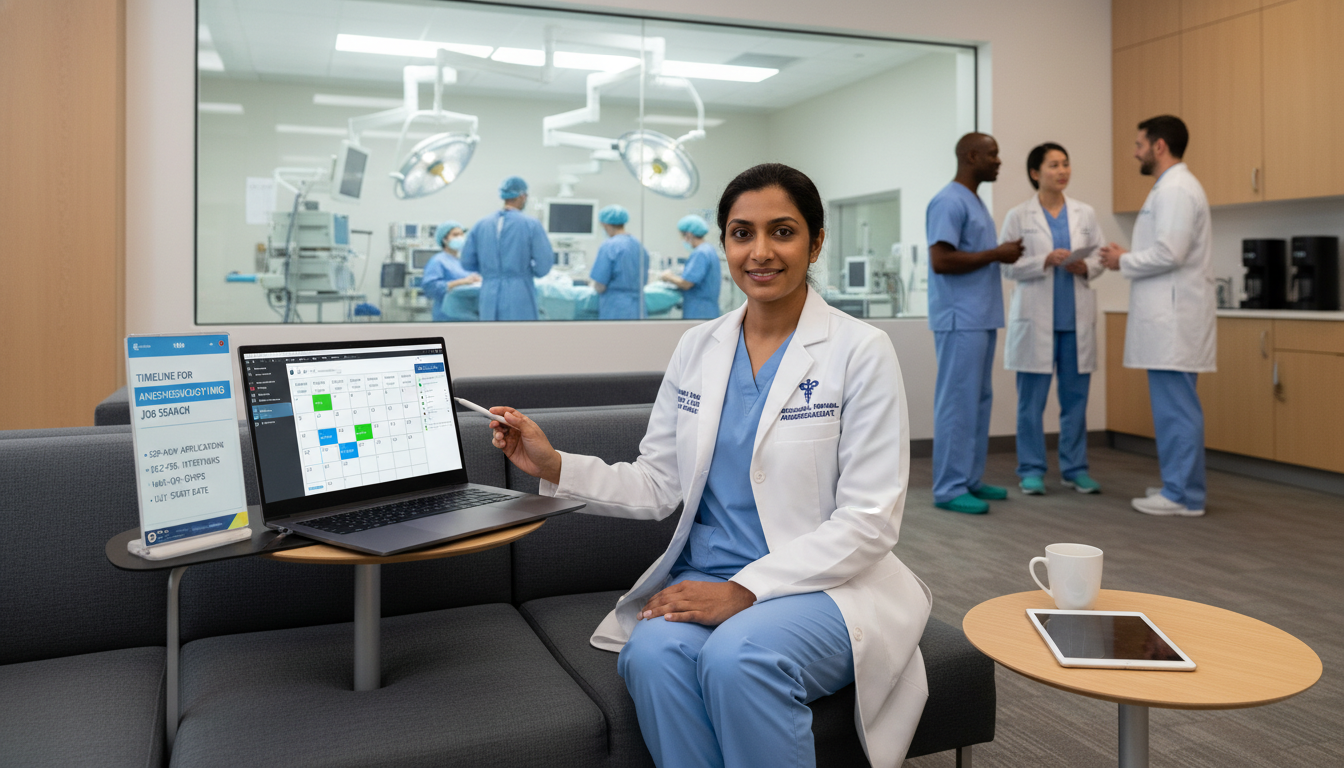
Understanding Job Search Timing for IMGs in Anesthesiology
For an international medical graduate (IMG) in anesthesiology, timing your job search after residency is almost as critical as matching into residency in the first place. The anesthesiology job market is generally strong, but as an IMG, you must layer in additional considerations:
- Visa timelines and restrictions (J‑1, H‑1B, others)
- State licensure and credentialing delays
- Academic vs private practice application cycles
- Geographic competitiveness
- Personal goals (fellowship vs going straight into practice)
This IMG residency guide focuses specifically on when to start each step of your attending job search for anesthesiology—so you can move from match to graduation to your first attending role with minimal gaps, stress, or surprises.
The Big Picture: Key Timelines for IMG Anesthesiology Job Search
Before breaking down month-by-month timing, it helps to see the overall structure of decisions you’ll face during senior residency:
1. Decide Early: Fellowship vs. Direct-to-Attending
Your job search timing depends heavily on whether you:
- Go straight into practice after CA-3/PGY-4, or
- Pursue fellowship first (e.g., cardiac, critical care, pain, pediatric, regional, OB, neuro)
Fellowship applications:
- ERAS applications often open 12–15 months before fellowship start
- Interviews typically run from summer to fall of your CA-2 year
- Match occurs months before you finish residency
If you choose fellowship, your attending job search usually ramps up during your fellowship year, not senior residency—though networking should start much earlier.
2. General Job Search Timing Benchmarks
For an IMG anesthesiology resident finishing in June (typical cycle) and planning no fellowship, a realistic high-level timeline looks like this:
18–24 months before graduation
- Start understanding the physician job market and visa options
- Clean up CV, build LinkedIn, begin light networking
12–15 months before graduation (early CA-2)
- Clarify fellowship vs no fellowship
- If no fellowship: start exploring regions and practice types; soft networking with groups
9–12 months before graduation (late CA-2 / early CA-3)
- Start serious job search:
- Contact groups and departments
- Talk to recruiters
- Begin formal interviews in some regions
- Start serious job search:
6–9 months before graduation (mid CA-3)
- Peak anesthesia match-style hiring time for many private practices and community hospitals
- Start negotiating offers and contracts
- Aim to sign a contract in this window if possible
3–6 months before graduation (late CA-3)
- Finalize contract
- Start licensure and hospital credentialing if not already done
- Confirm visa processing pathway and timelines
Because IMGs have more constraints, you generally cannot afford to wait until the last 2–3 months to start an attending job search.
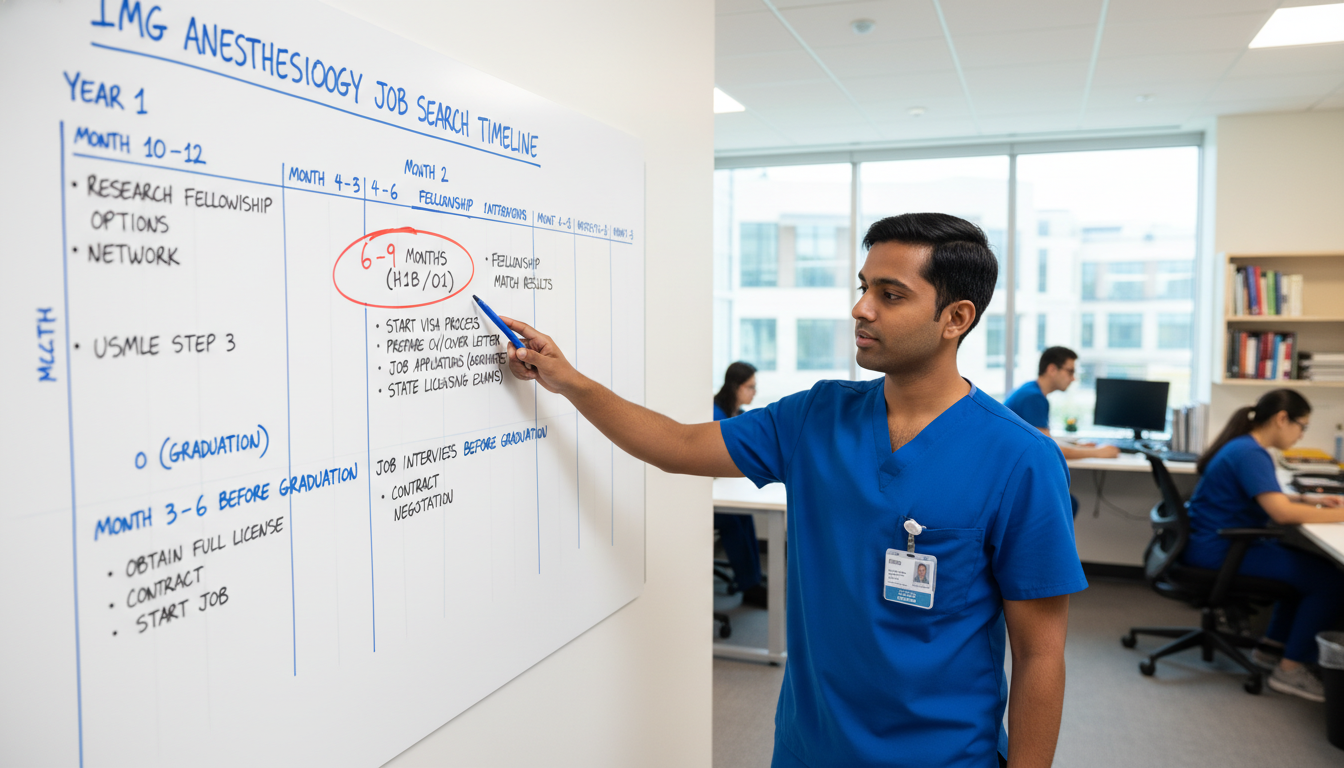
Month-by-Month: A Practical Timeline for IMGs in Anesthesiology
Below is a practical, phased roadmap for IMGs in anesthesiology, assuming:
- You will complete residency in June
- You’re targeting a job starting July–September
- You are either on a J‑1 or H‑1B (or considering one of them for your first job)
Adjust the months forward/backward based on your actual graduation date.
18–24 Months Before Graduation (Early CA‑1 / Mid-Residency)
Primary goal: Understand your options and constraints.
Key actions:
Clarify your long-term goals
- Academic vs community vs private practice vs locums
- Geographic priorities (coasts, Midwest, rural, urban)
- Interest in subspecialty fellowship (e.g., cardiac, critical care, pain)
Define your visa situation
- Are you J‑1 now? Planning a J‑1 waiver job?
- Are you on H‑1B? What are your portability and cap considerations?
- Do you see yourself in an underserved area vs large metro?
Start learning the anesthesiology job market
- Talk to senior residents and recent graduates (especially IMGs)
- Ask:
- How far in advance did you sign?
- What surprised you about the timeline?
- How did your visa affect your job options?
Lay the groundwork
- Update your CV (keep it to 2–3 pages, clean, and focused)
- Start a basic LinkedIn profile
- Keep a folder of jobs/employers that look interesting
Why this timing matters for IMGs:
Understanding whether you must take a J‑1 waiver position or can choose more freely will strongly affect when you can apply and where. Some J‑1 waiver opportunities fill early each year.
12–15 Months Before Graduation (Late CA‑1 to Early CA‑2)
Primary goal: Strategic planning and networking.
Actions:
Decide: fellowship vs direct-to-attending
- Do you want to apply for fellowship this cycle?
- If yes, your attending job search will be delayed to your fellowship year.
- If no, begin preparing for full-time job search.
Clarify preferred practice type
- Academic center: more structured hiring cycles, committees, slower timelines
- Large private groups: may hire 6–12 months in advance
- Small groups/community hospitals: some hire closer to start date, others very early
- Locums: more flexible timing, but more uncertainty (often for US graduates with easier visa situations)
Informal networking
- Talk with faculty about where they’ve worked, who they know
- Let trusted attendings know your general interest (e.g., “I’m an IMG planning to start job search next year. I’m open to Midwest or Southeast and leaning private practice.”)
- Attend regional/state anesthesia society meetings if feasible
Identify visa-aligned employers
- Search for anesthesiology groups that have previously sponsored J‑1 waiver or H‑1B
- Note states that are more IMG-friendly (e.g., many Midwest and Southern states regularly hire IMGs)
Timing nuance for IMGs:
If you’re J‑1, you might need a J‑1 waiver job (e.g., Conrad 30). Those opportunities often:
- Open for applications about 9–12 months before start date
- Vary by state significantly
- Fill quickly, especially in popular states
You should already be mapping states and programs during this 12–15 month window.
9–12 Months Before Graduation (Early CA‑3 / Late CA‑2)
Primary goal: Start active job search, especially for visa-dependent roles.
Actions:
Start contacting potential employers
- Send your CV and a brief, focused email to:
- Departments of Anesthesiology (academic and large health systems)
- Private practice groups and anesthesia management companies
- Introduce your situation clearly, including graduation date and visa status.
Example email structure:
- Who you are (IMG, current PGY level, program, graduation month/year)
- Type of role you’re seeking (academic vs community, subspecialty interests)
- Your visa status and needs (e.g., “will require J‑1 waiver sponsoring employer” or “seeking H‑1B-cap exempt employer”)
- Attach CV, offer to speak further
- Send your CV and a brief, focused email to:
Engage with recruiters—carefully
- Some recruiters understand anesthesiology residency and IMG visa issues; others do not.
- Ask directly:
- “Do your client hospitals or groups sponsor J‑1 waivers or H‑1B?”
- “How many IMG anesthesiologists have you placed in the last 2–3 years?”
Attend job fairs and conferences
- ASA (American Society of Anesthesiologists) annual meeting is an excellent place to:
- Meet employers
- Understand the anesthesia match-like dynamics of job openings
- See what regions are especially hungry for anesthesiologists
- Some employers are willing to interview on-site
- ASA (American Society of Anesthesiologists) annual meeting is an excellent place to:
Screen for realistic options
- Filter jobs immediately based on:
- Willingness to sponsor visa
- Timing (can they wait until your graduation date?)
- Start date flexibility
- Filter jobs immediately based on:
For IMGs seeking J‑1 waiver positions:
- Many states open their Conrad 30 waiver application cycles around October–January for the following year.
- You may need a signed contract with an eligible employer to apply.
- Therefore starting serious conversations 9–12 months before graduation is critical.
6–9 Months Before Graduation (Mid CA‑3 Year)
Primary goal: Peak job search and interviewing period.
Actions:
Schedule and complete interviews
- Many anesthesiology groups prefer interviews in this timeframe:
- They know their projected needs for the coming summer/fall
- You’re close enough to graduation to be a realistic candidate
- Try to cluster interviews to minimize time away from residency.
- Many anesthesiology groups prefer interviews in this timeframe:
Evaluate offers thoughtfully Compare:
- Clinical mix: OR vs ICU vs OB vs pain vs regional
- Call schedule and post-call structure
- Salary, sign-on bonus, and productivity model
- Partnership track: timeline, buy-in, transparency
- Support staff and work environment
- Visa support and immigration attorney availability
Clarify visa details in writing
- J‑1 waiver: Is the employer eligible? In a designated area? Familiar with process?
- H‑1B: Are they cap exempt? Have they sponsored H‑1B anesthesiologists before?
Begin negotiating contracts
- You don’t have to accept the first offer.
- But as an IMG, you must balance negotiation with visa realities and timelines.
- Consider hiring a physician contract lawyer familiar with immigration.
Why this phase is critical for IMGs:
- You need enough time after accepting an offer to:
- File waiver applications (if J‑1)
- File H‑1B petitions
- Complete state licensure and hospital credentialing
- If you delay beyond this 6–9 month window, you risk visa or license delays that may force you to postpone your start date or leave a gap in employment.

3–6 Months Before Graduation (Late CA‑3)
Primary goal: Finalize details and start paperwork.
Actions:
Sign your contract (if not already done)
- Most IMGs should aim to have a signed contract by 4–6 months before graduation.
- This allows:
- Visa petitions to be filed early
- State license applications to proceed smoothly
Start state medical licensure
- Some states take 3–6+ months to process a license.
- Ask your employer which states you need licenses in (some cross-border systems cover multiple states).
- Start gathering:
- Medical school transcripts and diplomas
- ECFMG certification
- USMLE results
- Letters of good standing
Begin hospital credentialing
- Credentialing and privileging can take 60–120 days, sometimes more.
- Your employer’s medical staff office usually helps initiate this once you sign.
Finalize immigration paperwork
- J‑1 waiver: ensure the employer and attorney are on top of:
- State agency deadlines
- USCIS timelines
- H‑1B: confirm filing date and premium processing if needed.
- J‑1 waiver: ensure the employer and attorney are on top of:
Note: If you still don’t have a job at this stage, do not panic, but act aggressively:
- Narrow your geographic preferences
- Consider more IMG-friendly/rural or smaller-market areas
- Reach out again to recruiters and groups that were initially slow to respond
- Ask faculty or program leadership to help with leads
0–3 Months Before Graduation (End of Residency)
Primary goal: Close all loops and prepare for transition.
Actions:
Track all applications and approvals
- State license: check status regularly
- Visa: ensure receipt notices and approvals are on time
- Hospital credentialing: respond quickly to any missing documents
Confirm your start date
- Align start date with when:
- Your visa is valid
- Your license is active
- Hospital privileges are approved
- Align start date with when:
Plan relocation and onboarding
- Coordinate with HR and anesthesia leadership about:
- Orientation
- Call schedule for first few months
- Initial supervision, if any
- Coordinate with HR and anesthesia leadership about:
Maintain a backup plan
- Especially as an IMG, have contingencies:
- Locums options if start date is unexpectedly delayed (if visa permits)
- Temporary clinical or non-clinical roles while awaiting paperwork
- Especially as an IMG, have contingencies:
Special Considerations for Anesthesiology IMGs
Timing your job search as an international medical graduate in anesthesiology involves more nuance than for US grads. Below are specific factors that directly affect when to start job search and how aggressively to pursue options.
1. Visa Status Shapes Your Timeline
J‑1 visa residents:
- Typically must complete a 3-year J‑1 waiver commitment in a qualifying job after training
- You often need a waiver position secured early (9–12 months before graduation)
- Many state Conrad 30 programs fill fast, so your attending job search is front-loaded
H‑1B visa residents:
- May have a bit more flexibility, especially if:
- Your employer is cap exempt (e.g., academic or nonprofit hospital)
- You can port H‑1B to another cap-exempt employer
- Still, start 9–12 months ahead to avoid last-minute issues
- May have a bit more flexibility, especially if:
Green card/US citizen IMGs:
- More freedom in start dates, location, and employer type
- You may push your search slightly later, but it’s still safer to follow the general timing above
2. Geographic Flexibility vs. Timing Pressure
- If you are highly flexible on location (open to rural, Midwest, or less competitive markets), you may:
- Get earlier and more numerous offers
- Be able to secure a job as early as 9–12 months out
- If you are restricted to specific metro areas or states that are less IMG-friendly:
- You should start even earlier
- Consider applying to a wider range of practice types (e.g., academic + private + health system groups)
3. Academic vs Private Practice Timing Differences
Academic roles:
- Often plan staffing earlier
- May require multiple committee interviews
- Typically align with academic year starts (July–September)
- Best to initiate contact 9–12 months before graduation, sometimes earlier
Private practice / community hospital roles:
- Some hire as needs emerge (closer to 6–9 months out)
- Others recruit continuously due to high demand
- For IMGs, earlier contact is always safer to clarify visa willingness
Practical Strategies to Optimize Your Timeline
Use Each Training Year Intentionally
- CA‑1: Learn the landscape and clarify visa constraints
- CA‑2: Decide fellowship vs attending; start research and soft networking
- CA‑3: Execute full job search plan and complete all paperwork
Track Your Progress with a Simple Checklist
Create a simple spreadsheet with columns like:
- Employer name
- Location
- Practice type
- Visa friendly? (Y/N/details)
- Date contacted
- Response
- Interview date
- Offer? (Y/N)
- Contract sent/signed date
- Visa status
- License/credentialing status
Review monthly to ensure you’re not falling behind the ideal timeline.
Stay Proactive with Communication
- Respond to emails quickly
- Politely follow up if you haven’t heard back in 2–3 weeks
- Be upfront about your IMG and visa status; this saves time for both you and the employer
Frequently Asked Questions (FAQ)
1. As an IMG in anesthesiology, when should I realistically start my attending job search?
For most IMGs planning to go directly into practice (no fellowship), begin active job searching 9–12 months before graduation, and aim to sign a contract 4–6 months before graduation. If you’re on a J‑1 visa and need a waiver job, lean earlier in that range and start exploring options 12–15 months before graduation.
2. How does pursuing a fellowship change the timing of my job search?
If you match into a fellowship, your main attending job search shifts into your fellowship year. The same general timeline applies, just moved forward one year:
- Start exploring 12–15 months before fellowship completion
- Actively search 9–12 months before fellowship end
- Sign a contract by 4–6 months before finishing fellowship
However, you should still start networking and understanding the physician job market during residency, even if you plan on fellowship.
3. Can I wait until the last few months of residency to look for a job as an IMG?
This is risky, especially with visa and licensing constraints. While some anesthesiologists do secure jobs close to graduation, IMGs generally cannot rely on late timing. Starting late may lead to:
- Fewer job options (especially in your preferred regions)
- Inadequate time for J‑1 waiver or H‑1B processes
- Delayed start dates due to licensure or credentialing
Plan to start contacting employers at least 9–12 months before graduation.
4. How important is it to mention my visa status early in the process?
For an IMG, it’s essential to clarify visa status early—ideally in your initial email or first conversation. This:
- Saves time by filtering out employers who cannot sponsor
- Allows serious employers to connect you quickly with immigration resources
- Ensures that your job search timing aligns with the necessary legal processes
Hiding or delaying this information often backfires and can compress your already-tight timeline.
By planning ahead and aligning your job search activities with visa, licensure, and hiring cycles, you can navigate the anesthesiology residency to attending transition smoothly as an international medical graduate. Thoughtful timing doesn’t just help you obtain a job—it helps you secure the right job, in the right place, at the right time for your career and life goals.