Understanding the Physician Job Market for Clinical Informatics IMGs
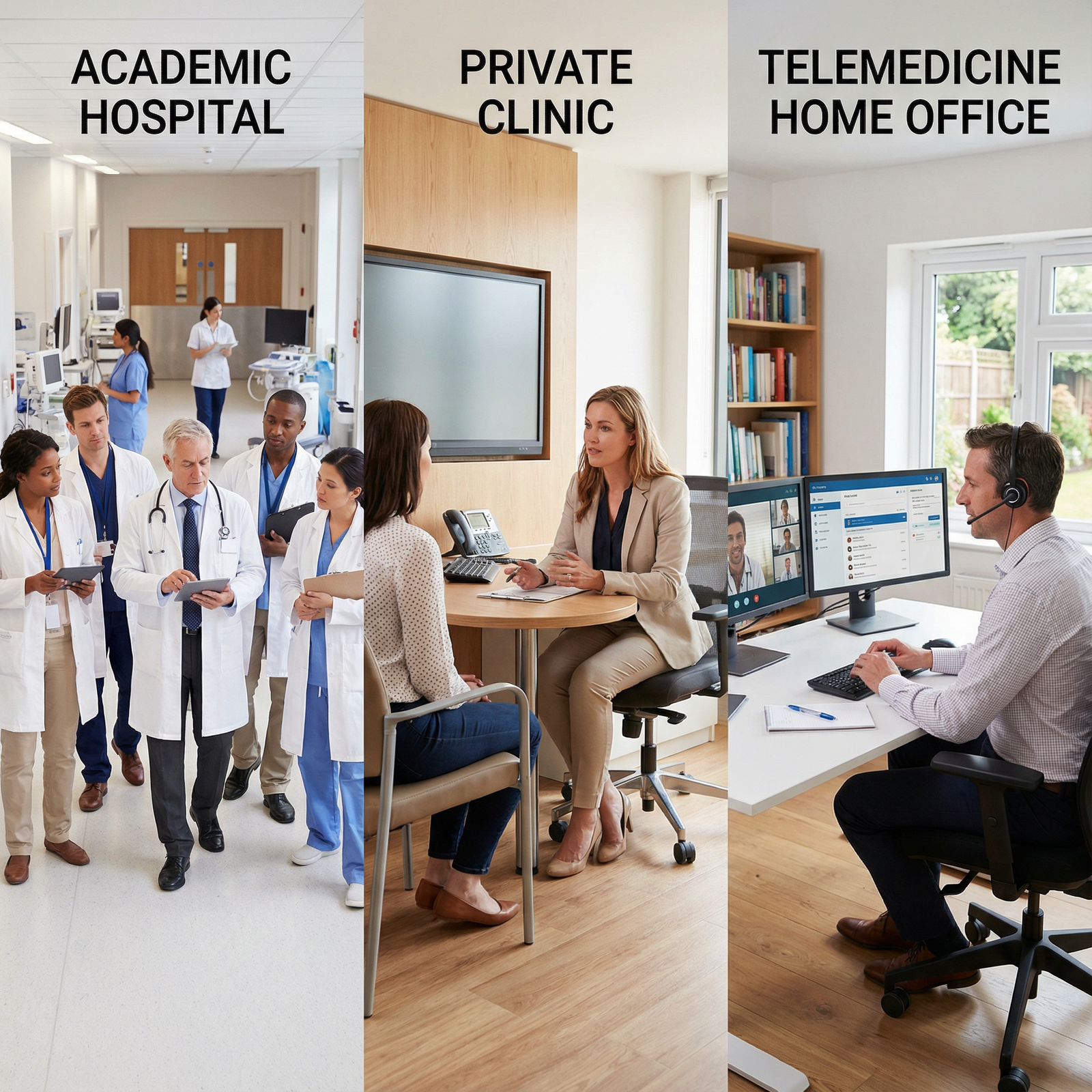
International medical graduates entering clinical informatics face a different physician job market than traditional clinical specialties. Instead of primarily competing for attending physician roles, you’re targeting a mix of:
- Clinical informatics physician roles (with or without active clinical practice)
- Clinical informatics fellowship positions
- Hybrid jobs (clinical + informatics leadership or project roles)
- Health IT training and implementation roles (e.g., CMIO associate, physician builder, clinical data lead)
For an IMG residency guide focused on job search timing, you need to navigate:
- Two markets at once:
- The clinical market (your base specialty)
- The informatics market (fellowships and jobs in health IT, analytics, quality, digital health)
- Visa constraints and timelines (J‑1, H‑1B, O‑1, green card)
- The slow hiring cycles typical in hospitals and academic centers
- The faster, less predictable cycles in industry and health IT vendors
Because of these complexities, the main mistake IMGs make is starting too late. For clinical informatics, your job search timing should begin years—not months—before graduation.
This article walks through:
- When to start job search planning at each stage (early residency through fellowship and early attending)
- Specific timelines for informatics fellowships vs. jobs
- Visa-aware timing strategies
- Practical examples and action steps for IMGs
Big Picture: When to Start Your Job Search in Clinical Informatics
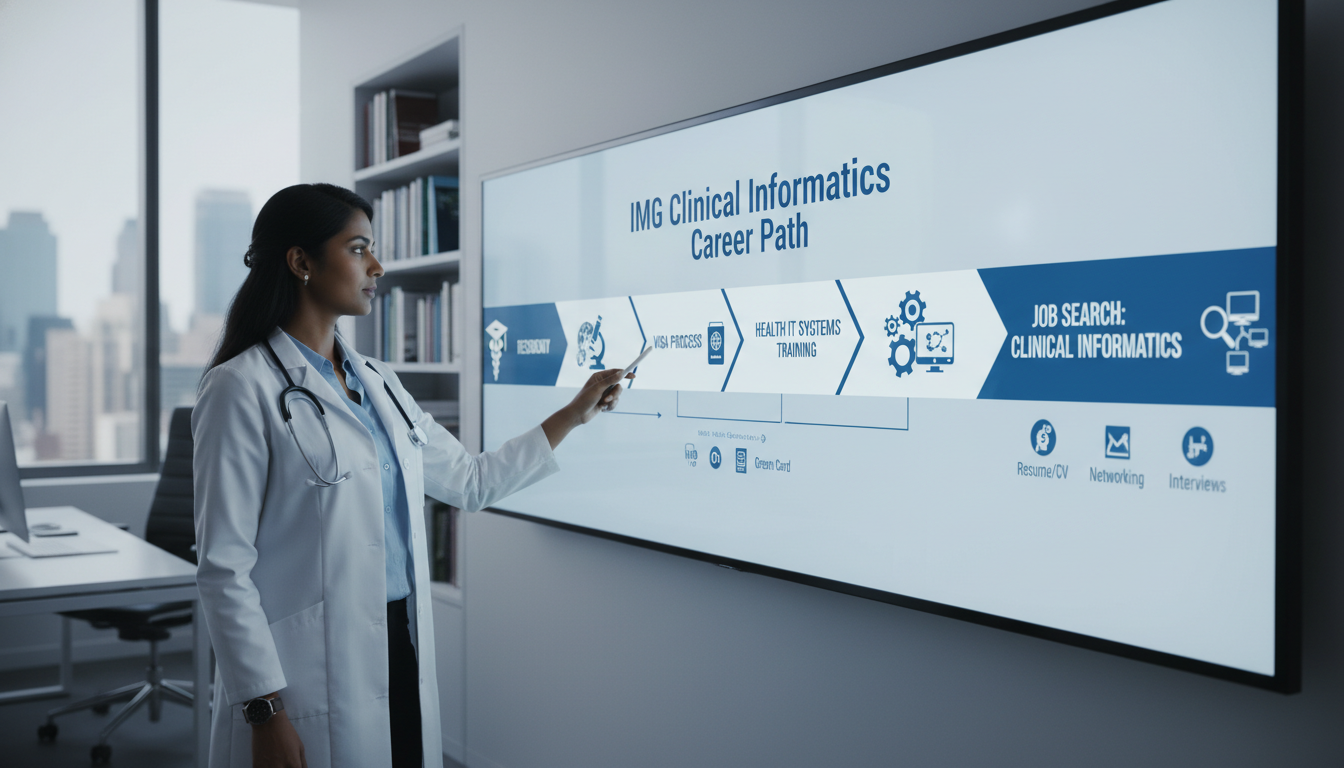
Think of your job search in three overlapping phases:
- Exploration and positioning (years 1–2 of residency or earlier)
- Targeted applications (12–24 months before graduation)
- Negotiation and transition (3–9 months before graduation)
For an international medical graduate, the optimal timing is often:
Residency PGY‑1 to PGY‑2
- Learn what clinical informatics really is
- Decide: fellowship vs direct job vs hybrid path
- Start building a CV that looks like “future informatics physician,” not just “busy resident”
Residency PGY‑2 to early PGY‑3 (or 18–24 months before graduation)
- Start formal job search timing activities:
- Identify mentor(s) in informatics
- Explore and possibly apply for clinical informatics fellowships
- Network with CMIOs, clinical informaticians, and health IT leaders
- Clarify visa realities with your program and/or an immigration attorney
- Start formal job search timing activities:
Residency PGY‑3 (or final year)
- Apply aggressively for:
- Clinical informatics fellowships (if not yet matched)
- Internal informatics roles at your training institution
- External clinical + informatics positions (especially if you already have US licensure and visa options)
- If continuing clinically: also align with attending job search in your base specialty
- Apply aggressively for:
During fellowship (for those who pursue it)
- 9–18 months before fellowship completion:
- Start your attending job search (for both clinical and informatics roles)
- Leverage fellowship projects as your “portfolio” in interviews
- Time your applications based on institutional vs industry hiring patterns (described below)
- 9–18 months before fellowship completion:
The key idea: For clinical informatics, “when to start job search” is much earlier than you might expect, because:
- Jobs often come from relationships and long-term projects
- Immigration processes can easily take 6–18 months
- Many positions, especially leadership roles, are created or tailored for a known internal candidate
Timing Your Path: Fellowship vs Direct Clinical Informatics Roles
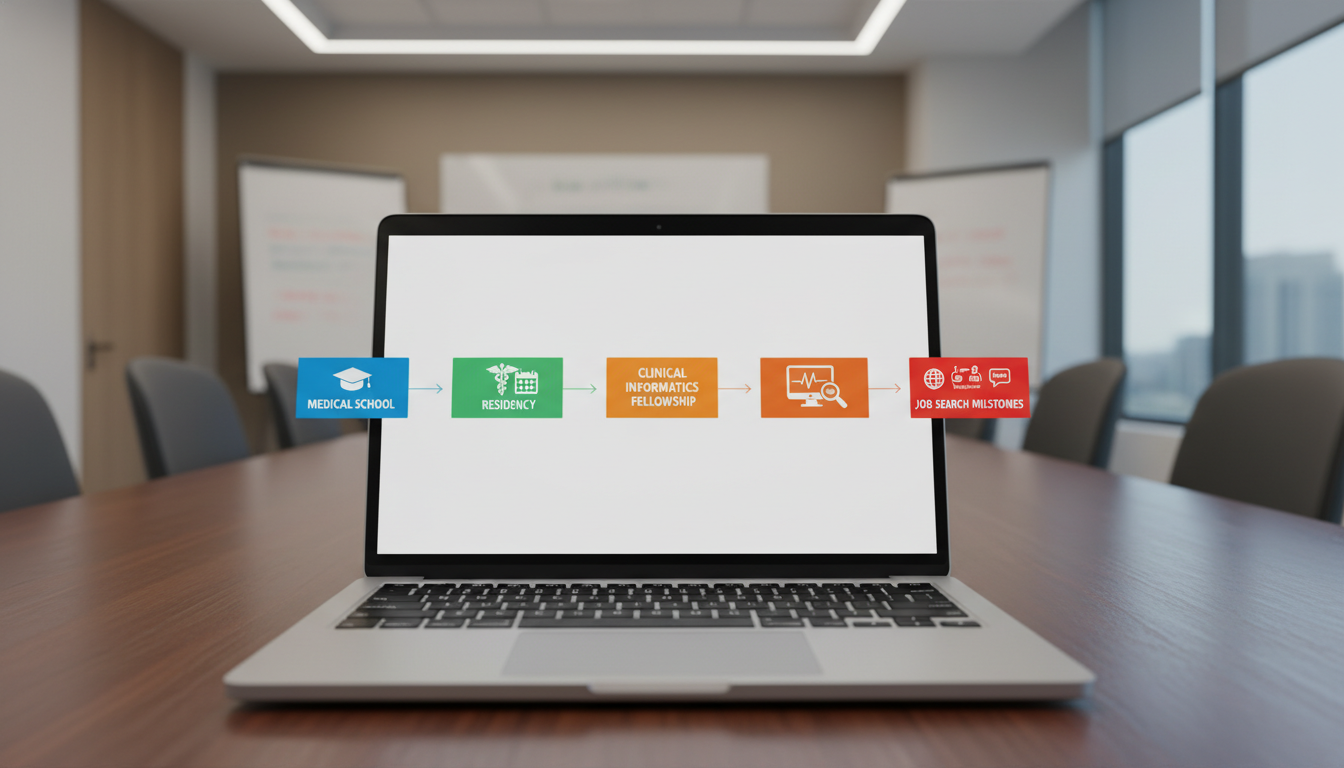
As an IMG targeting clinical informatics, you’re usually considering two main pathways:
- Clinical Informatics Fellowship → Job
- Direct entry into clinical informatics roles (with or without board eligibility)
Your job search timing strategy changes significantly depending on which you prioritize.
A. Timing for Clinical Informatics Fellowship Applications
Most ACGME-accredited clinical informatics fellowships:
- Start: July 1 each year
- Length: 2 years (standard)
- Application cycles: often 12–18 months before start date
- Funding: Typically GME funded, with more rigid timelines and visa limits
For IMGs, timing considerations:
Start exploring fellowships in PGY‑1
- Attend informatics conferences (AMIA, HIMSS) virtually or in person
- Identify programs that:
- Have previously accepted IMGs
- Are willing to sponsor J‑1 or H‑1B (if necessary)
- Look into non-ACGME programs or employer-based fellowships if visa is an issue
Begin serious applications ~15–18 months before your desired start date
Example:- Want fellowship to start July 2027?
- Begin reaching out to programs and faculty by Jan–Mar 2026
- Have application materials ready by mid-2026
If you’ll need a visa change or new visa
- Add 6–9 months for immigration logistics
- Discuss early with your current GME office and with prospective programs
- Ask explicitly in emails:
- “Do you sponsor J‑1/H‑1B for clinical informatics fellows?”
- “Have you previously sponsored IMGs in this role?”
If you begin late (less than 9–12 months before graduation)
You may still find:- Programs with unfilled or new positions
- Non-ACGME informatics or health IT training roles that behave like fellowships
But you’ll need to be more flexible about geographic location and compensation.
B. Timing for Direct Clinical Informatics Jobs Without Fellowship
Not all clinical informatics physicians complete a fellowship. Some IMGs:
- Combine a strong clinical background with:
- EHR build/optimization experience
- Quality improvement and data projects
- Master’s degree in informatics, public health, data science, or health administration
- Then move directly into:
- Clinical informaticist roles
- Physician builder/analyst positions
- Digital health or health IT vendor roles
When to start job search for direct entry roles:
Start positioning yourself 2–3 years before you want the job
- Volunteer for EHR committees, optimization projects, data governance
- Get Epic/Cerner/other EHR certifications if feasible
- Build a portfolio: dashboards, workflows, order sets, clinical decision support
Begin targeted job search 9–12 months before your planned start date
Because:- Hospital hiring for informatics roles can take 4–9 months
- Industry roles may move faster (4–12 weeks) but can be unpredictable
- Visa transfers or new sponsorship add additional latency
Example Timeline – Direct Entry IMG (No Fellowship)
PGY‑2:
- Join informatics committees
- Attend hospital EHR training beyond the basics
- Find a mentor in IT or quality
Early PGY‑3:
- Update CV and LinkedIn to highlight informatics exposure
- Reach out to CMIO/CHIO at your institution
- Apply to 2–3 local informatics or hybrid roles as “exploratory applications”
Final 9–12 months:
- Submit serious applications to clinical + informatics jobs
- Consider both hospital-employed and health IT vendor positions
- Start immigration strategy discussions with any employer interested
Visa and Immigration: Why IMGs Must Start Earlier
For an international medical graduate, job search timing and immigration timing are inseparable. Even the best offer can fall through if the visa plan is unrealistic or started too late.
Common IMG Visa Scenarios in Clinical Informatics
J‑1 Clinical Training → Waiver Job → Possible Informatics Transition
- You must complete a J‑1 waiver (e.g., Conrad 30) in a clinical underserved area
- Clinical informatics roles may or may not qualify as “clinical” for waiver purposes
- Timing:
- Start waiver job search 12–18 months before residency or fellowship completion
- Some states and employers fill J‑1 waiver slots very early in the cycle
- Strategy:
- Look for waiver positions with strong informatics infrastructure
- Negotiate protected time for informatics projects if possible
H‑1B During Residency/Fellowship → H‑1B or O‑1 for Informatics Job
- You may transition from a GME-sponsored H‑1B to an employer H‑1B
- Timing:
- H‑1B cap-exempt jobs (universities, some hospitals) may file year-round
- Cap-subject H‑1Bs are tied to an annual lottery (application in March, start Oct 1)
- Strategy:
- Favor cap-exempt employers (academic centers, non-profit hospitals) for informatics roles
- Discuss sponsoring O‑1 (extraordinary ability) if you have strong research or leadership
Green Card in Process → Flexibility in Job Market
- If you already have permanent residency, your timing is much simpler
- You can apply later and still start on time because visas are not a bottleneck
- Still, for informatics roles, networking and project-based hiring means you should begin 9–12 months in advance
Timing Checklist for IMGs Considering Visa Needs
Start these actions at least 12–24 months before the date you need a new job or fellowship:
Ask your current GME office:
- “How long can I remain on my current visa after completion?”
- “Can our institution sponsor H‑1B or green card for informatics roles?”
For any potential employer or fellowship:
- Confirm explicitly:
- “Do you sponsor visas for informatics physicians?”
- “Have you previously hired IMGs into informatics positions?”
- Confirm explicitly:
Keep documents updated:
- License(s) and ECFMG
- USMLE or equivalent
- CV with in-depth informatics project details (this helps with O‑1 or EB‑1 petitions)
Your job search timing as an IMG in clinical informatics should be shifted earlier by at least 3–6 months compared to a US grad without visa constraints.
Practical Job Search Timeline: Year-by-Year Guide for IMGs
This IMG residency guide section lays out concrete timing from early residency to early attending, assuming you are targeting clinical informatics.

PGY‑1: Exploration and Early Positioning
Goal: Decide whether clinical informatics fits your interests and long-term plans.
Timing actions:
Months 1–6:
- Learn the basics of clinical informatics:
- Attend any internal EHR or quality improvement workshops
- Join AMIA as a trainee member if possible
- Identify at least one faculty member involved in informatics
- Learn the basics of clinical informatics:
Months 6–12:
- Ask to join:
- Clinical decision support committees
- EHR optimization or physician advisory groups
- Start one small informatics-related project:
- Improving a problematic order set
- Analyzing an EHR-related workflow issue
- Start a simple CV “informatics” section where you track all relevant work
- Ask to join:
PGY‑2: Decision Point and Early Networking
Goal: Clarify your path: fellowship vs direct job vs combined plan.
Timing actions (12–24 months before graduation):
Early PGY‑2:
- Meet with:
- A CMIO or informatics director at your institution
- Program leadership to express your interest and ask for guidance
- Decide on primary path:
- Apply for clinical informatics fellowship
- Or aim for hybrid attending + informatics role directly
- Meet with:
Mid to Late PGY‑2:
- If aiming for fellowship:
- Create a list of 10–20 target programs
- Email program directors to ask about IMG and visa policies
- Begin drafting personal statement and updating CV
- If aiming for direct job:
- Start reviewing local physician job market postings:
- “Clinical Informatics Physician”
- “Physician Informaticist”
- “Associate CMIO”
- “Clinical lead, EHR optimization”
- Start reviewing local physician job market postings:
- If aiming for fellowship:
PGY‑3 (or Final Year of Residency): Full Job Search Mode
Goal: Submit serious applications and secure your next step 6–12 months before graduation.
Timing actions:
12–18 months before graduation:
- For fellowship:
- Send applications by each program’s deadline
- Schedule interviews and site visits
- For direct job:
- Inform your network (mentors, chiefs, faculty) that you’re starting your attending job search, with a focus on informatics
- Attend at least one major conference and arrange informational meetings with informatics leaders
- For fellowship:
6–12 months before graduation:
- For both paths:
- Actively monitor job boards:
- AMIA, HIMSS, major hospital systems, academic centers, health IT vendors
- Apply broadly to roles that mix:
- Clinical time in your base specialty
- Dedicated time in informatics projects or leadership
- Actively monitor job boards:
- For both paths:
3–6 months before graduation:
- Negotiate offers:
- Clarify percentage time for informatics vs clinical work
- Ask about title (e.g., “Clinical Informaticist,” “Associate CMIO”)
- Discuss visa sponsorship and long-term plans (e.g., green card)
- Negotiate offers:
During Clinical Informatics Fellowship: Timing the Attending Job Search
If you do a clinical informatics fellowship, your job search timing shifts, but the key principle is the same: start 9–18 months before completion.
Fellowship Year 1:
Months 1–6:
- Define your niche in informatics:
- EHR optimization
- Clinical decision support
- Data analytics and AI
- Quality and safety
- Digital health and telemedicine
- Start or join high-impact projects that can become your portfolio
- Define your niche in informatics:
Months 6–12:
- Present at internal or external meetings
- Update CV regularly with:
- Projects
- Presentations
- Publications (if any)
Fellowship Year 2:
12–18 months before graduation:
- Identify your ideal job mix:
- 50% clinical / 50% informatics?
- 20% clinical / 80% leadership or IT?
- Let your program director and mentors know you’re entering the job search phase
- Identify your ideal job mix:
9–12 months before graduation:
- For academic and hospital roles:
- Begin applying—these can have long hiring cycles
- For vendor/industry roles:
- Start networking with recruiters and leadership but may time your formal applications closer to 6 months prior
- For academic and hospital roles:
3–6 months before graduation:
- You should be in active offer and negotiation mode
- Clarify:
- Visa sponsorship
- Remote vs on-site expectations
- Protected time for informatics
Where to Look and How Timing Differs by Employer Type
The physician job market for informatics has distinct segments, each with different timing behaviors.
1. Academic Medical Centers and Teaching Hospitals
- Usually planning 9–18 months out
- Committees and multiple interviews slow down hiring
- More likely to offer:
- Hybrid roles (clinical + informatics)
- Visa sponsorship (especially if cap-exempt)
Timing advice for IMGs:
- Start conversations at least 12 months before you want to start
- Use conferences and alumni networks to reach internal decision-makers (CMIOs, division chiefs) early
2. Community Hospitals and Health Systems
- Vary widely in timing, but many:
- Plan 6–12 months ahead for physician roles
- Add informatics responsibilities to existing clinical jobs
Timing advice:
- Start outreach and applications 9–12 months before your target date
- Emphasize that you can fill both a clinical and informatics need, which often speeds up interest
3. Health IT Vendors, Startups, and Industry
- Faster timelines:
- 4–12 weeks from application to offer is common
- Less predictable hiring:
- Heavily influenced by contracts, revenue, and product roadmap
Timing advice:
- Begin networking and exploratory conversations 6–12 months out
- Time formal applications ~3–6 months before your desired start date
- Ensure they understand your visa needs early; many smaller companies are not familiar with physician visas
Actionable Steps: Building a Timeline That Works for You
To operationalize all of this, create a personalized job search timeline using these steps:
Define your “target start date”
- Residency or fellowship completion date
- Any required visa deadlines (e.g., J‑1 grace period end)
Count backward:
18–24 months before start
- Decide fellowship vs direct job
- Begin serious networking
- Understand visa constraints
12–18 months before start
- Apply to fellowships and/or early job postings
- Attend key conferences (AMIA/HIMSS) and set up informal meetings
9–12 months before start
- Enter full job search mode
- Apply broadly to hybrid and informatics-focused roles
3–6 months before start
- Negotiate final offers
- Complete visa/credentialing/licensure steps
Schedule quarterly reviews:
Every 3 months, ask:
- Have I expanded my network by at least 3–5 new informatics contacts?
- Am I actively contributing to at least one ongoing informatics project?
- Do my CV and LinkedIn look like an informatics physician, not just a clinician?
Use deliberate language in communication:
- Introduce yourself as:
- “Internal medicine resident with a strong focus on clinical informatics”
- “Family medicine physician pursuing a clinical informatics career path”
- This subtle shift shapes how leaders think of you and how they remember you when roles open.
- Introduce yourself as:
FAQs: Job Search Timing for IMGs in Clinical Informatics
1. When should an IMG in residency start their job search for clinical informatics roles?
Begin serious planning by PGY‑2, and active job search 9–12 months before graduation. If you are targeting a clinical informatics fellowship, you may need to start applications 12–18 months before your desired start date. Because of visa issues, IMGs do best when they plan earlier than US grads—often 3–6 months earlier.
2. Is it better for an IMG to do a clinical informatics fellowship or go directly into an informatics job?
Both paths can work. A clinical informatics fellowship provides structured training, mentorship, board eligibility, and credibility—especially valuable if you trained outside the US. Direct entry can work if you have strong informatics experience, projects, EHR work, and possibly a related master’s degree. If you are unsure, start by preparing for fellowship applications; this positions you well for either path.
3. How does my visa status affect when to start my job search in clinical informatics?
Visa needs can add 6–18 months to your effective job search timeline. If you’re on a J‑1, you must also plan around waiver requirements, which often require 12–18 months lead time. If you’re on H‑1B, you may need to target cap-exempt employers (e.g., academic centers) and allow time for transfer petitions. Always integrate immigration planning into your job search at least 1–2 years before you need a new position.
4. How early can I discuss informatics interests with potential employers without seeming too eager?
You can safely and professionally discuss your informatics interests as early as PGY‑1 with internal mentors, and PGY‑2 with external contacts. Employers in clinical informatics appreciate long-term relationships; many jobs are created or refined for a known candidate. As long as you are clear about your timeline (“I’ll finish residency in June 2027, so I’m planning ahead”), early conversations usually make you more competitive, not less.
By aligning your job search timing with the realities of the physician job market, immigration, and the unique culture of clinical informatics, you dramatically increase your chances of landing a role that matches both your skills and long-term career goals as an international medical graduate.