
Understanding Job Search Timing for IMGs in Family Medicine
For an international medical graduate (IMG) in family medicine, when to start the job search matters almost as much as how you search. The timing affects your visa options, contract terms, geographic flexibility, and ultimately your satisfaction in your first attending job.
This IMG residency guide focuses specifically on job search timing for family medicine residents and fellows, with a realistic, month‑by‑month framework. You’ll see how timing looks different for:
- J‑1 visa holders
- H‑1B visa holders
- U.S. citizens and permanent residents (green card holders)
and how the physician job market behaves for family medicine compared with other specialties.
The Big Picture: How Far in Advance Should an IMG Start?
For family medicine, most experts recommend:
- 12–18 months before graduation: Start serious job exploration
- 9–12 months before graduation: Begin formal interviews
- 6–9 months before graduation: Aim to sign a contract
For many IMGs, this is even more important than for U.S. grads because:
- Visa timelines are rigid.
- Waiver and sponsorship positions are limited.
- Processing delays can derail late decisions.
So if you’re wondering “when to start job search?” as an IMG in family medicine, the safe answer is: about 18 months before your residency end date, with clear milestones between then and graduation.
Year-by-Year & Month-by-Month Timeline
Let’s walk through a practical timeline from PGY‑1 to graduation, highlighting the best windows to step up your job search intensity.
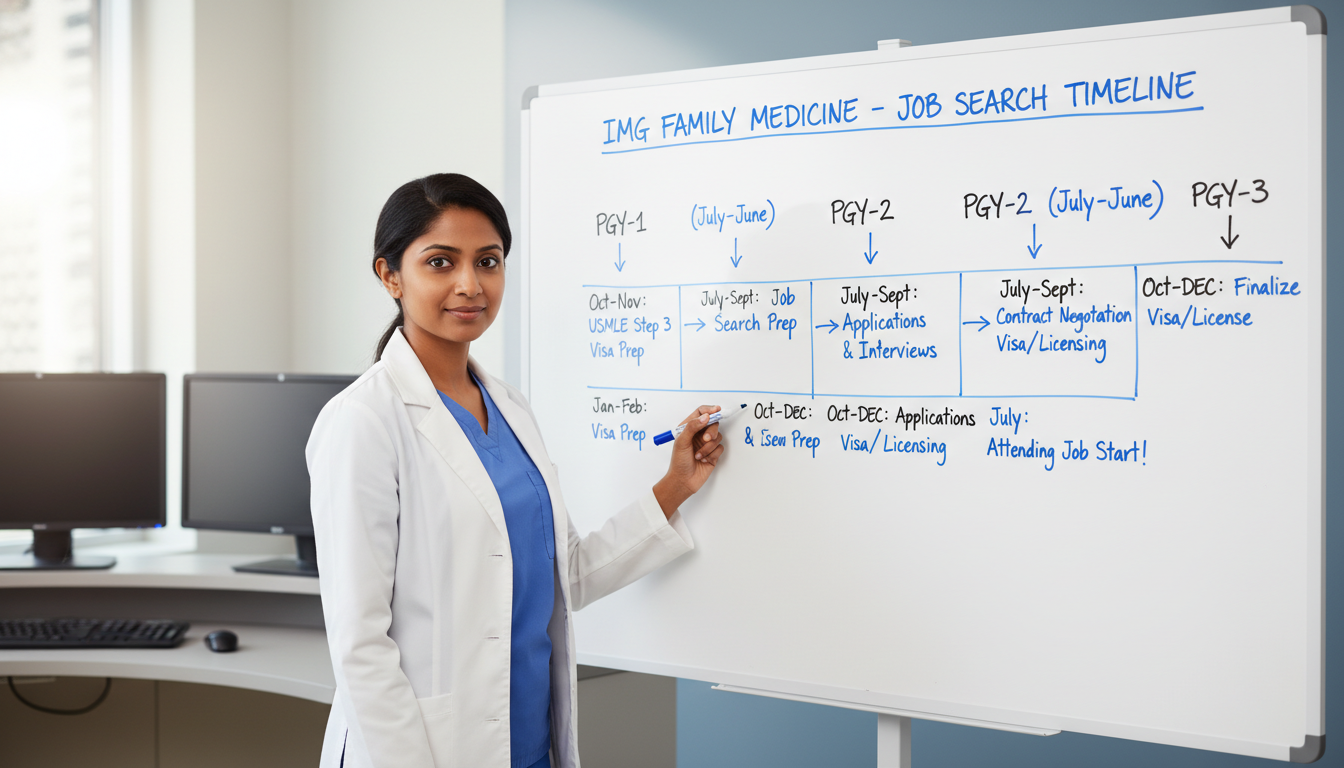
PGY‑1: Laying the Foundation (Not Too Early, But Don’t Ignore It)
At this stage, you do not need to apply for jobs yet. But you should start strategic preparation that will make later stages much easier.
Best timing focus in PGY‑1:
Understand your visa path
- J‑1: Likely will need a waiver job (Conrad 30 or other program).
- H‑1B: Need employers willing to sponsor and file in time.
- Green card/citizen: More flexibility, but timing still matters.
Clarify your career goals
- Outpatient only vs. inpatient + outpatient
- OB vs. no OB
- Urban academic vs. rural community vs. FQHC
- Long‑term interest in leadership, teaching, or research
Begin light networking
- Meet faculty who worked in your ideal geography.
- Attend departmental talks about careers and contracts.
- Connect with alumni, especially IMGs who matched into good jobs.
Key point for PGY‑1: You’re not in the active job market yet, but you are defining your target. No formal applications, just awareness and relationship building.
Early PGY‑2 (18–24 Months Before Graduation): Research & Strategy Phase
This is when the IMG residency guide really becomes relevant to your job search. For IMGs in family medicine, this is the ideal time to get organized.
What to do 18–24 months before graduation:
Clarify graduation date and board exam plans
- Exact date you complete residency matters for contract start dates.
- Plan around your ABFM exam window; some employers care about certification timing.
Define your constraints and priorities
- Visa: Will you require a J‑1 waiver or H‑1B sponsorship?
- Geography:
- Are you open to rural or underserved areas (where many IMG‑friendly jobs are)?
- Do you have family or spouse job constraints?
- Practice setting:
- FQHC, rural hospital, academic clinic, large health system, private group, telemedicine + clinic blend, etc.
Study the physician job market for family medicine
- Look at job boards specific to FM (AAFP, state academies, large health systems).
- Learn what “standard” compensation and benefits look like in your preferred states.
- Notice which job ads repeatedly mention J‑1 waiver available or H‑1B sponsorship.
Update your professional materials
- CV in U.S. format
- Basic cover email template
- Begin a simple spreadsheet to track leads, contacts, and deadlines.
Why this timing works:
By starting this early, you understand which states and systems are IMG-friendly and how many waiver‑type positions realistically exist in your target regions. You’ll also avoid a last‑minute scramble if your first choices don’t work out.
Late PGY‑2 to Early PGY‑3 (12–18 Months Before Graduation): Initial Outreach & Screening
This is when you truly begin your family medicine residency to attending job transition planning.
What to do 12–18 months before graduation:
Start soft outreach to potential employers
- Email recruiters or medical directors of systems in your target states.
- Attend career fairs (AAFP, state conferences, hospital system events).
- Let trusted mentors know your goals; many jobs are filled by referral.
Clarify state priorities for J‑1 Conrad 30 (if applicable)
- Research each state’s Conrad 30 rules:
- When does their application window open?
- Which specialties are prioritized? (Family medicine is often favored.)
- Are there IMG‑friendly rural or underserved sites?
- Research each state’s Conrad 30 rules:
Ask visa‑specific questions early
- “Do you sponsor J‑1 waiver positions?”
- “Do you support H‑1B for family medicine?”
- “Is there an internal legal team or external immigration lawyer?”
Start informal interviews
- Phone or virtual conversations with recruiters.
- Early screening by medical directors.
- Clarify start date, visa policies, and call expectations.
Why 12–18 months is crucial for IMGs:
For many J‑1 and H‑1B roles, institutions begin planning a year or more in advance due to visa paperwork and internal budgeting. If you only start looking 6 months before graduation, you may find few open options that can realistically arrange visas in time.
PGY‑3 (or Final Year): Active Search, Interviews & Contracts
This is the peak activity period. For most IMGs in family medicine, this is when job search timing must be intentional and disciplined.
12 Months Before Graduation: Widening the Net
Apply formally to a broad set of suitable jobs, especially:
- Rural and underserved positions that offer J‑1 waiver opportunities
- FQHCs and community health centers
- Health systems known to be IMG/visa friendly
Start structured interviews:
- Aim to schedule first wave of interviews 9–12 months before graduating.
- Keep detailed notes about compensation models, patient load, administration, and support staff.
Confirm visa strategy with each serious employer:
- J‑1: Will this site sponsor a Conrad 30 waiver, or other federal waiver (ARC, HHS)?
- H‑1B: Is timing aligned with cap‑subject or cap‑exempt filing dates?
9–12 Months Before Graduation: Site Visits & Shortlist
- In‑person visits (if feasible) to top 3–5 potential employers.
- Review how well each option matches your priorities: visa, location, practice style, call burden, compensation.
- For J‑1s, ensure the job is in a designated shortage area and meets waiver criteria.
Target:
By 9 months before graduation, it’s wise for most IMGs to have a shortlist of 2–3 serious offers pending or expected, especially if visas are involved.
6–9 Months Before Graduation: Contract Negotiation & Signing
- This is when you should aim to sign a binding contract.
- Why this timing?
- Visa processing (J‑1 waiver or H‑1B) often requires months.
- Licensure and credentialing processes can each take 3–6 months.
- Delays are common; having buffer time is protective.
Tasks in this period:
Carefully review contract terms (preferably with an attorney):
- Salary, bonus structure, RVU expectations
- Non‑compete radius and duration
- Call schedule and inpatient responsibilities
- Termination clauses and malpractice coverage (claims‑made vs. occurrence)
Lock in start date that matches your visa and licensure timeline.
Coordinate with immigration counsel:
- Ensure all necessary documents from employer and you are submitted early.
- Track receipt and approval notices.
Late signing risks:
If you delay signing until <4–5 months before graduation as an IMG, you may:
- Lose waiver opportunities to applicants who committed earlier.
- Face visa denials due to rushed or incomplete filings.
- Be forced to accept geographically undesirable or lower‑quality jobs under time pressure.
Visa-Specific Timing Considerations for IMGs in Family Medicine
Visa status is the single biggest factor shaping FM match to first attending job timing for international medical graduates.

J‑1 Visa Holders: Timing Around Waiver Requirements
As a J‑1 physician, you must either:
- Return to your home country for 2 years, or
- Obtain a J‑1 waiver job (e.g., Conrad 30 or other federal program)
Key timing points:
Start targeted search ~18 months before graduation.
- Many waiver positions are in rural/underserved settings that recruit early.
Research state Conrad 30 timelines 12–18 months in advance.
- Some states open applications as early as September–October before your final year ends.
- Some fill quickly (family medicine is often in demand).
Aim to sign a waiver‑eligible contract 9–12 months before graduation.
- Employer will then prepare the waiver application package.
Coordinate waiver application and H‑1B (or other status) timing.
- J‑1 waiver approval is required before filing H‑1B in most cases.
- Delays can easily push your start date back if you begin too late.
Practical advice:
If you are J‑1, don’t wait for “the perfect dream job” in a saturated urban area. Begin with IMG‑friendly, waiver‑friendly employers and secure a strong baseline offer on time. You can consider moving later once your waiver commitment is fulfilled.
H‑1B Visa Holders: Aligning with Filing Windows
If you are already on H‑1B in residency (less common in family medicine but possible), or transitioning to H‑1B after J‑1 waiver:
- Many hospitals and academic centers are cap‑exempt and can file year‑round, but still need months of lead time.
- Private practices and some health systems are cap‑subject, requiring attention to the spring lottery timelines.
Timing guidance:
- Start serious search 12–18 months before graduation for both cap‑exempt and cap‑subject roles.
- Aim to finalize contract 6–9 months before graduation, earlier if a lottery is involved.
- Confirm with employers:
- Are they cap‑subject or cap‑exempt?
- When will they file the petition?
- What happens if lottery selection fails?
U.S. Citizens & Green Card Holders: More Flexibility, But Don’t Wait Too Long
If you do not require visa sponsorship:
- You have more geographic and job flexibility.
- You can sometimes sign later (4–6 months before graduation) and still be fine.
However, even without visa issues, it’s still smart to:
- Start exploring options 12–15 months before graduation.
- Target signing no later than 6 months before graduation to ensure:
- State licensure, credentialing, and payer enrollment are complete.
- You avoid being forced into “whatever is left” in a weaker physician job market cycle.
How the Family Medicine Physician Job Market Affects Timing
Compared with many other specialties, family medicine remains in high demand, especially in:
- Rural areas
- Underserved urban communities
- Federally Qualified Health Centers (FQHCs)
- Community hospitals and integrated health systems
This shapes timing in several ways for IMGs:
Jobs are more plentiful, but not equally IMG‑friendly.
- There may be hundreds of FM postings, but only a subset sponsor J‑1 or H‑1B.
- Early search gives you access to the best options among that subset.
Rural/underserved jobs recruit earlier.
- They know it can take time to attract candidates, so they start outreach 12–18 months ahead.
Academic vs. community timelines differ.
- Academic or large system positions may have more formal, annual recruitment cycles.
- Private groups may recruit closer to when they need you (6–9 months out), but are not always prepared for visas.
Economic shifts can affect late starters.
- In tighter physician job markets, desirable areas (major metros, coastal cities) may fill earlier.
- Early applicants can secure positions that late applicants never see.
Key takeaway:
Even in a strong family medicine physician job market, IMGs must account for visa and licensure friction. Abundant jobs do not guarantee abundant visa‑friendly jobs close to your preferred city.
Practical Checklist: What to Do at Each Stage
Here is a concise, actionable timeline for when to start job search and what to do, tailored to an IMG in family medicine.
18–24 Months Before Graduation
- Clarify visa type and long‑term immigration goals.
- Define geographic priorities and flexibility (urban vs rural, which states).
- Research:
- State Conrad 30 programs (for J‑1).
- State licensing timelines.
- Major employers and systems in target areas.
- Begin light networking and attend career sessions.
12–18 Months Before Graduation
- Create or update:
- CV, cover email, reference list.
- Tracking spreadsheet for employers/contacts.
- Start initial outreach to:
- Health systems, FQHCs, rural clinics.
- Recruiters who specialize in IMGs.
- Ask about visa sponsorship up front.
- Schedule first screening calls and early interviews.
9–12 Months Before Graduation
- Intensify applications to:
- 10–20 well‑matched jobs, especially waiver‑eligible sites if J‑1.
- Visit top potential employers (virtual or in‑person).
- Narrow to a shortlist of 2–3 serious options.
- Start preliminary contract and compensation discussions.
6–9 Months Before Graduation
- Choose preferred job and negotiate contract.
- Finalize and sign no later than 6–9 months before graduation (earlier for J‑1).
- Begin visa, licensure, and credentialing paperwork with employer support.
- Maintain a backup option if primary employer’s visa plans fall through.
0–6 Months Before Graduation
- Complete all:
- State license and DEA.
- Hospital privileges and payer enrollment.
- Board exam scheduling and preparation.
- Stay in close contact with employer HR and legal teams.
- Prepare for transition: housing, moving logistics, practice orientation.
FAQs: Job Search Timing for IMG Family Medicine Physicians
1. When is the best time for an IMG in family medicine to start job searching?
For most IMGs, especially those on J‑1 or H‑1B visas, the optimal time to begin structured job searching is 18 months before graduation. You can do early research in late PGY‑1, but formal outreach, applications, and interviews should ramp up between 12–18 months before your residency end date. Aim to have a signed contract by 6–9 months pre‑graduation.
2. Is it too late if I start my job search only 6 months before graduating?
It’s not impossible, but it’s risky, especially if you require visa sponsorship. At 6 months out:
- Many J‑1 waiver positions and H‑1B slots may already be committed.
- Licensure and visa processes may be compressed, increasing the chance of delays.
If you’re in this situation, expand your geographic search immediately, prioritize IMG‑friendly rural or underserved employers, and consider working with a recruiter experienced in urgent IMG placements.
3. How does job search timing differ for J‑1 vs. H‑1B vs. green card holders?
- J‑1: Must start earliest, ideally 18 months before graduation, to secure waiver‑eligible positions and meet Conrad 30 or other waiver deadlines.
- H‑1B: Start 12–18 months out; need time to align with cap‑subject or cap‑exempt filing windows, plus processing time.
- Green card/U.S. citizen: More flexible; starting 12–15 months before graduation is sufficient in most cases, but aim to sign no later than 6 months pre‑graduation.
4. Should I delay signing a contract in case a better offer appears later?
For IMGs, especially on visas, delaying too long can be more damaging than helpful. A practical approach:
- Once you have a solid, visa‑compatible, and acceptable job that meets your key criteria, it’s usually wise to secure it 6–9 months before graduation.
- You can negotiate thoughtfully rather than rushing.
- Remember that job changes are possible later; your first attending job doesn’t have to be your forever job, but it must satisfy visa and licensure realities.
By understanding and respecting the timing of the job search, you give yourself—an international medical graduate in family medicine—the best chance to transition smoothly from the FM match and residency to a stable, fulfilling first attending role in a complex physician job market.