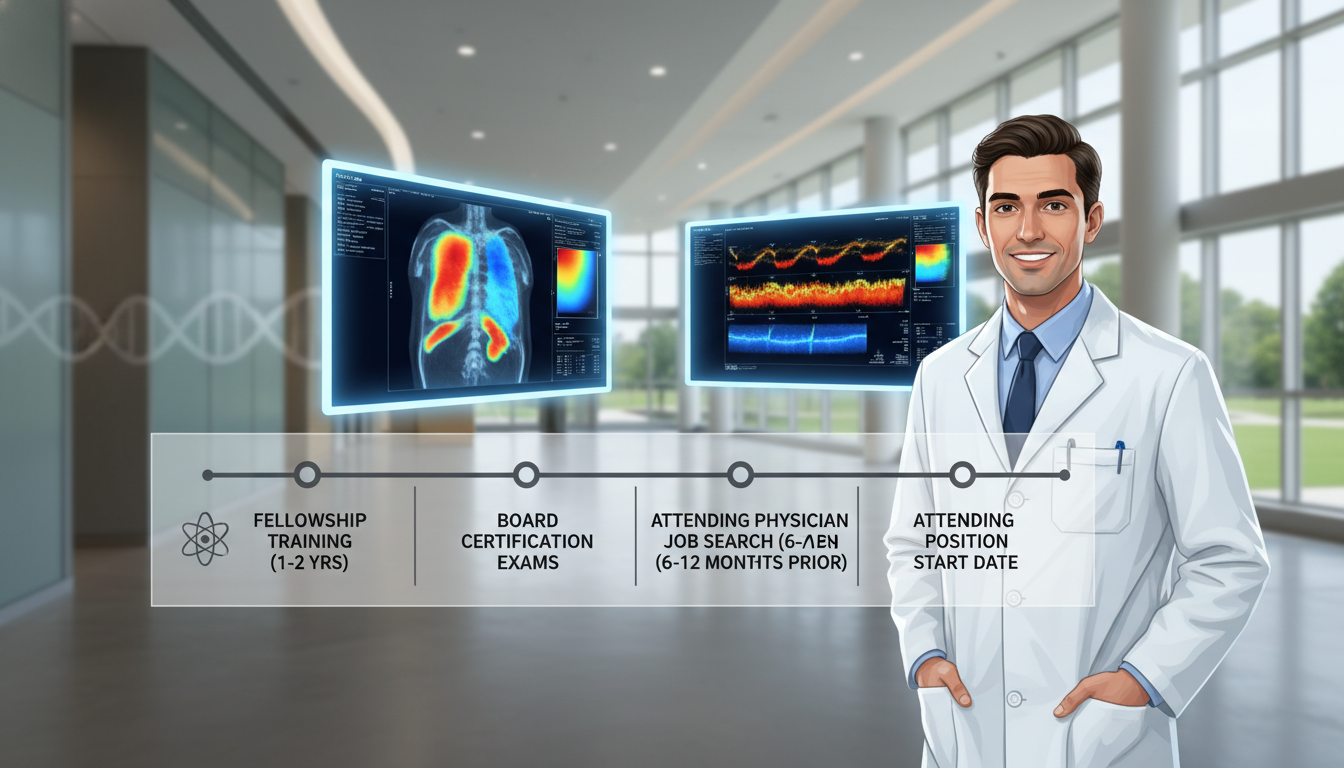
Understanding the Job Search Timeline for IMGs in Nuclear Medicine
Finding your first attending position in nuclear medicine as an international medical graduate (IMG) is not just about sending out applications; it’s about timing them correctly. The nuclear medicine job market is relatively small and regionally variable, and IMGs must also account for visas, licensing, and credentialing. Starting too late can severely limit your options; starting too early can lead to stalled conversations or lost momentum.
This IMG residency guide focuses specifically on job search timing for nuclear medicine fellows and residents with an eye toward the post‑residency physician job market. While the details vary depending on your visa status, sub-specialty interests, and geographic preferences, you can follow a structured, year‑by‑year plan to maximize your chances in the nuclear medicine match for fellowships and, ultimately, in the attending job search.
Below is a practical, stepwise timeline tailored to IMGs in nuclear medicine, from early residency through the first attending contract.
1. Big-Picture Timeline: When to Start Job Search Activities
The question “when to start job search?” is especially crucial for IMGs in nuclear medicine because of visa and licensing timelines. The short answer:
Clinical training level:
- Nuclear medicine residency (independent) or diagnostic radiology resident planning nuclear medicine fellowship?
- Nuclear medicine fellowship (one- or two-year) approaching completion?
Recommended timeline for first attending role:
- 18–24 months before graduation: Strategy and positioning
- 14–18 months before graduation: Early networking and market research
- 10–14 months before graduation: Active search and first applications
- 6–10 months before graduation: Interviews and offer negotiations
- 3–6 months before graduation: Finalizing license, visas, and onboarding
Because nuclear medicine positions are limited, you need to be slightly ahead of peers in larger specialties like internal medicine or pediatrics. This is even more important as an international medical graduate who might require H‑1B, O‑1, or J‑1 waiver sponsorship.
Why IMGs Need More Lead Time
Several factors make timing more complex for IMGs:
Visa sponsorship and processing
- Many employers are unsure about rules and may need extra time or legal guidance.
- J‑1 waiver positions (Conrad 30, VA, or other federal waivers) have strict application windows.
State licensure
- Some state medical boards can take 4–6 months or longer.
- Certain states have additional requirements or limitations for IMGs.
Credentialing and hospital privileges
- Background checks, training verifications, and board eligibility reviews are time‑consuming.
Nuclear medicine niche market
- Fewer positions means you cannot rely on a last‑minute approach.
- Jobs often open when a single faculty member or private group partner decides to leave.
A good rule of thumb: start meaningful planning at least 18 months before your anticipated completion date, even if active applications wait until the 10–14‑month mark.
2. From Residency to Fellowship to First Job: Key Milestones for IMGs
The nuclear medicine pathway commonly includes:
- Diagnostic radiology residency → Nuclear medicine fellowship
or - Nuclear medicine residency (3 years) → Fellowship or attending role
Here’s how to align your nuclear medicine residency or fellowship years with job search timing.
PGY-1 to PGY-3: Laying the Foundation (Early Planning Phase)
Even in your early years:
Clarify your career direction
- Academic vs non-academic
- Pure nuclear medicine vs hybrid role (nuclear + diagnostic radiology, or theranostics focus)
- Interest in research, radiotheranostics, PET/MR, or industry collaborations
Understand visa constraints early
- Are you on J‑1 or H‑1B?
- What are the waiver options for your intended states or regions?
- Do you plan to change visas (e.g., J‑1 → H‑1B, H‑1B → O‑1)?
Build a profile that matches your target jobs
- Case mix: PET/CT, SPECT/CT, cardiac nuclear medicine, radionuclide therapies (e.g., Lu‑177, I‑131)
- Research or QI projects: especially important for academics or O‑1 candidates
- Teaching experiences: helpful for university positions
You don’t need to apply for jobs yet, but you do need to align your CV with the type of positions you’ll eventually seek.
Final Residency Year or First Fellowship Year: Positioning Yourself (18–24 Months Out)
Around 18–24 months before completion (often your first fellowship year or late in nuclear medicine residency):
Refine geographic and practice-type preferences
- Do you prefer large academic centers, community hospitals with academic affiliation, or private practice groups?
- Are you open to rural or underserved areas (critical for J‑1 waiver candidates)?
Meet key people early
- Talk to your program director, nuclear medicine faculty, and department chair about your plans.
- Ask directly: “What is the physician job market like in nuclear medicine for an IMG? Where have recent graduates gone? When should I seriously begin my search?”
Start discreet networking
- Present at national meetings: SNMMI (Society of Nuclear Medicine and Molecular Imaging), RSNA, ASNC (for cardiac imaging).
- Introduce yourself to faculty from other institutions whose work interests you.
- Join relevant email lists and online forums where nuclear medicine jobs may be posted.
At this stage, the focus is not yet on sending applications but mapping the terrain.

3. Active Job Search Window: Month-by-Month Guide for IMGs
Once you reach the final year of your nuclear medicine training (residency or fellowship), the question of timing becomes very concrete. Here is a practical timeline:
14–18 Months Before Completion: Early Reconnaissance
Update your CV and LinkedIn profile
- Highlight nuclear medicine competencies, relevant board eligibility dates, and visa status.
- Emphasize radionuclide therapy experience, if applicable: Lu‑177 DOTATATE, Lu‑177 PSMA, I‑131, Y‑90, etc.
Start informational outreach
- Email mentors at other institutions: “I’m an IMG in nuclear medicine finishing in June 20XX; what does the local physician job market look like near you?”
- Ask about typical hiring timelines at their centers.
Monitor job boards and newsletters
- SNMMI Career Center
- ACR and RSNA career sites
- Institutional job pages (big academic centers, VA hospitals, cancer centers)
You’re still early, but you want to see how frequently nuclear medicine roles are posted and in what settings.
10–14 Months Before Completion: First Wave of Applications
This is usually the ideal time to begin active applications for nuclear medicine attending jobs, especially for IMGs.
Start applying to posted positions
- Academic nuclear medicine departments
- Hybrid radiology/nuclear medicine positions
- VA hospitals (often more IMG- and visa-friendly)
- Cancer centers focusing on theranostics
Send targeted “cold emails” where jobs are not yet posted
- Contact section chiefs, chairs, or nuclear medicine directors in locations of interest.
- Briefly introduce yourself as an IMG nuclear medicine trainee, mention your training completion date, visa needs, and why you’re interested in their institution.
- Ask whether they anticipate openings within the next 12–18 months.
Clarify visa willingness early
- Ask recruiters/employers if they can sponsor H‑1B or support a J‑1 waiver.
- Document which states and employers are open to your situation.
This phase should generate your first set of interviews. For nuclear medicine, this first wave can be critical since some departments plan hires 12–18 months ahead.
8–10 Months Before Completion: Intensifying Applications and Interviews
At this stage:
Follow up on earlier contacts
- Politely check in with departments that expressed interest but weren’t ready to commit.
- Update them with any new publications, board exam results, or conference presentations.
Schedule and attend interviews
- Prepare to discuss how your nuclear medicine and theranostics experience will fit their clinical service and strategic growth.
- Be ready to clearly explain your visa situation and timelines (for example, “My J‑1 waiver must be filed by X date; my ECFMG certificate is current; I am eligible for H‑1B.”).
Expand your search if responses are slow
- Consider broader geographic areas, including rural or underserved locations (especially for J‑1 waiver needs).
- Look at hybrid positions where you spend part of your time reading CT/MR or general radiology and part in nuclear medicine.
By now, you should be in active interview mode. Waiting until this time to initiate the process as an IMG can be risky; doing so earlier gives you leverage and choices.
6–8 Months Before Completion: Second Chance Window and Offer Negotiation
This is often when:
- Employers finalize staffing for the upcoming academic/fiscal year.
- Late-breaking openings appear due to retirements, resignations, or unexpected expansion of theranostic programs.
Your tasks during this window:
Pursue newly posted jobs aggressively
- You may see community hospitals or smaller systems start searching closer to need.
- For IMGs needing J‑1 waivers, check if state application cycles align with these job postings.
Negotiate offers
- Compensation: base salary, incentives for procedure volumes (e.g., therapies), signing bonus.
- Support: time for research, protected academic time, conference funding, access to advanced imaging technology.
- Visa/legal support: Who covers legal fees? Do they have prior experience sponsoring IMGs?
Assess long-term fit
- Will you be the only nuclear medicine physician?
- Is there a commitment to expand the theranostics service line?
- Are you expected to take general radiology call?
For IMGs, this is a crucial window: if you don’t have solid leads by 6 months before completion, you need a backup strategy (e.g., extend fellowship, short-term academic role, or consider other states or practice types).
3–6 Months Before Completion: Finalizing and Contingency Planning
By this stage, most IMGs should:
- Have a signed offer and active licensure application in the hiring state.
- Have visa paperwork in motion (J‑1 waiver, H‑1B petition, or O‑1).
If you still don’t have a position:
Immediately widen your search
- Include all states where your visa strategy is feasible.
- Look at temporary academic or research roles that can buy time.
- Consider nontraditional roles (e.g., industry positions related to radiopharmaceuticals, imaging AI companies, contract teleradiology for hybrid roles), while continuing your clinical search.
Stay in close contact with your program leadership
- They may hear of last-minute openings in nuclear medicine networks.
- Ask whether a chief fellow year, research year, or additional training (e.g., PET/MR, body imaging) is possible.
4. Special Timing Considerations for IMGs: Visas, Licensure, and Board Eligibility
Visa-Related Timing for Nuclear Medicine IMGs
Your visa category will affect when to start job search and where you can work.
J‑1 Visa (ECFMG-sponsored)
- Must usually return home for two years or obtain a J‑1 waiver.
- Conrad 30 and other waiver programs have specific annual timelines and state quotas.
- Key implications:
- Start identifying waiver-eligible employers at least 12–18 months before graduation.
- Many waiver-friendly spots are in underserved or rural locations; some will have limited nuclear medicine infrastructure, so be prepared for a hybrid job.
H‑1B Visa
- More flexibility in avoiding the 2-year home requirement, but:
- Employers must be willing and able to sponsor H‑1B.
- Start discussions 12–15 months before start date so legal teams can plan.
- Universities and some hospital systems are cap-exempt, which can be beneficial for timing.
- More flexibility in avoiding the 2-year home requirement, but:
O‑1 Visa
- Requires evidence of extraordinary ability; research, publications, and national presentations are key.
- Preparation for O‑1 petitions can take 3–6+ months.
- If aiming for O‑1, begin building a strong academic profile during early residency and involve an immigration attorney early.
State Licensure Timing
Nuclear medicine attending jobs require a full medical license:
- Timeline: 3–6 months or longer, depending on the state.
- Action points:
- As soon as you sign an offer, submit your license application if not earlier.
- Keep all documents organized: medical school diploma, transcripts, ECFMG certificate, training verifications.
IMGs should avoid signing with employers who underestimate licensing time; it can delay your start date and income.
ABNM / ABR Board Eligibility and Job Search
Employers will ask:
- Are you board-eligible or board-certified in nuclear medicine (ABNM) or diagnostic radiology (ABR) with nuclear medicine training?
- When will you take your boards?
Timing notes:
- Clarify your board eligibility date and put it prominently on your CV.
- Some jobs may be contingent on passing boards within a certain timeframe.
If you plan to sit for boards right after graduation, make sure this is communicated so employers understand your timeline.
5. Strategies to Maximize Opportunities in a Small Nuclear Medicine Job Market
Because nuclear medicine is smaller than many specialties, timing alone is not enough; you must also be strategic.
Use Training Years to Become “Easy to Hire”
To stand out and fit the needs of the physician job market:
Gain broad modality experience:
- PET/CT (oncologic, neurologic, cardiac)
- SPECT/CT (cardiac, bone, infection imaging)
- Radionuclide therapy (I‑131, Lu‑177, Y‑90, Ra‑223)
Develop complementary skills:
- If you’re a diagnostic radiology graduate, maintain competence in general body imaging or neuro to fit hybrid roles.
- For pure nuclear medicine IMGs, seek additional rotations or electives that broaden your interpreting capabilities.
Show commitment to theranostics:
- Employers are expanding services like Lu‑177 and PSMA therapies.
- Having hands-on experience and QI/research in these areas makes you more appealing.
Leverage Networking Beyond Formal Advertisements
Many nuclear medicine positions are never widely advertised. To uncover these “hidden” jobs:
- Ask your attendings: “If you hear of any nuclear medicine departments planning to expand in the next 1–2 years, could you introduce me?”
- Stay in touch with alumni from your program working across the U.S. and internationally.
- During conferences, attend business meetings or interest groups where future staffing might be discussed informally.
Given the niche size of nuclear medicine, word-of-mouth is often more powerful than online job boards, particularly if you’re an IMG needing visa support.
Target Employers Who Understand IMGs
For timing and practicality, you’ll have more success with:
- Academic medical centers with previous IMG faculty.
- VA hospitals and large health systems with in-house legal/immigration teams.
- Employers in states with a history of J‑1 waiver placements for radiology/nuclear medicine.
Ask directly in early discussions:
- “Have you previously sponsored J‑1 waivers or H‑1B visas for physicians?”
- “Do you have institutional guidelines on hiring IMGs?”
This avoids wasting precious months on employers who ultimately cannot support your situation.
6. Putting It All Together: A Sample Job Search Timeline for an IMG in Nuclear Medicine
Below is an example for an IMG completing a nuclear medicine fellowship in June 2027 on a J‑1 visa.
July 2025 (24 months out)
- Clarify career goals: academic vs community; theranostics focus.
- Review J‑1 waiver options in states of interest.
January–June 2026 (18–12 months out)
- Update CV; attend SNMMI, meet potential employers and mentors.
- Identify states with open or historically IMG-friendly waiver positions.
August–October 2026 (10–8 months out)
- Begin active applications to academic centers and waiver-eligible sites.
- Send tailored emails to nuclear medicine chiefs in target regions.
November 2026–January 2027 (7–5 months out)
- Attend interviews; negotiate offers.
- Confirm that the employer can support J‑1 waiver and start process immediately.
February–April 2027 (4–2 months out)
- Finalize state license application.
- Complete any remaining credentialing paperwork.
July 2027
- Start as attending nuclear medicine physician under J‑1 waiver in selected state.
This timeline can be adapted for H‑1B or O‑1 visas, but the principle is the same: start planning earlier than you think you need to.
FAQs: Job Search Timing for IMGs in Nuclear Medicine
1. When should an international medical graduate in nuclear medicine begin their attending job search?
Aim to start serious planning around 18–24 months before completion of your final training (residency or fellowship) and to submit your first applications 10–14 months before graduation. As an IMG, especially with visa needs, this early start is essential to allow time for interviews, contract negotiation, licensure, and immigration processing.
2. Is the physician job market good for nuclear medicine, or is it too small?
The nuclear medicine job market is small but evolving. Growth in theranostics and PET imaging is creating new opportunities, particularly in academic centers and cancer institutes. However, because the field is niche, positions are fewer and sometimes geographically clustered. IMGs should be flexible about location and consider hybrid roles that include both nuclear medicine and diagnostic radiology responsibilities.
3. How does visa status affect job search timing for IMGs?
Visa status is a major driver of timing:
- J‑1: Start identifying J‑1 waiver-eligible employers and states at least 12–18 months before completion.
- H‑1B: Employers need lead time (often 6–9 months) to process petitions; begin discussions a year in advance.
- O‑1: Because this requires a strong portfolio and legal preparation, planning may need to start several years before completion.
Always involve an immigration attorney early and be transparent with potential employers about your needs.
4. What if I am near graduation and still do not have an attending job?
If you are within 6 months of completion and still job-seeking:
- Rapidly broaden your search to more states and practice types, including rural or underserved areas and VA systems.
- Ask your program director about short-term options (extended fellowship, research year, or chief fellow role) that maintain your visa and income.
- Continue applying and networking aggressively; last-minute positions can appear due to unexpected staffing changes.
Acting early is best, but even late in the process, persistence, flexibility, and leveraging mentors can still secure a suitable first role.
By understanding the unique timing pressures facing an international medical graduate in nuclear medicine and aligning your strategy with the realities of the physician job market, you can move from residency or fellowship to a well-matched attending position with fewer surprises and more control over your career trajectory.