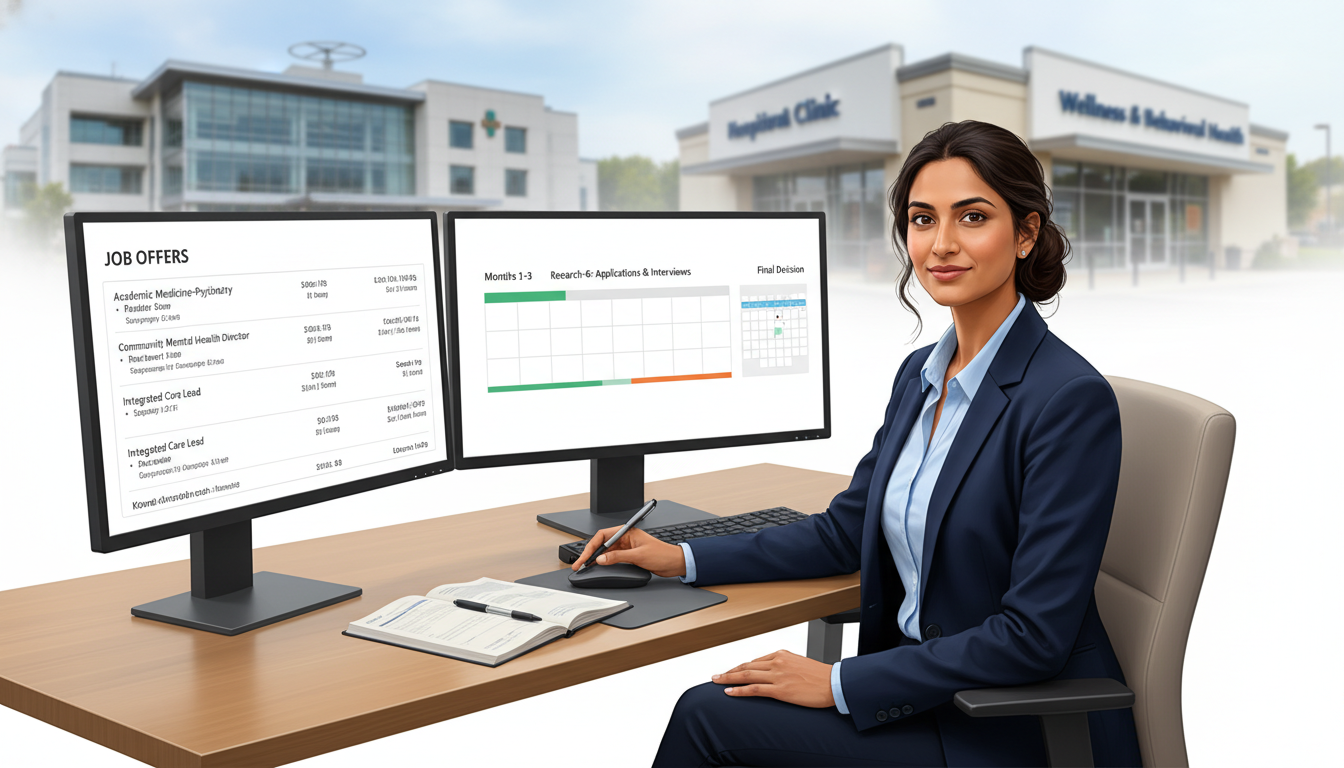
Overview: Why Job Search Timing Matters for IMGs in Preliminary Medicine
As an international medical graduate (IMG) in a preliminary medicine year, your job search timing is more complex than that of categorical residents. You’re balancing demanding clinical work, visa considerations, specialty transitions, and uncertainty about your next step. A poorly timed job search can close doors; a well-planned timeline can significantly expand your options in the physician job market.
This IMG residency guide focuses specifically on job search timing for those in Preliminary Medicine (Prelim IM) who are:
- Planning to move into a categorical residency (internal medicine, neurology, anesthesiology, radiology, etc.)
- Exploring non-residency roles (research, hospitalist extender roles, non-ACGME fellowships, clinical educator positions)
- Unsure and wanting to keep multiple paths open
This article walks through:
- A month-by-month timeline of when to start job search activities
- Different timing strategies depending on your primary career goal
- Visa-related timing issues specific to IMGs
- Practical tactics to avoid common timing mistakes
- How to align your preliminary medicine year workload with an effective job search
Understanding Your Unique Position as an IMG in Preliminary Medicine
Before you can time your job search, you need to understand what makes a prelim IM track different—and how that affects timing.
What Is a Preliminary Medicine Year?
A Preliminary Medicine year is a 1-year, non-categorical position, usually PGY-1, that:
- Provides broad internal medicine training
- Fulfills the internship requirement for many specialties (neurology, radiology, anesthesia, dermatology, ophthalmology, physical medicine and rehabilitation, etc.)
- Ends after 12 months with no guaranteed continuation in that same program
Because your training spot automatically ends, you face a hard deadline: you must secure your next role before the end of this year (unless you’re transitioning into a matched categorical program).
Unique Challenges for IMGs in Prelim Medicine
As an international medical graduate in prelim IM, you’re navigating:
- Visa constraints (J-1, H-1B, or pending green card)
- The need to plan for backup options if you don’t match into a categorical position
- Limited time during a demanding year to complete applications, interviews, and licensing steps
- Potential gaps in US experience or networking compared to US graduates
All of this makes job search timing not just important, but critical.
Core Timelines: When to Start Job Search Based on Your Primary Goal
Your ideal timing depends on your main next step. Use the scenario that best fits you, then adjust.
Scenario 1: Your Priority Is Matching into a Categorical Residency
For many IMGs in preliminary medicine, the primary goal is to:
- Secure a categorical internal medicine or other specialty position in the next cycle
- Treat the prelim year as your intern year and stepping stone
In this case, your “job search” initially looks like:
- ERAS applications
- Residency interviews
- Networking within your own hospital system
Timing Overview:
- ERAS/NRMP cycle: Typically opens in September (ERAS program access starting earlier in summer)
- Interview season: October–January
- Rank order list deadline: Usually late February
- Match Day: March
For this path, your non-residency job search serves as a backup strategy, not the primary plan.
Key Timing Principle:
Complete your residency application cycle first, but begin backup planning early (don’t wait until Match Week).
Scenario 2: You Want a Job (Hospital/Non-Residency) Immediately After Prelim Year
Some IMGs in prelIM pursue:
- Non-ACGME fellowships
- Research positions
- Hospitalist or “hospitalist extender” roles (sometimes called “clinical associates,” “RPAs,” “PGY-2+ non-ACGME,” etc.)
- Teaching-focused roles or transition-to-practice programs
In this case, your job search timing should be aggressive and start early in the year, often 6–9 months before your end date.
Rule of thumb:
Assume you should be fully engaged in the job search by October–December of your prelim year if your contract ends in June–July.
Scenario 3: You Want Both Options Open (Residency + Job as Backup)
This is the most common and realistic approach for IMGs in preliminary medicine.
Strategy:
- Treat ERAS and the residency Match as your primary pathway.
- Simultaneously, lay the groundwork for a job search:
- Explore hospital or research roles
- Build networks
- Clarify visa and licensing steps
- Escalate your job search if:
- Match results are uncertain
- You don’t match
- SOAP options are limited or not ideal
This dual-track approach makes timing more complex, but it’s safer.
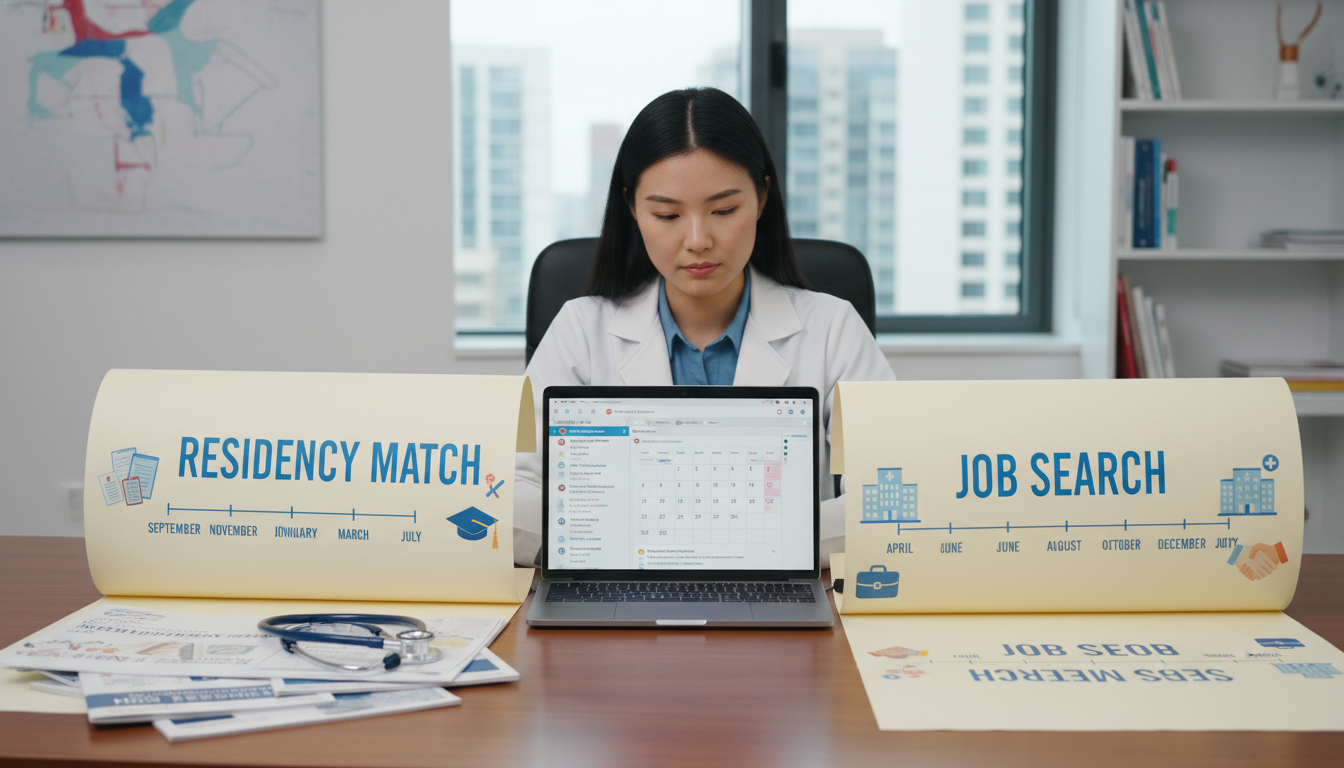
Month-by-Month Timeline: Job Search Timing Across the Preliminary Year
Assume your prelim medicine year runs July 1 – June 30. Adjust by a month as needed for your actual dates.
July–August: Foundation and Orientation
Clinical focus:
- Learn the system, EMR, and expectations
- Build a reputation as reliable, hardworking, and professional
Job-search focus (light but intentional):
- Clarify your primary goal:
- Categorical residency next year?
- Research or hospital job if no match?
- Open to both?
- Update your CV with:
- Prelim IM position
- Medical school credentials
- USMLE/COMLEX scores
- Any publications, presentations, or QI projects
- Meet your program leadership:
- Introduce yourself to the PD and APDs
- Ask for feedback on your long-term goals
- Signal that you may be looking for categorical positions or post-prelim roles
If your priority is residency:
- Start updating your ERAS application and personal statement.
- Request letters of recommendation early from faculty who can see your work in the first 2–3 months.
If your priority is a job after prelim year:
- Sketch out a timeline:
- When your visa expires or transitions
- When you can reasonably get a full medical license (if applicable)
- When to start active applications (likely October–December)
September–October: Peak Residency Application Season + Early Backup Planning
Clinical focus:
- Maintain strong evaluations—October and November evaluations can heavily influence letters and calls.
Residency (if applicable):
- Submit ERAS in September.
- Continue soliciting strong, updated letters from faculty who know you well.
- Attend interviews starting in October.
Backup job search activities (light to moderate intensity):
Research the physician job market:
- Look up demand for:
- Non-ACGME hospital roles
- Research officer positions
- Assistant physician roles (in states that allow limited licenses for IMGs)
- Pay attention to hospital systems in your current state—they already know you and your visa status.
- Look up demand for:
Informal networking:
- Talk with:
- Chief residents
- Senior residents (especially IMGs who finished prelim/categorical and moved into jobs)
- Fellows and attendings connected to research or education
- Ask:
- “Do we have non-ACGME clinical roles for graduating residents?”
- “Are there research associate positions that hire physicians after residency?”
- “When do those positions usually post?”
- Talk with:
Check visa timelines:
- J-1: Your ability to work after prelim year likely depends on another ACGME training position unless you have another visa path.
- H-1B: Sponsorship for a non-training job requires:
- Passing USMLE Step 3
- A valid state license
- If you’re uncertain, consider meeting with an immigration lawyer by October–November to understand realistic options.
November–January: Dual-Track Period (Residency Interviews + Early Applications)
This is the most intense and critical period for your timing.
Residency track:
- You may have multiple interviews per week.
- Keep refining your rank list strategy.
- Update programs with new achievements (presentations, publications).
Job search track (move from planning to initial action):
Refine and finalize your CV and cover letter:
- Have residency-focused and job-focused versions.
- Highlight:
- US clinical experience
- Procedural skills
- Independent night call experience
- QI and research involvement
Start identifying concrete job targets:
- University hospitals with:
- Non-ACGME clinical or academic positions
- “Inpatient associate” or “clinical fellow” roles
- Community hospitals:
- Some may hire prelim-year trained doctors into supervised positions (depending on state licensure)
- Research institutions:
- Positions such as “Clinical Research Coordinator – MD” or “Postdoctoral Research Scholar (Physician)”
- University hospitals with:
Start initial outreach (low-pressure):
- Email hospitalist group leaders or division chiefs:
- Mention your current prelim role
- Express interest in post-graduate positions
- Ask about their usual hiring timeline
- Example timing question:
- “I complete my preliminary internal medicine year in June 202X. When do you typically begin recruiting for positions that might be appropriate for a physician at my level?”
- Email hospitalist group leaders or division chiefs:
Why this timing?
If they tell you, “We usually post in February–April,” you’ll know exactly when to start job search intensively at their institution.
February–March: Match Preparation and Job Application Takeoff
Residency timeline:
- Rank list deadline is usually in February.
- Match Day is in March.
- This is when your future path begins to clarify.
Job search timeline (now active):
Start applying to specific roles if:
- You’re uncertain about matching.
- You’re intentionally keeping a backup.
- You already know you want a research or non-ACGME position, regardless of match.
Targeted applications:
- Hospital systems where:
- You rotate now
- Your attending or PD has connections
- Institutions in states where:
- You can qualify for at least a temporary license after 1 year of training
- Visa-friendly employers:
- Academic centers
- Larger systems used to sponsoring IMGs
- Hospital systems where:
State medical license timing:
- Research licensing requirements and processing times:
- Many states require:
- 1–2 years of ACGME training (varies)
- Primary source verification of your education
- Background checks and fingerprints
- Many states require:
- If your state permits licensing after 1 year, consider:
- Starting the application by February–March, so you have a license (or at least the application in progress) by the time offers appear.
- Research licensing requirements and processing times:
March (Match Week): Pivotal Decision Point
If you match into a categorical or advanced position:
- Your primary pathway is set.
- Still:
- Confirm start dates, contract details, and visa sponsorship.
- You may not need a separate job search, unless:
- You’re seeking temporary work between visa periods
- You’re planning moonlighting (where allowed) later.
If you do NOT match (or match into an undesired path):
- Participate in SOAP (Supplemental Offer and Acceptance Program).
- If SOAP yields no acceptable residency position:
- Immediately intensify job applications:
- Clinical research roles
- Non-ACGME hospital roles
- Educational roles (clinical tutor, simulation lab physician, etc.)
- Use your prelim program leadership:
- Ask your PD: “Where have previous prelim IMGs gone when they did not match? Can you connect me with them or with departments that might be hiring?”
- Immediately intensify job applications:
This is where early planning pays off: if you’ve already identified job targets and set up contacts, you can move much faster.
April–June: Finalizing Offers and Transition
At this stage, you should:
- Have clarity on:
- A categorical/advanced residency position or
- At least one or two serious job leads in the physician job market
Key timing tasks:
Negotiate and accept offers:
- Clarify:
- Job title and responsibilities
- Supervision level
- Salary and benefits
- Visa sponsorship
- Start date (usually July 1 or earlier/later if flexible)
- Clarify:
Complete licensing and credentialing:
- Credentialing can take 60–120 days.
- This is why waiting until May or June to start a job search is risky.
Exit from prelim program:
- Ensure:
- All evaluations and documentation are complete
- You obtain a final program letter documenting your PGY-1 year (important for some state licenses and future positions)
- Ensure:

Visa Considerations and Their Impact on Timing
For IMGs, visa strategy and job search timing are deeply linked.
J-1 Visa
- Typically used for residency and fellowship, not for most standard attending roles.
- After your training ends, you generally must:
- Return to your home country for 2 years, or
- Obtain a J-1 waiver (e.g., Conrad 30, federal waiver programs).
Timing implications:
- If your prelim medicine year is on J-1:
- You usually need to secure another ACGME position (residency or fellowship) to remain in the US on J-1.
- J-1 waivers usually apply after completion of full training, not just a prelim year.
- Action:
- Discuss strategy with your ECFMG/EVSP advisor and an immigration lawyer by early fall of your prelim year.
H-1B Visa
- H-1B can sometimes be used for residency and for certain attending-level jobs.
- Requirements:
- Typically Step 3 and state license must be in place.
- Timing impacts:
- You may need to pass Step 3 early (ideally by winter) to be ready for a job starting after prelim.
- H-1B cap and filing windows (often April for an October start) may not align with a July job start, though cap-exempt institutions (universities, some teaching hospitals) have more flexibility.
Green Card or US Citizen/Permanent Resident
- More flexible, but licensing timelines still apply.
- You can:
- Accept research or clinical roles without sponsorship delays.
- Timing:
- Focus shifts more toward licensing and credentialing time than visa deadlines.
Practical Strategies for Optimizing Job Search Timing
1. Start with a Backward Timeline
Work backward from:
- End of prelim year (June 30)
- Typical job start date (July 1 or later)
Then mark:
- 2–4 months for credentialing → begin job offers by March–April
- 1–2 months for interviews and negotiations → start active searching by January–February
- 1–2 months for identifying targets and preparing documents → start planning by November–December
This aligns with the earlier month-by-month framework.
2. Use Your Prelim Program as a Launchpad
Your preliminary medicine program can be your best ally if you work with them early.
Ask your PD, chiefs, and attendings:
- “When do hospitals in our network hire for non-ACGME clinical roles?”
- “Do we have post-residency research positions?”
- “Have former prelim IMGs taken jobs here or nearby? When did they start their searches?”
Request introductions to:
- Division chiefs
- Research PIs
- Hospitalist directors
Often, the earliest—and best—offers come from your own institution or closely affiliated sites.
3. Keep Your Documentation Continually Updated
To move quickly when a job appears, maintain:
- An up-to-date CV (revised every 2–3 months)
- A clear, concise professional summary you can paste into emails
- A folder with:
- USMLE transcripts
- ECFMG certificate
- Medical school diploma and translations
- Letters of recommendation
- Any license/Step 3 documentation
This reduces delays between “we’re interested” and “please submit your documents.”
4. Don’t Underestimate Informal Signals
In the physician job market, many opportunities are initially informal:
- “We might be opening a clinical associate role next year.”
- “Our PI might need another research physician on the trial.”
- “We usually hire one or two post-residency doctors each year.”
When you hear these by November–January, that’s a sign to:
- Keep regularly in touch with the relevant leaders.
- Express continued interest.
- Be ready to formalize your application as soon as postings go live.
5. Avoid the “April Surprise”
A common error for IMGs in prelim medicine:
- Focusing 100% on residency Match
- Discovering in March/April that:
- They did not match
- They have no job leads
- It’s too late for many positions and visas
Prevention:
- Begin at least light backup planning by fall.
- Have at least 2–3 realistic, researched alternatives:
- Research jobs
- Non-ACGME or transitional roles
- Another specialty application (if appropriate)
Frequently Asked Questions (FAQ)
1. When should I start my job search as an IMG in a preliminary medicine year?
For most IMGs in preliminary medicine, you should:
- Begin planning and networking by September–November.
- Start targeted outreach and CV preparation by November–January.
- Move into active job applications by February–March, especially if Match outcomes are uncertain or if your primary goal is a non-residency role.
If your prelim year ends in June, this gives enough time for interviews and credentialing before a July or later start.
2. How does applying for categorical residency affect my job search timing?
Your residency application and interviews (ERAS/NRMP) will dominate September–January. Treat residency as your primary pathway, but:
- Begin backup job planning in the fall.
- Use February–March to:
- Intensify job applications if you’re uncertain about the Match.
- Pivot quickly if you do not match or SOAP is unsuccessful.
The key is not waiting until after Match Day to first consider job options. Early parallel planning is essential.
3. Do I need a full medical license to take a job after a prelim IM year?
It depends on:
- State regulations (some require 1 year of ACGME training; others require 2–3 years)
- Job type:
- Many research roles and some junior clinical roles may not require a full independent license.
- True attending-level clinical positions usually do.
Because licensing can take 2–4 months or more, you should:
- Research your target state’s requirements by November–December.
- Start any necessary license applications by February–March if you plan a clinical job that summer.
4. As an IMG on a J-1 visa, is a non-residency job after prelim year realistically possible?
Often, a J-1 visa is tied to ACGME training, not standard employment. After a prelim year alone, options are limited unless:
- You obtain another ACGME training position (e.g., categorical residency, fellowship).
- You have an alternative visa pathway (e.g., change of status to H-1B via employer sponsorship, which is unusual after only a prelim year, and complex).
- You transition outside the US, then later pursue a J-1 waiver job after additional training.
Because of this complexity, J-1 IMGs should:
- Prioritize securing a categorical residency.
- Speak to an immigration attorney and ECFMG/EVSP advisor early in the year (by October) to clarify realistic scenarios and timing.
By treating your preliminary medicine year as both a clinical training period and a preparation year for your next step, you can use this IMG residency guide to structure your job search timing strategically. The earlier and more intentionally you plan, the more options you’ll have in the physician job market—whether your next step is a categorical residency, research, or a carefully chosen clinical role.