Understanding Job Search Timing as a DO Graduate in Clinical Informatics
For a DO graduate interested in clinical informatics, timing your job search is as important as your CV content or networking strategy. Clinical informatics is a dynamic, rapidly evolving field bridging medicine and technology, and the physician job market for informatics roles follows a different rhythm than traditional clinical specialties.
As a DO, you may also be navigating questions about the osteopathic residency match, the best path to a clinical informatics fellowship, and how health IT training aligns with your long‑term goals. All of these decisions influence when to start job search planning—both for training positions and for your first attending role.
This article lays out a structured, realistic timeline from late medical school through early attending years, with a focus on:
- When to prepare for residency and fellowship applications in clinical informatics
- When and how to start an attending job search in informatics or hybrid roles
- How the physician job market for informatics differs from traditional clinical practice
- Specific considerations for DO graduates
1. Career Pathways in Clinical Informatics for DO Graduates
Before nailing down timing, you need clarity on the pathway you plan to pursue. Clinical informatics careers can follow several routes, and each route has a different job search timeline.
1.1 Common Pathways for a DO Interested in Clinical Informatics
Traditional Clinical Residency → Attending Job → Clinical Informatics Fellowship → Informatics Leadership Role
- Typical for those who want a strong primary clinical identity (e.g., Family Medicine, Internal Medicine, Emergency Medicine) before specializing.
- You practice clinically first, then add informatics expertise via a formal ACGME-accredited fellowship.
Traditional Residency → Parallel or Early Involvement in Health IT Projects → Direct Hire into an Informatics or CMIO-track Role (with or without fellowship)
- Some institutions hire physicians into informatics-heavy roles based on experience, not just fellowship completion.
- You may become a medical director of informatics, EHR physician champion, or data/quality lead, sometimes while maintaining part-time clinic or hospital work.
Residency with Strong Health IT Exposure → Clinical Informatics Fellowship Immediately After Residency → Hybrid Clinical–Informatics Attending Job
- Fast-track to informatics specialization.
- Especially attractive for DO graduates who want to integrate osteopathic principles with systems thinking and quality improvement.
Non-traditional Paths (e.g., Industry, Health IT Startups, Consulting)
- Some physicians move directly into roles with EHR vendors, analytics companies, digital health startups, or consulting firms.
- Clinical informatics fellowship is helpful but not mandatory, especially if you bring a combination of clinical expertise, workflow knowledge, and technical skills.
1.2 Where DO Graduates Fit In
As a DO graduate, you have a few unique features that can help in the physician job market for informatics:
- A whole‑person care philosophy aligns naturally with patient-centered system design and usability work.
- Many osteopathic residencies emphasize community and primary care, which are central to population health analytics and quality improvement.
- Increasingly, both MD and DO pathways are accepted for clinical informatics fellowship and health IT leadership roles, as long as you’re board-eligible or board-certified in a primary specialty.
However, your job search timing will be affected by:
- Whether you matched via the osteopathic residency match route or NRMP (or both).
- The competitiveness and application cycles of fellowships and health IT roles you’re targeting.
- Your need to maintain a clinical base to meet board certification and credentialing requirements.
2. From Medical School to Residency: Laying the Informatics Foundation
Your job search journey in clinical informatics starts before you ever apply for a job—in late medical school and early residency. During this period, you’re not applying for attending jobs yet, but you’re building the experiences that will shape your residency and fellowship options.
2.1 Late Medical School (OMS-3 to OMS-4): Setting Up the Path
Key goals:
- Decide whether you want your primary clinical base (e.g., IM, FM, EM).
- Learn the basics of clinical informatics and health IT.
- Position yourself competitively for residency programs that value informatics.
Action steps (timed across OMS-3/4):
OMS-3:
- Seek rotations in clinics or hospitals that have robust EHR systems.
- Ask attendings about QI or EHR optimization projects you can help with.
- Start a small project: maybe a charting template optimization or a workflow study.
Early OMS-4 (before residency applications open):
- Identify residency programs (both MD and DO) with:
- Strong EHR infrastructure
- Ongoing QI and informatics projects
- Faculty involved in informatics or data analytics
- Prepare to highlight your interest in health IT during interviews.
- Identify residency programs (both MD and DO) with:
Residency Application Season (Fall OMS-4):
- In your personal statement, indicate a clear interest in:
- Clinical informatics
- QI, patient safety, and health IT training
- In interviews, ask directly:
- “Do residents have opportunities to work on informatics or EHR optimization projects?”
- “Does your program collaborate with a clinical informatics fellowship?”
- In your personal statement, indicate a clear interest in:
Here, the osteopathic residency match matters because certain DO-focused programs may be smaller and more flexible, allowing you to carve out informatics roles, while larger university programs may already have structured opportunities.
3. Residency Years: When to Start Job Search Planning
For most DO graduates, residency is where job search timing becomes strategic. You’re not just thinking about a first attending job; you’re also deciding whether and when to apply for a clinical informatics fellowship and how to position yourself for future health IT leadership.
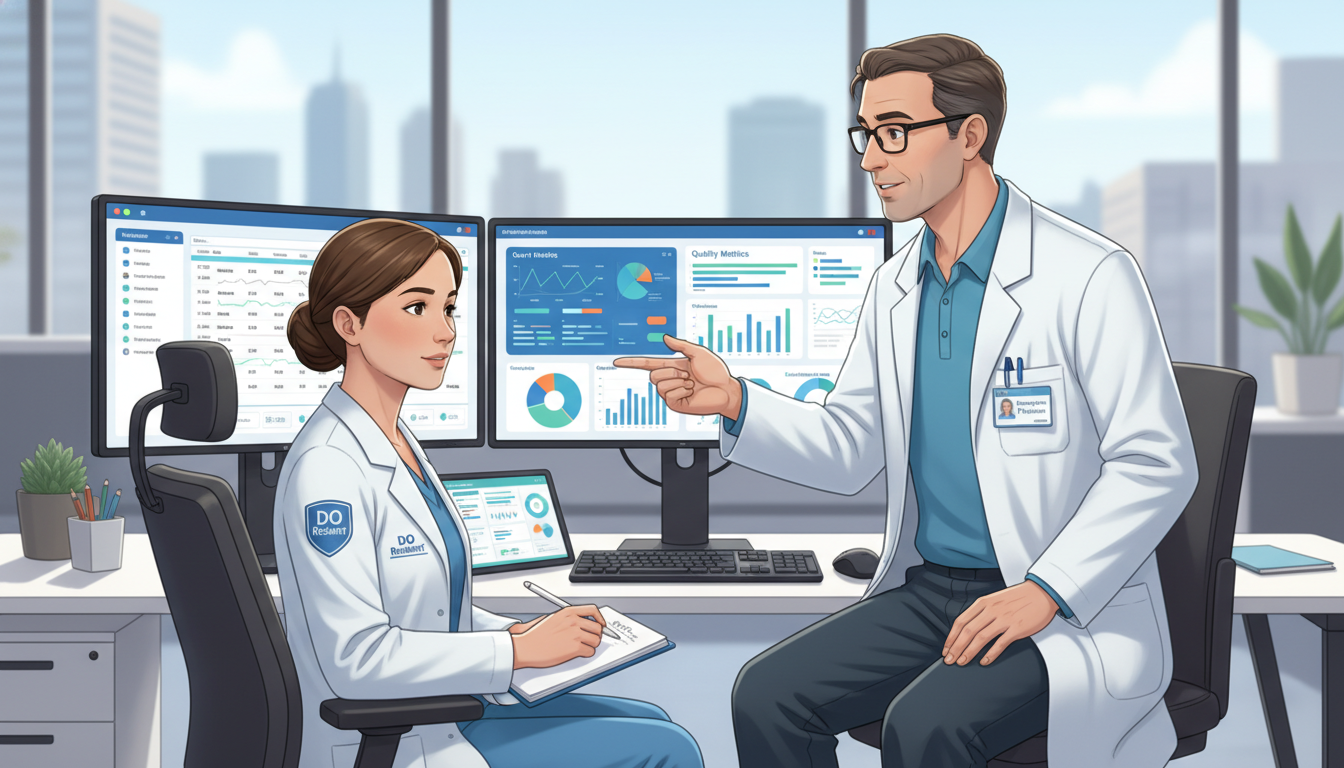
3.1 Early Residency (PGY-1): Exploration and Skill Building
Timing Focus: You are not applying for informatics jobs yet, but you are setting the stage.
PGY-1 Action Plan:
- Join or volunteer for:
- EHR optimization committees
- Quality improvement projects
- Clinical decision support (CDS) review groups
- Learn the basics of:
- Data extraction from your EHR (reports, dashboards)
- Common quality metrics in your specialty
- Workflow mapping and process improvement
- Start a longitudinal project you can present later (poster, presentation, or publication).
Job Search Implication:
Your PGY-1 year is where you define your narrative: “I am a clinically grounded DO resident with a growing track record in clinical informatics.”
You’ll use this narrative when:
- Applying to clinical informatics fellowships, usually during PGY-2 or PGY-3.
- Or applying directly for hybrid clinical–informatics roles at the end of residency.
3.2 Mid-Residency (PGY-2/PGY-3): Decision Point for Fellowship vs. Direct Practice
This is where timing becomes critical for DO graduates in clinical informatics.
3.2.1 If You Plan to Pursue Clinical Informatics Fellowship
Most clinical informatics fellowship programs follow a cycle similar to other subspecialty fellowships, often recruiting 1–2 years before the fellowship start date.
Typical Timeline:
18–24 months before you want to start fellowship
- Begin researching programs (university vs. community, EHR vendor partnerships, research vs. operations focus).
- Attend informatics conferences (AMIA, HIMSS, local chapters).
- Reach out to program directors or fellows for informational interviews.
12–18 months before start date
- Submit fellowship applications.
- Strengthen your CV with:
- QI projects with measurable outcomes.
- Presentations on informatics topics.
- Involvement in clinical decision support or EHR governance.
8–12 months before start date
- Interview for fellowships.
- Negotiate start dates and discuss expectations (clinical vs. non-clinical split).
Key Job Search Timing Insight:
If you’re in a 3-year residency (e.g., FM or IM), you may be applying for fellowship during PGY-2. If you’re in a longer residency (e.g., EM 3–4 years depending on program), you may have more time—but you still want to start planning early.
You are not looking for an attending job yet, but you are actively engaged in a training position job search—fellowship recruitment is a job search with its own calendar.
3.2.2 If You Plan to Go Directly into Informatics or Hybrid Roles After Residency
If you decide to skip fellowship initially and go straight into a role like:
- EHR Medical Director or Physician Champion
- Health System Clinical Informatics Lead
- Physician Advisor for Utilization/Documentation
- Industry role (EHR vendor, analytics company, startup)
then your job search timing should mimic a typical attending job search with some informatics-specific twists.
Recommended Timeline:
12–18 months before residency completion:
- Clarify: Do you want a fully clinical job with informatics responsibilities, or a hybrid job (e.g., 0.5 FTE clinical / 0.5 FTE informatics)?
- Build your portfolio:
- Document your informatics projects, with data and outcomes.
- Draft a “one-page impact summary” of your QI/informatics work.
- Start networking with:
- Your hospital’s CMIO, CNIO, or Director of Clinical Informatics.
- Health IT leaders at regional systems.
9–12 months before residency completion:
- Begin exploring positions in your desired geographic areas.
- Informally reach out to:
- Department chairs and IT leaders.
- Recruiters specializing in health IT or physician leadership.
- Update your CV to emphasize:
- EHR expertise.
- Data analytics projects.
- Leadership roles (committee work, project leads).
6–9 months before residency completion:
- Actively apply for positions.
- Be explicit about your goals:
- “I’m seeking a clinical role with dedicated time in clinical informatics and health IT training opportunities.”
- Be ready to explain:
- Why you’re qualified for informatics roles as a DO graduate.
- What you bring beyond baseline clinical skills (e.g., project outcomes, improved workflows, saved time, improved quality metrics).
4. Transition to Attending: When to Start Job Search for Your First Role
Whether you’re moving into a fellowship or directly into the workforce, your first attending role is pivotal. Many DO graduates underestimate how early they should start the attending job search, especially when informatics duties are part of the plan.
4.1 When to Start Job Search for Your First Clinical Attending Job
For most specialties, including those likely to feed into clinical informatics (FM, IM, EM, Pediatrics, etc.), a solid rule of thumb is:
Start your attending job search 9–12 months before your desired start date.
For a DO graduate targeting informatics-enriched roles, starting early is even more important because:
- Hybrid clinical–informatics jobs are less standardized and may take longer to define and approve within hospital leadership.
- You may be negotiating non-traditional work structures (e.g., 0.7 clinical, 0.3 informatics).
- You might be aligning your start date with a clinical informatics fellowship or other structured health IT training program.
4.2 Aligning Clinical and Informatics Job Search Timelines
Consider three common scenarios:
Scenario 1: Residency → Clinical Attending Job Only (Informatics Later)
- Job search starts: 9–12 months before residency graduation.
- Focus:
- Select a practice environment where informatics roles exist or are emerging.
- Ask during interviews:
- “Do physicians here participate in EHR governance or CDS design?”
- “Is there a pathway for physicians to assume informatics leadership roles?”
This sets you up for later transition into informatics or formal fellowship while building financial and clinical stability.
Scenario 2: Residency → Clinical Informatics Fellowship → Hybrid Attending Role
- Fellowship search: Begins 18–24 months before your intended fellowship start.
- Hybrid job search: Begins 6–12 months before fellowship completion.
During fellowship, you should:
- Build a robust portfolio of projects (CDS, analytics, workflow redesign).
- Attend conferences and network with leaders from systems that might hire you.
- Around the midpoint of fellowship, start informal conversations with potential employers:
- “I’ll be finishing my clinical informatics fellowship in about a year and am looking for a hybrid role in [specialty] plus informatics leadership.”
Scenario 3: Residency → Direct Hire into Health IT or Industry Role
- Job search window:
- Start exploring and networking 9–12 months before completion.
- Active applications 6–9 months before completion.
This timeline may involve:
- Connecting with recruiters in:
- EHR vendors
- Technology companies
- Digital health startups
- Highlighting:
- Clinical perspective as a DO physician.
- Informatics skills (data literacy, EHR optimization, QI outcomes).
- Ability to bridge front-line clinicians and technical teams.

5. Navigating the Physician Job Market for Clinical Informatics
The physician job market for clinical informatics has several distinct features that impact your timing and strategy.
5.1 Fewer Formal Positions, More Customization
Unlike pure clinical roles (e.g., “Hospitalist” or “Outpatient Family Physician”), informatics positions for physicians often have titles like:
- Associate CMIO / Assistant Director of Clinical Informatics
- Physician Champion for EHR / Physician Informatics Liaison
- Medical Director of Quality and Informatics
These roles are:
- Sometimes created or customized for specific candidates.
- Often unadvertised or only lightly advertised.
- Frequently shaped by internal networking.
Timing Implication:
You should start conversations before formal job postings appear. This means:
- Reaching out to CMIOs and health IT leaders 6–12 months before you finish training.
- Expressing interest in helping with informatics work even if there is no formal vacancy posted yet.
5.2 Health IT Training Expectations
Even if you don’t have a clinical informatics fellowship, employers expect you to demonstrate:
- Comfort working with EHRs beyond basic use.
- Ability to interpret and explain data to clinicians.
- Understanding of change management and clinical workflow.
You can meet these expectations with:
- Formal fellowship (most straightforward path).
- Health IT courses or certificates (e.g., online programs, AMIA 10x10 course).
- Substantial, documented project work during residency (e.g., creating order sets, improving documentation workflows).
Timing Tip:
Begin health IT training (courses, conferences, certifications) by early mid-residency so that by the time you start your attending job search, you have tangible experiences to showcase.
5.3 Compensation and Negotiation Timing
When discussing roles with substantial informatics responsibilities:
- Clarify early in negotiations (not at the last minute):
- Protected time for informatics work.
- Reporting structure (to the CMIO, department chair, or both).
- Expectations for project deliverables.
This is best done when:
- You have multiple months before a final decision deadline.
- The employer still has flexibility in defining your role.
Starting this process 6–9 months before your target start date allows adequate time for internal approvals.
6. Practical Timelines and Checklists for DO Graduates in Clinical Informatics
To tie all of this together, here are actionable, time-based checklists you can adapt to your specific path.
6.1 General Timeline Overview
OMS-3 to OMS-4:
- Explore interests in clinical informatics.
- Target residencies with informatics opportunities.
- Learn basics of EHR and QI.
PGY-1:
- Join QI and EHR projects.
- Learn basic data tools.
- Identify informatics mentors.
PGY-2:
- Decide: Fellowship vs. direct path.
- If fellowship:
- Research programs; attend conferences.
- If direct path:
- Build portfolio of informatics work.
PGY-2/3 (depending on specialty length):
- Fellowship applicants:
- Apply 12–18 months before fellowship start.
- Direct-to-workforce:
- Start informal networking 12–18 months before residency end.
- Start exploring jobs 9–12 months before completion.
Last 6–9 months of training:
- Actively apply for hybrid or clinical roles.
- Clarify your desired informatics time and responsibilities.
- Negotiate protected time, titles, and expectations.
6.2 Sample Checklist: DO Graduate Targeting Clinical Informatics Fellowship
18–24 months before fellowship:
- Identify 5–10 target fellowship programs.
- Meet with your CMIO or informatics faculty to review your CV.
- Secure at least one informatics-related project with measurable outcomes.
12–18 months before fellowship:
- Submit fellowship applications.
- Present your informatics work locally or regionally.
- Seek 2–3 letters of recommendation emphasizing informatics potential.
8–12 months before fellowship:
- Complete fellowship interviews.
- Clarify clinical vs. non-clinical balance in fellowship.
- Begin mapping out your post-fellowship career interests.
6.3 Sample Checklist: DO Graduate Going Directly into Hybrid Clinical–Informatics Role
12–18 months before residency completion:
- Create a single document summarizing all informatics/QI projects.
- Network with CMIOs at current and nearby institutions.
- Attend at least one major informatics or health IT conference.
9–12 months before completion:
- Begin conversations with department leaders about your dual interests.
- Explore geographic markets where health systems are expanding informatics teams.
- Update your CV to highlight:
- Health IT skills
- Leadership
- Project outcomes
6–9 months before completion:
- Apply for hybrid roles or clinical roles with informatics tracks.
- During interviews, explicitly ask about:
- EHR governance structures
- Physician informatics leadership pathways
- Negotiate for protected time, appropriate titles, and clear reporting lines.
Frequently Asked Questions (FAQ)
1. As a DO graduate, does my degree affect my chances in the clinical informatics fellowship or job market?
In most settings, no in a negative sense—DO and MD graduates are considered comparably if they are board-eligible or board-certified in a primary specialty and have a strong informatics portfolio. What matters most:
- Demonstrable informatics skills and projects.
- Strong recommendations from informatics mentors.
- Clear narrative about how you’ll contribute to health IT initiatives.
However, you should be prepared to explain how your osteopathic training—emphasis on holistic care and systems thinking—adds value to clinical informatics.
2. When should I start my attending job search if I’m finishing a clinical informatics fellowship?
Aim to start 6–12 months before your planned fellowship completion date. Given the customization of informatics roles, starting conversations on the earlier side (9–12 months) is helpful. Use:
- Conferences and networking events to identify interested institutions.
- Your fellowship mentors’ networks to connect you with hiring leaders.
3. Do I need a clinical informatics fellowship to get a job in informatics?
Not always, but it helps. Fellowship is particularly valuable if you want:
- Formal board certification in Clinical Informatics (for eligible specialties).
- A long-term trajectory as CMIO or system-level informatics leader.
- A structured environment to deepen technical and leadership skills.
You can work in informatics without a fellowship if you:
- Have strong project experience with measurable outcomes.
- Build a reputation as an EHR and workflow expert.
- Fit the needs of a specific organization or industry partner.
4. How early should I start building my informatics portfolio during residency?
Start in PGY-1. You don’t need advanced skills at first—begin with:
- A simple workflow improvement project.
- Participation in EHR committees.
- A small QI project using EHR data.
By PGY-2 and PGY-3, aim for projects substantial enough to present or publish. This way, when your when to start job search moment arrives (typically 9–18 months before your next step), you already have evidence of your capabilities.
Timing your job search as a DO graduate in clinical informatics isn’t about hitting a single perfect date; it’s about aligning your experiences, narrative, and networking with the natural “seasons” of the residency, fellowship, and physician job market cycles. By starting early, thinking in multi-year horizons, and intentionally building your informatics portfolio, you position yourself not just for a job, but for a sustainable, impactful career at the intersection of medicine and technology.