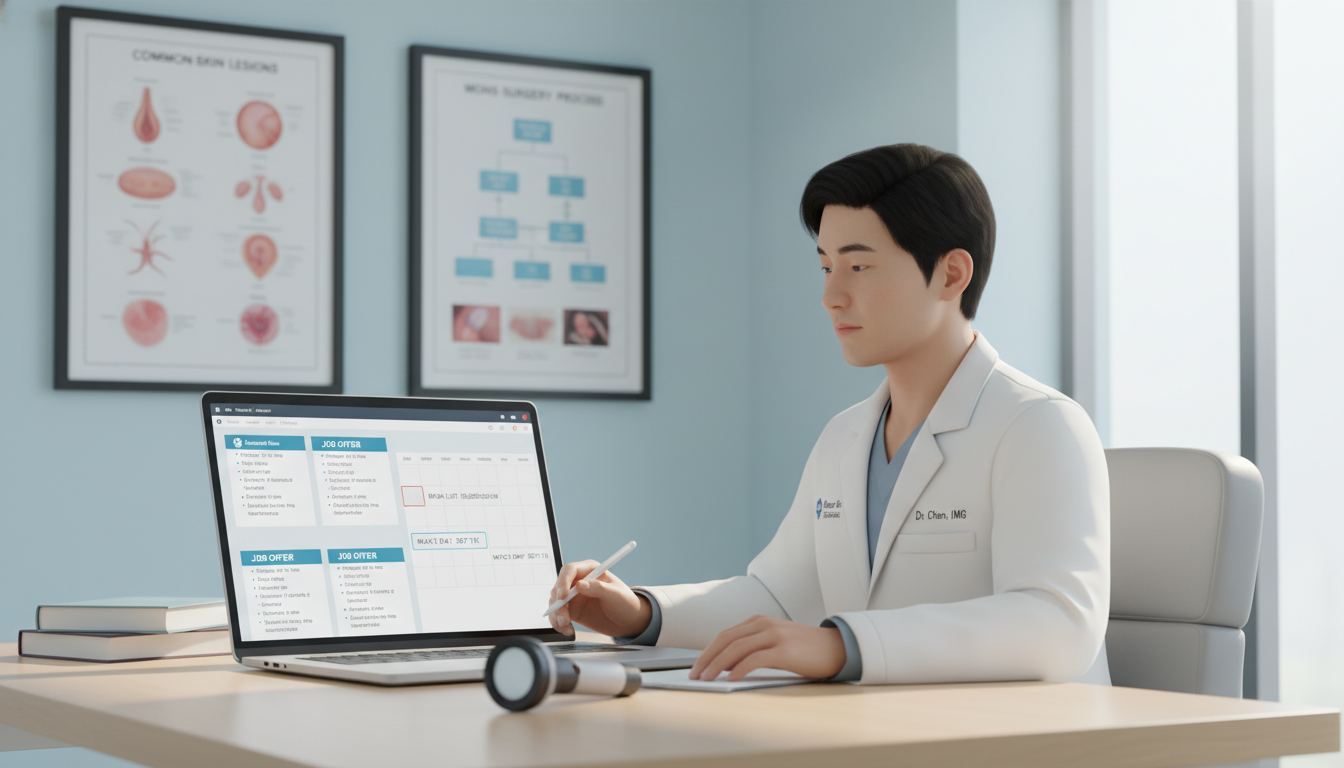
Understanding the Job Search Landscape for EM-IM Physicians
Emergency Medicine-Internal Medicine (EM IM combined) graduates are uniquely positioned in the physician job market—but that also means your job search timing and strategy must be more deliberate than average. You’re not just deciding where to work; you’re deciding how to structure a dual-trained career across emergency medicine and internal medicine.
A common question is when to start job search planning as an EM-IM senior resident:
- How early is “too early” to look for jobs?
- Will waiting give you better options—or fewer?
- Does timing differ if you want more ED shifts vs. inpatient work vs. a mixed role?
- How do fellowships, geography, academic vs. community interests, and visa status change the timeline?
This guide walks through a month-by-month strategy, tailored to EM-IM physicians, from 18 months before graduation through your first attending year. It also highlights common mistakes, contract pitfalls, and special considerations if you’re pursuing hybrid roles.
Ideal Timeline: Month-by-Month From PGY-4 to Early Attending
Many EM-IM programs are 5-year combined residencies. The example below assumes a 5-year EM-IM program and a “standard” June 30 graduation. Adjust by a few months if your program structure differs.
18–24 Months Before Graduation (Early PGY-4): Exploration Phase
Main goals:
- Clarify your career vision
- Research the market for EM-IM combined roles
- Start building a network
At this stage, you’re not signing contracts—but you are laying the foundation for a focused job search.
Key tasks:
Clarify your practice model preferences Ask yourself:
- Do I want pure emergency medicine, pure internal medicine/hospitalist, or a hybrid role?
- If hybrid:
- What’s my ideal split? 50/50 ED and inpatient? 70/30?
- Am I willing to have my time vary by season or by institutional needs?
- Do I want:
- An academic environment (teaching, research, leadership)?
- A community or rural setting with broad clinical autonomy?
Research the physician job market Look specifically for:
- Hospitals or systems with:
- Separate EM and IM contracts but interest in cross-coverage
- Combined EM-IM faculty positions in academic centers
- Rural or critical access hospitals needing flexible EM/IM coverage
- Trends in:
- Local and regional emergency medicine internal medicine demand
- Telehospitalist and tele-ICU programs
- Nocturnist and low-volume ED/hospitalist blended positions
- Hospitals or systems with:
Informational networking
- Talk to:
- Recent EM-IM graduates from your program
- Combined-trained faculty (EM-IM, EM-CCM, IM-CCM, EM-Peds)
- EM or IM program directors at institutions you might be interested in
- Ask:
- How do they structure their time?
- What would they change about their first job search timing?
- Are there institutions that particularly value EM-IM combined training?
- Talk to:
Conferences Attend at least one major specialty meeting per year:
- EM-focused: ACEP, SAEM
- IM-focused: ACP, SHM (hospital medicine)
- Combined-focused (if available) or regional EM-IM meetups Use these to:
- Visit career fairs and meet recruiters
- Get a feel for regional needs and compensation trends
Decision checkpoint: By the end of this period, you should have a shortlist of practice models (e.g., “academic EM with 10–20% IM,” “rural hybrid ED/inpatient,” or “urban academic hospitalist with ED moonlighting”).
12–18 Months Before Graduation (Late PGY-4 / Early PGY-5): Active Preparation Phase
This is when your attending job search becomes more structured, even if you’re not ready to sign.
Main goals:
- Define geographic targets
- Polish your professional materials
- Quietly start putting out feelers
Key tasks:
Narrow down geography Decide:
- Primary regions or cities (e.g., “Midwest academic center,” “Southeast within 2 hours of family”)
- Deal-breakers:
- Requirement for Level I Trauma?
- Minimum ED volume?
- Access to subspecialty backup?
For EM-IM, also consider:
- Are there multiple sites within a system (ED + IM service) where you could leverage both skillsets?
- Are they open to cross-credentialing in both ED and IM departments?
Update CV and create a flexible cover letter
- EM-IM CV should highlight:
- Dual board eligibility (or certification timelines) in EM and IM
- Unique skillsets:
- ICU experience
- ED resuscitation leadership
- Experience with boarding mitigation, ED observation units, or co-managed services
- QI or operational projects bridging EM and IM (e.g., sepsis pathways, admission flow)
- Draft two versions of a cover letter:
- One emphasizing emergency medicine internal medicine hybrid practice
- One focused on pure EM or pure IM, depending on opportunity
- EM-IM CV should highlight:
Mentor and advisor discussions
- Schedule intentional meetings with:
- EM-IM program director
- EM and IM department chairs or chiefs you’ve worked closely with
- Ask:
- Where have prior grads taken jobs?
- Which institutions value EM-IM most?
- Are there upcoming retirements or expansions where you might be a good fit?
- Schedule intentional meetings with:
Start preliminary outreach (quiet phase)
- Email department chairs or medical directors:
- Introduce yourself briefly
- Express interest in future opportunities (~12–18 months out)
- Ask if they ever employ EM-IM physicians and in what capacity
- Email department chairs or medical directors:
At this stage, some smaller or rural hospitals may already be ready to talk specifics; large academic centers may simply say, “Check back in 6–9 months.”
9–12 Months Before Graduation (Mid PGY-5): Prime Application Window
For most EM-IM residents, this is the sweet spot to formally start the job search.
Main goals:
- Begin formal applications
- Schedule interviews
- Clarify your first-year priorities (schedule, pay, location, mentorship)
Why 9–12 months?
- Many departments publish openings annually around budget planning cycles.
- It gives enough time for:
- Multiple interviews
- Contract negotiations
- Licensing and credentialing
- But not so much time that institutions are hesitant to commit.
Key tasks:
Targeted applications
- Apply to:
- Academic centers with EM or IM faculty openings where EM-IM may be an asset
- Community hospitals advertising:
- Hybrid ED/hospitalist or ED/ICU roles
- Flexible FTE arrangements (e.g., 0.6 EM, 0.4 IM)
- Rural/critical access hospitals needing broad-scope physicians
When you apply:
- Explicitly state:
- Your board eligibility timeline (both EM and IM)
- Your preferred practice mix (e.g., “I’m seeking a 60–80% EM and 20–40% IM role but am flexible based on departmental needs.”)
- Apply to:
Use recruitment channels strategically
- Hospital system career pages
- Academic job boards
- Recruiters:
- External recruiters can be helpful for community and rural EM or IM roles.
- Less useful for highly customized hybrid or academic roles.
Plan interview windows with your schedule
- Try to cluster interviews on:
- Elective months
- Lighter rotations
- Research/QI blocks
- Give your chiefs advanced notice if you anticipate multiple interviews.
- Try to cluster interviews on:
Clarify first-year priorities Before interviewing, know your hierarchy:
- Location vs. schedule vs. pay vs. practice mix vs. academic time
- For EM-IM:
- Are you okay starting as pure EM or pure IM for 1–2 years with a future pathway to hybrid work?
- Or do you need hybrid duties from day one?
Practical example:
A PGY-5 EM-IM resident wants an academic ED role with some inpatient time. She starts formal applications 11 months before graduation. One university hospital has an ED opening now and a projected need for hospitalist coverage a year later. She negotiates an offer that:
- Starts as 0.8 FTE ED
- Plans to transition to 0.6 ED / 0.4 IM after her first year
- Includes written language about evaluating hybrid work after 12 months

6–9 Months Before Graduation: Intensive Interviewing and Negotiations
By this point, you should be actively interviewing and moving toward one or more offers.
Main goals:
- Complete interviews
- Compare offers objectively
- Negotiate role structure and contract details
Key tasks:
Prepare EM-IM–specific interview talking points Expect to answer:
- “How do you see yourself splitting time between EM and IM?”
- “Do you anticipate maintaining dual board certification long-term?”
- “How will your combined training benefit our department?” Have concrete examples:
- Past efforts in throughput, triage, or admission workflow
- Leadership in code blues, rapid response teams, or ICU transfers
- Teaching across both EM and IM residents
Assess each offer across both specialties Consider:
- Clinical mix
- % ED vs. inpatient vs. ICU vs. clinic
- Night vs. day balance
- Opportunities to cross-cover during surges
- Compensation
- Base salary vs. RVU vs. shift-based pay
- Differential pay for nights/weekends/holiday shifts
- Separate compensation structures for EM vs. IM work?
- Schedule and burnout risk
- EM shifts plus IM weeks can quickly stack up
- Explicit limits on total monthly hours across both departments
- Academic and leadership opportunities
- Protected time for teaching or research?
- Pathways to ED or hospital medicine leadership?
- Support for quality improvement projects bridging ED and IM?
- Clinical mix
Contract negotiation EM-IM–specific points to consider:
- Contract structure
- Single contract with a health system covering both EM and IM?
- Two separate contracts (e.g., with ED and hospitalist groups)?
- If so, are there conflicts (non-competes, off-duty policies, shared malpractice)?
- Non-compete clauses
- If you leave one department, are you also restricted from the other?
- Does the non-compete geography work against your EM-IM flexibility?
- Malpractice
- One policy for all work or separate policies?
- Occurrence vs. claims-made and who pays for tail?
- Board requirements support
- CME and paid time off for both EM and IM boards and MOC/recertification
- Support for dual professional society memberships (e.g., ACEP + ACP/SHM)
- Contract structure
When to accept an offer?
- Many EM-IM residents sign their primary contract 4–8 months before graduation.
- Earlier is common for:
- Visa-dependent residents
- Rural or very specific geographic needs
- Slightly later (3–4 months out) can work if you have flexibility and a strong market.
0–6 Months Before Graduation: Finalizing and Transition Planning
By now, you ideally have a signed contract and are working through logistics.
Main goals:
- Licensing and credentialing
- Transition planning with your new departments
- Clarifying expectations for dual practice
Key tasks:
Licensing and credentialing
- State license application:
- Start as soon as your job’s state is decided; processing can take 3–6 months.
- DEA and state-specific controlled substance registrations (if applicable).
- Hospital credentialing:
- Privileging for:
- EM procedures (airway, rapid sequence intubation, procedural sedation)
- IM/hospitalist competencies (central lines, paracentesis, managing complex inpatients)
- Ensure the privileging forms reflect your combined training.
- Privileging for:
- State license application:
Clarify practice expectations in writing Request a written practice plan or addendum that outlines:
- Initial and target FTE split between EM and IM
- Typical weekly or monthly schedule patterns
- Departmental reporting structure:
- One boss or two?
- Who does your annual review?
- How schedule conflicts are resolved (e.g., ED vs. IM in July surge)
Prepare for role transition
- If starting as pure EM or pure IM, make a 2–3 year plan:
- Will you try to reintroduce your other specialty later?
- Are there internal pathways to do so at this institution?
- For hybrid starts:
- Ask about informal mentorship from another dual-trained or cross-department faculty member.
- Set realistic boundaries:
- Total hours
- Number of nights in both ED and wards
- Maximum consecutive work days across both services
- If starting as pure EM or pure IM, make a 2–3 year plan:
Personal timing logistics
- Moving timeline and housing
- Partner/spouse job searches
- Family considerations (childcare, schools, proximity to support networks)

Special Situations That Affect Job Search Timing
1. Considering Fellowship After EM-IM
If you plan to pursue a fellowship (e.g., critical care, ultrasound, toxicology, administration, research):
- Start exploring fellowships 18–24 months before graduation.
- Fellowship applications usually precede job applications, so:
- Focus first on fellowship match.
- Begin preliminary job networking in the region of your likely fellowship.
- During fellowship:
- Start your attending job search 9–12 months before fellowship completion.
- Highlight both EM-IM combined and fellowship training in your materials.
2. Visa Considerations (J-1, H-1B)
Visa status significantly impacts when to start job search and what roles are feasible.
J-1 waiver jobs:
- Many are in underserved or rural areas, which often value EM-IM flexibility.
- Start searching 18–24 months before graduation:
- Positions fill early.
- Competition may be high in desirable locations.
- Confirm:
- Whether the position can be structured for EM, IM, or hybrid
- Employer experience with J-1 waivers
H-1B:
- Ensure the position:
- Is clearly full-time and meets wage requirements.
- Can support dual-board roles if you plan to bill as both EM and IM.
- Work with an immigration attorney if any aspect is unclear.
- Ensure the position:
3. Shifting Market Conditions
The physician job market for emergency medicine internal medicine roles can shift with:
- ED volume trends (e.g., post-pandemic fluctuations)
- Hospitalist staffing models
- Expansion of telehealth
To adapt:
- Keep your options open: consider both pure EM and pure IM roles as bridges to your ideal hybrid.
- Use your versatile training as a market advantage:
- Willingness to help in ED surges
- Comfort managing complex inpatients
- Potential leadership in flow, triage, and boarding reduction
Common Mistakes and How to Avoid Them
Mistake 1: Starting the Job Search Too Late
Waiting until 3–4 months before graduation to start applications can lead to:
- Limited geographic options
- Less leverage in negotiations
- Rushed decisions
Fix: For EM-IM, plan to begin serious applications by 9–12 months out, earlier if you have visa or geographic constraints.
Mistake 2: Ignoring One of Your Specialties
Some EM-IM graduates default to pure EM or pure IM without considering long-term implications:
- Giving up one side entirely may:
- Make it harder to return later.
- Limit future leadership or niche roles where dual training is valuable.
Fix: Even if you accept a single-specialty job, keep doors open:
- Maintain board certification in both EM and IM if feasible.
- Moonlight selectively in your “secondary” specialty (within duty-hour and wellness limits).
- Seek employer support for future hybrid roles.
Mistake 3: Not Getting EM-IM–Savvy Advice on Contracts
Most generic contract reviewers understand EM or IM, but not necessarily dual practice complexities.
Fix:
- Find:
- A dual-trained mentor (EM-IM, EM-CCM, IM-CCM, etc.)
- A physician contract attorney comfortable with multi-department employment
- Ask them to review:
- Non-competes across specialties
- Call expectations and total work hours
- Academic and leadership pathways for dual-practice physicians
Mistake 4: Overcommitting in the First Year
EM shifts plus IM weeks can quickly lead to burnout if not carefully balanced.
Fix:
- During negotiations:
- Cap your total monthly clinical hours across both specialties.
- Ask for protected onboarding time.
- Build in regular check-ins (e.g., 6 months, 1 year) to adjust your mix.
Practical Timeline Summary for EM-IM Job Search
Here’s a condensed guide to when to start job search activities as an EM-IM resident:
24–18 months before graduation
- Explore models: pure EM, pure IM, hybrid
- Attend conferences and talk to mentors
- Research geographic and system-level opportunities
18–12 months before graduation
- Define target regions and practice mix
- Update CV and create flexible cover letters
- Begin low-key outreach to departments and medical directors
12–9 months before graduation
- Launch formal attending job search
- Apply broadly to EM, IM, and hybrid roles
- Start interviewing
9–6 months before graduation
- Intensify interviews
- Secure and compare offers
- Negotiate EM-IM–specific practice and contract details
6–0 months before graduation
- Finalize contract
- Complete licensing and credentialing
- Clarify schedules, FTE split, and long-term expectations
FAQs: Job Search Timing in EM-IM
1. When should an EM-IM resident ideally start looking for an attending job?
Most EM-IM residents should begin a structured job search 9–12 months before graduation. Start earlier (12–18 months) if you:
- Have visa restrictions (J-1, H-1B)
- Need a very specific geography
- Are targeting rare or highly customized hybrid positions
Exploration and networking should begin even earlier, around 18–24 months out.
2. Is it better to take a pure EM or pure IM job at first, then move to hybrid later?
It depends on your goals and your local physician job market:
- Advantages of starting pure:
- Clear identity and onboarding in one department
- Easier scheduling and evaluation
- Advantages of starting hybrid:
- Reinforces your dual training
- Builds a reputation as a flexible, system-level problem solver
If you start pure EM or IM, protect your long-term options by:
- Maintaining both board certifications if possible
- Negotiating opportunities to cross-cover or add your second specialty later
3. How competitive are hybrid EM-IM jobs that fully use both skill sets?
Truly balanced hybrid jobs (e.g., 50/50 ED and inpatient) are less common but highly valued when available. They are more likely to be found in:
- Smaller academic centers
- Rural or regional hospitals
- Systems with multiple interconnected sites
Because they’re relatively niche, start searching and networking early and be prepared to negotiate your role creatively, sometimes stepping into a hybrid schedule gradually over 1–2 years.
4. Should I use a recruiter for my EM-IM job search?
Recruiters can be helpful for:
- Community EM roles
- Hospitalist positions
- Rural or underserved areas
They are less commonly involved in:
- Academic or highly customized hybrid EM-IM roles
Use recruiters as one tool among many, but:
- Don’t rely on them exclusively.
- Continue direct outreach to academic centers and health systems where your EM-IM profile may be uniquely valuable.
Thoughtful job search timing is one of the most powerful ways to shape a satisfying, sustainable career as an Emergency Medicine-Internal Medicine physician. By starting early, clarifying your ideal practice mix, and negotiating roles that honor your dual training, you can enter the physician job market with both confidence and leverage.