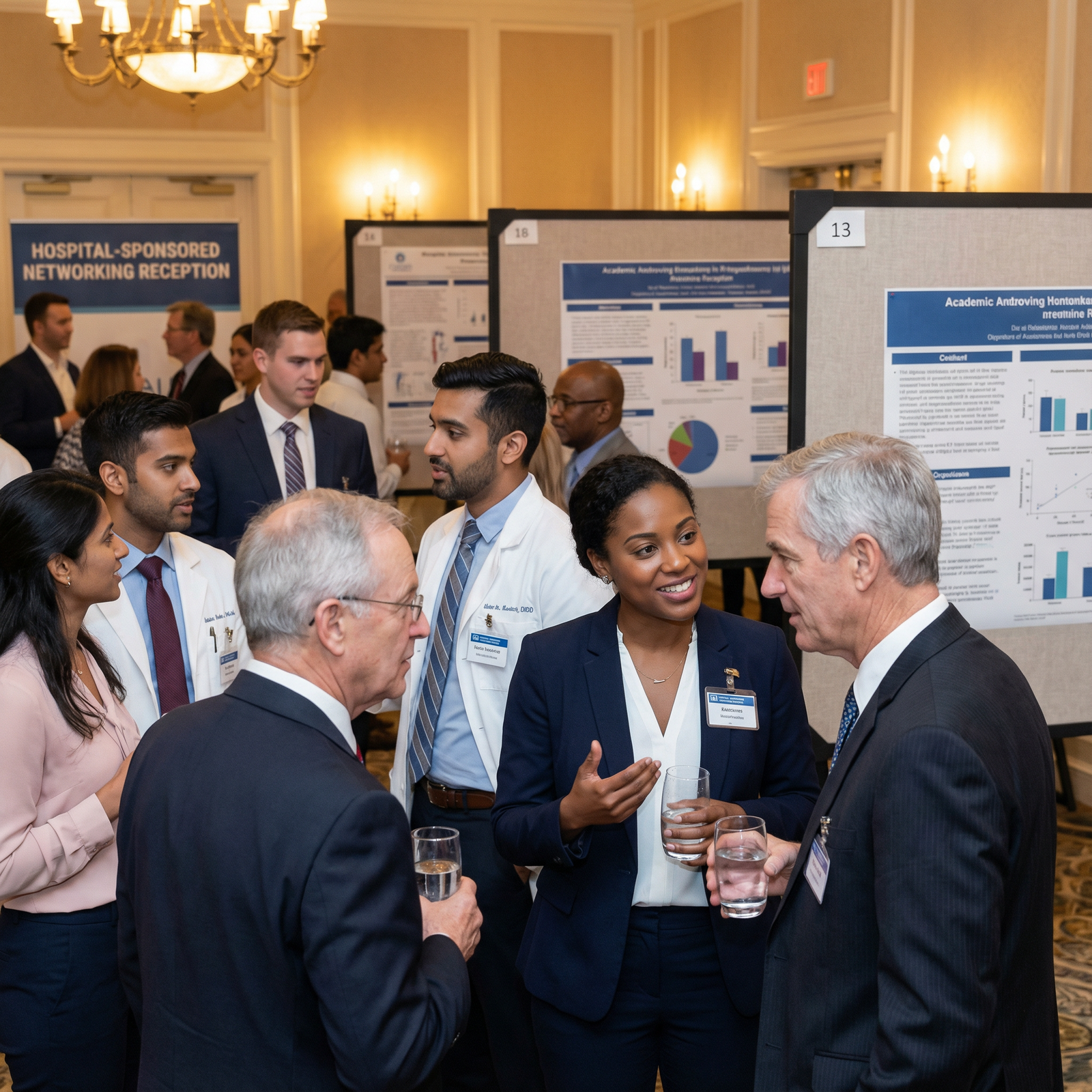
Understanding Job Search Timing for MD Graduates in Nuclear Medicine
For an MD graduate in nuclear medicine, job search timing is as important as your credentials. The nuclear medicine job market is relatively small, highly specialized, and geographically uneven. Starting too late can limit your options; starting too early, without a clear profile or letters, can waste opportunities.
This article walks you through exactly when and how to start the job search, how your allopathic medical school match and residency timeline influence your options, and what’s realistic in today’s physician job market for nuclear medicine. The focus is on North American timelines, but many principles apply more broadly.
1. Big Picture: How the Nuclear Medicine Job Market Works
The timing of your attending job search depends heavily on understanding the structure of the nuclear medicine physician job market.
1.1 Types of Jobs in Nuclear Medicine
Common roles MD graduates pursue after completing a nuclear medicine residency or related training:
- Academic positions
- University-affiliated hospitals
- Research-focused centers
- Often combine clinical work, teaching, and research
- Community hospital positions
- General nuclear medicine and SPECT
- Often integrated with radiology groups
- Hybrid roles
- Nuclear medicine + diagnostic radiology
- Nuclear medicine + theranostics center roles
- Industry and non-clinical roles
- Radiopharmaceutical companies
- Imaging technology and AI vendors
- Clinical trials coordination, medical affairs
Each setting has slightly different hiring cycles and lead times.
1.2 Factors That Affect Job Search Timing
Your optimal timing depends on:
- Training pathway
- Nuclear medicine residency (3-year)
- Diagnostic radiology residency + nuclear medicine fellowship
- DR + dual certification tracks
- Visa status
- J-1, H-1B, or permanent resident/citizen
- Career goals
- Academic versus community practice
- Desire to focus on PET/CT, theranostics, or general nuclear
- Geographic constraints
- Wanting a specific city or region
- Family or partner considerations
Because nuclear medicine is a niche field, geography and subspecialty interests can strongly shape your job search timeline. If you are geographically flexible, you can usually find something; if you are limited to one city, you may need to start earlier and network more aggressively.
2. Ideal Timeline: From PGY-2 to First Attending Job
To avoid last-minute scrambling, think of your nuclear medicine match–to–first job journey as a multi-year process. Below is a practical timeline, assuming a traditional path where you’re in your final years of training.
2.1 Early Residency (PGY-1 to Early PGY-3/4): Foundation and Exploration
Main goal: Build a credible career profile while you’re still in or just after your allopathic medical school match and early residency.
Recommended focus:
- Excel clinically
- Strong evaluations and references
- Show reliability, ownership, and attention to detail
- Clarify your niche
- PET/CT oncology imaging
- Cardiac nuclear medicine
- Theranostics (Lu-177, I-131, etc.)
- Neuroimaging (FDG, amyloid, dopamine transporter imaging)
- Start your scholarly activity
- Case series, QI projects, retrospective studies
- Present at SNMMI, RSNA, or regional meetings
- Light, early networking
- Connect with faculty who know the broader field
- Attend national meetings and note which institutions are doing work that interests you
Timing implications:
- No formal job applications yet.
- You’re shaping the CV and narrative that will support your later job search.
2.2 Mid-Residency / Fellowship (About 18–24 Months Before Graduation)
Main goal: Convert career ideas into a focused plan; start preparing the building blocks of your eventual job application.
Key tasks:
- Clarify post-training direction
- Academic vs community practice
- Need for additional fellowship (e.g., DR fellowship if coming from nuclear medicine only)
- Interest in theranostics or leadership roles
- Strategic CV building
- Aim to complete at least one project that can be submitted or accepted for publication
- Try to present at a national meeting; this can be a strong talking point during interviews
- Relationship-building
- Identify 2–3 mentors (within and outside your program)
- Ask them explicitly: “When should I start my job search for my situation?”
Still no formal job applications yet, but you should be able to describe the kind of job you want in a sentence or two, for example:
“I’m looking for an academic nuclear medicine position with a strong theranostics program, where I can also be involved in PET/CT protocol development and resident teaching.”
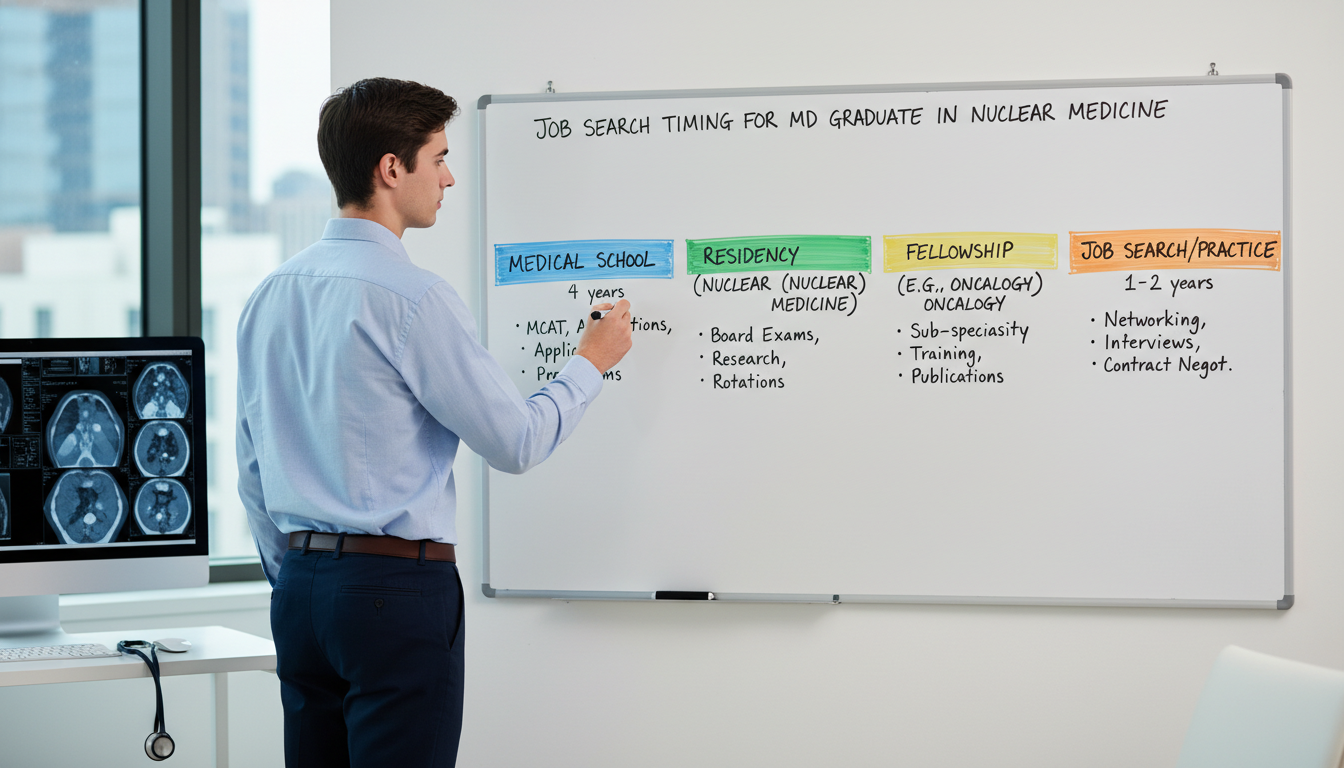
3. The Critical Window: 12–18 Months Before Graduation
For most MD graduates in nuclear medicine, the ideal time to move from planning to action is 12–18 months before your expected completion date.
3.1 Why This Window Matters
At 12–18 months before finishing:
- You’re senior enough that:
- Faculty know your strengths
- You’ve completed meaningful projects
- You can get strong, specific letters of recommendation
- Employers are starting to:
- Identify upcoming retirements, expansions, or new service lines
- Firm up budgets and clinical FTE needs for the upcoming year
- You can:
- Explore multiple positions
- Compare locales, practice types, and compensation
- Avoid the pressure of accepting the first offer you see
Rule of thumb for nuclear medicine residency graduates:
- Start serious networking and informal outreach: about 18 months before graduation
- Start formal job applications and interviews: around 12–15 months before graduation
3.2 What to Do at 18 Months Out
Actions:
- Meet with your program director
- Discuss your career goals and realistic options in the nuclear medicine job market
- Ask about:
- Alumni who might be hiring
- Regional or national contacts
- Whether your own institution could hire you
- Refine your target profile
- Academic vs community
- Geographic range (e.g., “major East Coast metro,” “Midwest but near a university,” “open to any large tertiary hospital”)
- Clinical scope (theranostics, PET/CT heavy, general nuclear + call with radiology, etc.)
- Prepare application materials
- Update CV with recent presentations, projects, leadership roles
- Draft a generic cover letter template you can customize
- Prepare a one-page personal statement or professional summary (useful in academics)
- Strengthen your online presence
- Clean up public-facing social media
- Consider a simple LinkedIn profile emphasizing:
- Training
- Skills (PET/CT, SPECT, theranostics, research methods)
- Presentations/publications
3.3 What to Do at 12–15 Months Out
This is when your attending job search should become active and intentional.
Key steps:
- Start scanning job postings regularly
- Society websites: SNMMI, RSNA, ACR, ARRS, regional societies
- Academic job boards and large health system sites
- Specialized physician recruitment platforms
- Send targeted cold emails
- Reach out to chairs, section chiefs, and nuclear medicine directors at:
- Institutions with strong nuclear programs
- Cities/regions you’d prefer
- Briefly introduce yourself, your training, and your interests; attach your CV
- Reach out to chairs, section chiefs, and nuclear medicine directors at:
- Leverage conferences
- Attend SNMMI, RSNA, or specialty meetings in your final 1–2 years
- Schedule informal meetings with potential employers in advance:
- “I’ll be at SNMMI; would you be open to a brief coffee to discuss future opportunities?”
- Line up letters of recommendation
- Ask 2–4 faculty (including at least one nuclear medicine leader)
- Give them:
- Your updated CV
- A concise list of jobs you’re applying for
- Specifics about what you hope they can highlight
At this stage, it is entirely appropriate to start formally applying to positions that match your interests and timeline—particularly at large academic centers that may have long hiring processes.
4. Tightening Focus: 6–12 Months Before Graduation
This is the core decision-making period. You should be actively interviewing, negotiating, and comparing options.
4.1 Academic Jobs: Earlier Is Better
For academic nuclear medicine roles:
- Optimal application window: 9–15 months before start date
- Why so early?
- Multi-step interview process
- Academic approvals (department, faculty affairs, finance)
- Sometimes a need to secure start-up or protected time
Typical sequence:
- Initial email or application via job posting
- Video call with division chief or chair
- Formal visit: meet faculty, give a talk, tour facilities
- Department discussion and ranking
- Offer letter + institutional approval
- Contract review and negotiation
If you are certain you want academics, you should be strongly engaged in the search by about 12 months before graduation and not wait much longer.
4.2 Community and Hybrid Jobs: Slightly Shorter Lead Time
Community hospitals, imaging centers, and mixed radiology groups often:
- Hire closer to need (e.g., expected retirement, service expansion)
- Offer faster timelines:
- Initial contact → interview → offer can be weeks rather than months
Yet even here, for nuclear medicine:
- Starting 6–12 months before your desired start date gives you:
- Time to find groups that truly value nuclear medicine expertise
- Flexibility to compare several offers
- Space to negotiate role details (theranostics, PET protocol leadership, etc.)
Many MD graduates in nuclear medicine find that the best positions—those with robust PET/CT and emerging theranostics programs—are filled months in advance, not in a last-minute scramble.
4.3 Visa Holders: Start Even Earlier
If you are on a J-1 or H-1B visa, job search timing must factor in:
- Work authorization deadlines
- J-1 waiver or H-1B cap timelines
- Institutional willingness to sponsor
Practical recommendations:
- Start active job search no later than 12–18 months before completion
- Be transparent with potential employers early:
- “I will need J-1 waiver support” or “I will need H-1B sponsorship and am currently on ___”
- Target systems familiar with hiring international medical graduates (IMGs):
- Academic centers
- Large health systems
- Groups with a history of sponsoring visas

5. Final Phase: 0–6 Months Before Graduation
By this point, ideally, you are finalizing contracts rather than starting from scratch.
5.1 When to Have a Signed Contract
For most MD graduates in nuclear medicine:
- Target having a signed contract 4–6 months before your start date
- Why this timing?
- Credentialing and privileging can take 60–120 days (sometimes longer)
- If moving, you need time for:
- State license processing
- Board exam scheduling
- Relocation logistics
In highly competitive academic positions, contracts may be signed even earlier. In some loosely structured community roles, it may be later—but aim for 4 months minimum as a safety margin.
5.2 What If You’re Still Unmatched to a Job at 3 Months Out?
If you are three months from graduation and still without an offer:
- Expand your geographic flexibility
- Consider regions with physician shortages or developing nuclear programs
- Look for hybrid roles
- Radiology groups that want someone to build or expand PET/CT or theranostics
- Large health systems where you can start clinically and grow into a niche
- Use your network intensely
- Ask every attending, mentor, and recent graduate:
- “Do you know of any nuclear medicine or hybrid positions still open for this year?”
- Ask every attending, mentor, and recent graduate:
- Consider short-term or interim options
- Locums tenens (if credentialing permits)
- Short contracts at institutions in need of nuclear coverage
- Research or industry roles as a bridge year
Even late in the cycle, nuclear medicine expertise remains in demand, particularly as theranostics and PET/CT continue expanding.
6. Special Scenarios and Strategic Advice
6.1 MD Graduate from an Allopathic Medical School: Leveraging Your Background
Coming from an allopathic medical school match and MD graduate residency pathway can offer distinct advantages:
- Strong clinical foundations and familiarity with multidisciplinary care
- Access to robust alumni networks
- Credibility with chairs and credentialing committees
To capitalize on this:
- Highlight multidisciplinary training and comfort working with:
- Oncologists
- Surgeons
- Cardiologists
- Endocrinologists
- Showcase experiences such as:
- Tumor boards
- Multidisciplinary case conferences
- Collaborative research projects
6.2 Considering Additional Training vs Entering the Job Market
Some MD graduates finishing a nuclear medicine residency consider:
- Diagnostic radiology fellowship
- Additional subspecialty training (e.g., neuroradiology, body imaging)
- Dedicated theranostics or research fellowships
Timing implications:
- If you’re even 50% unsure whether you will do more training:
- Start exploring those options at least 12–18 months before your nuclear medicine completion so you don’t miss application deadlines.
- Parallel planning is possible:
- Apply to both jobs and fellowships
- Make final decision when offers crystallize
You can still leverage your nuclear medicine match experience and skills in future radiology or hybrid roles, especially where PET/CT or theranostics are central.
6.3 When to Start Job Search If You Plan to Change Cities for Personal Reasons
If your location is constrained by:
- Partner’s job
- Family responsibilities
- Visa limitations to certain states or health systems
Then your strategy should include:
- Very early reconnaissance:
- 18–24 months out: identify all hospitals and groups with nuclear medicine services in your target area
- Map out who leads those services; note any system expansions or new cancer centers
- Proactive outreach:
- Even before jobs are posted, send a polite expression-of-interest email:
- “I will be completing my nuclear medicine residency in [month, year] and am very interested in opportunities in [city]. I’d welcome an opportunity to speak with you about future needs in your department.”
- Even before jobs are posted, send a polite expression-of-interest email:
- Flexibility in role design:
- Be open to:
- Splitting time between nuclear medicine and general imaging (if credentialed)
- Helping build or expand theranostics programs
- Taking on quality or administrative responsibilities
- Be open to:
Be realistic: the more you restrict geography, the earlier and more proactive you must be.
FAQs: Job Search Timing for MD Graduates in Nuclear Medicine
1. When should I start my job search if I’m in a nuclear medicine residency and want an attending job right after graduation?
For most MD graduates in nuclear medicine, begin serious career planning and networking around 18 months before graduation, and start formal applications and interviews around 12–15 months before your completion date. This is especially important if you’re aiming for academic positions or specific geographic locations.
2. I’m an MD graduate on a J-1 visa. How does this affect my job search timing?
If you’re on a J-1 visa, start your attending job search at least 12–18 months before completing training. You’ll need time to secure a J-1 waiver employer and navigate the legal process. Focus on larger health systems or academic centers that have prior experience with visa sponsorship, and be upfront about your visa needs early in discussions.
3. Is the job market for nuclear medicine physicians competitive, and does that change when to start?
The nuclear medicine physician job market is a small but evolving niche. Demand is rising in areas with expanding PET/CT and theranostics, but positions can be regionally concentrated. Because there are fewer positions overall compared to large specialties, timing matters: starting 12–18 months in advance maximizes your ability to find a job that fits your desired role, institution type, and geography.
4. What if my long-term goal is academics, but I don’t have a strong research background yet?
You can still aim for academic nuclear medicine by:
- Starting research or QI projects during residency or fellowship
- Presenting at conferences (SNMMI, RSNA, etc.)
- Seeking mentors who are established in academic nuclear medicine
In terms of timing, start connecting with potential academic employers early, around 15–18 months before completion, so they can see your trajectory and potential, not just your current CV. You may also consider a research-focused fellowship year to strengthen your profile if academic positions are highly competitive in your target region.
By approaching your nuclear medicine job search as a structured, multi-year process—and aligning your actions with the 18–12–6 month milestones—you can move from training to attending life with strategic clarity, rather than last-minute anxiety.