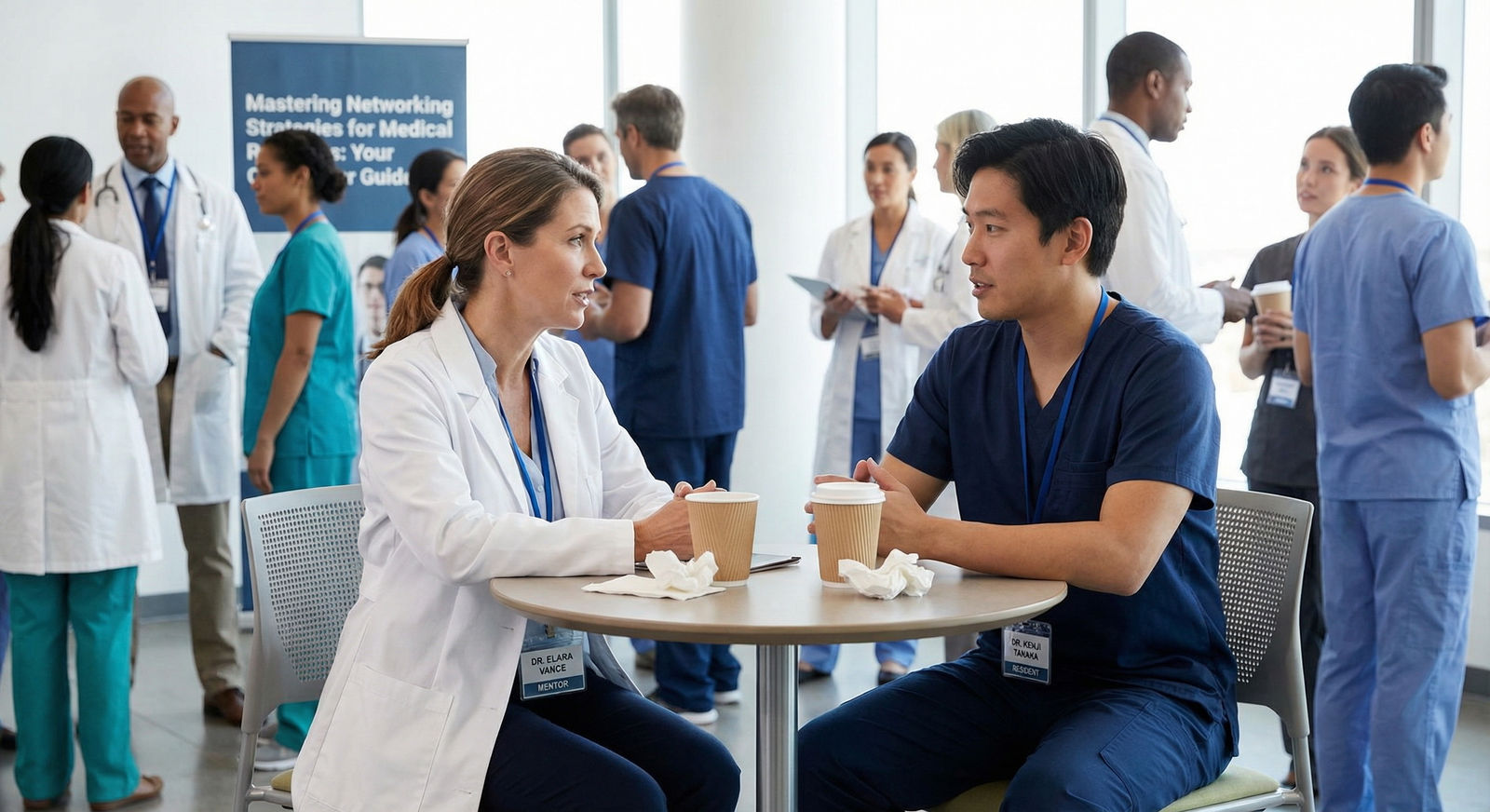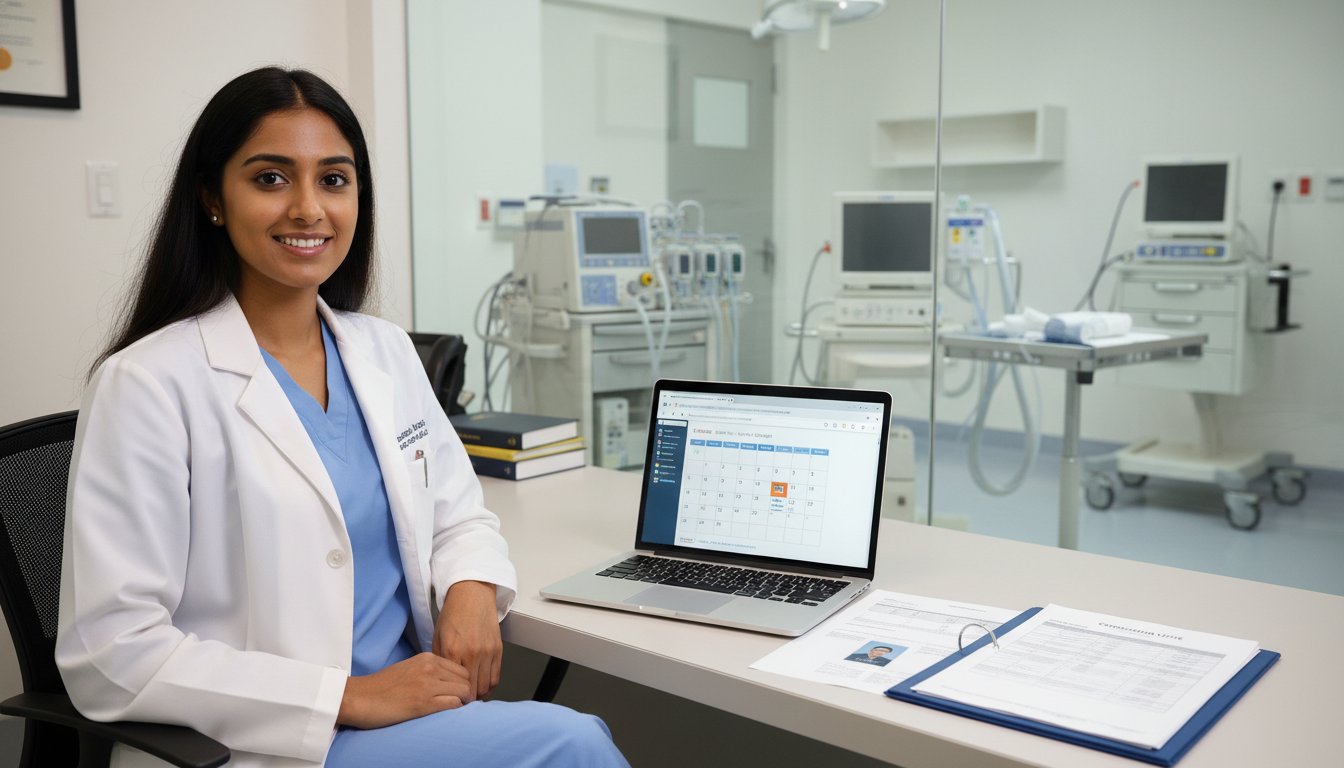
As a non-US citizen IMG in a preliminary medicine year, timing your job search is both critical and uniquely complex. You’re navigating not just the usual physician job market, but also visa constraints, uncertainty about PGY-2 placement, and the reality that prelim IM positions are, by design, only one year.
This article walks you through when to start your job search, how to sequence different application pathways, and what realistic options exist during and after your preliminary medicine year.
Understanding Your Context as a Non-US Citizen IMG in a Prelim IM Year
Before you can plan timing, you need a clear picture of your starting point.
What a Preliminary Medicine Year Really Means
A preliminary medicine year (prelim IM) is typically a 1-year internal medicine internship (PGY-1) designed to:
- Provide clinical foundation and ACGME-approved training
- Fulfill the intern-year requirement for advanced specialties (e.g., neurology, radiology, anesthesia)
- Offer some track to categorical positions if available (but not guaranteed)
Crucially:
- You do not automatically have a PGY-2 spot after this year
- Your current GME contract ends after 12 months
- Your visa sponsorship (J‑1 or H‑1B) is usually tied to that contract and program
So, unlike categorical residents, you must plan your “what’s next” early and carefully.
Unique Challenges for a Non-US Citizen IMG
As a foreign national medical graduate on a visa, you face specific constraints:
- Limited visa sponsors for non-training jobs (most first jobs for IMGs are through residency/fellowship, not direct attending roles)
- J‑1 home residency requirement (2 years in home country) after training, unless you secure a J‑1 waiver job
- H‑1B caps and timelines, plus requirement for full state licensure if seeking an attending role
- Some employers hesitate to hire physicians who are:
- Mid-training
- On time-limited visas
- Without completed US residency
This means for most prelim IM non-US citizen IMGs, the more realistic path after PGY-1 is additional training, not immediately an attending job.
Clarify Your Primary Goal Early
By the start of your prelim year, you should be clear on your primary objective for after PGY-1:
- Transition into a categorical Internal Medicine position (PGY-2 or PGY-1)
- Enter another specialty (advanced or categorical)
- Secure a research, observer, or non-clinical role while reapplying to residency
- In rare cases, explore limited attending or hospitalist-type roles if licensure and visa conditions allow in a specific state/circumstance
Your job search timing depends on which of these you’re aiming for.
Overall Timeline: Month-by-Month Roadmap
Because your prelim year is only 12 months, you must start earlier than you think. Below is a practical timeline centered around a July 1 start date; shift months accordingly if your program calendar differs.

July–August (Months 1–2): Foundation and Strategy
Key objectives:
- Understand your visa status and constraints
- Clarify your post-prelim goals
- Start relationship-building and letter planning
Action steps:
Meet with GME office and program leadership
- Confirm your visa type (J‑1 vs H‑1B) and exact expiration
- Ask about:
- Internal pathways to a categorical IM position
- Whether anyone from prelim IM has transitioned to categorical in prior years
- The program’s willingness to support you with references and networking
Define your primary and backup pathways
- Example:
- Primary: secure categorical IM PGY‑2 within same or another program
- Backup: repeat PGY‑1 in a categorical IM spot
- Safety: research or non-clinical role + reapply
- Example:
Request early mentorship
- Identify at least one core faculty member who knows your work and is open to:
- Future letters of recommendation (LoRs)
- Advising on timing and strategy
- Identify at least one core faculty member who knows your work and is open to:
Start preparing application materials
- Update CV, personal statement drafts, and ERAS profile
- Outline a personal story that explains:
- Why you did a prelim IM year
- Your commitment to internal medicine or your target specialty
- Your long-term vision in the US system, despite visa constraints
September–October (Months 3–4): Active Application Phase
This is prime time if you’re re-entering the Match for:
- Categorical Internal Medicine (PGY‑1 or PGY‑2)
- Categorical positions in another specialty (e.g., neurology, psychiatry, FM)
- Advanced specialty PGY‑2+ spots, if applicable
Key focus: ERAS and Match
- ERAS application should ideally be submitted by late September
- LoRs: Request them early—ideally by late August, with a goal of having at least:
- 2–3 strong IM letters from faculty in your prelim program
- 1 letter from your program director or associate PD
Strategies specifically for a non-US citizen IMG:
- Be transparent in your application about:
- Your current prelim IM position
- Your visa status
- Explicitly state that you are eligible for visa sponsorship (J‑1/H‑1B as applicable) and have active US clinical experience
- Use your US intern year as a major strength:
- “I have already functioned as an internal medicine intern in the US system and am fully prepared to succeed in a categorical role.”
November–January (Months 5–7): Interviews and Parallel Planning
By now, you’ll be:
- Attending interviews (residency or fellowship, if applicable)
- Continuing full-time clinical work
- Beginning to consider non-Match-based options if your interview volume is low
If your interview numbers are adequate (for your specialty and competitiveness):
- Focus on performing well in interviews
- Keep updating your CV and case logs
If your interview numbers are low or absent by December:
This is a critical moment to reassess and intensify your job search, especially outside the Match.
Start directly emailing program directors (for off-cycle or unadvertised positions)
- Emphasize:
- Your current US intern experience
- Strong evaluations and professionalism
- Flexibility to start as PGY‑1 or PGY‑2
- Emphasize:
Contact your faculty mentors
- Ask if they know of:
- Programs that unexpectedly lost a resident
- Institutions that frequently create extra PGY‑2 spots
- Ask if they know of:
Consider non-residency roles as backup
- Research fellow, clinical research coordinator, or academic position that:
- Can sponsor or maintain a visa (often J‑1 research or institutional H‑1B)
- Keeps you connected to clinical departments
- Research fellow, clinical research coordinator, or academic position that:
February–March (Months 8–9): Match Outcomes and Contingency
Match Week (March) will provide pivotal information:
- If you match into categorical IM or another specialty:
- Your main “job search” is effectively complete—your next step is training.
- If you do not match or partially match:
- Enter SOAP aggressively
- Focus particularly on categorical IM, family medicine, psychiatry, or pediatrics, where some open spots are more common and more visa-friendly than surgical subspecialties
If you remain unmatched after SOAP:
This is when the concept of timing for non-training jobs becomes paramount.
- Now you must consider:
- Research roles
- Non-clinical positions
- In very constrained settings, limited clinical roles (depending on state licensure and visa options)
You should already have started this backup search by late January, so you aren’t starting from zero in March.
April–June (Months 10–12): Finalizing Next Steps Before Your Contract Ends
By late spring:
- You should have some pathway secured:
- New residency/fellowship contract
- Research or non-clinical position
- Plan to return to home country while reapplying (for some)
This is also when your visa timing becomes critical:
- Coordinate with GME, ECFMG, and/or your new employer about:
- Visa transfer (J‑1 transfer between programs or new DS‑2019 for research)
- End date of current DS‑2019 or H‑1B petition
- Any grace period and how it aligns with your new start date
Choosing Your Primary Path: Training vs Attending Role
For most non-US citizen IMGs in prelim medicine, the realistic options after PGY‑1 are:
- Further residency training (categorical IM or another field) – primary and most common
- Research/non-clinical academic role
- Return to home country and seek clinical work there, possibly with future reapplication
- Direct attending job in the US – relatively rare and heavily constrained
Option 1: Transition to Categorical IM or Another Residency
This should be your default target.
Timing summary:
- Start planning: July–August
- Apply via ERAS: September–October
- Interviews: November–January
- SOAP/backup: March
This pathway best preserves:
- Visa continuity (especially J‑1 training)
- Your trajectory toward:
- Board eligibility in IM or another specialty
- Long-term attending job search in the US, including J‑1 waiver or H‑1B roles
Option 2: Research or Non-Clinical Roles
If residency doesn’t work out immediately, an academic or research position can:
- Keep you in the US academically
- Help maintain visa status (if sponsored)
- Strengthen your CV for reapplication
When to start this search:
- Serious exploratory conversations by December–January
- Formal applications and networking no later than February, ideally earlier
How to approach it:
- Ask attendings and PDs if:
- Their departments have funded research projects
- They know PIs who have hired IMGs in the past
- Search:
- University job boards
- NIH-funded project listings
- Large academic medical center opportunities
Option 3: Return to Home Country Temporarily
Some foreign national medical graduates choose to:
- Return to their home country to work clinically
- Reapply later for US training with:
- More experience
- Possibly stronger finances
- Additional certifications
Timing considerations:
- Coordinate with:
- Program end date (June)
- Visa expiration and travel deadlines
This option changes your future US physician job market path but can still lead back to residency in the US if strategically planned.
Option 4: Direct Attending or Hospitalist Role After Prelim IM
For a non-US citizen IMG who has only completed a preliminary medicine year, a direct attending job search in the US is usually not feasible, because:
- Most states require full residency training (usually 3 years IM) for:
- Full, unrestricted medical license
- Employers are generally unwilling to hire:
- Physicians without board eligibility
- Candidates on J‑1 not yet completed or without a clear visa solution
Rare exceptions might include:
- Specific states with more flexible licensing for limited or restricted licenses
- Rural or underserved areas under unique state-level provisions
- Roles that are not formally labeled as attending physician but more like supervised clinician or hospitalist extender
Timing if you explore this (uncommon) path:
- Start investigating state licensure rules as early as November–December
- Consult:
- Your program’s legal/credentialing office
- State medical board websites
- Immigration counsel for visa feasibility
But again: for nearly all non-US citizen IMGs in prelim IM, this is a low-probability path and should not be your main plan.
Practical Advice on “When to Start Job Search” in Each Track
Because “job search” can mean multiple things, it helps to separate by pathway.
1. When to Start the Residency/Fellowship Job Search
- Start planning in Month 1–2 (July–August)
- ERAS application: ready to submit by late September
- Networking and cold emails to PDs: begin by October–November, especially if:
- Your interview invite volume is low
- You are targeting off-cycle PGY‑2 positions
2. When to Start a Research/Non-Clinical Job Search
- Begin seriously by December, not after Match Week
- Have your:
- CV
- Statement of interest
- Reference letters
ready so that if you need this backup, you’re not starting from scratch in March.
3. When to Start Considering Home-Country Options
- Quietly explore throughout the year, but intensify in February–April if:
- Matching appears unlikely
- Visa extensions or transfers look challenging
4. When to Explore Direct Attending or Hospitalist Options (If Any)
- Research licensing and visa feasibility by December–January
- If there is even a legal possibility:
- Begin initial employer outreach by January–February
- Expect lots of barriers and be sure you have a backup plan.
Visa and Licensing Considerations That Affect Timing
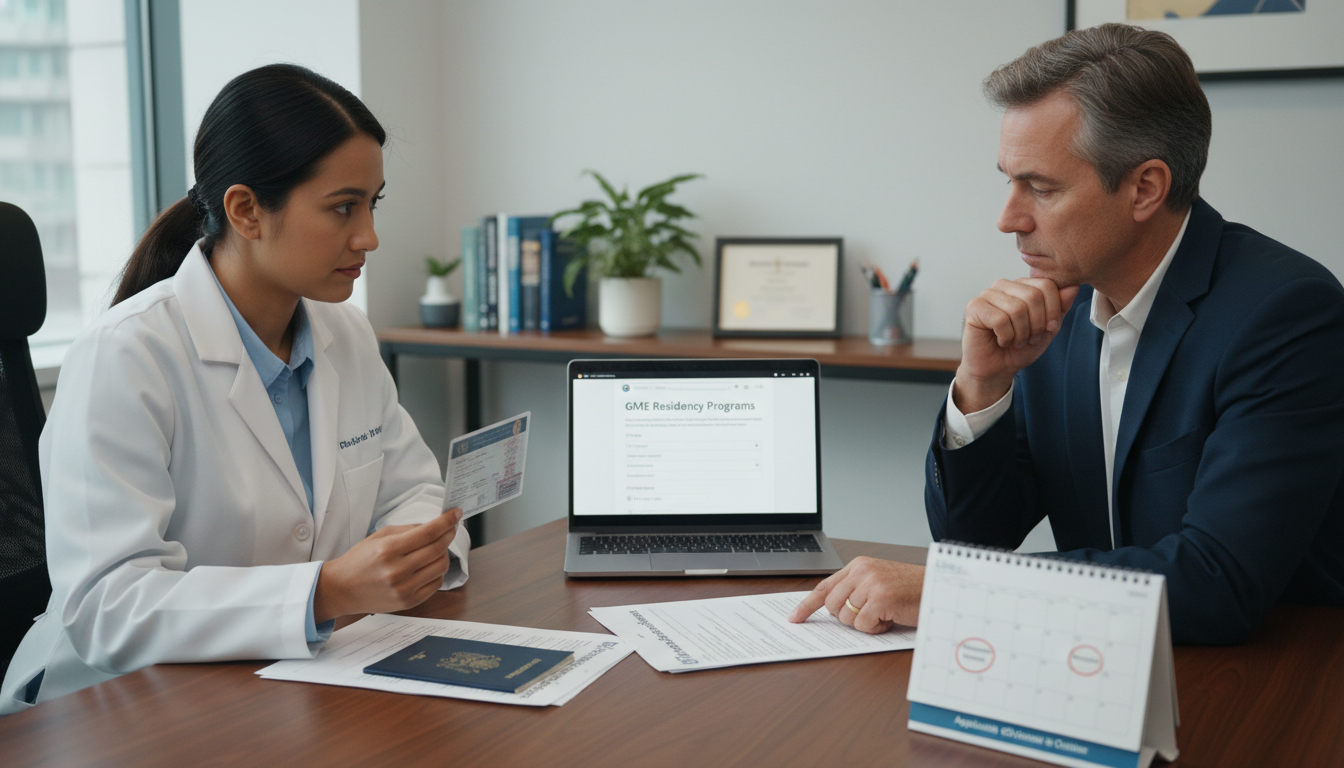
J‑1 Visa Timing Issues
If you are on a J‑1 visa sponsored by ECFMG:
- Your visa is tied to GME training (residency/fellowship)
- After your training ends:
- You typically must leave the US unless:
- You begin another J‑1 eligible training or research program
- You change to another visa status (complex)
- You typically must leave the US unless:
For long-term US practice, you eventually will need either:
- A J‑1 waiver job (underserved area, 3-year service), or
- A successful change of status to H‑1B or another visa type + appropriate licensure
This means you cannot delay decisions about your post-prelim role:
- You must know by spring (ideally earlier) what your next J‑1-sponsorable activity will be.
H‑1B Visa Timing Issues
If you’re on H‑1B:
- Your visa is tied to your employer/program and specific role
- Switching to another employer involves:
- New H‑1B petition
- Alignment with H‑1B cap (if not cap-exempt) and timing
Most prelim IM positions are in academic or teaching hospitals, often cap-exempt, which sometimes makes transferring to:
- Another academic/cap-exempt residency
more feasible than moving straight to a private hospital attending job.
Bottom line: Visa realities strongly favor continuing in residency/fellowship immediately after prelim IM, rather than pausing into an uncertain job market.
State Licensure and Its Impact on Timing
Many non-US citizen IMGs ask:
“Can I get a medical license after prelim IM and work as an attending?”
In most US states:
- To get a full, unrestricted license, you need:
- Completion of 3 years of accredited residency training (for IMGs)
- Board eligibility or a pathway to it
A single preliminary medicine year almost never meets that threshold.
Before investing time in an attending job search, verify:
- The state’s medical board requirements
- Whether any sort of restricted or limited license could apply to you
Start this research early (December–January), so you don’t build your entire plan on an assumption that turns out to be incorrect.
Practical Tips to Maximize Your Odds, Regardless of Timing
Be the strongest prelim intern you can be
- Your evaluations will heavily influence PDs considering you for a categorical spot.
- Reliability, professionalism, and teamwork are often more memorable than raw test scores.
Document your accomplishments as you go
- Keep a running list of:
- Cases you managed independently
- Quality improvement or research projects
- Teaching experiences (students, juniors)
- This material feeds your CV, LoRs, and personal statements.
- Keep a running list of:
Stay in consistent communication with your PD
- If your goal is to move into a categorical IM spot:
- Ask early: “Is there any chance of a PGY‑2 or PGY‑1 categorical position opening here?”
- Even if the answer is “unlikely,” your PD might help you network elsewhere.
- If your goal is to move into a categorical IM spot:
Use your IMG strengths
- Many non-US citizen IMGs bring:
- Multilingual abilities
- Comfort with diverse populations
- Strong work ethic and resilience
- Highlight these as advantages in underserved or safety-net institutions, which often sponsor visas.
- Many non-US citizen IMGs bring:
Get immigration/legal advice when needed
- Especially if you’re considering:
- Switching from J‑1 to H‑1B
- Exploring non-training roles
- Long-term strategy for US practice
- Especially if you’re considering:
FAQs: Job Search Timing for Non-US Citizen IMGs in Preliminary Medicine
1. As a non-US citizen IMG in a prelim IM year, when should I first start my job search?
You should begin planning in the first 1–2 months of your prelim year (July–August). That doesn’t mean applying to jobs immediately, but you must:
- Clarify your post-prelim goal (categorical IM, other specialty, research, etc.)
- Understand your visa limitations
- Start preparing application materials so you can apply via ERAS by September–October and activate backup plans early if needed.
2. If I want a categorical internal medicine spot after prelim IM, what is the ideal application timeline?
For categorical IM or similar specialties:
- July–August: Prepare CV, personal statement, request letters
- September–October: Submit ERAS
- November–January: Attend interviews; email PDs about unadvertised positions if invites are limited
- March (Match Week): Use SOAP if necessary
By starting early, you also gain time to pursue non-Match backups (research or non-clinical roles) if needed.
3. When should I start looking for non-residency roles (research, non-clinical) as a backup plan?
Begin serious exploration by December–January, not only after Match Week. This includes:
- Talking with faculty about available research positions
- Identifying departmental or institutional job openings
- Preparing a targeted CV and cover letter for research/academic roles
This way, if residency options don’t materialize by February–March, you can transition quickly into a secure role before your prelim contract and visa expire.
4. Is it realistic to aim for an attending job in the US after only a preliminary medicine year? When should I start that job search if I try?
For a non-US citizen IMG, this is generally not realistic because:
- Most states require three years of residency for full licensure
- Employers want board eligibility and clear visa solutions
If you still want to explore this path, you must:
- Research state licensure rules by December–January
- Confirm whether any restricted license options apply to you
- Consult with immigration counsel about visa feasibility
Even then, treat this as a low-probability backup, not your primary plan. For nearly all non-US citizen IMGs in prelim IM, the most viable path is continuing formal residency training before entering the attending job market.
By understanding your visa context, state licensing rules, and the structure of the residency and physician job market, you can time your job search intelligently. For a non-US citizen IMG in preliminary medicine, starting early, keeping multiple pathways open, and maintaining close communication with mentors and program leadership are the keys to successfully navigating the transition beyond your intern year.