
Understanding the Job Search Landscape for US Citizen IMGs in Dermatology
For a US citizen IMG, matching into dermatology is a major achievement. But as you approach the end of residency or fellowship, a new challenge begins: navigating the attending job search. Timing is critical—start too late and you risk limited options; start too early and you may waste effort on leads that fizzle or are misaligned with your evolving interests.
Dermatology is both competitive and relatively small. The physician job market for dermatologists is generally favorable, but positions can be concentrated in certain regions and heavily relationship-based. As an American studying abroad or who trained abroad and then matched into a US dermatology residency, you may also be balancing additional considerations: geographic ties, visa history (even though you’re a US citizen), or a nontraditional path that shapes how programs and employers view you.
This article breaks down job search timing step-by-step from early residency through your first attending role, with a focus on US citizen IMGs in dermatology. It will help you know:
- When to start job search planning during residency
- How derm match timing and fellowship decisions affect your career timeline
- Key milestones PGY2–PGY4 (or PGY5 if fellowship) so you don’t miss windows
- How to balance academic vs private practice options
- How to adapt if your timeline is delayed or accelerated
Big Picture: How the Dermatology Job Market Works
Before diving into dates and timelines, it helps to understand structural features of the dermatology job market that influence timing.
1. A Generally Favorable Physician Job Market—With Local Nuances
Dermatology continues to be one of the strongest specialties in the physician job market. Factors helping you:
- Aging population and rising demand for skin cancer care
- Persistent patient wait times (often months) for both medical and cosmetic derm
- Limited number of residency spots each year
- Growing cosmetic and procedural dermatology sectors
However, “good market” does not mean “easy everywhere”:
Desirable metro areas (coasts, major academic hubs, lifestyle cities) may have:
- More applicants per position
- Lower starting salaries relative to rural/suburban areas
- More stringent academic expectations
Community and rural areas may offer:
- Faster paths to partnership
- Higher compensation and signing bonuses
- More flexibility on background (including IMG paths), provided you are board-eligible/board-certified
As a US citizen IMG, you’re often evaluated mostly on your current training program, references, and clinical skills—especially once you are in a US derm residency. But competition in saturated markets can still be intense, so timing and networking matter.
2. Hiring Cycles and When Positions Typically Open
Dermatology jobs don’t follow as rigid a match-style timeline as residency, but there are patterns:
Academic positions
- Often open 9–18 months before a desired start date
- Require institutional approvals and budget planning
- May involve multiple interview stages and faculty votes
- Often advertised on:
- Institution job pages
- AAD CareerCompanion
- Specialty listservs and conference boards
Private practice / group practices
- Variable timing; can open 6–18 months in advance
- Some groups recruit years in advance if they anticipate growth or retirement
- Many positions are never publicly posted—filled through word-of-mouth or prior connections
Large multispecialty groups / hospital systems
- Typically recruit 9–15 months before the start date
- Use physician recruiters, formal HR processes, and standardized salary ranges
Result: You need to be “on the radar” well before your actual graduation date to have the greatest range of choices, especially in competitive locations.
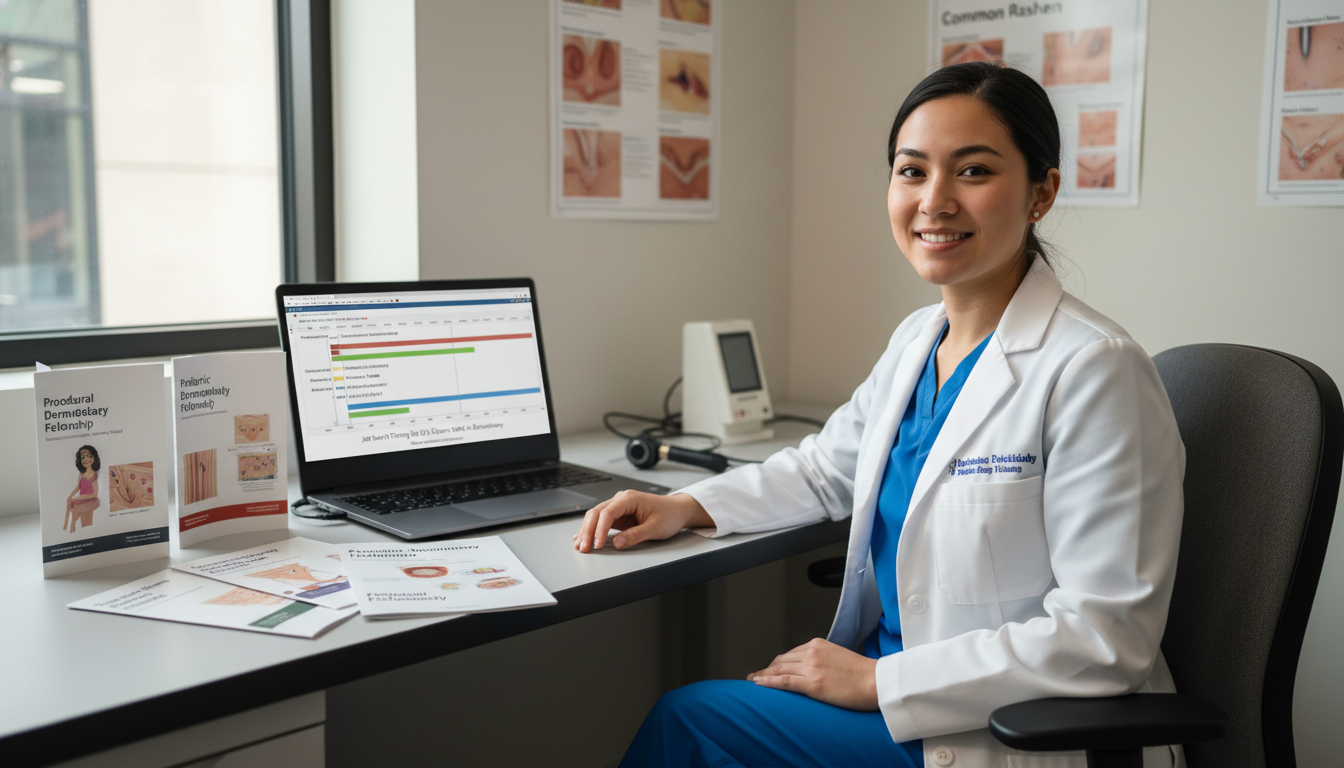
Year-by-Year Timeline: When to Start Your Dermatology Job Search
Below is a practical timeline assuming a standard 3-year dermatology residency (PGY2–PGY4). If you are doing a dermatology fellowship (e.g., Mohs, dermatopathology, pediatric derm), you can shift this by +1 year but keep the same intervals.
PGY2 (First Year of Derm Residency): Foundation, Not Formal Job Search
Primary goal: Build your clinical, academic, and professional foundation—no aggressive job search yet, but strategic preparation.
Key activities:
Clarify broad career direction
- Academic vs community vs private practice vs hybrid
- Interest in cosmetics, complex medical derm, Mohs, dermpath, pediatric derm, telederm, etc.
- Preferred geography (coasts vs Midwest/South, urban vs suburban vs rural)
Optimize your reputation within your department
- Show up prepared, reliable, and teachable
- Be responsive and collaborative with faculty and staff
- This matters because your program director and faculty references heavily influence future job offers.
Start a lightweight professional profile
- Update CV with:
- US citizen IMG background clearly but succinctly
- Medical school, residency program, USMLE scores (if you choose), publications, presentations
- Create or polish your professional LinkedIn profile
- Use a consistent professional headshot and email
- Update CV with:
Network quietly
- Attend your first AAD Annual Meeting if possible
- Join resident and career panels
- Introduce yourself to faculty with overlapping interests from other institutions
- When people ask your goals, you don’t need details yet; “I’m still exploring, but I’m very interested in medical derm / cosmetics / [X] and plan to be in the U.S. long-term” is enough.
What you generally should NOT do in PGY2:
- Sign job contracts
- Engage in formal interviews for attending jobs (exception: rare situations in smaller markets with long lead times)
- Lock yourself into a city or practice before you truly understand your interests and capabilities
PGY3: When to Start Your Serious Job Search Planning
PGY3 is when timing becomes critical. This is the sweet spot to begin actively planning and, in many cases, launching your first round of outreach.
1. Early PGY3 (Summer–Fall): Clarification and Strategy
This is when to start job search planning in earnest.
Key steps:
Clarify if you’re doing a fellowship
- If you intend to pursue Mohs, dermpath, or other fellowships, your attending job search will target post-fellowship, not immediately post-residency.
- Even if you’re fellowship-bound, this is still the time to:
- Build mentor relationships in your niche
- Learn what the post-fellowship job market looks like
- Understand how fellowships change your market value and location options
Narrow your geographic preferences
- Preferable to identify:
- 1–2 “priority” regions (family ties, spouse/partner job, lifestyle)
- 1–2 “flexible” regions you’d still consider for an ideal role
- For each region:
- Research major groups, academic centers, and dermatology networks
- Note places known to be receptive to IMGs or to graduates from your program
- Preferable to identify:
Talk to mentors about timing
- Ask senior residents and recent graduates:
- When did you start looking?
- How many applications did you send?
- How many interviews and offers did you get?
- What would you change about your timing?
- Ask senior residents and recent graduates:
Their experience within your specific program and region is gold.
2. Mid-to-Late PGY3 (Winter–Spring): Initial Outreach and Visibility
This is often when US-trained derm residents (including US citizen IMGs) begin active job exploration, even if they don’t sign anything yet.
Actions:
Update your CV and a simple, clean cover letter template
- Tailor versions: Academic-focused vs Private practice-focused
- Emphasize your:
- Board-eligibility timeline
- Clinical strengths (e.g., complex medical derm, surgical skills, cosmetics experience)
- Research or teaching interests if applicable
Soft outreach to target practices and departments
- Email potential employers:
- Brief intro (who you are, US citizen IMG currently in [Program], graduation date)
- Your main interests (e.g., mix of medical/surgical derm, openness to cosmetics)
- Geographic tie (family/spouse, previous training, familiarity with the area)
- Attach CV; ask if they anticipate hiring in your timeframe
- Purpose is to:
- Put yourself on their radar
- Learn about upcoming openings
- Signal early interest in specific locations
- Email potential employers:
Conferences as networking hubs
- At the AAD Annual Meeting or regional meetings:
- Attend career or networking events
- Introduce yourself to faculty and practice leaders in regions of interest
- Follow up with personalized emails afterward
- At the AAD Annual Meeting or regional meetings:
You are not late if you start serious outreach in the second half of PGY3—but waiting until PGY4 to begin thinking about jobs can shrink your options, especially in competitive urban areas.
PGY4: Active Job Search, Interviews, and Contract Negotiation
PGY4 is when most dermatology residents secure offers and sign contracts, particularly if they aren’t doing fellowship.
1. Early PGY4 (Summer–Fall): Main Interview Season
By now, you should be:
- Actively applying to posted positions
- Continuing exploratory outreach to unadvertised practices
- Responding to emails from recruiters and department chairs
Typical activities and timing:
Interviews
- Virtual or in-person depending on the employer
- Include meetings with:
- Department chair/section chief
- Potential colleagues
- Practice manager/administration
- For academic jobs:
- Grand rounds or a short talk may be requested
- Expect multiple rounds over 1–3 months
Evaluating early offers
- Some employers—especially private practices in high-need areas—may present offers quickly after interviews.
- Consider whether to:
- Accept early (if it’s your dream city + practice type)
- Ask for more time while you complete other interviews
- Many contracts allow for a 1–2 week review period; you can often request a reasonable extension.
2. Mid PGY4 (Fall–Winter): Narrowing Options and Negotiating
By this stage, most residents who started on time are:
- Finishing second-wave interviews
- Comparing offers across dimensions:
- Salary and bonuses
- Partnership track
- Non-compete clauses and restrictive covenants
- Call responsibilities
- Cosmetic vs medical volume
- Academic title and protected time (if relevant)
Actions:
Get a health-care–savvy attorney to review your contract
- Especially important in private practice/multispecialty groups
- Pay particular attention to:
- Non-competes (radius, duration)
- Termination clauses
- Productivity metrics (RVUs, patient volumes)
- Ownership/partnership terms
Make a decision timeline
- Try to sign by late PGY4 winter or early spring if possible, especially for:
- Competitive cities
- Academic or large system roles that require onboarding time
- This gives both you and the employer time for credentialing, licensing, and marketing.
- Try to sign by late PGY4 winter or early spring if possible, especially for:
3. Late PGY4 (Spring–Graduation): Finalizing Logistics
If you started early enough:
- You should have a signed contract and a clear start date.
- Focus shifts to:
- State licensure (if different from your training state)
- Hospital privileging
- Malpractice coverage start dates
- Moving arrangements
- Board exam study
If you are still searching late in PGY4, you may need to:
- Broaden your geographic or practice-type preferences
- Consider short-term locums as a bridge
- Use your program’s alumni network more aggressively

Fellowship vs Direct-to-Practice: How It Changes Job Search Timing
Many dermatologists consider fellowship training. As a US citizen IMG, a fellowship can be particularly valuable if:
- You want to differentiate yourself in academic or saturated urban markets
- Your derm residency program has limited exposure to your desired niche
- You have a strong interest in Mohs, dermpath, pediatric derm, or complex medical derm
If You’re Going Straight Into Practice (No Fellowship)
- Use the PGY3–PGY4 timeline as outlined above.
- Aim to sign a contract by late PGY4 winter for a summer/early fall start.
If You’re Doing a Fellowship
Your attending job search shifts by about one year, but the structure is similar:
Derm Residency PGY3–PGY4:
- Focus is on fellowship applications and matching.
- Still worthwhile to:
- Meet potential future employers at conferences
- Understand job trends in your subspecialty
Fellowship Year (Post-Residency):
- Fellowship start (July): Get settled, define your subspecialty focus more sharply.
- Fellowship mid-year (around December–February): “When to start job search” as a fellow
- This is your main window to:
- Start formal outreach
- Apply for academic or high-level subspecialty-heavy roles
- Many post-fellowship jobs are recruited 6–12 months before your fellowship ends.
- This is your main window to:
Fellowship late-year (Spring):
- Conduct final interviews and negotiate contracts
- Sign ideally by ~3–4 months before fellowship completion
Impact on Job Type and Marketability
Fellowship can:
- Expand opportunities in academic centers that prioritize subspecialty expertise
- Increase demand in private practice (especially for Mohs and dermpath)
- Raise starting compensation in certain settings
But it also:
- Delays your attending salary by one year
- Requires you to shift your job search timeline and manage two separate match-like experiences (residency, fellowship) before your attending search
Special Considerations for US Citizen IMGs and Americans Studying Abroad
Your status as a US citizen IMG or American studying abroad influences how people perceive your journey—but it does not prevent you from thriving in the dermatology job market once you’re residency-trained in the U.S.
1. Leveraging Your Background Positively
Use your IMG story to your advantage:
- Emphasize:
- Resilience and adaptability (navigating different systems)
- Cross-cultural competence with diverse patient populations
- Language skills, if applicable
- Frame your path succinctly in interviews:
- “I completed my MD at [International School], then matched into dermatology at [US Program]. That experience really sharpened my appreciation for evidence-based skin care across different populations.”
Most employers focus primarily on:
- Your US residency training
- Reputation of your program
- References from US-based attendings
- Communication skills and professionalism
The fact that you are a US citizen minimizes visa concerns and can be a significant plus compared with non-citizen IMGs.
2. Geographic Strategy
As a US citizen IMG, you may:
- Have fewer long-standing US geographic ties than some US MDs (e.g., no hometown undergrad network)
- Conversely, you may have:
- Strong ties to specific regions (family, partner’s work, prior US schooling)
- International connections that could support cosmetic or boutique practices with certain patient populations
Recommendations:
- Highlight any regional connections at the top of your cover letters:
- “I grew up in [State] and am eager to return.”
- “My spouse has a permanent position in [City].”
- Be transparent about long-term plans; employers want to know you’re likely to stay.
3. Academic vs Private Practice as a US Citizen IMG
Academic tracks
- May place greater weight on publications and teaching portfolio
- Often care least about where you went to med school compared with your current performance and scholarly output
- Your IMG path is often a neutral or mildly positive differentiator if you can show strong academic engagement
Private practice
- Focused on clinical productivity, patient rapport, and procedural skills
- Your status as US citizen IMG usually becomes irrelevant once you demonstrate competence and reliability
- Some may ask about your pathway out of curiosity; keep your explanation crisp and confident
If Your Timeline Is Off-Track: Late Starters, Early Contracts, and Changing Plans
Not every resident follows a textbook schedule. Here’s how to adapt.
If You Started Job Search Late (Mid/Late PGY4 or End of Fellowship)
Broaden your scope
- More flexible on:
- Geography
- Practice size
- Academic vs non-academic
- Consider smaller markets where demand is high
- More flexible on:
Utilize locum tenens strategically
- Temporary roles can:
- Provide income
- Expose you to different practice models
- Fill a gap while you seek a permanent fit
- Temporary roles can:
Leverage recruiter networks
- Contact reputable physician recruiters who specialize in dermatology.
- Be clear about:
- Start date
- Board-eligibility/board-certification status
- Geographic boundaries
If You Committed Too Early and Want to Change Directions
Sometimes residents sign PGY3 or early PGY4 and later reconsider:
- Review your contract first
- Look for:
- Termination without cause clauses and required notice
- Penalties or repayment of sign-on bonuses if you back out
- Look for:
- Speak with an attorney before making moves
- Especially if you received a sign-on bonus or relocation assistance
- Have a candid but professional conversation with the employer
- Earlier is better; surprises close to start date are more damaging
- Re-launch your search with urgency but not panic
- Use mentors heavily
- Choose a more focused geographic or practice-type goal so you can move quickly
Practical Action Plan: Month-by-Month Snapshot
This condensed plan assumes a direct-to-practice path, no fellowship.
PGY2
- Build strong reputation and clinical base
- Attend AAD, start light networking
- Clarify general career and location preferences
PGY3 (July–December)
- Decide on fellowship vs no fellowship
- Identify target regions and practice types
- Update CV and LinkedIn; discuss strategy with mentors
PGY3 (January–June)
- Begin targeted outreach emails to practices and departments
- Attend conferences, meet potential employers
- Track contacts in a simple spreadsheet
PGY4 (July–December)
- Submit applications to open positions
- Participate in interviews (virtual and on-site)
- Start contract discussions with serious prospects
PGY4 (January–March)
- Compare offers and negotiate key terms
- Get legal review of contracts
- Aim to sign by late winter/early spring
PGY4 (April–Graduation)
- Complete licensure, credentialing, and logistics
- Study for boards, finish residency strong
- Transition smoothly into your first attending role
FAQ: Job Search Timing for US Citizen IMGs in Dermatology
1. As a US citizen IMG in dermatology, when should I start my attending job search?
For most residents going straight into practice (no fellowship), start planning and light outreach in mid-PGY3 and move into active interviewing in early PGY4. Aim to sign a contract by late PGY4 winter or early spring for a summer/early fall start. If you’re doing a fellowship, shift these milestones about one year later, with active job search typically starting mid-fellowship year.
2. Does being an American studying abroad or US citizen IMG hurt my chances in the dermatology job market after residency?
Once you have completed a US dermatology residency, your status as a US citizen IMG matters far less than your training program, references, and clinical performance. Employers care much more about your board-eligibility, skills, and professionalism. Being a US citizen eliminates visa barriers, which is a major advantage compared with non-citizen IMGs.
3. Should I aim for academic or private practice as my first job, and does timing differ?
Timing is broadly similar, but academic jobs often open earlier (9–18 months ahead) and involve more steps (committee approvals, multiple interviews). Private practice roles can appear on shorter notice but may also be discussed informally years in advance. As a first job, choose the environment that best supports your clinical interests, mentorship needs, and desired mix of medical, surgical, and cosmetic work, then align your timeline accordingly.
4. What if I’m undecided about fellowship—does that change when I should start job searching?
If you’re unsure about fellowship, use early PGY3 to gather information—talk to subspecialists, review fellowship application deadlines, and understand how each path impacts your long-term marketability. You don’t need to start a full job search until you commit to either:
- Direct-to-practice: follow the standard PGY3–PGY4 search timeline, or
- Fellowship: focus on fellowship apps during PGY3–PGY4, then launch your attending job search mid-fellowship year.
Avoid running a full attending job search while still uncertain about fellowship; it can confuse employers and dilute your focus.
By understanding how dermatology hiring cycles work and mapping your actions to each year of training, you can approach the job search with confidence. As a US citizen IMG who has already cleared the hurdle of a derm match, you are well-positioned—timely planning, transparent communication, and strategic networking will help you secure the right first attending role in a competitive but favorable physician job market.