
You failed a shelf exam. That hurts, but it does not mean you're not smart enough, not cut out for medicine, or secretly falling apart while everyone else glides by. It means one exam went badly. Full stop. The fastest way back is not shame. It's sequence. Do the right things in the right order, week by week, before panic talks you into something dumb.
I've seen students make the same bad move over and over in the first 48 hours: they turn one score into a personality diagnosis. Then they start announcing wild plans. “Maybe I should switch specialties.” “Maybe I’m just bad at clinical medicine.” No. Not this week. At this point you should focus on stabilization first, then facts, then a plan.
Week 0: The first 24 to 72 hours after the fail
This is emotional triage. Not strategy. Not reinvention. Triage.
At this point you should do three things first:
Pause
- No late-night doom-scrolling through Reddit threads about failed shelves.
- No comparing your score to your friend who “barely studied” and somehow crushed it. Those stories are usually half nonsense anyway.
- No sending ten texts explaining your whole life story.
Name what happened accurately
- “I failed a shelf exam.”
- Not: “I’m failing medical school.”
- Not: “I’m not good enough to be a doctor.”
- Not: “This proves I picked the wrong field.”
Get your body out of alarm mode
- Sleep one real night if you can.
- Eat actual food.
- Drink water.
- Walk outside for 20 minutes.
- Cry if you need to. Fine. Then get up.
The first 24 to 72 hours are dangerous because your brain wants a dramatic explanation. It wants a villain. Usually that villain is you. That's lazy thinking dressed up as insight.
At this point you should not:
- Change your specialty plans
- Decide to leave the rotation
- Announce the news to everyone in your life
- Build a heroic 14-hour-a-day study schedule you'll abandon in two days
Instead, make a tiny holding plan:
- One page in a notebook titled: What happened / What I know / What I need next
- One trusted person to tell
- One deadline for when you’ll review the facts
That’s enough for now. The goal of Week 0 is not to feel amazing. The goal is to stop the emotional bleeding so you can think clearly.
Week 1: Stabilize your routine and get the facts
Now you move from emotion to information. This week is for boring, useful reality. Good. Boring reality is what gets people through remediation.
First, review what actually happened:
- Your score report
- The passing standard
- The timing of the exam
- Your study methods
- Sleep the week before the test
- Rotation workload
- Whether you ran out of time on the exam
- Whether your questions were random, passive, or poorly reviewed
A failed shelf rarely comes from one single cause. It's usually a stack:
- weak content foundation
- not enough questions
- reviewing questions badly
- poor timing
- bad sleep
- trying to “study when possible” instead of scheduling it
At this point you should notify the minimum necessary people:
- clerkship director
- academic advisor
- required academic support person, if your school has one
Not your entire group chat. Not your college roommate who will respond with motivational clichés. The people who can clarify policy and help you move.
Questions to ask this week:
- What is the retake timeline?
- Does this affect the clerkship grade or only the shelf portion?
- Are there required remediation steps?
- Is there faculty feedback available?
- What resources does the school recommend?
At this point you should also stabilize your routine:
- fixed wake time
- fixed sleep target
- daily study block
- one protected meal break
- basic movement
It sounds almost insultingly simple. It works anyway. Students love to look for advanced fixes while ignoring wrecked sleep and chaos. That's backwards.
Week 2: Build a recovery plan you can actually follow
This is the week to stop vaguely “studying harder” and start building a plan with edges.
Your recovery plan should be short, specific, and repeatable. If it looks like a military campaign, it’s bad. If it depends on perfect motivation, it’s bad. If it punishes you for being human, it’s bad.
At this point you should translate weaknesses into daily tasks.
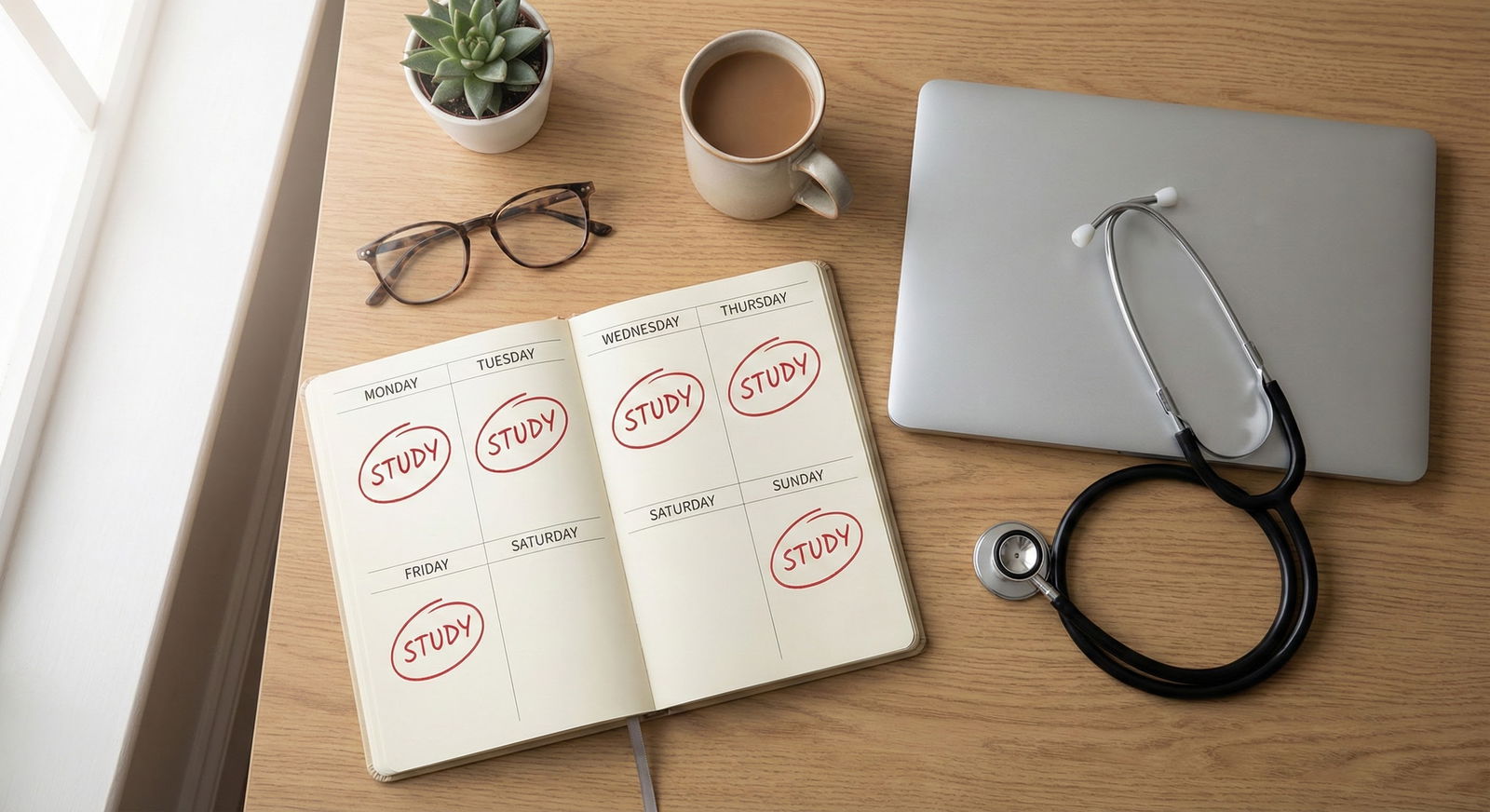
A solid weekly structure looks like this:
- 5 to 6 study days
- 1 lighter recovery day
- Daily question block
- Daily wrong-answer review
- Targeted content review on weak systems
- One timed block every few days
Example day:
- 20 to 40 timed questions
- Review every missed question and every guessed question
- Write down recurring weak areas
- Do 45 to 60 minutes of focused content review
- End with a 5-minute plan for tomorrow
That’s enough. Seriously. Enough.
At this point you should prioritize high-yield correction, not a total rebuild from scratch. Do not reopen three giant textbooks and pretend you're beginning medicine for the first time. That is procrastination wearing a lab coat.
Focus on:
- topics you repeatedly miss
- common shelf patterns
- management algorithms
- next-best-step reasoning
- test-taking stamina
Your plan should answer:
- What will I do every day?
- How will I measure progress?
- What will I do when I miss a day?
That last question matters. Because you will miss a day. Recovery plans fail when they assume robotic perfection.
Weeks 3 to 4: Execute the turnaround week by week
Now the work becomes rhythmic. Less drama. More reps.
At this point you should settle into a weekly cycle:
- Learn
- Test
- Review
- Rest
- Reassess
Here’s the weekly rhythm I recommend:
Monday to Thursday
- timed questions
- deep review of misses
- one weak-topic content session
- maintain sleep target
Friday
- mixed block
- identify pattern of errors
- make next week’s weak-topic list
Saturday
- lighter review
- flashcards or teaching back concepts out loud
- shorter study day
Sunday
- partial rest
- prep calendar
- reset materials
- protect your evening
This is also the point where tracking matters. Not just hours studied. Hours are a vanity metric. You can sit with UWorld open for six miserable hours and accomplish basically nothing.
Track these instead:
- number of practice questions completed
- percent correct
- wrong-answer patterns
- hours of sleep
- stress rating
- confidence by topic
What you’re looking for by the end of Week 4:
- fewer random misses
- better timing
- improved stamina during timed blocks
- more accurate self-assessment
- less panic when you see hard questions
And yes, confidence matters. Not fake confidence. Real confidence built from evidence. When you can say, “I’ve done four weeks of consistent review, I know my weak spots, and my blocks are improving,” that lands differently than empty self-talk.
If your scores are not improving by Week 4, don’t just grind harder. That’s a bad instinct. Change the method:
- get faculty help
- review fewer resources more deeply
- examine whether timing is the real issue
- check if burnout is flattening your performance
Weeks 5 to 8: Rebuild confidence and prepare for the next shelf or retake
This phase is about performance, not panic. You are no longer reacting to a bad result. You are training for the next attempt.
At this point you should shift into:
- mixed question sets
- timed blocks
- cumulative review
- teach-back sessions
Teach-back is underrated and weirdly powerful. Explain acute chest pain workup, nephrotic vs nephritic syndrome, postpartum fever, or delirium vs dementia out loud like you’re teaching an exhausted intern at 5:30 a.m. If you can't explain it simply, you don’t own it yet.
At this point you should also protect your mental health on purpose. Not as an afterthought. A failed shelf can turn every day into an internal trial if you let it.
Non-negotiables:
- regular meals
- movement most days
- sleep that is at least respectable
- one boundary around school talk
- one weekly check-in with someone you trust
That trusted person does not need to fix anything. They just need to help you stay honest. I’ve seen this make a huge difference. One ten-minute check-in can prevent a week of silent spiraling.
By Weeks 5 to 8, recovery should feel less like punishment and more like structure. That's how you know you're heading back to solid ground.
Closing: What recovery looks like by the end of the month
By the end of this recovery window, you should have three things:
- A clearer explanation for why you failed
- A written plan for what changed
- A calmer, more sustainable study routine
That’s real progress. Not motivational poster progress. Actual progress.
You do not need to turn this into a grand story about resilience by next Tuesday. You just need to recover cleanly. One week at a time. One block at a time. One decent night of sleep at a time.
A shelf exam failure is a setback. Not a verdict. Not a prophecy. Not your identity.
At this point you should remind yourself of the order:
- stabilize
- get feedback
- make the plan
- follow the plan
- adjust without drama
That’s how people come back from this. Not with shame. With structure.