Exploring the Use of Psilocybin in Mental Health Treatment
Introduction: From Counterculture to Clinical Tool
Psilocybin, the psychoactive compound found in “magic mushrooms,” has rapidly moved from the margins of counterculture into the center of serious psychiatric research. Once synonymous with 1960s experimentation and later heavily stigmatized, psilocybin is now at the forefront of innovative approaches to treating complex mental health conditions.
Across leading academic centers, early-phase and large-scale Clinical Trials are evaluating psilocybin-assisted therapy for major depressive disorder, treatment-resistant depression, anxiety related to life-threatening illness, PTSD, and substance use disorders. For residency applicants, medical students, and early-career clinicians, understanding this emerging field is increasingly relevant—both for future practice and for engaging with evolving medical ethics.
This expanded overview will:
- Define psilocybin and its pharmacology
- Explain key brain mechanisms, including serotonin signaling, Neuroplasticity, and the default mode network
- Summarize major Clinical Trial findings across different psychiatric conditions
- Describe how psilocybin-assisted therapy is conducted in practice
- Explore ethical, regulatory, and training considerations for clinicians
- Offer practical guidance on how trainees can engage with Psychedelic Therapy research and practice responsibly
What Is Psilocybin? Pharmacology and Historical Context
Psilocybin is a naturally occurring psychedelic compound present in more than 200 mushroom species, particularly within the Psilocybe genus. It is classified pharmacologically as a classic serotonergic psychedelic.
Basic Pharmacology
- Prodrug and active metabolite:
After ingestion, psilocybin is rapidly dephosphorylated in the body to psilocin, the primary active compound. - Primary target:
Psilocin acts as a partial agonist at several serotonin receptors, with strongest affinity for the 5‑HT2A receptor. - Onset and duration:
- Oral onset: 20–60 minutes
- Peak effects: ~2–3 hours
- Total duration: 4–6 hours (occasionally longer)
- Subjective effects (dose-dependent):
- Altered perception of time, space, and self
- Intensified emotions (both positive and negative)
- Visual alterations (colors, patterns, mild to complex imagery)
- Changes in thought patterns, including increased introspection and sense of meaning
These experiences, when carefully supported in a therapeutic context, can become the basis for profound psychological insights and behavioral change.
Historical and Cultural Use
- Indigenous traditions:
Mesoamerican cultures, including the Mazatec and other Indigenous groups, have used psilocybin-containing mushrooms for centuries in spiritual and healing rituals. - Mid-20th-century research boom:
In the 1950s–60s, psychiatrists and psychologists investigated psilocybin and other psychedelics for depression, alcoholism, and existential distress. Early findings were promising but methodologically limited by modern standards. - Prohibition and stigma:
Amid political and cultural backlash, psilocybin was classified as a Schedule I controlled substance in the U.S. and similarly restricted in many countries, stalling clinical research for decades. - Modern “psychedelic renaissance”:
Since ~2000, carefully regulated clinical studies have re-emerged at institutions such as Johns Hopkins, NYU, Imperial College London, and others. The current wave is defined by:- Rigorous study designs
- Strong emphasis on safety and ethics
- Integration with structured psychotherapy
The Science Behind Psilocybin: Brain Networks and Neuroplasticity
Psilocybin’s therapeutic promise lies in its dual action: creating a transient altered state of consciousness while also shifting underlying brain circuitry. Two core mechanisms stand out in current research: modulation of the default mode network and enhancement of Neuroplasticity.
Serotonin and the 5‑HT2A Receptor
Psilocin primarily exerts its effects via the 5‑HT2A receptor:
- Location: Highly expressed in the cortex, especially in regions involved in higher-order cognition (e.g., prefrontal cortex, posterior cingulate).
- Functional effects:
5‑HT2A activation is associated with:- Increased excitability of cortical pyramidal neurons
- Heightened sensory and emotional processing
- Disruption of rigid patterns of thinking and perception
These changes lay the groundwork for the powerful shifts in perspective often reported during Psychedelic Therapy.
Neuroplasticity: Opening a Window for Lasting Change
Neuroplasticity—the brain’s capacity to reorganize synaptic connections—is central to mental health and recovery. Mood and anxiety disorders are often associated with:
- Reduced synaptic density
- Impaired connectivity in mood-regulating circuits
- Entrenched maladaptive cognitive patterns (e.g., rumination, negative self-beliefs)
Preclinical and early human studies indicate that psilocybin and related psychedelics can:
- Increase dendritic spine growth and synaptogenesis
- Enhance structural and functional connectivity in relevant brain regions
- Create a “plasticity window” in which psychotherapy may be particularly effective
This suggests that psilocybin may not merely mask symptoms but could help “reset” neural pathways, making it easier to adopt new habits, beliefs, and behaviors after the acute experience.
The Default Mode Network: Quieting the Overactive “Self”
The Default Mode Network (DMN) includes regions such as the medial prefrontal cortex and posterior cingulate cortex. It is active when:
- The mind is at rest
- We engage in self-referential thinking
- We ruminate on past and future events
Hyperactivity or hyperconnectivity in the DMN has been linked to:
- Major depressive disorder
- Generalized anxiety
- Obsessive rumination and self-criticism
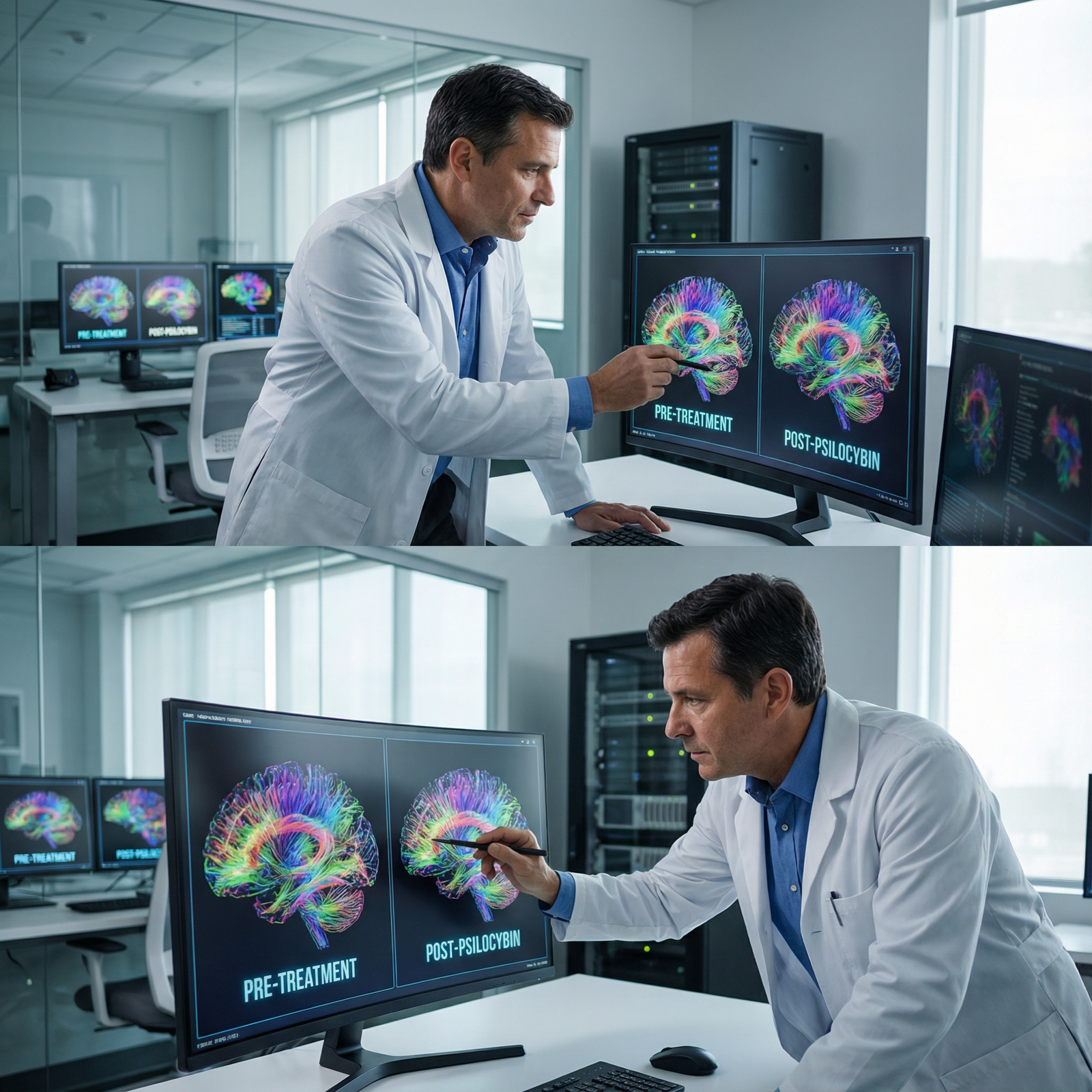
Neuroimaging studies show that psilocybin:
- Transiently disrupts normal DMN synchrony and connectivity
- Increases communication between networks that typically do not “talk” to each other (e.g., sensory and associative regions)
- May subjectively correspond to ego dissolution—a reduction in rigid self-focus and a sense of merging with a broader reality
After the acute experience, DMN connectivity often reconsolidates in a more normalized pattern, aligning with reported improvements in mood and perspective.
Clinical Trials and Key Research Findings in Mental Health
A growing body of Clinical Trials suggests that psilocybin, when combined with structured psychotherapy, may have significant and durable effects across multiple conditions.
Major Depressive Disorder and Treatment-Resistant Depression
A 2020 JAMA Psychiatry trial and subsequent studies have investigated psilocybin for major depressive disorder (MDD), including treatment-resistant cases:
- Design features:
- Participants with moderate-to-severe depression
- One or two psilocybin sessions with preparatory and integration therapy
- Dose administered in a controlled clinical environment
- Outcomes:
- Rapid reductions in depressive symptoms within 1–7 days
- Many participants maintained significant improvement at 4–12 weeks
- Some longer-term follow-up data suggest benefits may persist for months, particularly with continued therapeutic support
Compared with traditional antidepressants (SSRIs), psilocybin appears to:
- Act faster (hours to days vs. weeks)
- Have a more pronounced effect for some treatment-resistant patients
- Potentially work via different mechanisms (network-level “reset” rather than gradual monoamine modulation alone)
However, the evidence is preliminary, and psilocybin is not yet a standard-of-care treatment.
Anxiety and Depression in Life-Threatening Illness
Pioneering studies at Johns Hopkins and NYU have examined psilocybin in patients with cancer and significant existential or death-related distress:
- Clinical picture:
Many patients experience severe anxiety, depression, and loss of meaning after a life-threatening diagnosis. - Findings:
- Single high-dose psilocybin sessions, with psychotherapy, produced large and sustained reductions in anxiety and depressive symptoms.
- Many participants reported increased sense of meaning, acceptance, and spiritual well-being.
- Benefits often persisted for 6 months or longer in follow-up assessments.
These results suggest psilocybin-assisted therapy may be uniquely suited to existential distress that is only partly responsive to conventional medications.
PTSD and Trauma-Related Disorders
While MDMA has garnered more attention for PTSD, early psilocybin research is emerging:
- Preliminary data and pilot studies suggest:
- Decreases in PTSD symptom severity (re-experiencing, avoidance, hyperarousal) after psilocybin-assisted sessions.
- Patients described being able to revisit and process traumatic memories with less avoidance and greater self-compassion.
- Mechanistic rationale:
- Enhanced Neuroplasticity may allow reconsolidation of traumatic memories in less distressing forms.
- Modulation of the DMN and emotional circuits may reduce rigid fear responses and shame-based self-narratives.
Larger, controlled trials are needed, and for now, PTSD remains an experimental indication for psilocybin.
Substance Use Disorders: Tobacco, Alcohol, and Beyond
Psilocybin is under active investigation for multiple addictions:
- Smoking cessation:
A pilot study comparing psilocybin-assisted therapy to standard interventions found:- Higher long-term abstinence rates (often >50% at 6–12 months)
- Participants frequently described a powerful reappraisal of their relationship to health, autonomy, and addiction.
- Alcohol use disorder:
Early-phase trials report:- Reduced heavy drinking days
- Improved overall functioning and quality of life
- Associations between mystical-type experiences and better outcomes
Mechanistically, psilocybin appears to:
- Increase insight into the consequences and drivers of substance use
- Facilitate changes in identity (e.g., from “addicted person” to “person with agency and values”)
- Promote sustained engagement in behavioral change strategies
How Psilocybin-Assisted Therapy Works in Practice
Psilocybin’s clinical promise stems not from the drug alone, but from its use within a structured therapeutic framework. For residents and clinicians, understanding the practical model is critical.
Core Elements: Set, Setting, and Integration
Set (mindset):
- Patient expectations, intentions, psychological readiness
- Addressed via multiple preparatory psychotherapy sessions
Setting (environment):
- Comfortable, non-clinical room (soft lighting, music, supportive staff)
- Safety measures and medical monitoring as needed
Integration:
- Post-session psychotherapy to process insights, emotions, and experiences
- Translation of acute experience into concrete behavioral and cognitive changes
Typical Clinical Protocol
While protocols vary slightly across institutions, a common structure includes:
Screening and Assessment
- Comprehensive psychiatric evaluation
- Medical history and physical exam
- Assessment of suicide risk, psychosis risk, and family history of bipolar or schizophrenia-spectrum disorders
Exclusion Criteria (common)
- Active psychotic disorder or history of schizophrenia
- Uncontrolled cardiovascular disease
- High risk of mania or psychosis
- Current substance dependence (in some studies)
Preparatory Sessions
- 2–4 psychotherapy sessions before dosing
- Establish rapport, review personal history, clarify goals
- Educate patient about possible experiences (including challenging ones)
- Develop coping strategies (breathing, acceptance-based approaches)
Dosing Day
- Patient arrives fasting or with light meal, vital signs monitored
- Oral psilocybin capsule administered, often in moderate to high dose
- Two facilitators (typically therapists) present for the full session
- Eyeshades and curated music are often used to promote inward focus
- Supportive, non-directive presence unless safety issues arise
Integration Sessions
- Debrief within 24–72 hours, then additional sessions over weeks
- Explore emotional content, imagery, insights about relationships, self, and meaning
- Strengthen adaptive narratives and concrete action plans (e.g., behavior changes, communication, self-care)
Therapeutic Mechanisms in Context
Within this structure, several overlapping mechanisms likely contribute to clinical benefit:
- Facilitation of Emotional Processing
- Intensified access to previously avoided emotions (grief, fear, guilt)
- Enhanced ability to process these experiences without immediate avoidance
- Cognitive Flexibility and Perspective Shift
- Patients often report seeing longstanding problems “from outside” or with new compassion.
- This can disrupt rigid, negative core beliefs (e.g., “I am broken,” “I am unlovable”).
- Enhanced Therapeutic Alliance
- The vulnerability and depth of the experience can deepen trust and openness with therapists.
- Many patients feel a sense of shared journey, strengthening engagement in ongoing therapy.
For clinicians, these elements highlight why psilocybin is best understood not as a stand-alone pharmacologic agent, but as a catalyst embedded within an intensive Psychotherapeutic process.
Implications for the Future of Mental Health Treatment
The psilocybin literature is still developing, but the trajectory suggests substantial implications for psychiatry and medical ethics.
A Potential Paradigm Shift in Psychiatry
Psilocybin-assisted therapy challenges the traditional model of:
- Daily or chronic medication use with incremental symptom reduction
- Limited focus on existential, spiritual, or meaning-related dimensions of suffering
Instead, it introduces:
- Time-limited interventions with 1–3 high-impact sessions
- Holistic attention to identity, values, spirituality, relationships, and mortality
- Emphasis on Neuroplasticity-driven change, rather than indefinite symptom management alone
This could transform not only treatment algorithms but also how we conceptualize recovery and human flourishing in Mental Health care.
Regulatory and Policy Changes
As Clinical Trials progress, several trends are emerging:
- Breakthrough Therapy Designations:
Regulatory bodies like the U.S. FDA have granted “Breakthrough Therapy” status to psilocybin for treatment-resistant depression, expediting development. - Local and State-Level Reforms:
- Some U.S. cities have decriminalized psilocybin to various degrees.
- Oregon and Colorado have created regulated frameworks for supervised psilocybin services, though not all are strictly medical.
- Global perspective:
Countries differ widely in regulatory approaches, and cross-border research collaborations are growing.
For future clinicians, staying updated on local laws and institutional policies will be essential, particularly around prescribing, referral, and participation in research.
Training, Competency, and Medical Ethics
With expanding interest comes responsibility:
Training Needs
- Specialized courses in psychedelic-assisted therapy
- Supervised clinical experience in research or service settings
- Education on risk management and cultural humility
Ethical Considerations
- Preventing exploitation of vulnerable patients in highly suggestible states
- Maintaining clear professional boundaries and informed consent
- Navigating spiritual or existential content respectfully in a pluralistic society
Equity and Access
- Ensuring that psilocybin therapies do not become accessible only to wealthy or privileged patients
- Addressing historical injustices, including disproportionate criminalization of drug use in marginalized communities
For residency applicants and trainees, engaging with these questions now will prepare you to practice ethically in a rapidly evolving field.

FAQ: Psilocybin, Psychedelic Therapy, and Clinical Practice
1. Is psilocybin currently legal for medical use?
In most countries, psilocybin remains a Schedule I or equivalent controlled substance, meaning it is not approved for routine medical use. However:
- Clinical Trials:
Psilocybin can be legally administered within approved research protocols at academic or specialized centers. - Local Reforms:
Certain jurisdictions (e.g., parts of the U.S. like Oregon and Colorado) have begun to:- Decriminalize possession to varying degrees
- Develop regulated service models for supervised psilocybin experiences
- Future outlook:
If ongoing Phase II/III trials demonstrate safety and efficacy, regulatory agencies may consider rescheduling psilocybin or approving specific psilocybin-based therapies.
Clinicians should always follow current local and national regulations and institutional policies.
2. What are the risks and side effects of psilocybin?
Common acute effects during a psilocybin session can include:
- Transient anxiety or panic, especially during the onset phase
- Nausea, vomiting, or dizziness
- Increased heart rate and blood pressure
- Visual distortions or hallucinations
Potential psychological risks:
- Difficult or distressing experiences (“bad trip”) with intense fear or confusion
- Exacerbation of latent psychotic or manic symptoms in vulnerable individuals
- Challenging emotional material that requires careful integration
In carefully screened and supervised Clinical Trials, severe adverse events have been rare. However, unsupervised use—especially in unsafe settings or in individuals with psychiatric vulnerability—can be dangerous.
3. How does psilocybin compare to traditional antidepressants like SSRIs?
Psilocybin and SSRIs act in fundamentally different ways:
- Onset of effect:
- SSRIs: Gradual; often 4–6 weeks for full therapeutic effect
- Psilocybin: Rapid; often within days of a supervised session
- Dosing pattern:
- SSRIs: Daily, long-term use
- Psilocybin: Typically one to a few high-dose sessions within a psychotherapeutic framework
- Mechanism:
- SSRIs: Increase serotonin availability, affecting mood regulation over time
- Psilocybin: Short-term 5‑HT2A activation leading to altered consciousness, DMN disruption, and enhanced Neuroplasticity
Currently, psilocybin is not a replacement for SSRIs in standard practice. It remains investigational, and combination strategies (e.g., tapering off SSRIs before psilocybin therapy) are still being studied. Treatment decisions should be made case-by-case within evidence-based guidelines.
4. Can psilocybin be used for trauma-related disorders like PTSD?
Emerging data suggest that psilocybin-assisted therapy may help some individuals with trauma-related conditions:
- Facilitates processing of traumatic memories with reduced avoidance
- May weaken the emotional “charge” associated with traumatic recollections
- Encourages new, more compassionate narratives about the self
However:
- The evidence base is currently much smaller than for MDMA-assisted therapy in PTSD.
- Psilocybin for PTSD remains experimental and should only be undertaken within properly designed Clinical Trials or highly structured, regulated programs.
Patients with significant trauma histories should be carefully screened, and any psychedelic therapy must involve experienced trauma-informed clinicians.
5. How can medical students or residents get involved in psilocybin research or training?
There are several pathways to engage with this growing field:
- Research participation:
- Seek electives or research rotations at institutions running psychedelic Clinical Trials.
- Search for “psilocybin” on ClinicalTrials.gov to identify active sites.
- Academic involvement:
- Join or form interest groups in “Psychedelic Medicine” or “Psychedelic Science.”
- Attend conferences hosted by organizations such as MAPS, APA sections, or academic centers.
- Foundational training:
- Study core topics: psychopathology, psychotherapy modalities, Neuroplasticity, and ethics.
- Explore emerging certificate programs in psychedelic-assisted therapy (note: many are designed for licensed clinicians).
- Ethical engagement:
- Critically evaluate the evidence base.
- Stay aware of hype and avoid premature clinical use outside appropriate legal and ethical frameworks.
For residency applications or early-career development, demonstrating thoughtful, evidence-based interest in Psychedelic Therapy can signal engagement with cutting-edge Medical Innovations and evolving standards of care—as long as it is grounded in scientific rigor and ethical reflection.
Psilocybin sits at the intersection of neuroscience, psychotherapy, ethics, and policy. For the next generation of clinicians, understanding this evolving area will be key—not only for delivering novel treatments but also for reshaping how we think about healing, meaning, and recovery in Mental Health care.