Introduction: How Robotics Are Transforming Modern Surgical Techniques
Robotics has moved from science fiction into everyday clinical reality, reshaping how surgeons operate and how patients experience surgery. Robotic Surgery is no longer a niche experiment; it is now embedded in routine care across urology, gynecology, general surgery, cardiothoracic surgery, and orthopedics. For medical students and residents, understanding robot-assisted surgery is becoming as fundamental as mastering traditional open and laparoscopic approaches.
This article explores how Robotic Surgery works, how it has evolved, the advantages and limitations of these systems, and what this Healthcare Innovation means for your training and future practice. You will also find real-world examples, practical considerations for residency applicants, and a detailed FAQ at the end.
The Evolution of Surgical Robotics and Minimally Invasive Procedures
Robotic platforms did not appear overnight. Their development parallels the broader shift from open surgery to Minimally Invasive Procedures, which aim to reduce trauma while maintaining or improving outcomes.
From Open Surgery to Laparoscopy to Robotics
- Open surgery dominated the 20th century: large incisions, direct visualization, and hands-on tactile feedback.
- Laparoscopy in the 1980s–1990s introduced small incisions, long rigid instruments, and 2D video. These techniques dramatically reduced postoperative pain and hospital stay but demanded a steep learning curve in depth perception and hand–eye coordination.
- Robotic Surgery builds on laparoscopy, adding wristed instruments, 3D high-definition visualization, tremor filtration, and improved ergonomics for the surgeon.
Robotic platforms extend what minimally invasive surgery can achieve, allowing complex operations to be performed through tiny incisions with enhanced precision.
Key Historical Milestones in Robot-Assisted Surgery
1985 – Puma 560 in neurosurgery
The Puma 560 industrial robot was adapted to assist in neurosurgical biopsies, showing that a robot could position tools more steadily than a human hand.1990s – Early telemanipulation systems
Defense and space agencies funded research into remote surgery for battlefield and space applications. These efforts laid the groundwork for master–slave robotic systems where the surgeon’s movements are translated into robotic arm motions.1997 – First robot-assisted laparoscopic prostatectomy (RALP)
Using early versions of what would become the da Vinci Surgical System, surgeons performed minimally invasive prostate surgery with unprecedented precision in the narrow pelvic space.2000s – FDA approvals and clinical expansion
The da Vinci platform and similar systems gained regulatory approval for various procedures, enabling rapid growth in urology, gynecology, and general surgery.2010s – Single-port and flexible robotic systems
Newer systems introduced single-port access (multiple instruments through one incision) and flexible robotic endoscopes, expanding applications into natural orifice and trans-luminal procedures.2020s – Competitive platforms and AI integration
Multiple vendors now offer robotic platforms, and early forms of artificial intelligence are being integrated for image enhancement, instrument guidance, and workflow optimization.
These milestones reflect a clear trajectory: toward more precise, customizable, and less invasive Surgical Techniques, with robotics as a central driver of Healthcare Innovation.
How Robotic Surgery Works: Systems, Workflow, and Team Roles
To appreciate Robotic Surgery as a trainee, it helps to understand the components, workflow, and team dynamics in a robot-assisted operating room.
Core Components of a Robotic Surgical System
Most modern robot-assisted surgery platforms share four essential elements:
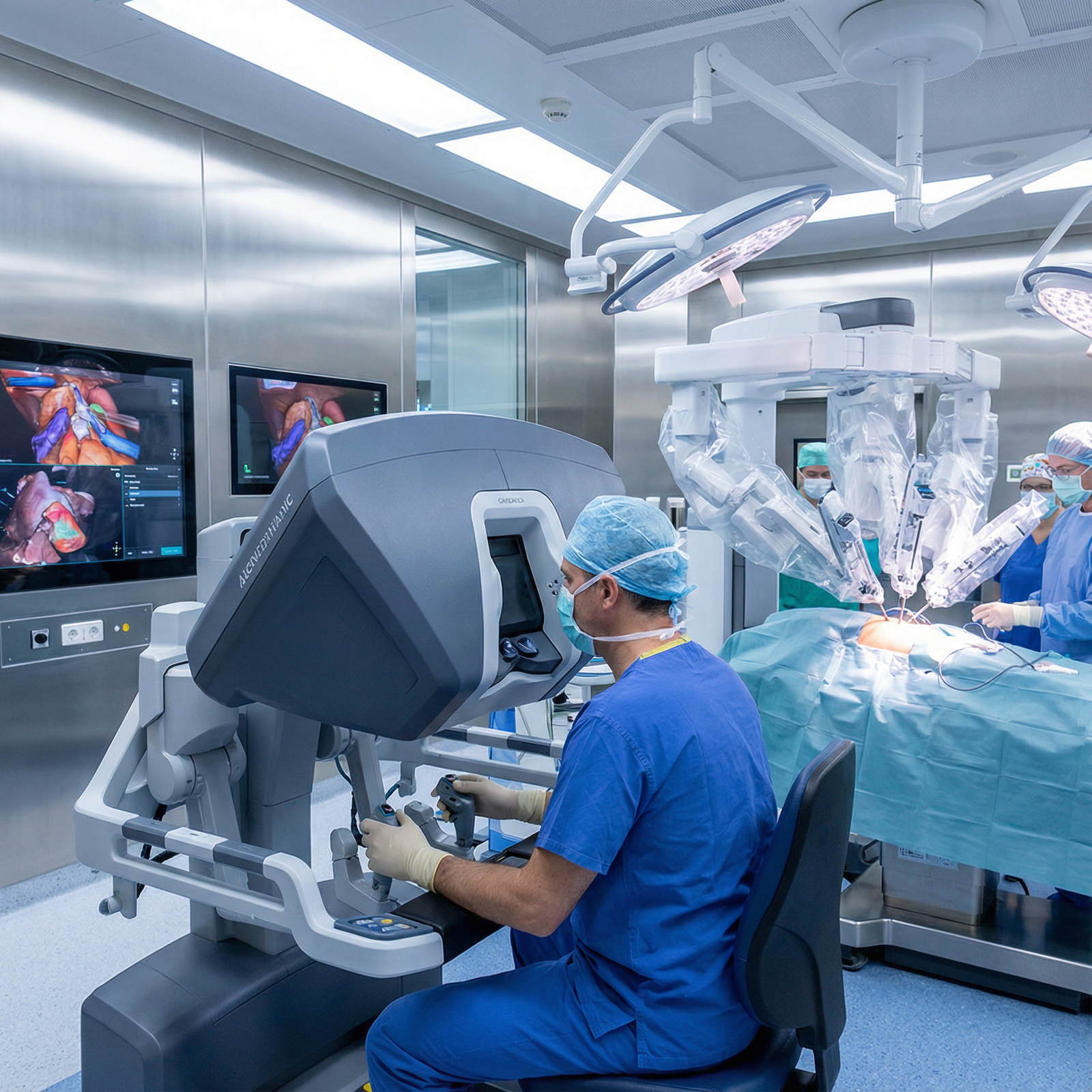
Surgeon Console
- Located a few feet from the operating table (or in tele-surgery, potentially in another room or facility).
- Provides immersive, magnified, three-dimensional visualization of the operative field.
- The surgeon controls robotic arms using hand manipulators and foot pedals, translating their movements into precise, scaled-down motions of the instruments.
- Tremor filtration stabilizes fine movements, particularly important for microsurgery and delicate dissection.
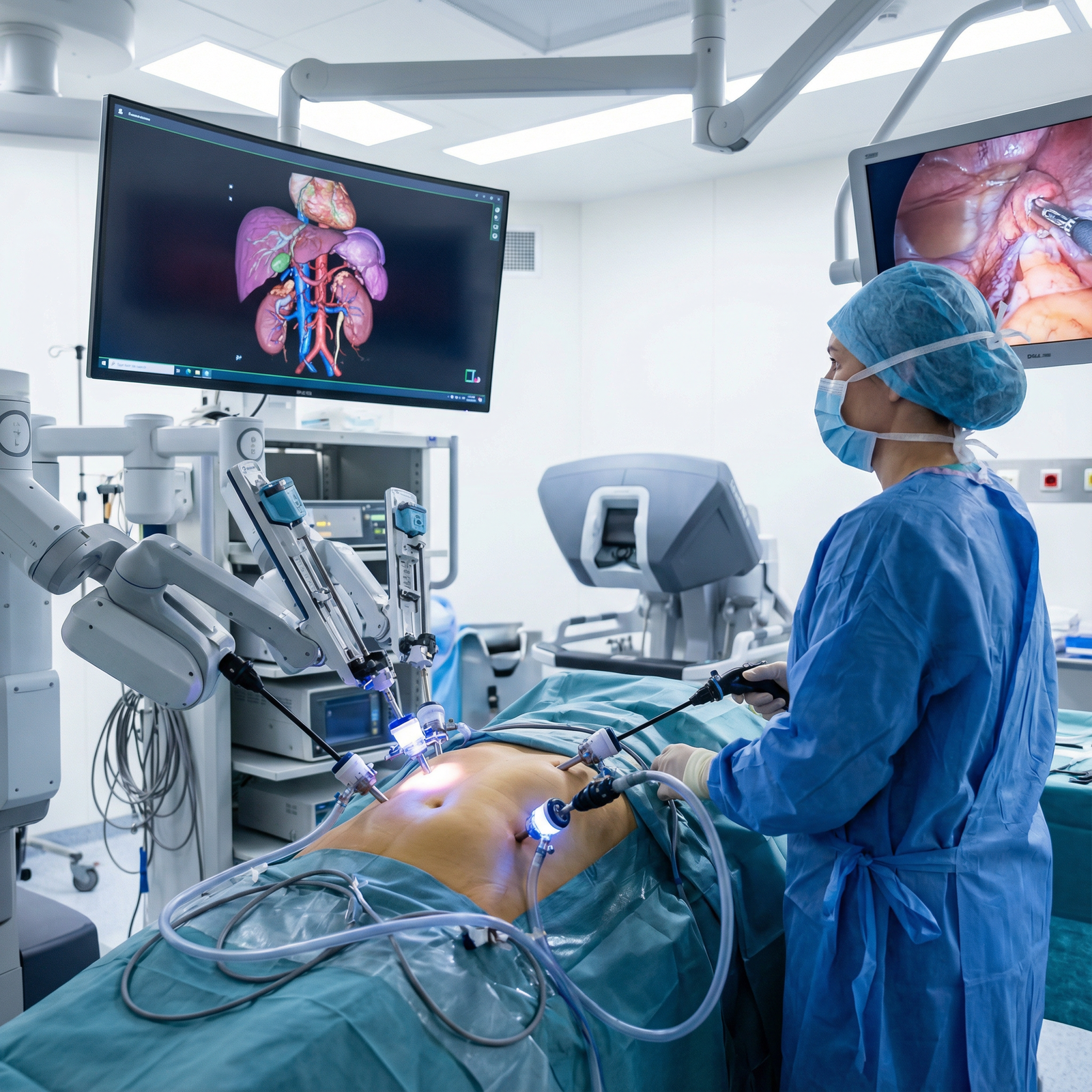
Patient-Side Cart
- Houses the robotic arms that hold the endoscope and various instruments.
- A scrubbed assistant at the bedside exchanges instruments, suctions blood or smoke, and can help manage unexpected events.
- Newer systems offer more compact designs, easier docking, and improved arm articulation to minimize collisions.
Robotic Instruments
- Endo-wristed instruments mimic or exceed the range of motion of the human wrist, allowing seven degrees of freedom.
- Instrument options include graspers, scissors, needle drivers, staplers, energy devices, and clip appliers.
- Many instruments are single-use or have a limited number of uses, contributing to overall cost.
Camera and Vision System
- Typically a high-definition, 3D endoscope with zoom and focus capabilities.
- Some systems incorporate fluorescence imaging (e.g., indocyanine green) to visualize blood flow, lymphatics, or bile ducts.
- Future integration with augmented reality (AR) and preoperative imaging (CT, MRI) will further enhance intraoperative guidance.
Step-by-Step: The Robotic Surgical Process
While details vary by procedure and specialty, the overall workflow of Robotic Surgery includes:
Patient Positioning and Setup
- Anesthesia induction and careful positioning (e.g., steep Trendelenburg for pelvic surgery).
- Skin preparation and draping, similar to laparoscopic procedures.
Port Placement and Access
- Small incisions (ports) are made for the camera and instruments.
- Port locations are carefully planned to allow optimal range of motion, avoid arm collisions, and maintain ergonomics.
Docking the Robot
- The patient-side cart is positioned, and each robotic arm is connected to its respective port.
- Setup time improves with experience and standardized protocols.
Console Operation
- The surgeon sits at the console and controls the robotic arms, while the assistant remains at the bedside.
- The surgeon can scale movements (e.g., large hand movements translate to tiny instrument tip motions) for fine dissection and suturing.
- Instrument changes and suction/irrigation are coordinated with the bedside assistant.
Completion and Undocking
- After the procedure, the robot is undocked, ports are removed, and incisions are closed.
- The team debriefs, focusing on efficiency, safety, and opportunities for improvement.
For trainees, being familiar with each phase—from docking strategies to troubleshooting common issues—is increasingly important for surgical competency.
Advantages of Robotic Surgery: Precision, Outcomes, and Training Implications
Robotic platforms are not simply high-tech gadgets; they meaningfully influence clinical outcomes, patient experience, and surgeon performance over time.
1. Enhanced Precision and Dexterity
- Superior instrument articulation: Wristed instruments move in ways that traditional laparoscopic tools cannot, improving access in narrow spaces (e.g., deep pelvis, mediastinum).
- Fine control of motion: Surgeons can perform micro-movements for delicate dissection, nerve-sparing, and intracorporeal suturing.
- Tremor filtration and movement scaling: Particularly beneficial for neurosurgery, cardiac surgery, and complex reconstructive cases where millimeter precision matters.
Example: In prostatectomy, robotic systems help preserve neurovascular bundles responsible for erectile function while ensuring complete cancer excision.
2. Minimally Invasive Procedures with Smaller Incisions
Robotic Surgery is a powerful enabler of Minimally Invasive Procedures that might otherwise be technically too challenging laparoscopically:
- Smaller incisions lead to:
- Less postoperative pain
- Reduced risk of wound infection and hernia
- Less scarring and improved cosmetic outcomes
- Minimally invasive approaches can be extended to complex cases (e.g., redo surgery, obesity, or anatomically challenging patients) that previously required open operations.
For patients, this often translates into faster return to work, reduced need for postoperative narcotics, and overall higher satisfaction.
3. Improved Visualization and Situational Awareness
- 3D, high-definition magnification reveals planes between tissues, small vessels, and delicate nerves much more clearly than the naked eye.
- Advanced imaging modes (e.g., fluorescence) allow real-time assessment of perfusion or identification of key structures.
- Integration with future AR platforms may overlay tumor margins, vascular maps, or lymphatic drainage paths directly onto the surgical field.
For residents, the combination of visual clarity and real-time guided teaching at the console can significantly accelerate skill acquisition in dissection and suturing.
4. Reduced Blood Loss, Complications, and Length of Stay
Clinical studies across multiple specialties consistently show:
- Reduced intraoperative blood loss and transfusion rates
- Lower rates of wound complications
- Shorter hospital stays and quicker functional recovery
For example, in many centers, robot-assisted prostatectomy and hysterectomy have largely replaced open approaches due to reduced perioperative morbidity.
5. Surgeon Ergonomics and Longevity
Traditional open and laparoscopic surgery can be physically demanding: awkward postures, prolonged standing, and strained neck and back positions. Over time, this can contribute to career-limiting musculoskeletal problems.
Robotic Surgery offers:
- Seated posture at the console
- Adjustable ergonomics (hand controls, view angle, seat height)
- Reduced physical strain during long cases
Long-term, this may help extend surgeons’ operative careers, reduce fatigue, and maintain high-quality performance during complex operations.
Limitations, Challenges, and Ethical Considerations
Despite these clear advantages, Robotic Surgery is not a universal solution. Understanding its limitations is critical for responsible adoption and ethical practice.
1. High Capital and Operating Costs
- Robotic platforms can cost millions of dollars to purchase, plus substantial annual maintenance fees.
- Disposable instruments and limited-use devices increase per-case costs.
- Hospitals often face pressure to recoup investment by increasing case volume or marketing robot-assisted surgery aggressively.
From a health systems perspective, the central question is: Do improved outcomes justify the added cost?
Current evidence suggests value for certain procedures (e.g., prostatectomy, hysterectomy, some colorectal and cardiac operations), but less so for others.
For trainees, being able to critically appraise cost-effectiveness and communicate transparently with patients is an important professional skill.
2. Learning Curve and Training Gaps
Robotic Surgery has its own learning curve:
- Console skills: camera control, instrument manipulation, and depth perception
- System management: docking, troubleshooting, and intraoperative problem-solving
- Team coordination: effective communication between console surgeon and bedside assistant
Ethically, trainees must balance education with patient safety. Robust proctoring, simulation-based training, and structured curricula are essential to ensure safe adoption.
Residency applicants should look for programs that:
- Provide access to simulation and dry-lab practice
- Offer graduated responsibility at the console
- Track outcomes and maintain transparent supervision policies
3. Dependence on Technology and Failure Modes
As surgical practice becomes more dependent on complex technology, new risks arise:
- System failures (e.g., loss of power, instrument malfunction) require immediate contingency plans.
- Teams must be prepared to convert to open surgery rapidly and safely.
- Over-reliance on robotic systems may erode open and laparoscopic skills if not deliberately maintained.
Professional responsibility demands that surgeons remain proficient in traditional techniques to protect patients in all circumstances.
4. Equity, Access, and Global Disparities
Robotic Surgery is widely available in high-income countries and large academic centers but remains scarce in many low- and middle-income settings.
Ethical questions include:
- Are we widening disparities by concentrating advanced care in select institutions?
- How can lower-cost platforms, tele-mentoring, and international partnerships help democratize access?
- What is our obligation as surgeons and educators to promote global equity in Healthcare Innovation?
Future developments, including more affordable robots and remote tele-surgery for underserved regions, may help address these gaps—but only with deliberate planning and ethical oversight.
Future Directions: AI, AR, and Personalized Robot-Assisted Surgery
Robotics is now at the intersection of multiple rapidly evolving technologies—artificial intelligence, augmented reality, and precision medicine. Together, they are poised to reshape Robot-Assisted Surgery in the coming decades.
1. Advanced Robotics and Semi-Autonomous Functions
While fully autonomous surgery is still experimental, several AI-driven capabilities are emerging:
- Automated camera control: Systems that anticipate where the surgeon needs to look.
- Instrument guidance: AI assistance in maintaining safe distances from critical structures.
- Workflow recognition: Identifying procedural steps in real time to provide decision support or prompt checklists.
Ethically, surgeons will remain the ultimate decision-makers, but the human–machine partnership may become more collaborative, improving consistency, safety, and efficiency.
2. Integration with Augmented and Mixed Reality
Augmented Reality (AR) overlays digital information onto the real surgical field:
- Preoperative imaging (CT/MRI) fused with intraoperative views to localize tumors or vascular structures.
- Real-time perfusion mapping to assess tissue viability.
- Educational overlays for trainees, highlighting dissection planes or risk zones.
As AR tools integrate with robotic platforms, they may provide a more intuitive, information-rich operating environment that enhances both performance and education.
3. Patient-Specific, Personalized Surgical Strategies
Robotic Surgery is well-suited to precision, patient-tailored interventions:
- Patient-specific instrumentation and planning: 3D printing and virtual simulation for complex reconstructions.
- Tailored resection margins based on tumor biology and imaging.
- Adaptive workflows that adjust intraoperatively to anatomical variation or functional goals (e.g., continence, fertility preservation).
In the long run, robotics may help surgeons translate personalized medicine from the molecular level to the operative field.
4. Tele-Surgery, Tele-Mentoring, and Global Collaboration
High-bandwidth networks and secure communication tools are enabling:
- Tele-mentoring: Expert surgeons guiding less experienced colleagues in real time from another institution or country.
- Remote education: Live, interactive broadcasts of robot-assisted procedures with console-level view and annotation.
- Potential remote tele-surgery in select, controlled scenarios, such as battlefield or remote island settings (still experimental and heavily regulated).
For residents and fellows, this means exposure to global best practices and access to world-class mentorship, regardless of location.
Real-World Applications of Robot-Assisted Surgery
Robotics is not limited to one specialty; it is reshaping Surgical Techniques across multiple domains.
Case Study: Robotic-Assisted Prostatectomy (RALP)
Robot-assisted radical prostatectomy is one of the flagship applications of robotic technology:
- Studies in journals such as European Urology show:
- Lower blood loss and transfusion rates
- Shorter hospital stays
- Reduced postoperative pain
- Comparable or improved cancer control compared with open surgery
- Better early continence and erectile function in many series
This has led many high-volume centers to adopt robot-assisted techniques as their primary approach for localized prostate cancer. For trainees interested in urologic oncology, robotic proficiency is now an essential skill.
Robotic Surgery in Cardiac and Thoracic Procedures
In cardiothoracic surgery, robotic platforms have enabled:
- Mitral valve repair through small thoracotomy incisions, avoiding full sternotomy.
- Coronary artery bypass grafting (CABG) with robotic-assisted internal mammary artery harvesting.
- Mediastinal mass resections using precise dissection in confined spaces.
Several studies have reported high success rates, lower postoperative pain, shorter ICU stays, and faster return to normal activity for selected patients undergoing robot-assisted cardiac procedures.
Other Growing Indications
- Gynecology: Hysterectomies, myomectomies, endometriosis resections, pelvic organ prolapse repairs.
- General surgery: Colorectal resections, bariatric surgery, hernia repairs, complex hepatobiliary and pancreatic procedures.
- Orthopedics: Robotic-assisted joint replacements (e.g., knee, hip) for improved alignment and implant positioning.
- ENT and head & neck surgery: Transoral robotic surgery (TORS) for oropharyngeal cancers, reducing the need for more morbid open approaches.
For residents, exposure will vary by program and specialty, but familiarity with the principles of Robotic Surgery will be increasingly important regardless of ultimate career path.
Practical Tips for Medical Students and Residents
For residency applicants and early-career clinicians, engaging with robotics is both a technical and professional development opportunity.
Building Foundational Skills
- Master laparoscopic principles first: Camera navigation, triangulation, port placement, and basic knot tying.
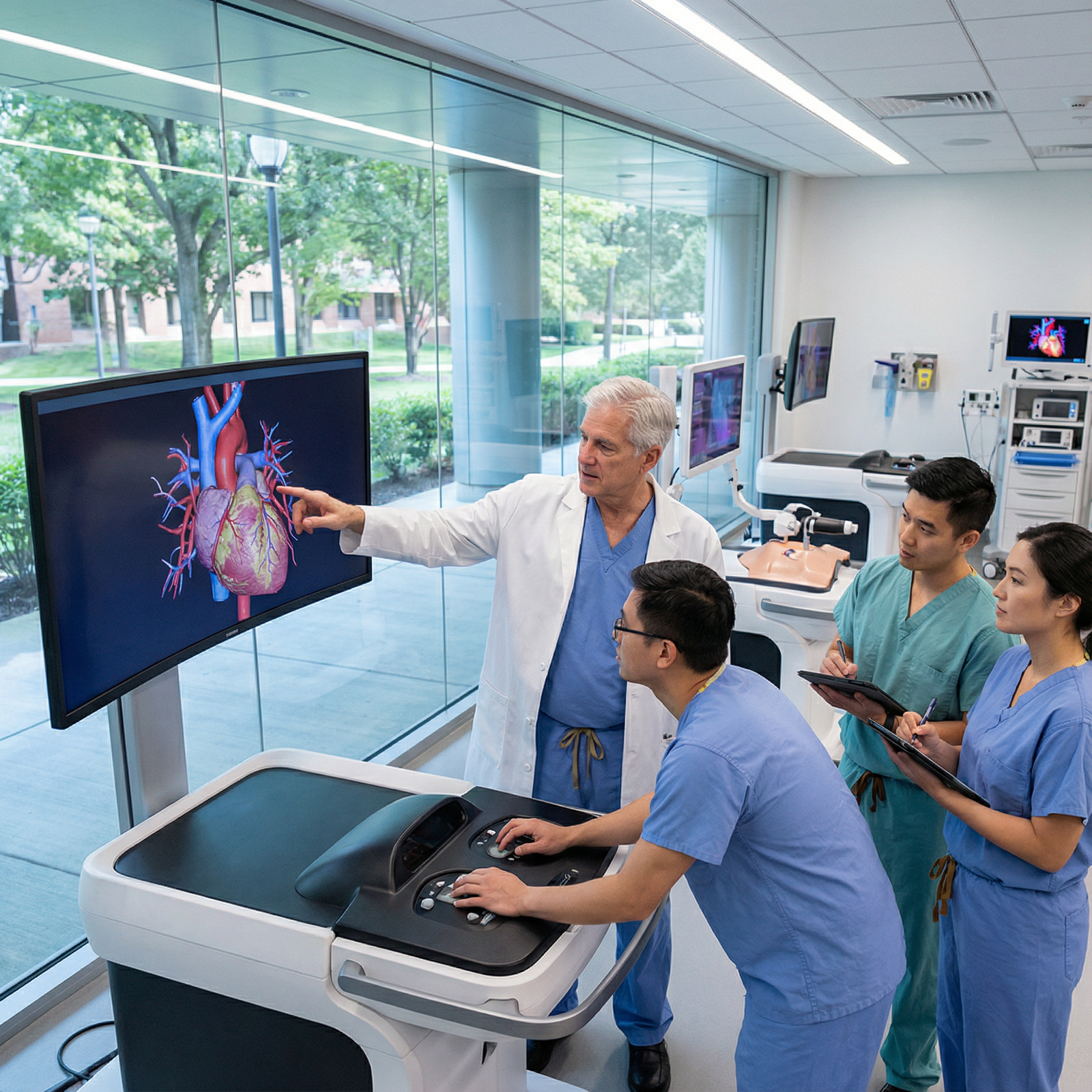
- Use simulation: Many institutions offer robotic simulators that mimic console controls and scenarios—practice regularly.
- Learn system setup: Volunteer to help with robot docking, instrument checks, and turnover. Understanding logistics is crucial.
Seeking Educational Opportunities
- Attend robotics-focused conferences, workshops, or wet labs.
- Ask faculty about ongoing robotic research projects (outcomes studies, cost-analysis, educational interventions, AI integration).
- Request incremental responsibility: start with camera control, progress to simple tasks (e.g., suturing, closure), and build to more complex steps under supervision.
Ethical and Professional Considerations
- Be transparent in patient interactions about your level of experience and the supervising surgeon’s role.
- Learn to discuss risks, benefits, and alternatives to robotic approaches, including open and laparoscopic options.
- Think critically about value-based care: when is robotic technology truly beneficial, and when might simpler, less costly approaches suffice?
FAQs: Robotic Surgery, Training, and Patient Care
1. What types of surgeries are most commonly performed using Robotic Surgery?
Robotic Surgery is widely used in:
- Urology: Prostatectomy, partial nephrectomy, pyeloplasty
- Gynecology: Hysterectomy, myomectomy, endometriosis surgery, pelvic floor reconstruction
- General surgery: Colorectal resections, bariatric procedures, hiatal hernia repair, cholecystectomy in select cases
- Cardiothoracic surgery: Mitral valve repair, selected coronary procedures, mediastinal mass resections
- ENT / Head & neck: Transoral robotic surgery for oropharyngeal tumors
- Orthopedics: Robotic-assisted knee and hip replacements
The specific mix depends on institutional expertise, surgeon training, and available technology.
2. Are robotic surgeries safer than traditional open or laparoscopic surgery?
Robotic Surgery is generally considered safe and effective when performed by appropriately trained teams:
- Complication rates are often similar or lower compared with open or conventional laparoscopy, particularly regarding blood loss and wound issues.
- Benefits such as shorter hospital stay and faster recovery are well documented in many procedures.
- However, safety depends heavily on surgeon experience, team training, and case selection. Robotics is a tool—not a guarantee of superior outcomes in every situation.
3. How much does robotic surgery cost, and who pays for it?
Costs vary widely by country, institution, and procedure:
- Hospital costs: Robot purchase, maintenance contracts, disposable instruments, and OR time.
- Patient charges: In many healthcare systems, patients may not see a separate line item for robotic use, but overall charges may be higher than for traditional surgery.
- Payers: Insurers and national health systems increasingly evaluate whether robotic approaches provide sufficient value (better outcomes, fewer complications, faster return to work) to justify the added cost.
For clinicians, understanding this economic landscape is important for counseling patients and participating in policy discussions.
4. How can patients prepare for robot-assisted surgery?
Preparation is similar to other major operations:
- Follow preoperative instructions (fasting, medication adjustments, bowel prep if indicated).
- Optimize comorbid conditions (e.g., diabetes, hypertension, smoking cessation, nutrition).
- Discuss with your surgeon:
- Why a robotic approach is recommended
- Available alternatives (open, laparoscopic)
- Expected recovery timeline and activity restrictions
- Ask about the surgeon’s experience with the robotic procedure, including volume and outcomes.
For trainees, observing these preoperative discussions can be a valuable part of learning patient-centered care.
5. As a medical student or resident, how can I get more involved in Robotic Surgery?
- Seek rotations at centers with strong Robotics programs.
- Participate in robotic cases as an assistant, learning port placement, docking, and instrumentation.
- Use available simulators and complete any institution-specific robotic training modules.
- Engage in research on robotic outcomes, education, or Healthcare Innovation.
- Communicate your interest to mentors; many attendings appreciate motivated trainees and will help structure learning opportunities.
Robotic Surgery is reshaping Surgical Techniques, expanding the possibilities of Minimally Invasive Procedures, and redefining what it means to be a surgeon in the 21st century. For today’s medical students and residents, developing literacy—and eventually proficiency—in Robot-Assisted Surgery is no longer optional; it is a key component of modern surgical education and ethical, patient-centered practice.