
Revolutionary Advances in Diabetes Care: What’s New and What Matters for Future Clinicians
Diabetes is one of the defining chronic diseases of our time, affecting over 500 million people globally and projected to approach 700 million by 2045. For medical students and residents, understanding today’s rapidly evolving Diabetes Care landscape is not optional—it is central to primary care, endocrinology, hospital medicine, and even surgery and psychiatry.
Driven by Technology in Healthcare, Personalized Medicine, and digital health, diabetes management has shifted from episodic, clinic-based care to continuous, data-driven, patient-centered care. Emerging tools such as Continuous Glucose Monitoring (CGM), smart insulin delivery systems, and Telemedicine are reshaping how clinicians diagnose, monitor, and treat diabetes.
This article reviews key innovations, their clinical implications, and practical considerations for trainees who want to deliver high-quality, ethical, and evidence-based diabetes care.
Understanding Diabetes in the Era of Precision and Technology
Before exploring innovations, it’s critical to ground them in pathophysiology and epidemiology. New tools are only useful when tied to thoughtful clinical reasoning.
Core Types of Diabetes
Type 1 Diabetes (T1D)
An autoimmune destruction of pancreatic beta cells leads to absolute insulin deficiency. Typically presents in childhood or young adulthood, but can occur at any age. These patients are insulin-dependent for life and highly vulnerable to hypoglycemia and diabetic ketoacidosis (DKA).Type 2 Diabetes (T2D)
Characterized initially by insulin resistance and later by progressive beta-cell failure. Strongly associated with obesity, sedentary lifestyle, genetic predisposition, and social determinants of health. Most patients can be treated with lifestyle, oral agents, non-insulin injectables, and eventually insulin as disease progresses.Other Forms
- Latent autoimmune diabetes in adults (LADA) – autoimmune but slower onset.
- Monogenic diabetes (e.g., MODY) – specific gene defects.
- Secondary diabetes from pancreatitis, Cushing’s, medications like glucocorticoids, etc.
Why Innovation in Diabetes Care Matters
The burden of diabetes extends far beyond glycemic numbers:
- Microvascular complications: retinopathy, nephropathy, neuropathy
- Macrovascular complications: MI, stroke, peripheral arterial disease
- Psychosocial burden: depression, diabetes distress, burnout
- Health-system impact: hospitalizations, resource utilization, and costs
Technological and therapeutic advances are aiming to:
- Improve time-in-range (TIR) and reduce HbA1c
- Reduce hypoglycemia and hyperglycemic crises
- Personalize therapy based on lifestyle, comorbidities, and patient preferences
- Expand access via Telemedicine and remote monitoring
- Improve quality of life and autonomy for patients
For trainees, the challenge is to integrate these tools into ethical, patient-centered, and feasible care plans—especially in resource-limited settings.
Innovative Monitoring Technologies Transforming Daily Management
Glucose monitoring is the foundation of modern diabetes management. Over the last decade, the field has shifted from occasional fingersticks to continuous, real-time, data-rich monitoring.
Continuous Glucose Monitoring (CGM): From Numbers to Patterns
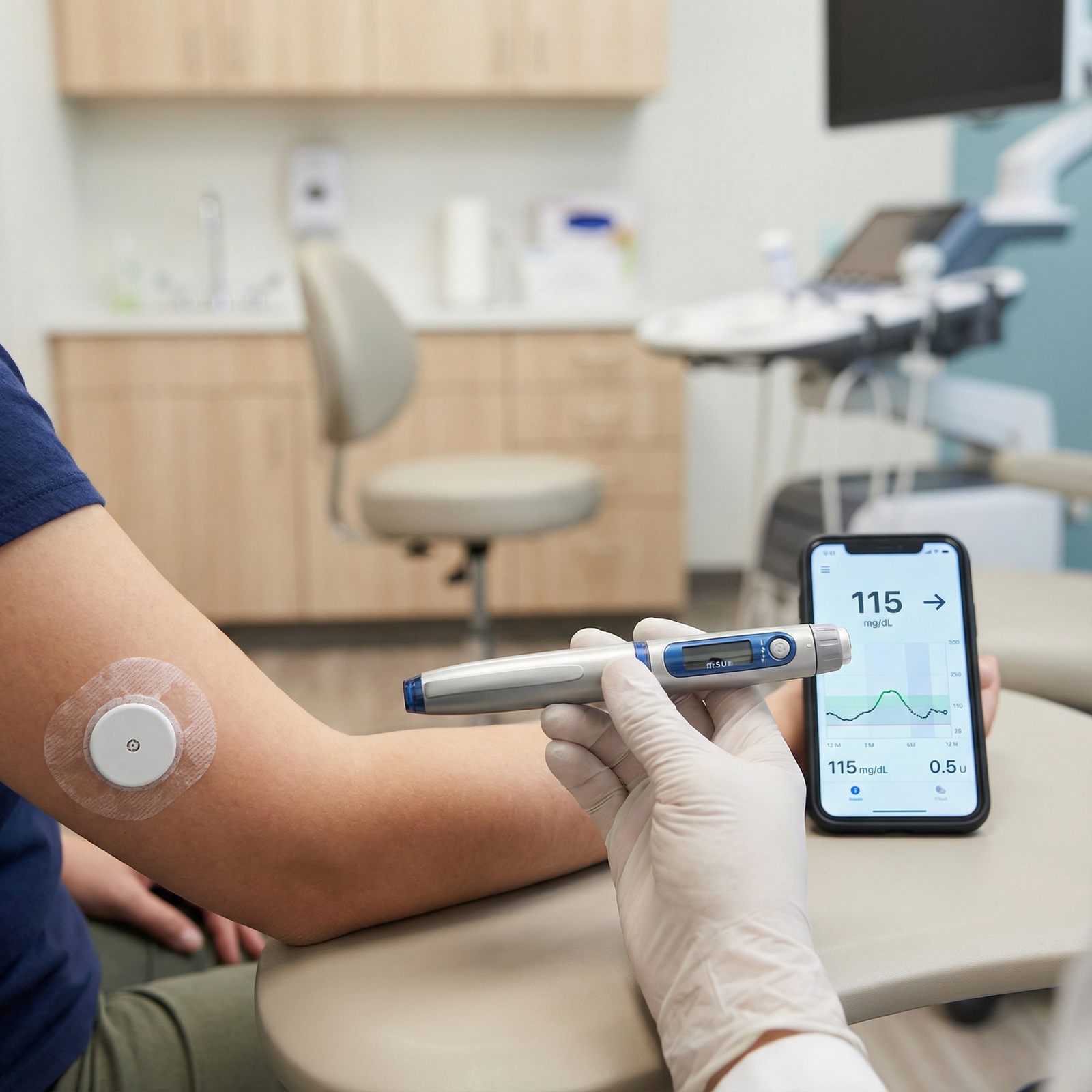
Continuous Glucose Monitoring systems measure interstitial glucose every few minutes via a small sensor worn on the skin, transmitting data to a receiver, smartphone, or insulin pump. This has dramatically changed how both patients and clinicians understand glycemic control.
Key Features and Clinical Benefits of CGM
Real-Time Data and Alerts
- Immediate alarms for hypoglycemia and hyperglycemia (including predictive alerts).
- Particularly valuable for patients with hypoglycemia unawareness, children, and older adults living alone.
Trend Arrows and Pattern Recognition
- Patients can see whether glucose is stable, rising, or falling.
- Helps guide pre-meal insulin dosing, exercise planning, and overnight adjustments.
Time-in-Range Metrics
- Beyond HbA1c, clinicians now assess % time in target range (typically 70–180 mg/dL), time below range, and glycemic variability.
- Professional societies increasingly recommend TIR as a core outcome for diabetes care.
Data Integration and Personalized Medicine
- CGM data integrates with smartphones, cloud-based portals, and insulin pumps.
- Enables data-driven, Personalized Medicine—individualizing insulin regimens, dietary recommendations, and exercise plans.
Recent Innovations in CGM
Devices from companies such as Dexcom, Abbott (FreeStyle Libre), and Medtronic have:
- Reduced sensor size and increased wear duration (10–15 days or more).
- Improved accuracy, especially at lower glucose levels.
- Eliminated routine fingerstick calibration in many systems.
- Added “no-scan-needed” real-time streaming (for some models).
For residents, familiarity with ambulatory glucose profile (AGP) reports and interpreting CGM patterns is becoming a core skill in diabetes care.
Smart Insulin Pens and Connected Devices
Smart insulin pens and pen caps bridge the gap between traditional insulin pens and full insulin pump systems.
Clinical Advantages of Smart Insulin Pens
Dosage Accuracy and Decision Support
- Record exact dose, timing, and type of insulin.
- Some provide dose calculators based on carbohydrate intake and current glucose level.
Adherence Tracking and Reminders
- Alerts for missed or late doses, especially helpful for basal insulin.
- Insight into “real-world” adherence, a key factor in patients with unexplained poor control.
Secure Data Sharing
- Clinicians can review dosing patterns remotely via portals or Telemedicine visits.
- Facilitates productive and specific feedback (“You’re missing your lunchtime bolus 3–4 times a week”).
Smart pens are particularly useful for patients needing flexible regimens but not ready—or not interested in—insulin pump therapy.
Advanced Therapeutic Approaches: Beyond Traditional Insulin Therapy
Advances in pharmacology, algorithms, and device integration are bringing diabetes care closer to automated, physiologic regulation.
Modern Insulin Therapy: Faster, More Flexible, More Physiologic
Ultra-Rapid-Acting Insulins
Newer mealtime (prandial) insulins have:
- Faster onset of action and shorter duration
- Flexibility to dose closer to meals or even shortly after eating
- Better postprandial glucose control and potentially fewer late hypoglycemic episodes
For busy patients and those with unpredictable meal timing, these agents reduce the burden of strict pre-meal planning.
Concentrated and Long-Acting Basal Insulins
Modern basal insulins:
- Offer smoother, flatter profiles with reduced nocturnal hypoglycemia
- Allow once-daily dosing (and in some cases every 36–48 hours in select settings)
- Are available in concentrated forms, useful for patients with severe insulin resistance
For residents, matching insulin pharmacokinetics to patient lifestyle and comorbidities is a core skill in Personalized Medicine.
Glucose-Responsive and “Smart” Insulin: The Next Frontier
Glucose-responsive insulin is an experimental concept where insulin is engineered to become active when glucose is high and inactive when glucose is low.
Potential benefits:
- Reduced need for frequent dosing decisions
- Lower risk of both hyper- and hypoglycemia
- Closer mimicry of physiologic insulin secretion
Research includes:
- Insulin molecules bound to glucose-sensitive polymers
- Nanoparticle carriers that release insulin in response to local glucose changes
- Smart insulin patches combining sensing and delivery in a single wearable
While not yet standard of care, these innovations illustrate the direction of future Diabetes Care.
Artificial Pancreas and Hybrid Closed-Loop Systems
Artificial pancreas systems—often referred to as hybrid closed-loop systems—integrate CGM data, insulin pumps, and control algorithms.
How Closed-Loop Systems Work
- Continuous Glucose Monitoring provides real-time glucose values.
- Control Algorithms (on a pump or smartphone) calculate basal insulin adjustments every few minutes.
- Insulin Pump automatically adjusts basal delivery and sometimes correction boluses.
Current systems are typically “hybrid” rather than fully closed-loop, meaning:
- Users still count carbohydrates and administer meal boluses.
- The system automates background insulin adjustments and some corrections.
Clinical Impact
Studies have demonstrated:
- Lower HbA1c
- Increased time-in-range
- Reduced hypoglycemia
- Improved quality of life and reduced diabetes distress
For trainees, understanding indications, contraindications (e.g., inability to troubleshoot technology), and patient selection is essential.
Lifestyle, Digital Health, and Psychosocial Support in Diabetes Care
Technological innovation is only as effective as the behavioral and psychosocial support that accompanies it. Lifestyle management, education, and ongoing support remain foundational.
Mobile Health Apps and Digital Coaching
Mobile apps have become central to Technology in Healthcare and self-management support.
Common Features of Diabetes Management Apps
Glucose, Food, and Activity Logs
- Manual input or automatic import from CGM, fitness trackers, and smart scales.
- Carbohydrate counting tools and bolus calculators.
Pattern Analysis and Feedback
- Trend insights (“Your post-breakfast readings are consistently high”).
- Nudges to encourage adherence, exercise, or hydration.
Education and Community
- Bite-sized educational modules on insulin, diet, and exercise.
- Peer support communities to reduce isolation and share strategies.
Examples: MySugr, Glucose Buddy, and MyFitnessPal are commonly used and often integrated into multidisciplinary care plans.
Telemedicine and Remote Diabetes Care
Telemedicine has become a pillar of modern Diabetes Care, especially since COVID-19 accelerated virtual care adoption.
Clinical Advantages of Telemedicine for Diabetes
Improved Access
- Patients in rural or underserved areas can see endocrinologists and diabetes educators.
- Reduced travel burden for those with mobility issues or limited transportation.
Data-Rich Virtual Visits
- CGM and insulin pump data can be uploaded in advance.
- Clinicians review detailed trends rather than a few handwritten logs.
Continuity and Frequency of Follow-Up
- Shorter, more frequent check-ins are possible, which can be critical after insulin changes or new diagnoses.
- Interdisciplinary visits (physician, dietitian, educator) can be coordinated more easily.
From a training perspective, residents should develop skills in conducting effective virtual visits, including:
- Building rapport through video
- Reviewing digital data efficiently
- Ensuring privacy, equity, and informed consent in digital environments
Psychosocial and Ethical Considerations
Technological tools can unintentionally:
- Increase anxiety or “data overload” for some patients
- Worsen disparities if access to technology is unequal
- Create pressure to “perform” perfect control, contributing to diabetes burnout
Ethical, patient-centered care requires:
- Assessing health literacy and digital literacy
- Respecting patient autonomy and preferences (e.g., not everyone wants continuous data)
- Addressing financial barriers and advocating for access when possible
- Being sensitive to mental health, stigma, and cultural factors impacting diabetes management
Personalized Medicine in diabetes must extend beyond pharmacogenomics to truly individualized goals and shared decision-making.
<ai-image title="Telemedicine consultation for diabetes management" location="inline" prompt="Photorealistic image of a physician conducting a telemedicine video visit with a patient discussing diabetes care, with CGM graphs and medication lists on a dual-monitor setup, in a home-office style clinical environment.")] />
Research, Future Directions, and the Role of AI in Diabetes Care
The future of diabetes management is being shaped in research labs, tech companies, and clinical trials worldwide. Trainees entering practice now will witness—and help guide—this transformation.
Gene Therapy, Beta-Cell Regeneration, and Cell-Based Therapies
Several promising avenues aim not just to manage diabetes, but to modify or even cure it:
Gene Editing (e.g., CRISPR)
- Potential to correct monogenic defects causing diabetes.
- Theoretical ability to modulate immune responses in Type 1 Diabetes.
Stem Cell–Derived Beta Cells and Islet Transplants
- Research into implantable or injectable beta cells that can restore insulin production.
- Encapsulation technologies designed to protect transplanted cells from immune attack.
Immunotherapy for T1D
- Targeted agents to preserve residual beta-cell function in newly diagnosed T1D.
- Trials exploring ways to prevent or delay onset in high-risk individuals.
These strategies raise important ethical questions around risk-benefit balance, cost, equity, and long-term safety.
New Pharmacologic Agents for Type 2 Diabetes
Beyond insulin, recent years have brought powerful agents that improve both glycemic control and cardiovascular/renal outcomes:
SGLT2 Inhibitors
- Lower glucose by promoting glucosuria.
- Provide cardiovascular and renal protection, now used even in non-diabetic CKD and heart failure.
GLP-1 Receptor Agonists and Dual/Triple Agonists
- Improve glycemic control, promote weight loss, and reduce cardiovascular events.
- Weekly or even less frequent dosing options improve adherence.
Understanding these medications, their indications, contraindications, and combination strategies is essential for contemporary Diabetes Care.
Artificial Intelligence and Data-Driven Personalized Medicine
AI and machine learning are increasingly embedded in diabetes technologies:
Predictive Algorithms in CGM and Pumps
- Anticipate hypoglycemia and automatically reduce insulin.
- Optimize basal rates and correction factors over time.
Risk Stratification and Decision Support
- Identify patients at highest risk for complications based on EHR and CGM data.
- Suggest individualized targets and treatment intensification strategies.
Population Health and Health Equity
- Analyze large datasets to identify gaps in care and inequities in outcomes.
- Support targeted interventions for disadvantaged populations.
Clinicians must remain critical consumers of AI: understanding limitations, monitoring for algorithmic bias, and ensuring that decision support supplements—not replaces—clinical judgment and patient preferences.
Frequently Asked Questions (FAQs)
1. How does Continuous Glucose Monitoring (CGM) compare to traditional fingerstick testing in clinical practice?
CGM provides near-continuous data (typically every 1–5 minutes), allowing clinicians to evaluate trends, time-in-range, and glycemic variability rather than isolated spot checks. While fingersticks are still used in some contexts (e.g., confirming very low readings or for patients not on CGM), CGM is superior for:
- Adjusting basal and bolus insulin regimens
- Identifying nocturnal or unrecognized hypoglycemia
- Evaluating the impact of meals, exercise, and medications
For many patients on intensive insulin therapy—particularly those with T1D—professional societies now recommend CGM as standard of care where accessible.
2. Who is a good candidate for smart insulin pens versus insulin pump or closed-loop systems?
Smart insulin pens are well-suited for:
- Patients on multiple daily injections who want better tracking and reminders
- Those not ready (or not interested) in pump therapy
- Patients with occasional missed doses or uncertain dosing histories
Insulin pumps and closed-loop systems may be better for:
- Patients with T1D with significant glycemic variability or hypoglycemia
- Highly engaged patients comfortable with technology and troubleshooting
- Children and adolescents benefitting from automated adjustments and parental monitoring
The choice should be individualized based on clinical needs, lifestyle, digital literacy, and financial/insurance factors.
3. How is Telemedicine changing diabetes care, and what should trainees learn about it?
Telemedicine enables more frequent, convenient follow-up, especially when combined with CGM and app-based data sharing. Trainees should learn to:
- Conduct structured virtual visits (pre-visit data collection, focused agenda)
- Review CGM and pump reports efficiently
- Address technical barriers and digital disparities
- Maintain privacy, professionalism, and empathy in virtual settings
Telemedicine is particularly impactful for follow-up visits, medication titration, and diabetes education.
4. What role does Artificial Intelligence (AI) currently play in diabetes management?
AI is already integrated into many diabetes devices and platforms:
- CGM and pump systems use algorithms to predict and prevent hypoglycemia.
- Closed-loop systems use AI-driven control algorithms to adjust insulin delivery.
- Some apps offer AI-powered coaching and decision support.
In clinical practice, AI tools can assist but should not replace clinical judgment. Clinicians must understand how algorithms work, recognize their limitations, and involve patients in shared decision-making when using AI-informed recommendations.
5. What should medical students and residents prioritize when learning about modern diabetes care?
Key priorities include:
- Mastering interpretation of CGM data and AGP reports
- Understanding modern pharmacotherapy, including GLP-1 RAs and SGLT2 inhibitors
- Becoming comfortable with basic insulin pump and smart pen functionality
- Practicing Telemedicine skills and digital communication with patients
- Applying principles of Personalized Medicine and medical ethics—respecting patient autonomy, addressing disparities, and considering affordability and access
Ultimately, the goal is not to use every new technology, but to thoughtfully select and integrate tools that best support each individual patient’s health and quality of life.
By embracing evidence-based innovations—from Continuous Glucose Monitoring and smart insulin delivery to Telemedicine and AI-driven decision support—future clinicians can help patients achieve safer glucose control, reduce complications, and live fuller lives with diabetes. The art of Diabetes Care in the 21st century lies in combining cutting-edge Technology in Healthcare with compassionate, ethically grounded, patient-centered practice.