
Introduction: How Wearable Technology Is Transforming Modern Healthcare
Wearable Technology has moved from being a fitness trend to a core pillar of Healthcare Innovation. For medical students, residents, and practicing clinicians, understanding how wearables fit into Patient Monitoring, Chronic Disease Management, and Telehealth workflows is increasingly essential.
Today, smartwatches, patches, rings, clothing, and even implantable sensors are generating continuous streams of real-time health data. This data is reshaping how we detect disease, assess risk, monitor treatment response, and engage patients in their own care—often outside the walls of hospitals and clinics.
This enhanced guide explores:
- The types of healthcare wearables and how they work
- How they are revolutionizing Patient Monitoring in acute and chronic care
- Real-world clinical use cases across specialties
- Ethical, legal, and professional considerations for clinicians
- Future directions and how trainees can prepare for this rapidly evolving field
Understanding Wearable Technology in Healthcare
What Is Wearable Technology in Healthcare?
Wearable Technology in healthcare includes any device that:
- Is worn on or near the body
- Continuously or intermittently senses physiological or behavioral data
- Stores and/or transmits data to a smartphone, cloud platform, or clinical system
- Can support clinical decision-making, research, or patient self-management
Unlike simple step counters of the past, modern medical wearables can:
- Capture multi-parametric physiological signals
- Integrate with Electronic Health Records (EHRs) and Telehealth platforms
- Use algorithms (including AI) to detect abnormalities and generate alerts
- Provide feedback and coaching directly to patients
For healthcare professionals, these tools extend clinical observation beyond the brief clinic visit into a patient’s daily life.
Major Categories of Wearable Devices
1. Consumer Fitness Trackers
Examples: Fitbit, Garmin, Xiaomi bands
Key functions:
- Step counting and physical activity tracking
- Heart rate monitoring (usually via photoplethysmography, PPG)
- Sleep duration and basic sleep stage estimates
- Calorie estimates and goal tracking
Clinical relevance: While not medical-grade, they provide valuable insights into lifestyle, adherence to activity goals, and early signals of deconditioning or functional decline.
2. Smartwatches With Health Functions
Examples: Apple Watch, Samsung Galaxy Watch, Google Pixel Watch
Enhanced capabilities:
- Heart rate and heart rate variability (HRV)
- FDA-cleared single-lead ECG (select models)
- Irregular rhythm notifications (e.g., AFib detection algorithms)
- Blood oxygen saturation (SpO₂) estimates
- Fall detection and emergency SOS
- Integration with Telehealth apps and remote visits
These devices sit at the hybrid frontier between consumer electronics and regulated medical devices, especially as algorithms are validated for specific indications.
3. Dedicated Medical Wearables
These are designed specifically for clinical use and often undergo regulatory clearance.
Examples:
Continuous Glucose Monitors (CGMs)
- Dexcom G7, Abbott FreeStyle Libre
- Provide near real-time interstitial glucose readings every few minutes
- Support trend analysis, hypoglycemia alerts, and insulin titration
Wearable ECG and Cardiac Monitoring Devices
- AliveCor KardiaMobile, ZioPatch
- Help detect arrhythmias, monitor QT intervals, and evaluate palpitations
Wearable Blood Pressure Monitors
- Cuffless BP wearables under investigation and some validated wrist devices
- Ambulatory blood pressure monitoring integration
Wearable Pulse Oximeters and Respiratory Monitors
- For COPD, sleep apnea, COVID-19 follow-up, and perioperative monitoring
These devices are central to evidence-based Remote Patient Monitoring programs.
4. Wearable Sensors and Smart Patches
Advancements in flexible electronics have enabled:
- Skin patches that measure temperature, motion, HR, respiratory rate, and even sweat biomarkers
- RFID and Bluetooth-enabled tags that track mobility and falls in older adults
- Smart textiles and garments measuring muscle activity, posture, and ECG
These tools are especially valuable in inpatient monitoring, rehab, and high-risk outpatient populations.
Why Wearable Technology Matters in Healthcare
From a systems perspective, Wearable Technology supports:
- Continuous Vital Sign Monitoring vs. episodic measurements in clinic
- Early Detection of Deterioration (e.g., sepsis, arrhythmia, hypoxia)
- Data-Driven Chronic Disease Management at home rather than in hospital
- Enhanced Patient Engagement and shared decision-making
- Scalable Telehealth and Virtual Care Models, particularly post-COVID-19
For trainees, fluency in interpreting wearable data and integrating it into clinical workflows will soon be as fundamental as reading a standard 12-lead ECG.
How Wearable Tech Is Revolutionizing Patient Monitoring
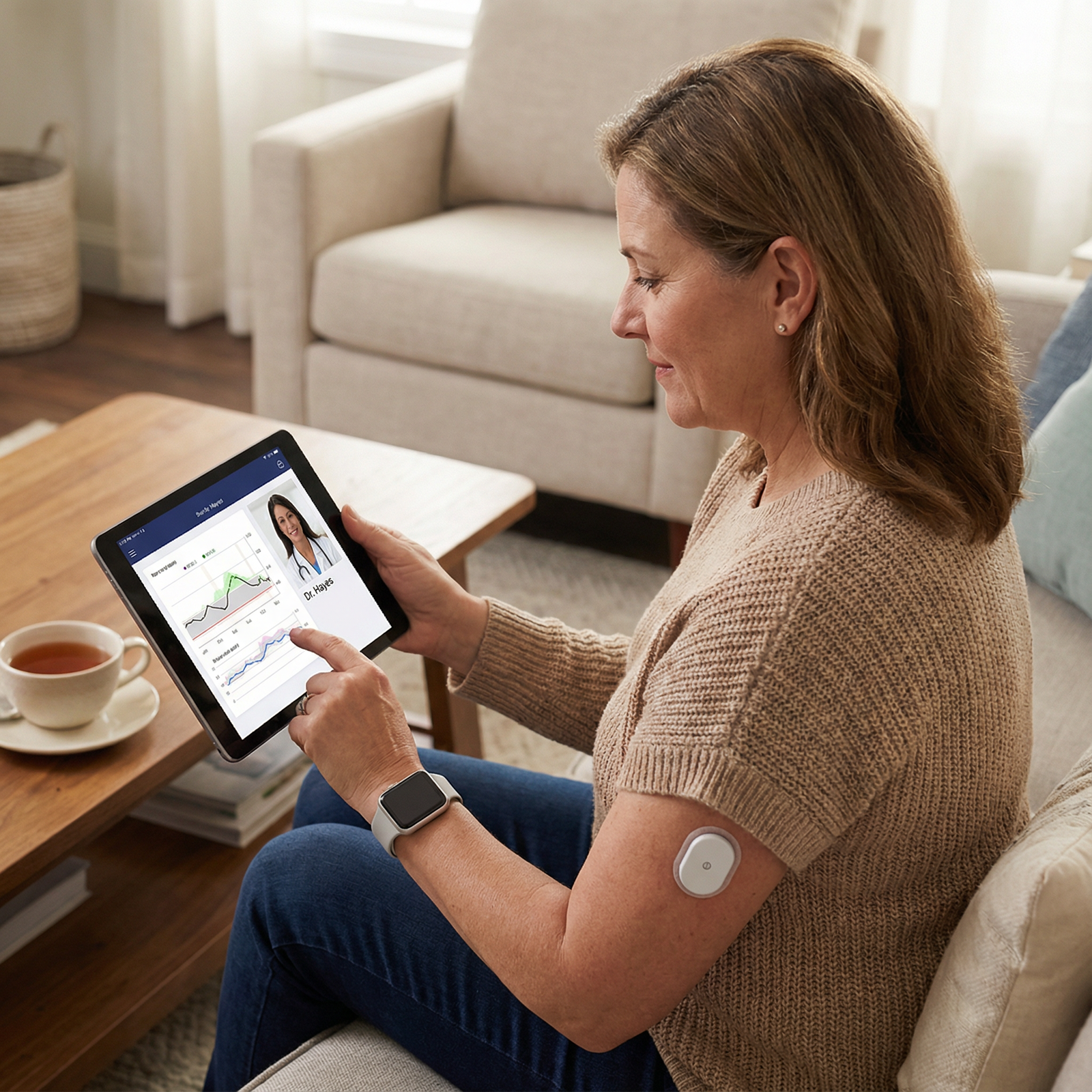
Continuous, Real-World Health Monitoring
Traditional care is built around snapshots:
- A blood pressure reading every clinic visit
- A 10-second ECG
- A self-reported diary of symptoms
Wearable devices convert these snapshots into rich, longitudinal datasets:
- Heart rate trends over weeks, not minutes
- Activity, sleep, and HRV patterns revealing stress, recovery, and frailty
- Continuous glucose traces demonstrating glycemic variability
- Long-term arrhythmia burden rather than single episodes
Research has consistently shown that such data can:
- Improve blood pressure control in hypertension when combined with remote support
- Optimize insulin and diet adjustments in diabetes
- Predict exacerbations in COPD or heart failure before patients become symptomatic
For example, ambulatory patients wearing remote monitoring patches have enabled earlier identification of atrial fibrillation that would have been missed by in-clinic ECG alone, changing stroke-prevention strategies.
Real-Time Alerts and Clinical Decision Support
A key advantage of modern wearables is their ability to generate real-time alerts for both patients and clinicians.
Examples:
- A CGM sends an urgent low-glucose alert to the patient’s phone and, optionally, to family members or caregivers.
- A smartwatch detects a potential irregular rhythm (possible AFib) and prompts the user to record a single-lead ECG and notify their provider.
- Remote monitoring platforms trigger clinician alerts when a heart failure patient’s weight and resting heart rate trend upward, suggesting impending decompensation.
From a clinical standpoint, these alerts:
- Enable proactive interventions (e.g., adjusting diuretics, arranging an urgent Telehealth visit)
- Reduce avoidable ED visits and admissions
- Allow staffing models that prioritize high-risk patients, improving efficiency
For residents and fellows, learning to triage and respond appropriately to these digital alerts is becoming a core component of modern care delivery.
Enhancing Patient Engagement and Self-Management
Engagement is where wearables shine. Many devices:
- Display user-friendly visualizations of trends
- Offer goals, reminders, and gamified features
- Integrate with peer support or family-sharing functions
This fosters:
- Self-awareness: Patients see the impact of diet, exercise, sleep, and stress on their numbers.
- Adherence: Medication reminders and activity prompts improve compliance.
- Shared decision-making: Data supports conversations about treatment options and lifestyle changes.
Studies have shown that cardiac patients who actively use wearables and connected apps often:
- Increase physical activity
- Report higher satisfaction with care
- Adhere better to rehab programs and medication schedules
From a professionalism and ethics standpoint, clinicians need to:
- Respect patient autonomy while guiding interpretation
- Avoid data overload by focusing on clinically meaningful metrics
- Be transparent about what is and is not being monitored or acted upon
Remote Patient Monitoring and Telehealth Integration
Remote Patient Monitoring (RPM) is one of the most impactful use cases for Wearable Technology.
Key components of an RPM program:
- Patient wears one or more devices (e.g., BP cuff, weight scale, ECG patch, SpO₂ sensor, CGM)
- Data streams to a secure cloud platform
- Clinicians or care teams receive dashboards, trend reports, and alerts
- Telehealth (video/phone) visits are used to intervene when necessary
Clinical scenarios where RPM has been especially valuable:
- Heart Failure: Monitoring weight, heart rate, and symptoms can prevent admissions.
- Postoperative Care: Early detection of infection (via temperature, HR, activity decline).
- COVID-19 and Respiratory Illness: SpO₂ and respiratory rate monitoring at home.
- High-Risk Obstetrics: Blood pressure and weight tracking in preeclampsia risk.
Telehealth and RPM together enable hospital-at-home models, allowing selected patients to be safely managed in their own environments, with escalation protocols if needed.
For trainees, this changes what it means to “round” on patients—data review may increasingly happen through dashboards rather than just in physical wards.
Clinical and Real-World Applications Across Specialties
Chronic Disease Management: From Episodic to Continuous Care
Wearables are particularly powerful in Chronic Disease Management, where outcomes depend on long-term trends and daily behaviors.
1. Diabetes
- CGMs provide glucose readings every few minutes, showing postprandial spikes and nocturnal hypoglycemia.
- Patients can adjust meals, exercise, and insulin dosing with near real-time feedback.
- Clinicians can review ambulatory glucose profiles (AGP) remotely and alter regimens.
Evidence shows CGM use is associated with:
- Improved HbA1c
- Reduced hypoglycemia episodes
- Higher treatment satisfaction
2. Cardiovascular Disease
- Wearable ECG and smartwatches help detect AFib, SVT, pauses, and PVC burden.
- Activity monitors aid in cardiac rehab adherence and risk stratification.
- Remote BP monitoring supports better control and medication titration.
In practice, a patient presenting with intermittent palpitations may be sent home with a patch monitor, dramatically increasing the diagnostic yield relative to in-clinic ECG.
3. Respiratory Conditions (COPD, Asthma, Sleep Disorders)
- Wearable SpO₂ and respiratory sensors detect early deterioration.
- Activity patterns and nocturnal desaturations can guide therapy adjustments.
- For sleep apnea, home sleep testing with wearable sensors is increasingly common.
This supports earlier interventions, reduced exacerbations, and more appropriate use of in-lab polysomnography.
Mental Health and Behavioral Medicine
Although still emerging, wearables can support mental health by tracking:
- Sleep timing and quality
- Activity levels and circadian patterns
- HRV as a proxy for stress and autonomic balance
Patients and therapists can use this objective data to:
- Identify triggers for anxiety, panic, or depressive episodes
- Evaluate the impact of therapy, exercise, or medication
- Integrate biofeedback and mindfulness interventions via apps and wearables
Ethically, clinicians must avoid over-pathologizing normal variability and be cautious in interpreting physiological proxies for psychological states.
Fitness, Preventive Care, and Population Health
At a population level, consumer wearables contribute to:
- Increased awareness of physical inactivity and sedentary behavior
- Community challenges and corporate wellness programs
- Early detection of risk patterns (e.g., declining activity pre-diagnosis of major illness)
For preventive medicine, wearable data can:
- Identify at-risk individuals based on activity and sleep metrics
- Support interventions for obesity, metabolic syndrome, and cardiovascular risk
- Facilitate longitudinal cohort studies in real-world settings
Clinical Trials and Biomedical Research
Wearables are transforming research methodology:
- Decentralized trials allow participants to remain at home while still providing continuous data.
- Passive data collection reduces recall bias and improves granularity.
- Lower participant burden improves recruitment and retention.
Examples:
- Cardiology trials tracking daily activity, HR, and arrhythmias
- Oncology trials monitoring performance status and treatment tolerability via gait speed and activity levels
- Neurology studies capturing seizure frequency or motor symptoms in Parkinson’s disease with wearable sensors
Residents and fellows involved in research should consider incorporating Wearable Technology outcomes to enhance the ecological validity and scalability of their studies.
Challenges, Ethics, and Professional Considerations
Data Privacy, Security, and Regulatory Compliance
Wearables generate highly sensitive health data. Key concerns:
- Where is data stored (local device vs. cloud)?
- How is it encrypted in transit and at rest?
- Who owns the data—the patient, the manufacturer, or the health system?
- How is consent obtained and can it be withdrawn?
Clinicians and institutions must ensure:
- Compliance with regulations (e.g., HIPAA in the U.S. and analogous frameworks globally)
- Use of secure, vetted platforms for Remote Patient Monitoring
- Transparency with patients about risks, benefits, and data flows
From an ethical standpoint, informed consent must extend beyond traditional treatments to include digital surveillance and data sharing.
Accuracy, Reliability, and Clinical Validity
Not all devices are created equal. Challenges include:
- Variability in accuracy between consumer and medical-grade devices
- Reduced accuracy in certain populations (e.g., darker skin tones for some PPG-based sensors, arrhythmias, peripheral vascular disease)
- Algorithm “black boxes” that may contain bias
As clinicians, it’s essential to:
- Understand the limitations of specific devices you recommend or rely on
- Use wearable data as an adjunct, not a sole determinant, of high-stakes decisions
- Look for devices with peer-reviewed validation and regulatory clearance for intended use
Over-Reliance on Technology and the Human Connection
Wearable Technology should augment—not replace—the clinician-patient relationship.
Risks of over-reliance:
- Reduced in-person assessments and subtle clinical observations
- Increased anxiety in “worried well” patients constantly checking metrics
- Alert fatigue among clinicians, leading to missed critical notifications
Balancing act:
- Set clear expectations with patients about what is monitored and how often it will be reviewed
- Focus on clinically meaningful thresholds and trends
- Maintain space for narrative, context, and empathetic listening beyond the data stream
This balance is central to maintaining ethical, patient-centered care in a digital era.
Equity, Access, and the Digital Divide
Healthcare Innovation must not widen existing disparities.
Barriers to equitable use:
- Cost of devices and data plans
- Limited digital literacy or language barriers
- Lack of accessibility for patients with disabilities
- Lower adoption in marginalized or rural communities without broadband
As future clinicians, you can:
- Advocate for programs that subsidize or loan wearables to high-need populations
- Provide training and support (including family and caregiver engagement)
- Design research and RPM programs with inclusivity from the outset
Equity-focused implementation is crucial if Wearable Technology is to benefit all patients, not just the most resourced.

The Future of Wearable Tech, Telehealth, and Clinical Practice
Integration With Telehealth Ecosystems
Future-ready care models will see seamless integration between:
- Wearables (data capture)
- Smartphones and home hubs (data aggregation)
- Telehealth platforms (virtual visits)
- EHRs and clinical decision support tools (documentation and action)
Clinicians may routinely review summarized wearable dashboards before or during virtual visits, incorporating:
- Trend lines
- AI-generated risk scores
- Personalized recommendations
For trainees, competence in navigating and interpreting these systems will become part of core clinical skills.
AI, Predictive Analytics, and Personalized Care
Artificial intelligence and machine learning are increasingly applied to wearable datasets to:
- Predict exacerbations of heart failure, COPD, or mental health crises
- Identify early signs of infection or decompensation post-surgery
- Customize exercise prescriptions and stress-management strategies
These tools could move care from reactive (treating illness) to proactive and preventive, intervening before patients feel unwell.
Ethically, clinicians must:
- Understand the basics of how these algorithms work and their limitations
- Guard against algorithmic bias
- Preserve patient autonomy while using predictive tools
Holistic Health: Physical, Mental, and Social Dimensions
Future wearables may:
- Integrate physical metrics (HR, SpO₂, activity) with mental health indicators (sleep, HRV, usage patterns)
- Capture social determinants of health proxies (mobility, isolation, environment)
- Provide tailored micro-interventions (breathing exercises, prompts to move, reminders to connect socially)
This holistic approach aligns with emerging models of comprehensive, person-centered care.
How Trainees Can Prepare
For medical students and residents:
- Get hands-on experience: Use wearables personally or through simulation, and understand the data they generate.
- Learn to interpret trends: Go beyond isolated values to longitudinal analyses.
- Engage with informatics: Collaborate with data scientists and IT teams in your institution.
- Stay current: Follow literature in digital health, Telehealth, and Patient Monitoring.
- Reflect ethically: Consider privacy, consent, equity, and the impact on clinical relationships.
Being literate in Wearable Technology will increasingly differentiate effective clinicians and leaders in Healthcare Innovation.
FAQ: Wearable Technology, Patient Monitoring, and Clinical Practice
Q1: How should I, as a medical student or resident, approach data from a patient’s consumer wearable?
Consumer devices (like fitness trackers and smartwatches) provide useful context but are not always clinically validated. Treat this data as supportive information, not a definitive diagnostic tool. Ask targeted questions (e.g., “Have you noticed trends in your heart rate or sleep when your symptoms worsen?”), and use medical-grade testing when needed to confirm or refute concerns.
Q2: Which chronic conditions benefit most from Remote Patient Monitoring with wearables?
Conditions with high readmission risk and strong links between daily behaviors and outcomes benefit most, including:
- Heart failure (weight, BP, HR, activity)
- Hypertension (home BP monitoring)
- Diabetes (CGM and activity tracking)
- COPD and asthma (SpO₂, respiratory rate, symptoms)
- Postoperative recovery (vitals, activity, temperature)
When combined with structured Telehealth follow-up, these programs can significantly reduce hospitalizations and improve quality of life.
Q3: What are the main ethical issues I should consider when recommending wearable devices?
Key ethical considerations include:
- Informed consent: Patients must understand what is being monitored, who sees the data, and how it will be used.
- Privacy and security: Ensure platforms meet regulatory standards and clearly explain potential risks.
- Equity: Consider cost, digital literacy, and access. Avoid recommending tools that will widen disparities without providing support.
- Scope of responsibility: Clarify when and how often data will be reviewed, and what patients should do in emergencies.
Q4: Will Wearable Technology and Telehealth replace in-person visits?
Wearables and Telehealth are complements, not replacements. They are ideal for:
- Monitoring stable chronic conditions
- Follow-up visits and medication adjustments
- Early detection and triage of new symptoms
In-person visits remain essential for physical examinations, procedures, complex diagnostics, and building deep therapeutic relationships. The optimal model is a hybrid approach tailored to patient needs.
Q5: How can I critically evaluate a new wearable or digital health tool I encounter in practice or research?
Consider the following questions:
- Clinical validity: Has the device been tested in peer-reviewed studies? For which populations and indications?
- Regulatory status: Is it cleared or approved by relevant regulatory agencies for its claimed use?
- Accuracy and limitations: How does it perform under different conditions (skin tone, motion, arrhythmias)?
- Data integration: Can it securely connect to your Telehealth or EHR systems?
- Usability and equity: Is it easy to use? Affordable? Accessible to diverse patients?
Applying this framework will help you integrate Wearable Technology responsibly into evidence-based, patient-centered care.