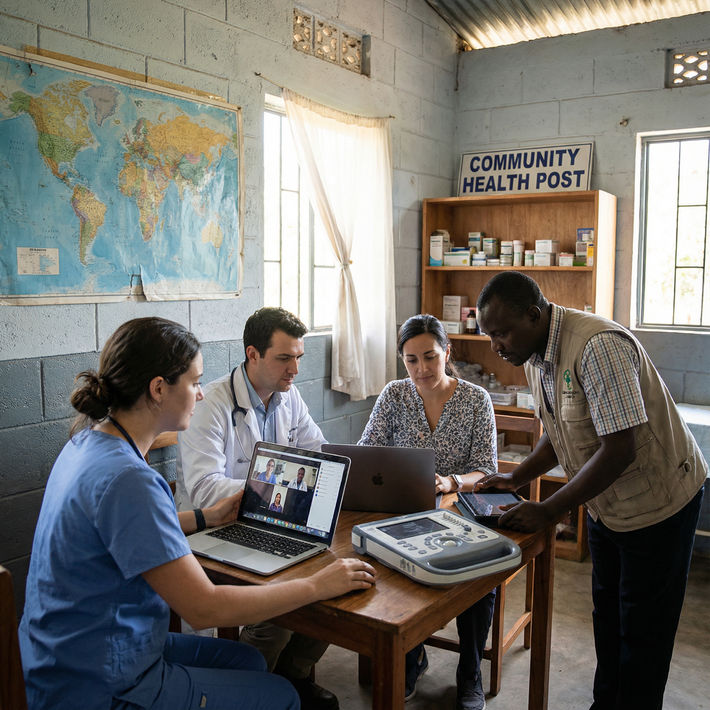
Opening Problem: Why “Observation-Only” Is a Trap on Applications
Here’s the mistake. A bad one.
You went on a medical mission trip, stood in a clinic, watched patient visits, maybe handed out supplies, maybe translated a few phrases, maybe helped move people through a line. Then you came home and wrote “clinical experience” on your application because, well, you were physically in a clinical setting.
Don’t do that.
I’ve seen applicants sink their own credibility this way. Not because the mission trip had no value. It may have had plenty. The problem is the label. Admissions readers are not impressed by vague proximity to medicine. They want to know what you actually did. Watched? Shadowing. Helped with logistics? Service. Took vitals under supervision? Possibly clinical. Directly interacted with patients in a defined care role? Now we can talk.
A clinic is not magic. Being present doesn’t transform passive observation into hands-on patient care.
And reviewers know the difference. Medical school admissions committees, residency programs, and anyone screening “clinical exposure” have read thousands of applications. They can smell padded wording from a mile away. If your description sounds inflated, inconsistent, or weirdly slippery, you create a credibility problem you didn’t need.
That’s the real cost:
- weak trust
- awkward follow-up questions
- missed chances to show authentic growth
- an application that feels less mature than it should
This article is simple: myth vs reality. What counts, what doesn’t, and how to avoid the dumb, preventable mistake of overstating observation-only mission work. Honest labeling protects you. Every time.
Myth vs Reality: What Observation-Only Mission Work Actually Is
Let’s define it cleanly.
Observation-only mission work means you were present in a healthcare setting, but you did not hold meaningful responsibility for patient care. You may have:
- watched physicians, nurses, or other clinicians
- followed team members through clinic flow
- listened during patient encounters
- helped with setup, registration, crowd movement, or supplies
- observed procedures without performing them
- stood in exam rooms as a learner, not a care provider
That is not the same thing as clinical experience. It’s usually one of these:
- Shadowing/observation: watching clinicians work
- Non-clinical service: logistics, registration, transport, organization
- Community service: helping people, but not through direct care tasks
- Cultural exposure: learning about a healthcare environment or population
Here’s where people get themselves in trouble.
Myth: “I was in the clinic, so it counts as clinical.”
Reality: The setting matters less than your function.
Myth: “It was a medical mission, so all hours are clinical.”
Reality: Mission branding doesn’t convert passive exposure into patient care.
Myth: “I saw a lot of medicine.”
Reality: Seeing medicine is not doing medicine.
That distinction matters because admissions reviewers separate experiences by role, not by backdrop. A student quietly standing in the corner of a mission exam room is not equivalent to a hospice volunteer sitting with patients weekly, a medical assistant rooming patients, or an EMT responding to calls. Not even close.
Titles can mislead you too. “Volunteer assistant.” “Global health intern.” “Mission team member.” Fancy labels are cheap. Reviewers care about tasks:
- Did you touch the workflow of care?
- Did you interact with patients directly?
- Were you supervised?
- Did you have defined responsibility?
If the honest answer is “mostly watched,” then call it what it was. Observation. There’s no shame in that. The shame is pretending otherwise.
What Admissions Committees See: Why the Mislabeling Problem Hurts
Admissions committees aren’t tallying romance. They’re evaluating evidence.
When they read mission work, they’re asking:
- What was this applicant’s actual role?
- How much responsibility did they carry?
- Was there real patient contact?
- What did they learn about care, vulnerability, ethics, and teamwork?
- Do they understand professional boundaries?
If you classify observation-only work as clinical experience, two bad interpretations appear immediately.
First: you may look like you’re exaggerating.
Second: you may look like you don’t understand the difference between shadowing and patient care.
Neither one helps you.
A vague mission entry is especially dangerous. I’ve read descriptions like: “Provided support in a rural clinic and participated in patient care delivery.” That sounds polished. It also sounds suspicious if, under questioning, “participated” really means “stood nearby while a physician worked.” One follow-up question can expose the inflation.
And yes, follow-up happens. In interviews. In secondary essays. In committee reviews. You may get asked:
- “Tell me about your direct patient interactions.”
- “What did you personally do on that trip?”
- “What responsibilities were you entrusted with?”
- “How were you supervised?”
If your answer collapses into “I mostly observed,” the damage is done. Now the issue isn’t just the mission trip. It’s your judgment.
Strong reviewers look for depth, not scenery. A student who spent six months transporting patients in a local hospital may have far better clinical exposure than someone who spent one week overseas watching clinicians in a dramatic setting. That’s reality. Not glamorous. But true.
Red Flags and Common Mistakes Applicants Make
This is where people get reckless.
Watch for these red flags in your own application:
- Calling it “clinical” when you only observed
- Using inflated verbs like “treated,” “managed,” “assisted medically,” or “provided care” when you didn’t
- Padding hours by counting every minute of travel, downtime, orientation, meals, or sightseeing as clinical exposure
- Blending categories together so observation, volunteering, tourism, and cultural immersion become one convenient blob
- Claiming skills learned that you never actually performed
- Listing procedures witnessed as if they were procedures participated in
- Having no documentation of role, dates, duties, or supervisor
That last one is a silent killer. If your entry says you worked in a mission clinic but you can’t provide:
- a clear role description
- a supervisor name
- contact information
- specific examples of patient interaction
- details of what boundaries existed
then your description becomes shaky fast.
I’ve also seen applicants say things like, “I learned wound care, triage, and clinical decision-making” from a five-day trip where they watched physicians. No, you didn’t. You were exposed to those things. Very different. Exposure is not competence. Don’t blur that line.
Another common mess: mixing translation or registration into “clinical” automatically. Translation can be meaningful service. Registration can be helpful. Logistics can be essential. But unless your duties involved direct, supervised patient care, don’t force them into the clinical bucket just because medicine was happening nearby.
Short-term mission trips create temptation because they feel intense. New country. High need. Packed clinic. Emotional stories. It all feels medically important. And sometimes it is personally transformative. But emotional intensity is not a substitute for role clarity.
That’s the trap. Don’t fall for it.
How to Describe Observation-Only Mission Work Correctly
The fix is straightforward. Be precise.
If you only watched clinicians, label it as:
- Shadowing
- Clinical observation
- Physician observation
If you handled logistics, translation, check-in, education materials, or crowd flow, label it as:
- Non-clinical volunteering
- Service
- Community outreach support
If you did both, separate them. Don’t mash everything together into one inflated “clinical mission experience” entry.
Better phrasing looks like this:
- “Observed physicians and nurses during outpatient visits in a short-term mission clinic.”
- “Shadowed clinicians providing primary care and medication counseling.”
- “Supported patient registration and clinic flow during a community health outreach event.”
- “Assisted with translation and non-clinical coordination under team supervision.”
- “Reflected on resource limitations, continuity-of-care challenges, and cross-cultural communication.”
Notice what’s missing? Fake hero language.
Avoid phrases like:
- “provided treatment”
- “performed procedures”
- “delivered medical care”
- “managed patients”
- “treated underserved populations”
Unless you actually did those things in a legal, supervised, role-appropriate way, those words are dangerous.
Here’s the smarter move: use the experience to show maturity.
Talk about:
- what you observed about patient trust
- how clinicians maintained boundaries
- the limitations of short-term care
- the importance of continuity and follow-up
- what cultural humility really felt like when you didn’t fully understand the system
- how the trip clarified what real service should look like
That kind of reflection is far more impressive than trying to sound hands-on when you weren’t.
Also, separate this experience from your true clinical exposure elsewhere. If you have hospital volunteering, hospice, CNA work, EMT work, medical assisting, scribing with meaningful patient proximity, or another defined patient-facing role, let those carry the clinical weight. Your mission trip can still matter. Just in its proper lane.
What to Do Instead: Build Credible Clinical Experience the Right Way
If you want real clinical experience, stop chasing labels and build substance.
Safer, stronger options include:
- local hospital or clinic volunteering with direct patient-facing duties
- hospice volunteering with consistent patient presence
- CNA, EMT, MA, phlebotomy, or similar certified roles
- long-term community health work
- structured shadowing with clear observation boundaries
- free clinic roles that are legal, supervised, and clearly defined
The gold standard is not exotic. It’s credible.
Admissions committees trust:
- consistency over spectacle
- long-term commitment over one-off trips
- defined responsibility over vague inspiration
- documented patient contact over dramatic scenery
Mission work can still add value. Pair it with legitimate clinical exposure and it becomes part of a coherent story: you observed global health realities, served where appropriate, respected boundaries, and then pursued sustained hands-on experience at home. That’s solid. That’s believable.
Keep records. Save dates, duties, supervisor names, and a plain-language summary of what you actually did. If you can’t explain your role in two honest sentences, your application entry probably needs revision.
Here’s the reminder I want you to leave with: honest classification does not weaken your application. It strengthens it. Every single time. You are safer, sharper, and more credible when you describe mission work exactly as it was. Not more. Not less.