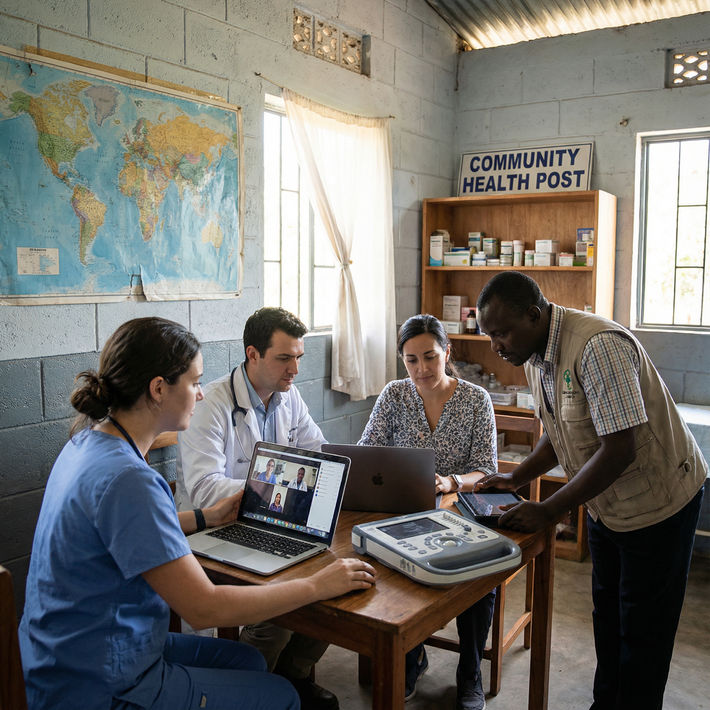
You did a two-week global surgery elective in Honduras. Or maybe a free-clinic trip in rural Appalachia. You took histories, handed instruments, translated, helped with patient education, maybe even watched a resident close wounds while you suctioned and tried not to look too excited. It felt real because it was real. Patients were there. Need was there. You were there.
Now you’re staring at ERAS, hovering over categories, and the question starts needling at you: does this count as Clinical Experience?
Here’s the trap. What felt like patient care to you may look very different to the people reviewing your application. To you, it was medicine. To a reviewer moving at speed, it may read as volunteering, shadowing, service, or a short-term trip with a medical theme unless your role is clearly clinical, supervised, and described with discipline. That distinction matters more than applicants think.
Let me tell you what really happens in file review. Program directors and faculty do not read every ERAS entry like a novel. They skim. Fast. They use category labels as mental shortcuts before they ever get to your description. If you place a mission elective under Clinical Experience and the wording is vague, inflated, or fuzzy about supervision, the entry can get downgraded in the reviewer’s head almost instantly. Sometimes before the second sentence. And once that little credibility alarm goes off, it colors everything else.
That’s the part nobody tells students. ERAS isn’t just collecting your experiences. It’s testing your judgment.
What ERAS Actually Means by Clinical Experience
On paper, applicants love categories. In practice, reviewers care about substance. Clinical Experience means you were involved in actual patient-facing medical work, under appropriate supervision, with responsibilities that were medically relevant. Not glamorous. Not heroic. Just real.
That means direct patient interaction matters. Taking histories. Assisting with physical exams. Participating in patient education tied to care. Helping with care delivery in a defined, supervised role. If your mission elective gave you that, fine. If you mostly watched, transported supplies, translated occasionally, or attended rounds without owning a clinical task, that is not the same thing. Useful experience? Sure. Clinical Experience in the way faculty interpret it? Not necessarily.
Mission work often straddles categories, and that’s where applicants get sloppy. A single trip can contain service, observation, public health exposure, and clinical participation all at once. But not every patient-facing moment becomes Clinical Experience just because a stethoscope was nearby. If the main point of the trip was service, outreach, education, or support logistics, reviewers often mentally sort it into volunteering or other meaningful experience. If the main point was observing clinicians, it’s shadowing. If you collected data or helped with outcomes tracking, parts of it may be research. One experience can be rich without needing the most prestigious label.
Here’s the faculty mindset, stripped of the polite language: was this longitudinal, hands-on, and medically relevant, or was it a short-term service trip where the applicant is dressing up limited exposure as major clinical work? That’s the question. Not because reviewers are cynical monsters. Because they’ve seen hundreds of applications and plenty of embellished mission entries. The category earns trust only when the role supports it.
The Hidden Risk: Why Mission Electives Can Backfire If Misfiled
The danger isn’t that reviewers hate mission electives. They don’t. The danger is that overclaiming one creates a judgment problem.
I’ve watched attendings read an ERAS entry that says things like “managed complex patients in underserved communities” or “provided surgical care to rural populations,” then look up and ask the obvious question: “As a student? For twelve days?” That’s the moment your impressive experience becomes a credibility leak.
Red flags are painfully predictable. Vague descriptions. Inflated verbs. Claims of procedure exposure without context. Wording that implies continuity of care when the trip was brief and episodic. Phrases like “served as primary provider” are especially toxic unless you want faculty to assume you either don’t understand supervision or don’t respect boundaries. Neither impression helps you match.
There is a big difference between “participated in a mission trip” and “provided clinically meaningful care under supervision.” The first is broader and safer when your role was limited. The second can be accurate, but only if it’s true and you can support it with specifics. What did you do? With whom? Under whose oversight? For how many days? In what setting? If your answers are mushy, the entry probably doesn’t belong in Clinical Experience.
That’s the secret most applicants miss: the cost of overstating is higher than the benefit of sounding impressive. You are not trying to win a marketing contest. You are trying to look like someone faculty can trust at 2 a.m. with a pager.

How to List Mission Electives Without Sounding Dishonest
Here’s the clean decision framework.
List the mission elective as Clinical Experience only if you personally did patient-facing medical work under supervision. That means you took histories, assisted with supervised physical exams, participated in counseling or patient education tied to care, documented information for the team, assisted in clinic flow in a medically meaningful way, or otherwise had a defined care role. Not “I was present.” Not “I observed surgeries.” Not “I felt involved.” Defined role. Direct patient contact. Supervision.
If those elements are weak, move it. Volunteer/Service is not a demotion. It’s often the more mature choice. Reviewers notice that too.
The wording matters just as much as the category. Your job is to be precise and modest. State the setting. State your role. State the supervision. State the patient population. State the scope. That’s it. No hero music in the background.
Good descriptions sound like this: “Participated in a 10-day supervised free-clinic elective serving uninsured adult patients; obtained focused histories, assisted with basic physical exams, provided patient education on medication adherence through interpreter support, and observed attending-led treatment planning.” That reads honest. Grounded. Specific.
Bad descriptions sound like this: “Delivered care to underserved populations in a resource-limited environment and managed a wide range of medical conditions.” That is puffed-up nonsense unless you were licensed and independently responsible, which you weren’t. Reviewers know the difference. Instantly.
Use the description box intelligently. Quantify the experience without turning it into theater. Number of days. Type of clinic. Approximate patient volume if you truly know it. Typical tasks. Team structure. What constraints shaped care. The strongest mission entries also show that you learned something deeper than “underserved communities face barriers.” Everyone writes that. Say what actually changed your understanding: medication stock-outs disrupting treatment plans, interpreter-mediated counseling changing how long visits took, triage decisions in a one-room clinic, follow-up limitations making “great plans” meaningless. That’s mature reflection. It proves you were paying attention.
One more thing. Don’t hide the short duration. Brief experiences are fine if they’re described honestly. A short, well-defined clinical elective can still add value. But if you try to make twelve days sound like six months of continuity clinic, you’ll look unserious. Own the scale. Reviewers respect proportion.
What Program Directors and Faculty Really Notice
Mission entries are rarely judged mainly on prestige. They are used to assess maturity.
That’s the behind-the-scenes truth. Faculty read these entries and silently ask: does this applicant understand scope? Do they know the difference between exposure and responsibility? Can they describe vulnerable patient populations without turning the whole thing into a savior performance? Those questions matter more than whether the clinic was overseas, on tribal land, or in a church basement three counties away.
What helps is concrete supervision, clear scope, and humility. If your description makes it obvious that you worked within a team, knew your role, and learned from limits rather than pretending you transcended them, you come off as grounded. That’s exactly what residency programs want.
What hurts is the usual junk. Savior language. “Brought care to the poor.” No, you didn’t. You participated in a supervised team effort. Travel-brochure global health clichés. “Immersed in a culture while making a difference.” Spare everyone. Entries that read like Instagram captions wearing a white coat get dismissed fast.
I’ve seen applicants tank an otherwise solid experience by making themselves the star of someone else’s hardship. Faculty notice that immediately, and they don’t forget it. The best mission descriptions center the clinical role, the team, the system constraints, and your learning. Not your virtue.

Best-Practice Checklist Before You Hit Submit
Before you submit, force yourself through a blunt audit.
Did you personally have patient contact? Was it medically relevant? Were you supervised? Can you explain your exact role in one sentence without sounding slippery? If any of those answers are weak, stop trying to force prestige into the category field and move the entry to Volunteer/Service or Other. That move doesn’t weaken your application. It protects it.
Then check alignment. Your ERAS entry, personal statement, letters, and interview stories should all tell the same honest story. If your application says you “provided care” but your letter writer describes you as an observer, that inconsistency will do more damage than the mission trip will ever do good. Programs smell mismatch fast.
Here’s the reminder I want you to keep: the goal is not to maximize category prestige. The goal is to make reviewers trust you at first glance. Mission electives belong in Clinical Experience only when the role was truly patient-facing, supervised, and medically meaningful. Accuracy beats ambition. Every time. Describe exactly what you did, put it in the right bucket, and let honesty do the heavy lifting.