
You're on interview day. The residents are friendly. The PD is energetic. The hospital is brand new or recently renovated, the slide deck looks expensive, and everyone keeps saying the program is "building something special."
Then you ask a simple question.
"Who's covering wards at night?" Or: "Who's the clinic preceptor when Dr. X is away?" Or: "How many core faculty are on service every week?"
The answer gets fuzzy.
That's the moment applicants talk themselves into a mistake.
They tell themselves the details will work out. They assume enthusiastic leadership equals stable supervision. They confuse startup energy with educational infrastructure. Bad move. I've seen applicants rank shiny new programs based on vibes, mission statements, and nice dinner conversations, only to learn later that the actual day-to-day coverage model was held together with borrowed faculty, rotating moonlighters, or attendings stretched so thin they could barely supervise, let alone teach.
This matters more in new residency programs because nothing is mature yet. Systems aren't battle-tested. Coverage plans may still depend on goodwill, temporary arrangements, or one or two key attendings who can't possibly carry the entire educational load forever.
Here's the central mistake: ranking a program before you know who is actually supervising patient care on wards, nights, ICU, and continuity clinic.
Don't do that.
A beautiful website cannot staff an overnight service. Interview charm cannot precept your clinic patients. And "we're growing" is not the same thing as "you will have reliable attending supervision every single day."
If you don't verify coverage, you may become the patch.
Why Faculty Gaps Matter More Than the Marketing Tour Suggests
Faculty gaps don't just create inconvenience. They change the entire training environment.
A fully covered program gives you three things that are hard to replace:
- Reliable supervision
- Consistent teaching
- Trustworthy evaluation
Take away even one of those, and the cracks spread fast.
In a strong program, you know who the attending is, who's making final decisions, who's available for escalation, and who's responsible for feedback. There's structure. The rotation feels owned. Teaching happens in real time, not just during a noon conference someone barely had time to give.
Patchwork coverage feels different immediately. You'll notice:
- different attendings appearing unpredictably
- conflicting management styles with no continuity
- delayed decisions because no one clearly "owns" the service
- residents doing extra coordination work just to keep things moving
- feedback that is generic, late, or absent
That last one gets overlooked. It shouldn't. If five different people supervise fragments of your rotation, your evaluation is often watered down nonsense. "Pleasant resident. Works hard." That's not developmental feedback. That's a staffing byproduct.
And no, more autonomy is not always the silver lining people pretend it is. Unsupervised drift is not high-quality autonomy. Real autonomy happens inside a strong supervision structure. Being left to figure things out because there aren't enough available attendings is not a gift. It's a risk.
This gets especially dangerous in:
- ICU
- night float
- weekends
- continuity clinic
- procedural settings
- services dependent on one or two star faculty
Interview days hide this well. Of course they do. Programs put forward their most organized version of themselves. You may meet the best teachers, hear from the happiest residents, and tour the service on a good day. Meanwhile, the actual monthly reality may involve frequent reshuffling, backup attendings pulled from unrelated duties, or clinics where precepting bottlenecks turn every session into chaos.
That's why you need specifics, not polish.
Red Flags Applicants Should Not Ignore During Interviews and Second Looks
Let me be blunt. If a program cannot clearly explain who supervises patient care, that is not a minor communication issue. That is the issue.
Here are the red flags I'd take seriously.
1. Vague staffing answers
You ask who covers nights, clinic, ICU, or backup call. You get broad language instead of names, roles, or schedules.
Watch for lines like:
- "We're still growing."
- "It's pretty flexible."
- "Our faculty are very involved."
- "We all kind of pitch in."
- "The residents get great autonomy."
- "It depends on the month."
That language is often camouflage. Specific programs give specific answers.
2. Repeated reliance on locums or temporary coverage
A rare temporary attending is one thing. Chronic dependence is another. If locums are routinely covering core educational roles, the program may not yet have a stable faculty backbone.
Don't make the mistake of treating this as harmless. Temporary physicians may be excellent clinicians, but residency training needs continuity. Residents need attendings who know the curriculum, know the learners, and stay long enough to teach longitudinally.
3. Residents filling operational gaps
If residents are describing themselves as the people who "keep things running," be careful. That phrase can mean maturity and teamwork. It can also mean the adults are missing.
I've seen new programs quietly normalize interns carrying coordination burdens because attendings were double-booked, unavailable, or inconsistently present. That becomes burnout fast.
4. Unclear note-signing and supervisory chains
Ask:
- Who signs resident notes?
- Who is physically present in clinic?
- Who is available for urgent decisions overnight?
- Who staffs admissions after hours?
- Who handles escalation if the assigned attending is unavailable?
If these answers wobble, your supervision structure wobbles too.
5. No clear plan for absences
This is where fragile programs get exposed. Ask what happens when a key attending is on vacation, sick, leaves the institution, or burns out.
If the answer is basically "we make it work," hear that correctly: they do not have a dependable backup model.
6. M&M, didactics, and core teaching tied to one or two people
If one beloved attending runs everything educational, that's not a strength. That's a single point of failure.
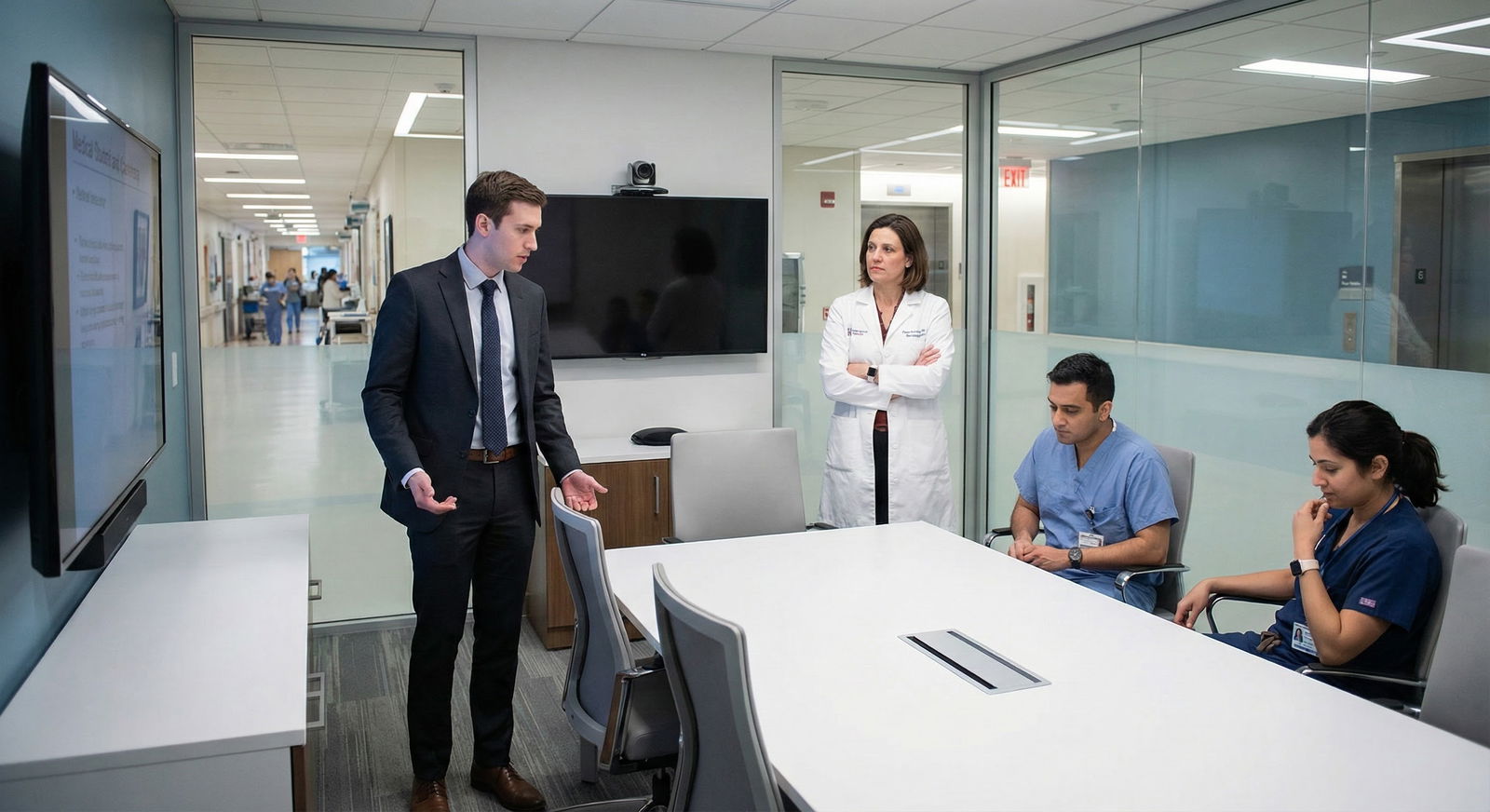
How to Verify Coverage Before You Rank: Questions That Expose Weak Spots
Don't settle for atmosphere. Investigate structure.
Here's the checklist I'd use.
Ask about the real faculty roster
Not the aspirational roster. The real one.
- How many core faculty are currently hired and active?
- How many are full-time vs part-time?
- Which rotations depend on one person?
- Are any faculty still being recruited for required core experiences?
- Which faculty have joined in the last 6-12 months, and which have left?
A healthy program can answer this cleanly.
Ask who covers what, specifically
Break it down:
- Who covers daytime wards?
- Who supervises night admissions?
- Who covers weekends and holidays?
- Who is the attending of record in ICU?
- Who precepts continuity clinic each half-day?
- Who supervises procedures?
If they answer with titles only, push once more. You want an actual model, not a brochure sentence.
Ask about backup
This is where weak programs squirm.
- What is the backup plan if the assigned attending is out suddenly?
- How often was backup coverage needed in the last month?
- Who steps in when clinic preceptors are absent?
- Have residents ever had sessions rescheduled because attending coverage fell through?
One of my favorite questions is simple: "Can you walk me through what happened the last time a key attending was unexpectedly unavailable?" That gets you reality, not branding.
Compare spoken answers with written evidence
If you get a sample schedule, study it.
Look for:
- repeated blank spots
- the same faculty name appearing everywhere
- frequent switches in clinic preceptors
- thin weekend coverage
- services dependent on "TBD" or floating attendings
Ask residents whether schedules change often at the last minute. Then ask faculty the same thing separately. If the stories don't match, believe the mismatch.
Check the clinic experience carefully
Clinic is a common place for coverage weakness to hide.
Ask:
- How many patients are residents expected to see per session?
- How many preceptors are present at once?
- Are preceptors physically onsite or remote?
- Do clinic sessions run late because too many residents share one attending?
- Has clinic ever been canceled or compressed because of attending shortages?
A weak precepting structure can quietly wreck outpatient training.
Watch the residents
Not their rehearsed praise. Their fatigue patterns.
Do they sound like they're constantly adapting to staffing changes? Do they use phrases like:
- "We've had to be flexible."
- "It's better than it was."
- "We usually find someone."
- "Sometimes it's a little chaotic."
That's data. Use it.
Decision Framework: When a Faculty Gap Is a Minor Risk vs a Rank-List Dealbreaker
Not every gap is fatal. New programs do have growing pains. But there's a big difference between a program that is building responsibly and one that is underbuilt and hoping residents won't notice until Match is over.
Minor risk: probably manageable
I'd consider the risk manageable if you see most of the following:
- leadership is direct and transparent
- the program names exact faculty and coverage roles
- backup systems are already functioning
- residents describe recent improvements with concrete examples
- coverage data show stable ward, ICU, clinic, and night supervision
- educational ownership does not rest on one heroic attending
That's a program with growing pains, not structural failure.
Dealbreaker: don't ignore this
I'd move a program way down, or off the list, if you find:
- unclear attending presence on core rotations
- chronic use of temporary attendings for key services
- no dependable night or weekend supervision model
- continuity clinic precepting bottlenecks
- residents functioning as operational glue because faculty coverage is thin
- evasive answers when asked basic supervision questions
- obvious overreliance on future hires that haven't happened yet
Here's the trap: prestige, novelty, and optimism make people excuse nonsense. Don't. A new hospital tower does not compensate for weak supervision. A charismatic PD does not erase staffing instability. And being "part of building something" sounds noble right up until you're the one discovering the structure wasn't actually built.

What to Do Before You Finalize Your Rank List
Don't trust your memory alone. Interview season blurs together.
Use this action plan:
- Write down exact answers about ward, ICU, clinic, night, and backup coverage right after each interview.
- Mark vague responses in red. Vague is not neutral. Vague is a warning.
- Compare programs by supervision reliability, not just reputation or friendliness.
- Look for single points of failure, one attending, one clinic preceptor, one ICU lead.
- Ask follow-up questions before ranking if anything is unclear.
- Use second looks strategically to verify staffing, not just vibe-check culture.
- Do not volunteer to be the experiment in a program that still hasn't secured its educational backbone.
That's the point. Protect your training.
Key takeaways
- Don't rank a new residency program on charm alone, faculty coverage tells you whether the environment is actually safe and teachable.
- Vague staffing answers are a red flag, not a small detail.
- Before you rank, verify who is physically and functionally present for wards, clinics, nights, weekends, and backup coverage.
A new program can become excellent. Some do. But you are not obligated to gamble your training on promises. Ask who's there. Ask who covers the holes. Ask what happens when someone disappears from the schedule.
Then rank with your eyes open. Not blindly.