
You’re sitting in a windowless conference room on interview day. The program director just finished a polished PowerPoint about this “exciting new residency opportunity.” Lots of buzzwords. Not a lot of data. You know you’re basically a test pilot if you match here.
Here’s the real problem: with a brand-new program, the usual metrics—board pass rates, fellowship matches, alumni network—do not exist. So you cannot afford to ask fluff questions. You need questions that stress‑test the foundation.
Let’s walk through exactly what to ask, why it matters, and what “good” vs “red flag” answers sound like.
1. Start with the core: Why this program exists and who is really in charge
You need to know whether this program was created to train physicians…or to plug a cheap labor hole.
Ask the program director and department leadership directly:
- “Why was this residency started, and who pushed for it most strongly?”
- “What are the top 2–3 goals for the program in the next five years?”
- “What metrics will you use to decide if the program is successful?”
What you’re listening for:
- Strong answers:
- A clear educational mission.
- Hospital/health system commitment (not just one enthusiastic PD).
- Specific goals: accreditation stability, case volume targets, research infrastructure, fellowship development.
- Weak answers:
- Vague “we thought it would be nice.”
- Heavy emphasis on “coverage” and “service needs” with little mention of education.
- No clear 3–5 year vision beyond “grow” or “expand.”
Then dig into leadership stability:
- “How long has the core leadership team worked together?”
- “Who else is part of the core faculty and what percentage of their time is protected for teaching?”
- “If you left tomorrow, what structures are in place so the program doesn’t fall apart?”
You want to hear there’s a team, not just a solo PD duct‑taping things together.
2. Drill into accreditation, oversight, and risk
Brand‑new programs are fragile. You need to know how seriously they take accreditation and external oversight.
Ask these directly:
- “What is your current accreditation status and when is your next ACGME site visit?”
- “What feedback did you receive from ACGME in the initial site visit, and how did you respond to it?”
- “Who is your sponsoring institution, and what other accredited programs are under that sponsor?”
| Question | Good Sign |
|---|---|
| Current accreditation status | Initial accreditation already obtained |
| Response to ACGME feedback | Specific changes implemented |
| Sponsor portfolio | Multiple stable, long-standing programs |
| GME office role | Clear support, oversight, resident voice |
You also want to understand GME infrastructure:
- “How involved is the GME office in oversight of this program?”
- “What other residencies or fellowships here would I interact with regularly?”
- “If there is a serious concern about the program, who outside the department can residents go to?”
Good programs talk about:
- A functioning GME office.
- A DIO (designated institutional official) who actually exists and is present.
- Mechanisms for confidential reporting and remediation.
Bad programs hand‑wave: “Oh, just talk to us, we’re a family.”
3. Clinical training: Are you going to see enough, and the right mix?
The single biggest risk with a new program: inadequate volume or lopsided exposure. You do not want to be the only resident on a service that barely generates patients.
Here’s exactly what to ask:
- “What was the case volume here before residents started, and how has that changed?”
- “For my PGY-2 and PGY-3 years, what does a typical week look like on the busiest core rotations?”
- “Where do you expect residents might feel over‑utilized for service needs, and how are you planning to protect education?”
Then go more granular by specialty. Examples:
- Internal Medicine:
- “How many ICU beds are there, and do residents have primary responsibility in the unit?”
- “What percentage of admissions are resident‑driven vs hospitalist‑run?”
- Surgery:
- “What is the annual case volume by major category (bread‑and‑butter vs complex), and how many residents will share that?”
- “Who scrubs cases when there are no residents available?”
- EM:
- “What is the annual ED volume and acuity mix? How many residents per shift? How are students, PAs, and NPs integrated?”
You should also ask about off‑site rotations:
- “Which rotations are at outside institutions, and who supervises us there?”
- “Has the relationship with those outside sites already been tested with other learners (students, fellows, etc.)?”
- “What happens if an outside partner stops taking residents?”
Well‑run programs have backup plans. Weak programs assume every outside site will stay locked in forever.
4. Education structure: Do they have a real curriculum or just vibes?
New programs love to say, “We’re building the curriculum with resident input!” That can be code for “We haven’t done the work.”
You want specifics:
- “What is the structured didactic schedule? How many protected hours per week, and how is that protected in practice?”
- “Who is responsible for curriculum design, and what experience do they have with graduate medical education?”
- “What standing conferences are already running (M&M, journal club, grand rounds, board review)?”
Then ask about evaluation and feedback systems:
- “How are milestones assessed, and who reviews them with residents?”
- “How often do formal evaluations occur, and what is the process if I am struggling in an area?”
- “How do residents give feedback to the program, and can you give an example of a change that was made already based on trainee feedback?”
You should hear about:
- Scheduled block lectures.
- A curriculum map aligned to ACGME milestones.
- Regular CCC (Clinical Competency Committee) meetings.
- Concrete examples: “We changed X rotation after early feedback.”
If they respond with, “We’re very open to feedback, you can always just stop by my office,” and nothing more, that’s flimsy.
5. Workload, schedules, and how they’ll keep you from being cheap labor
You need the unvarnished details about how hard you’ll be worked and whether their systems are realistic.
Ask about schedule design:
- “How did you design the call/night float system, and who pressure‑tested it?”
- “What coverage plans exist when residents are out sick or on leave?”
- “Can you walk me through a typical day on your busiest inpatient rotation, hour‑by‑hour?”
Then hit the duty‑hours question in a way that forces specifics:
- “In the first year of the program, where do you anticipate the highest risk for duty hour violations, and what’s your monitoring plan?”
- “Who else is on the care team—APCs, hospitalists, fellows—and how are responsibilities divided?”
- “Are there any rotations currently dependent on residents that used to run without them? What changed to support that?”
You’re essentially asking: Did they add resident work on top of an old system, or did they redesign the system to integrate residents properly? Huge difference.
6. Resources: Are they actually putting money into this?
Talk is cheap. FTEs, faculty buy‑down, simulation equipment, and admin staff are not.
Targeted questions:
- “How much protected time do core faculty have for teaching and supervision?”
- “Tell me about your program coordinator—what’s their background and what other responsibilities do they have?”
- “What simulation and procedural training resources already exist, and how often will residents use them?”
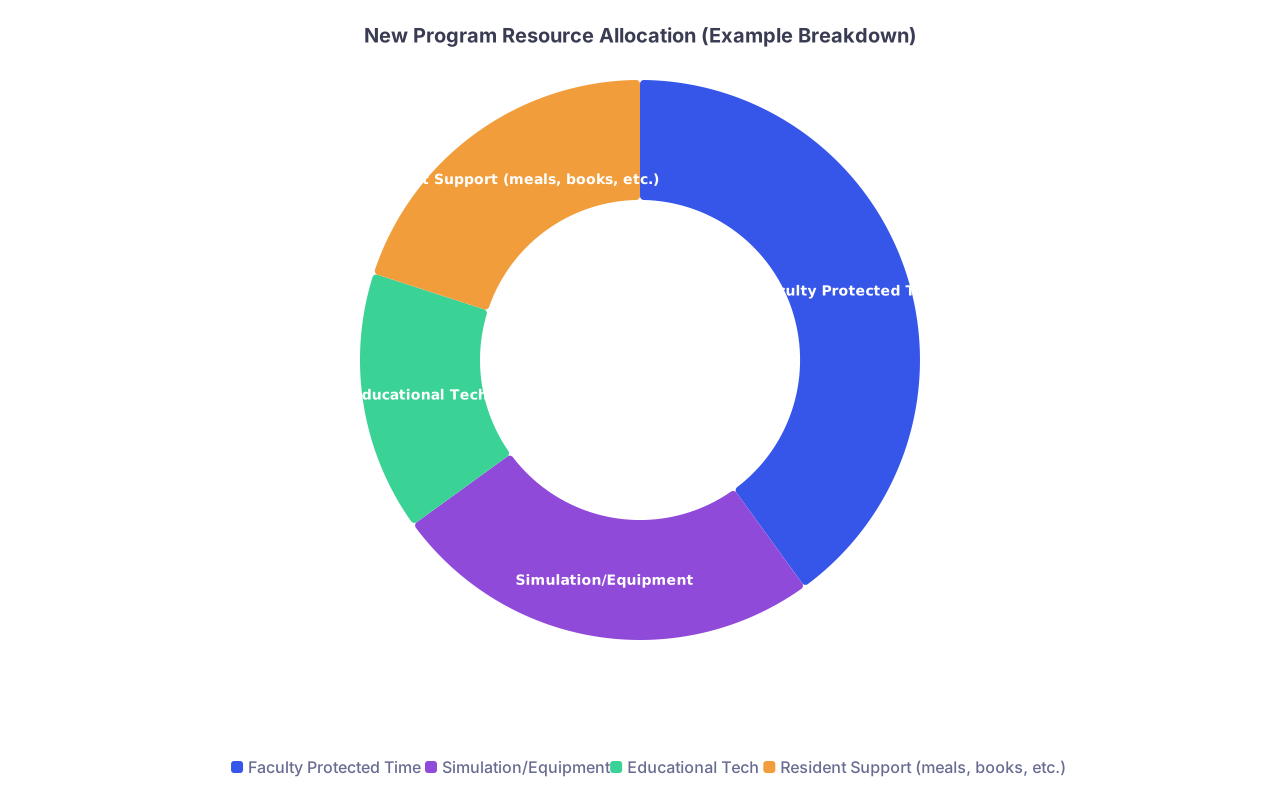
| Category | Value |
|---|---|
| Faculty Protected Time | 40 |
| Simulation/Equipment | 25 |
| Educational Tech | 15 |
| Resident Support (meals, books, etc.) | 20 |
Then ask directly about resident‑level support:
- “What funding is available for conferences and board review materials?”
- “Are there dedicated resident workrooms, call rooms, and quiet study areas already in place?”
- “What is your plan and budget for expansion as more classes are added?”
If they dodge budget questions entirely, assume corners will be cut somewhere—and that “somewhere” usually lands on residents.
7. Culture and psychological safety (without residents yet)
This is tricky. They can’t show you an established resident culture because you’d be the culture. But you can still infer the tone.
Ask faculty and leadership:
- “Describe a time you strongly disagreed with a trainee here. How was that handled?”
- “What behaviors are absolutely non‑negotiable for faculty working with residents?”
- “How are faculty evaluated on their teaching and professionalism with learners?”
And then, about mistakes:
- “When a resident makes a serious clinical error, what happens next—educationally and administratively?”
- “Can you walk me through a recent patient safety event and what changed afterward?”
- “How are nurses and other staff involved in giving feedback about resident performance and well‑being?”
You’re listening for whether the default response to error is blame and shame, or analysis and systems improvement.
Also, talk to nurses and other staff on the tour if you can:
- “How do you feel about having residents now?”
- “Who tends to respond to pages fastest—residents, attendings, or hospitalists?”
- “Are residents treated as part of the team here?”
Their tone will tell you more than any brochure.
8. Career development when you’re the first class
No alumni. No track record. You need to know how they’ll help you not be invisible when it’s time for jobs or fellowship.
Ask:
- “What does your advising structure look like—who would be my primary career mentor?”
- “For fellowship‑bound residents, what will you do in the absence of previous match data?”
- “What formal support is there for research, QI projects, or scholarly work?”

| Step | Description |
|---|---|
| Step 1 | PGY1 Start |
| Step 2 | Assigned Faculty Advisor |
| Step 3 | Identify Goals IM vs Fellowship |
| Step 4 | Match with Mentor or Research Lead |
| Step 5 | Scholarly Project and Presentations |
| Step 6 | Application Strategy Meeting |
| Step 7 | Letters and Interview Prep |
For job placement:
- “What relationships do faculty have with regional or national employers/fellowships?”
- “How will you help the first class stand out when programs may not recognize your institution yet?”
- “If I decide to practice locally, what groups or systems usually hire your graduates from other roles (e.g., prior fellows, faculty)?”
A good sign: they can name specific people and institutions, not just “we’ll support you.”
9. What to ask current residents (if any exist)
Sometimes you’re not truly first; maybe there’s an inaugural class already. They’re your best data.
Ask them when you get them alone:
- “What’s one thing that turned out better than you expected when you matched here?”
- “What’s one thing that is worse or more chaotic than you were told on interview day?”
- “How often does leadership respond to your feedback with actual change?”
Then go a little sharper:
- “Have you had any concerns about accreditation, case volume, or being overworked, and how were those addressed?”
- “If you had to decide again today with what you now know, would you rank this program the same way?”
- “What would make you consider leaving the program?”
Watch their faces more than their words.
10. Quick reference: Priority questions cheat sheet
Here’s a compact set of high‑yield questions you can literally keep in your notes.
| Domain | One Must-Ask Question |
|---|---|
| Mission | Why was this residency created and who drove that decision? |
| Accreditation | What feedback did ACGME give and what changes did you make? |
| Volume | How do you know there is enough patient volume for training? |
| Curriculum | What does your didactic schedule look like week to week? |
| Workload | Where do you anticipate highest duty hour risk and why? |
| Careers | How will you help the first class succeed in fellowship/job searches? |
Print that, memorize it, whatever works.
FAQ: Common Questions About Interviewing at Brand-New Programs
1. Is it risky to rank a brand-new residency program highly?
Yes, inherently. You’re trading stability and track record for potential upside and influence. The risk is higher if: the hospital has no other established residencies, leadership has minimal GME experience, or they can’t answer basic questions about volume, curriculum, and accreditation. It can still be a good move, but it should be an intentional one, not a blind leap.
2. What’s the single biggest red flag answer I should watch for?
“I don’t know, we’ll figure that out with the first class.” It sounds collaborative. In reality, it usually means no planning, no infrastructure, and you becoming unpaid project management. A better version is, “Here’s our current plan, and here’s where we’re open to refining with resident input.”
3. How much weight should I put on case volume for a new program?
A lot. Without solid volume, everything else is cosmetic. You want proof that the hospital had enough patients before residents existed, not promises that volume will “grow” later. Ask what the service looked like pre‑residency, whether APPs/hospitalists are being replaced by residents, and how many residents will share that workload.
4. What if they don’t have answers to some of these questions yet?
One or two “we’re still finalizing that” answers are fine, especially for details more than a year out. But they should have at least a draft plan and be able to explain their reasoning. If they can’t answer about accreditation plans, duty hour monitoring, curriculum structure, or career advising, they’re not ready for residents.
5. How do I compare a shiny new program to a mediocre but established one?
Ask yourself two things: (1) Will I for sure get the core training I need at the established place? and (2) Does the new program offer enough concrete advantages (autonomy, volume, mentorship, location) to justify the uncertainty? If the established program reliably graduates competent residents and the new program is mostly promises, lean toward boring but proven unless you’re very comfortable with risk.
6. Should I ask directly if they expect to expand class size?
Yes. Ask, “What is your planned class size over the next 5–10 years, and what will change to support that?” If they plan to double or triple residents without adding faculty, beds, or resources, that’s a major concern. Expansion without infrastructure is how residents end up as under‑supervised, overworked service coverage.
Key points to walk away with:
- Your questions should stress‑test foundations: mission, accreditation, volume, curriculum, and workload.
- Push for specifics, not vibes—numbers, examples, and concrete plans separate serious programs from wishful thinking.
- You’re not just choosing a program; you’re choosing how much risk you’re willing to carry to be part of building something new. Make that choice with your eyes fully open.