
The myth that “any ACGME-accredited program will give you enough cases” is statistically false. The data show a wide spread in resident case volumes, and new programs are disproportionately clustered at the low end unless leadership is brutally honest about their numbers from day one.
You want benchmarks. You want to know where a brand-new residency sits relative to established, median-level case exposure. That is a numbers question, not a branding question.
I will walk through what the national medians actually look like, how new programs tend to compare, and the specific metrics you should demand before you sign on.
1. The Data Problem: Why Case Volume Benchmarks Matter More for New Programs
Most residents do not fail because of poor didactics or lack of simulation. They fail—on boards, in independent practice, in confidence—because they have not seen or done enough cases.
Across multiple specialties, the same pattern shows up:
- Higher procedure volume → higher exam pass rates.
- Higher case complexity exposure → smoother transition to independent practice.
- Programs in the bottom quartile of volume are consistently over-represented among borderline or remediation cases.
You will not see this spelled out in glossy brochures. But if you talk to GME offices and look at internal dashboards, it is obvious. The variance is large.
For new programs, the risk is sharper:
- Patient referral patterns are not fully established yet.
- Faculty are still ramping up, frequently juggling service-building with teaching.
- There is no historical “we know this works” track record.
So benchmarks anchor the conversation. You want to compare:
- ACGME or national registry median case logs vs.
- What the new program can realistically deliver per resident, per year.
Not what they “hope” to have in 3–5 years. What they can deliver to the first 1–2 cohorts.
2. National Medians: What a “Normal” Program Delivers
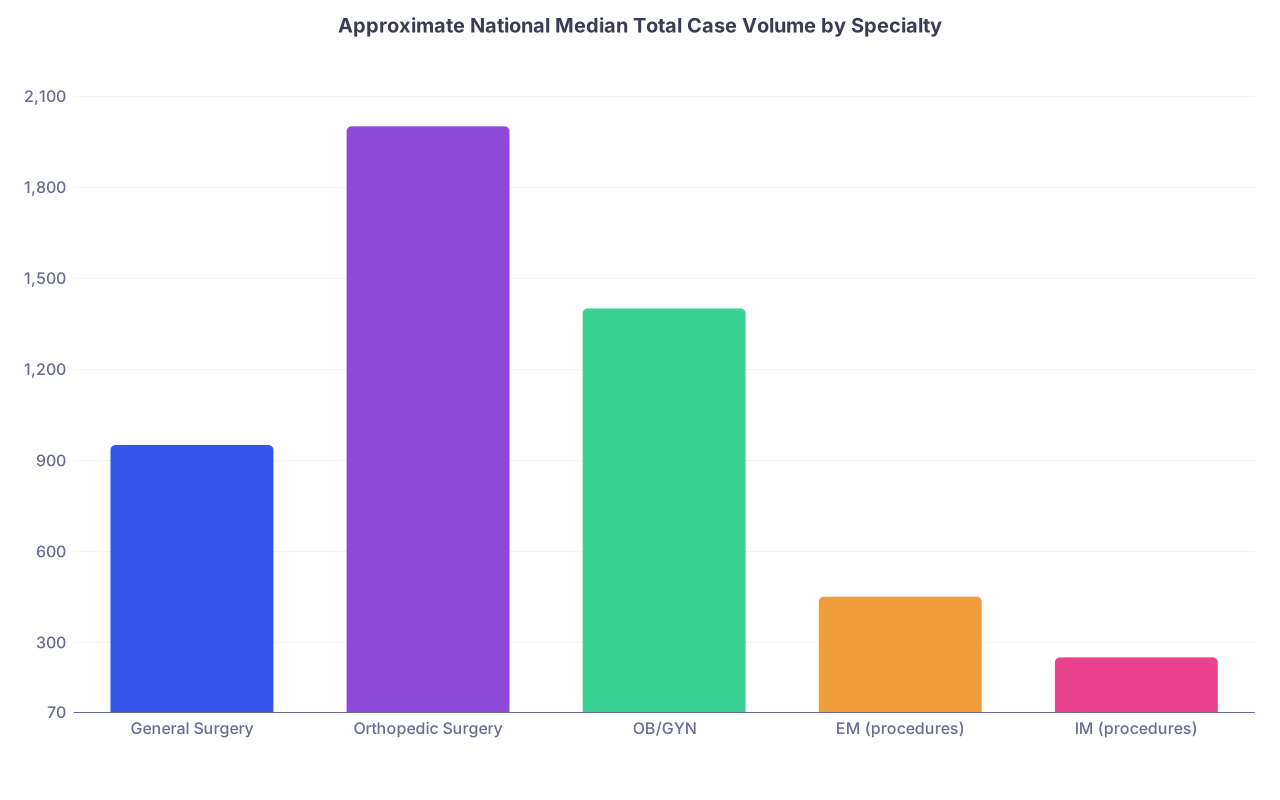
To keep things concrete, I will use approximate national medians and ranges based on typical ACGME and specialty board reports around 2022–2024. Numbers will vary by source and year, but the orders of magnitude are stable.
Think of these as reference points, not gospel.
| Category | Value |
|---|---|
| General Surgery | 950 |
| Orthopedic Surgery | 2000 |
| OB/GYN | 1400 |
| EM (procedures) | 450 |
| IM (procedures) | 250 |
Those “total cases” hide the distribution. The granular breakdown matters more. A resident with 1,200 total cases of mostly low-acuity, repetitive volume is not equivalent to one with 900 cases but strong distribution across complexity and key index categories.
Let us pin down the benchmarks specialty by specialty.
General Surgery – Index Case Benchmarks
By graduation, a typical general surgery resident at a mature, mid-volume program will see something like:
- Total major cases: 900–1,100 (median around 950).
- As surgeon junior: 350–450.
- As surgeon chief: 200–300.
- Bread-and-butter minimums:
- Appendectomy: 40–60+
- Cholecystectomy: 70–100+
- Hernia (all types): 50–80
- Bowel resections (small + large): 60–90
- Core complex exposure:
- Major vascular: 20–40
- Thoracic (non-cardiac): 20–40
- Complex HPB / upper GI: 20–40 combined
- Trauma laparotomies: 25–50 (varies heavily by center)
The lower quartile programs often hover 20–30 percent below these medians, especially in complex subspecialty categories.
Internal Medicine – Procedural and Complexity Exposure
Internal medicine is not counted by “major cases” but by:
- Panel size and continuity clinic encounters.
- Inpatient service weeks.
- Procedural exposure (paracentesis, thoracentesis, central lines, etc.).
Typical graduating IM resident benchmarks:
- Continuity clinic: 1500–2000+ patient encounters.
- Total inpatient admissions cared for (primary team role): 800–1200.
- Procedures (if not outsourced to procedural services):
- Paracentesis: 15–30
- Thoracentesis: 10–20
- Lumbar puncture: 10–20
- Central lines: 10–20
Hospitals with strong proceduralist or intensivist models can cannibalize these numbers. New IM programs at such centers often take 2–3 years to secure a fair procedural share for residents.
Emergency Medicine – Procedures and High-Acuity Encounters
A “healthy” 3- or 4-year EM program tends to deliver:
- Total patient encounters: 3000–4000 over residency.
- Intubations: 35–60 (ACGME minimum is lower; real competence correlates closer to 40+).
- Central lines: 25–40.
- Chest tubes: 10–20.
- Procedural sedation: 20–40.
- Cardiac arrests (team leader roles progressively): 30–60.
Low-volume emergency departments or systems where anesthesia/intensivists own airways will depress these numbers quickly.
OB/GYN – Deliveries and Surgical Volume
For OB/GYN, national medians cluster roughly around:
- Spontaneous vaginal deliveries: 150–200+.
- Cesarean deliveries: 100–150.
- Major gynecologic surgery (TAH, TLH, etc.): 120–200 total.
- Operative vaginal deliveries: 15–30 (and declining in many places).
Programs with a strong midwife presence or competing family medicine OB tracks must actively manage resident exposure to hit these benchmarks.
3. How New Programs Typically Compare to National Medians
Here is the pattern I keep seeing when I look at early cohorts from new ACGME programs: first-year case volumes usually land at 60–80 percent of national median for key categories, with large variance.
Not terrible. But not competitive with well-established, volume-heavy programs either.

Let me formalize that with a rough comparison. Call “median mature program” 100 percent.
| Specialty | Key Metric (per grad) | Mature Median (Index = 100) | New Program Year 1-2 (% of Median) |
|---|---|---|---|
| General Surgery | Total major cases | 100 | 65–80 |
| General Surgery | Complex subspecialty cases | 100 | 50–75 |
| Emergency Medicine | Intubations | 100 | 60–75 |
| OB/GYN | Cesarean deliveries | 100 | 70–90 |
| Internal Medicine | Core procedures total | 100 | 50–80 |
Notice two things:
- Bread-and-butter tends to recover first (appendectomies, vaginal deliveries, basic IM admissions).
- Complex, contested, or cross-disciplinary procedures lag badly (thoracotomies, interventional procedures, airway management, advanced gynecologic minimally invasive surgery).
If a new program leadership tells you “we are at national medians already,” ask for the actual numbers and category breakdown. Year 1–2 programs rarely match medians across the board. If they do, it usually means:
- They converted from long-standing fellow-dependent or non-ACGME training to ACGME-labelled residency, or
- They back-filled into a very high-volume safety-net or referral center with deliberately capped prior trainee competition.
Anything else is marketing.
4. Where New Programs Overperform, Match, and Underperform
Let us separate the signal.
Areas Where New Programs Can Match or Beat Medians Early
New programs often have surprisingly strong numbers in:
- Common ED presentations and low-acuity EM procedures (suturing, basic sedation, splinting).
- Uncomplicated general surgery (lap chole, lap appy, simple hernias).
- Routine vaginal deliveries in busy community OB units.
- General internal medicine inpatient volume at hospitals that were previously hospitalist-heavy, resident-light.
Why? Because these services were already high-volume, often run almost entirely by attendings and advanced practice providers. Once residents arrive and coverage is redesigned, there is plenty of volume to share.
A new general surgery program at a 500-bed community hospital that has been running on attending + PA coverage for years can easily push its first graduating class above 900 major cases. Especially if there are no fellows competing.
Areas Where New Programs Consistently Underperform
The weak points are sharper and more dangerous:
- Index complex cases that depend on referral patterns:
- Pancreatic resections, esophagectomies, major vascular reconstructions.
- Complex pelvic surgery, oncologic resections.
- Any procedure that multiple services want:
- Central lines, intubations, chest tubes (EM vs anesthesia vs ICU vs surgery).
- Discretionary teaching cases:
- Aortic surgery, advanced laparoscopy/robotics, rare open procedures.
New programs do not have political capital yet. Faculty are negotiating who gets what. It usually takes several years and a few hard conversations before leadership enforces resident-first allocation for core training cases.
| Category | Value |
|---|---|
| Common bread-and-butter | 90 |
| Moderate complexity | 70 |
| High-complexity index | 55 |
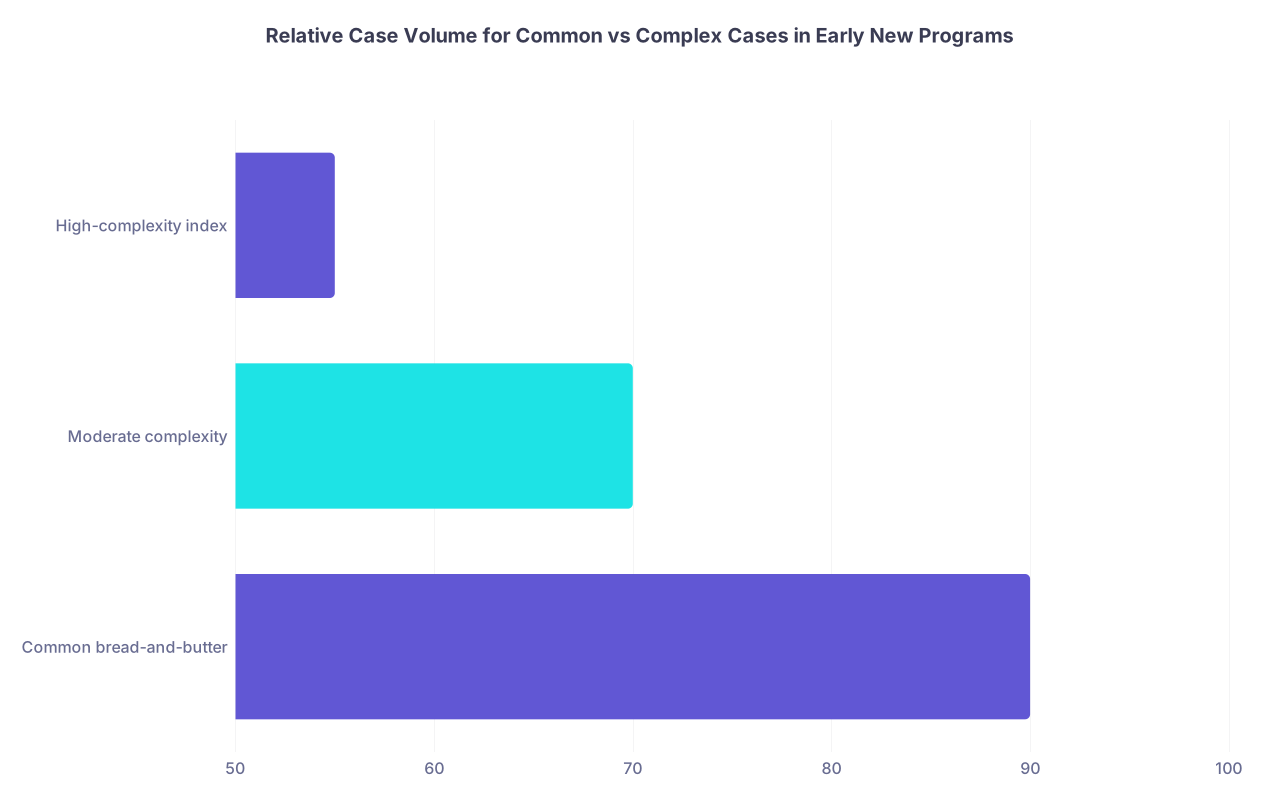
You can see the shape: new programs quickly approach median on basic stuff, but lag 30–45 percent on high-complexity categories.
5. Specific Benchmarks to Demand From a New Program
Vague statements like “we have a very busy ED” or “our surgeons are high-volume” are useless. You need hard numbers, preferably de-identified case log summaries from faculty or early residents.
Here is what you should ask for, by specialty.
General Surgery
Ask for most recent 12-month data per categorical resident equivalent (even if they don’t have residents yet, they can model it):
- Projected major cases per resident per year (PGY2–5):
- Target: 225–275 / year average, to reach 900–1,100 by graduation.
- Gallbladder cases per resident per year:
- Target: 20–25+ by PGY3–4.
- Appendectomies per resident per year:
- Target: 15–20+ by PGY2–3.
- Bowel resections per resident per year:
- Target: 15–20+ by PGY3–4.
- Trauma operative cases (laparotomies) per resident per year at senior levels:
- Target: 8–12+ (or robust trauma rotations elsewhere).
If their projected totals per graduate are below 800 major cases or if any key category (bowel, chole, hernia) is under 50 over the entire residency, that is a bright red flag.
Emergency Medicine
You want per-resident, per-year projections:
- Intubations:
- 10–15+ per year during “airway-rich” rotations. Aim for 40+ by graduation.
- Central lines:
- 10–15+ per year on critical care blocks; 25–30+ total.
- Chest tubes:
- 3–5+ per year in mid-level years.
- Total ED encounters:
- 800–1,000+ per year, depending on program length.
Many new EM programs start around 60–70 percent of these and then renegotiate airway and procedure distribution with anesthesia and ICU. You want to hear specifically how they are formalizing these agreements, not “we work it out case by case.”
Internal Medicine
For IM, focus on both volume and who actually does the procedure:
- Annual admissions per resident:
- 200–250+ inpatient admissions per year across rotations.
- Continuity clinic encounters:
- 400–600 per year (if 3-year program).
- Procedures (if part of curriculum rather than shunted to proceduralists):
- Paracentesis: 5–10 per year; 15–20+ total.
- Thoracentesis: 3–6 per year; 10–15+ total.
- Central lines: 3–6 per year; 10–15+ total.
If a new IM program says “our residents do not really need procedures, we have a dedicated proceduralist team,” interpret that as “our residents will be below national medians for hands-on procedures unless we change our system.”
OB/GYN
Drill down on both obstetric and gynecologic surgery:
- Spontaneous vaginal deliveries per graduate:
- Target: 150–200+.
- Cesarean deliveries per graduate:
- Target: 100–150.
- Total major gynecologic surgery:
- Target: 130–200 cases, with a mix of open and MIS.
Ask how volume is distributed between residents, midwives, family medicine, and APPs, not just total institutional numbers.
6. Reading a New Program’s Growth Trajectory: Lag vs Catch-Up
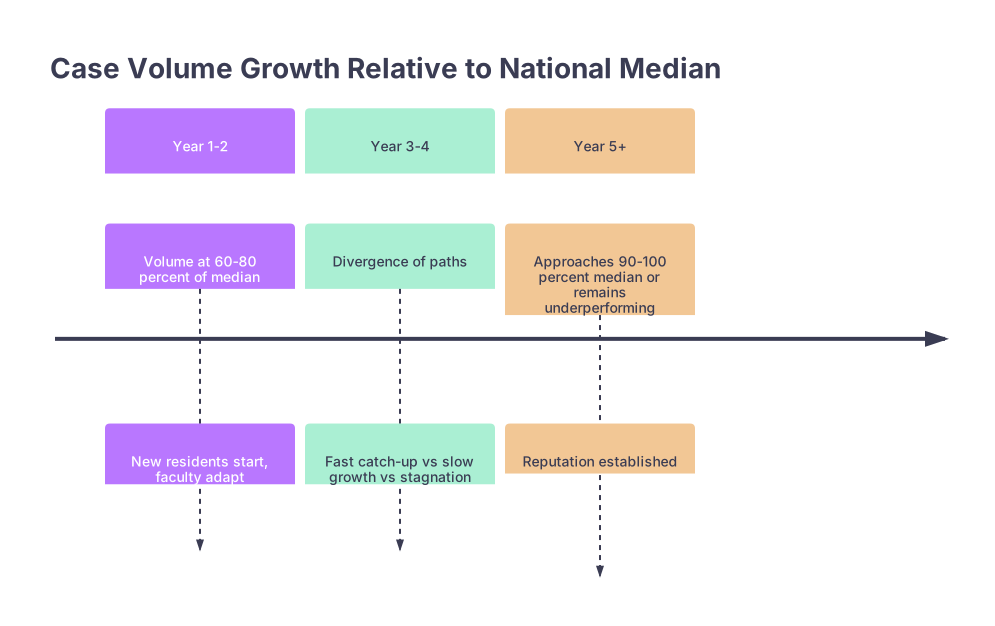
Case volume is not static. New programs often grow from “under median” to “near median” within 3–5 years if leadership is aggressive and the hospital is busy enough.
There are three trajectories I have seen repeatedly:
Fast catch-up (2–3 years):
- Hospital already high-volume.
- Leadership reassigns cases to residents early.
- Fellows are limited or intentionally moved away from core resident cases.
Slow catch-up (4–6 years):
- Moderate hospital volume.
- Complex cases limited; heavy competition with fellows or other services.
- Residents hit medians for basics, remain low on complex categories.
Chronic underperformance:
- Low or fragmenting referral base.
- No political will to reallocate procedures.
- Residents stay 30–40 percent below medians until recruitment fails and program shrinks or closes.
| Period | Event |
|---|---|
| Year 1-2 - Volume at 60-80 percent of median | New residents start, faculty adapt |
| Year 3-4 - Divergence of paths | Fast catch-up vs slow growth vs stagnation |
| Year 5+ - Approaches 90-100 percent median or remains underperforming | Reputation established |
Ask explicitly:
- “Show me your projected per-resident case curves for cohorts 1–5.”
- “What concrete steps are you taking to reach or exceed national medians by graduation for cohort 1 and 2?”
If the answer is hand-wavy, assume slow or no catch-up.
7. Using Data to Compare New Programs Head-to-Head
You are probably not choosing between “top 5 legacy university” and “random brand new community program.” You are likely choosing among:
- A mid-tier, established program with predictable medians.
- A new program at a busy but unproven hospital.
- Maybe a couple of “rebuilding” programs that behave similarly to new ones.
Here is how to prioritize the data.

Step 1: Normalize everything to “percent of national median per graduate” for key metrics.
Step 2: Separate things into:
- Bread-and-butter exposure.
- Complex/advanced exposure.
Step 3: Weight according to your goals.
If you want to be a broad-based generalist:
- Prioritize programs where total volume and bread-and-butter metrics are ≥90 percent of median.
- You can tolerate slightly lower complex volumes if fellowship is not your goal.
If you are targeting a complex subspecialty or competitive fellowship:
- You cannot afford a program that is 50–60 percent of median on complex cases.
- Better to be an above-average trainee at a stable, mid-volume program than a top trainee at an underpowered new program that cannot give you the cases.
Here is an example comparison between a mature program and two new ones:
| Program | Total Volume % of Median | Bread-and-Butter % | Complex Index % |
|---|---|---|---|
| Mature Program A | 105 | 110 | 100 |
| New Program B (Y2) | 85 | 95 | 70 |
| New Program C (Y2) | 70 | 80 | 55 |
If you are numbers-driven and planning a high-acuity career, you choose A every time. Between B and C, B is salvageable if leadership trajectory looks real. C is a risk unless they show structural changes in motion.
8. Practical Red Flags and Green Flags in New Programs
Let me condense this into operational signals you can actually use on interview day.
Green Flags
- Program director can quote case volume medians and current numbers without looking them up.
- They show you a de-identified case log summary or dashboard of volume by category.
- There is a written plan for case allocation:
- Formal policies on which service owns which procedures.
- Clear rules around resident vs fellow vs APP cases.
- Early graduates (if any) are landing fellowships or jobs consistent with their claimed training level.
Red Flags
- “We are a very busy hospital” with zero numbers to back it up.
- Heavy emphasis on technology (robotics, advanced imaging) but vague on who actually gets to do the cases.
- Multiple competing training programs (strong fellowships, anesthesia-heavy airway management, proceduralist IM services) with no formal case-sharing agreements.
- Program leadership dismisses national medians as “just numbers” or “not that important.”
| Category | Value |
|---|---|
| Programs at or above medians | 70 |
| Programs below medians | 30 |
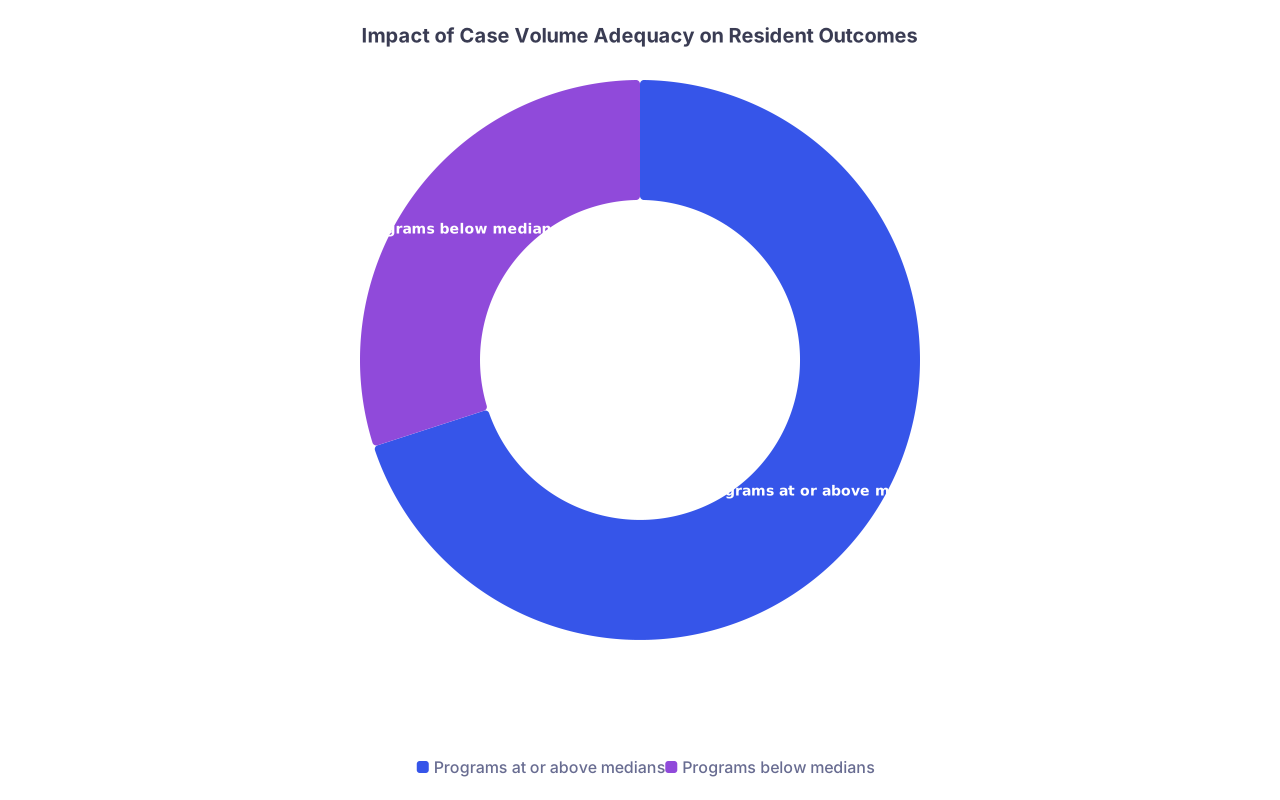
You can debate the exact percentages, but the pattern is consistent: programs operating at or above median volumes produce more confident graduates with fewer remediation issues. That is not philosophy. That is how training data shake out across specialties.
9. The Bottom Line for New Residency Programs
Let me be blunt: a new residency program should not be asking you to “take a chance” without giving you hard case-volume data. That is not a fair trade.
You should walk away with three core numbers per program:
- Projected total case/procedure volume per graduate vs national median (aim for ≥85–90 percent or a credible, time-bounded plan to get there).
- Bread-and-butter category counts (appendectomies, vaginal deliveries, basic IM admissions, etc.) relative to medians.
- Complex/index case counts (advanced surgery, high-risk procedures, critical care procedures) and how they are protected for residents.
If any of those are dramatically below national medians with no clear structural fix, assume your training will be below standard no matter how enthusiastic the leadership sounds.
Key points:
- National medians are not optional ideals. They are practical benchmarks that strongly correlate with resident competence and confidence.
- New programs tend to start at 60–80 percent of median volume, reaching parity only if leadership aggressively controls case allocation and builds referral patterns.
- Your decision should hinge less on branding and more on hard, category-level case numbers and how they compare to those national medians.