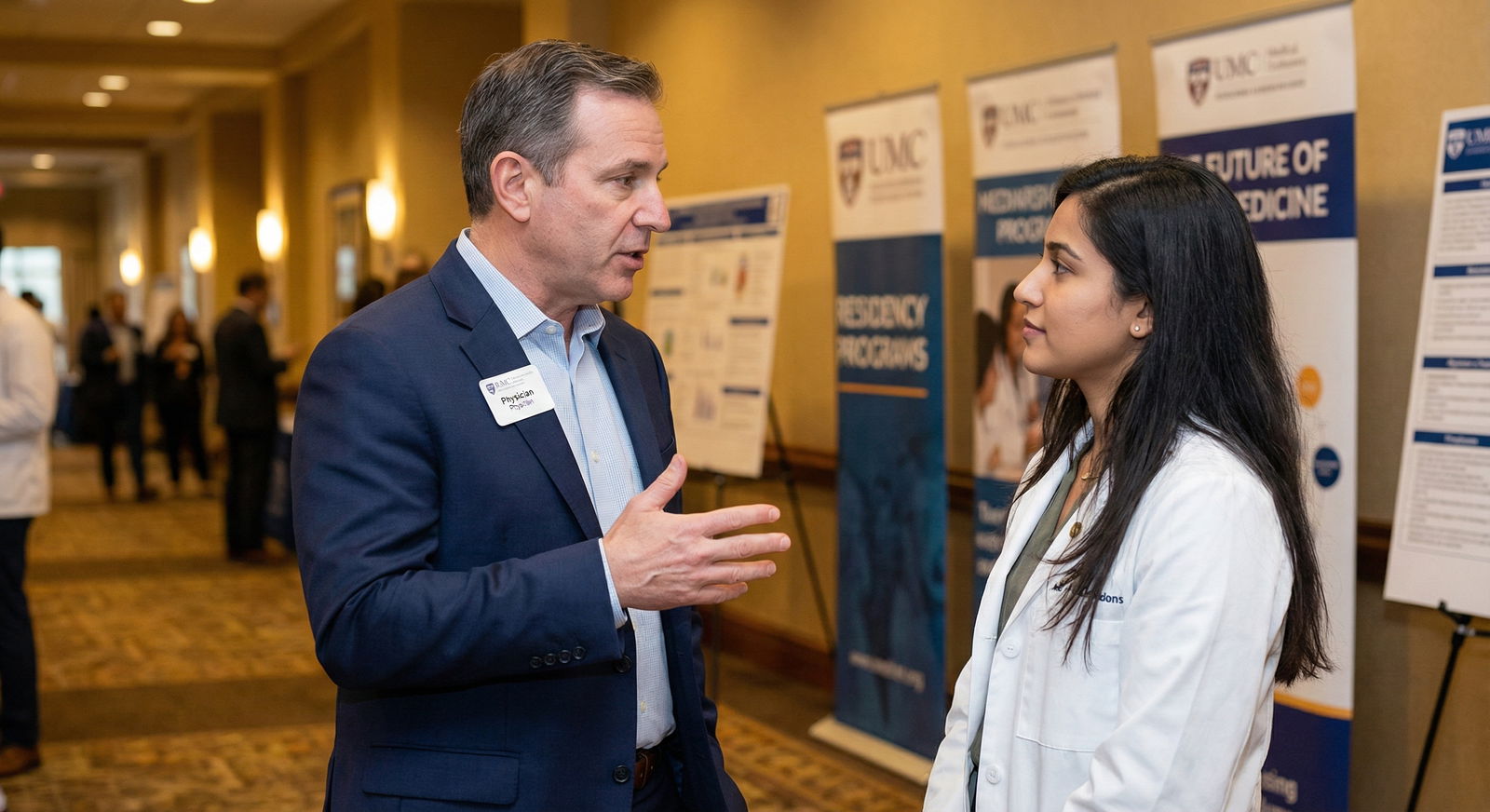
The way program directors quietly recruit for brand‑new, unproven residency programs would make most applicants’ jaws drop if they saw the playbook laid out honestly.
You are not seeing the full picture on ERAS or the website. Not even close.
Let me walk you through what actually happens behind the curtain when a hospital decides, “We’re starting a residency,” and a PD is told to go fill it. Then we’ll talk about what all of that really signals for you—and when a new program is a smart, strategic bet versus a career‑limiting mistake.
The Birth of an Unproven Program: What You Don’t See
New programs don’t start because someone woke up one day deeply committed to graduate medical education.
They start because of money, coverage, and prestige—usually in that order.
You need to understand the origin story, because how and why a program is created drives how PDs recruit and what it means for you.
Here are the three big archetypes I’ve seen over and over:
The Service Coverage Program
Administration looks at the call schedule and says: “These attendings are too expensive. We could get residents.”
Translation: They want cheaper labor. If education happens, wonderful. If not, oh well, at least nights and weekends are covered.The Prestige Play
Mid‑size system wants to look like an academic center. They want “Residency Program” on the billboard. They pitch: “We’ll be the Mayo Clinic of [Region].”
Usually, education might be decent, but infrastructure is thin. Curricula are copy‑pasted. Faculty are overextended.The Faculty Pressure Program
A group of academically inclined attendings pushes for a residency to get teaching protected time, promotion, and clout.
These are the ones that can be very good—but only if they win the political fight with administration over time and resources.
You, as the applicant, almost never get told which one you’re walking into. But the PD knows. The CMO knows. The chair knows.
And that dictates the stealth recruitment tactics you’ll see.
How PDs Quietly Recruit Before the Program Is “Real”
Before a program has a reputation, board pass data, match outcomes, or alumni success, the PD has one asset: the story they sell.
They can’t lean on “Our fellows are at MGH and Penn.” They don’t have “98% board pass rate” slides. So they recruit sideways—through relationships, whispers, and “early believer” messaging.
Here’s what actually happens.
1. The Back‑Channel Emails and Phone Calls
Long before you see anything in ERAS, the PD and core faculty are working the contacts list.
They email clerkship directors, deans, and former colleagues with messages that look something like:
“We’re starting a new ACGME‑accredited [specialty] program with strong clinical volume and committed faculty. We’re looking for a few strong, motivated pioneers. Anyone come to mind?”
If you rotated at that hospital as a student, you might get a personal email or text:
“Hey, we’re starting a residency next year. Would love to talk if you’re interested in being part of the founding classes.”
That’s not “networking.” That’s strategic early recruitment. They want people they already know, because unknowns are risky when you’re trying to survive those first site visits and board outcomes.
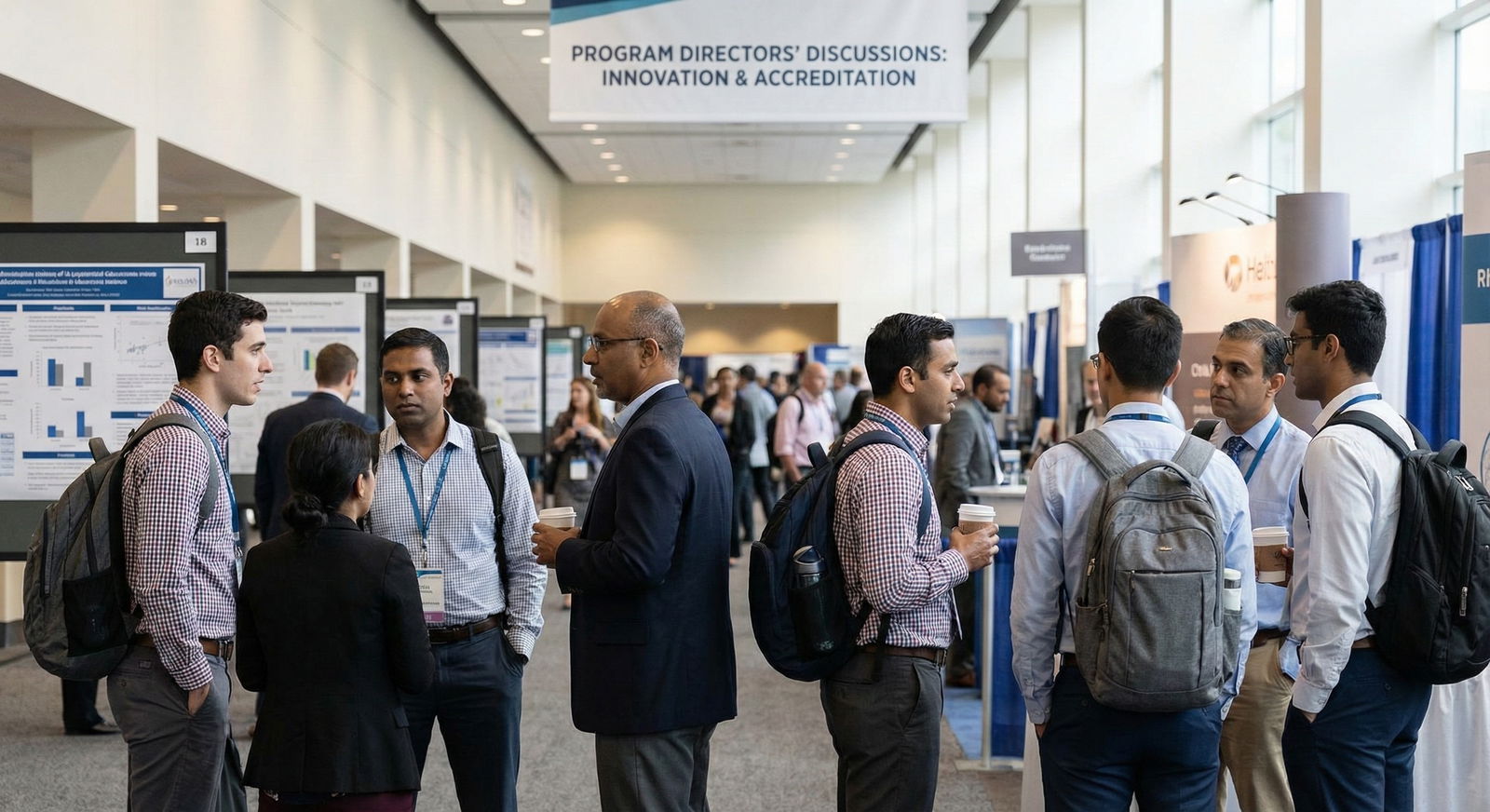
2. Handshakes at Conferences and Specialty Meetings
You think you’re just chatting with a friendly attending at a national meeting. They know exactly what they’re doing.
They’ll say:
- “We’re in the process of building a really innovative program.”
- “We’re not widely advertising yet, but we’ll be in ERAS this year.”
- “We’re looking for residents who want leadership roles from day one.”
Notice the pattern? Pioneering. Early adopter. Leadership. They’re borrowing tech‑startup language for a reason. It reframes “we have no track record” as “you get to be in on the ground floor.”
3. “Whisper Campaigns” to Home Students and Rotators
If their hospital already has medical students, they start inside.
Students will hear things like:
- “We’re getting ACGME approval soon; you should keep an eye out.”
- “We’d love to keep good people like you here.”
- “Our first residents are going to shape everything.”
The PD will invite interested students to “informal chats” or “vision meetings.” This isn’t just friendly mentorship. It’s quiet pre‑match recruiting done under the radar before there’s an established brand.
4. The ERAS “Soft Launch”
Here’s an insider move many applicants miss.
New programs will often:
- Open with relatively few positions (3–4 instead of 8–12).
- Apply to participate in the Match—but quietly.
- Not heavily market on social media or big national platforms in year one.
Why? They want a manageable first cohort. Fewer variables. If you get 4 great residents and all pass boards and match to solid fellowships, you have instant credibility. If you get 8 mixed‑bag residents and 2 fail boards, that data follows you for years.
So they recruit just enough, just quietly enough, to get a class they think they can shape.
The Tactics They Use To Hook You (Read These Twice)
Most applicants walk into this blind. They hear flattering language and “leadership opportunities” and think they’re hearing about their potential.
What they’re actually hearing is targeted marketing for a high‑risk product.
Here are the phrases I’ve seen over and over, and what they really mean.
1. “You’ll have tremendous autonomy”
Translation:
“We don’t have enough residents, midlevels, or support staff, and our attendings are stretched. You will be doing a lot, often with blurry supervision lines.”
Autonomy can be a gift in PGY‑2 and PGY‑3.
Dangerous in Month 2 of intern year.
2. “You’ll get to help build the program”
Translation:
“We don’t have our systems nailed down—didactics, evaluation tools, call structure, scholarly oversight—so we need you to tolerate chaos while we figure it out.”
Sometimes this works out beautifully. Residents shape a strong culture.
Sometimes it’s five years of, “We’re changing the rotation schedule again next block, just hang tight.”
3. “We’re not burdened by legacy; we can be innovative”
Translation:
“We don’t have a real structure yet, and the administration has not decided how much they actually care about education versus service. It could swing either way.”
Innovation is not a curriculum. It’s an aspiration.
4. “Our clinical volume is incredible; you’ll see everything”
Translation:
“This place is busy, probably understaffed, and you’re going to work. A lot.”
High volume can be phenomenal training. Or pure service grind with no teaching. The difference is all about faculty culture, not case numbers.
What Their Recruitment Style Signals About the Program
You can learn a lot about a new program from how the PD recruits, not just what they say.
Let’s decode a few common patterns.
The Over‑Eager Sell
If you’re getting love‑bombed—multiple emails, “we’re so excited about you,” lots of flattery—especially with a modest application, that’s a yellow flag.
It often means:
- They’re having trouble filling spots.
- Their usual pipeline (home students, regional schools) isn’t biting.
- Administration is pressuring them to fill at all costs.
Strong programs do not beg. They court, yes. But they don’t sound desperate.
The Vague Academic Promise
If they keep saying “academic,” “research,” “fellowship‑oriented”—but can’t give you clear, concrete details (names of ongoing projects, institutional collaborators, dedicated research time that’s actually protected), assume it doesn’t exist yet.
A brand‑new community program saying, “We’ll send people to top fellowships”—without a single faculty with those connections—is selling a fantasy, not a plan.
The “We’ll Figure It Out With You” Line
I’ve heard PDs say on interview days:
“We’re very flexible. We’ll work with you to shape your training experience.”
Sounds empowering. Often means, “We don’t have a real plan, and we’re hoping flexible language will compensate for our lack of structure.”
Founding classes need more structure, not less.
The Quiet Data You Can See (If You’re Looking)
You can’t see board pass rates or alumni fellowships from year one. But there are other signals.
| Signal Type | Good Sign | Bad Sign |
|---|---|---|
| Faculty CVs | Mix of prior teaching, PD/APD | Mostly fresh grads, no GME roles |
| Hospital Type | Busy tertiary, subspecialty depth | Small, low‑acuity, limited scope |
| Admin Support | GME office, coordinator, funding | Skeleton staff, shared roles |
| Rotations | Clear schedule, named sites | Vague, “we’re arranging” |
| Culture Stories | Specific teaching examples | Only buzzwords and slogans |
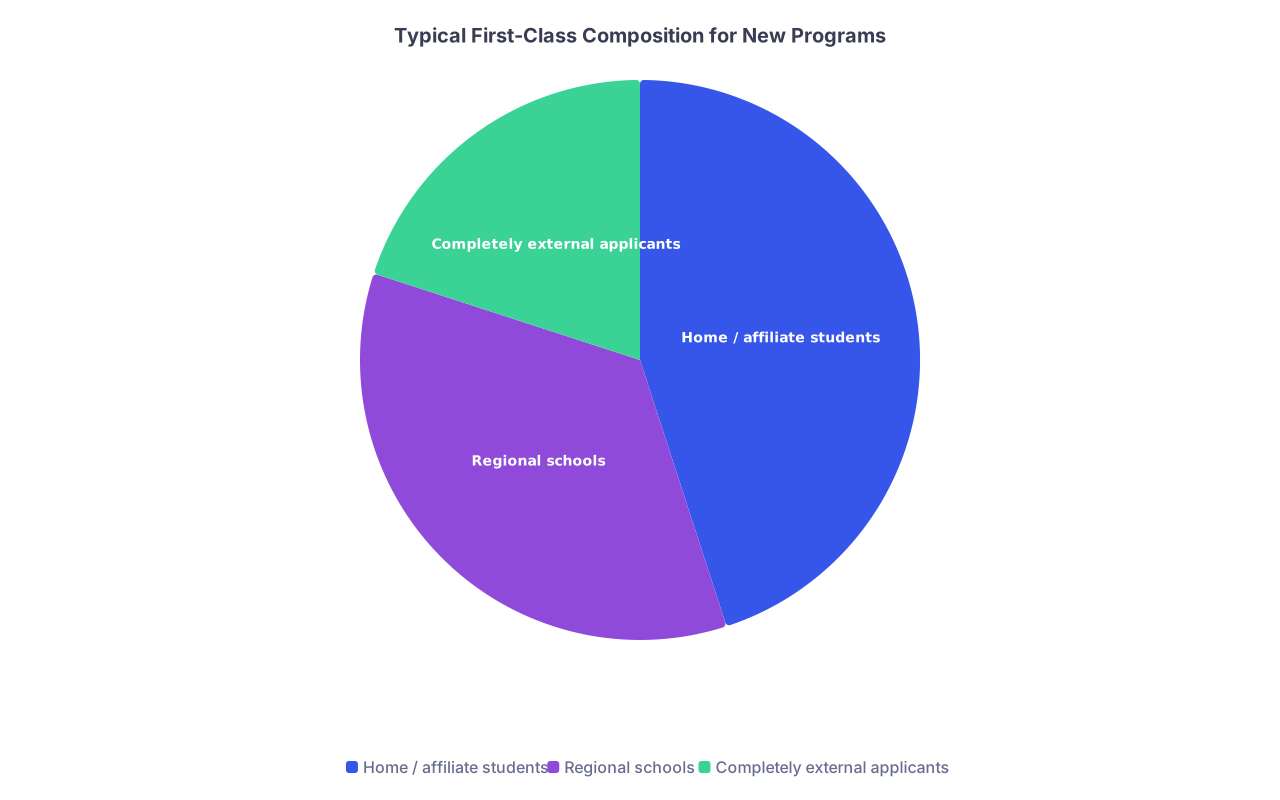
And then there’s the single strongest indicator: who they’re recruiting and where they’re getting them from.
| Category | Value |
|---|---|
| Home / affiliate students | 45 |
| Regional schools | 35 |
| Completely external applicants | 20 |
If the first class is almost entirely home students and close affiliates, it can actually be a good sign. Those students have seen the place up close and still chose to stay. That says something.
If they’re scraping together a class from far‑flung applicants with no geographic tie, especially with lower‑than‑expected academic metrics, that’s… less reassuring.
When a New Program Is a Smart Bet
Not every new residency is a trap. Some are phenomenal opportunities—if you know what to look for.
Here’s the sort of scenario I pay attention to:
- The hospital itself is legit: strong tertiary or quaternary center, big referral base, ICU beds, subspecialty depth, real pathology.
- Multiple faculty have prior GME experience at solid programs: ex‑associate PDs, former site directors, clerkship directors.
- There’s visible GME infrastructure: dedicated coordinator, DIO you can meet, established other residencies (often a very good sign).
- PD and faculty can name names: “Our intensivist trained at X, our cardiologist is faculty at Y, we have fellows from Z presenting at national meetings.”
- They can articulate a curriculum in detail: blocks, sites, conferences, evaluation system, remediation plan, scholarly oversight.
In those cases, being R1–R3 can actually accelerate your career. You get leadership titles for free: chief of your class, first QI committee reps, founding members of conference series.
Fellowship directors sometimes like that. Shows initiative and resilience. If your clinical training holds up.
When a New Program Is a Career Risk
Now the uncomfortable side.
Here’s the kind of unproven program that should make you very careful, especially in competitive specialties or if you’re fellowship‑bound:
- The hospital is service‑heavy, low‑acuity, and obviously desperate for coverage.
- Faculty have thin academic CVs and no history of resident teaching.
- The PD dodges questions about board pass support (“Our residents are motivated, they’ll do fine.”)
- Rotations are heavily off‑site with no clear supervision or teaching guarantees.
- They cannot name a single realistic fellowship pipeline or faculty mentor in your area of interest.
Here’s the real danger that almost nobody says aloud on interview day:
If you train at a weak, unknown new program, you’re the one that pays the price later—not the PD, not the chair.
Fellowship directors will quietly ask:
- “Where is this place?”
- “Do we know anyone there?”
- “Have we ever taken someone from this program before?”
If the answers are, “Nowhere, no, and no,” your application starts behind.
How PDs Quietly “Select For” Who They Want
One more behind‑the‑scenes truth: in these unproven programs, PDs often have strong preferences for who they want in the founding classes, and they recruit accordingly.
I’ve heard the conversations in selection meetings.
- “We need people who won’t freak out when things are messy.”
- “We can’t take someone who expects an Ivy League experience.”
- “We want team players who won’t run to the DIO every time the call schedule changes.”
So they look for:
- Applicants with obvious ties to the area—less likely to bail.
- Students they’ve already worked with who tolerated chaos or high workload.
- People with lower expectations because their application was borderline for stronger programs.
This is the uncomfortable part.
Sometimes, the quiet recruitment of “pioneers” is just a euphemism for finding residents who won’t complain about being overworked while the program figures itself out.
What You Should Actually Ask and Do
You cannot control how PDs recruit. But you can control how clear‑eyed you are about what their tactics signal.
Here’s how a savvy applicant approaches an unproven program.
1. Pin Them Down on Specifics
Instead of “Tell me about your program,” ask:
- “What will my exact PGY‑1 rotation schedule look like? Which hospitals, which services, how is supervision handled?”
- “What structured board prep do you have planned? Who is responsible for it?”
- “What concrete scholarly projects are currently ongoing, and how have you built resident involvement into those?”
If you get hand‑waving and “We’re still building that out,” log that mentally. Once you’re there, you become the patch for every hole.
2. Talk to People Who Are Not Selling You Anything
If possible:
- Students who rotated there.
- Fellows or attendings at other institutions who know the hospital.
- Nurses, midlevels, non‑GME staff who can tell you the real clinical culture.
They will be more honest about:
- How attendings treat learners.
- Whether administration actually values education.
- How chaotic day‑to‑day operations really are.
3. Be Honest About Your Risk Tolerance and Goals
Some of you are trying to break into a specialty that was probably out of reach at legacy programs. A new residency may be your shot. Fair.
Then the question becomes: is this place good enough that, if you never match fellowship, you’d be okay being a generalist trained there? Many people never ask that until it’s too late.
For others—especially those aiming for highly competitive fellowships—choosing a brand‑new, unproven program is a significant gamble. Occasionally a brilliant one. Often unnecessary.

| Step | Description |
|---|---|
| Step 1 | Considering a new program |
| Step 2 | High risk - deprioritize |
| Step 3 | Only if no better options |
| Step 4 | Safer to choose established |
| Step 5 | Potential high upside |
| Step 6 | Strong hospital and faculty? |
| Step 7 | Clear curriculum and support? |
| Step 8 | Your risk tolerance high? |
The Future: Why You’ll See More of This
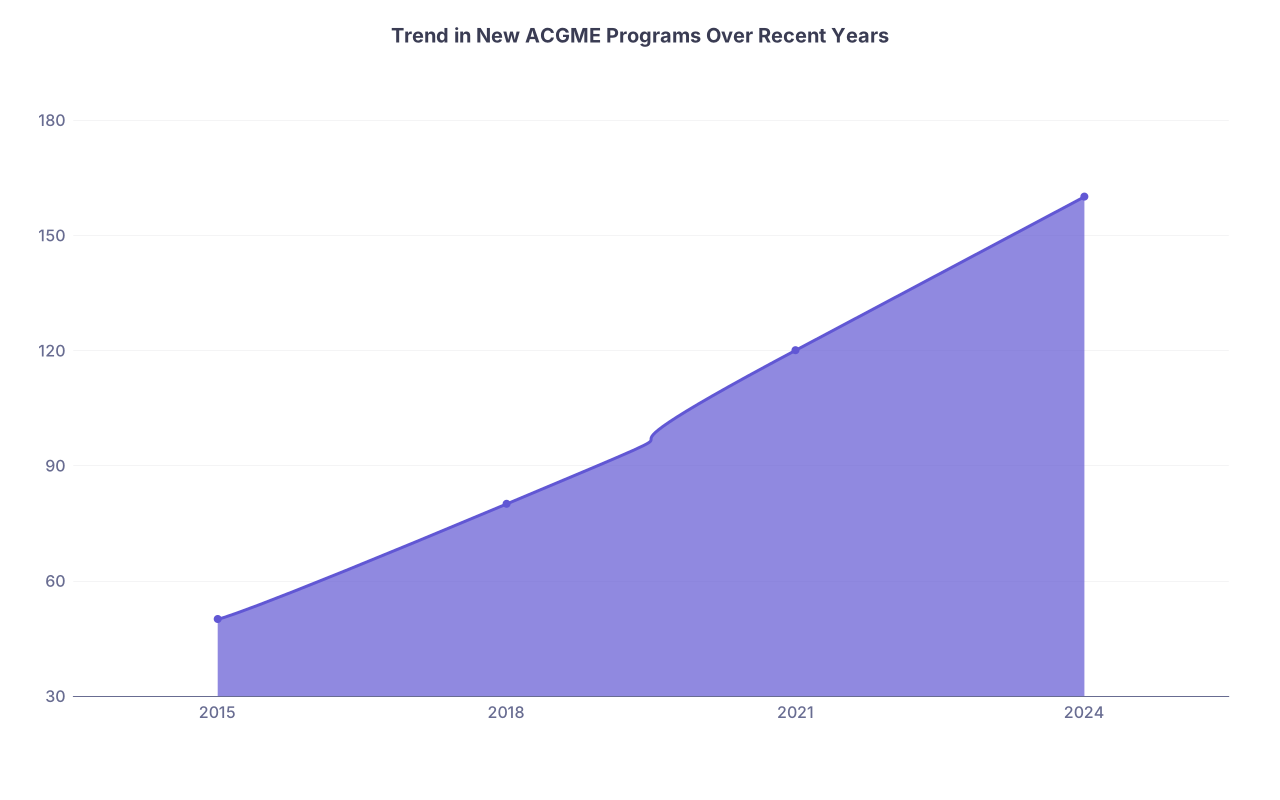
You’re not imagining it. New residency programs are multiplying.
| Category | Value |
|---|---|
| 2015 | 50 |
| 2018 | 80 |
| 2021 | 120 |
| 2024 | 160 |
Hospitals want residents. CMS funding, cheaper coverage, academic branding. And with the shift to pass/fail Step 1, programs are more willing to bet on “unproven” applicants if they can shape them in‑house.
What this means for you:
- You’ll be courted more aggressively by new, unknown names.
- Marketing will get slicker: better websites, Instagram accounts, fancy brochures.
- The gap between marketing and reality may widen.
Your job is not to be cynical about every new program. Your job is to treat each one as a risk‑reward calculation, not a glossy brochure.
FAQ (Exactly 3 Questions)
1. Is it ever smart to rank a brand‑new program as my #1?
Yes—if the fundamentals are strong. Busy, reputable hospital. Faculty with a track record in GME. Clear curriculum and support. And if the alternative is an obviously weaker, disorganized, or malignant established program. Being in the first classes of a well‑built new program can launch you. But ranking a shaky, service‑only new program over a solid mid‑tier established one is rarely a good trade.
2. How do fellowship directors really view residents from new programs?
They’re cautious but not automatically biased against you. They look harder at letters, research output, and how well they know your PD/chair. If your PD is well‑connected and your training is clearly robust, you’ll be fine. If the program is obscure, chaotic, and your letters are generic, you’ll feel that disadvantage more—especially in competitive subspecialties.
3. What’s the biggest red flag in how a PD recruits for a new program?
Two things together: heavy flattery/desperation combined with vagueness on specifics. If they’re chasing you hard but cannot clearly answer questions about call structure, supervision, didactics, and board prep, they’re not recruiting for your education. They’re recruiting for coverage. That’s when you step back and remember: you’re not just filling their schedule. You’re betting your career.
Key takeaways:
New programs recruit quietly through relationships, flattery, and “pioneer” language because they have no track record to sell.
How they recruit—and what they dodge when you ask specifics—tells you more than any brochure.
Treat every unproven program as a calculated bet: sometimes brilliant, often risky, and never something to walk into blindly just because a PD made you feel special on Zoom.