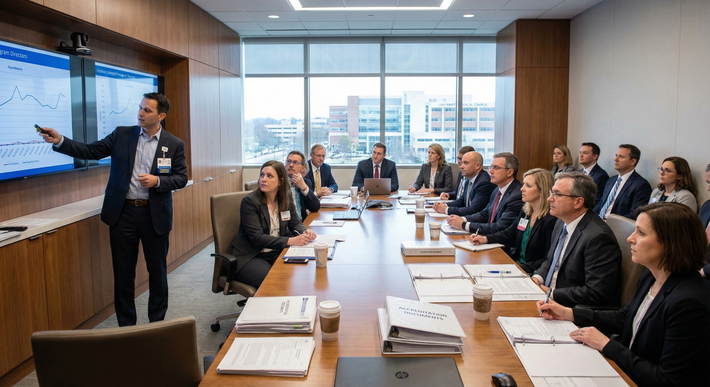
I once walked into a new residency program the night before an ACGME site visit and found the faculty doing what every new program does when panic finally peaks: relabeling binders, rehearsing answers, and trying to make the sim lab look busier than it really was. One attending was literally asking whether a resident lounge coffee machine should be moved into frame because "it shows wellness." That's the level of theater we're talking about.
Let me tell you what really happens. Site visitors have seen all of it. The staged clinic tour. The suddenly polished conference room. The faculty who magically become available on visit day after being absent for six months of curriculum design. None of this fools anyone who's done even a handful of reviews. The biggest mistake new programs make is thinking the visit is a performance. It isn't. It's an audit of whether your culture matches your paperwork, whether your leaders can build a training environment under stress, and whether residents are safe telling the truth.
This article is for the people who want the real playbook. Not the public one. The one that program directors whisper about after the meeting ends.
This article is for educational purposes only. It is not financial advice, not legal advice, and not tax advice. Figures vary by individual circumstances, so consult a qualified professional before acting.
The Visit You Don't See: What Really Happens Before the Site Visitor Knocks
By the time the site visitor shows up, the first draft of your story has already been written.
That's the secret nobody says plainly enough. The real evaluation starts months earlier with the document package, ADS entries, faculty rosters, block schedules, scholarly activity records, policies, committee minutes, and whatever else your institution uploaded thinking quantity would substitute for clarity. It doesn't. A sloppy packet tells on a program before a single interview starts. If your policies contradict your rotation grids, or your faculty CVs look padded, or your research plan reads like it was copied from another specialty, the visitor already has concerns. Quiet ones. The dangerous kind.
New program leaders often over-prepare the visible parts of the visit because they're anxious about appearances. So they script resident answers, overbuild the day, and choreograph every hallway interaction. Bad move. Site visitors know this routine cold. When a program feels too polished, they don't relax. They get suspicious. They start looking for seams. Why does every resident use the same phrase when describing supervision? Why does every faculty member suddenly mention "graduated autonomy" in exactly the same wording? Why is the call room newly renovated but nobody can explain how backup coverage works after 2 a.m.? That's how over-preparation backfires.
And yes, programs are compared with peers. Constantly. Not always with a formal benchmark slide on the table, but in the visitor's head and later in committee discussion. If a new internal medicine program claims robust ambulatory training, somebody is mentally stacking that claim against what comparable new programs have offered. If your emergency medicine program says simulation is central to the curriculum but your schedule shows thin sim exposure and no clear faculty leadership, that gap matters more than your mission statement. The comparison isn't always fair. It is always happening.
Here's another truth most people only hear after a drink: some of the most candid feedback never appears in the official report. I've seen site visitors soften language in writing but speak much more bluntly over dinner with designated institutional officials or senior faculty. Off the record, they'll say things like, "Your PD is carrying too much alone," or "Your faculty seem committed, but I don't believe your hospital is fully invested," or the killer: "Your residents are more guarded than they should be." Those comments matter because they often predict exactly what the Review Committee will focus on later.
So if you're leading a new program, stop obsessing over whether the conference room is tidy. Start asking whether your documents tell one coherent story, whether your faculty actually know the curriculum they allegedly built, and whether your residents would give the same answer in private that leadership gives in public. That's the visit you don't see. And it's the one that counts.
The Hidden Checklist: What Site Visitors Are Actually Looking For
The published ACGME requirements are the floor. Not the ceiling. Not the game. The real game is whether your program feels stable, credible, and educationally alive.
Every experienced site visitor carries a shadow checklist. It's not secret in the conspiratorial sense. It's just the stuff everyone in accreditation learns to read between the lines. Program culture. Leadership maturity. Faculty ownership. Whether residents are being trained or merely used. That's what separates a program that squeaks by from one that earns trust.
The first hidden marker is stability. And nothing screams instability louder than early faculty turnover. If a new program loses key teaching faculty in the first 18 months, especially the associate program director, core faculty, or major rotation champions, that gets noticed fast. Officially, the issue may be framed as continuity or adequacy of resources. Unofficially, everyone knows what they're asking: why are people leaving before the first class is even settled? I've watched otherwise promising programs get tagged because the site visitor sensed the faculty weren't buying what leadership was selling. You can explain one departure. Three departures become a pattern.
The second marker is onboarding. New programs love to talk about vision and innovation, then completely botch basic orientation. Residents arrive not knowing escalation pathways, call expectations, evaluation systems, or where to go when a service gets unsafe. Faculty aren't much better. Attendings who can't explain milestone evaluation, direct supervision rules, or the structure of didactics tell the visitor that the program launched before it was ready. That is a self-inflicted wound.
The third marker is whether diversity and inclusion are real or decorative. Programs still try to get away with polished statements and one committee photo. That doesn't cut it anymore. Visitors look for who actually sits on committees, who has authority, who mentors whom, and whether underrepresented faculty and trainees have meaningful presence in leadership pathways. If your diversity work lives only in recruitment brochures, you will be exposed. Fast.
Simulation infrastructure is another quiet divider between serious programs and aspirational ones. I'm not talking about owning expensive mannequins for a brochure photo. I mean scheduled access, faculty who know how to debrief, cases tied to curricular goals, and actual resident participation logs. Plenty of programs have equipment. Far fewer have a functioning simulation curriculum. Site visitors know the difference in about ten minutes.
Scholarly activity also matters earlier than people expect. New programs sometimes think they'll "build research later." Wrong. If there is no visible scholarly culture before the first class arrives, visitors assume it will remain thin once service demands ramp up. They look for mentors, project pathways, IRB familiarity, QI infrastructure, and whether residents have somewhere real to plug in. Not fantasy. Not future plans. Existing lanes.
Then there's resident advocacy, which is more important than most institutions understand. Who speaks for residents when schedules get ugly? Is there a forum that actually changes things? Can trainees identify a mechanism for raising concerns without retaliation? If the answer is fuzzy, the program looks fragile. Strong new programs don't wait for a crisis to build advocacy structures. They hardwire them from day one.
What site visitors are really testing is whether your program can survive contact with reality. Every new program looks ambitious on paper. The strong ones have built systems that still function when a faculty member resigns, clinic volumes spike, the EMR melts down, and a resident says, "This rotation is unsafe." That's the hidden checklist. Resilience. Credibility. Adult supervision.
The 'Off-the-Record' Fact-Finding: How They Interview Your Residents and Faculty
This is where the visit is won or lost.
Residents get private time away from leadership for a reason. The site visitor is trying to answer one central question: what happens here when nobody important is in the room? That's the truth test. And good visitors know how to get to it.
They don't just ask, "Are you happy?" That's useless. They ask whether faculty actually teach on rounds or mainly move the list. They ask who comes in when a patient decompensates at night. They ask whether residents feel comfortable disagreeing with an attending. They ask how call works when census explodes. They ask whether evaluations are meaningful or just generic praise pasted every quarter. They ask for examples. Specifics. "Tell me about the last time you raised a safety concern." "Who reviews your duty hours?" "When was the last conference canceled and why?" Those details expose everything.
And yes, they push. If the residents seem rehearsed, the questioning gets sharper. I've seen visitors sit quietly after a polished answer and wait out the discomfort until somebody finally says, "Well, actually..." That phrase has probably generated more citations than any policy lapse in modern graduate medical education.
The hot-button topics are predictable: autonomy, supervision, psychological safety, service versus education, and fatigue. But the one that blindsides new programs is inconsistency. If one resident says call is fine and another says they routinely stay beyond limits with no backup, the visitor won't average those stories out. They'll investigate the discrepancy. If one faculty member says remediation is structured and another clearly has no idea how a struggling resident is supported, trust drops immediately.
Psychological safety matters more now than many old-school leaders realize. A resident who says, "I can ask for help and nobody humiliates me," gives a program oxygen. A resident who says, "It depends who's on," is signaling danger. Visitors hear that. So does the Review Committee. Programs still underestimate how much tone matters. You can meet every formal requirement and still look unsafe if your trainees seem wary, guarded, or afraid to say basic things in front of faculty.
One off-hand complaint can absolutely sink momentum if it points to a systems problem. I'm not talking about a resident whining that cafeteria food is bad. I mean a casual comment like, "We usually just log our hours later so it doesn't become a problem," or "The attending is technically available from home," or "Conference is protected unless the service is really busy, which is most weeks." That's enough to turn a smooth visit into an adverse report because it suggests the official structure is fictional.
Faculty interviews matter too, though people talk about them less. Visitors look for alignment. Do core faculty know the aims of the program? Can they explain how residents are assessed? Are they invested in development, or are they just names on a roster to satisfy requirements? Nothing tanks credibility faster than "core faculty" who look surprised to be called core faculty.
Here's the blunt version: you cannot spin your way through private interviews. If your residents trust the program, that trust comes through. If they don't, that comes through even faster.
The Timeline Trap: Why New Programs Get Citated Even Before Their First Graduates
A lot of leaders think early citations mean failure. They don't. They mean the ACGME is testing whether you can respond like a mature program.
First-year citations are common because new programs almost always overestimate readiness. They think approved curriculum equals functional curriculum. It doesn't. The usual early trouble spots are painfully predictable: weak research mentorship, inadequate simulation time, murky supervision structures, and duty hour tracking that exists on paper but not in actual practice. If residents don't understand when to log exceptions, who reviews them, or whether reporting creates blowback, your tracking system is performative. Site visitors can smell performative systems instantly.

Weak infrastructure gets penalized harder than honest growing pains. That distinction matters. Nobody expects a brand-new program to run like one with twenty years of institutional muscle. But visitors do expect clear ownership, quick corrections, and evidence that leadership knows where the weak points are. A program that says, "We identified a simulation shortfall and already expanded faculty-led sessions with documented attendance," looks coachable. A program that says, "We're working on it," looks unserious.
Warning citations aren't the end unless leadership becomes defensive. Programs recover all the time when they treat the citation as a management problem instead of a personal insult. The winners move fast, assign owners, document every corrective step, and communicate like adults. The losers argue semantics and waste months trying to prove the visitor was unfair.
The Post-Visit Power Play: What Happens After the Door Closes
After the visit, the mythology really starts. People imagine a giant faceless process. It's not faceless at all. A single site visitor typically shapes the first formal narrative, and then the Review Committee filters that narrative through its own standards, biases, and politics. That's where wording becomes destiny.
The report isn't just data. It's interpretation. Which concerns are framed as isolated? Which are framed as structural? Which resident comments are treated as anecdotal versus representative? Those decisions matter because Review Committee members are reading a distilled version of your program, not reliving the day themselves.
And yes, politics matter. Not petty politics, usually. Professional politics. Specialty expectations. Institutional reputation. What counts as forgivable immaturity versus dangerous instability. Many RC members are former program directors, former designated institutional officials, or faculty who have spent years in the accreditation trenches. That's good news and bad news. Good because they understand how messy new programs are. Bad because they instantly recognize excuses, cosmetic fixes, and leadership spin.

Here's the move most new programs underuse: the request for reconsideration. If a program acts within 30 days and submits a serious, evidence-heavy response, it can absolutely shift the outcome. I've seen citations softened or functionally neutralized because the response packet was better organized than the original self-study. Emails showing implemented changes. Signed faculty agreements. Revised schedules already in force. Screenshots of duty hour review workflows. Meeting minutes documenting resident input. This stuff works because it proves execution, not intention.
What fails? Emotional rebuttals. Long letters about how hard everyone worked. Defensive paragraphs attacking the site visitor's interpretation. Nobody cares. The Review Committee wants evidence that the problem is fixed or fixable. Full stop.
Winning the Long Game: How New Programs Turn Warnings into Full Accreditation
The programs that eventually earn full accreditation after a rough start all do the same thing: they stop managing optics and start managing systems.
Immediate corrective action carries more weight than eloquent promises. If you say mentorship was inconsistent, then assign mentors that week, create logs, require sign-offs, and show meeting records. If simulation was weak, don't just buy equipment. Launch sessions, track attendance, and tie cases to milestones. If residents felt unheard, establish a functioning forum with follow-through and minutes. Evidence beats aspiration every time.
The smartest new programs build a formal mentorship pipeline early, before they need it for damage control. Not just faculty advisers on paper, but actual vertical support, peer support, career coaching, and escalation channels. Visitors read that as cultural maturity. They should. It means the program is thinking beyond survival.
And here's the best-kept secret in this whole process: credibility improves when programs invite scrutiny before they're forced to. An unofficial check-in visit, external mock review, or consultation from someone who has served on an RC can change the trajectory of a shaky program. Why? Because it shows confidence, transparency, and willingness to be corrected before the next formal cycle. Strong leaders don't hide from review. They use it.
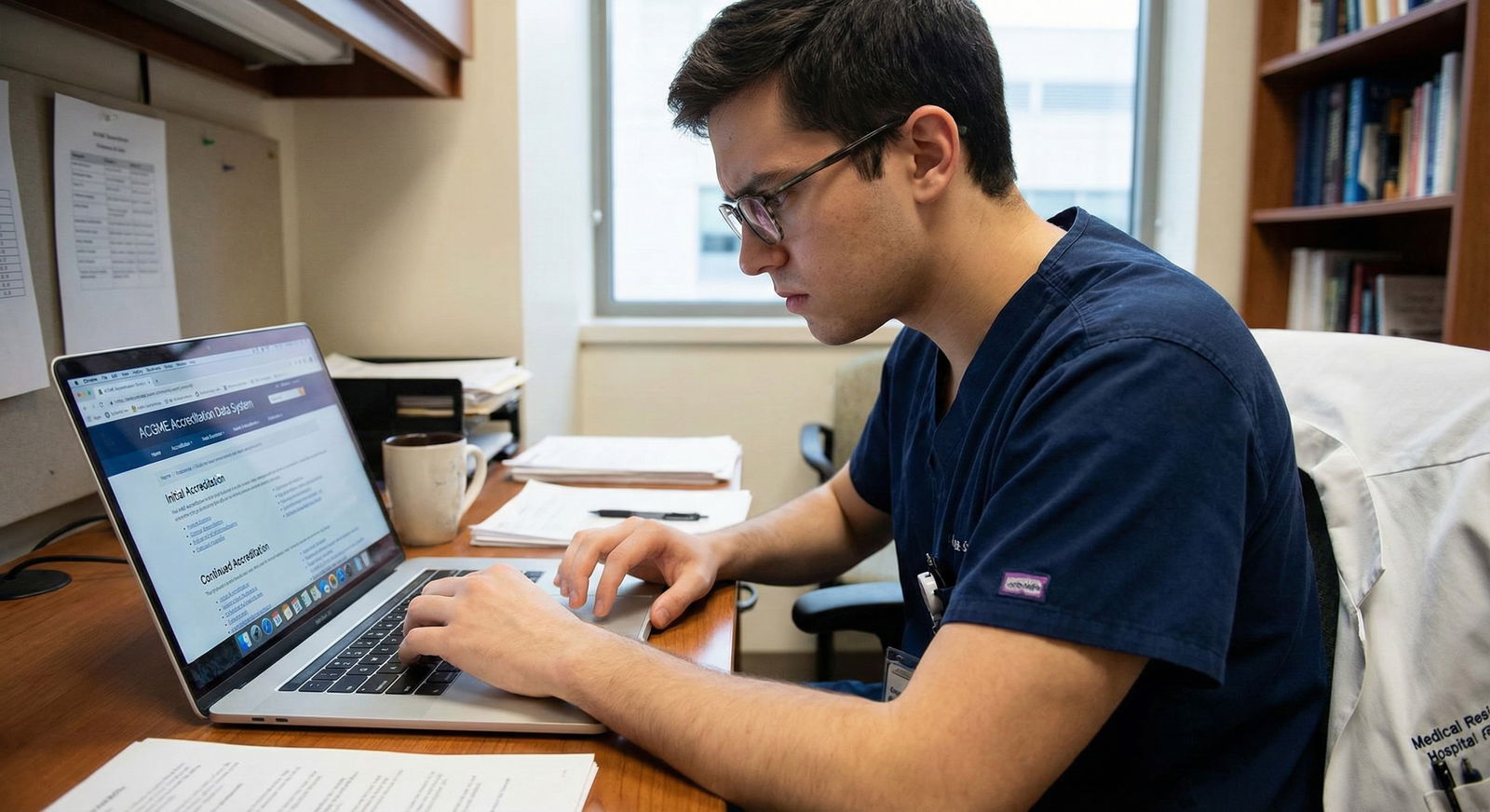
That's where the future is headed, by the way. New program evaluation is becoming less about static compliance and more about adaptive capacity. Can your program identify problems early? Can it protect trainees under pressure? Can it prove change with receipts? That's the new standard, and honestly, it should be. Medicine doesn't need more residency programs that look polished in binders and fall apart at 2 a.m. It needs programs with backbone.
If you're building one now, remember this: the site visit is not a day. It's a stress test of your leadership culture. Pass that, and the paperwork becomes manageable. Fail that, and no binder on earth will save you.