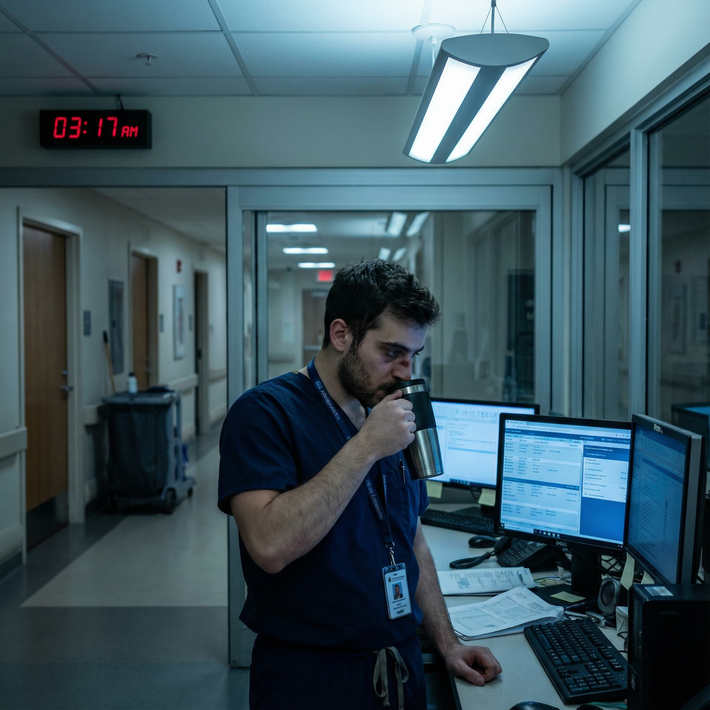
Night shifts do not merely tire female physicians. They scramble the endocrine machinery that runs the menstrual cycle, and the people writing the schedules know it.
The Silent Epidemic: When Circadian Chaos Hits the Gynecologic Floor
I have sat in enough faculty meetings to hear the quiet version of this conversation. Program directors rarely put menstrual disruption on the orientation slide deck. It complicates call pools, makes floating coverage messier, and forces uncomfortable admissions about biology colliding with logistics. Attendings, though? They know. They have lived it. They have watched excellent residents bleed through shifts, miss cycles entirely for months, or white-knuckle through dysmenorrhea while running a code.
This is not "just stress." It is not psychosomatic fragility. The endocrine data linking circadian misalignment to worsened menstrual symptoms, menorrhagia, dysmenorrhea, cycle irregularity, is robust and has been sitting in the literature while training culture treated it as private inconvenience. Female residents and attendings absorb a double hit: the same sleep debt and light exposure that degrade cognition also pull the hypothalamic-pituitary-ovarian axis off its rails. You feel it in heavier flow, sharper cramps, shorter or longer cycles, and PMS that suddenly feels like a different disease.
The insider truth is simple. Leadership treats this as an individual coping problem because acknowledging it as a systems physiology problem would require scheduling flexibility most programs refuse to build. Meanwhile, the women doing the work keep showing up with heating pads stuffed in white coat pockets and NSAIDs timed to the minute. That pattern is not resilience theater. It is evidence of a mismatch between human reproductive biology and the 7-to-7 swing that hospitals still treat as neutral.
You are not imagining the correlation. Your body is reporting it accurately.
Chronobiology 101: Why Your Body Hates the 7 PM to 7 AM Swing
Start at the master clock. The suprachiasmatic nucleus sits in the hypothalamus and sets the tempo for nearly every hormonal cascade you depend on. It reads light. When you flood your retinas with fluorescent and screen light at 2 AM, you do not get a mild adjustment. You get aggressive melatonin suppression, steeper and more complete than anything daylight produces in a normal diurnal pattern. Melatonin is not just a sleep hormone. It is a quiet regulator of reproductive timing.
Downstream, the damage lands on GnRH. Gonadotropin-releasing hormone needs clean pulsatility to drive LH and FSH correctly. Disrupted melatonin scrambles that pulse generator. Ovulation becomes less reliable. Corpus luteum function wobbles. Progesterone support thins out. Estrogen peaks shift. The result looks like the cycles you see in clinic when a patient's axis is under metabolic or circadian assault: irregular bleeding, anovulatory stretches, luteal phase insufficiency, and amplified prostaglandin-driven pain.
Think of the SCN as a pacemaker. Flip-flopping days and nights is the hormonal equivalent of inducing arrhythmia in the HPO axis. You would not shrug at a patient whose sinus node kept getting reset every third night and then act surprised when cardiac output suffered. Yet that is exactly how training culture frames menstrual chaos under shift work: annoying, personal, not structural.
The light hit matters more than most residents realize. Blue-enriched hospital lighting at night is not ambient background. It is a pharmacologic-level signal telling the brain it is still daytime. Melatonin drops. The rest of the cascade follows. You cannot out-caffeine that signal. You cannot "tough it out" into normal GnRH rhythms. The physiology does not negotiate.
That curve is the mechanism in plain numbers. The night-shift line never gets to build the nocturnal melatonin peak your HPO axis expects. No peak, no clean downstream signaling. Repeat that pattern three or more times a month and the cycle stops behaving like the textbook version you memorized for boards.
What the Literature Actually Says: Data Over Anecdotes
Anecdotes fill every call room. The literature is colder and more consistent. Rotating night shift workers show roughly 20-30% higher prevalence of clinically significant PMS severity compared with day-only workers. That is not a soft quality-of-life finding. It tracks with measurable endocrine and inflammatory change.
Dysmenorrhea gets worse for a concrete reason. Circadian misalignment and the sleep fragmentation that comes with it elevate systemic inflammatory markers, CRP and IL-6 among them. Higher inflammatory tone drives higher prostaglandin production in the endometrium and myometrium. More prostaglandins mean stronger uterine contractions and more ischemic pain. The cramp is not "in your head." It is amplified prostaglandin signaling on top of a lowered pain threshold.
Cycle length variability is equally documented. Healthcare workers logging more than three night shifts per month show elevated rates of both oligomenorrhea and polymenorrhea. The axis does not settle into a stable follicular-luteal rhythm when the SCN keeps getting yanked. Some months you skip. Some months you bleed twice. Neither is mysterious once you accept that GnRH pulsatility is light- and sleep-sensitive.
Sleep architecture makes perception worse. Loss of consolidated REM and deep sleep lowers pain thresholds. The same prostaglandin load that produced a manageable 4/10 cramp on a normal sleep schedule becomes a 7/10 when you are running on fragmented daytime sleep after a string of nights. Residents routinely underestimate this multiplier. They dose ibuprofen the same way they always did and wonder why it fails.
I have watched strong residents chalk this up to "being bad at residency." That framing is wrong. The data describes a predictable physiologic response to an unnatural light-dark and sleep-wake schedule. Your ovaries are not failing you. The schedule is assaulting the control system that runs them.
The Gynecologist's Paradox: Treating Patients While Ignoring Ourselves
Here is the ugly irony. Female OB/GYNs and residents in women's health know this physiology better than almost anyone in the building. They counsel patients on shift work and fertility, on melatonin and cycle regularity, on inflammation and pain. Then they walk into a month of nights and apply none of the protections they would hand a patient on a laminated after-visit summary.
I have heard attendings pull trainees aside, quietly, never in conference, and say the practical thing: go on continuous combined oral contraceptives for the hard rotations. Suppress the cycle. Make bleeding predictable or absent. Natural cycling becomes a liability when your call schedule has no respect for a luteal phase. That advice rarely appears in formal mentoring documents. It travels by hallway and text thread because admitting it out loud collides with the culture's preference for stoicism.
Stigma still runs the show. Reporting heavy bleeding, disabling cramps, or cycle collapse still risks the quiet label: less resilient, not built for this, will be a problem on call. So people delay. They wait until ferritin tanks, until they are soaking through in the middle of a long case, until burnout is already cemented. I have seen anemia get worked up as "possible GI source" before anyone asked about menstrual volume under nights. That is not thorough medicine. That is willful blindness dressed as toughness.
Performance takes a hit even when pride pretends otherwise. Heavy menstrual bleeding episodes correlate with measurable drops in cognitive vigilance and fine motor consistency. Patients may never clock the difference. Your co-residents might. You will feel it in delayed decisions and a hand that does not track quite as cleanly. Managing the bleed and the pain is not self-indulgence. It is operational risk control.
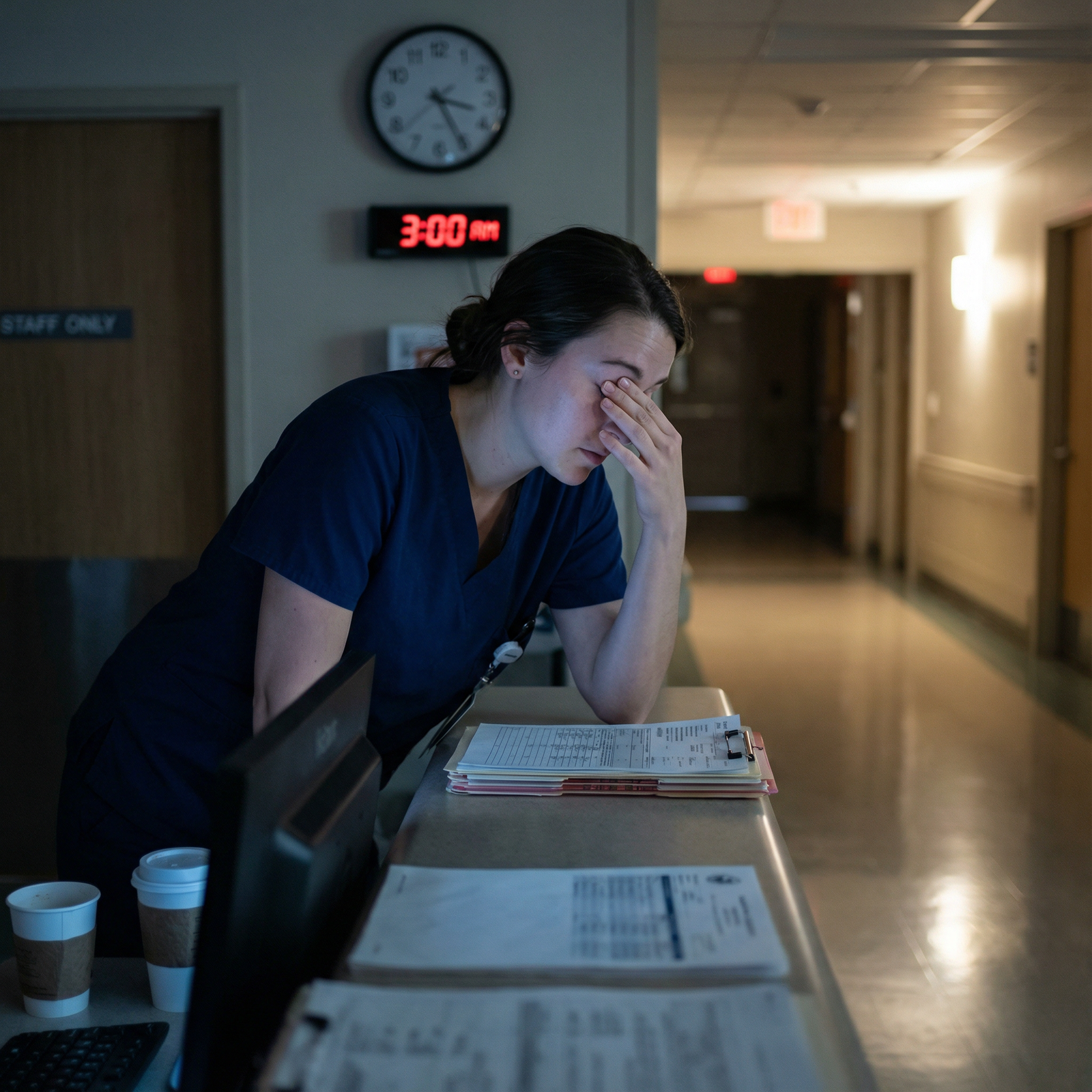
The paradox persists because the system rewards people who never mention it. That reward structure is backward, and senior faculty who still enforce it are protecting scheduling convenience over trainee physiology.
Strategic Survival: Beyond "Just Drink Water"
Reactive ibuprofen at 3 AM is a losing strategy. You want prevention timed to the biology.
If your program gives any schedule flexibility, block nights away from your expected menses when you can see it coming. Do not wait to call out in pain. Front-load the recovery nights. Most chiefs will accommodate a specific swap far more readily than an emergent absence, especially if you frame it as performance maintenance rather than fragility.
Supplementation is not wellness fluff when dosed correctly. Senior faculty who have lasted in this environment often start magnesium glycinate and solid omega-3s about ten days before expected menses. Magnesium supports smooth muscle relaxation and can blunt cramp intensity. Omega-3s push the inflammatory balance away from prostaglandin excess. This is not a cure. It is load reduction, and it works better than pretending hydration alone fixes an HPO axis under circadian attack.
Pharmacologically, continuous combined oral contraceptives remain one of the cleanest tools for residents who want cycle control during brutal blocks. NSAID strategies work better as a scheduled taper starting before pain peaks rather than rescue dosing after prostaglandins have already surged. Treat this as a performance protocol. You would pre-medicate for a procedure. Premedicate for your own physiology under nights.
Light hygiene is the cheapest lever almost nobody pulls. Amber or red-tinted glasses on the commute home after a night shift protect whatever residual melatonin signaling you have left and make daytime sleep more restorative. Blackout the room like you mean it. The goal is not perfect circadian realignment, that is impossible on a rotating schedule, but reducing the depth of the crash so the next cycle does not absorb quite as much damage.
None of this requires heroism. It requires treating your own axis with the same seriousness you give a patient's.
Reflections from the Chief's Desk: Changing the Culture
Leadership owns more of this than it admits. Duty hour conversations already track sleep and fatigue. Menstrual health belongs in the same room. Not as a special accommodation that marks someone as difficult, but as a predictable physiologic consequence of circadian disruption that any program running nights should plan for. Normalize the conversation and the stigma shrinks. Keep it taboo and you will keep losing good people to silent anemia, silent burnout, and the quiet decision to leave procedural fields.
You are not failing because your body reacts hard to nights. Your biology is doing exactly what evolution built it to do in the presence of light at the wrong hour and sleep at the wrong time. The environment is the aberration. Once you see the mechanism, SCN, melatonin collapse, GnRH pulse disruption, inflammatory uptick, lowered pain threshold, you stop moralizing the symptoms and start managing the inputs.
That shift, from passive suffering to active control, is the real survival skill. Use the data. Use the tools. Demand that the people building the call schedule stop pretending this axis is optional. Your cycle is not a character test. It is physiology under load. Treat it accordingly.