
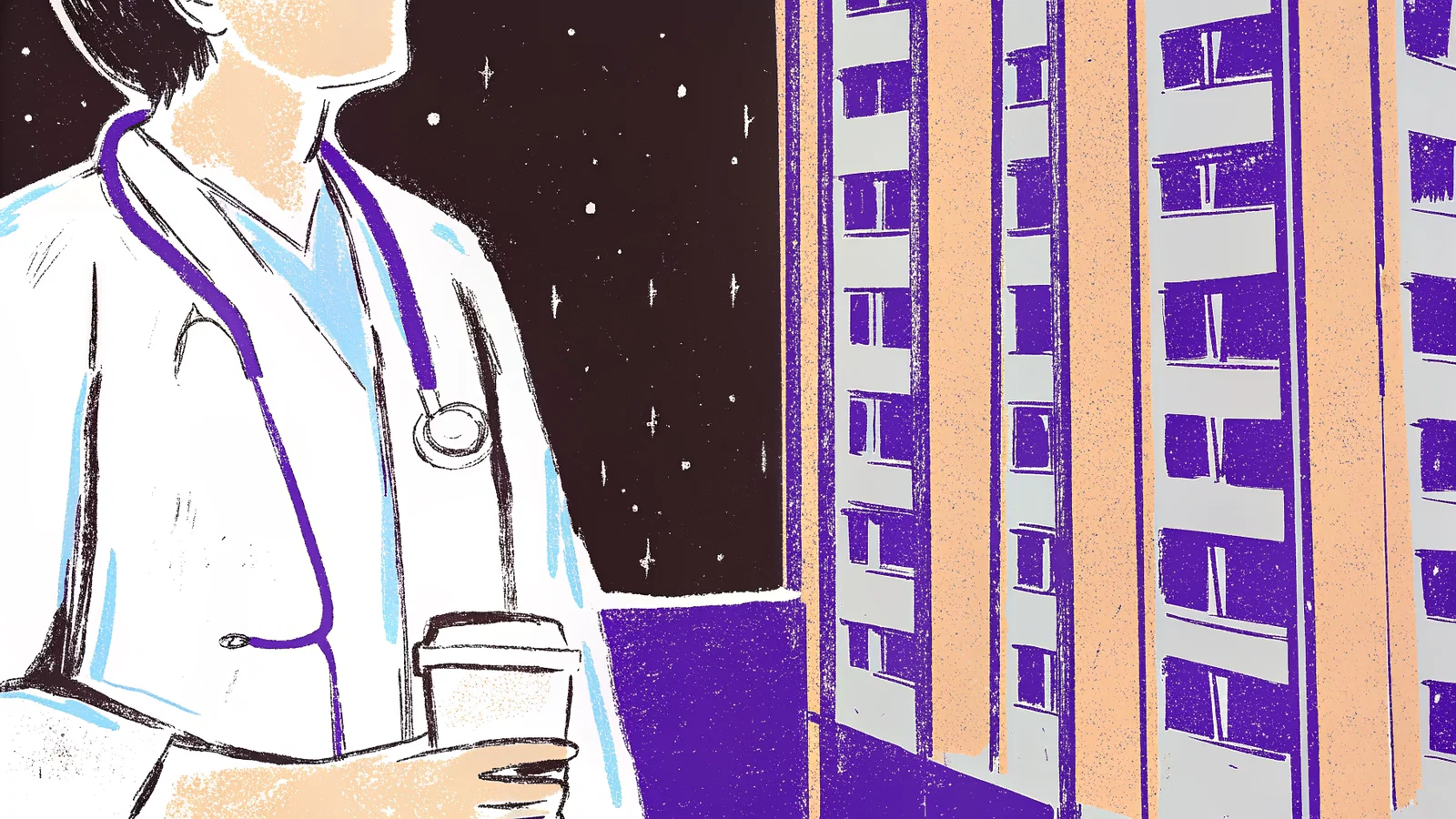
At 3:14 AM, the hospital is a ghost town. The bright, collaborative energy of multidisciplinary morning rounds is dead. The attendings are at home, fast asleep in their beds or nominally reachable via a telephone call that you know they do not want to receive.
You are standing in a dimly lit nursing station, holding a pager that will not stop beeping, responsible for sixty to one hundred sick human beings.
This is night float. And it breaks more residents than any other block in graduate medical education.
The Silent Crisis: Why Night Float Breaks Residents
Night float does not test your medical knowledge; it tests your structural tolerance for vulnerability.
Daytime rotations offer safety nets. If you are unsure about an atypical presentation of heart failure, an attending is standing five feet away. A fellow is down the hall. A clinical pharmacist is sitting at the central workstation.
Night float strips that entire support apparatus away within a thirty-minute sign-out period.
Day Shift vs. Night Shift Environment:
- Day: Collaborative | High Resource | Instant Escalation | High Supervision
- Night: Isolated | Low Resource | Friction-Heavy Escalation | Low Supervision
The core trap of night float is the illusion of independence. Program leadership frames night shifts as an opportunity for autonomy. "You are running the floor," they tell you.
What they leave out is that this autonomy comes without infrastructure. You are expected to make senior-level triage decisions with intern-level experience, often while experiencing acute circadian disruption and severe cognitive impairment.
Then there is the Attending Gap.
Most attendings covering night float from home operate under an implicit rule: Do not call me unless someone is actively coding or heading to the ICU.
They will not tell you this directly during orientation. Instead, you learn it through the cold, irritated tone of a sleeping physician forced to answer a 2:45 AM call about a questionable drop in blood pressure. This creates a dangerous psychological barrier. Residents delay calling for help, second-guess their clinical instincts, and absorb immense stress while trying to cover up their uncertainty.
Isolation is structural. It is built into the night shift model. To survive it, you must stop treating night float as a test of endurance and start treating it as an operational problem that requires systemic protocols.
Protocol 1: Mastering the Handoff Hierarchy
The moment day shift hands you the list, your clock starts ticking. If you accept a flawed handoff, you will spend your entire night putting out preventable fires instead of managing actual medical emergencies.
You need a systematic triage engine.
1. Build an Acuity-Based Triage Queue
Never handle incoming tasks in the order they arrive. Nurses page you based on their immediate operational friction (e.g., missing diet orders, requested sleeping pills, mild hypertension), not clinical risk.
Structure your night tasks into three non-negotiable buckets:
- Tier 1: Immediate Threat to Life/Limb. Airway compromise, chest pain, acute altered mental status, MAP < 65, drop in hemoglobin > 2 g/dL. Stop everything and go to the bedside.
- Tier 2: Symptom Control & Abnormal Findings. Uncontrolled pain, fever spikes, oliguria, isolated critical lab results. Address within 30 to 45 minutes.
- Tier 3: Administrative Friction. Diet changes, bowel regimens, non-urgent home medication reconciliations, routine order updates. Batch these. Do not answer individual pages for Tier 3 items. Inform the nursing units that Tier 3 requests are processed at 01:00 and 04:00 only.
2. Execute the Red-Flag Transfer Checklist
During sign-out, day teams routinely gloss over subtle instabilities to get home on time. Do not let them off the hook. Run this checklist for every single complex patient transferred to your care:
- The Trajectory Question: "Is this patient getting better, worse, or plateauing over the last 6 hours?"
- The Watch-List Trigger: "What specific parameter would make you call an ICU consult tonight?"
- The Pending Trap: "What lab or imaging results are still pending, and what will you do if they come back positive?"
If the day team cannot answer these three questions instantly, force them to review the patient bedside with you before they leave the building.
3. Deploy the Structured SBAR for Attending Calls
When you must wake an attending at 2:00 AM, eliminate all conversational noise. Use a ruthless SBAR (Situation, Background, Assessment, Recommendation) framework to control the call.
- Situation: "Dr. Smith, I am calling about Patient X in Room 412. He has acute shortness of breath and a new oxygen requirement of 4L."
- Background: "He is a 68-year-old admitted yesterday for acute heart failure exacerbation, currently on IV Lasix."
- Assessment: "His lungs have bilateral crackles, BP is 165/90, heart rate is 110. I suspect worsening pulmonary edema, but I am concerned about a PE given his sudden onset."
- Recommendation: "I am ordering a stat chest X-ray, ABG, and a repeat bolus of 40mg IV Lasix. I need you to confirm if you want a CT angio tonight or if you prefer bedside echocardiogram first."
This forces the attending into a binary decision-making role, proves you have stabilized the situation, and keeps the conversation focused on clinical management rather than your competence.
Protocol 2: Building Your Virtual Safety Net
You cannot survive night float as a lone ranger. When attendings are remote and day resources vanish, you must build an operational, informal safety net on the floor.
1. Recur and Leverage "Night Float Allies"
Identify your allies within thirty minutes of arriving on shift. Introduce yourself directly to three key people:
- The ICU Charge Nurse: They know bedside deterioration better than most junior residents. If a patient looks bad but doesn't meet formal rapid response criteria yet, ask the ICU charge nurse to take a 30-second look with you.
- The Senior Night Pharmacist: They are your shield against dosing disasters and drug interactions. Call them directly when managing complex renal dosing, pressor titrations, or antibiotic cross-reactivities.
- The Senior Emergency Department Resident: The ED runs on high-acuity volume all night. If you are stuck on a difficult procedure (e.g., hard central line, failed intubation, tricky lumbar puncture), call the ED senior. They do these procedures continuously and will usually help in exchange for smooth admissions.
2. Standardize Clinical Decision Tools
Do not rely on memory when sleep-deprived. Your brain at 4:00 AM has 40% less working memory bandwidth than at 10:00 AM.
Keep three clinical support tools pinned open on your desktop screen at all times:
- Institutional Order Sets: Always use standard order sets for acute conditions (e.g., sepsis, DKA, acute stroke). They prevent missing critical monitoring parameters or electrolyte replacement protocols.
- Dosing & Risk Calculators: Use automated tools (MDCalc) for HEART scores, PERC rules, Wells criteria, and sodium correction speeds. Never calculate electrolyte replacement rates mentally at night.
- Local Antibiotic Stewardship Pocket Guides: Know your hospital's specific antibiogram. Do not guess empiric coverage for hospital-acquired pneumonia at 3 AM.
3. Weaponize Automated EHR Guardrails
Set up real-time EHR alerts on your patient tracking board. Configure custom filters for:
- Critical Lab Triggers: Potassium < 3.0 or > 5.5 mEq/L, Lactate > 2.0 mmol/L, Creatinine jump > 0.5 mg/dL.
- Vital Sign Thresholds: Systolic BP < 90 mmHg, Heart Rate > 120 bpm, Respiratory Rate > 24/min.
If your EHR allows customized flags, build a watchlist column. Every time a high-risk patient hits a parameter, your board flashes. You stop reacting to nurse pages and start anticipating clinical collapses before they happen.
Protocol 3: Cognitive Debriefing and Fatigue Management
The mental tax of night float accumulates invisibly. By night four of a seven-night stretch, cognitive decline is equivalent to a blood alcohol concentration of 0.08%. You are functionally operating while impaired.
You need tactical protocols to manage fatigue and process clinical decisions.
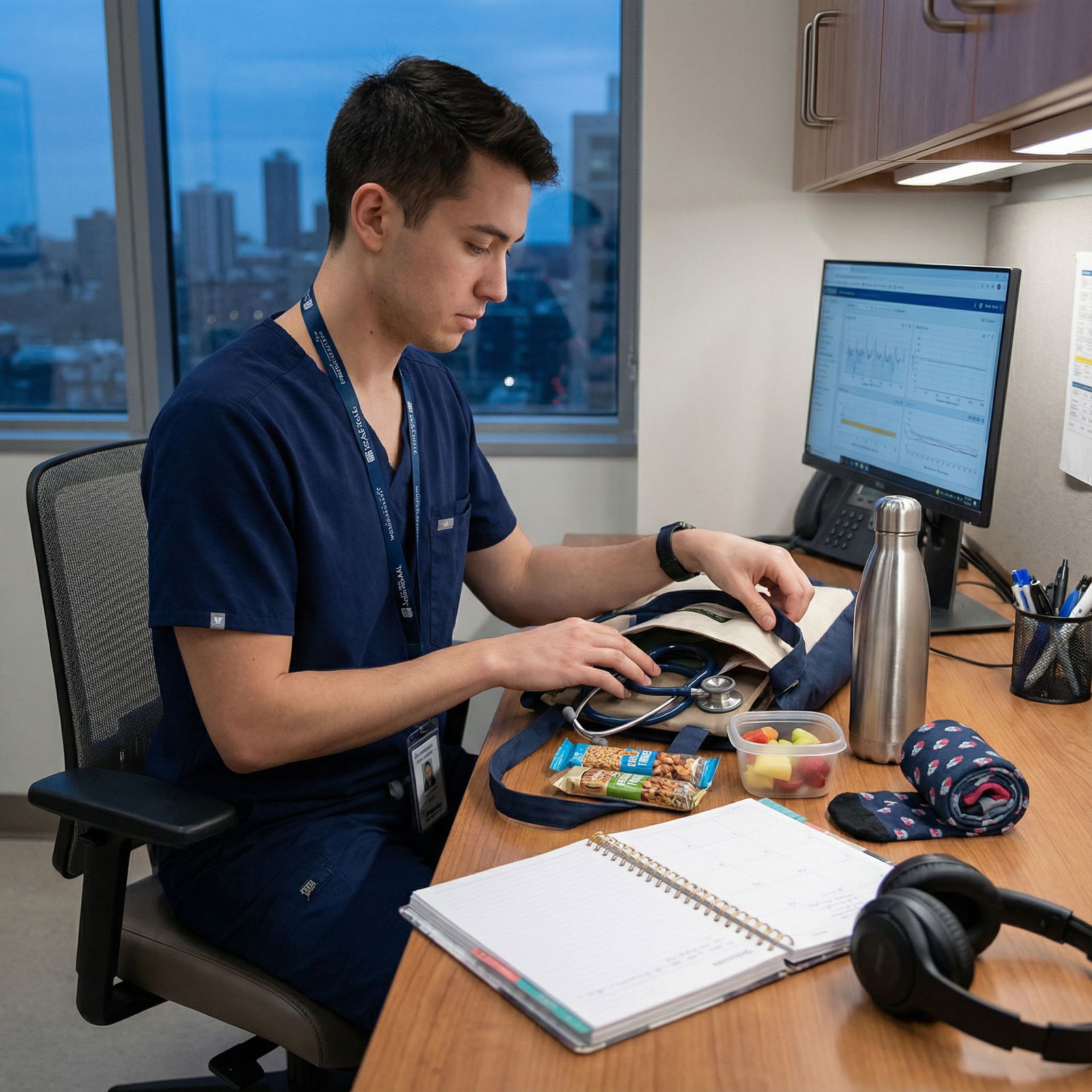
1. Run the Mandatory End-of-Shift Cognitive Dump
Before you pass your sign-out list back to the day team, execute a 5-minute mental audit. Sit alone at a computer terminal and answer these three questions:
- What was my biggest near-miss tonight? (e.g., almost missed an elevated lactate, forgot to check a post-procedure X-ray).
- Which decision was driven by fatigue rather than evidence? (e.g., giving a sleeping pill instead of investigating why the patient was acutely restless).
- What systemic mistake did I make that I need to correct before my next shift?
Write the answers down in a private notebook. This transfers cognitive baggage out of your working memory and prevents ruminating on mistakes when you are trying to sleep.
2. Implement Strategic Recovery Sleep Hygiene
You cannot defeat circadian biology, but you can minimize its damage.
- Darkness Protocol: Put on 100% blue-blocking sunglasses inside the hospital 30 minutes before your shift ends. Do not take them off until you are inside your bedroom with the blinds closed. Exposing your eyes to daylight at 7:00 AM immediately halts melatonin production and ruins your sleep architecture.
- The Chemical Hard Stop: Stop all caffeine intake precisely 5 hours before your shift ends. If your shift ends at 7:00 AM, your last cup of coffee is at 2:00 AM. No exceptions.
- Core Body Temperature Drop: Take a hot shower immediately upon getting home, then enter a bedroom set to 65°F (18°C). The rapid drop in core body temperature mimics the body's natural sleep onset mechanism.
3. Enforce the Two-Minute Delegation Rule
Mental fatigue compounds when you spend cognitive energy on administrative micro-tasks.
Apply this strict operational rule: If a task takes less than two minutes and falls within the scope of practice of a nurse, unit secretary, or APP, delegate it instantly.
Stop drawing your own peripheral blood samples, hunting down basic patient blankets, or manually faxing records to outside facilities. Save your processing power for complex differential diagnoses and critical resuscitations.
Task Delegation Protocol:
- Clinical Diagnostics & Medical Decisions -> RESIDENT (Keep)
- Order Entry & Protocol Verification     -> RESIDENT (Keep)
- Blood Draw / IV Access / Vitals Checks  -> NURSING / PHLEBOTOMY (Delegate)
- Outside Record Retrieval / Transport     -> UNIT CLERK / TRANSPORT (Delegate)
From Isolation to Autonomy: Reclaiming Your Nights
Night float isolation feels like an personal trial, but it is not. It is an operational design flaw in hospital systems.
You survive it by removing emotion and replacing it with explicit systems:
- Strict Triage: Sort incoming work by acuity, not by page arrival time.
- Safety Nets: Build real-time allies with night nurses, pharmacists, and ED peers.
- Fatigue Safeguards: Automate your alerts, offload routine tasks, and aggressively protect your sleep hygiene.
Handling night float successfully is an operational skill set. Master these protocols, and you stop surviving the night shift. You start controlling it.
If your program consistently puts you in unsafe situations, such as unmanageable patient ratios or complete lack of attending coverage during major patient decompensations, do not suffer in silence. Bring objective log data (page volume, patient counts, response delays) directly to your Program Director and Residency Advisory Committee. Professional operational pushback is not complaining; it is ensuring patient safety.
Key Takeaways
- Isolation is structural, not personal. Build systematic operational safeguards to compensate for absent hospital infrastructure.
- Triage by acuity, not volume. Categorize tasks into strict tiers and process low-acuity administrative requests in timed batches.
- Cultivate local night allies. Night pharmacists, ICU charge nurses, and ED seniors are your primary support system when attendings are off-site.
- Execute strict cognitive offloading. Run an end-of-shift mental audit and delegate two-minute routine tasks to protect your processing bandwidth for critical decisions.


