

What if night float doesn’t just mess up your sleep, but quietly kills your relationship while you’re too tired to notice it happening?
Because that’s the fear, right?
Not just “I’ll be tired.”
It’s “I’ll be a zombie, my partner will get sick of it, we’ll fight all the time, and one day they’ll say: ‘I can’t do this anymore.’”
You’re not crazy for thinking that. I’ve seen it. People starting night float rotations and six weeks later they’re “taking a break” or moving out or suddenly “not sure” about the future. It’s ugly.
But I’ve also seen couples come out the other side… weirdly stronger. Not in the corny Instagram way. In the “we got through that and we still like each other” way.
Let’s be honest about what actually happens—and what people who didn’t break up actually did differently.
What Night Float Really Does To Your Life (And Why It Feels So Dangerous)
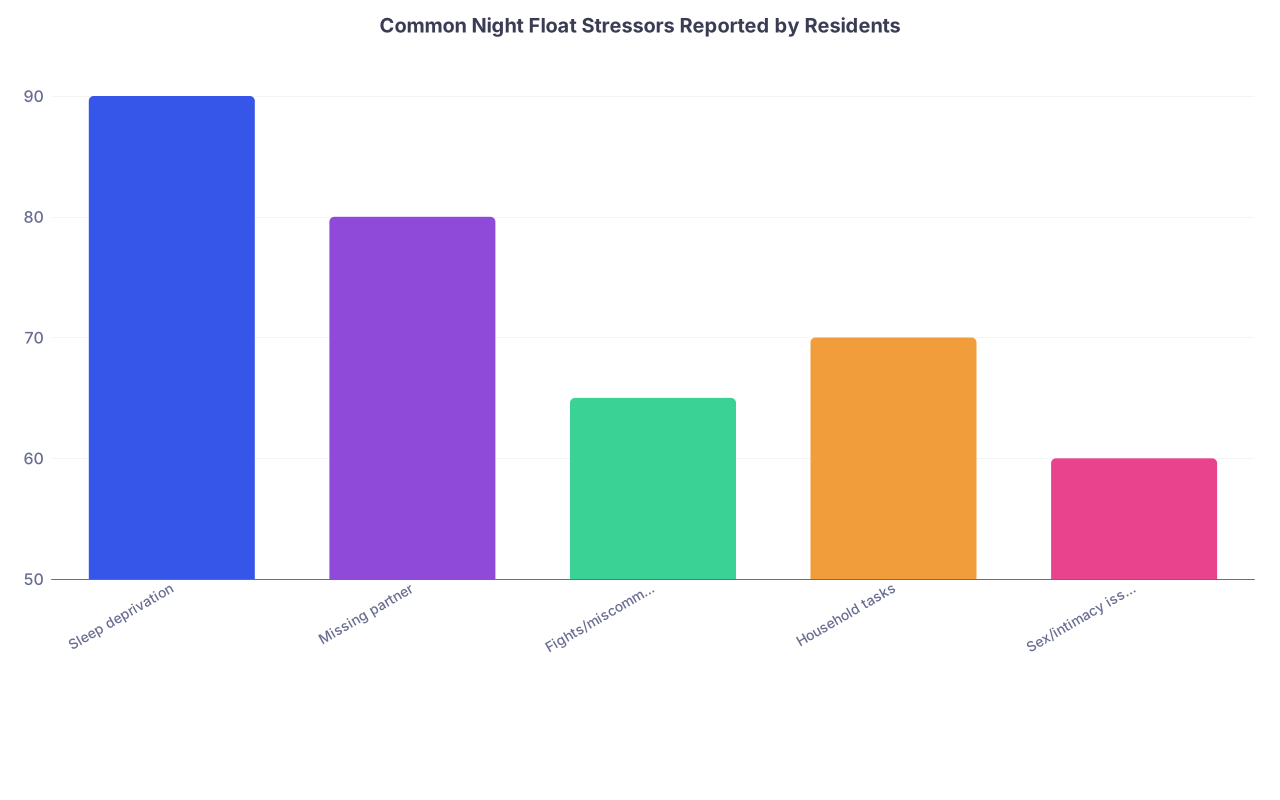
| Category | Value |
|---|---|
| Sleep deprivation | 90 |
| Missing partner | 80 |
| Fights/miscommunication | 65 |
| Household tasks | 70 |
| Sex/intimacy issues | 60 |
The part that scares me is how quietly night float rearranges your life. Nobody comes to your door and announces, “Hi, I’m here to ruin your relationship.” It’s more like:
You go in feeling okay. It’s just nights, right? A block or two.
Then this happens:
- Your days and nights flip, so your partner’s “I’m awake and functioning” time is your “I am a shell of a human” time.
- You stop eating like a real person. Coffee, random snacks, maybe something from the vending machine at 3AM.
- You’re emotionally flat. Not because you don’t care, but because your body’s done and your brain is in pure survival mode.
- Little annoyances turn into fights. Texts not answered, calls missed, “You said you’d call on your break” or “You’re always tired when I see you.”
This is why night float is dangerous: not because of one big blowup, but because of 100 little disconnections in a short, intense window.
One guy I knew in IM said, “We didn’t break up during nights. We just… drifted, and then afterwards we realized we weren’t talking like before.” That’s the scary part. You often don’t realize how much drift is happening.
The Worst-Case Scenarios You’re Imagining (And Yes, Some Are Real)
Let’s not pretend your brain isn’t already running through these:
- They’ll feel like a single parent / roommate handling everything alone
- They’ll get resentful that you’re “never there”
- They’ll think you don’t care anymore because you’re too tired to show it
- You’ll snap at them after a brutal shift and they’ll remember that instead of everything else
- You’ll just stop feeling close, and by the time your schedule normalizes, something will be broken
I’ve seen versions of all of that. Residents in tears in the call room, saying things like:
- “He says he doesn’t recognize me anymore.”
- “She told me she feels like she’s not a priority at all.”
- “We barely talk unless it’s logistics – groceries, bills, the dog.”
Brutal truth: night float can accelerate whatever cracks already exist. It’s like turning up the volume on stuff that was already there: unmet expectations, poor communication, different needs for closeness, one person doing more emotional labor.
But here’s the part I have to remind myself: that doesn’t mean it’s automatically doomed. It just means if the relationship is going to survive this, you can’t go into night float on autopilot and hope for the best.
What Couples Who Don’t Fall Apart Actually Do
I’m not going to pretend there’s some magical script. But I started paying attention to people who came out of night float saying, “Honestly, it sucked, but we were okay.”
They had patterns. Not perfect, not Instagram-pretty. Just… intentional.
1. They have a brutally honest conversation before nights start
Not a vague “We’ll get through this.” A real, uncomfortable, specific conversation.
Stuff like:
- “I’m probably going to be a zombie. I might be less affectionate or talkative. It’s not you; it’s my brain being cooked.”
- “What actually matters to you during this block? Is it one real call per day? A quick goodnight text? A meal together on my day off?”
- “What scares you about this rotation?” (Yes, say this out loud. It’s painful. Do it anyway.)
One EM resident told me he and his wife literally sat at the kitchen table and wrote out: “During nights, minimum expectations,” like:
- Daily: One check-in text, no pressure to reply fast
- Week: One real conversation (20–30 minutes, no phones)
- Chores: She handled mornings, he did evenings on days off
It sounded almost corporate. But it worked because they didn’t spend the whole month guessing what the other person wanted.
2. They lower the bar for what “connection” looks like
This is the part that hurts my romantic side. During night float, “connection” often looks… boring.
Not date nights. Not deep talks. More like:
- A 2-minute sleepy FaceTime while you brush your teeth before leaving
- A voice note on the walk into the hospital: “Hey, I’m thinking about you. Today might suck but I love you.”
- Them leaving stupid little notes on the counter where you’ll see them at 2PM when you wake up: “Hope you survived. Coffee in the fridge.”
A pediatrics resident told me, “We decided that for nights, success was that we still liked each other a little at the end. Not that we maintained our usual level of closeness.” That reframing helped her stop panicking every time they had a week of bad, half-asleep conversations.
Is that depressing? A bit. But trying to force your pre-night-float level of emotional energy when you’re sleeping 4 hours a day is how you burn out and fight nonstop.

Your Partner Is Going To Have Their Own Version Of Hell
This part gets ignored a lot.
You’re tired. You’re working hard. You’re the resident. So it’s tempting to unconsciously frame it as: “I’m the one suffering. They should understand.”
But partners of night-shift residents repeat the same phrases:
- “I feel like I’m living around their schedule.”
- “I never know when to call, I don’t want to wake them.”
- “I’m scared to complain because they’re the one saving lives.”
So they swallow their frustrations. Which is cute for about 3 days. After that, it turns into resentment.
The couples who make it give the partner explicit permission to not be perfect and endlessly understanding.
Things I’ve heard that actually helped:
- “Please don’t hide it if this sucks for you. I’d rather know and feel guilty than lose you quietly.”
- “You’re allowed to be annoyed with my schedule without me feeling attacked as a person.”
- “If you ever start feeling more like my nurse/parent/roommate than my partner, tell me. Even if it comes out messy.”
Because here’s the nightmare scenario: they’re drowning too, but you both keep pretending you’re “fine” until one day you’re not.
The Logistics That Quietly Save Relationships
I used to roll my eyes at “logistics help relationships.” Then I watched night float wreck couples who never talked about the boring stuff.
It’s not sexy, but it absolutely matters:
Sleep boundaries
If your partner wakes you up 3 times a day because they “just wanted to check something,” you will resent them. If you text them while they’re at work and they don’t respond for 6 hours, they’ll feel ignored.
People I’ve seen handle this well do things like:
- Set a “no-guilt” sleep window. For example: “12PM–5PM = do not text, do not call unless the house is on fire.”
- Decide what counts as “worth waking you up.” Package delivery? No. Burst pipe? Yes. Emotional meltdown? Maybe yes, if they explicitly say, “I really need you.”
Chores and house stuff
Nothing will start a 1AM fight faster than: “You slept all day and the trash is still full?”
Couples that survived nights usually did one of two things:
- Either the partner explicitly agreed: “For this block, I’ll handle 80% of house stuff. We’ll rebalance when you’re back on days.”
- Or they picked 1–2 specific things the resident would own, even on nights. Something small but consistent: taking out trash before leaving, emptying the dishwasher after waking up, feeding the dog at 6PM.
Not because the task itself is huge, but because it signals: “I’m still part of this household, not just a guest who sleeps here between shifts.”
| Habit Type | Example That Actually Works |
|---|---|
| Daily Check-in | 1 real text or voice note at consistent time |
| Sleep Boundary | 12–5PM sacred sleep, no non-urgent calls |
| Chore Ownership | Resident always does trash + dishes on wake-up |
| Tiny Ritual | 5-minute couch cuddle before leaving for shift |
| Weekly Reset | 30-minute talk on day off about how it’s going |
What If You’re Already In The Middle Of Night Float And It’s Going Bad?
Sometimes the horror isn’t hypothetical. It’s happening. You’re on week 2, you’ve already had three stupid fights, you’re crying in the parking garage, and you’re thinking, “We’re not going to make it.”
You’re not automatically doomed. But you have to stop pretending it’s “just the schedule” and actually triage the relationship like you would a crashing patient.
Here’s what I’ve watched people do that actually helped mid-rotation:
Call it what it is.
“We’re not doing well right now. I know I’m exhausted, but I also know I’m not showing up for you the way you need. Can we talk about it for 15 minutes tonight or tomorrow?”Narrow the focus.
Don’t try to solve every relationship issue you’ve ever had while you’re deliriously tired. Pick one or two pain points:- “You feel ignored when I don’t text back.”
- “I feel accused when you say I don’t care.”
Agree on a temporary “night float plan.”
This is not your forever relationship contract. It’s the survival version for the next 2–4 weeks. Something like:- One check-in at X time
- One “no screens” 10-minute cuddle/talk when you get home or before you leave
- You both suspend big heavy conversations (money, moving, in-laws) unless it’s urgent
A psych resident told me, “We literally said: ‘We are in emergency mode.’ That took the pressure off. We weren’t failing at being the perfect couple; we were surviving a brutal block.”

| Step | Description |
|---|---|
| Step 1 | Start Night Float |
| Step 2 | Pre-rotation talk |
| Step 3 | Set expectations and rituals |
| Step 4 | Call out problems directly |
| Step 5 | Protect sleep and set contact rules |
| Step 6 | Assign small chores and check ins |
| Step 7 | Weekly quick reset talk |
| Step 8 | Continue plan until block ends |
| Step 9 | Consider couples therapy or neutral third party |
| Step 10 | Post-rotation debrief |
| Step 11 | Already on nights? |
| Step 12 | Still falling apart? |
The Fear Underneath All Of This
If I’m honest, my real fear isn’t night float. It’s this question: “What if medicine, as a whole, makes me impossible to be with?”
Night float just concentrates that fear into one block.
Because if your partner leaves during this, your brain is absolutely going to say:
“See? You are too much. Too busy. Too tired. Too emotionally unavailable. No one wants this long-term.”
Here’s what I’ve watched, though:
- People who broke up during nights often had long-standing, unspoken problems that just got louder.
- People who were basically solid before nights, and who were willing to talk messily and imperfectly, almost always made it through.
- Some couples actually got clearer about their needs. One partner realized they needed more frequent check-ins long term. Another realized they were silently keeping score and needed to stop.
Night float doesn’t invent brand-new relationship dynamics out of nowhere. It amplifies what’s already there and removes the wiggle room. Which is terrifying, but also… clarifying.

One More Thing: It’s Okay If You’re Scared
You’re not weak or dramatic for being worried night float might wreck your relationship.
You’re paying attention.
The residents who scared me the most weren’t the ones who said, “I’m terrified my partner will leave.” It was the ones who shrugged and went, “If they can’t deal with it, that’s their problem,” while clearly using work to avoid intimacy.
You’re here, already stressing, already trying to figure out how to not screw this up. That alone puts you on a different path than the “I’ll just hope it’s fine” crowd.
So if I had to boil it down to one sentence:
Don’t expect your relationship to magically adapt to night float. Decide, together, how you’re going to adapt—and accept that it’s going to look imperfect, small, and sometimes ugly.
Years from now, you won’t remember exactly how many hours you slept on that block. You’ll remember whether you came home from those shifts to someone who still felt like yours, even if all you could give them was ten honest, exhausted minutes on the couch.

FAQ: Night Float & Relationships
1. Is it normal to fight more during night float?
Yes. Almost everyone I’ve talked to does. You’re sleep-deprived, stressed, and your schedules are out of sync. Little things feel bigger. The key is not “never fighting” but fighting in a contained way—short, direct, no late-night 2-hour drama sessions when you’ve slept 3 hours.
2. How much communication is “enough” on nights?
There’s no universal rule, but a common pattern that works is: one meaningful check-in per day, not constant texting. That could be a 5-minute call, a couple of voice notes, or a short FaceTime. Trying to keep up your usual daytime text frequency usually just leads to disappointment and pressure.
3. What if my partner says they “feel alone” even when I’m trying?
Take that seriously, but don’t jump straight to “I’m failing.” Ask, “What would help you feel less alone this week, realistically, given my schedule?” You might be guessing wrong about what they need. Often it’s consistency more than quantity—a small ritual you don’t skip.
4. Should we avoid big decisions during night float?
If you can, yes. Nights are basically “emotional drunk mode.” You’re not thinking clearly, they’re not getting the best version of you, and everything feels more dramatic. If a huge issue comes up (moving, breaking up, engagement, money), it’s usually smarter to say, “Let’s bookmark this and talk two weeks after this block ends—unless it’s an actual emergency.”
5. What if we already broke up during night float? Does that mean it was never going to work?
Not necessarily. But it probably means there were real issues that night float exposed. Sometimes couples get back together after residency with clearer boundaries and expectations. Sometimes they don’t. It sucks either way. But breaking during night float doesn’t mean you’re unlovable—it means the relationship, as it was structured, couldn’t tolerate that level of stress.
6. How do I explain night float to a partner who’s never done anything like this?
Be concrete, not vague. Instead of “I’ll be really busy,” say: “I’ll be working 7PM–7AM, sleeping roughly 12–5PM, and I’ll feel like I’m half-jetlagged the whole time. I might be quieter and less affectionate, not because I don’t care, but because my body is in pure survival mode.” Then ask them what they’re worried about and make a specific plan together. Vague reassurance (“We’ll be fine”) usually just makes them feel crazy for being scared.


