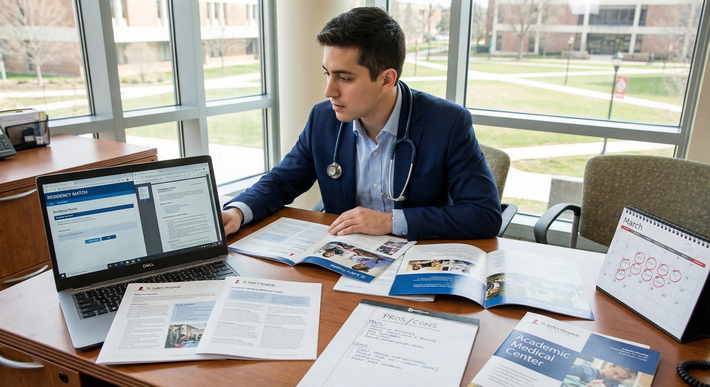
You open the email. A program wants you. Relief hits first. Then the second thought arrives right behind it: What if something better is still coming?
That is the real prematch dilemma. A secure spot feels like oxygen after months of applications, interviews, and silent scoreboards. It also feels like a trap. Accept too fast and you may lock yourself into a second-choice life. Wait too long and you may lose the only solid offer you had. I have watched strong applicants freeze in that exact gap, between safety and possibility, and turn a manageable decision into a spiral.
The emotional drivers are predictable. Relief. Pressure from family or classmates. Self-doubt about whether you "deserve" to hold out. Urgency from a deadline sitting in bold text. None of those feelings is a strategy. The central question is simpler and harder: When is immediate acceptance the smart move, and when should you pause, verify terms, and evaluate what is actually left on the board?
This guide gives you a fix, not a pep talk. You will identify the real nature of the offer, run a fast reality check on your remaining chances, map the hidden costs, follow a decision protocol, and know the exact scenarios that justify saying yes now versus waiting with a plan.
This article is for educational purposes only. It is not financial advice. It is not legal advice. It is not tax advice. Figures vary. Consult a qualified professional about any contract or commitment before you sign.
Step 1: Identify What Kind of Offer You Actually Have
Do not react to the word "offer" as if every message carries the same weight. Prematch language gets sloppy. Applicants treat a friendly phone call like a signed contract and treat a formal letter like a casual suggestion. Fix that first.
Clarify three things before you feel anything:
- Is the offer written and clear?
- Is it binding, time-limited, or informal?
- Does accepting require you to withdraw from other opportunities, interviews, or a rank list?
A verbal indication ("We really like you and hope you join us") is not an offer you can bank on. An email that outlines start date, salary band, and a response deadline is closer to real. A signed contract with withdrawal language, penalties, or explicit binding terms is the real thing. Those differences matter more than how excited the program director sounded on the call.
If the message is vague, ask for details in writing. Do it the same day. You are not being difficult. You are preventing a later mess. Also check program policy and any NRMP or institutional rules that apply to your specialty and timeline. Accepting a binding prematch offer may require you to stop interviewing or to pull out of the Match entirely. If you do not know that answer, you are not ready to decide.
I have seen applicants celebrate a "yes" that was really a soft expression of interest, then scramble when the actual paperwork never arrived. Start with paperwork reality, not vibe.
Step 2: Run a Quick Reality Check on Your Chances Elsewhere
Once you know what the offer is, stop daydreaming and score your alternatives. Waiting is either a calculated strategy or anxiety dressed up as strategy. You need to tell which one you are doing.
Use objective factors only:
- Interview performance so far (specific feedback, not gut feeling)
- Number and quality of interviews still ahead
- Specialty competitiveness and your relative standing
- Geographic flexibility versus hard constraints
- How this program compares to your true top tier
If you have two remaining interviews at programs you already ranked lower in your head, waiting is usually wishful thinking. If you have several unfinished interviews at programs that clearly outrank this one on training quality, location, and fit, waiting can be rational. The difference is evidence.
Build a simple probability table on paper. One column for the current offer. One column for the realistic best alternative. Score quality, probability of getting it, and downside if the current offer disappears. You do not need perfect math. You need honesty. Applicants who skip this step almost always overestimate the upside of waiting and underestimate the cost of losing a secure seat.
Read the grid cold. High chance of a better offer plus low risk of losing the current spot favors waiting. Low chance of improvement plus high risk of losing the secure position favors accepting. Everything else needs advisor input, not more late-night rumination.
Step 3: Know the Hidden Costs of Saying Yes Too Fast
Immediate acceptance is not free. Neither is delay. You need both cost maps.
Opportunity cost. Saying yes can shut down interview momentum. That may be good if the offer is strong. It can also mean you never see a program that would have fit better. Travel, time off, and interview fatigue cut both ways: continuing interviews has real burden, while a secure spot often delivers immediate stress reduction that improves your remaining performance if you are still allowed to interview.
Professional cost. Reneging on a binding commitment is a reputation problem. Programs talk. Advisors remember. Future letters and relationships can take damage. Even when the paperwork is soft, ghosting a program after signaling strong interest looks careless. If you accept, you should plan to stay. If you are already rehearsing the exit speech, do not sign.
Personal cost. Regret cuts in both directions. Accept too fast and you may spend months comparing yourself to classmates who matched "better." Wait too long, lose the offer, and land somewhere weaker, or nowhere, and the second-guessing gets uglier. I have seen both versions. The people who recover fastest are the ones who can point to a clear process, not the ones who claim they "went with their gut."
There is also a quieter cost: decision fatigue. Every extra day of "maybe" drains attention you need for remaining interviews, rotations, and life logistics. Indecision is not neutral. It taxes you.

Step 4: Use a Decision Protocol Before You Respond
Feelings are noisy. Protocols are quieter. Use this sequence every time.
- Pause if you can. A 24-hour buffer prevents panic replies. If the deadline is shorter, take whatever hours you have and protect them.
- Verify deadline and binding terms in writing. Ask what accepting requires you to do next.
- Consult one trusted mentor or advisor. Not five friends with opinions. One person who knows your application strength and the specialty landscape.
- Compare the offer against remaining opportunities using your probability table.
- Test the offer against your minimum criteria. Training quality, location floor, culture signals, call burden, and long-term career path.
- Decide and document. Send a clear written response. Save the email thread and any contract version you signed.
Set your own internal deadline inside the program's deadline. Example: "I will decide by Thursday 5 p.m. even if I feel uncertain." Without that, people default into delay until the choice is made for them.
If you need clarification or a short extension, keep the language clean and professional:
"Thank you for the offer and for the clear timeline. I am giving this careful consideration and want to confirm the response deadline and whether a brief extension is possible. I will follow up by [date]. Please let me know the best contact for any additional details."
That script does not sound uncertain. It sounds organized. Programs prefer clarity over long confessions about your anxiety.
Step 5: When Immediate Acceptance Is the Better Move
Immediate acceptance is the smarter move in clear conditions:
- The program meets or exceeds your minimum bar for training quality and culture.
- Your remaining interview list is thin, weaker, or logistically brutal.
- Specialty competitiveness makes a "maybe better later" bet fragile.
- Personal priorities (partner location, family needs, finances, health) make certainty disproportionately valuable.
- The contract terms are clear and you can live with the commitment.
If those boxes are checked, take the offer. Do it cleanly. Thank the program, confirm next steps, complete required paperwork, and stop shopping for phantom alternatives in your head. Overthinking after a good decision is just a new problem with no upside.
Acceptance email should be short: gratitude, clear acceptance, confirmation of any documents or dates, and professional close. Then shift into preparation mode, housing questions, onboarding, residual interviews if still permitted, and mental closure. The applicants who struggle after accepting are usually the ones who keep running a private shadow Match in their mind.
A good-enough secure offer that fits your real life beats a theoretical perfect program you do not have.
Step 6: When Waiting for a Better Offer Makes Sense
Waiting is justified when specific red flags or clear upside exist:
- Poor educational fit or weak training signals you already noticed
- Culture concerns you cannot ignore
- Major geographic mismatch that will grind on you for years
- A stronger, realistic pipeline still ahead with interviews that outrank this offer on objective criteria
Waiting strategically is active. You continue interviews with full preparation. You track every deadline. You keep a one-page note on each program: pros, cons, gut concerns, faculty impressions, and rank tendency. You reassess weekly against the original offer. You do not "see what happens."
Smart patience has a plan and a kill switch. Dangerous indecision has vibes and open tabs. If you cannot state in one sentence why the upside of waiting exceeds the risk of losing the current seat, you are not waiting strategically. You are stalling.
Score the current offer before you reject the idea of accepting it.
Use your own numbers. If the composite is strong and alternatives are speculative, accept. If multiple core categories score low and stronger options remain plausible, wait with a date to reassess.
Conclusion: Make the Best Decision, Not the Fastest One
The core rule is blunt: decide from contract terms, realistic alternatives, and personal fit, not from fear of missing out or fear of ending up unmatched.
Verify what you were actually offered. Evaluate remaining chances with evidence. Consult one grounded advisor. Decide. Then commit fully. That sequence protects you better than any motivational speech about "trusting the process."
Either choice can be correct. Immediate acceptance can be disciplined and wise. Strategic waiting can be disciplined and wise. Panic acceptance and vague delay are the failure modes. If your decision is deliberate, documented, and tied to criteria you can defend out loud, you can move forward without dragging the counterfactual behind you for the next four years.
Secure the next step. Then do the work.
Key Takeaways
- Do not decide on emotion alone: confirm whether the prematch offer is binding, timed, or informal before acting.
- Accept immediately when the offer is clearly good enough and the downside of waiting is higher than the upside of a possible alternative.
- Wait strategically only when you have a realistic path to a better fit and a clear plan to reassess, not because of vague hope.
- Use a simple decision protocol so you can respond professionally, protect your options, and reduce regret.