
The most dangerous pre‑match offer is the one you accept in a panic, not in a plan.
If you are in a system or specialty where pre‑match offers still exist (think some Texas programs, certain prelim/TY years, or international placements), you are walking through a minefield. I have watched smart, capable applicants trap themselves in miserable situations because they grabbed the first pre‑match that hit their inbox. Not because it was right. Because they were scared.
Let me be direct: saying “yes” too fast can hurt you on Match Day, damage your long‑term career, and close doors you do not even know exist yet.
Here is how that mistake plays out—and how to avoid becoming the cautionary tale people whisper about on interview trails.
1. The Psychological Trap: Fear Masquerading as Strategy
The biggest error is simple: confusing anxiety relief with good decision‑making.
You know the internal monologue:
- “What if I do not match anywhere?”
- “Everyone else is posting acceptances.”
- “This offer expires tomorrow. I cannot risk losing it.”
- “It is not perfect, but at least I would be safe.”
That last sentence is where careers go sideways.
You are most vulnerable to a bad decision when:
- You have had fewer interviews than your classmates.
- You have one or two red flags (low Step score, leave of absence, visa issues).
- Your first offer comes from a lower‑tier or less desirable program.
- You are exhausted and burnt out from interviews and travel.
In that state, any guaranteed spot looks golden. It is not. Programs know this. Some absolutely count on it.
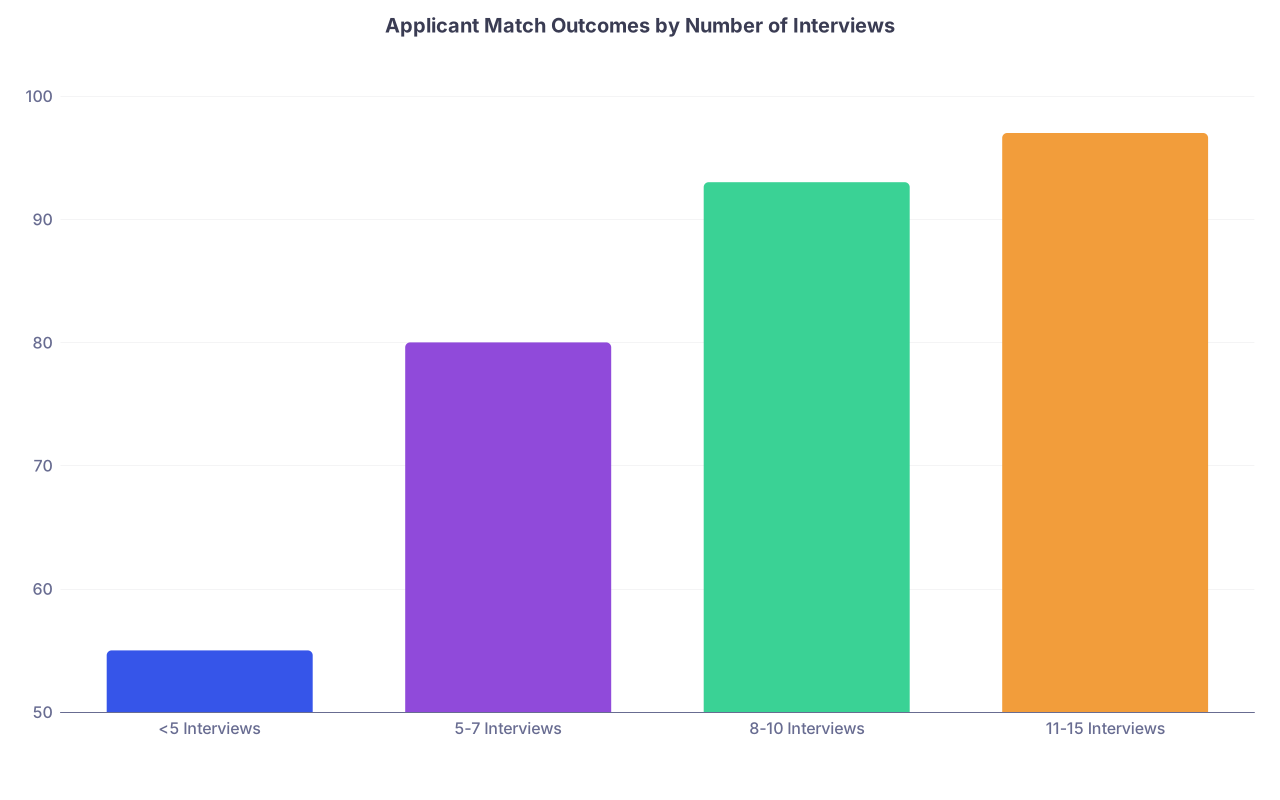
I have seen applicants with 10–12 solid categorical interviews panic‑accept a pre‑match at a mid‑tier community program. Then match statistics come out and everyone else with their interview profile matched at better‑fit university programs. They did not “play it safe.” They just sold themselves short.
You cannot prepare for pre‑match offers if you are not brutally honest about this: fear will push you to see “offer” as “only chance.” It is almost never your only chance.
| Category | Value |
|---|---|
| <5 Interviews | 55 |
| 5-7 Interviews | 80 |
| 8-10 Interviews | 93 |
| 11-15 Interviews | 97 |
Look at that chart and notice the mistake: people with 8–10 interviews who grab a weak pre‑match often would have matched anyway—usually somewhere better.
2. Contractual Handcuffs: What Saying “Yes” Really Means
Too many applicants treat a pre‑match like a “soft hold.”
“Worst case, I can still rank other programs, right?”
Wrong, in many settings.
In systems where pre‑match is binding (for example, certain Texas programs outside the NRMP), once you accept:
- You are contractually obligated to that program.
- You may be required to withdraw from the Match or specific tracks.
- Breaking that contract can label you as unprofessional, with real career consequences.
I have sat in meetings where PDs explicitly said: “We will not touch an applicant who broke a signed pre‑match at another program.” That is not hypothetical.
Common contractual traps you do not want to ignore:
- Non‑NRMP binding agreements that override the Match.
- Early‑decision contracts that require you to withdraw from other programs.
- Institutional policies that blacklist applicants who renege on a pre‑match.
If you sign without understanding:
- Whether it is binding.
- Whether you must withdraw from NRMP.
- Whether you can still rank other programs.
…you are playing career roulette with a blindfold on.
Here is the comparison you should have in front of you before you even think about signing anything:
| Aspect | Typical Pre-Match (Non-NRMP) | NRMP Match Contract |
|---|---|---|
| Binding before Match Day | Often yes | No |
| Ability to rank others | Sometimes restricted | Fully allowed |
| Penalty for breaking | Institutional / legal | NRMP violation consequences |
| Timing of commitment | Weeks–months before Match | On Match Day |
| Negotiation leverage | Slight, before signing | None, after Match results |
If you cannot clearly classify your offer into the left or right column, you have no business accepting it yet.
3. The “Bad Fit” Problem You Will Not See on Paper
Here is where people get burned the worst.
On paper, the pre‑match program looks “fine”:
- ACGME‑accredited.
- Decent board pass rate.
- Not malignant in the obvious Reddit‑infested sense.
But because you are desperate to lock something in, you downplay serious red flags during the visit:
- Residents who look exhausted and guarded, saying things like “we get good training” with zero enthusiasm.
- PDs bragging about “we are not for everyone; we push our residents very hard.”
- A schedule where “80 hours” sounds theoretical, and their definition of “day off” is “you might not come in until noon.”
I remember an applicant who pre‑matched at a program where three residents left mid‑year in one class. She admitted later, “I saw the tension on interview day. I just pretended it was fine because I was scared of not matching.”
Guess what she did PGY‑1 year? Spent 12 months trying to transfer out. While studying for boards. While being overworked. While explaining to every new PD why she wanted to leave.
Rushing to accept a pre‑match means:
- You have less time to talk with current residents off the record.
- You stop investing fully in later interviews that might be a much better fit.
- You rationalize problems as “temporary” or “every program has issues.”
Bad fit does not just mean “not my dream city.” It means:
- Training style that does not match how you learn.
- Culture clash (hyper‑hierarchical vs collaborative).
- Poor support for your goals (fellowship, research, visas, etc.).
Do not assume “I can suffer through three years.” That attitude is why people burn out, switch specialties, or quit.

4. The Opportunity Cost You Do Not Feel Until It Is Too Late
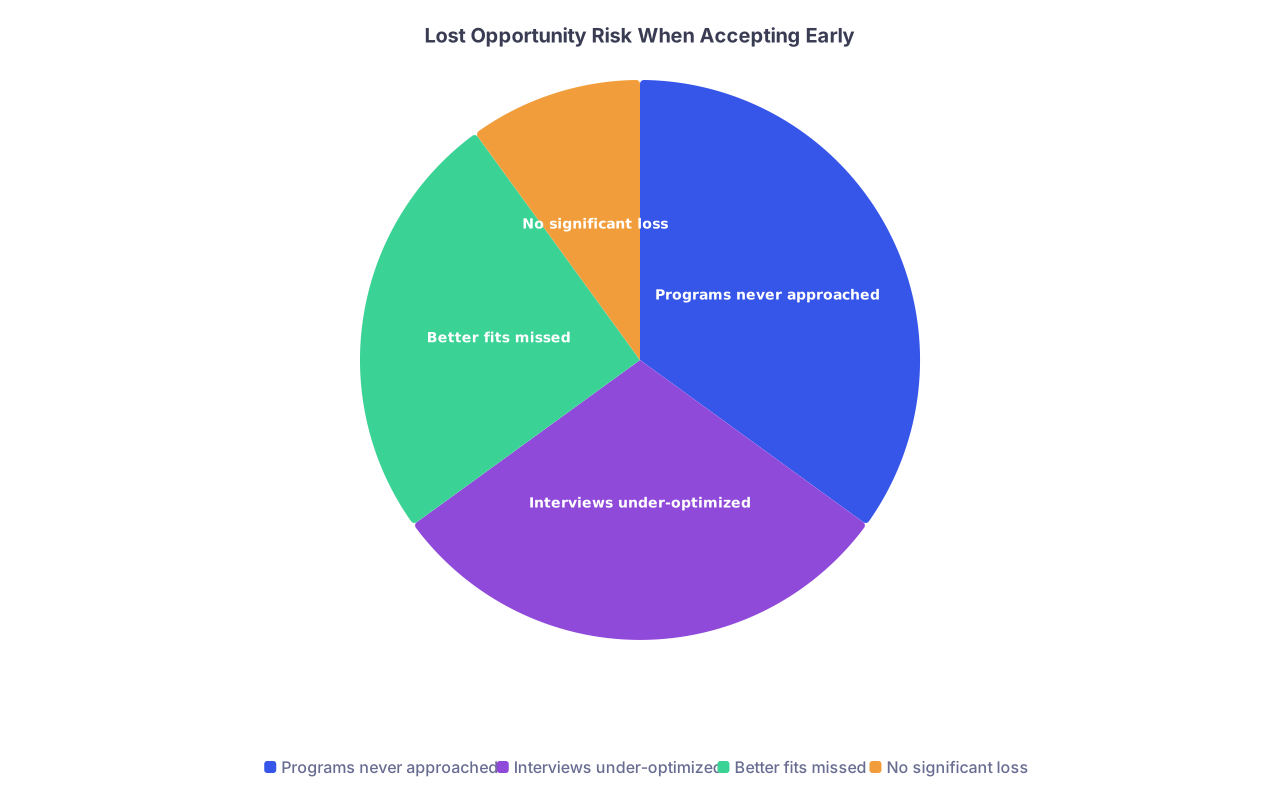
The most invisible damage from a rushed pre‑match is the opportunity cost.
You never see the doors that would have opened because you shut them before they could.
Clear examples:
- You accept a pre‑match at a community IM program that rarely sends graduates to competitive fellowships.
- Two months later, a university program with a strong cardiology pipeline invites you for an interview.
- You go, but mentally you are “taken.” You do not network as hard. You do not ask about research. You do not follow up with faculty.
- Three of your co‑interviewees match there and end up in GI and Cards fellowships. You stay where you pre‑matched and later fight for a single community GI spot.
Did you “fail”? No. You just traded upside for early certainty.
Here is how rushing to accept a pre‑match quietly hurts you:
- You stop improving your application mid‑season.
- You stop applying broadly or at stretch programs.
- You mentally disengage from interviews that happen after the pre‑match.
- You close your mind to better fits because “this is already done.”
| Category | Value |
|---|---|
| Programs never approached | 35 |
| Interviews under-optimized | 30 |
| Better fits missed | 25 |
| No significant loss | 10 |
Most residents who regret their pre‑match do not regret “having a job.” They regret all the things they will never know they could have had.
5. Red Flags in Pre‑Match Offers You Must Not Ignore
Some pre‑match offers are reasonable. Many are not. The trick is knowing which is which.
Programs rushing to lock you in may show the same pattern over and over:
- Extremely early offers after minimal interaction.
- Hard 24–48 hour deadlines for decisions, with no flexibility.
- Vague or evasive answers about schedule, call, or fellowships.
- Resistant to giving you time to review the contract or talk with residents.
Those are not “signs they love you.” They are signs they want your commitment before you ask too many questions.
Watch out for these patterns:
Unilateral urgency
They say, “We need your answer by tomorrow,” but refuse to say why. True urgency (e.g., institutional deadlines) usually comes with an explanation and flexibility if you ask for a day or two to review.Refusal to put details in writing
PD: “We support you doing research.”
You: “Is dedicated research time written into the schedule?”
PD: “We are flexible; we will work it out.”Translation: you are on your own.
Inconsistent stories between PD and residents
- PD says “We cap at 10 patients.”
- Residents say “I have had 18 on my list multiple times this month.”
That disconnect should stop you cold.
Empty flattery
Programs that oversell you (“You are our top candidate; you must pre‑match now”) but have not asked about your actual goals are not excited about you. They are excited about filling a slot.

If you feel rushed, pressured, or gagged from asking hard questions, do not tell yourself you are overreacting. You are seeing the future.
6. Visa, Couples Match, and Non-Traditional Applicants: Special Pitfalls
Here is where it gets trickier—and where people talk themselves into bad deals.
International / Visa‑dependent Applicants
The common trap: “I need a visa. Any offer is a blessing.”
Reality:
- Some programs use visa dependence to justify exploitative schedules or poor treatment.
- A pre‑match that “guarantees” a visa but traps you in a toxic environment is not a blessing. It is a cage.
You must clarify:
- Exactly which visa types they sponsor (J‑1 vs H‑1B).
- Historical success in obtaining that visa.
- What happens if there are delays or denials.
And you still do not accept in 24 hours just because you are IMG. Your vulnerability does not excuse their pressure tactics.
Couples Match
Classic mistake in couples match: one partner accepts a solo pre‑match “to be safe,” completely undermining the whole point of couples matching.
If you are couples matching, you cannot treat a solo pre‑match as harmless. It:
- Limits where your partner can realistically match.
- May force them into a much worse program or unmatched status.
- Creates long‑distance strain you did not truly sign up for.
If a pre‑match does not allow both of you to secure reasonable positions, it is not “security.” It is a fracture.
Non-Traditional / Red‑Flag Applicants
If you have:
- Failed boards.
- Prior residency experience.
- Gaps or professionalism issues.
You might feel you “should be grateful” for any pre‑match. That mindset is how people walk into abusive environments.
Here is the sober reality: you may need to accept a less competitive program. You do not need to accept:
- Chronic violation of duty hours.
- Hostility toward remediation or support.
- A PD who holds your past over you constantly.
Being vulnerable does not mean you throw away all standards.
7. How to Evaluate a Pre‑Match Without Sabotaging Yourself
You cannot control if you get pre‑match offers. You can control how you respond.
Here is the disciplined approach that keeps you out of trouble.
Step 1: Clarify the Rules Immediately
Before you even think about “fit,” you must know the legal and NRMP reality.
Ask, very specifically:
- Is this offer binding outside the Match?
- If I accept, must I withdraw from the Match or from other programs?
- Will there be a written contract, and when?
- How long do I have to review the contract before signing?
If they dodge, stall, or downplay the importance of these questions, pause everything.

| Step | Description |
|---|---|
| Step 1 | Receive Pre Match Offer |
| Step 2 | Request Contract Details |
| Step 3 | Clarify Impact on Rank List |
| Step 4 | Request Extension Or Decline |
| Step 5 | Assess Fit And Future Goals |
| Step 6 | Decline Offer |
| Step 7 | Compare Against Expected Match Odds |
| Step 8 | Accept Offer |
| Step 9 | Binding Outside Match? |
| Step 10 | Time To Review Reasonable? |
| Step 11 | Program Meets Core Needs? |
| Step 12 | Risk Worth Certainty? |
Step 2: Do a Cold‑Eyed Fit Check
Ask yourself, very bluntly:
- Would I rank this program in my top 3 if there were no pre‑match pressure?
- Does this program realistically support my fellowship or career goals?
- Do I trust the people I met to have my back when things go wrong?
- Did anything about the culture or schedule give me that “something is off” feeling?
If you would not rank them high without the pre‑match pressure, that is your answer.
Step 3: Compare Against Your Match Odds
This is where most applicants are sloppy. Instead of thinking in numbers, they think in catastrophes.
You should roughly know:
- Your interview count.
- Historical match rates for your specialty at that interview number.
- Whether you are aiming too high for your record.
| Interviews | Risk Level |
|---|---|
| 0–3 | Very high risk |
| 4–5 | High risk |
| 6–8 | Moderate risk |
| 9+ | Relatively safe |
If you have 2 interviews in a competitive specialty and receive a decent pre‑match, that is a different equation than having 12 interviews and grabbing the first below‑average offer that comes by.
Be honest. Are you trading substantial upside for a tiny reduction in risk? Many are.
Step 4: Involve Someone Who Is Not Terrified
Do not do this alone. Talk to:
- A trusted advisor or dean who knows match data.
- A resident in your desired specialty who survived the process.
- A mentor not affiliated with the offering program.
You want someone who is not blinded by your anxiety. Tell them everything: your scores, your interviews, your goals, your fears. Then listen when they say, “You are panicking,” or “You actually should consider this because your risk is high.”
Often the smartest thing you can do is have someone else call the program to clarify terms. Takes the emotion out of it.

8. When Accepting a Pre‑Match Is Actually Reasonable
Let me be fair. I am not saying never accept a pre‑match. I am saying stop accepting them blindly.
It can be reasonable if:
- The program is somewhere you would gladly rank in your top tier.
- You have real risk factors (few interviews, major red flags, visa dependence).
- The contract terms are clear, fair, and not abusive.
- You have taken at least 24–72 hours to think and talk with trusted advisors.
- You are not ignoring obvious cultural or training red flags.
Even then, you accept knowing exactly what you are giving up: the possibility—not guarantee—of something better on Match Day.
When it goes right, people who accept strong, well‑vetted pre‑matches sleep better, train hard, and never look back. When it goes wrong, it is almost always because they rushed, minimized warning signs, or let fear make the decision.
9. The Bottom Line: How Not to Regret Match Day
If you take nothing else from this, take this:
- Do not let fear trick you into treating the first offer as your only offer.
- Do not sign anything you do not fully understand—binding status, withdrawal requirements, and consequences included.
- Do not ignore bad‑fit or toxic‑culture red flags just because a pre‑match feels like safety.
Match Day regret does not come from “failing to be grateful.” It comes from knowing you silenced your own judgment to quiet your anxiety.
Protect future‑you. Slow down, ask hard questions, and accept only what you would still choose even if you were not scared.