
Pre-match communication can feel opaque and stressful for any residency applicant—but when you’re applying in global health, it adds an extra layer of complexity. Programs may span multiple sites and countries, involve nontraditional funding streams, and attract highly mission-driven applicants. Understanding how, when, and why to communicate before the Match is essential to both professionalism and success.
This guide focuses on pre-match communication for applicants interested in global health–focused programs and global health residency tracks, with practical advice you can use immediately.
Understanding Pre-Match Communication in Global Health
Pre-match communication refers to any interaction between an applicant and residency program that occurs after applications are submitted but before the formal Match process determines final outcomes. This includes:
- Emails
- Phone calls
- Virtual or in-person meetings
- Second looks
- Messages via mentors or faculty advocates
- Social media messages (less formal, but still professional communication)
In global health, this can also include:
- Conversations about international rotations or partnerships
- Communication with global health track directors separate from core program leadership
- Contact with faculty based at international partner sites
- Follow-up after global health electives or away rotations abroad
Why global health makes this especially nuanced
Global health–oriented training often involves:
- Multiple stakeholders: Core residency PD, global health residency track director, institutional global health office, and international partners.
- Long-term commitments: Programs may look for applicants who are serious about multi-year engagement in international medicine and underserved care.
- Additional funding and logistics: Travel grants, visas, safety standards, and local partner needs can influence who is ultimately a good fit.
Because of these factors, programs may be especially interested in your authentic commitment to global health—something that can be clarified and reinforced through thoughtful, ethical pre-match communication.
Rules, Ethics, and Expectations: What’s Allowed (and What’s Not)
Before strategizing, you need to be clear on the ground rules. While exact details vary by country and specialty, most U.S. programs participating in the NRMP are bound by the Match Participation Agreement and professional guidelines.
Core principles
No coercion or commitments
- Programs cannot ask you to:
- Rank them first
- Reveal how you will rank them
- Commit to a “verbal contract” outside the Match
- You cannot ethically ask them to:
- Promise to rank you at a specific position
- Guarantee you a spot
- Programs cannot ask you to:
Honesty and professional integrity
- You may express strong interest or intent (e.g., “I plan to rank you highly”), but you should not lie or imply contractual promises.
- Avoid statements like “I will rank you #1” unless you mean it and it is fully true at the end of your process.
No formal early commitment in NRMP programs
- For programs participating in the NRMP, pre-match offers and early commitment agreements are not allowed.
- Some non-NRMP programs or positions (often in other countries or certain non-categorical roles) might still make pre-match offers, but you must understand the implications and check compatibility with any other Match you’re entering.
Equal treatment and fairness
- Programs should not give more favorable ranking solely based on your willingness to commit prematurely.
- You should not feel pressured to violate the spirit of the Match to gain an advantage.
How this plays out in global health
In the context of global health:
- Programs may be very eager to identify applicants whose long-term goals align with their specific global health residency track or international medicine projects.
- You may receive informal signals of interest (e.g., “We’d be excited to have you here,” “You are a strong fit for our global health pathway.”).
- Some institutions with global health tracks may offer separate fellowships or tailored contracts (particularly outside the U.S.) where early or direct offers are more common—these are different from standard NRMP graduate medical education positions.
When in doubt, ask directly but neutrally:
“Just to clarify, does your global health residency track participate fully in the NRMP, or are there any non-Match positions or early commitment options applicants should be aware of?”
This keeps you informed without signaling inappropriate intent.
Strategic Communication Timeline for Global Health Applicants
Thinking in phases helps you communicate effectively and ethically. Below is a suggested structure from application submission through rank list certification.

Phase 1: Post-Application, Pre-Interview Invitations
Goals:
- Signal genuine interest in a program’s global health opportunities.
- Provide relevant updates that may not have been in your initial application.
- Avoid appearing pushy or entitled.
Appropriate communication:
- Targeted interest email to global health leadership
If there is a global health residency track or dedicated international medicine pathway, consider reaching out to the track director or global health program lead after applications are submitted, especially if:
- You have substantial prior global health experience.
- You completed an elective or research project with that institution or its partners.
- Their global health focus is an unusually strong match with your career path.
Example email:
Subject: Applicant to [Program Name] – Strong Interest in Global Health Track
Dear Dr. [Last Name],
I recently applied to the [Specialty] residency at [Institution] and wanted to express my particular interest in the [Program’s Global Health Residency Track Name]. My previous work has focused on [brief 1–2 lines: e.g., maternal health quality improvement in rural Uganda and refugee health in U.S. community clinics], and I hope to build a career in academic global health and health systems strengthening.
I am especially drawn to your program’s work in [specific partner site or initiative] and the opportunity for sustained engagement over the course of residency. I would be grateful if you might keep my background and interests in mind during the review process. I would welcome the opportunity to learn more about the track if granted an interview.
Thank you for your time and for the work your team does in international medicine and local underserved care.
Sincerely,
[Full Name], [Current Institution]
AAMC ID: [if applicable]
- Leveraging mentors appropriately
If you have a mentor with a legitimate professional relationship to the program (e.g., former faculty, research collaborator), it can be appropriate for them to send a brief, honest note of support. This is especially impactful in the global health context, where track directors care about your track record and reliability in field settings.
Guidance to your mentor:
- Ask them to focus on your reliability, humility, teamwork, and ethical conduct in global health settings—not just test scores.
- Avoid asking them to “get you a spot”; instead, ask them to share perspective on your fit.
Phase 2: Interview Season
Goals:
- Clarify the structure and expectations of the global health residency track.
- Assess whether the program’s global health activities align with your values and long-term plans.
- Continue to demonstrate sincere interest without pressuring the program.
Key topics to ask about during interviews:
- Track structure and commitment
- Is the global health residency track formally separate, or integrated into the core program?
- How are residents selected into the track—before the Match, during intern year, or later?
- Are there required international rotations, or are they elective?
- How much protected time is there for global health work, research, or language learning?
- Funding and logistics
- Who funds travel, housing, and insurance for international experiences?
- Are trips guaranteed or competitive?
- How does safety, supervision, and local partner input figure into planning?
- Career outcomes
- Where have recent global health track graduates ended up?
- How many alumni have built careers in international medicine, health policy, humanitarian work, or academic global health?
These questions both inform your decision and signal to programs that you understand the realities of long-term global health engagement.
Post-interview thank-you messages:
- Within a week, send concise, personalized emails to:
- Program director
- Global health track director
- Any key faculty you spoke with about global health
Example:
Dear Dr. [Last Name],
Thank you again for the opportunity to interview at [Program Name] on [date]. I especially appreciated learning more about your global health residency track and the longitudinal work with [partner site/community].
Our conversation about balancing international fieldwork with continuity clinic and local underserved care resonated with my own goals in global health. I would be very excited to train at a program that takes such a thoughtful and sustainable approach to partnerships.
Thank you again for your time and mentorship during the interview day.
Sincerely,
[Your Name]
Phase 3: Post-Interview, Pre-Rank List
Goals:
- Clarify remaining questions (especially about global health track logistics and feasibility).
- Provide meaningful updates.
- Communicate authentic, non-coercive interest.
Updates worth sending:
- New global health publication or accepted abstract.
- Significant fieldwork or service project completion.
- Notable leadership role related to international medicine or local underserved work.
- A newly secured grant or scholarship for global or community health work.
Keep updates short and targeted; do not send weekly messages.
Expressions of interest:
If a program is genuinely your top choice—especially for global health reasons—it can be appropriate to share this once, clearly and honestly.
For example:
I wanted to share that after completing my interviews, [Program Name] stands out as my top choice, particularly because of the longitudinal structure and mentorship within your global health residency track. I intend to rank your program very highly and would be thrilled to train with your team.
Only say you will rank them #1 if that statement will remain true when you certify your list.
Global Health–Specific Complexities: Tracks, Sites, and Early Signals
Global health programs differ more from each other than many standard residency programs. Understanding these differences will help guide your pre-match communication.
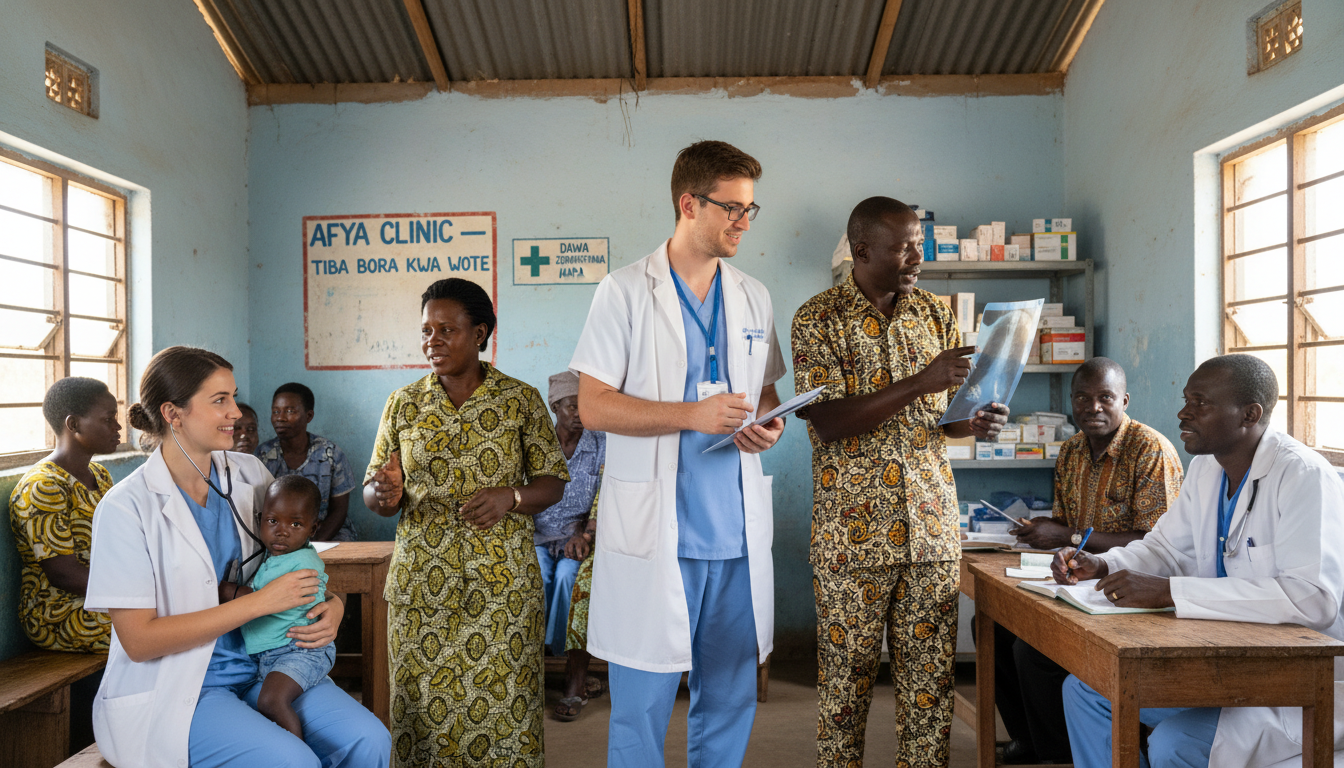
Communicating with both the core program and global health track
In many institutions, your NRMP Match is into the core residency, not directly into the global health track. Selection into the track may occur:
- As part of the interview process
- Shortly after the Match
- During the first year of residency
Actionable advice:
Clarify the process:
“Is acceptance into the global health residency track determined during the residency application process, or after interns begin? Is there a separate application?”Target both audiences:
- Keep your program director informed of your interest in the global health focus.
- Build rapport with the global health track director or faculty who run the track.
Show dual commitment:
- Emphasize that you value excellence in core clinical training and not just the opportunity to travel.
- Programs look for residents who will be strong team members on the wards and reliable partners in the field.
International partner sites and local expectations
Many global health tracks have long-standing partner sites, where you might spend months caring for patients and contributing to education or research.
Good pre-match questions:
- “Are residents assigned to specific partner sites, or do they rotate among several?”
- “How do you ensure local partner priorities guide your projects?”
- “What language skills or prior experiences are most useful at your main sites?”
These questions help you assess fit and ethics while signaling maturity and genuine engagement.
Pre-match offers and early commitment in global health
For NRMP-participating U.S. residency programs, formal pre-match offers for core residency positions are not permitted. However, in the global health context, you may encounter:
“Soft” early signals, like:
- “We’re very enthusiastic about your application.”
- “We think you would be an excellent fit for our track.”
Non-residency roles tied to global health:
- Pre-residency research year or global health fellowship.
- Structured MPH–residency pathways (sometimes with separate application processes).
- Contracts at international partner institutions not directly governed by NRMP.
How to respond:
- For NRMP programs:
Treat warm language as encouraging but non-binding. Do not rely on it as a guarantee of matching. - For non-NRMP offers (e.g., some international positions or special tracks):
- Clarify whether acceptance affects your ability to participate in a separate Match.
- Confirm in writing the terms, start date, and whether it is contingent on your Match outcome.
If you’re uncertain, discuss with:
- Your home institution’s GME office
- A trusted advisor familiar with Match rules
- Specialty societies in global health
Professionalism, Boundaries, and Red Flags
The way you handle pre-match communication reflects your professionalism—something global health programs take very seriously because of the added ethical dimensions of working across cultures and borders.
Do’s and don’ts for applicants
Do:
- Be timely and polite in all communications.
- Personalize messages—avoid mass, generic emails.
- Ask specific, thoughtful questions about training and global health structure.
- Be honest about your level of interest.
- Keep your email tone calm, mature, and appreciative.
Don’t:
- Email repeatedly to ask where you stand on their rank list.
- Pressure programs for promises or early commitment.
- Exaggerate your interest; don’t tell multiple programs they are your #1.
- Criticize other programs in your communication.
- Use overly casual language or unprofessional social media messages.
Program behavior: what’s reassuring vs concerning
Reassuring signs:
- They volunteer clear information about how the global health residency track works.
- They are transparent about funding and logistical limitations.
- They acknowledge Match rules and do not pressure you about rank order.
- They respond respectfully to your questions and updates.
Concerning red flags:
- Pressure to verbally commit to ranking them #1 or to withdraw from other programs.
- Ambiguous or evasive answers about how selection into the global health track actually occurs.
- Overemphasis on “how many months abroad” without discussion of sustainability, local priorities, or safety.
- Dismissive attitudes toward equity, decolonizing global health, or ethics.
When you see red flags, discuss them with mentors—your long-term values and professional integrity are more important than any single program.
Putting It All Together: A Sample Communication Strategy
Here’s how a strong global health applicant might approach pre-match communication in practice:
After ERAS submission
- Sends 3–5 highly targeted emails to global health track directors at programs that are an exceptional fit.
- Asks one mentor with global health connections to reach out to 1–2 particularly aligned programs.
Before interviews
- Reviews each program’s global health offerings, partner sites, and publications.
- Prepares specific questions for track directors and faculty.
After interviews
- Sends thoughtful thank-you emails highlighting specific global health conversations.
- Maintains a simple spreadsheet tracking communication, impressions, and key program features.
Approaching rank list deadline
- Sends:
- One clear, honest “top choice” email if applicable.
- A few brief update/interest emails to other programs where genuine excitement remains.
- Avoids over-promising or sending conflicting messages.
- Sends:
Throughout
- Keeps communications concise and respectful.
- Respects that programs have institutional constraints and multiple excellent applicants.
- Retains focus on long-term goals in global health, not just getting a spot anywhere.
FAQs: Pre-Match Communication for Global Health Residency Applicants
1. Can I tell more than one program they are my top choice, especially if they all have strong global health tracks?
You can, but you shouldn’t. Telling multiple programs they are your #1 is dishonest and undermines the integrity of the Match. You can tell multiple programs that you are “very interested” or that you “plan to rank them highly,” but reserve “I will rank you first” for one program—and only if it is genuinely true.
2. Is it okay to contact the global health residency track director before I have an interview?
Yes, if done thoughtfully. A brief, targeted email expressing your interest in the track and highlighting your relevant experience in international medicine or local underserved care is appropriate. It should not be a demand for an interview, but a professional introduction and clarification of fit. Be sure to include your AAMC ID and current institution for easy reference.
3. How often should I email a program about my interest in their global health opportunities?
Quality matters more than quantity. For most applicants, 2–3 well-timed communications per program are sufficient:
- An initial interest email (optionally, especially for global health tracks).
- A post-interview thank-you.
- A final update or interest note closer to rank list certification if you have new information or clarified preferences.
Multiple “just checking in” messages with no new content can be counterproductive.
4. Do global health residency tracks ever make pre-match offers or early commitment agreements?
In NRMP-participating U.S. residency programs, early commitment for core residency positions is not allowed. However:
- Some global health opportunities tied to residency (research years, fellowships, MPH pathways) may have separate application and acceptance processes.
- In non-U.S. or non-NRMP contexts, early offers may be more common. If you receive such an offer, clarify whether accepting it affects your ability to enter another Match and obtain written details of all terms.
When uncertain, consult your dean’s office, GME office, or a mentor familiar with the rules. Always prioritize ethical conduct and clarity over perceived short-term advantages.
Approached thoughtfully, pre-match communication can help you identify programs that truly align with your global health values while showcasing your professionalism and commitment. Used poorly, it can create confusion or even ethical risks. By understanding the rules, respecting boundaries, and communicating strategically, you’ll navigate this crucial phase of the residency process with integrity and confidence—setting the stage for a meaningful career in global health.