
Introduction: The Pressure of Pre-Match Offer Decision-Making
Pre-match offers can feel like both a safety net and a high‑stakes gamble in your residency journey. After years of exams, clinical rotations, and interviews, being told “We want you” by a program before Match Day is incredibly validating. It can instantly reduce uncertainty, but it also forces you into one of the most consequential decisions of your medical career before you’ve seen all your options.
You are not just deciding where you’ll spend the next three to seven years—you are making choices that will shape your professional development, your future opportunities, and even your personal life. The key challenge: deciding whether to accept a pre-match offer now or take your chances in the residency Match.
This guide walks you step-by-step through how to think about pre-match offers strategically and ethically. We’ll cover:
- What pre-match offers are (and are not)
- Core decision-making factors: career fit, institutional culture, location, finances, and alternatives
- How pre-match offers influence your Match strategy
- Communication and negotiation with programs
- A practical framework to make—and feel confident about—your final decision
Throughout, the focus is on helping you align this decision with your long-term medical career, not just short-term anxiety relief.
Note: Always verify the specific rules for your application cycle, specialty, and country (e.g., NRMP rules for the U.S.). Policies can change, and some systems severely restrict or prohibit pre-match arrangements.
Understanding Residency Pre-Match Offers
What Is a Pre-Match Offer?
A pre-match offer is an invitation from a residency program to commit to a residency position before the official Match process is complete. Depending on the system and specialty, this may be:
- A formal contract or binding agreement
- A strong verbal offer with a timeline to accept or decline
- A non-binding indication that they intend to rank you highly (less common as a true “offer,” but often framed that way in communication)
In many systems, pre-match offers are most relevant in:
- Non-NRMP programs or specialties
- Certain states, countries, or institutions with parallel processes
- Programs that fill partially through the Match and partially outside of it
In all scenarios, the core issue is the same: you must decide early whether to lock in a position or remain fully in play for Match Day.
Why Do Programs Extend Pre-Match Offers?
Programs use pre-match offers to secure residents they believe will:
- Perform well clinically
- Fit the culture and values of the department
- Stay for advanced training (e.g., chief year, fellowship, academic career)
Common reasons you might receive a pre-match offer include:
Outstanding interview performance
You demonstrated strong clinical reasoning, professionalism, maturity, and communication skills. Programs may move quickly to secure someone they see as a future leader.Strong connections and networking
You rotated at the institution as a student, did an away rotation, or have faculty champions advocating for you. Familiarity lowers the program’s risk: they know what they’re getting.Clear, sustained interest in the program
You followed up after interviews, attended second looks, participated in virtual sessions, and articulated why this program specifically fits your goals. Programs often reward such demonstrated commitment.Competitive profile for a competitive specialty or location
Programs may fear losing you to another prestigious institution or geographic area, prompting an early offer.
Why You Might Be Tempted to Accept Immediately
- Anxiety relief: Eliminating uncertainty about where you’ll match.
- Fear of not matching: Particularly if you’re in a competitive specialty, have red flags, or a non-traditional pathway.
- Emotional attachment: You had an excellent interview day and connected with faculty or residents.
- Location or family reasons: The offer is in your top geographic choice or near your support system.
While these are valid considerations, accepting purely out of fear or relief can lead to regret later. The rest of this article helps you slow down, analyze, and decide intentionally.

Core Decision Factors: How to Evaluate a Pre-Match Offer
1. Alignment with Long-Term Career Goals and Interests
The most important question: Does this program move you toward the medical career you envision?
Specialty Fit and Career Trajectory
- Are you truly committed to this specialty?
- Have you had enough exposure to be confident (e.g., sub-internships, electives, shadowing)?
- Can you realistically see yourself practicing this field in 10–20 years?
- Does the program’s case mix and patient population match your learning needs?
- High-acuity tertiary center vs. community-based hospital
- Urban underserved vs. suburban insured population
- For those considering academic careers:
- Is there strong research infrastructure?
- Are there mentors in your specific areas of interest?
Example:
If you dream of becoming an academic cardiologist, a pre-match offer from a small community internal medicine residency with limited research may not support that path as well as a larger academic IM program you might still match into.
Faculty, Program Leadership, and Mentorship
Residency is an apprenticeship. Your program director, core faculty, and institutional leadership will profoundly shape your professional development.
Ask yourself:
- Did you feel respected and supported in your interactions with leadership?
- Are faculty approachable, engaged teachers, and active in your specialty’s national organizations?
- Are there mentors who share your interests (global health, hospitalist work, surgery subspecialty, medical education, etc.)?
You can investigate by:
- Reviewing PubMed or institutional websites for faculty interests
- Asking current residents:
- “Who are the go-to mentors for [interest area]?”
- “Do faculty actively involve residents in projects?”
2. Institutional Culture, Training Environment, and Resident Wellness
You are choosing not only a training curriculum but also a day-to-day workplace culture.
Work-Life Integration and Wellness Support
Questions to explore:
- What is the reputation of the program regarding burnout, duty hour enforcement, and wellness?
- Are there structured wellness initiatives (e.g., counseling access, wellness days, debriefing sessions)?
- How do residents describe support during crises (family illness, personal health issues, remediation)?
Red flags:
- Residents seem guarded or hesitant to speak openly when faculty are present.
- Reports of chronic understaffing, frequent duty hour violations, or hostile supervision.
- Dismissive comments about wellness or mental health.
Supportive cultures:
- Transparent enforcement of duty-hour rules.
- Program leadership that knows residents personally and intervenes when they struggle.
- Embedded support resources (psychological services, mentorship programs, peer support groups).
Educational Quality and Resident Autonomy
Consider:
- Curriculum structure:
- Is there protected didactic time that is truly protected?
- Are there clear milestones, feedback, and remediation pathways?
- Graduated responsibility and autonomy:
- Do residents get appropriate independence by senior years?
- Does the program trust residents while supervising safely?
Strong educational programs will have:
- Clear board pass rates and graduation metrics
- Residents who feel “ready” for fellowship or independent practice
- Alumni in roles you might aspire to (fellowships, academic positions, community practice)
3. Location, Lifestyle, and Personal Circumstances
Your life outside the hospital matters for your success inside it.
Geographic and Lifestyle Fit
Ask yourself:
- Can you see yourself living in this city/region for 3–7 years?
- Consider:
- Climate and seasonal affective concerns
- Transportation and commute times
- Safety and neighborhood options
- Access to activities that sustain you (gyms, outdoor spaces, places of worship, cultural communities)
If you are partnered or have a family:
- How will this location affect your partner’s career, your children’s schooling, or caregiving responsibilities?
- Are there employment opportunities for your partner within a reasonable commuting distance?
Social Support and Community
Residency is demanding. A support network can be protective.
- Will you have friends or family nearby?
- Do you have or can you build a community identity here (e.g., cultural, religious, LGBTQ+, immigrant, or interest-based communities)?
- How connected did residents seem to each other socially?
4. Financial Realities: Stipend, Cost of Living, and Benefits
Money is not everything, but it is far from irrelevant during residency.
Salary and Benefits Package
Compare:
- Base stipend versus national/local averages for the region and specialty
- Benefits, such as:
- Health, dental, and vision coverage (family vs. individual)
- Retirement contributions or matching
- Disability insurance
- Parental leave policies
- Education funds (board review courses, conferences, licensing fees)
Remember: a slightly lower salary with better benefits and a lower-cost area may be a better overall financial decision than a higher salary in an expensive city.
Cost of Living and Debt Management
Estimate your monthly budget:
- Housing (rent, utilities, parking)
- Transportation (car payments, insurance, fuel, or public transport)
- Loan payments (IDR plans, refinancing considerations later)
- Food, child care, and personal essentials
Ask current residents:
- “Is it feasible to live near the hospital on the resident salary?”
- “Do most residents need roommates or second jobs?”
You do not need luxury, but chronic financial strain can amplify burnout.
5. Commitment Level, Opportunity Cost, and Alternatives
Every pre-match acceptance is also a decision not to see how you might do in the Match.
Assessing Your Competitiveness and Risk Profile
Reflect honestly on:
- Your USMLE/COMLEX or equivalent scores
- Clinical grades and letters of recommendation
- Any red flags (course failures, professionalism concerns, leaves of absence, visa issues)
- Specialty competitiveness and the number of programs you applied to
If you are in a higher-risk category (e.g., IMG with limited interviews, lower scores, multiple red flags), a solid pre-match offer may be a life-changing opportunity to secure a residency at all.
If you are a strong candidate with numerous interviews so far and positive feedback, the opportunity cost of accepting too early may be higher.
Impact on Your Match Strategy
Consider:
- Are you allowed to legally participate in the Match after accepting this offer?
- In some systems, accepting a binding pre-match offer requires you to withdraw from the NRMP or equivalent.
- If the offer is non-binding but heavily implied, are you willing to:
- Turn down or cancel other interviews?
- Potentially strain relationships by backing out later?
When in doubt, review the NRMP Code of Conduct and speak with your dean’s office or institutional advisor.
Communication, Ethics, and Negotiation Around Pre-Match Offers
Clarifying the Details of the Offer
Before making any move:
- Ask for the offer in writing with:
- Start date and position type
- Any contingencies (visa, licensing, background checks)
- Duration and training structure
- Expectations about withdrawing from the Match, if applicable
- Clarify deadline to respond and whether extensions are possible.
You can say:
“Thank you so much for the offer. I’m honored you see me as a strong fit for your program. Could you send the details in writing so I can review them carefully and discuss with my mentor? Would it be possible to have until [date] to decide?”
Ethical and Professional Considerations
- Do not misrepresent your intentions or commitments to other programs.
- Avoid “accepting” multiple binding offers.
- Honor the spirit of the Match: it’s designed to be fair to both programs and applicants.
Be transparent with mentors and advisors; they can help you navigate gray areas while maintaining professionalism.
Can You Negotiate a Pre-Match Offer?
In residency, negotiation is limited compared with attending-level jobs, but you can sometimes explore:
- Start date flexibility for special circumstances
- Clarification or support for:
- Research time or mentorship
- Protected clinic or elective opportunities
- Support for a particular fellowship track
- Resources for specific needs (e.g., family leave planning, visa sponsorship details)
Approach tactfully:
- Focus on fit and patient care, not just money.
- Phrase as questions, not demands:
- “Is there any flexibility regarding…”
- “How have you handled… for residents in the past?”
A Step-by-Step Framework to Make Your Final Decision
When the deadline is looming and your mind is swirling, use a structured process.
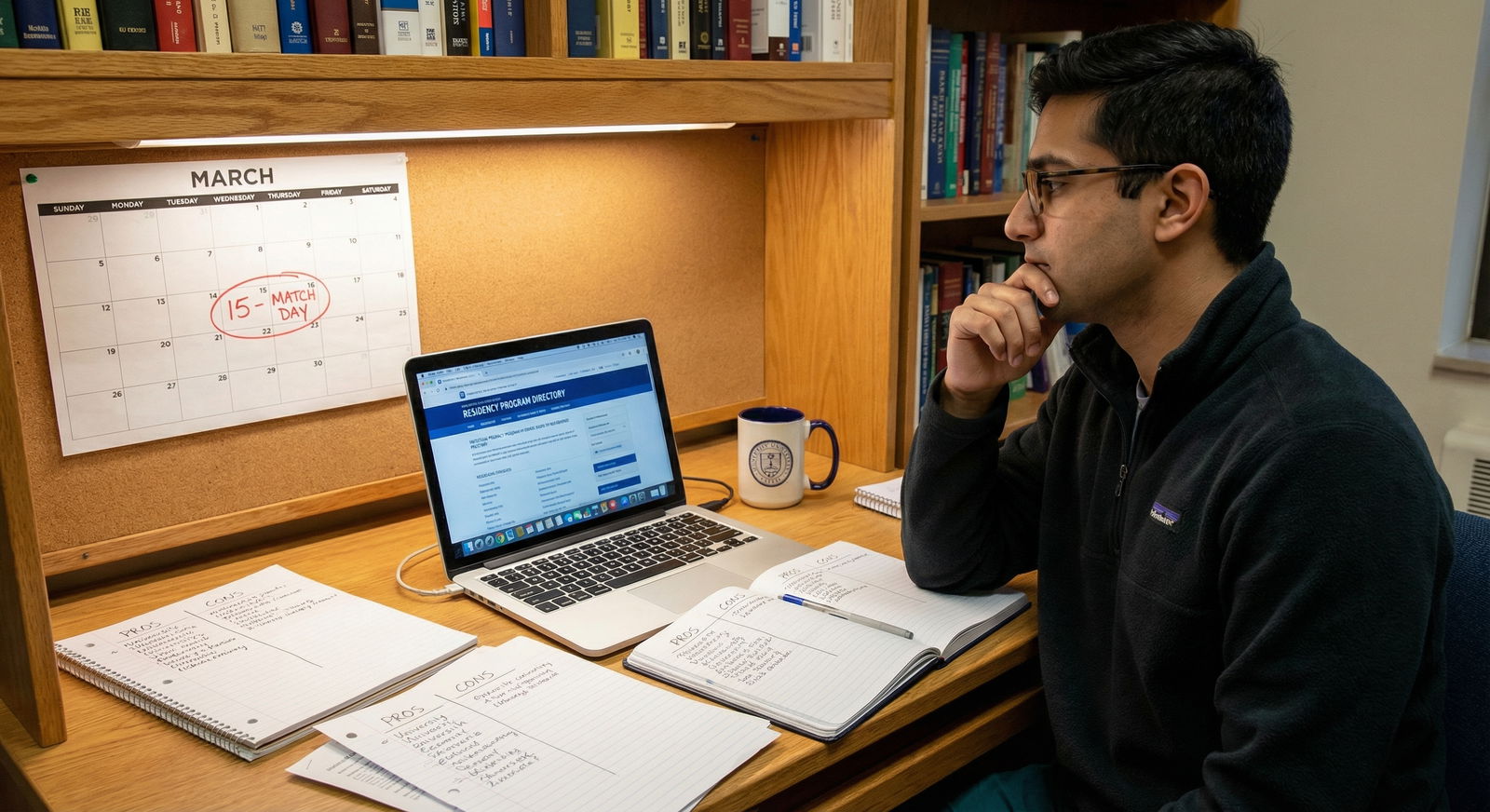
Step 1: Make a Comparative List
Create a table or list with:
- Column 1: The pre-match program
- Column 2: Your best realistic Match outcomes (e.g., top 3–5 programs you think you might match at)
Rows might include:
- Specialty and program reputation
- Clinical training quality
- Location
- Culture and wellness
- Family/social factors
- Financial considerations
- Fellowship or job placement track record
Rate each factor (e.g., 1–5) and then add notes. This visual comparison can reveal patterns your emotions might be overshadowing.
Step 2: Use the “Future Self” Test
Ask:
- “If I look back 5 years from now, which decision will I be more likely to regret?”
- “Which option keeps more doors open for the long-term medical career I want?”
- “If I had no fear of failing the Match, what would I choose?”
Your honest answers often clarify whether fear or genuine preference is driving you.
Step 3: Consult Trusted Advisors
Talk with:
- Specialty advisors or program directors from your home institution
- Mentors who know your strengths, weaknesses, and personal circumstances
- Recent graduates or residents who’ve faced similar decisions
Ask specific questions:
- “Given my profile and this offer, would you lean toward accepting or waiting for the Match?”
- “What risks do you see with each option?”
- “What do you wish you had considered at the time of your own decision?”
Step 4: Listen to Your Gut—But Validate It
Intuition matters, especially about culture and people. If something feels “off” about a program—even if it looks great on paper—take that seriously. Likewise, if you felt at home and supported, that counts.
But don’t rely on gut alone. Validate with:
- Concrete data (board pass rates, duty hour enforcement, fellowship match lists)
- Multiple resident perspectives
- At least one advisor’s opinion
Step 5: Decide, Communicate Clearly, and Move Forward
Once you decide:
- If accepting:
- Confirm in writing by the stated deadline.
- Ask about next steps (paperwork, contract signing, onboarding).
- Politely withdraw from the Match if required by rules.
- Notify other programs as appropriate, professionally and succinctly.
- If declining:
- Thank the program sincerely.
- Keep the door open:
- “I truly appreciate your confidence in me and the offer. After careful thought, I’ve decided to proceed through the Match this cycle, but I remain very impressed by your program.”
Then commit to your choice. Avoid second-guessing and focus on maximizing success within the path you choose.
FAQs: Navigating Residency Pre-Match Offers and Career Decisions
1. What exactly counts as a “pre-match offer,” and is it always binding?
A pre-match offer generally means a program is inviting you to commit to a residency position before the official Match. In some systems, this involves a formal, legally binding contract that requires you to withdraw from the Match. In others, it may be a strong verbal assurance or non-binding offer. Always clarify in writing:
- Whether you must withdraw from the Match
- Whether there are penalties or consequences if you back out
- What steps are required to finalize the position
Consult your dean’s office or an advisor to interpret any contract language.
2. Can I continue interviewing at other programs after receiving a pre-match offer?
You can usually continue interviewing until you:
- Sign a binding contract, or
- Commit in a way that conflicts with NRMP or local matching policies
However, from a professional and ethical standpoint, once you formally accept a binding pre-match position, you should not pursue other residency slots in the same cycle. If you are undecided, you can:
- Ask for more time to decide
- Attend already scheduled interviews while you reflect
- Be honest with your advisors about the situation
Always ensure you are not violating Match rules or institutional policies.
3. Should salary or financial compensation be the main factor in choosing a pre-match offer?
Compensation is important—but it should not be the primary determinant. Focus first on:
- Specialty and program fit for your long-term medical career
- Training quality, culture, and wellness
- Location and support system
Once you’re confident in those, compare financial aspects:
- Stipend vs. local cost of living
- Benefits (insurance, retirement, education funds)
- Impact on loan repayment and day-to-day financial stress
A well-fitting program with adequate support and training is almost always more valuable than a slightly higher salary in a poor fit.
4. What happens if I decline or reject a pre-match offer? Will it hurt my chances elsewhere?
If you decline respectfully and early, it usually does not harm your prospects at other programs. Programs understand that applicants are weighing multiple options. However:
- Do not accept and then rescind a binding offer without serious reason; that can damage your reputation and potentially violate rules.
- If you decline, proceed with a strong, organized Match strategy (adequate applications, well-prepared interviews, realistic rank list).
Declining a pre-match offer is reasonable if you believe you are likely to match at programs that better align with your goals and values.
5. How do I know if I’m “safe enough” to turn down a pre-match offer and go through the Match?
There is no zero-risk approach, but you can estimate your risk level by considering:
- Your specialty’s competitiveness
- Number and quality of interviews you’ve received
- Strength of your application (scores, evaluations, letters, research if relevant)
- Advice from trusted specialty-specific mentors
If multiple advisors independently tell you that your chances of matching well are high, and your pre-match offer is from a program that is not among your top choices, you may reasonably choose to decline. If you are borderline or high-risk, a solid pre-match offer can be a crucial opportunity to secure a residency position.
Thoughtful, informed decision-making at the pre-match stage is one of your first major acts of professional autonomy. By carefully weighing specialty fit, institutional culture, location, financial realities, and your broader medical career goals, you can choose a path that supports both your professional development and your personal wellbeing—whether that means accepting a pre-match offer or trusting the Match process.
Use your mentors, trust your analysis, and commit fully to the path you choose. Your residency is not just a job; it is the launchpad for the physician you are becoming.