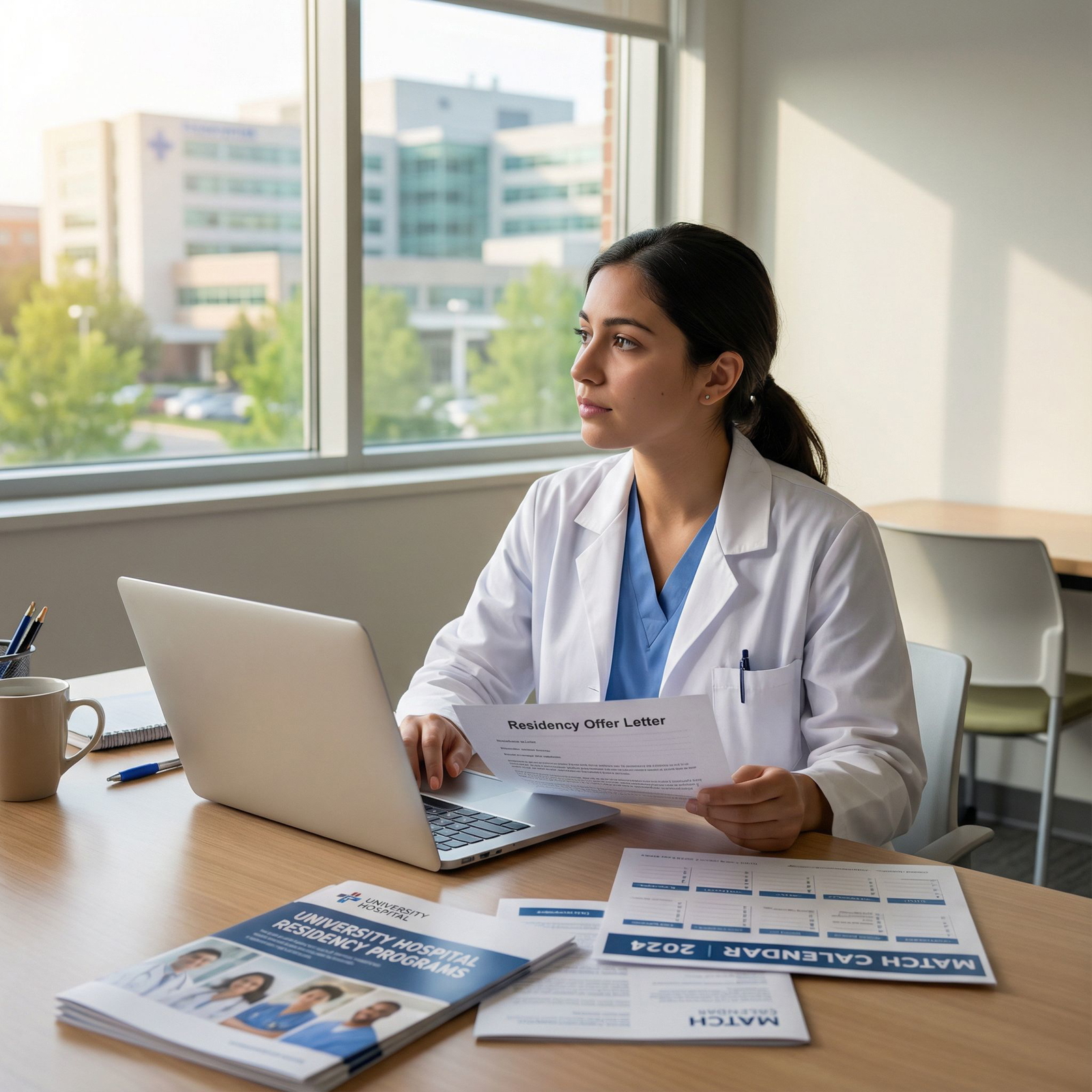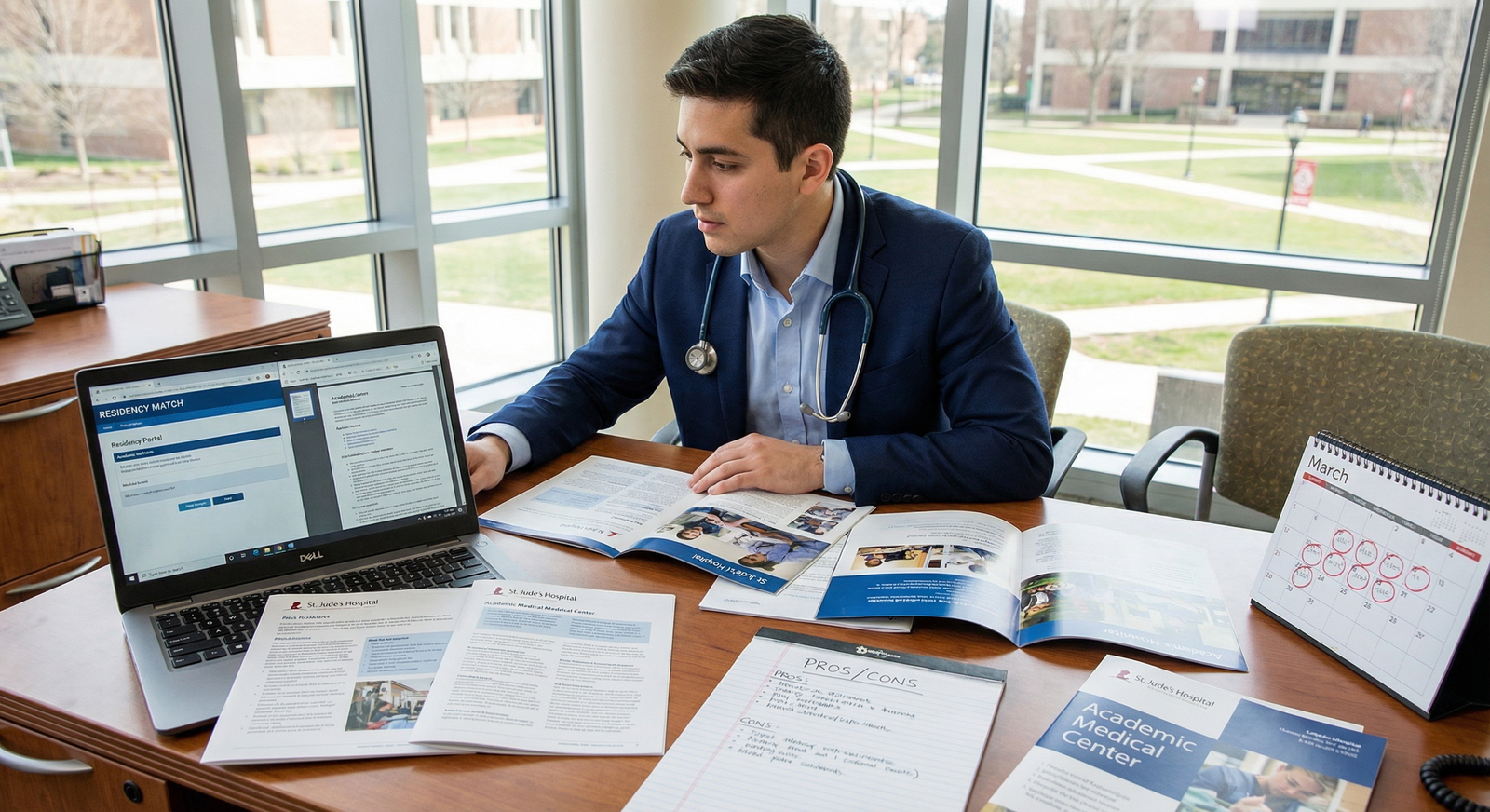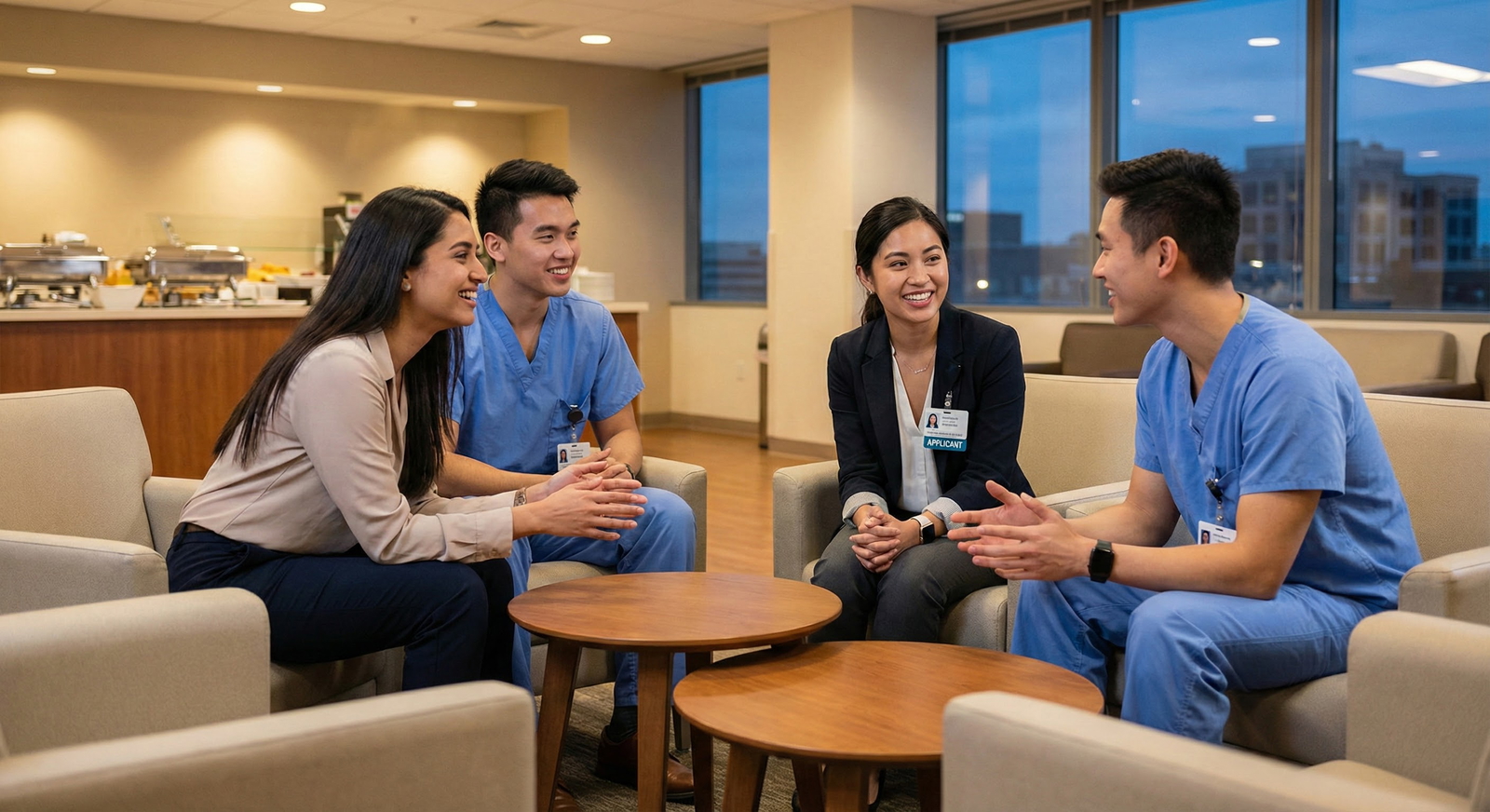
Understanding Pre-Match Communication as a DO Applicant in Preliminary Surgery
Pre-match communication is one of the most confusing and anxiety-provoking parts of the residency application process, especially for a DO graduate targeting a preliminary surgery year. You may hear terms like pre-match offers, early commitment, and program communication before match and wonder what is actually allowed—and what is wise.
For a DO graduate aiming for prelim surgery residency, pre-match communication has additional nuances:
- You may be using a preliminary surgery year as a springboard to:
- Categorical general surgery
- Another surgical specialty (urology, ortho, ENT, neurosurgery, etc.)
- Anesthesia, radiology, PM&R, etc.
- You may be concerned about osteopathic residency match dynamics and how your DO background is perceived in traditionally MD-heavy surgical fields.
- You might receive signals of interest from programs and wonder if a pre-match offer or early commitment is possible or advisable.
This article outlines how to approach pre-match communication ethically, strategically, and confidently as a DO graduate pursuing preliminary surgery.
1. Key Concepts: What Pre-Match Communication Is (and Is Not)
Before planning your strategy, it’s critical to understand what’s meant by “pre-match communication” and what is actually allowed.
1.1 Definitions and Scope
Pre-match communication
Any communication between you and programs after your application is submitted and before the Match results are released. This includes:- Interview invitations and scheduling messages
- Thank-you emails
- “Update” or “interest” letters
- Clarifying questions sent to coordinators or PDs
- Phone calls or informal conversations at conferences
Pre-match offers / early commitment
In the current NRMP system for ACGME-accredited positions, programs generally cannot require you to commit before rank list certification. True “pre-match contracts” (signing before Match) are now rare and usually illegal under NRMP rules. However:- Programs may strongly hint you will be ranked highly.
- Some non-NRMP positions (e.g., off-cycle, outside the Match) may involve contracts outside of NRMP.
Program communication before Match
Under NRMP rules, programs and applicants must not:- Solicit or disclose rank order lists.
- Make any binding promises about how they will rank one another. But they may:
- Express interest
- Ask or answer questions related to fit, schedule, and program details
- Provide feedback (usually non-specific) on your candidacy
1.2 NRMP and ACGME Rules That Matter
While you don’t need to memorize the NRMP Code of Conduct, keep these guiding principles:
No coercion
Programs cannot pressure you into revealing your rank list or demand a “yes” or “no” to some kind of verbal contract.Non-binding statements
Programs can say:- “We are very interested.”
- “You are ranked to match.” You can say:
- “You are my top choice.”
- “I intend to rank you highly.” These statements are allowed but not binding.
Honesty expectation
While statements aren’t contractually binding, they should still be truthful and made in good faith. Avoid telling multiple programs, “You are my #1” unless it is genuinely true at the time.
For a DO graduate in preliminary surgery, this framework should reassure you: you can advocate for yourself without violating rules, as long as you avoid explicit rank bargaining or coercive language.
2. Strategic Goals of Pre-Match Communication for DO Graduates
As a DO applicant to preliminary surgery residency, your pre-match communication should serve several concrete objectives.
2.1 Clarify Your Application Narrative
Programs want to understand:
- Why preliminary surgery?
- Are you targeting categorical general surgery eventually?
- Are you planning a different surgical subspecialty that requires a prelim year?
- Are you a re-applicant strengthening your profile?
- Why as a DO graduate?
- How have your osteopathic training and experiences prepared you for surgical practice?
- What unique patient care, OMT, or holistic approaches do you bring to the team?
Effective pre-match communication reinforces a cohesive, believable story about your career goals.
2.2 Signal Serious Interest and Fit
Especially in surgery, programs want residents who:
- Understand the demands of surgical prelim years
- Are reliable, hardworking, and team-oriented
- Are likely to finish the year and contribute positively
Your emails, questions, and follow-up messages should demonstrate:
- Familiarity with the program’s structure (trauma exposure, ICU time, off-service rotations)
- Understanding of what a preliminary surgery year realistically entails
- Stability and professionalism
2.3 Address DO-Specific Concerns Gently but Directly
Some programs may have less experience with DO graduates or may hold outdated assumptions. Pre-match communication can:
- Highlight your COMLEX and USMLE (if taken) performance
- Emphasize clerkship and sub-internship performance in surgical settings
- Showcase strong letters of recommendation from MD surgeons when possible
- Reassure them you are fully prepared for an ACGME-accredited academic environment
If your school’s name or geography is unfamiliar to them, your communications can help build familiarity and trust.

3. Communication Before, During, and After Interviews
Your approach to pre-match communication should evolve through three main phases: pre-interview, during the interview, and post-interview periods.
3.1 Before the Interview: Professional Interest, Not Pressure
Before you interview, your communication should be functional and courteous—focused on:
- Clarifying logistics
- Dates and times
- Virtual vs. in-person format
- Technical setup for virtual interviews
- Brief, targeted interest notes (optional)
Some applicants send short notes to high-priority programs:- After submitting ERAS, but before interview season gets busy
- After the first wave of interview offers has gone out
For a DO graduate in preliminary surgery, strategic pre-interview emails might:
- Highlight a meaningful connection:
- A visiting sub-I you did there
- An alumnus from your DO school now in their program
- Clarify your academic metrics if not obvious:
- “I recognize your program receives many applications; I wanted to directly share that I have passed COMLEX Levels 1 and 2 on first attempts and scored a [score] on USMLE Step 2CK.”
Example pre-interview interest email (brief):
Subject: DO Prelim Surgery Applicant – Continued Interest in [Program Name]
Dear Dr. [Program Director Last Name] and [Program Name] Team,
My name is [Your Name], a DO graduate from [School], applying to your Preliminary Surgery Program this cycle. I wanted to express my sincere interest in [Program Name] given its strong exposure to trauma and critical care and the opportunity to work alongside categorical residents and subspecialty services.
As a DO applicant with a strong interest in [e.g., general surgery or a specific subspecialty], I am particularly drawn to your structured prelim curriculum and mentorship opportunities. I would be grateful for the chance to interview and learn more about how I might contribute as a preliminary resident.
Thank you for your time and consideration.
Sincerely,
[Your Full Name], DO
AAMC ID: [Number]
Keep it short, specific, and respectful. One concise email per program is sufficient; avoid repeated messages if you don’t get a reply.
3.2 During the Interview: Ask the Right Questions
Your spoken communication during interviews is also part of pre-match communication. For preliminary surgery, you want to show that you’ve thought carefully about:
- The nature of a prelim year
- % of time on general surgery vs. off-service
- ICU, trauma, night float structure
- Call responsibilities and level of autonomy
- Support for career advancement
- Availability of faculty mentors for prelims
- Guidance for applying to categorical positions or advanced specialties
- Match or placement outcomes for prior prelims
- Respect and integration of DO graduates
- Number of DO residents currently in the program
- Any specific onboarding or academic supports
Examples of strong questions:
- “How does your program support preliminary surgery residents who are seeking a categorical surgery position or another surgical subspecialty afterward?”
- “Have DO graduates from your preliminary or categorical tracks gone on to fellowships or categorical surgery positions, and what has contributed to their success?”
- “How is feedback provided to prelim residents, and how early in the year do you discuss next steps for the following cycle?”
These questions both inform your decision-making and signal that you understand what it means to be a prelim vs. categorical resident.
3.3 Post-Interview: Thank-You Notes, Updates, and Interest Statements
After each interview, plan for three possible types of communication:
- Thank-you notes
- Update emails
- Preference or “love” letters (if appropriate and honest)
3.3.1 Thank-You Notes
General guidelines:
- Send within 24–72 hours of the interview.
- Keep to 1–2 short paragraphs.
- Individualize each note—reference something specific you discussed.
- If the program instructs “no thank-you emails,” follow their instructions.
For a DO prelim surgery applicant, you might briefly reaffirm:
- Your interest in the program’s specific strengths (trauma, ICU, case volume).
- How you see yourself contributing as a DO graduate with your particular experiences.
3.3.2 Update Emails
Use updates sparingly and strategically:
- New publications, presentations, or research
- New Step/COMLEX scores
- An updated goal (e.g., more clarity about your surgical career direction)
Send only when you have genuine new information, not just to “remind them you exist.”
3.3.3 “You Are My Top Choice” or Preference Letters
If you have a clear #1 program, one honest letter (or email) near the end of interview season can be powerful. Include:
- A statement of genuine intent:
- “You are my top choice and I intend to rank [Program Name] #1.”
- Specific reasons:
- Curriculum features, mentorship, location, culture
- Reassurance about your commitment to prelim surgery and your long-term goals
Do not send this same statement to multiple programs. It’s both unethical and potentially damaging if discovered.
4. Handling Signals of Interest, “Pre-Match Offers,” and Early Commitment
Programs vary widely in how direct they are with applicants. DO graduates in surgery may be particularly likely to interpret any positive signal as a potential pre-match offer—so it’s important to decode what’s actually happening.
4.1 Common Phrases and What They Typically Mean
- “We would be very excited to have you here.”
→ Genuine interest, but not a guarantee. - “You are ranked to match.”
→ Strong signal, but NRMP still considers this non-binding. - “If you rank us first, you will match here.”
→ This strays into problematic territory. It may or may not be true, and it’s incompatible with NRMP’s intended spirit. - “Would you come here if we ranked you highly?”
→ They are probing your genuine interest. You may reaffirm that you are strongly considering them but avoid giving rank-order specifics if you’re not fully sure.
Your best response strategy:
- Be honest, but do not overpromise.
- Emphasize that you are “very interested” and “strongly considering ranking them highly” if that’s true.
- Avoid giving your detailed rank list unless you are certain and comfortable disclosing.
4.2 True Pre-Match Offers vs. Misunderstandings
In the modern ACGME/NRMP environment, official pre-match contracts are rare for accredited prelim surgery positions. Still, you might encounter:
- Off-cycle or non-NRMP positions:
- Some hospitals occasionally recruit prelim residents outside the Match.
- You might be offered a written contract; review it carefully.
- Informal “handshake” offers:
- “If you commit verbally to us now, we will rank you to match and expect you to rank us first.”
Remember:
- Under NRMP rules, you cannot be forced to commit early.
- If you accept a contract for an out-of-Match prelim position, you are obligated to honor it.
For DO graduates who may feel pressure to secure any surgical position, it’s essential to:
- Ask for clarity:
“Is this position participating in the NRMP Match, or is it outside the Match with a separate contract?” - Consider the long-term impact:
An outside-the-Match prelim year might limit your flexibility compared to a Match-participating prelim.
4.3 When (and Whether) to Make an Early Commitment
If you do receive what feels like a pre-match offer or strong early commitment request:
Clarify the nature of the offer
- Is it a standard NRMP-participating position or an off-Match contract?
- Is there any written documentation?
Consider your risk tolerance and backup options
- Are you holding multiple interview invitations?
- Do you have categorical options elsewhere?
- Is this program’s training environment acceptable if it ends up being your only surgical year?
Seek advice quickly, but thoughtfully
- Talk to your home institution advisors, especially those familiar with the osteopathic residency match and surgical placements.
- Ask DO mentors who successfully matched into surgery or used a prelim year effectively.
In most instances for prelim surgery, it is wiser to participate fully in the Match, use your rank list to express preferences honestly, and avoid early verbal commitments that might conflict with your long-term goals.

5. DO-Specific Considerations and Communication Strategies
As a DO graduate, there are additional layers to your pre-match communication for a preliminary surgery year.
5.1 Addressing COMLEX and USMLE Transparently
Programs may vary in their familiarity with COMLEX scoring and interpretation. Your communication can help:
- If you also took USMLE:
- Highlight a strong Step 2CK score in an update email if released after ERAS submission.
- If you did not take USMLE:
- Emphasize strong COMLEX performance and clinical evaluations.
- If asked, be ready to explain your rationale: finances, institutional policy, or timing—without sounding defensive.
You don’t need to apologize for being DO; instead, project confidence and competence.
5.2 Emphasizing Surgical Readiness from a DO Background
Use your emails and conversations to:
- Showcase hands-on procedural experience from rotations:
- Central lines, suturing, wound care, initial trauma assessments.
- Highlight osteopathic principles where relevant:
- Holistic assessment of surgical patients.
- Communication skills with complex, high-acuity patients.
- Lean on strong letters from surgical faculty:
- If you completed sub-Is at MD-heavy academic centers, mentioning this in your communications can reassure skeptical programs.
5.3 Managing Limited Interview Volume as a DO Applicant
If you receive fewer interview invitations than expected:
- Consider one brief, respectful inquiry to a top program you haven’t heard from:
- Reaffirm interest
- Offer to provide any additional information
- Avoid multiple follow-ups or sounding entitled.
You may also consider:
- Broadening your list of prelim surgery programs, including community-based academic affiliates.
- Exploring transitional year or non-surgical prelim options if your ultimate specialty can accommodate that.
Your pre-match communication should never sound desperate; it should come across as organized, thoughtful advocacy.
6. Practical Communication Templates and Common Pitfalls
6.1 Practical Templates
Use these as starting points; always customize.
A. Brief Post-Interview Thank-You (Preliminary Surgery)
Subject: Thank You – Preliminary Surgery Interview on [Date]
Dear Dr. [Last Name],
Thank you for the opportunity to interview for the Preliminary Surgery position at [Program Name] on [Date]. I appreciated learning more about your program’s robust exposure to [e.g., trauma, critical care, vascular cases] and the way preliminary residents are integrated into the surgical teams.
As a DO graduate with a strong interest in [general surgery / specific subspecialty], I value the mentorship, operative experience, and collegial environment you described. I would be honored to train at [Program Name] and contribute as a hardworking, reliable prelim resident.
Sincerely,
[Your Name], DO
AAMC ID: [Number]
B. End-of-Season #1 Preference Letter (Only if Genuine)
Subject: Strong Interest in [Program Name] – Preliminary Surgery
Dear Dr. [Last Name] and the [Program Name] Team,
I want to thank you again for the opportunity to interview for a Preliminary Surgery position at [Program Name]. After completing my interviews and carefully reflecting on my goals, I have decided that [Program Name] is my top choice, and I intend to rank your program #1 on my rank list.
I am particularly drawn to your program’s strong operative exposure for prelims, structured mentorship, and the supportive environment you described for residents applying to categorical surgery and surgical subspecialties. I believe my background as a DO graduate, my commitment to patient-centered care, and my work ethic would allow me to contribute meaningfully to your surgical team.
Thank you again for your time and consideration.
Sincerely,
[Your Name], DO
6.2 Common Pitfalls to Avoid
Over-communicating
- Multiple emails without new information can irritate programs.
- Avoid weekly “just checking in” notes.
Being vague or generic
- “I really like your program” is weak.
- Instead, mention specific aspects: call schedule, trauma volume, resident camaraderie, research opportunities.
Misrepresenting your rank intentions
- Telling several programs they are “#1” damages your integrity and could backfire if word spreads.
Sounding transactional or demanding
- Don’t ask “Where will you rank me?”
- Don’t imply they should rank you highly based solely on your scores.
Neglecting professionalism in written communication
- Check spelling, punctuation, and tone.
- Use a professional email address and signature.
FAQs: Pre-Match Communication for DO Graduates in Preliminary Surgery
1. As a DO graduate, should I tell a prelim surgery program that they are my top choice?
Yes, if and only if it’s true. A sincere, well-crafted message indicating that a program is your top choice, and that you intend to rank them #1, can reinforce mutual interest. Do not send this statement to more than one program. Remember, this is not a binding contract, but honesty and professionalism are essential.
2. Can a preliminary surgery residency program give me a pre-match offer or contract?
Most ACGME-accredited prelim surgery positions participate in the NRMP Match and cannot legally require a pre-match contract. Occasionally, there may be off-cycle or non-Match positions where a contract is offered outside the NRMP system. If you’re presented with something that looks like a pre-match offer:
- Ask if the position is in the NRMP.
- Request the details in writing.
- Discuss with your advisor or Dean’s office before signing.
3. How often should I email programs about my interest?
Limit yourself to 1–2 well-timed emails per program:
- Possibly one pre-interview (optional, if you have a meaningful reason).
- One thank-you note after the interview.
- One update or preference letter late in the season, if appropriate. Avoid repeated “check-in” messages without new information.
4. How can I address being a DO in my pre-match communication without sounding defensive?
You generally don’t need to explicitly defend being a DO. Instead, demonstrate your readiness:
- Highlight strong COMLEX (and USMLE, if applicable) scores.
- Emphasize successful surgical sub-internships, including at MD-majority centers if relevant.
- Reference letters from well-known surgeons when possible.
- Describe how your osteopathic training enriches your surgical care (holistic assessment, communication, patient-centered focus).
By focusing on competence, professionalism, and fit, you present your DO background as a strength rather than something to overcome.
Thoughtful, honest, and well-timed pre-match communication can significantly strengthen your candidacy as a DO graduate pursuing a preliminary surgery year. Use it to clarify your narrative, highlight your readiness for surgical training, and build genuine connections—while always respecting NRMP rules and your own integrity.