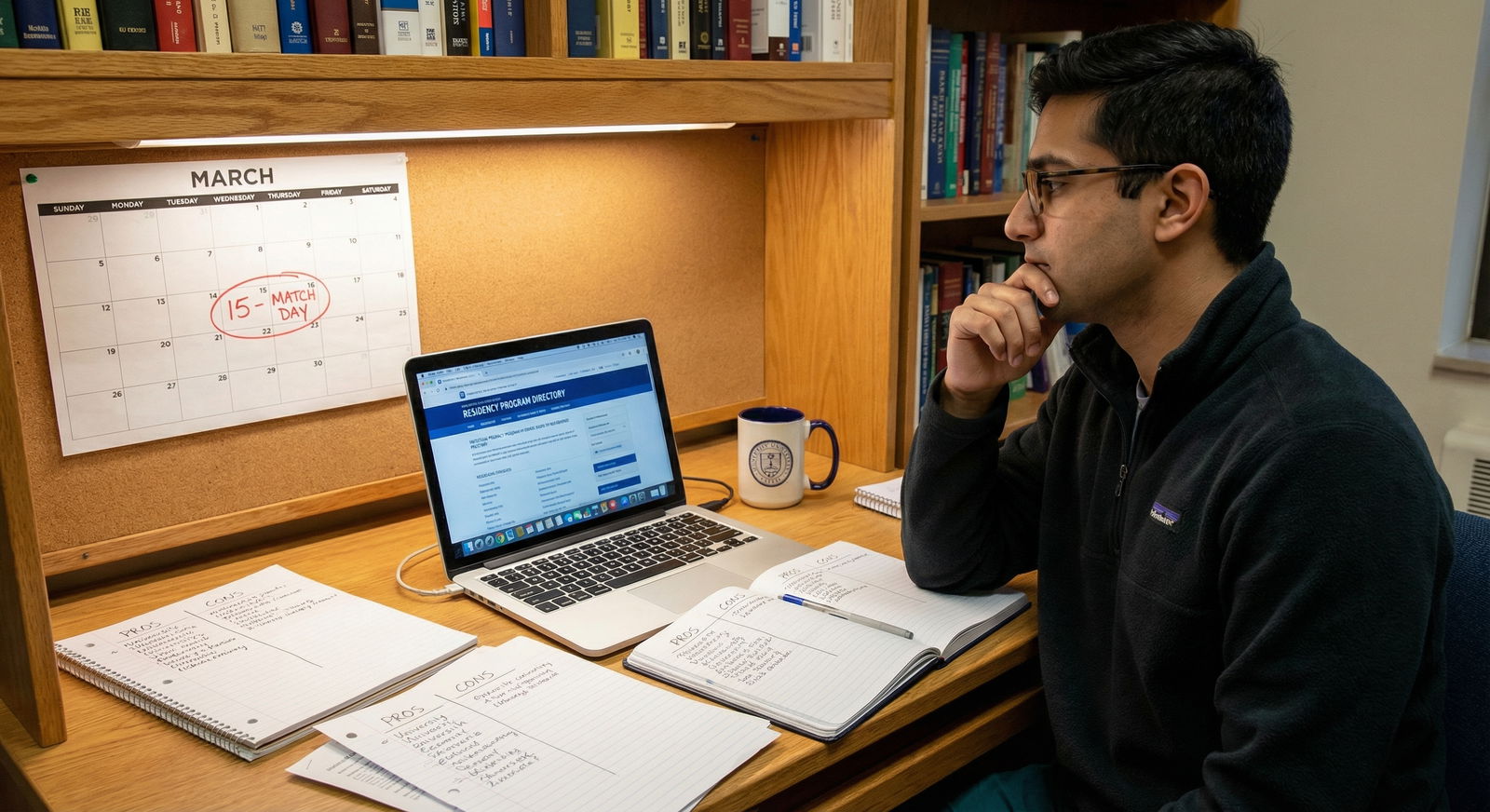
It’s late October. You just walked out of what felt like your best interview so far. The PD smiled, dropped a line about you being “a great fit,” and the coordinator hinted they’re “moving quickly on pre-match offers this year.”
You fly home replaying every answer and, let’s be honest, already half-planning where you’d live if they offer.
What you do not see: that same afternoon, the PD closes the door, pulls up your ERAS again, and starts making calls. Not to you. About you.
Welcome to the world of backchannel feedback. The quiet vetting that happens before most real pre-match offers ever reach your phone.
Let me walk you through what actually happens behind the scenes, how brutally honest those conversations can be, and what you can do now so that when a PD calls around with your name, what they hear makes them comfortable enough to put an early offer on the table.
What “Backchannel Feedback” Really Is (Not the Sanitized Version)
Backchannel feedback is everything that’s said about you off the record.
Not the LoRs you see. Not the MSPE comments your dean cleans up. I’m talking about:
- Phone calls between PDs and your home faculty
- Quiet WhatsApp messages in PD groups and alumni chats
- “Hey, do you know this kid from your med school?” texts to an old co-resident
- Chiefs getting pinged for “the real story” about a rotator
No paper trail. No formal evaluation. Just people talking about whether they’d trust you at 3 a.m. on their ICU.
Here’s the uncomfortable truth: pre-match offers, especially in more competitive or IMG-heavy programs, are high-risk moves for PDs. Once they commit a spot early, they’re betting that you:
- Will not embarrass them clinically
- Will not implode professionally
- Will not bring drama that ends up in the DIO’s office
So they don’t rely on your carefully curated application. They ask people who’ve seen you tired, frustrated, and under pressure:
Is this person safe?
That’s what backchannel feedback is really answering.
When PDs Start Backchanneling You (Timing Around Pre-Match)
This varies a bit by specialty and country, but the pattern is the same.
For programs that actively use pre-match offers (think some IM, FM, psych, certain community-based or IMG-heavy programs, and definitely in some non-NRMP systems), the timeline often looks like this:
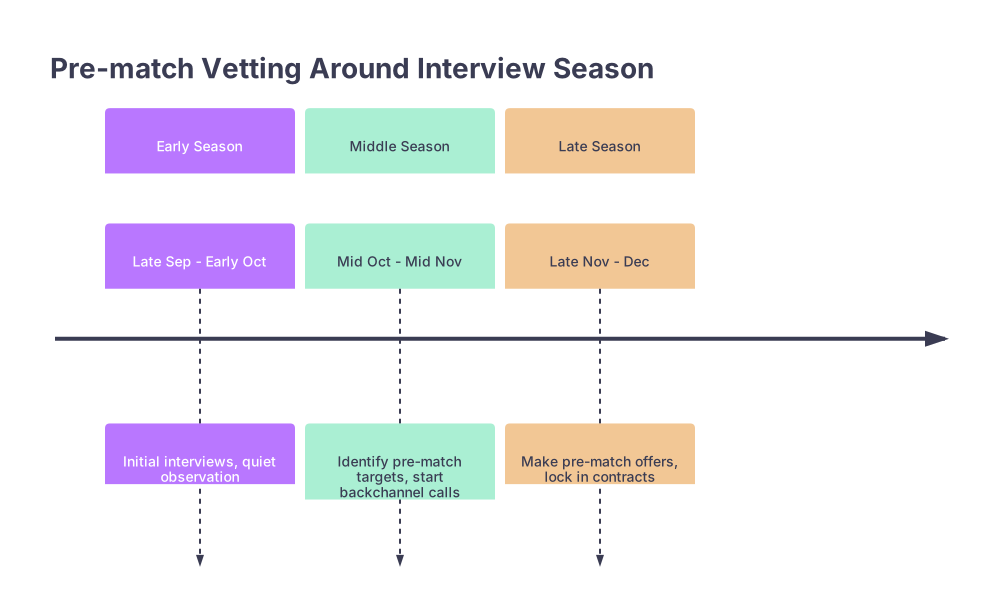
| Period | Event |
|---|---|
| Early Season - Late Sep - Early Oct | Initial interviews, quiet observation |
| Middle Season - Mid Oct - Mid Nov | Identify pre-match targets, start backchannel calls |
| Late Season - Late Nov - Dec | Make pre-match offers, lock in contracts |
The calls really ramp up in that mid-season window. PDs are staring at their interview spreadsheets, highlighting names. They know which spots they’re saving for competitive NRMP candidates and which ones they want to lock in early with people they “trust.”
You do not usually get pre-match offers without some sort of informal vetting first, especially if:
- You’re an IMG they’ve never heard of
- You’re from a school with a reputation they don’t fully trust
- Your Step scores / clerkship grades are good-not-amazing and they’re leaning heavily on “fit” and “character”
This is where backchannel feedback becomes make-or-break.
The Quiet Network PDs Use (And How Your Name Travels)
You probably think of “networking” as emails and shaking hands at conferences. PDs have their own network that’s older, tighter, and significantly more blunt.
Here’s where your name actually gets passed around.
1. PD-to-PD Calls
This is the cleanest channel and the one everyone pretends is “professional collaboration.”
Example I’ve seen:
An IM PD at a mid-tier community program in the Midwest is considering pre-matching you. You’re from a Caribbean school. He looks up where most of your graduates match and dials a PD at a different program that has taken a lot of grads from your school.
The script is short and not subtle:
“Hey, I’ve got an applicant from [School X], name is [Your Name]. Do you know them or have you had anyone similar? What’s your experience been with grads from that place? Any red flags I should know about?”
And if that other PD says, “We had two grads from that school recently, both solid clinically, no professionalism issues,” your stock just went up.
If they say, “One was fine but the other was a disaster — lots of sick-call abuse, weak work ethic,” that stain spills on you too. Unfair? Yes. Real? Also yes.
2. PD to Your Dean / Clerkship Director
This one is more personal.
Especially if you’re a US MD/DO, PDs will call:
- Your medicine clerkship director
- Your sub-I director
- Sometimes your dean of students
The “off the record” ask is always the same:
“If this were your own program, would you be comfortable taking them? Anything I wouldn’t see in the MSPE?”
That last line is code for: tell me about the near-fail in surgery, the unprofessional email to a coordinator, the time you blew up at a nurse.
Most deans won’t absolutely torch you, but they will modulate their tone. And PDs listen for that.
“I think they’d be a good resident” vs “They’re outstanding, I’d take them in a second” are not the same endorsement.
3. Ex-Residents and Faculty Who Left
People underestimate this one.
PDs love calling their graduates who are now attendings or fellows at other places:
“You’ve got a student rotating from [Your School]? What’s the vibe with that place right now? Any sense of how rigorous their training has been?”
Those grads have less reason to sugarcoat anything. They remember the painful call nights and who pulled their weight. Their impressions of your school and your cohort get projected onto you.
4. Residents and Chiefs: The Real Filters
If you rotated there. If you did an away. If you did a virtual elective and had real Zoom time with the team.
Your name lives in the resident group text.
PDs will absolutely ask the chiefs and seniors:
“What did you think of [Your Name]? Are they someone you’d want on nights with you?”
If a single chief resident says, “I don’t completely trust their judgment,” that kills many pre-match considerations immediately. PDs won’t fight that.
Residents control more of your fate than you think.
What PDs Are Actually Asking Behind Closed Doors
The questions are blunt. And they’re very different from what appears in your polished letters.
Here’s what PDs really want to know before they risk a pre-match spot on you:
| Category | What PDs Actually Ask |
|---|---|
| Reliability | Do they show up, follow through, own mistakes? |
| Clinical sense | Are they safe? Would you trust their judgment? |
| Team fit | Any drama, attitude, or ego problems? |
| Work ethic | Do they disappear, cut corners, or coast? |
| Professionalism | Any complaints, write-ups, or weird behavior? |
The exact language varies, but the themes don’t.
Reliability
Nobody pre-matches a flake.
PDs will ask:
- “Any issues with punctuality or attendance?”
- “Do they close loops or do others have to clean up behind them?”
One story of you “forgetting” to follow up on a critical lab or leaving a task unfinished gets magnified.
Clinical Judgment
This is the “will they hurt someone in July?” question.
PDs ask:
- “How’s their reasoning? Safe with consults?”
- “Do they know when to ask for help?”
If the answer is, “They’re a bit overconfident for their knowledge level,” kiss that early offer goodbye.
Team Fit and Drama Potential
This is where your personality and professionalism matter more than your Step score.
- “Any issues getting along with staff?”
- “Would you want them covering your patients?”
Residents and nurses have long memories. The arrogant third-year who rolled their eyes at consults? People remember.
Red Flags
The PD always ends with something like:
“If there were something I should be cautious about, what would it be?”
That’s the “tell me what isn’t documented” moment. Anything that pops up here becomes a risk factor that pushes you from pre-match consideration to “we’ll just see where they land in the Match.”
Where Backchannel Feedback Hurts You The Most
Let me be blunt: backchannel feedback rarely turns a mediocre paper app into a star.
What it does very effectively is kill borderline opportunities.
1. The Strong-But-Unknown IMG
Classic scenario: good scores, good English, decent letters from home, short US clinical experience.
The PD really wants someone like you to fill an early spot. But they’re nervous. So they ask around.
If even one trusted PD or attending says something like, “We’ve had mixed results with that school, knowledge gaps, professionalism issues,” they’ll pull back.
You’ll still be ranked. You just won’t be their early commitment.
2. The US Grad With “That One Rotation Incident”
You think it got buried with time. It did not.
The SICU attending you snapped at? Now a PD somewhere else. Or best friends with one.
If the story circulating is: “Good student, but had one episode where they lost their cool and blamed nursing,” PDs get spooked. Pre-match offers are about risk minimization. Any whisper of unstable behavior, and you’re out of that category.
3. The “Too Cocky For Their Own Good” Applicant
This kills people in surgery, EM, and some IM programs.
You interview well. You’re charming. PD likes you. Then they ask a former attending:
“How was their teamwork?”
“Big ego. Not always the best listener.”
No pre-match. Possibly a lower rank than your scores deserved.
How You Can Influence Backchannel Feedback Before It Happens
You can’t control every whispered conversation. But you’re not powerless.
1. Stop Thinking Only Attendings Matter
Residents. Nurses. Coordinators. They all have mouths. And PDs listen.
On every rotation from now until the end of M4 (and honestly through intern year), assume:
- Any bad interaction can end up summarized in one sentence to a PD.
- Any great interaction can turn into, “They’re the kind of person you want on your team.”
Treat staff with the same basic respect you’d use around your PD. You’d be shocked how many pre-match “no’s” are because residents or nurses say, “I really don’t want to work with this person.”
2. Identify and Cultivate Your “Defenders”
You want 2–3 people in your universe who, if a PD called and asked about you, would say without hesitation:
“They’re excellent. I’d take them here any day.”
These are usually:
- A sub-I attending who actually saw you grind on service
- A clerkship director who noticed you and remembers your name
- A chief resident you worked closely with, especially on a tough rotation
They don’t need to be famous. They need to be willing to go to bat for you.
Stay in touch. Send a short, sincere update email:
“I’m applying to [Specialty] this cycle and interviewing at [Program X]. I really valued my time on your service. If they ever reach out about me, I’d be incredibly grateful for any support you feel comfortable giving.”
That’s not manipulative. It’s smart. You’re reminding them you exist and care about their opinion.
3. Minimize Loose Ends and Unresolved Conflicts
If you had any near-miss professionalism issues, clear the air before interviews:
- Apologize to the attending you clashed with
- Thank the coordinator you once frustrated
- Show growth and maturity in how you communicate now
I’ve watched PDs rethink a borderline story because the follow-up impression was: “They really matured since then. They owned it and improved.”
People will say you changed—if you actually did and let them see it.
How PDs Use Backchannel Feedback to Decide on a Pre-Match Offer
Think of it like this: PDs have three mental buckets for serious interviewees.
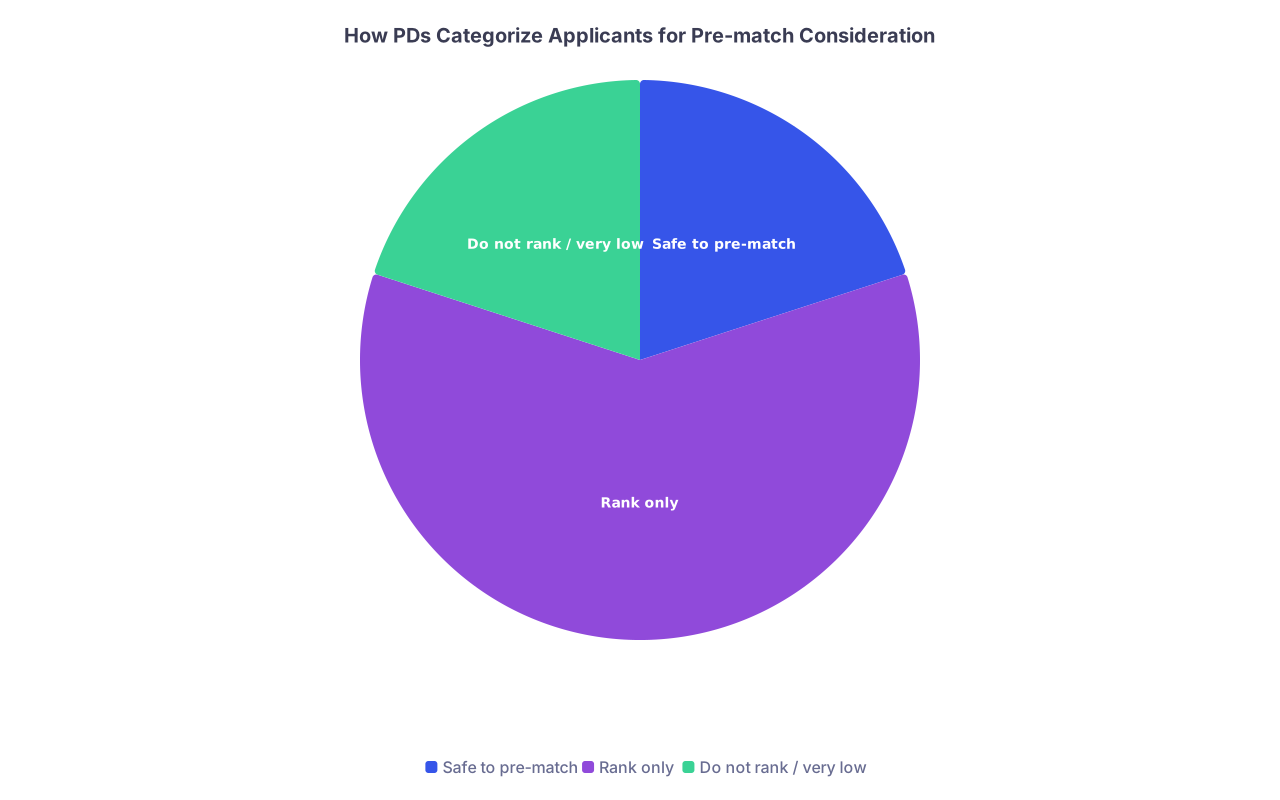
| Category | Value |
|---|---|
| Safe to pre-match | 20 |
| Rank only | 60 |
| Do not rank / very low | 20 |
Those percentages are rough, but the mindset is right.
Backchannel feedback helps them move you between those buckets.
Bucket 1: “Safe to Pre-Match”
This is you if:
- Your scores + CV are solid enough
- Multiple voices say you’re reliable, safe, easy to work with
- Nobody hints at drama or professionalism issues
Here, a PD feels comfortable burning an early spot on you. These are the people who get the mid-November, “We’d like to discuss an offer” call.
Bucket 2: “We’ll Rank Them, But Not Commit Early”
You land here if:
- You’re strong on paper, but no one really knows you
- Backchannel feedback is neutral or vague
- There’s small smoke but no clear fire (“Good, but not the hardest worker we’ve seen”)
In this zone, they like you, but they will not pre-commit. They’ll see how the Match shakes out.
Bucket 3: “Too Risky”
This is where backchannel feedback is clearly negative:
- “Smart, but can be difficult.”
- “Some professionalism concerns in the past.”
- “Not someone I’d want in my program.”
PDs don’t spend much time debating these. They’ve got a stack of safer options.
What To Do During Interview Season To Help Yourself
Alright, enough theory. Here’s how you play the game while interviews and pre-match conversations are actively happening.
1. Always Assume Someone Is Watching You For Fit
Every pre-interview dinner. Every resident Q&A. Every email you send a coordinator.
That “casual” pre-interview social? Residents screenshot group chats and send impressions upwards:
“Loved [Name], seemed genuine and humble.”
“That one was rolling their eyes, felt entitled, talked over others.”
Those impressions show up in PD discussions when they’re deciding whom to pre-match.
2. Watch What You Say About Other Programs and People
You have no idea who knows whom.
Badmouthing your home program, your school, or another program you interviewed at is the fastest way to be labeled as “potential problem.”
Residents remember the applicant who said, “Yeah, I’m mostly just using this place as a backup.” So do PDs.
3. Follow Up Intelligently, Not Desperately
If you’re explicitly interested in pre-match with a program that uses it, a short follow-up after your interview helps. Not a 900-word essay. Something like:
“Thank you again for the opportunity to interview. I really connected with the residents and see myself thriving at [Program]. I’d be very excited to train there and would strongly consider any early offer you might extend.”
That gives the PD political cover if they decide to make a pre-match move. They can tell their GME office, “The candidate clearly expressed strong interest.”
A Realistic Scenario: Two Applicants, Same Scores, Different Backchannel
Let’s put all this together.
Two applicants. Both IMG. Step 1 235, Step 2 243. Similar LoRs on paper.
Applicant A:
- Rotated at the program for 4 weeks
- Showed up early, stayed late, no drama
- Residents liked them, chief says, “Would absolutely work nights with them”
- PD calls A’s home IM attending: “They’re one of our favorites this year. Very reliable.”
Applicant B:
- Never rotated at the program
- Their school has mixed history with that PD’s friends
- Backchannel feedback: “Smart, but can be a bit defensive with feedback.”
Who gets the pre-match offer? It’s not even a question.
Backchannel feedback is the tiebreaker. Over and over again.
Long-Term: How To Build a Reputation That Helps You Next Year Too
This doesn’t stop once you get a pre-match offer. Or once you match.
Your name, your work ethic, your professionalism — they keep circulating.
PDs talk. Fellowship directors talk. If you start residency with even a small halo—“solid, hardworking, good teammate”—you’ll see doors quietly open that never show up on any public posting.
If you get a reputation as the resident who’s “difficult,” the network remembers that too. You’ll feel it when fellowship interviews are “mysteriously” thin.
The backchannel never fully shuts off.
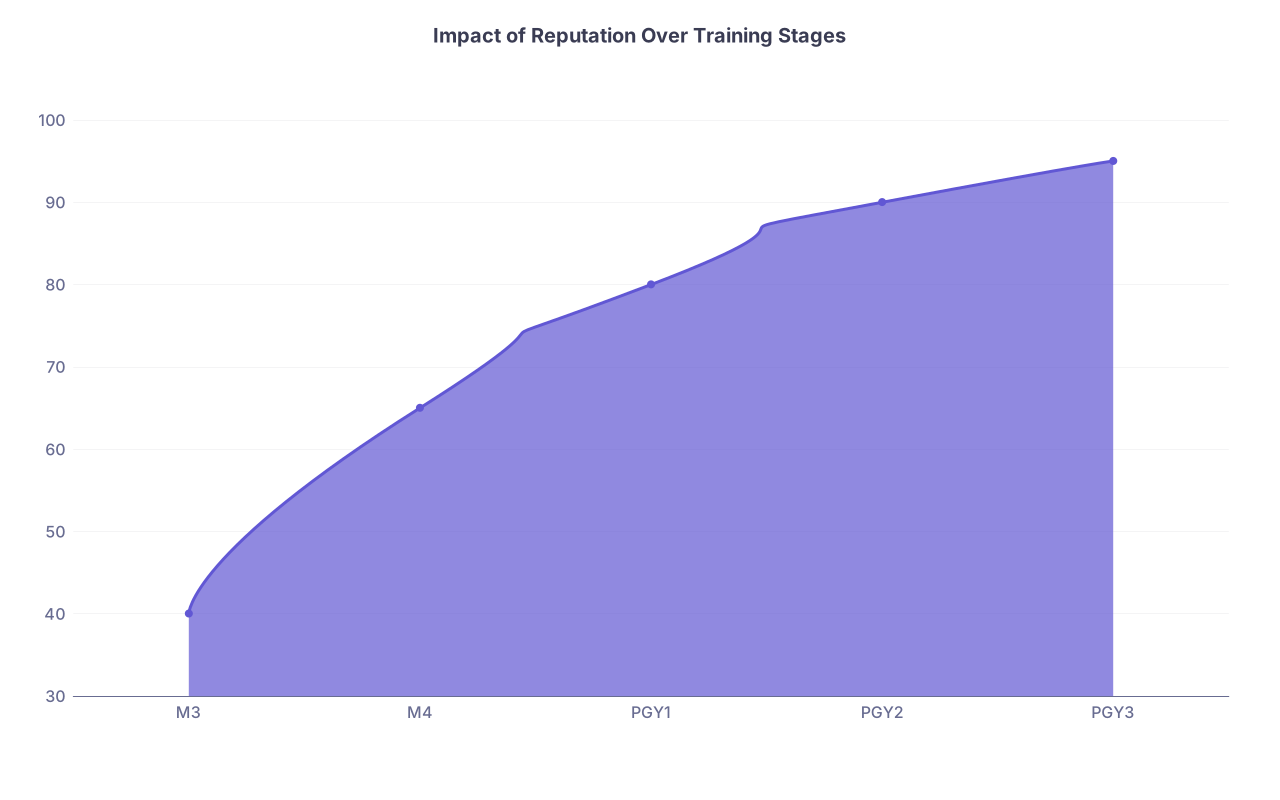
| Category | Value |
|---|---|
| M3 | 40 |
| M4 | 65 |
| PGY1 | 80 |
| PGY2 | 90 |
| PGY3 | 95 |
(Think of that as how much your reputation, not just your CV, influences your opportunities. It only goes up.)