
The fastest way to destroy your residency prospects is to mishandle pre‑match conversations and offers. People do not forgive this easily. Programs talk. Coordinators remember names.
You are not just risking one spot. You are risking an entire specialty.
This is the part of the Match cycle where otherwise strong applicants behave recklessly:
- Saying “yes” before they understand what “yes” means
- Ghosting programs they no longer want
- Playing two offers against each other like it is corporate recruiting
Residency is not tech recruiting. You cannot treat pre‑match offers like optional “placeholders.” Let me walk you through the most common ways people accidentally burn bridges—and how to stay out of that disaster category.
1. Misunderstanding What a Pre‑Match Offer Actually Means
The first fatal mistake: not understanding the rules of the game.
A pre‑match offer is not just “interest.” It is not “strong consideration.” In many institutions, especially outside the U.S. and in some community programs, a pre‑match is essentially:
- A conditional contract
- With real expectations
- That takes you out of the general applicant pool
If you treat it like a casual flirtation, you look unprofessional at best and dishonest at worst.
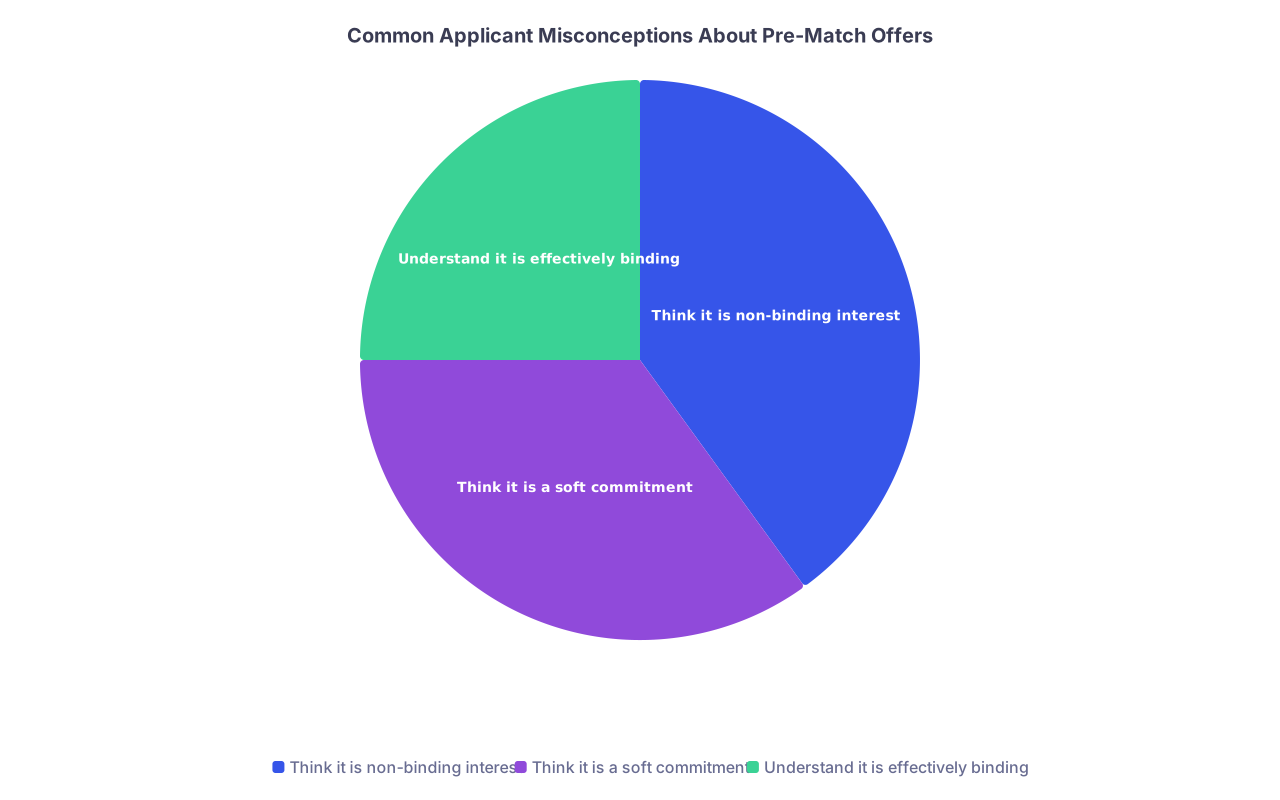
| Category | Value |
|---|---|
| Think it is non-binding interest | 40 |
| Think it is a soft commitment | 35 |
| Understand it is effectively binding | 25 |
Bridge-burning behaviors here:
- Accepting verbally because you feel pressured, then backing out “after thinking about it”
- Assuming you can accept multiple pre‑match offers and decide later
- Telling one program you are committed while still shopping yourself around openly
Programs remember two types of applicants:
- The ones who were excellent and professional
- The ones who were dishonest or flaky
You do not want to be in the second group. Faculty absolutely mention names when other PDs ask informally, “Hey, have you interviewed this person?”
How to avoid this mistake:
- Before you say anything that might sound like acceptance, ask directly:
- “If I accept, is this considered a binding commitment to your program?”
- “Does this remove me from consideration at other programs or in the Match?”
- Never, ever accept on the spot if you are not sure. Your safest line:
- “I am very interested and honored. I take commitments seriously. May I have 24–48 hours to think carefully and clarify some details?”
- Talk to someone who knows local rules (school advisor, recent grads, alumni in that specialty) before committing
Do not let your fear of “losing the offer” push you into making a promise you cannot or do not want to keep. Broken promises in this space follow you.
2. Being Vague or Dishonest About Your Intentions
Half-truths around pre‑match offers are one of the quickest ways to get blacklisted informally.
I have heard this exact story multiple times:
Applicant tells Program A, “You are my top choice.”
Program A pushes for a pre‑match.
Applicant accepts verbally, keeps interviewing, then matches elsewhere.
Next year, Program A tells every colleague, “Do not trust this person.”
You may think, “They will never know.” They do. Faculty move. Assistant PDs have friends at other hospitals. Word spreads, especially in small specialties (Derm, ENT, Rad Onc, Ortho, Neurosurg).
Red flag behaviors:
- Using phrases like “You are my number one” at more than one program
- Saying you will rank a program first when you know you will not
- Letting a program assume you are committed when you are not, just to stay in good favor
- Telling different stories to different places
This is not sales. This is medicine. Integrity matters.
Safe, honest phrases that do not trap you:
- “I am very interested in your program and see an excellent fit.”
- “You are among my top choices, and I would be very excited to train here.”
- “I take commitments seriously, so I do not want to make a firm statement I cannot guarantee, but I have a strong interest in your program.”
What not to do:
Do not try to “game” them with ambiguous enthusiasm like, “If I got an offer here, it would be hard to say no,” when in reality you know you would say no. That sounds clever in your head. It sounds deceptive to them later.
3. Accepting Too Quickly, Then Trying to Back Out
The worst bridge you can burn: accepting a pre‑match and then reversing. That is an almost guaranteed permanent stain.

I have watched this play out step by painful step:
- Applicant gets a pre‑match offer from a mid-tier community program.
- Panic: “What if I do not match anywhere else?” They accept.
- Two weeks later: big-name university program calls with interest.
- Applicant tries to “renegotiate” life: asks Program #1 if they can withdraw.
- Program #1 is furious. They lose trust, lose time, may have already stopped interviewing for that spot.
Now you have:
- Program #1 actively warning others about you
- Program #2 questioning your reliability if they hear even a hint of this
How you avoid this trap:
- Do not accept in the first emotional 10 minutes. Ever.
- Ask for a clear timeframe: “By when do you need an answer?”
- Use that time to:
- Review all pending interview invites
- Talk honestly with mentors about your competitiveness
- Decide if you would be genuinely content (not ecstatic, just content) training there
If your answer to “Would I be okay training here if nothing else comes?” is anything less than yes, do not accept.
If you already accepted and regret it:
This is damage control, not clean prevention. But if it happens:
- Call (not email first) and speak directly to PD or coordinator.
- Own it plainly: “I accepted prematurely. I realized I cannot commit in good faith. I know this is damaging, and I deeply regret the disruption this causes.”
- Accept the consequences. Do not expect forgiveness. You might lose that specialty entirely that cycle. But lying or ghosting is worse.
4. Ghosting or Going Silent When You Lose Interest
Ghosting is immature in dating. In residency applications, it is career suicide.
I have seen applicants:
- Stop replying to a program after getting more prestigious interviews
- Skip a scheduled second-look / follow-up meeting without notice
- Fail to respond to a “We are strongly interested in you” email because they are “keeping options open”
You think you are quietly withdrawing. From their side, it looks like:
- Disrespect
- Poor professionalism
- Complete lack of reliability
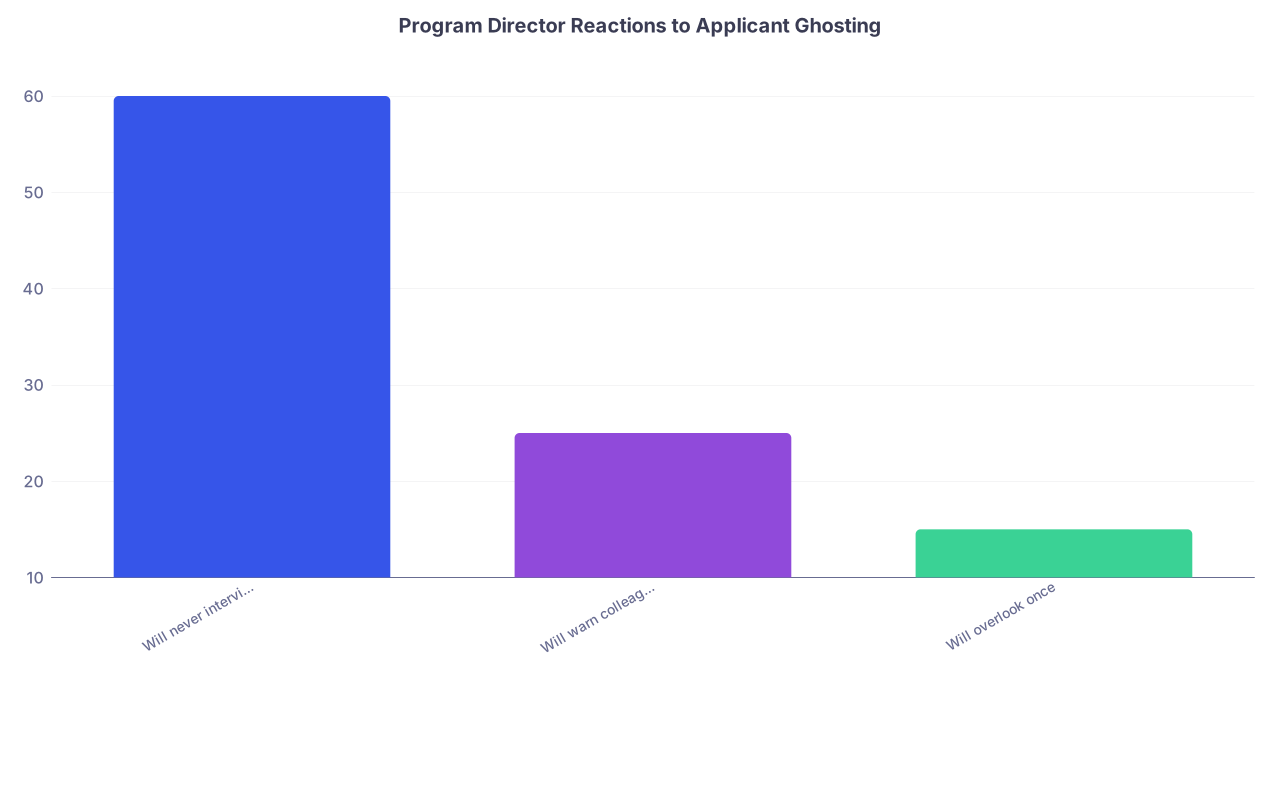
| Category | Value |
|---|---|
| Will never interview again | 60 |
| Will warn colleagues | 25 |
| Will overlook once | 15 |
Minimum professional standard:
If a program reaches out:
- Respond. Within 24–48 hours.
- If you are no longer interested, say so clearly but respectfully.
Dear Dr. [Name],
Thank you very much for your continued interest. After careful thought about my priorities and personal circumstances, I have decided to focus on other programs this cycle. I am grateful for your time and consideration and have a great deal of respect for your program.
Sincerely,
[Your Name]
Short. Direct. Not insulting. That is how adults withdraw.
Never do this:
- Confirm attendance for an interview or second look and then no-show. If an emergency happens, fine, but you better call as soon as it is humanly possible and explain.
- Agree to “let us know by Friday” and then vanish. Program coordinators keep lists of these names. I have seen them.
5. Mishandling Communication Channels (Email, Phone, WhatsApp)
You can sabotage yourself just by being sloppy with your inbox.

Typical disaster pattern:
- Program emails a soft pre‑match signal: “We are very interested, can we set up a call?”
- You miss it. It goes to spam. You see it two weeks later.
- By then they have assumed disinterest and moved on
Or worse:
- You respond from a casual email address like “doc4lyfe92@…”
- Your message is full of typos and no greeting
- They question your maturity before they even think about an offer
Basic protections:
- Use a serious email address (ideally FirstnameLastname or close to it).
- Check your email at least twice daily during peak season.
- Check spam regularly. Programs use all sorts of systems; things get filtered.
- Keep voicemail set up, not full, with a professional greeting.
- If they call and you miss it, call back the same day if you can, or early the next business day.
On messaging apps:
In some countries and some smaller programs, PDs or coordinators will use WhatsApp or similar. Do not:
- Respond with emojis as your only message
- Use ultra-casual abbreviations (“k thx”, “lol, sounds good”)
- Leave them on “read” for days
Short, professional, but human is fine:
- “Thank you very much, I appreciate the update.”
- “Yes, that time works for me. Looking forward to speaking with you.”
6. Trying to “Bid” Programs Against Each Other
This one is ugly.
You are not in a corporate counteroffer war. Residency programs do not like being leveraged.
Common rookie maneuver:
- You get a verbal or semi-formal offer from Program A
- You email Program B: “I have a pre‑match offer from another program and need to decide by Friday. If you want me, I need an answer now.”
Programs hate this. Reason:
- It shifts the power dynamic in a way that looks manipulative, not confident
- It pressures them to rush decisions they are not ready to make
- It frames you as someone playing games instead of genuinely evaluating fit
| Situation | Healthy Approach | Toxic Approach |
|---|---|---|
| You have an offer with a deadline | Ask if they expect to make decisions before then | Demand they decide quickly because of your other offer |
| You want to signal competitiveness | Mention ongoing interviews neutrally if asked | Name drop programs to impress or intimidate |
| You are close to accepting somewhere | Inform them respectfully if they showed interest | Threaten to go elsewhere unless they act now |
A safer, respectful phrasing if you truly must mention timing:
“I have been offered a position at another program with a decision deadline of [date]. I remain very interested in your program. I do not want to pressure you, but if you anticipate making decisions before then, I would be grateful to be considered.”
Notice the difference:
- You provide information
- You do not make demands
- You let them decide without emotional blackmail
If they cannot move that fast, accept it. Forcing them usually backfires.
7. Forgetting That Every Interaction Is Part of Your Reputation
You are under a microscope, whether you see it or not.
Programs pick up on:
- How you spoke to the receptionist
- How you treated residents at dinner
- Whether you replied “Thanks so much for hosting” after an interview day
- How you handle “small” logistical issues
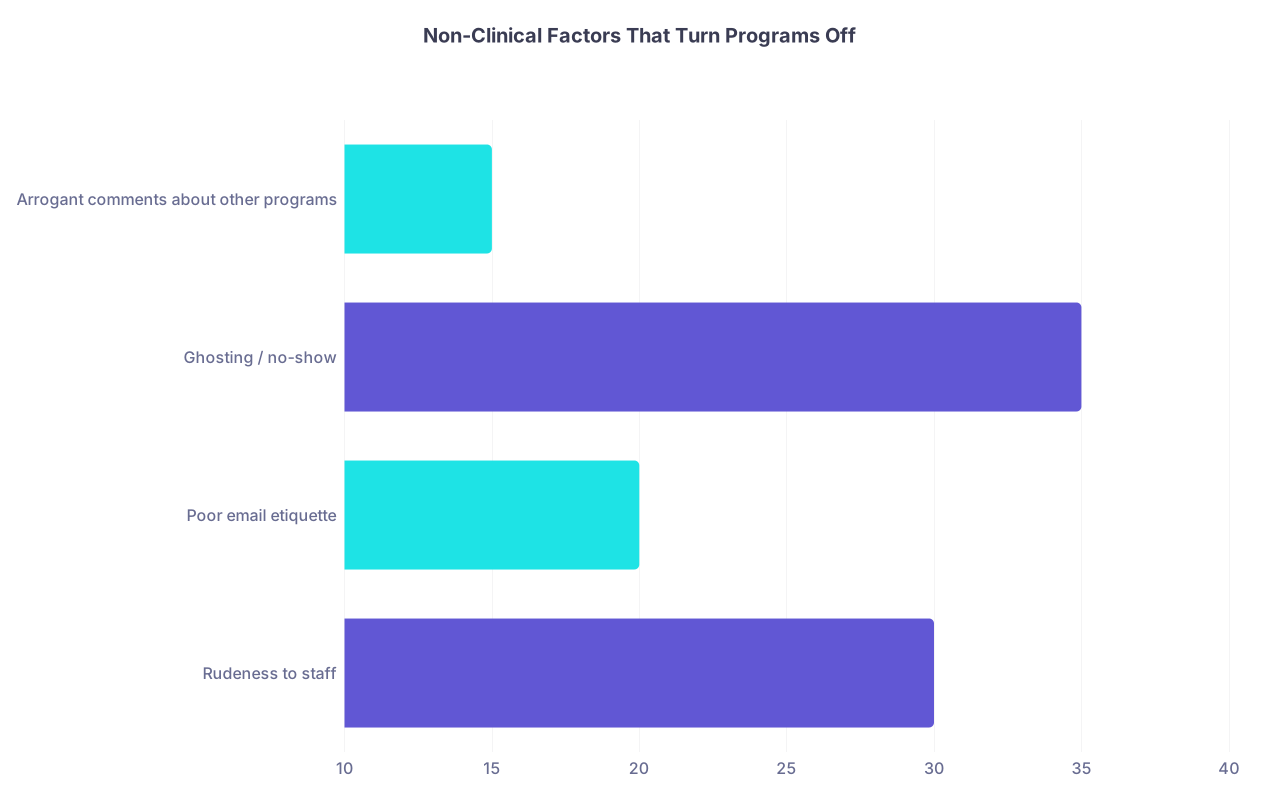
| Category | Value |
|---|---|
| Rudeness to staff | 30 |
| Poor email etiquette | 20 |
| Ghosting / no-show | 35 |
| Arrogant comments about other programs | 15 |
Fatal pre‑match moments often come from:
- Casual insults: “Honestly I am just using community programs as backups.” Said to a resident. Who then tells the PD.
- Bragging about multiple offers and how you are “still shopping.”
- Complaining loudly about location, call schedule, or pay—as if that particular program is beneath you.
You might think residents will keep that to themselves. They do not. They are asked directly for input. Multiple times.
Do not make this mistake:
Assume that anything negative you say about:
- The program
- The city
- Other programs in the same specialty
…will find its way back to someone who matters.
Keep complaints for your friends outside the system, not group chats that include residents, fellows, or anyone even peripherally connected.
8. Neglecting to Get Real Advice Before Making a Big Decision
Too many applicants wing pre‑match decisions on instinct and fear. That is how bad choices happen.

| Step | Description |
|---|---|
| Step 1 | Receive Pre Match Offer |
| Step 2 | Clarify If Binding |
| Step 3 | Ask For Decision Deadline |
| Step 4 | Consult Mentor or Advisor |
| Step 5 | Consider Accepting |
| Step 6 | Politely Decline |
| Step 7 | Confirm In Writing |
| Step 8 | Maintain Professional Relationship |
| Step 9 | Would I Be Content Here? |
Skipping the “consult mentor” step is a classic unforced error.
I have seen:
- Strong applicants panic and lock into low-quality programs they could have easily surpassed in the Match
- Overconfident applicants decline solid offers they should have taken, assuming they would match higher and then not matching at all
You are too close to your own fear and ego to see clearly. You need:
- A specialty-specific advisor when possible
- Someone who knows your full profile: scores, letters, red flags
- Someone who has seen many cycles and knows current competitiveness
Do not rely exclusively on:
- Random Reddit threads
- Anonymous Discord servers
- That one classmate who “knows a guy”
These can be supplemental, not primary.
9. Failing to Document Commitments Clearly
Verbal agreements and vague emails are where misunderstandings explode.
If you accept:
- Make sure you have some form of written confirmation summarizing what was agreed
- If they do not send something, you send a clear acceptance email
Example:
Dear Dr. [Name],
Thank you again for the opportunity to join your residency program. I am writing to confirm my acceptance of your pre‑match offer for a [specialty] residency position starting in [month, year].
I look forward to training at [Program Name] and contributing to your team.
Sincerely,
[Your Name]
This does two things:
- Commits you clearly (no ambiguity from your side)
- Keeps a record in case there is later confusion or leadership turnover
Do not assume:
- “They know I accepted; we talked on the phone.”
- “The coordinator said it was done, that is enough.”
Document it. If there is a formal contract, read it carefully. Ask about:
- Visa issues (if relevant)
- Salary
- Start date
- Any contingencies
You do not want to be the person who realizes in March that the “offer” was never officially approved by GME because something was missing.
10. Acting Like Pre‑Match Is the Only Path (And Panicking Accordingly)
Here is the quiet trap: overvaluing pre‑match offers and underestimating your chances in the regular Match.
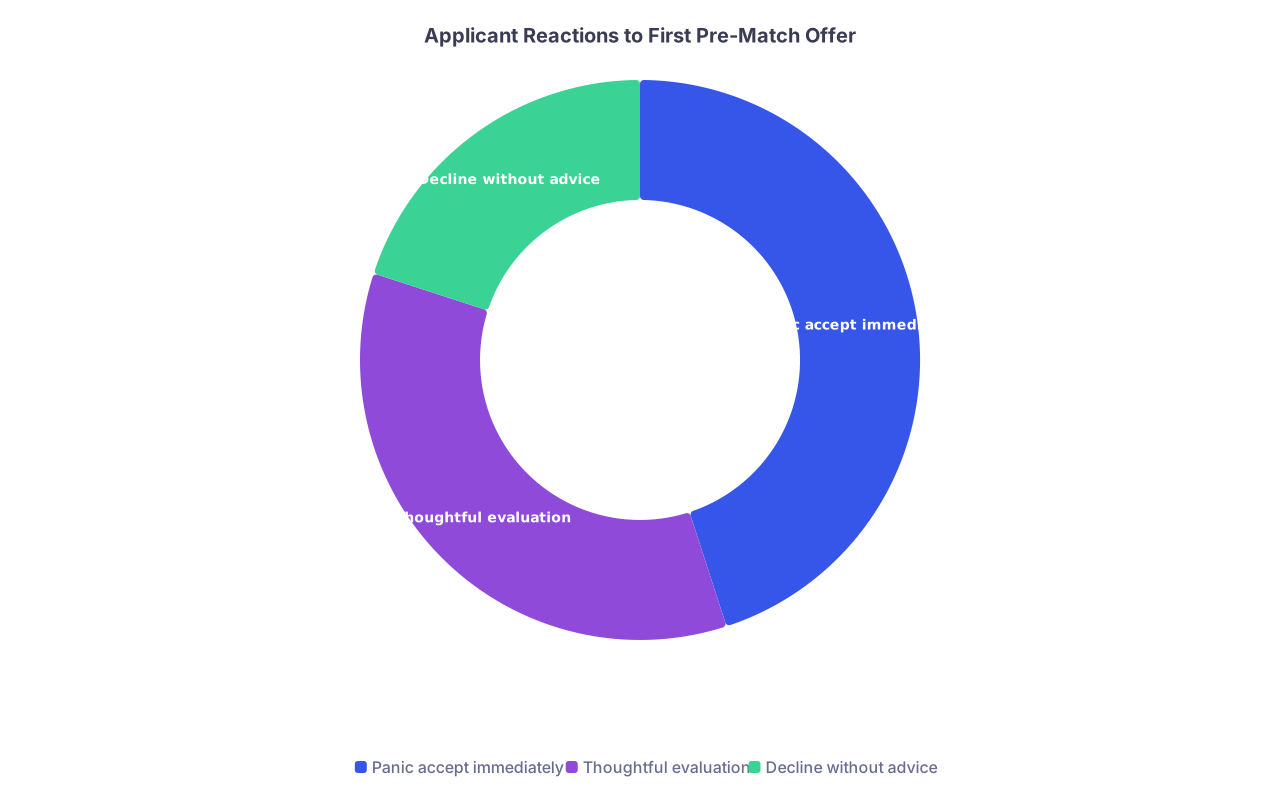
| Category | Value |
|---|---|
| Panic accept immediately | 45 |
| Thoughtful evaluation | 35 |
| Decline without advice | 20 |
Panic-accept behavior often comes from:
- Listening to horror stories from one unlucky senior
- Ignoring your actual competitiveness data
- Confusing one specialty’s difficulty with another’s
Result:
You lock into a program you secretly resent. You burn bridges by backing out later, or you stay and are miserable.
Before treating any pre‑match like your last lifeboat, soberly assess:
- Your scores vs. recent match data in that specialty
- Number and quality of interviews you already have
- Feedback from mentors who actually know the field this year
If independent reviewers tell you, “You are a solid candidate and likely to match somewhere,” you can be more selective. Rejecting or delaying a pre‑match, politely, is not burning a bridge if done professionally.
Pretending you are desperate when you are not just leads to bad decisions.
FAQ (Exactly 5 Questions)
1. If I verbally accept a pre‑match offer, is it always binding?
Not legally in every system, but ethically it is treated as binding in most professional circles. Programs invest based on your “yes”: they stop recruiting for that spot, adjust rank lists, and commit administrative resources. Walking back a verbal acceptance without a serious, unavoidable reason will almost certainly damage your reputation and may be shared informally with other programs.
2. Can I accept a pre‑match offer and still enter the regular Match for other programs?
In many jurisdictions and under NRMP rules, you are not allowed to sign a contract outside the Match and still participate for the same type of position. Even if technically possible in your country, doing so is seen as gaming the system. You must clarify locally with your dean’s office or GME office. The mistake that burns bridges is trying to silently play both sides and hoping no one notices. They usually do.
3. How do I politely turn down a pre‑match offer without offending the program?
Be direct, prompt, and respectful. Thank them genuinely, state that after careful thought you have decided not to accept, and avoid insulting comparisons (“I want a more academic place”). Keep it about your priorities and circumstances, not their shortcomings. Delay and silence are far more offensive than a clear, courteous no.
4. What if a program pressures me to decide on a pre‑match offer in 24 hours?
High-pressure tactics are a red flag about culture, but they do happen. Your best move is to calmly request a reasonable extension (“I want to make this decision responsibly”) and immediately consult a mentor. If they refuse any flexibility and you feel forced, remember: saying “yes” under pressure and then backing out later is worse than saying “no” now. Do not accept an offer you cannot commit to just because you are scared.
5. Is it ever okay to tell more than one program they are my ‘top choice’?
No. That is how you earn a reputation as untrustworthy. You can express strong interest to multiple programs, but reserve phrases like “top choice,” “number one,” or “I will rank you first” for exactly one place—and only when it is completely true. If you are not sure, use more measured language that reflects genuine enthusiasm without making promises you may not keep.
Key takeaways:
- Do not accept anything—verbal or written—unless you are truly prepared to commit. Backing out is how bridges get torched.
- Communicate like a professional adult: no ghosting, no manipulation, no double‑talk about “top choice.”
- Get real advice before big decisions, document commitments in writing, and remember: how you handle pre‑match offers will follow you long after this application season ends.