
You’re sitting in a call room between pages, staring at an email that says: “We’re prepared to offer you a pre-match contract.”
Your heart jumps. This is what you wanted—security, no more interview roulette, no more obsessively refreshing ERAS. There’s a PDF attached. You skim it. Salary looks fine. Sign-on bonus looks generous. They want an answer in 48 hours.
You’re about to make a very expensive mistake.
Residency pre-match offers are not just about where you’ll train. They lock in your income, your relocation costs, your penalties for leaving, and sometimes your future earning power for years after graduation. Programs know you’re desperate for certainty. Some of them quietly weaponize that.
Let’s walk through the financial traps I see people fall into over and over—and how you avoid becoming one of them.
1. The Seductive Sign-On Bonus That Isn’t Free Money
The first financial trap is the one that looks the most generous.
You see: “$15,000 sign-on bonus.”
You think: “Sweet. That covers moving, deposits, maybe a bit of my loans.”
Reality: It’s usually a loaded bear trap with shiny wrapping.
Common ways sign-on “bonuses” backfire:
- Clawbacks if you leave early
- Tax hits you didn’t plan for
- Paid out in installments, not upfront
- Tied to hidden obligations (extra shifts, longer commitments)
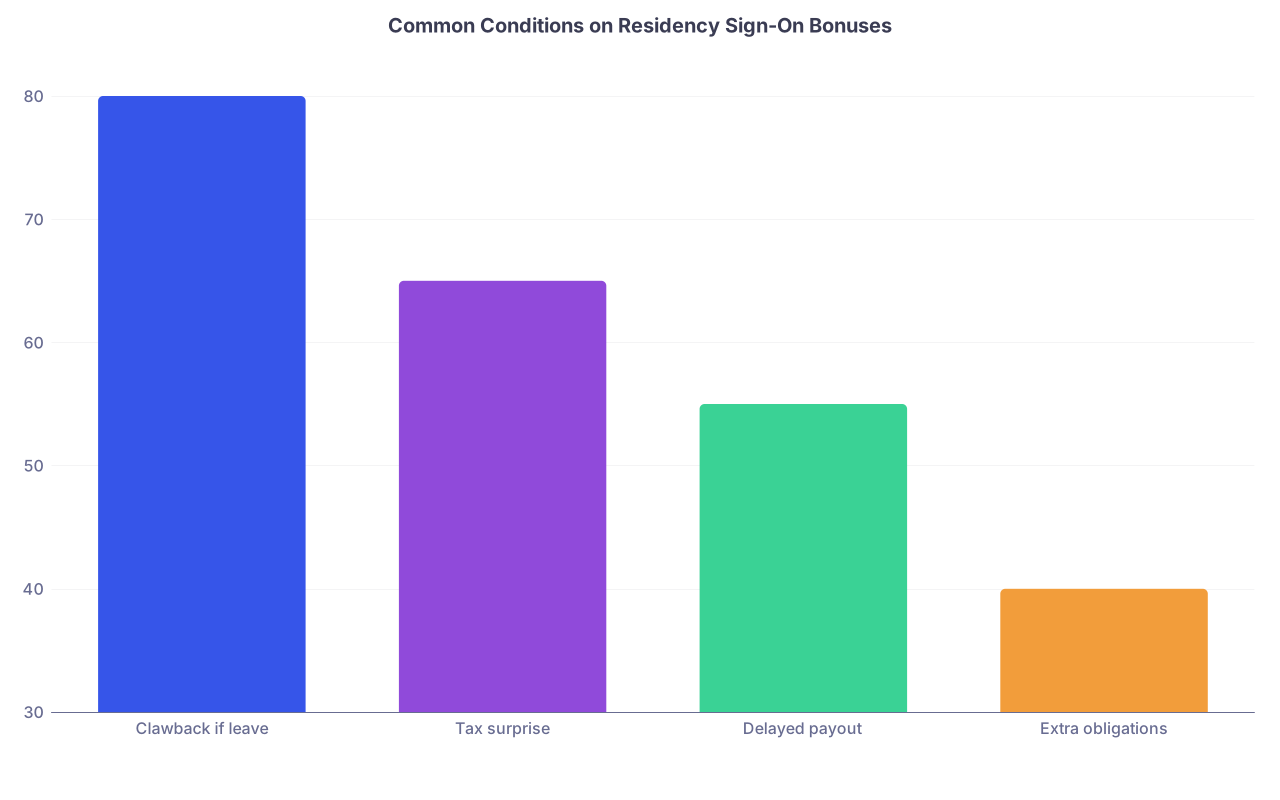
| Category | Value |
|---|---|
| Clawback if leave | 80 |
| Tax surprise | 65 |
| Delayed payout | 55 |
| Extra obligations | 40 |
Those percentages aren’t published anywhere, but they’re realistic from what I’ve seen over several cycles. Most “bonuses” have strings.
Red flags in sign-on language
Look for phrases like:
- “Forgiven at a rate of X per month of service”
- “Subject to repayment if the physician fails to complete the program”
- “Repayable on a pro-rata basis”
- “At the sole discretion of the program”
What this actually means:
You’re taking a loan you must “work off” by staying. If you leave—for health, harassment, family, or just realizing it’s a terrible fit—you may owe thousands you already spent.
Example I’ve seen:
- $10,000 “bonus” paid in PGY-1
- Contract says it’s forgiven at $277.78 per month over 36 months
- You leave after 12 months? You owe roughly $6,666 back. Immediately.
Most interns don’t have that sitting in savings.
How not to get trapped
Do not just ask, “Is there a clawback?” That’s too vague. Ask:
- “If I leave the program after:
- 6 months,
- 1 year,
- 2 years, how much of the sign-on would I have to repay, and by when?”
Get that answer in writing, not just over the phone.
Also clarify:
- Is the bonus paid as one lump sum or in installments?
- Is it guaranteed, or “contingent on continued funding/approval”?
- Will they gross it up for taxes, or is that your problem?
If you’re going to accept a bonus, treat it like a loan that might be forgiven—not free cash.
2. Hidden Penalties for Early Withdrawal or Breaking the Contract
You’re thinking, “I’d never leave. I just need a spot.” That’s exactly how people get nailed by exit penalties.
Residents do leave:
- Toxic programs
- Lost accreditation risk
- Major geographic or family changes
- Health or disability issues
- Switching specialties
And then they discover the contract they signed in a rush basically punishes them for protecting themselves.
The three forms of financial punishment
You’ll most commonly see:
- Direct repayment clauses
- “Resident will reimburse program for any relocation assistance and sign-on bonus if they do not complete the full term.”
- Training cost reimbursement
- “Resident shall repay costs of training incurred by the institution up to $X if they resign or are terminated without cause.”
- Non-disparagement + legal fee clauses
- “If resident initiates legal action and is not successful, they will pay the program’s legal expenses.”
That second one—training cost reimbursement—is nasty. It’s sometimes written in vague language that sounds harmless, but then used to justify thousands in “costs” if you leave.
| Clause Type | Typical Financial Impact |
|---|---|
| Sign-on clawback | $5,000–$25,000 |
| Relocation repayment | $2,000–$10,000 |
| Training cost payback | $10,000–$50,000 |
| Legal fee shifting | Highly variable |
What you absolutely must find in the contract
Hunt for these phrases:
- “repay”
- “reimburse”
- “training costs”
- “damages”
- “liquidated damages”
- “attorney fees” or “legal fees”
If you see “liquidated damages” with a flat number (say $25,000), that’s a flashing siren. You’re agreeing to pay that amount if you breach even if the real cost to them is lower.
What to do?
- Email GME or HR:
“Can you clarify in writing whether there are any financial penalties, repayments, or liquidated damages if I leave the program before completion for any reason?”
If they deflect, minimize, or respond vaguely? That’s not an accident. That’s your sign this could hurt later.
3. Relocation Assistance That Turns Into Surprise Debt
“$5,000 relocation assistance” sounds generous—until you read the conditions.
Common traps:
- It’s a reimbursement, not upfront money.
- You must provide extensive receipts, and lots of perfectly valid costs don’t qualify.
- Repayment required if you leave before X months.
- Sometimes it’s a “forgivable loan” disguised as relocation support.
I’ve seen contracts where:
- They advance $3–5k for relocation.
- Language: “Forgiven at X per month of active employment.”
- You leave at month 10 of a 36-month schedule? You owe most of it back.
Questions to ask before you count on that money
- Is this:
- A grant?
- A reimbursement?
- A forgivable loan?
- What must I submit to receive the full amount?
- If I do not complete PGY-1, how much do I repay?
- If I change to another program within your institution, does repayment still apply?
Do not assume “relocation assistance” = free. It often isn’t.
4. Salary Details That Are Vague, Variable, or Misleading
Everyone looks at the PGY-1 salary line. Too few look at what happens over the whole residency.
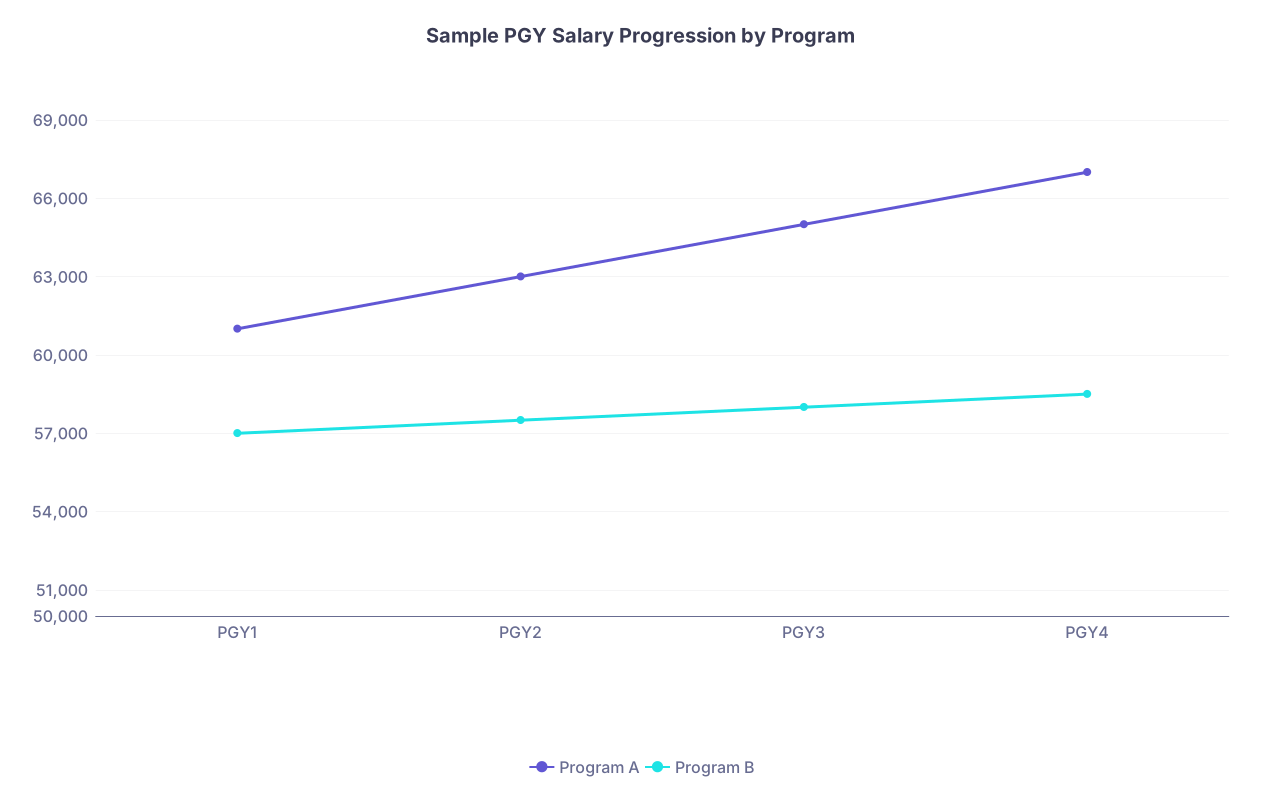
| Category | Program A | Program B |
|---|---|---|
| PGY1 | 61000 | 57000 |
| PGY2 | 63000 | 57500 |
| PGY3 | 65000 | 58000 |
| PGY4 | 67000 | 58500 |
This is where residents get burned:
- No guaranteed annual increase
“Subject to institutional budget” is code for “can stagnate for years.” - Moonlighting restrictions with no offsetting pay
You think you’ll make up low salary with moonlighting. Then the contract quietly bans it. - Incentive-based pay for extra call or shifts that sounds great but rarely materializes.
Critical salary questions
You want specifics, not vibes:
- “What were the PGY-1, 2, and 3 salaries for the last three years?”
- “Is there a guaranteed minimum yearly raise? What is it?”
- “Is moonlighting allowed? If so:
- After which year?
- In what settings?
- Paid at what rate?
- Counted as duty hours?”
If they dodge direct numbers or only talk about “competitive for the region,” assume the worst until you see actual figures.
Also check:
- Is housing “stipend” automatic or application-based and limited?
- Do they treat certain benefits (like meal cards or parking) as “compensation” to make the salary look higher than it really is?
You’re not just comparing first-year pay. You’re comparing total financial reality over the length of the program.
5. Non-Compete and Future Earnings Restrictions
Yes, even in residency contracts, I’ve seen versions of non-competes or restrictive covenants—especially in pre-match type deals tied to future employment.
Two flavors:
- Embedded in the residency contract
Usually subtle: “Resident agrees not to work for a competing entity during and for X months after employment.” - Sneakily added if there’s a “track” to join their attending group
“Upon completion of residency, physician may be offered employment under the following conditions…” followed by a non-compete.
Why does this matter now? Because saying yes to the pre-match may quietly limit where you can:
- Moonlight during residency
- Work as an attending in the same city
- Join a different group in the same specialty after graduation
What to hunt for
Scan for:
- “Covenant not to compete”
- “Restrictive covenant”
- “Non-compete”
- “Non-solicitation”
If they expect you to sign a future employment contract with a non-compete as a condition of the pre-match, you need that future contract in hand before you say yes. Otherwise you’re agreeing blind to constraints on your post-residency income.
If they say, “We’ll discuss those details later,” that’s your answer. They want you committed before you see the handcuffs.
6. The “Exploding Offer” Pressure Tactic
Short deadlines are not just annoying. They are a financial risk amplifier.
Scenario I see constantly:
- Offer email goes out Friday afternoon.
- Deadline: Monday 5 PM.
- You’re on a weekend call block.
- They “encourage” you to decide quickly to “secure your spot.”
You sign without:
- Having an attorney review the contract.
- Clarifying bonus clawbacks or penalty clauses.
- Comparing actual numbers with other pending programs.
- Checking if the institution is stable (ACGME citations, funding issues, etc).
Those 48–72 hours of panic can lock in:
- Tens of thousands in potential penalties.
- Lower salary than you might have matched into.
- Geographic and financial limitations you didn’t fully see.
How to push back—without burning the bridge
You don’t need to be confrontational. Try:
- “I’m very interested in your offer. To make an informed decision and honor the seriousness of this commitment, I’ll need time to have the contract reviewed. Could we extend the deadline to [date]?”
If they refuse any reasonable extension or say things like, “If you don’t sign now, we’ll move on,” ask yourself:
- Why are they so afraid of you reading this carefully?
- Why are they acting like a used car dealership, not an academic program?
A program confident in its offer and its culture doesn’t need to play hostage games with your future.
7. Ignoring Benefits and Cost-of-Living Math
Residents obsess over base salary and completely ignore:
- Health insurance premiums
- Retirement matching (or lack of it)
- Parking
- Meal money
- Call room quality (yes, because you live there)
- Local cost of living
That’s how you end up financially worse off at a “higher salary” program in a brutal city than at a lower-salary program in a more reasonable area.

Do basic math—at least once
At minimum, estimate:
- Monthly take-home pay after taxes (even rough online calculators help)
- Average rent near the hospital
- Transportation costs (parking, gas, or transit pass)
- Mandatory fees (parking, licensure, union dues if applicable)
Then ask:
- “Do residents receive:
- Free parking or paid parking?
- Meal cards? How much per month?
- A housing stipend?
- Reimbursement for Step 3, licensing, and exam fees?”
Two programs with the same listed salary can feel radically different financially once you account for all of that. Pre-match pressure makes people ignore those numbers. Then PGY-1 hits and they’re wondering why they’re using credit cards for groceries.
8. Not Getting a Neutral Legal Review
This is the mistake that amplifies every other mistake: signing a binding contract that affects your income, debt, and penalties without anyone who understands contracts reading it.
Yes, you’re busy. Yes, it costs money. And no, your class group chat and Reddit are not contract review tools.
The worst cases I’ve seen all share one thing:
“No, I never had anyone look at it. I just assumed residency contracts were standard.”
They aren’t.
How to do this without overcomplicating your life
You don’t need a BigLaw firm. You need:
- A healthcare or employment attorney who has seen GME/residency contracts before.
- One who can do a flat-fee review and point out:
- Repayment obligations
- Liquidated damages
- Non-competes and restrictive covenants
- Dispute resolution clauses (mandatory arbitration, one-sided terms)
- Any dangerous vague language
If you can’t afford full review, at least:
- Ask your med school:
- Does student affairs or legal aid offer contract reviews for graduating students?
- Ask your state medical association:
- Many offer low-cost or free contract reviews to members.
You spend hundreds on interview travel, suits, and Step exams, then hesitate to spend a bit to avoid a $20k trap. That’s backwards.
9. Confusing Emotional Relief with a Good Financial Decision
This is the quiet, psychological trap underneath everything.
Pre-match offers hit you at your most vulnerable:
- You’re exhausted.
- You’ve been ghosted by programs.
- You’re scared of not matching.
- Your classmates are posting “Just signed!!” screenshots.
So you tell yourself:
- “Any spot is better than no spot.”
- “I can’t risk waiting for the match.”
- “This is probably the best I’ll get.”
Sometimes that’s true. Many times it isn’t.
Pre-match can be reasonable if:
- You’ve compared it against:
- The typical salary ranges in that region and specialty.
- The financial terms at similar programs.
- You understand every clawback and penalty.
- You’re clear about how it affects your:
- Debt trajectory,
- Ability to leave if it’s unsafe/toxic,
- Post-residency options.
Pre-match is a problem when it functions as financial blackmail: “Sign now or risk disaster.” That’s how people end up stuck in abusive programs and owing them money to leave.

| Step | Description |
|---|---|
| Step 1 | Receive Pre Match Offer |
| Step 2 | Request Clarification in Writing |
| Step 3 | Seek Legal or Advisor Review |
| Step 4 | Decline or Request Revisions |
| Step 5 | Consider Accepting Offer |
| Step 6 | Understand All Financial Clauses |
| Step 7 | Had Contract Reviewed |
| Step 8 | Still Comfortable With Risks |
Final Thoughts: What You Cannot Afford to Miss
You will be tempted to think, “I’ll deal with the details later.” With pre-match contracts, “later” usually means “when you’re already trapped.”
If you remember nothing else, keep these in your head:
Every “bonus” and “relocation assistance” line might be a loan in disguise.
Never assume it’s free. Always ask what happens if you leave early—and get the numbers.Penalties and clawbacks hurt most when you’re already in crisis.
Illness, burnout, harassment, bad fit—these are the exact moments you’ll discover how expensive it is to leave. Read the exit clauses before you sign.Your need for emotional certainty is the biggest weapon they have.
Do not let relief push you into a contract you haven’t fully understood. Take the time. Ask blunt questions. Get a real review. A few days of discomfort now can save you tens of thousands and years of regret later.