
The biggest misunderstanding about pre-match offers is simple: a lot of programs can do them but strategically choose not to. On purpose. And the reason has almost nothing to do with “fairness” or “policy” and everything to do with control, leverage, and reputation in the Match ecosystem.
You keep hearing rumors: “That hospital never pre-matches.” Students say it like it’s some moral stance. It usually isn’t. It’s math and power.
Let me pull back the curtain on why some programs never pre-match, how they actually think about it behind closed doors, and what that means for how you should prepare if you’re chasing a pre-match offer.
The Quiet Truth: Pre-Match Is a Risk–Reward Game
Here’s what you are not told as a student: pre-match is fundamentally a risk management decision for program directors.
They’re constantly balancing three questions:
- Can we reliably fill our spots through the regular Match?
- What kind of applicants do we want to “lock in” early?
- How much do we care about our perceived prestige among other programs and applicants?
At a program director meeting a few years ago, I watched a PD from a well-known community IM program say this out loud:
“Every time I pre-match, I am telling NRMP that I don’t trust my own rank list.”
He was only half joking. Some programs hate the optics of that. To them, pre-matching screams: “We’re scared we can’t fill.”
So they refuse to do it. Even when it hurts. Because long-term branding—“We always fill through the Match”—matters more to them than plugging a couple of uncertain spots with nervous applicants in October.
That’s the mindset you’re up against.
Why Some Programs Never Pre-Match: The Real Reasons
You’ll hear the official explanations: “We follow NRMP best practices,” or “We prefer the algorithm to work.” That’s not the full story.
Behind closed doors, the reasons look more like this.
1. They’re Confident They’ll Fill – and Fill Well
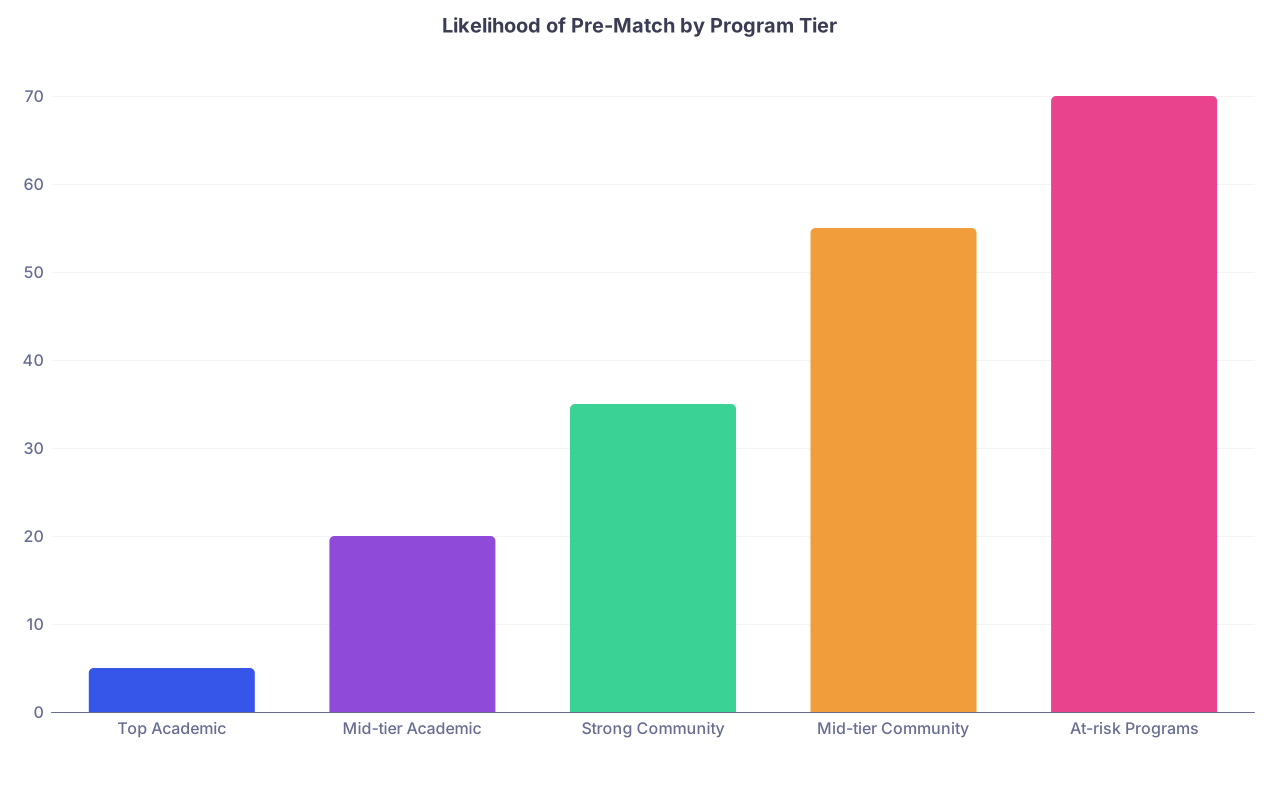
Programs fall into rough buckets on competitiveness. The more secure they are, the less they want to pre-match.
| Category | Value |
|---|---|
| Top Academic | 5 |
| Mid-tier Academic | 20 |
| Strong Community | 35 |
| Mid-tier Community | 55 |
| At-risk Programs | 70 |
Broadly:
- Top academic programs almost never pre-match. They know they’ll fill with high-quality applicants through the Match.
- Many strong community programs have stopped pre-matching as they’ve built reputations; they could fill through pre-match, but they want to play in the same prestige economy.
One PD at a mid-tier academic IM program told me bluntly:
“Why would I bind myself to someone in December when I know I’ll get a deeper pool in January? The Match is my friend.”
They like options. Pre-match reduces optionality. Once you commit a spot to a pre-matched applicant, that seat is gone no matter who shows up on your rank list.
If your program is confident they’ll fill near the top of their list, they don’t want to “waste” a spot on an early, safe choice.
2. They Do Not Want to Signal Weakness
Programs care deeply about how they look to other PDs, their GME office, and students. Pre-match has become a kind of scarlet letter in some circles.
In internal meetings you’ll hear things like:
- “We don’t want to look desperate.”
- “We’re not a pre-match program.”
- “Once you start pre-matching, it’s hard to stop.”
That last line is key. Once a program uses pre-match to save a weak fill year, their leadership starts to see it as a tool. Next year, someone asks, “Should we pre-match again… just to be safe?”
It becomes a crutch. The programs that never pre-match are often deadly serious about not sliding into that pattern.
So they draw a hard line: We never pre-match. That line becomes part of their identity. They tell applicants that proudly. Not because it always benefits the individual student—but because it protects the program’s brand.
3. Legal, Contract, and Administrative Headaches
This part you rarely see.
Each pre-match contract means:
- Involvement from GME office and legal
- HR onboarding starting earlier
- Extra documentation and tracking
- Risk of ugly situations if a pre-matched applicant later tries to back out or doesn’t graduate/pass exams
Academic centers, especially those deeply tied into a university HR system, hate bespoke processes. They want clean timelines and standardized cycles.
I sat in a GME meeting where the institutional DIO told programs outright:
“If you pre-match, you’re responsible for managing every piece of that mess. Don’t come to us when it blows up.”
Some programs simply decide it’s not worth the administrative pain for 1–3 extra residents secured in November.
4. They Trust (and Exploit) the Algorithm
Here’s something you should never forget: the NRMP algorithm is applicant-favoring on paper, but programs also know how to game it in their favor.
Programs that never pre-match tend to:
- Rank aggressively long lists
- Be disciplined about rank order decisions (no last-minute emotional swaps)
- Have enough applicant volume to feel safe ranking who they really want
They understand that if they rank enough realistic candidates, they’ll fill. Without side deals. Without exceptions.
There was a PD who used to say at the end of rank meetings:
“We’ve done our job. Now let the algorithm do its job.”
Those programs see pre-match as emotional insurance. And they don’t buy insurance if they think they’ve already stacked the deck.
The Strategy Behind “Never Pre-Match”
Here’s the piece most applicants never see: “We don’t pre-match” is itself a strategy directed at you.
It creates a specific applicant psychology that benefits the program.
1. It Forces You to Commit Emotionally Without Commitment from Them
When a program announces, “We never pre-match,” what happens?
You stop waiting for early offers. You stop holding out for a contract before the Match. You start thinking:
- “If I love them, I have to rank them highly. It’s the only way.”
- “They fill every year. If I drop them too low I’ll lose them.”
- “They’re not pre-matching, so if I want them, I’m the one who has to take the risk.”
That is exactly the power shift they want. It makes it easier for them to land strong candidates who are willing to rank them #1 or #2 without the program putting anything on paper.
I watched this happen at a strong community IM program that stopped pre-matching entirely. Within two cycles, they were getting, in their words, “higher-commitment applicants” — because they weren’t tying their own hands with early contracts, but applicants were still putting them high to avoid losing them.
2. It Cleans Their Applicant Pool
Programs that openly never pre-match attract a certain type of candidate:
- More risk-tolerant or confident in their portfolio
- Less “contract-dependent”
- Often with multiple interviews and options
That’s exactly the pool many PDs want.
Applicants who desperately need the security of a pre-match tend to cluster at institutions that still do them. This unintentionally “sorts” candidates across programs.
One faculty member once admitted:
“We stopped pre-matching and suddenly we were interviewing fewer people whose main goal was just to lock down any job. The ones who came wanted us, not just any contract.”
Cynical? Maybe. Accurate? Very.
3. It Lets Them Keep Their Spots Open Till the End
Never pre-matching = all spots remain in play until the Match. That gives programs maximal flexibility.
They can:
- Adjust for late information (new Step 2 scores, red flags, glowing updates)
- Change their mind on borderline candidates at final rank meetings
- Respond to institutional pressures (“We need more US grads,” “We want stronger research residents,” etc.)
Every pre-matched seat is a seat you can’t adapt. That’s the tradeoff they’re avoiding.
What This Means for You If You’re Chasing Pre-Match
Now, here’s the part you actually care about: how to prepare for pre-match offers when some programs will use them and some never will.
First, accept this reality: you cannot “force” a non–pre-match program to behave differently. Charming them, saying “You’re my #1,” or hinting that you’d sign on the spot won’t move a system-level strategy.
So you shift your focus.
Step 1: Sort Your Programs Correctly
You need to mentally categorize your interview invites:
| Program Type | Pre-Match Likelihood |
|---|---|
| Big-name university | Very low |
| University-affiliated IM | Low–moderate |
| Strong community hospital | Moderate |
| Visa-heavy / IMG-heavy IM | High |
| Previously unfilled spots | Very high |
Then two lists:
- Programs that have a real history of pre-matching (from seniors, forums, advisors, alumni).
- Programs that reliably say, “We never pre-match.”
The first list is where your pre-match strategy lives. The second list is where your rank list strategy lives. Don’t confuse them.
Step 2: Prepare Two Parallel Strategies
Think of it like this:
- Strategy A: “Pre-match game” with programs that use early offers
- Strategy B: “Pure Match game” with programs that never pre-match
They overlap, but they are not identical.
For Strategy A (true pre-match programs), you need to:
- Signal strong interest early after interviews
- Clarify visa needs, start dates, and exam status quickly
- Be easy to “sell” to the GME office (clean file, passed all exams, no pending disasters)
For Strategy B (never-pre-match programs), you should:
- Stop fantasizing about pre-match scenarios with them. It will not happen.
- Use your communication to reinforce genuine interest (for rank purposes, not contract fishing).
- Be ready to rank them according to true preference, not based on who gives you paper first.
One of the most common mistakes I see: someone gets fixated on a solid “never pre-match” program and spends emotional energy waiting for an offer that institutionally can’t happen. Meanwhile they ignore more realistic pre-match possibilities elsewhere.
How to Recognize a “Never Pre-Match” Program Early
You usually do not have to guess. The signs are consistent.
1. They Say It Explicitly on Interview Day
If during orientation or PD Q&A you hear:
- “We do not pre-match.”
- “We only participate in the main Match.”
- “We have no out-of-Match contracts.”
Believe them. That’s usually a hard policy decision, not an offhand line.
2. Their Residents Confirm the Culture
Ask residents:
- “Did anyone in your class pre-match here?”
- “Has the program ever pre-matched in the past?”
- “Do they ever give out early contracts for special circumstances?”
Residents will usually tell you the truth, especially off-script in breakout rooms. If multiple people say, “No, they don’t do that here,” accept it.
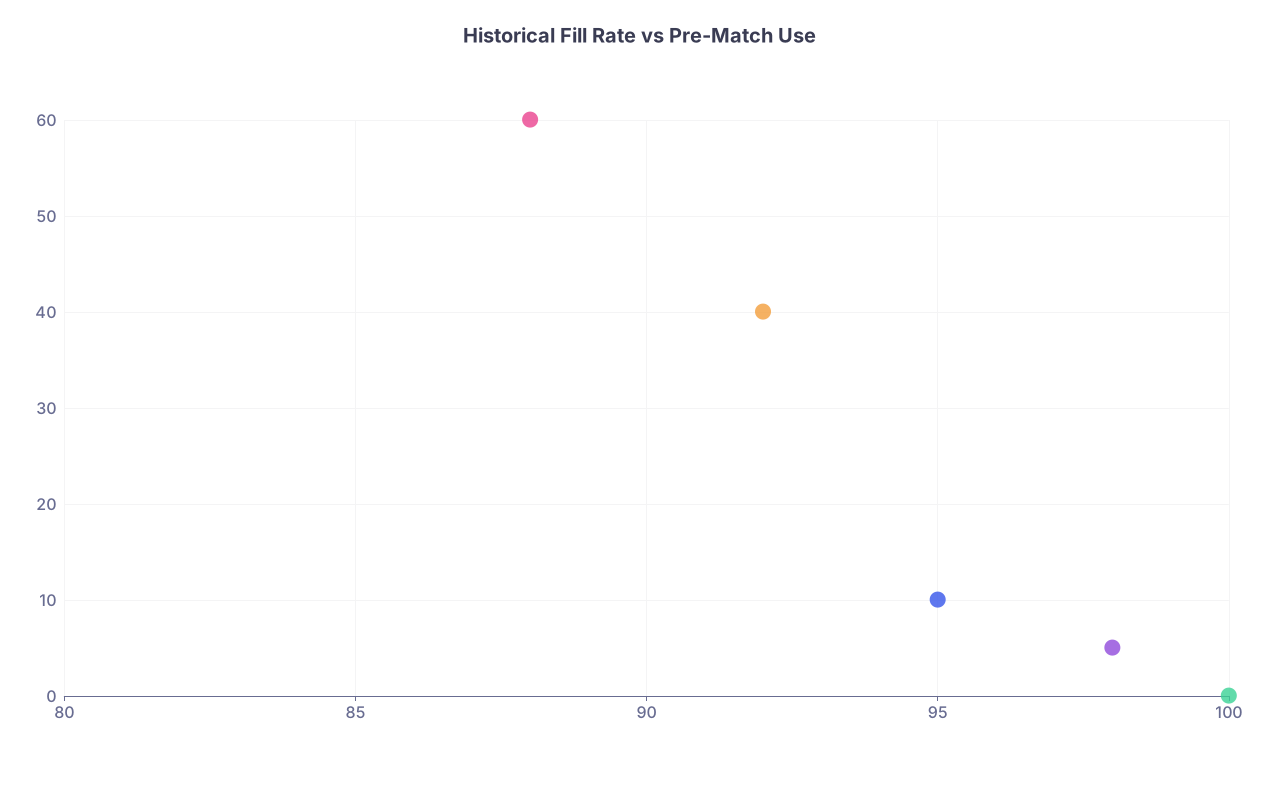
3. They Fill Consistently and Brag About It
Look at their history if you can:
- Do they proudly say “We fill all positions through the Match every year”?
- Do they have no SOAP spots historically?
- Do they emphasize selectivity and “fit” during the interview?
That kind of program has no incentive to start pre-matching you. They already like the way things work.
| Category | Value |
|---|---|
| Prog A | 95,10 |
| Prog B | 98,5 |
| Prog C | 100,0 |
| Prog D | 92,40 |
| Prog E | 88,60 |
Higher historical fill rate, lower reliance on pre-match. That pattern is real.
Tactical Preparation: Playing the Pre-Match Game Where It Exists
Now let’s talk about the places where pre-match is alive and well—often community IM programs, IMG-heavy hospitals, or institutions that have struggled to fill.
Here’s the uncomfortable truth: you are their risk management. They want to secure enough residents early so they’re not panicking in February.
Your goal is to become one of the few they decide are “safe to lock in.”
1. Make Yourself Contract-Ready
Programs that pre-match look for applicants they can sign today and not worry about.
That means:
- All exams passed (especially Step 2 if they care about it)
- Visa pathway clear (if applicable)
- No pending disciplinary issues from med school
- Clean documentation and quick responses
I’ve watched PDs throw up their hands and say, “Forget it, don’t pre-match him, he still doesn’t know his exam date.” You want to be the opposite of that.
2. Signal, But Don’t Grovel
There’s a difference between strategic signaling and desperation.
Good signal after an interview:
“Thank you again for the interview. Your program is among my top choices, and I would be very happy to train there. If given the opportunity for a contract, I’d be seriously interested.”
Bad signal:
“Please pre-match me. I will sign anything. You’re my only hope.”
The first tells them you’re likely to say yes to an offer. The second makes you look like someone they can exploit but maybe shouldn’t.
Remember: programs want people who want them—but they also read confidence as a marker of quality. Don’t abandon that.
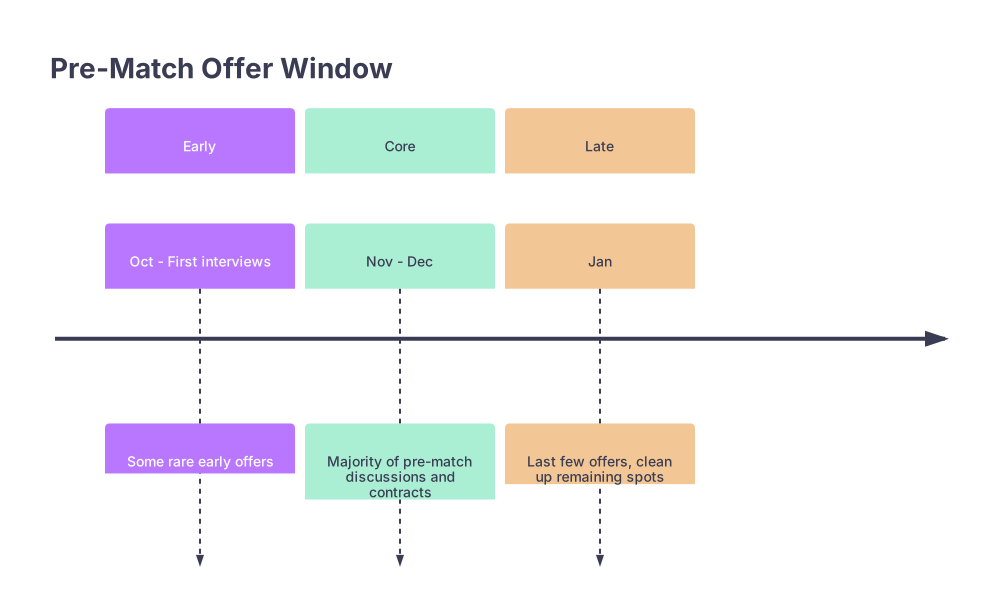
3. Manage Your Timeline Expectations
Most pre-match–capable programs make their moves in a predictable window:
| Period | Event |
|---|---|
| Early - Oct - First interviews | Some rare early offers |
| Core - Nov - Dec | Majority of pre-match discussions and contracts |
| Late - Jan | Last few offers, clean up remaining spots |
If it’s late January and a program known to pre-match hasn’t hinted at anything, mentally move them into the “pure Match” column and stop waiting for a contract from them.
This protects your sanity.
Mental Game: Balancing Pre-Match Security and True Preference
Here’s the hardest part, psychologically.
A pre-match offer from a mid-tier community program you like somewhat will feel more “real” than the possibility of matching at a stronger, never-pre-match program you genuinely love.
I’ve seen students throw away better long-term fits because the piece of paper showed up earlier from somewhere else.
You have to decide in advance:
- Is my primary objective any US residency, as fast and as certain as possible?
- Or do I have the portfolio to gamble a bit for something stronger, knowing some programs will never pre-match me?
And then live that decision consistently.
Because what sabotages people most is inconsistency. One day they say, “I’ll take anything, I just want to match,” and pre-match into a place they barely tolerate. Six months later they’re miserable, staring at their co-intern who matched at a program they had ranked higher—if only they hadn’t signed early.
Be ruthlessly honest with yourself. Pre-match is a tool. For some of you, it’s a lifeline. For others, it’s a trap.
How to Talk to “Never Pre-Match” Programs Without Sounding Naive
If you walk into a program that doesn’t pre-match and keep hinting for contracts, you flag yourself as not understanding the game.
Instead, your communication should focus on ranking, not contracts.
For example:
- “After interviewing at multiple programs, yours remains my top choice. I intend to rank you very highly.”
- “I felt an especially strong fit with your residents and teaching style. I wanted you to know you’re one of my top programs.”
What you don’t say is:
- “Would you consider pre-matching me?”
- “If you pre-matched, I’d sign.”
That doesn’t move the needle and makes it clear you don’t understand that their “never pre-match” stance is structural, not negotiable.
Program directors talk about this. I’ve heard: “He kept asking if we’d pre-match him. We told him three times we don’t. It was a turn-off.”
Don’t be that applicant.
The Thing No One Admits: Some Programs Quietly Break Their Own Rule
Now for the messy truth: every so often, even “never pre-match” programs… cheat.
A star applicant with a unique profile. An internal candidate the department chair absolutely wants. A last-minute pressure from above.
I’ve seen it happen. They call it something else—“early letter of intent,” “institutional contract,” “guaranteed spot”—but functionally, it’s a pre-match. Just not for you.
Should you bank on being that exception? No. Those decisions are usually made for extremely protected candidates: internal rotators, children of faculty, insane Step scores plus research, or political favorites.
But it’s useful to understand that when they say “we never pre-match,” what they usually mean is, “We never pre-match through the front door.”
Which brings us back to the only piece you can control: your overall application strength and the impression you leave on interview day.
Key Takeaways
Let’s strip it down.
“We never pre-match” is not about you. It’s a strategic choice programs make to protect their brand, preserve flexibility, and avoid administrative headaches. You will not talk them out of it.
Your pre-match strategy should focus on programs that actually use early offers. For everyone else, you’re playing a pure Match game—so save your energy and plan your rank list intelligently.
The real skill is knowing who you are as an applicant: whether you should chase security through pre-match at any decent program that offers, or accept some risk and trust your rank list with stronger, never-pre-match institutions.
FAQ
Q1: If a program says they don’t pre-match, should I still tell them they’re my top choice?
Yes. But frame it in Match language, not contract language. Tell them they’re your top choice or that you’ll rank them highly. That helps you; begging for a pre-match at a never-pre-match institution just makes you look uninformed.
Q2: Can telling a pre-match program “you’re my #1” backfire?
It can if you say that to multiple programs and they find out, or if you’re obviously saying it to everyone. Be selective, be honest, and only use that phrase when you truly mean it. Word gets around more than you think—especially within regions.
Q3: Is it ever smart to turn down a pre-match offer?
Yes. If your application is strong and you have interviews at significantly better programs that never pre-match, locking yourself into a weaker program you don’t really want can be a long-term mistake. But you need brutal self-awareness; if your portfolio is marginal and this might be your only solid shot, taking the pre-match can be life-changing.