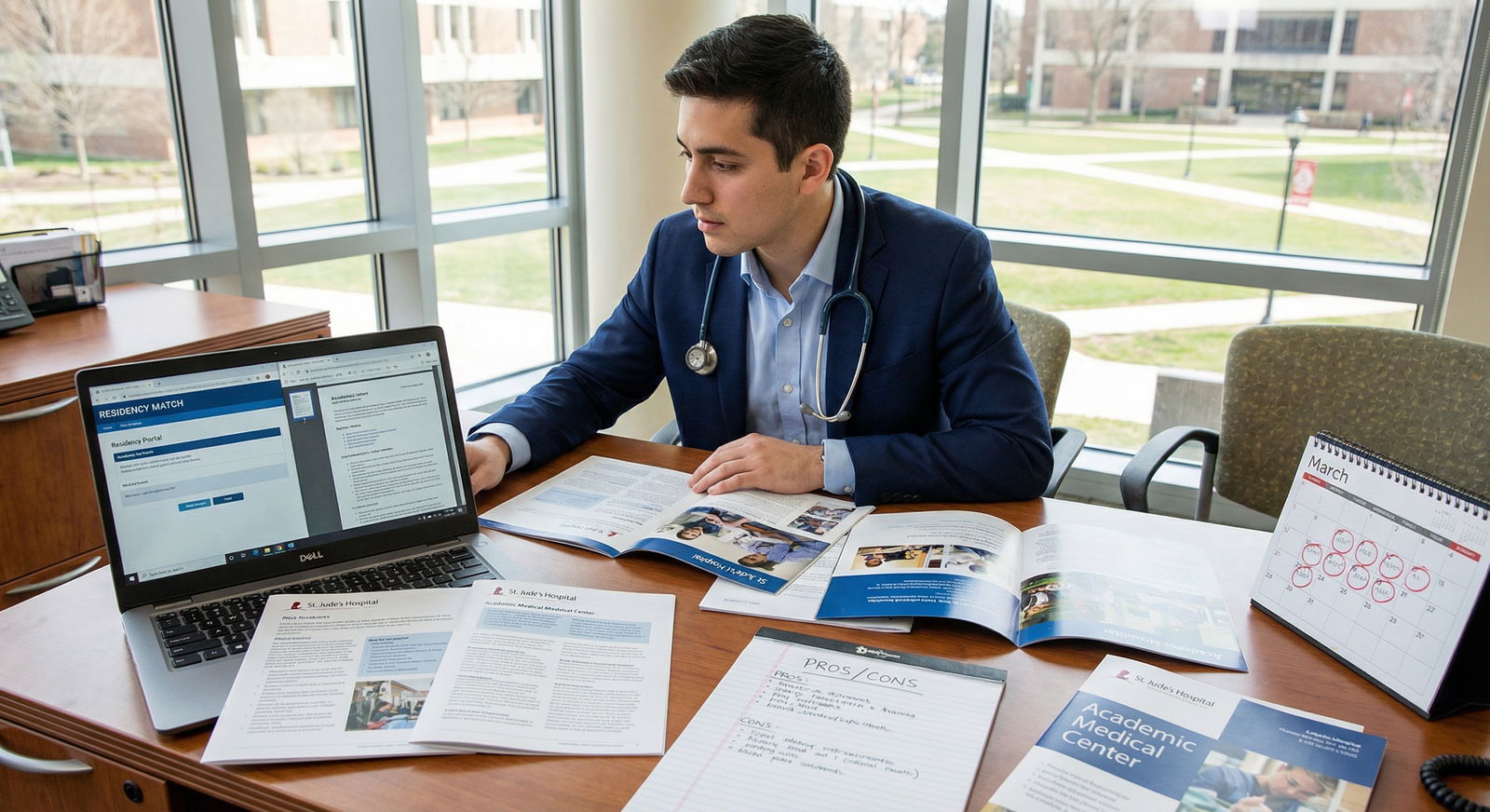
The order of pre‑match offers is not random. It is a ranking of who the program cannot afford to lose.
Let me walk you through what actually happens in those closed‑door meetings, long before you ever get that “We’d like to talk about an offer” email. Because if you think this is purely about merit and test scores, you’re already behind.
How pre‑match offers are really decided
Inside a program director’s office, this is the conversation you’ll never hear but is absolutely about you:
“Okay, if we don’t lock her down early, she’s going to match at [bigger name program].” “Those two are local, married, highly likely to stay. We can wait on them.” “He’s good, but he needs us more than we need him. No rush.”
That’s the real algorithm.
Programs that use pre‑match (often community programs, some IMG‑heavy programs, some in Texas pre‑Match system, some prelims, some less competitive specialties) will sit down by late fall and divide applicants into three mental categories:
- People they want
- People they must have
- People they can probably still get on Match Day
Pre‑match offers go to category 2 first. Always.
Not the nicest. Not the hardest working. Not necessarily the best objectively. The ones they think are:
- High risk to lose to other programs, and
- Critical to their service coverage, political standing, or reputation.
So your real job is not just to be “good.” It is to look like someone they’re afraid to lose.
What drives who gets offers first (the real hierarchy)
Here’s the dirty hierarchy nobody explains to you. When programs talk through early offers, this is how their brains are sorted.
, Internal/Loyalty status, Service needs fit, Scores/Grades, Likeability/fit](https://cdn.residencyadvisor.com/images/articles_svg/chart-relative-weight-of-factors-in-early-pre-match-deci-3104.svg "Relative weight of factors in early pre-match decisions")
| Category | Value |
|---|---|
| [Perceived ranking risk](https://residencyadvisor.com/resources/pre-match-offers/how-pds-rank-pre-match-candidates-internally-before-offering-spots) | 30 |
| Internal/Loyalty status | 25 |
| Service needs fit | 20 |
| Scores/Grades | 15 |
| Likeability/fit | 10 |
1. Perceived ranking risk: “Who will leave us if we wait?”
This is #1. By a mile.
Programs game out your likely rank list from whatever crumbs you’ve given them. They ask:
- Does this person have interviews at stronger name‑brand programs?
- Are they from this region or are they “shopping up” and using us as a safety?
- Are they couples matching with someone in a stronger specialty/location?
- Are they US‑grads with strong scores applying to a weaker reputation program?
If they think you’re very desirable on the market and likely to have better options, you move to the top of the “offer early” pile.
If they think you’re desperate for them (limited interviews, visa‑dependent, reapplicant, clear geographic constraints), you drop down the urgency list. They might still rank you highly. But they won’t burn an early offer on you.
This is the part that shocks applicants: being “safe” for a program can delay or kill your pre‑match.
2. Internal and “loyalty” status
Next tier: people with political weight inside the building.
This includes:
- Their own med students
- Rotating students who did acting internships / sub‑Is there
- Children/relatives of faculty (yes, still happens)
- Students from their “feeder” schools who have sent them good residents before
These people are not always the first to get pre‑match offers. Counterintuitive, I know. Here’s why:
If you’ve been at their hospital for months and said, “This is my top choice,” they think you’re likely to rank them highly anyway. So they may delay their offer because they think you’re “sticky.”
The exception: when an internal is strong and also obviously competitive at higher‑tier places. Then the conversation becomes, “We need to lock her before she gets snatched.”
You want to look like that second group, not the first.
3. Service coverage and “we need this body”
The unromantic truth: some early offers are driven purely by coverage.
A PD in medicine or surgery who has been burned by:
- Three residents quitting in PGY‑1
- Chronic night float gaps
- Visa residents stuck in bureaucratic limbo
…will start thinking like this in the selection meeting:
“He’s older, former hospitalist, already did a prelim year, wants to stay in this city. He can carry a heavy load and won’t leave. We need him.”
Or:
“She’s FMG but has rock‑solid US clinical experience and great bedside nurse reviews. She will survive nights. Offer her.”
Programs are constantly juggling risk. Risk of residents burning out, leaving, failing boards, or needing remediation. Applicants who look durable, pragmatic, and “will get the work done without drama” climb that silent priority list.
4. Scores and grades (less decisive than you think)
Once you’re in pre‑match conversation territory, your scores and grades got you in the room. They’re no longer the deciding factor.
Between two similarly strong candidates:
- One with 260+ Step 2 but seems lukewarm, possibly shopping around
- One with 240 Step 2 but clearly engaged, bonded with residents, and has roots in the area
The early offer usually goes to #2.
Programs do use scores as tie‑breakers when deciding who is “worth” the early offer risk. But they don’t open ERAS, sort by Step 2, and pre‑match the top 10. That’s fantasy.
5. Likeability, vibe, and resident advocacy
You underestimate how much power the residents have in this phase.
I’ve watched this play out in debriefs:
Attending: “Her research is phenomenal, strong letters.” Senior resident: “She was on her phone on rounds more than once.” Another resident: “We’d rather work with the other guy.”
Offer goes to the other guy.
Residents push hardest for the person they want to suffer through nights and codes with. Programs know that one toxic or lazy intern can blow up morale. So in borderline decisions, “who we like more” wins.
That’s human. And very political.
How the timeline really unfolds behind the scenes
Pre‑match isn’t just about who. It’s also about when. Here’s the general internal flow programs never spell out.

| Step | Description |
|---|---|
| Step 1 | Post-Interview Season |
| Step 2 | Shortlist Applicants |
| Step 3 | Consider Early Offer |
| Step 4 | Rank Normally |
| Step 5 | Contact Applicant |
| Step 6 | High Risk to Lose? |
| Step 7 | Internal Approval |
Early to mid‑interview season
A few “obvious stars” get flagged. PDs and chiefs make mental notes: “If we like them as much in person as on paper, we move early.”After the second or third big interview day
Programs have a better sense of their applicant pool. They start building a “pre‑match watch list.” These are people they’d be okay burning a spot on.Informal probing begins
You’ll see it as:
- “So… where else are you interviewing?”
- “Are you thinking of staying in this region?”
- “If you got an offer from a place like ours, would you be ready to decide early?”
They’re testing your risk profile. If your answers scream “I’m aiming higher,” you just became more likely to get an early offer.
- Internal meeting: “Who do we pull the trigger on?”
This is often a painful, political meeting. PDs argue with APDs. Residents weigh in. Chairs care about reputation and “star power.”
The agenda is basically: “Which 3–5 people do we make a move on before Match Day?”
- Chair approval and GME politics
At some institutions, the PD cannot just throw out pre‑match contracts. They need:
- Chair approval (“Are you sure about this person?”)
- GME approval for visa candidates
- Budget and slot confirmation
You might be the PD’s favorite but get delayed because central GME wants to see more data, or HR is slow, or the chair wants to interview you personally again.
That’s why some “obvious” candidates get weirdly late offers.
- Contact phase (this part you see)
You’ll get:
- A “we’d like to talk” email
- A phone call from the PD
- Sometimes a casual “check‑in” that’s really a disguised temperature check
By the time they’re calling, the politics are already done. You were debated. You were compared to others by name. Residents argued for or against you. Keep that in mind when you respond.
How your behavior shapes whether you’re “worth” an early offer
You actually have more control than you think, but it’s indirect. You’re not going to walk in and say “Pre‑match me.” That’s tacky and usually backfires.
You influence how risky and how valuable you look.
Make them believe they could lose you
Programs want to pre‑match people they might lose. But there’s a fine line between “competitive” and “arrogant” or “unrealistic.”
You want subtle signals:
- You mention other strong interviews, casually, not as a brag.
- You show broad geographic flexibility, meaning you have options.
- Your CV already screams you could go higher tier (research, scores, leadership).
The key: you still show genuine enthusiasm for them specifically. Otherwise, they’ll just decide you’re not worth chasing.
Bad: “I’m only interested in top 10 academic places.”
Good: “I’m fortunate to have several interviews, including some big academic centers, but I really liked the operative autonomy and culture here.”
Translation inside the room: “This one has options but actually likes us.” That’s catnip.
Signal loyalty without sounding desperate
Desperation kills urgency. If they think you’ll rank them #1 no matter what, you just talked yourself out of an early offer.
But yes, you should still communicate interest.
The trick is balance:
- “I could see myself being very happy here”
- “This program is near the top of my list right now”
- “I connected strongly with your residents and training philosophy”
Avoid hard pledges like: “I will rank you #1” unless:
- You truly mean it, and
- You’re ready for that to possibly remove the need for them to pre‑match you (because now they think you’re safe on Match Day).
A lot of PDs are more likely to early‑offer someone who says, “You’re one of my very top choices” than someone who swears “You’re my #1” too early. Counterintuitive, but I’ve seen it.
Be the resident the seniors are willing to go to war for
Remember: residents have veto power more often than you think.
Things that lead residents to push hard for you in that meeting:
- You looked like you cared about workflow: you asked how they run rounds, how interns are supported, how cross‑cover works.
- You were normal. Talked like a human. Didn’t try to impress every second.
- On rotations, you did the scut without whining, showed up early, and didn’t throw co‑students under the bus.
On the flip side, things that get you quietly tanked:
- You talk poorly about other programs.
- You name‑drop “prestige” places every three sentences.
- You treat ancillary staff like background.
PDs will listen when a senior says, “Please do not pre‑match that one. We’ll regret it.”
Special situations: IMGs, visa needs, and “safety” candidates
Let me be blunt.
If you’re an IMG, need visa support, or are a reapplicant, many programs assume you’re more “grateful” and more likely to rank them high if they rank you. That can lower your chance of getting an early offer, even if you’re a strong candidate.
They build quiet models in their heads:
- IMG + strong scores + many interviews = higher perceived risk to lose
- IMG + borderline scores + few known interviews = lower risk to lose (they think “we can get them in the Match”)
The strongest IMGs get treated like strong US grads: high risk, more likely to get pre‑match.
The rest are often put into “rank high, no need to pre‑match” category. Which is fine, unless you were banking on an early offer.
Visa adds another layer. Early offers to visa‑needing applicants have more institutional friction:
- Legal review
- HR and GME coordination
- Budget limits on sponsored positions
Sometimes, a PD loves you but decides not to burn a pre‑match on you simply because it’s bureaucratically harder than offering an American graduate and then using the visa slot for someone later.
You can’t fully control this, but you should understand it. And plan a broad application strategy rather than counting on one pre‑match.
How to prepare strategically for pre‑match possibilities
You’re not just preparing to say “yes” or “no.” You’re preparing to make a fast, life‑altering decision under pressure.
| Phase | Key Focus |
|---|---|
| Before interview season | Program research, real rank draft |
| During interviews | Signaling interest and value |
| After strong interviews | Refine personal rank order |
| When hinted about offers | Clarify dealbreakers, questions |
| After receiving an offer | Decide quickly but rationally |
Before interviews: have a real hierarchy, not a fantasy one
If you haven’t already sketched a realistic rank list in your head before interviews, you’ll panic when an offer comes.
Ask yourself now:
- “If Program X offered me a guaranteed spot tomorrow, would I lock in and cancel others?”
- “What risks am I actually unwilling to take? Location, spouse’s job, visa, reputation?”
Your future self, staring at a 72‑hour deadline to sign a contract, will thank you.
During interviews: manage how you’re perceived
Your goal in each strong program you’d seriously consider pre‑matching at:
- Look like someone who has options (competitive, thoughtful, not desperate)
- Look like someone who’d actually choose them (genuine interest in their strengths)
That’s not fakery. It’s alignment.
Ask about specifics that show you’ve done your homework:
- “I saw you have a strong ICU curriculum with early exposure; how do interns transition into that?”
- “Your graduates going into cardiology fellowship caught my eye; how is that supported?”
These questions mark you as someone who might also be looking at other good programs but actually cares about their training details.
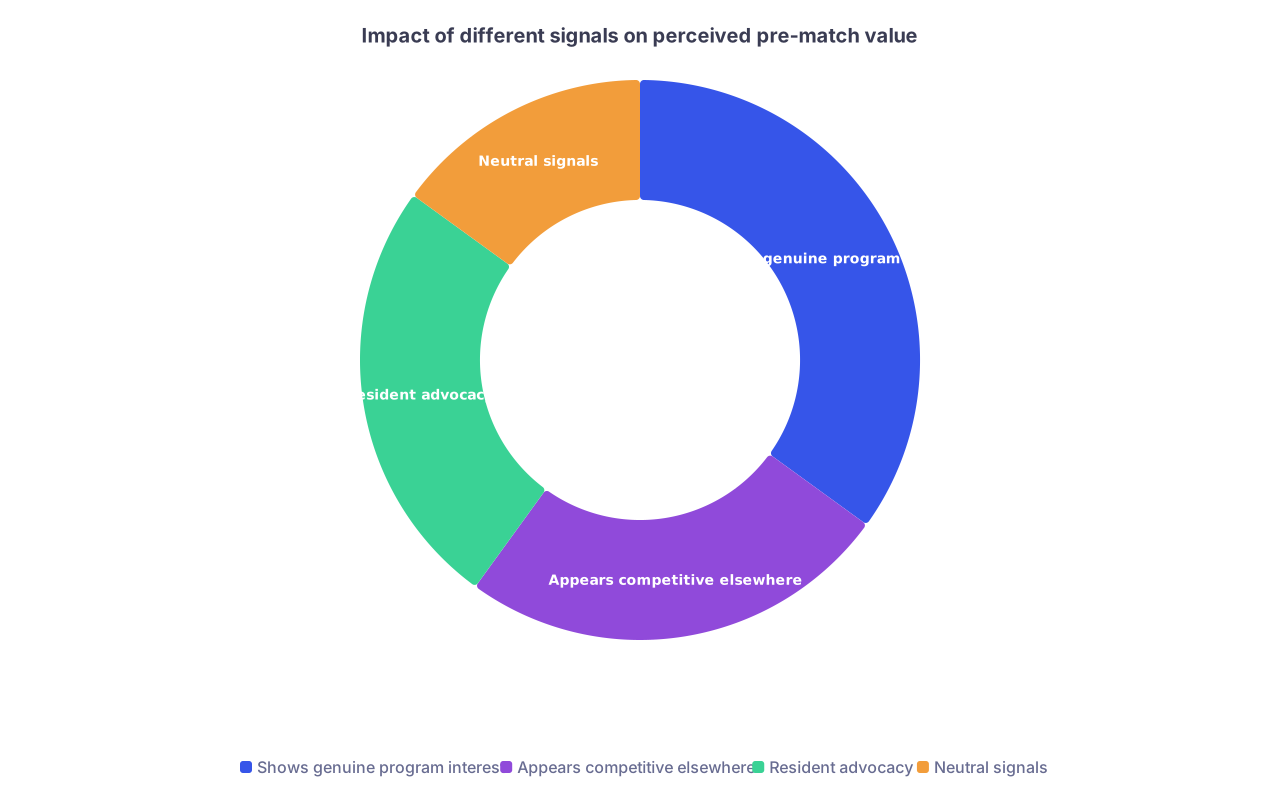
| Category | Value |
|---|---|
| Shows genuine program interest | 35 |
| Appears competitive elsewhere | 25 |
| Resident advocacy | 25 |
| Neutral signals | 15 |
When a program starts “hinting”
There’s a pre‑offer phase that many applicants misread.
Lines like:
- “We were very impressed by you.”
- “You’d be a great fit here.”
- “We hope you seriously consider us.”
These are generic. Ignore them as predictive.
More telling are:
- “If we were to move early on an offer, would you be open to that?”
- “How would you feel about making a decision before Match Day if the fit is right?”
- “Is there anything you’d need from us to feel comfortable committing early?”
Now they’re testing whether you’re pre‑match material.
Your job in that moment is to:
- Stay non‑committal but positive.
- Ask smart questions about training, call, mentorship, contract details.
- Not look startled, panicked, or overeager.
You want them to leave thinking: “This candidate is thoughtful, has standards, but would seriously consider us.”
When the offer actually comes
This is the part you care about, so let’s be specific.
You’ll typically get either a phone call or a very “we need to talk by phone” email. They rarely just send a contract cold.

| Step | Description |
|---|---|
| Step 1 | Receive Offer |
| Step 2 | Request Details and Short Time |
| Step 3 | Ask for 24-72 Hours |
| Step 4 | Politely Decline |
| Step 5 | Accept and Confirm in Writing |
| Step 6 | Review, Compare, Decide |
| Step 7 | Serious top choice? |
Here’s how to handle it like someone who’s not panicking.
1. Buy a small amount of time, not weeks
Programs offering pre‑match expect you to decide fast. Days, not weeks.
Reasonable ask:
“I’m very honored and excited. Could I have 24–48 hours to review details and talk with my family/mentor?”
If they push hard for on‑the‑spot decisions, that’s a red flag about their culture. But it still happens.
Don’t ask for a week. You’ll look indecisive, and they may rescind or emotionally move on.
2. Get concrete about what you’re agreeing to
Do not just say “yes” to a verbal offer without understanding baseline details:
- Call schedule as an intern
- Vacation policy
- Salary/benefits (you can look this up, but confirm if there are upcoming changes)
- Visa support if relevant
- Research time and fellowship track, if that matters to you
You don’t need every micro‑detail. But you do need to know if this is roughly aligned with what you can tolerate for 3–7 years.
3. Align with your pre‑planned priorities
This is where your early work pays off.
Ask yourself, brutally:
- “If I don’t take this, could I live with the possibility of not matching or landing somewhere worse?”
- “Is there any realistic program I’d choose over this one if both were guaranteed?”
If the truthful answer is that you’d still choose this program even if a slightly shinier name came along, you should strongly consider accepting.
If your answer is, “This is okay, but there are at least 3–5 places I’d clearly prefer if I get them,” then you’re gambling. That might be rational. Just don’t lie to yourself about the risk.
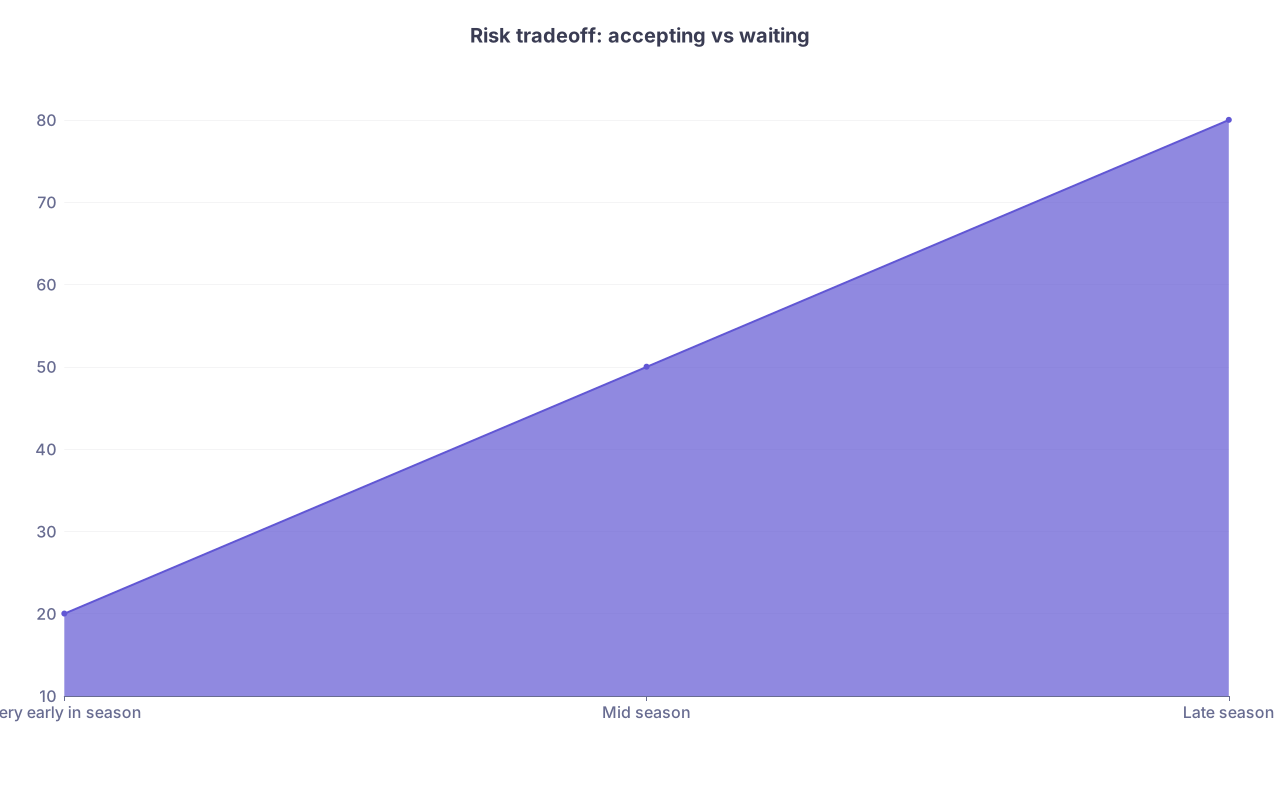
| Category | Value |
|---|---|
| Very early in season | 20 |
| Mid season | 50 |
| Late season | 80 |
(Think of that as your risk of regretting declining an early offer as the season moves on.)
4. Once you accept, act like you meant it
Once you sign a binding contract (where applicable), you’re done. Ethically and often legally. There’s no “but what if something better comes along?” anymore.
Keep that in mind before you say yes.
Once you accept:
- Stop interviewing for that specialty if that’s the expectation in your region/system.
- Do not keep fishing for “backup” when you already have a guaranteed spot. Word circulates. PDs talk.
- Shift your mindset to: “How do I make the most of this program?” rather than “Could I have done better?”
Programs remember who honored their word. And who didn’t.