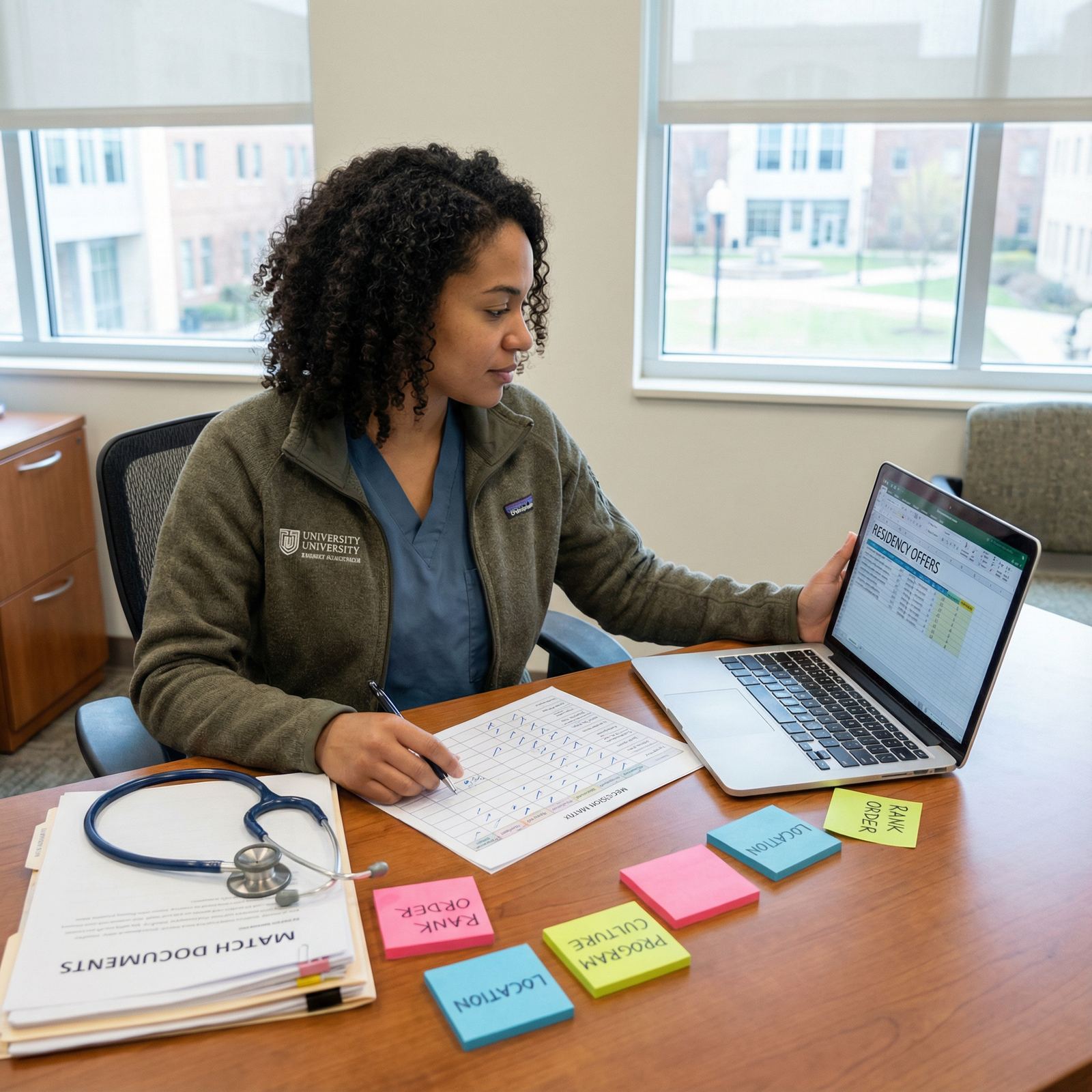
It’s late November. You finished what felt like a great audition rotation. The PD pulled you aside, told you they were “very interested” and to “keep us at the top of your list.” An associate program director winked about “working something out before the Match.” You’ve been telling your family this place is basically yours.
And then… nothing. No pre-match email. No call. Radio silence. Eventually you hear through a resident you trusted: “They liked you, but someone on committee blocked it.”
You’re stunned. One person killed what you thought was a done deal.
Let me walk you into that committee room and show you exactly how that happens. Because once you understand how fragile a pre‑match is behind the scenes, you’ll prepare very differently. You’ll stop relying on charm and “good vibes,” and start protecting yourself from that one fatal “no.”
How Pre-Match Really Gets Discussed Behind Closed Doors
First thing you need to understand: a “pre-match” is almost never a single person’s decision. Even in less formal programs, there is always some version of: “Can I defend this candidate in front of my colleagues?”
I’ve watched this play out in multiple specialties. The structure varies, but the pattern doesn’t.
Here’s the usual flow:
Someone becomes your internal champion
That could be:- Program Director (PD)
- Associate PD
- Clerkship director
- A senior faculty who worked closely with you during your rotation
They’re the one who says to others, “This student crushed it. I want to move early.”
They test the waters informally
Before anything gets sent to you, there are hallway conversations, brief mentions at faculty meetings, side chats after morning report. You’re discussed casually long before you’re on an agenda.Then comes the “Is this safe?” moment
Your champion is asking: “If I push for a pre‑match with this person, am I going to get burned by something I missed?” That’s where one dissenting voice can completely derail it.Finally, there’s the real committee conversation
Usually a shorter item in a longer meeting. Your name is brought up with a few bullet points: strengths, any red flags, and whether it’s “worth” offering you a pre‑match versus saving the spot for later.
That’s where one voice can kill you.
Why? Because pre‑match is perceived as high-risk. Once they commit that spot early, they lose flexibility. So any doubt—any tiny doubt—feels amplified.
And the people who tend to speak up are not random. They’re the ones you ignored on your rotation. The ones you thought didn’t matter.
The Hidden Power Players You Underestimate
You think the PD decides. On paper, yes. In reality, other people are quietly holding a knife over your pre‑match deal.
Three groups you probably don’t fully appreciate:
1. The “silent” faculty you barely noticed
Every department has those mid‑career people: not loud, not flashy. They’ve been there 10–20 years. PDs rely on them because they’re consistent and they don’t exaggerate.
These are the people whose comments sound like this in committee:
- “I didn’t like their clinical reasoning. They were very checklist‑oriented.”
- “They were fine, but I wouldn’t go out of my way to grab them early.”
- “Honestly, I’d wait on a pre‑match. I don’t see them as a top threat to lose.”
That last sentence? That’s death. Not because they hated you. Because for pre‑match, “not special” feels like “not worth the risk.”
2. Senior residents and chiefs
A lot of you underestimate how much a bad impression with residents costs you. You think: “Well, I just need to impress the attendings. Residents are like peers.”
Inside the room, it sounds like this:
- Chief: “They struggled with time management. I kept having to remind them about tasks.”
- Senior resident: “They were nice, but their notes were weak and they disappeared a lot in the afternoons.”
- Another resident: “They seemed more interested in impressing the PD than actually helping the team.”
The PD hears that and thinks: If I force this person onto the team for 3 years, I’m ignoring my front‑line people. That’s politically expensive. Many PDs won’t pay that price for someone who’s not an absolute superstar.
3. The clerkship coordinator / program coordinator
You might think they don’t affect “academic” evaluation. You’d be wrong.
They’re not voting members in most places, but when the PD asks, “Any issues with this student?” and the coordinator says:
- “They were late on paperwork. Hard to reach by email.”
- “We had to chase them for immunization clearance. Schedules got messy.”
- “They didn’t read their rotation instructions. Kept asking stuff that was clearly laid out.”
That doesn’t sink your entire candidacy… but it absolutely destroys the confidence in you as a “low‑maintenance” pre‑match.
A pre‑match is basically the program saying: “We trust this person enough to lock in early.” You know who PDs don’t trust? People who already made admin life harder.
How a Single Negative Comment Snowballs in the Room
Now let me show you the actual mechanics of how one vote, one line in your eval, or one irritated resident kills your deal.
Picture this: You’ve done a rotation at a mid‑tier IM program. Step scores fine, good letters coming, no glaring red flags.
Your champion (associate PD) brings you up in a committee meeting:
“I want to talk about [your last name]. They rotated with us in September. Clinical performance was strong, they connected well with patients, and I think we should consider a pre‑match before they commit elsewhere.”
Everyone glances at the quick summary in front of them: USMLE, class rank, comments.
Then:
- Faculty A: “I only worked with them one day. No major issues. They seemed engaged.”
- Faculty B: “They seemed a bit anxious but prepared. I wouldn’t oppose a pre‑match.”
- Chief Resident: “Honestly, I had concerns. They needed a lot of direction, weren’t proactive, and at one point they left for lunch and came back 45 minutes late without telling anyone. It’s in my eval.”
The temperature in the room drops.
Here’s the internal monologue around the table:
- PD: “Do I really want to go to bat early for someone my chief is lukewarm on?”
- Faculty who barely know you: “Okay, so maybe not as strong as I thought. I’ll stay quiet.”
- Your champion: “Damn. I didn’t see that. Now if I push too hard, it looks like I’m ignoring the frontline.”
So what happens?
The PD says something like:
“Given this, I’m not comfortable burning a pre‑match spot right now. Let’s rank them favorably but hold early offers for candidates we’re unanimous on.”
Your name is now in the “good but not worth the risk” pile. That one comment didn’t make you unrankable. It made you un-pre-matchable.
There’s a difference. And you need to understand that line.
What Programs are Actually Afraid Of When They Pre-Match You
Everyone thinks programs are just guarding prestige or Step stats. That’s part of it, but it’s not the whole story. I’ve heard the same three fears over and over when discussing pre‑match:
“We’ll use a spot too early and miss someone better.”
A pre‑match is committing early to a resource (a seat) they only get a few of. The more competitive the program or specialty, the more allergic they are to losing flexibility.“We’ll lock in someone who becomes a problem resident.”
They’re asking: Could this person become one of the 5% of residents who drain disproportionate time, energy, and faculty hours? Any whisper of professionalism issues makes them want to wait.“We’ll look foolish to our colleagues.”
No PD wants to be the person who pushed hard for someone, pre‑matched them, and then has their name come up repeatedly in problem meetings.
That’s why one strong objection carries so much weight. It speaks directly to fear #2 and #3.
The Quiet Red Flags That Kill Pre-Match but Not Your Rank
Here’s the trap: You can still match at a place where your pre‑match was killed. The committee doesn’t need you to be perfect for rank list. But for a pre‑match? Different standard.
Things that often block pre‑match but don’t block ranking:
- “Not proactive” comments
- Mild concerns about insight: “They got feedback but didn’t really change.”
- Perceived neediness: “They required a lot of check-ins.”
- Team-fit doubts: “Good clinically, but the team didn’t click with them.”
- Mild professionalism hitches: late once, casual with phone use, leaving early regularly
For ranking, the logic is: “They’re fine, we’ll see how they do if they end up here.”
For pre‑match, the logic is: “We need clean consensus. Why use our early bullet on a ‘fine’ when we might meet a ‘fantastic’ in the January pool?”
So your application isn’t dead. Your early deal is.
How to Protect Your Pre-Match from That One Fatal Vote
You prepare for pre‑match like you’re litigating a case. Your goal: make it very hard for anyone in that room to say, “I have concerns.”
You’re not aiming for polite. You’re aiming for bulletproof.
1. Treat every single person as if they sit on the committee
Because functionally, they do. Maybe not with a formal vote. But their comments show up in the only thing that matters: how confident your champion feels.
So:
- The quiet attending who only worked with you one afternoon? Show up early, be engaged, be prepared with patient data.
- The moody senior resident you think doesn’t like you? Ask them for feedback, follow through visibly the next day.
- The coordinator? Answer emails promptly, submit paperwork early, say thank you in person.
Internally, PDs keep tallies like this:
| Candidate Type | Resident Feedback | Faculty Feedback | Coordinator Input | Pre-Match Risk |
|---|---|---|---|---|
| Candidate A | Strong | Strong | Clean | Low |
| Candidate B | Strong | Mixed | Clean | Moderate |
| Candidate C | Mixed | Strong | Minor issues | Moderate-High |
| Candidate D | Mixed/Negative | Mixed | Negative | Very High |
You want to be Candidate A. Or as close as possible.
2. Manage feedback like your pre-match depends on it (because it does)
The worst thing you can do on an audition is drift through the month without asking anyone: “What could I be doing better?”
You want specific, mid-rotation, timely feedback from:
- An attending who seems influential (APD, clerkship director, subspecialty lead)
- A senior or chief resident who you know everyone trusts
Then show obvious change.
Example:
- Day 3: Senior tells you, “You’re a bit slow on prerounds; try to prioritize vitals and overnight events first.”
- Day 4–5: You deliberately open with those on every presentation.
- Day 6: You say, “Thanks for the earlier feedback. I’ve been focusing on X and Y; do you feel that’s improved?”
You know what ends up in their eval? Not: “Slow.” But: “Improved quickly with feedback.”
That single phrase is gold in committee. It reassures risk-averse attendings. It says: “Even if they’re not perfect, they’re coachable.”
3. Close the loop with your champion before they go to bat for you
Too many students assume the PD/APD is on the same page they are. Then they’re stunned when no pre‑match appears.
You want a conversation, not just vibes.
Somewhere near the end of the rotation, you say something like:
“I’ve really enjoyed my time here and could very realistically see myself training at this program. I wanted to ask candidly—based on my performance and how the team sees me—do you think I’m competitive for a strong rank here or possibly even an early offer if your program uses them?”
You’re giving them three options:
- “Yes, you’re very strong; we’ll likely rank you highly and may consider early options.”
- “You’re competitive, but we don’t really do pre‑matches” (or “not this year”).
- “You’re competitive, but I’m not sure you’re in that tier for us right now.”
If you get #3, your pre‑match chances are already low. But better to know and recalibrate than live in fantasy.
If you get #1, they’ve now verbally aligned themselves with your expectation. Psychologically, that makes them more likely to actually push for you—because they know you’ll remember that conversation.
Timing, Numbers, and Why You Might Lose a Pre-Match You “Deserved”
There’s one more uncomfortable truth: even if the entire committee loves you, you might still lose the pre‑match for structural reasons.
Here’s how it looks from their side.
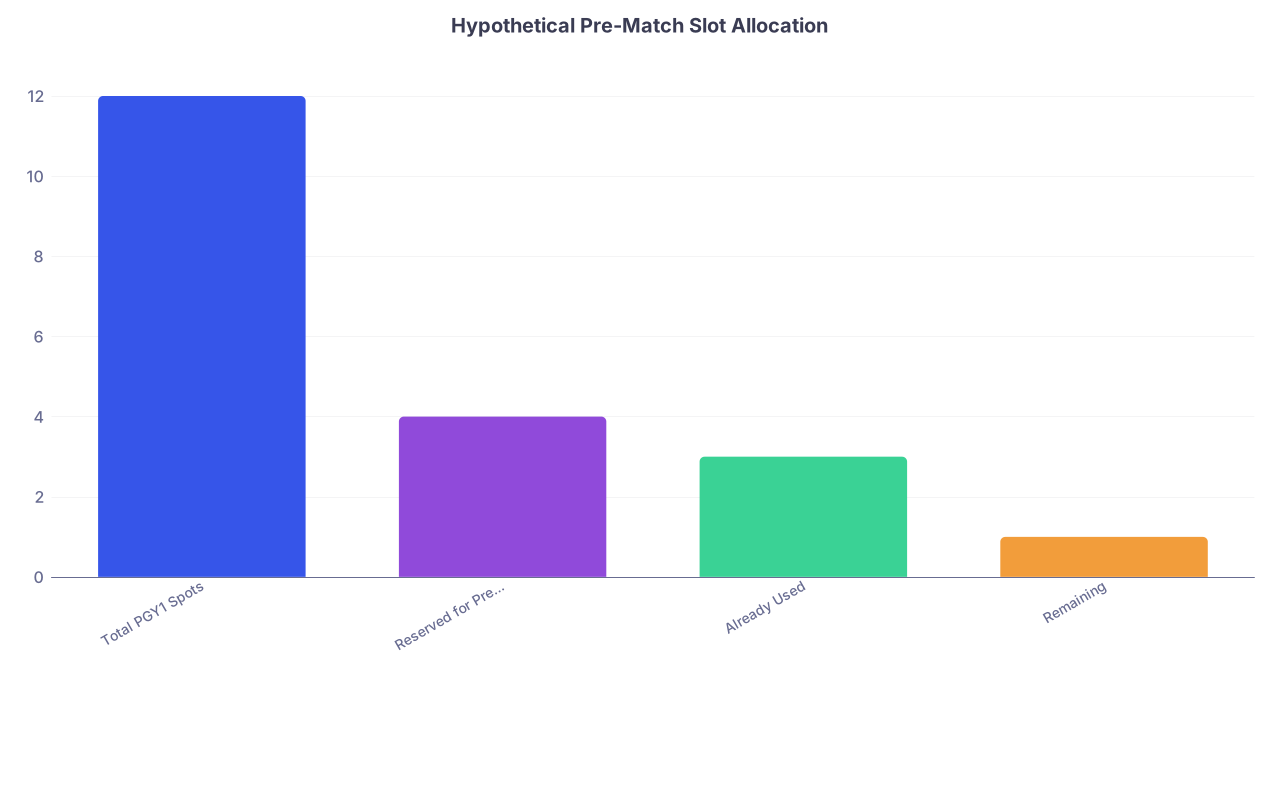
| Category | Value |
|---|---|
| Total PGY1 Spots | 12 |
| Reserved for Pre-Match | 4 |
| Already Used | 3 |
| Remaining | 1 |
Programs often think like this:
- “We have 12 spots. Let’s not pre‑match more than 3–4, max.”
- “We already promised 2 internal candidates and 1 superstar from an early rotation.”
- “We have 1 slot left, and several strong rotators coming in December and January.”
If you were a September rotator and they like you, but December has a rumored 260+ applicant from a connected home institution… your pre‑match might quietly die so they can “keep optionality.”
You didn’t do anything wrong. You just weren’t high enough above their threshold to justify using the last bullet now.
This is why over-attaching to any one promised pre‑match is dangerous. There are forces above your head you’ll never see.
How to Read Between the Lines of PD Language
You asked: “How do I prepare for pre‑match offers?” Part of that is learning to translate what PDs and faculty actually mean.
Here’s the unsanitized dictionary:
| What They Say | What It Usually Means |
|---|---|
| "We were very impressed with you." | You did well. Nothing more promised. |
| "We'd love to have you here." | We’d be happy if you matched, but no guarantee. |
| "Keep us high on your list." | We plan to rank you, range TBD. |
| "You're the kind of resident we want." | Culturally good fit, but not necessarily top tier |
| "We'll be in touch soon." | Maybe pre-match, maybe not. Could be generic. |
| "We’re discussing some options internally." | They’re considering pre-match or special ranking. |
You know when it’s real? When you hear things like:
- “We are strongly considering offering you something before the Match. Are you open to that?”
- “If we extend you an early offer, would you be prepared to commit?”
- “We have limited early spots and you are in that conversation.”
If you never heard language at that level, you never truly had a solid pre‑match in play. You had warm fuzzies.
Warm fuzzies do not survive committee.
Concrete Steps to Prepare Yourself for Real Pre-Match Offers
Let’s pull this together into an actual plan you can act on.
Before your rotation
- Research which programs in your specialty have historically offered pre‑matches (talk to prior students, residents, your dean’s office; not just Reddit).
- Know your realistic tier. A 215 Step 2 is not getting a pre‑match from a program that usually matches 245+. Aim your energy wisely.
- Decide, in advance, what you’d say if asked: “If we offer you an early contract, will you accept?”
If you waffle when they ask that, they might pull back. They don’t want to offer a pre‑match to someone who’s hedging for “something better.”
During the rotation
- Treat day 1–3 like a high-stakes audition, not orientation week. First impressions are what people lazily default to in meetings 2 months later.
- Seek actionable feedback by the end of week 1 and again mid-rotation. Then visibly improve.
- Build at least one strong resident ally and one strong faculty ally. You want a supportive voice from each side of the hierarchy.
And do not, under any circumstances, be the rotator who:
- Is late more than once
- Uses their phone constantly on rounds
- Disappears to “study for shelf” during busy clinical times
- Argues when given constructive criticism
Those behaviors are wildly overrepresented in “I have concerns” comments.
After the rotation
Send a brief, specific thank-you email to your champion and key residents/faculty:
“Working with you confirmed my interest in [program]. I’d be absolutely thrilled to train there.”
That line—“absolutely thrilled to train there”—is a quiet green light for pre‑match consideration.If your school allows, signal clearly in your application and communications that this program is one of your top choices. Programs are more willing to pre‑match when they believe you’re likely to accept.
If the PD hinted at pre‑match, a respectful check-in a few weeks later is fine:
“You’d mentioned during my rotation that there might be early options at your program. I just wanted to reiterate my very strong interest and ask if that’s still something you’re considering this cycle.”
Be prepared for no answer or a vague one. That usually means: internal politics, limited spots, or someone else is ahead of you.
The Dark Truth: You’ll Never Fully Control This
One last thing nobody tells you: sometimes your pre‑match is killed by dynamics that have nothing to do with who you are.
Budget changes. GME caps. A surprise internal candidate suddenly applying. Department chair politics. A last-minute mandate to hold spots for a new affiliated school.
I’ve sat through meetings where a candidate everyone loved lost a pre‑match because:
- “We need to leave a spot open for the Chair’s mentee if they decide to apply.”
- “Admin wants us to hold one more spot for diversity recruitment.”
- “The DIO is nervous we’re making too many early commitments.”
You will never see those reasons. You’ll just feel the silence.
So you prepare like everything depends on your performance. But you plan your life like pre‑match is a bonus, not a guarantee.
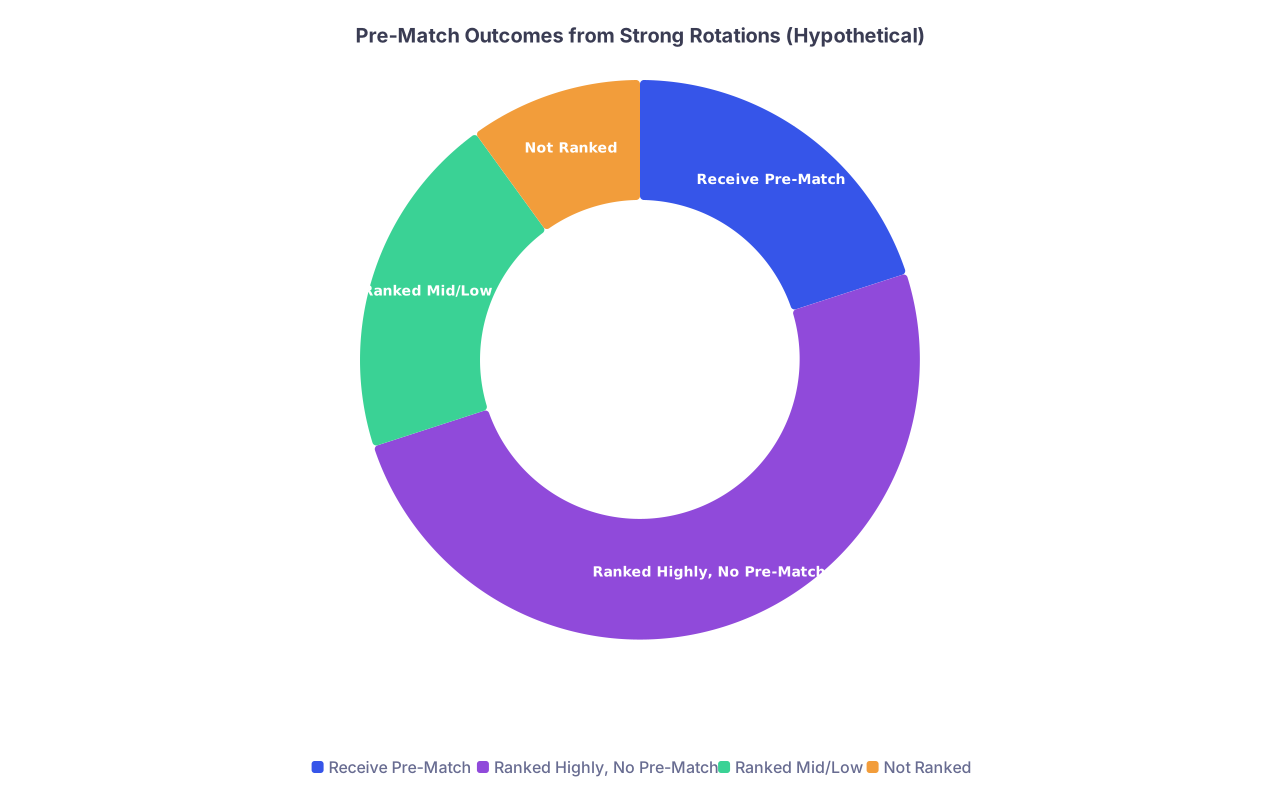
| Category | Value |
|---|---|
| Receive Pre-Match | 20 |
| Ranked Highly, No Pre-Match | 50 |
| Ranked Mid/Low | 20 |
| Not Ranked | 10 |
Most strong rotators end up in “Ranked Highly, No Pre‑Match.” That’s normal. Not a failure.

| Step | Description |
|---|---|
| Step 1 | Strong Away Rotation |
| Step 2 | Champion Identified |
| Step 3 | Informal Faculty Check |
| Step 4 | No Pre-Match - Rank Only |
| Step 5 | Discuss at Committee |
| Step 6 | Pre-Match Offer Considered |
| Step 7 | Any strong concerns |
| Step 8 | Pre-Match Slots Left |
| Step 9 | Consensus Support |
You live or die at those two diamonds: “Any strong concerns?” and “Consensus support?”
Your job on rotation is to make both of those very, very easy.