
You’re sitting in the call room. It’s late. Your phone buzzes with an email from a program director you interviewed with last week.
“We were very impressed with you… we’d like to offer you a position outside the Match…”
Your stomach drops.
You remember three different advisors giving you three totally different takes:
- “Never accept a pre-match. It means they’re bad.”
- “Take the first offer. You might not match.”
- “You can verbally say yes and still rank others higher. It’s not binding.”
Here’s the problem: a lot of common “hallway advice” about pre-match offers is dangerously wrong, partly true, or missing the one nuance that matters. And this is the kind of decision you don’t get to redo.
Let’s walk through the advisor advice that will hurt you if you follow it blindly—and how to avoid getting trapped.
1. The Worst Starting Point: Not Knowing Your System

| Step | Description |
|---|---|
| Step 1 | Get pre match email |
| Step 2 | No binding pre match |
| Step 3 | Check local rules |
| Step 4 | Formal pre match possible |
| Step 5 | Ethics > strategy |
| Step 6 | What country system |
Here’s the first big mistake: taking any advice—good or bad—without knowing which system you’re actually in.
You cannot treat “pre-match” the same across:
- NRMP main Match in the US
- Military match
- SF Match (ophtho) / Urology match
- Non-US systems with actual binding pre-match contracts
- Institutional “outside the Match” positions that still affect your NRMP participation
If you’re in the NRMP main Match (typical for most US residencies):
- There is no formal NRMP-sanctioned pre-match for categorical spots.
- Programs may “strongly signal” or “informally offer,” but you are still going through the Match unless it’s a completely outside-the-Match position with its own legal contract.
If you’re IMG / FMG applying in states that historically had pre-matches (like some Texas programs back in the day): the rules have changed over time. Listening to someone who “matched 10 years ago when we just pre-matched everything at [X hospital]” will get you wrecked.
Don’t make this mistake:
Taking advice from someone who doesn’t first ask:
- “Which specialty exactly?”
- “Which match system?”
- “What’s the exact wording of the email/offer?”
If your advisor doesn’t start there, be careful. They’re giving you generic folklore, not tailored guidance.
2. Bad Advice #1: “Never Take a Pre-Match—It Means the Program Is Desperate”
This one sounds bold and confident, which is why students fall for it. It’s also lazy and wrong.
Programs offer pre-match (formal or informal):
- To secure someone they genuinely want
- Because they’re in a competitive region
- Because they’ve been burned before by ranking someone highly who went elsewhere
- Because their internal politics or chair wants “assurances”
It does not always mean:
- The program is terrible
- They can’t fill
- You’re their last resort
I’ve seen this exact disaster:
- Student has mid-range application in a competitive specialty.
- Solid community program offers a pre-match.
- Their “prestige-obsessed” advisor says, “Don’t you dare. It means they’re desperate. You can do better.”
- Student declines, ranks a bunch of reaches, doesn’t match, ends up in SOAP scrambling into a program they openly dislike.
Would that pre-match have been their dream? No.
Would it have been 10x better than a SOAP panic placement or a gap year? Absolutely.
How to avoid this trap:
Ask yourself:
- “If this were my only offer on Match Day, would I be relieved?”
- “Is this program at least solid training with acceptable location and culture?”
- “Would I feel worse taking this or worse going unmatched?”
If the honest answer is:
- “Yes, I’d be relieved,” and
- “No, I don’t want to risk SOAP,”
then blanket “never pre-match” advice is not just bad—it’s reckless.
3. Bad Advice #2: “Take the First Pre-Match Offer You Get—You Might Not Match”
On the flip side, fear-based advising is just as dangerous.
This is common with:
- Deans who are terrified of their school’s unmatched rate
- Senior faculty who trained when the match environment was very different
- People who assume any pre-match is better than risk
The fear script goes like this:
“You’re not a perfect applicant. Don’t get picky. Take security. You’d be crazy to say no.”
Here’s where this falls apart.
Pre-match is not automatically “safety”
Some programs use aggressive pre-match behavior the way some used to do “exploding offers” for jobs:
- “You have 24–48 hours to decide.”
- “We need to know by Friday or we’ll move on.”
- “We’re offering you a guaranteed spot—others may not.”
This can mean:
- They’ve had trouble filling.
- Their reputation locally is poor.
- Their residents are leaving, and they’re scrambling.
- Their culture is toxic, and they know it.
Accepting a pre-match because you’re scared, without asking hard questions, is how people end up stuck in malignant programs for years.
Minimum due diligence before you even consider saying yes:
- Ask current residents (not just the ones they parade on interview day) about:
- How many residents have left in last 3–5 years
- How call schedules changed in reality vs what’s advertised
- Board pass rates, fellowship placements, and actual teaching
- Look at your full interview schedule. Are you actually weak, or are you panicking?
If you have 12–15 interviews in a moderate competitiveness specialty and reasonably strong metrics, accepting the first pre-match offer out of fear is almost always a mistake.
4. Bad Advice #3: “Verbal Commitments Don’t Matter—Just Say Yes and Rank Who You Want”
This one is toxic. And way too common.
Someone—often a slightly jaded resident—will tell you:
“Just tell them you’re committed. Then rank wherever you want. The Match is what’s binding.”
NRMP rules are clear:
- You cannot make a binding commitment outside the Match for a position that is participating in the Match.
- But also: unethical behavior, misrepresentation, and broken verbal promises can absolutely come back to bite you.
No, there isn’t a “verbal contract jail.”
Yes, there are very real consequences:
- Word travels. PDs talk. Coordinators talk. Especially within a region or specialty.
- You can get a reputation for being dishonest or manipulative before you even start residency.
- If you match somewhere else after implying you were “committed,” that program might complain to your dean or the NRMP.
Is it always provable? No.
Is it a great way to start your career? Also no.
Don’t make this mistake: treating ethics like a loophole to game.
If you’re not comfortable actually going there, do not say:
- “You’re my number one.”
- “I’ll definitely rank you first.”
- “You have my commitment.”
You can be honest and still positive:
- “I really enjoyed your program and you’re very high on my list.”
- “I could see myself training there and thriving.”
- “I’m still finalizing my rank list, but you’re absolutely in serious consideration.”
If a program pushes you to verbally commit, that itself is a red flag.
5. Bad Advice #4: “Programs Can’t Pressure You—If They Do, They’re Breaking Rules, So Just Ignore It”
I wish this were fully true in real life. It’s not.
Yes, there are rules.
Yes, programs should not ask you how you’ll rank them or demand commitments.
But they still do. Regularly. On Zoom. On phone calls. In “informal” chats.
I’ve heard actual lines like:
- “We have limited spots and we want people who really want to be here. Where would you rank us?”
- “If you’re serious about us, we’d like a firm commitment.”
- “We don’t want to be someone’s backup, so we need you to be all in.”
Here’s the mistake:
Assuming that because they are technically rule-breaking, you have no responsibility here. That you can say whatever “strategic” thing and walk away clean.
You still need to protect yourself:
- Don’t email anything that reads like a binding promise.
- If you feel cornered on a call, use phrases like:
- “I’m still evaluating all of my options carefully.”
- “I can say you’re one of my top choices, but I’m not ready to give an exact rank yet.”
- If they continue to push, ask yourself why they’re so desperate for verbal leverage.
You can absolutely report egregious behavior to your dean or the NRMP.
But most of you won’t. Because you’re scared. And they know that.
So instead, assume you will have to maintain your own boundaries.
6. Bad Advice #5: “Your Advisor Knows Your Risk Better Than You Do”
This is subtle, but it ruins a lot of decisions.
You sit down with an advisor. They look at your Step scores, grades, research, and say:
“You’re high risk. If you get any kind of pre-match, you should probably take it.”
Here’s the hidden problem:
Advisors are often more concerned with their aggregate numbers (unmatched rate, school reputation) than your individual goals.
They don’t feel it if:
- You’re stuck in a program you hate.
- You’re far from your only support system.
- You have to repeat a year or scramble to upgrade later.
They see “matched vs unmatched.” You live “happy vs miserable for 3–7 years.”
You should absolutely get honest risk assessment. But do not let someone treat you as a statistic.
Protect yourself with a brutally honest self-evaluation:
| Factor | Lower Risk Signal | Higher Risk Signal |
|---|---|---|
| Step/COMLEX Scores | At/above specialty mean | Below mean or first-time fail |
| Number of Interviews | 12+ in categorical match | <8 for moderately competitive |
| Red Flags | None | Gaps, professionalism issues |
| Visa / IMG Status | US grad, no visa issues | IMG, visa needed |
If you’re:
- IMG with visa needs
- Low Step with few interviews
- Non-traditional with big gaps or fails
Then yes, security might matter more than ideal fit.
But that’s a decision you should own, not just inherit.
7. Bad Advice #6: “You Have Plenty of Time to Decide”
Sometimes you don’t.
Programs know the psychology here. They send emails like:
- “We’d like an answer within 48–72 hours.”
- “We’re offering a position contingent on your acceptance this week.”
And advisors casually say: “Just think about it. No rush.”
Wrong. There is rush. Time pressure is part of their leverage.
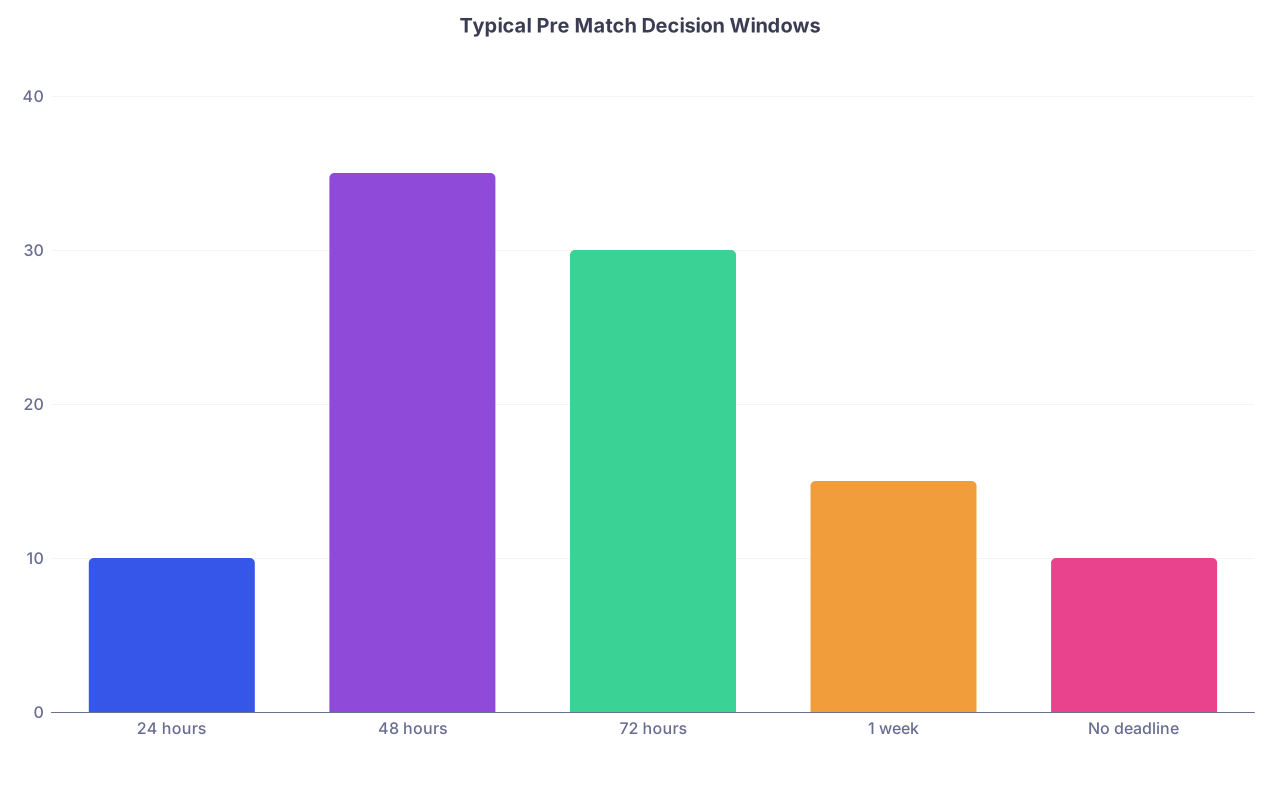
| Category | Value |
|---|---|
| 24 hours | 10 |
| 48 hours | 35 |
| 72 hours | 30 |
| 1 week | 15 |
| No deadline | 10 |
What you can’t do is:
- Panic-respond in 2 hours without talking to anyone
- Stall endlessly and assume the offer will sit there untouched
You need a pre-made decision framework before offers even come:
- “If any program from my ‘would be relieved’ list offers, I’ll seriously lean yes.”
- “If a program outside my geographic or training minimums offers, I’ll probably decline.”
- “If it’s a place I walked away from ambivalent or uneasy, I will not let fear talk me into it.”
Have that written down before interview season. Otherwise, you’ll let adrenaline and imposter syndrome decide for you.
8. Red Flags in Advisor Advice You Should Not Ignore
If you hear any of these, your caution radar should go off.
1. “This is how we’ve always done it.”
Translation:
“I haven’t updated my understanding in a decade.”
Residency and match dynamics change. Fast. Especially for IMGs, DOs, and competitive specialties.
2. “Everyone from our school who did X was fine.”
You are not “everyone.”
You might have:
- Different family constraints
- Financial limitations
- Mental health considerations
- A spouse or partner to think about
“Fine” is a low bar for a life-defining decision.
3. “Honestly, just match anywhere. You can always move later.”
I’ve seen how often “move later” actually happens. Very rarely.
Transfers are hard. Politically messy. And you may end up staying exactly where you didn’t want to be.
4. “I’d be flattered. Just say yes.”
You are not applying to be flattered. You’re applying to be trained. Do not confuse ego boosts with good offers.
9. How to Actually Prepare for Pre-Match Offers (Without Getting Burned)
Let’s get practical.

| Step | Description |
|---|---|
| Step 1 | Before interviews |
| Step 2 | Define dealbreakers |
| Step 3 | Rank training priorities |
| Step 4 | Identify acceptable minima |
| Step 5 | Draft response templates |
| Step 6 | Discuss with trusted mentors |
| Step 7 | Revisit once interviews start |
Before interview season
Define non-negotiables
- Geographic constraints (family, support, partner job)
- Program type (community vs academic—what’s okay vs what is a hard no)
- Malignancy tolerance (be honest—can you survive a toxic place for 3+ years?)
Create three mental buckets
- “Would be happy here”
- “Acceptable if needed”
- “Only if absolutely desperate / SOAP-level”
If a pre-match comes from the third bucket, that’s a huge warning sign.
During interview season
Take serious notes after each interview
- Residents’ faces and body language when leadership wasn’t in the room
- How they talked about work hours and support
- Whether anyone quietly hinted, “We’ve had a lot of turnover”
Update your internal list weekly
- Where each program lives in your three buckets
- Which ones you’d accept early if they asked
When an offer or “strong signal” comes
Slow down, but don’t freeze
- Reply acknowledging receipt
- Ask for 24–72 hours if they haven’t given a time frame
- Contact 1–2 trusted people who actually understand your current cycle (not someone who matched 12 years ago in a different specialty)
Ask the unspoken question
- “Will future-me thank current-me for choosing certainty here?”
- Or will they resent you for panicking?
10. Ethically Handling Interest Without Cornering Yourself
You can express enthusiasm without handcuffing yourself.
Here’s what’s safe:
- “You’re one of my top programs.”
- “I could see myself very happy training here.”
- “I value the opportunity to interview and remain very interested.”
Here’s what’s dangerous unless it’s actually true:
- “You are my number one.”
- “I will rank you first.”
- “You have my commitment that I’m coming if you rank me.”
If you truly decide to commit to ranking a place first, you may choose to tell them. But don’t use that language casually or strategically. That’s where people step into ethical gray zones they regret later.
11. Don’t Outsource Your Regret

Here’s the ugly part no one likes to say out loud:
- Your dean won’t live with your residency schedule.
- Your advisor won’t carry your pager.
- That resident who said “just say yes and figure it out later” won’t be the one on 28-hour call in a program you hate.
You will.
So when you hear strong, confident advisor takes on pre-match offers, run them through this filter:
- Does this person actually know the current rules and market?
- Are they acknowledging my specific risk factors and constraints?
- Are they more afraid of their metrics than my long-term fit?
- Are they oversimplifying a complicated decision into a slogan?
If the answer to any of those is “yes,” step back. Get a second opinion. Protect yourself.
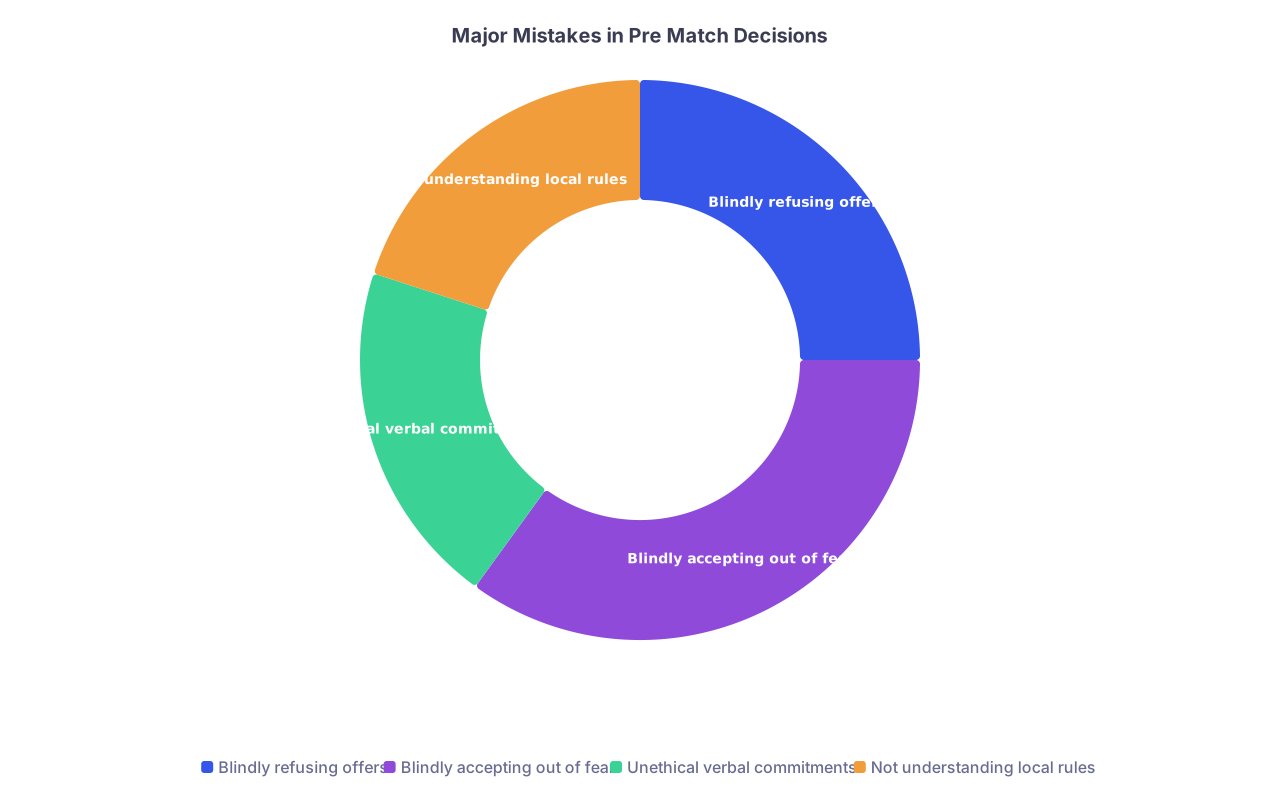
| Category | Value |
|---|---|
| Blindly refusing offers | 25 |
| Blindly accepting out of fear | 35 |
| Unethical verbal commitments | 20 |
| Not understanding local rules | 20 |
FAQ (Exactly 4 Questions)
1. Is it ever clearly right to accept a pre-match-style offer?
Yes. When all three are true:
- You’d be genuinely relieved to match there.
- Your risk of not matching somewhere acceptable is non-trivial (few interviews, red flags, visa/IMG issues).
- The program passes basic due diligence on training quality and culture.
In that scenario, “certainty over theoretical upside” is a rational choice—not cowardice.
2. What if I already told a program they were my “top choice” but I’m rethinking?
You can’t rewrite the past, but you can avoid digging deeper. Don’t double down with stronger promises. When updating them, stay vague but positive (“you remain very high on my list”). And learn from it: don’t use superlatives casually again.
3. How much should location factor into deciding on a pre-match?
More than most advisors admit. Location drives support systems, cost of living, and your actual life outside the hospital. If a pre-match offer would isolate you from all support, weigh that heavily. A “good program” can still break you if you’re completely alone and miserable.
4. Should I tell other programs if I accept a pre-match-style offer outside the Match?
If it’s a fully outside-the-Match, contract-based position and you’ve truly committed, you should:
- Withdraw from the Match if required by rules, or
- At least ethically cancel remaining interviews so you’re not wasting spots.
Do not keep interviewing “for fun” once you’ve locked yourself into something. That kind of behavior spreads fast and can damage your reputation before residency even starts.
Key points to walk away with:
- Don’t let slogans (“never pre-match” / “always take security”) replace your own judgment and risk reality.
- Guard your ethics and your future reputation; casual verbal “commitments” can haunt you.
- Prepare your lines in advance and build a personal framework so you’re not deciding life-changing offers in a panic at 1 a.m.