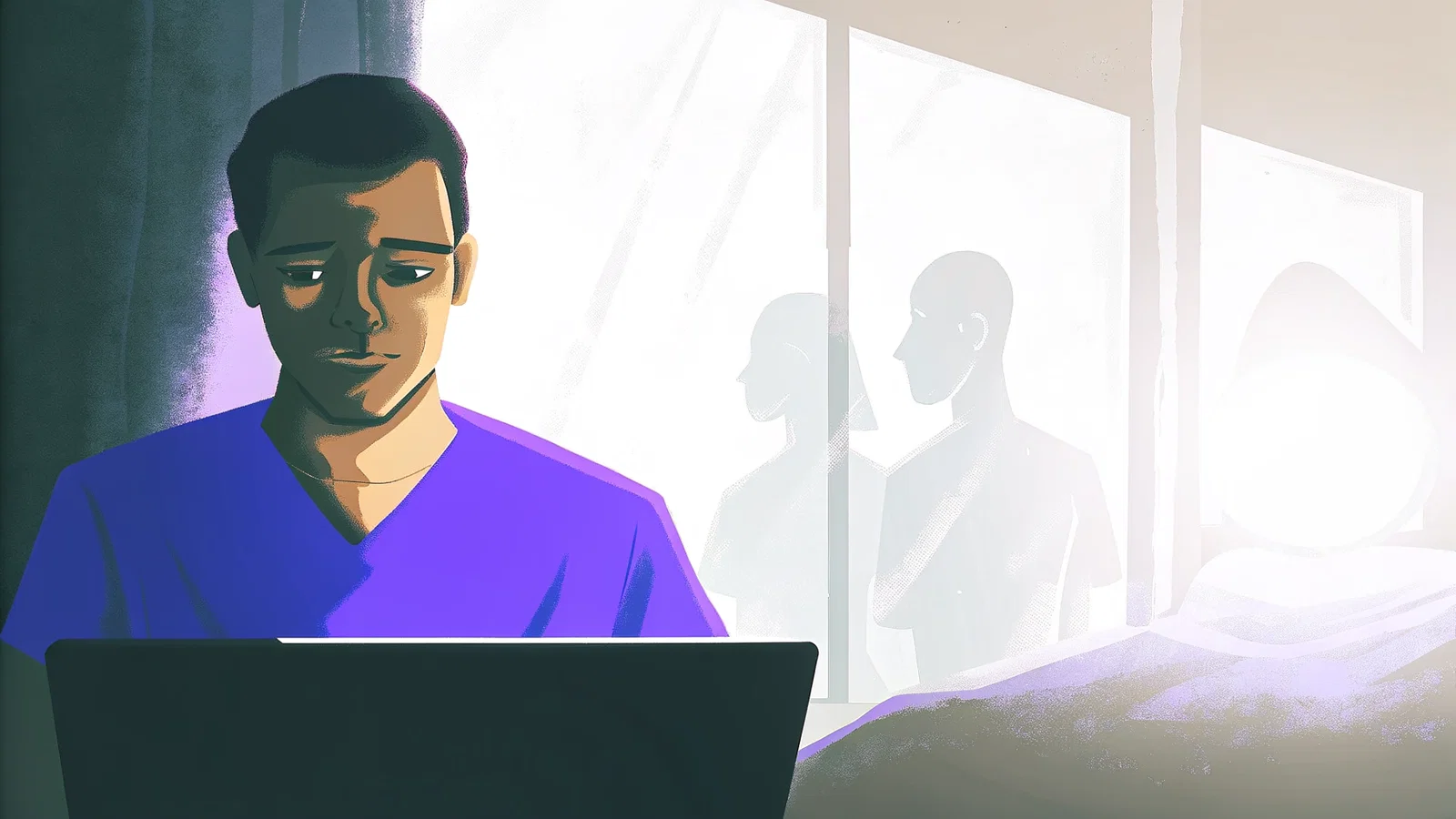
The Scenario: The 'Zoom Fatigue' vs. The 'Floor Exhaustion'
It's 9:47 p.m. You're still in the same chair you sat in at 7 a.m. The laptop fan is whirring like it's personally offended. You've just finished your twelfth video consult. Your eyes feel sandpapered. Your neck is locked. And somehow you're lonelier than you were after a 28-hour call. No one high-fived you. No one even saw you. You close the laptop and the silence hits harder than any code blue ever did.
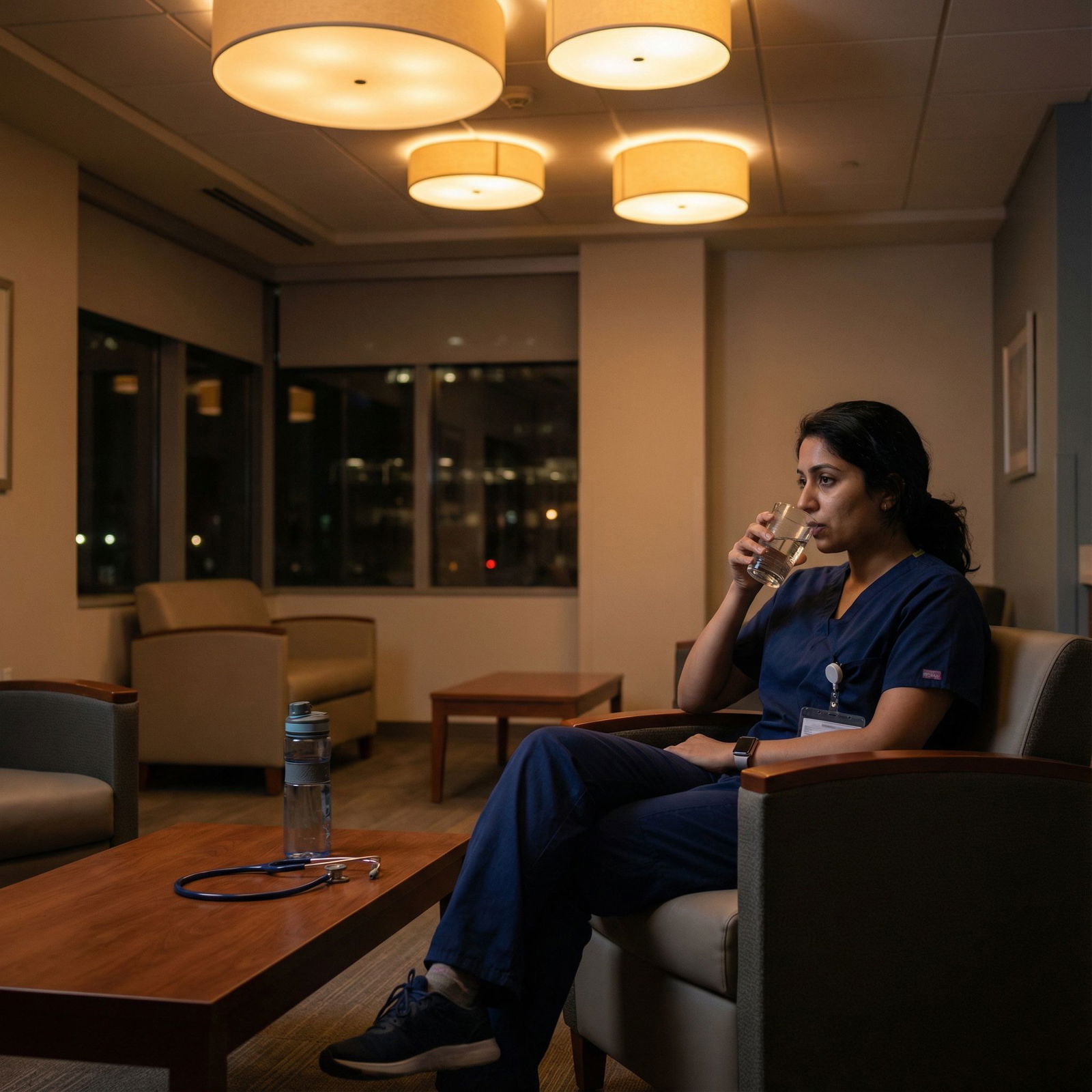
Now flip it. Same clock, different hell. You're peeling off a mask that smells like every patient you saw today. Your feet are screaming. The fluorescent lights in the call room feel like an interrogation. You just absorbed three bad outcomes in a row because the attending was too busy and the nurses were short-staffed, so the emotional sludge stuck to you. You drive home on autopilot, too wired to sleep and too wrecked to care.
I've lived both. Physical exhaustion from the floor is brutal, your body keeps the score. Cognitive overload from telemedicine is quieter and sneakier, it hollows you out from the inside. Here's the thesis most people get wrong: neither modality is "better" for preventing burnout. They just attack different systems. One wrecks your body and boundaries. The other wrecks your brain and sense of connection. You need different protocols for each, or you'll burn out either way.
The Data: Why Telemedicine is Rising in Burnout Reports
Telemedicine was sold as the burnout cure. No commute. Flexible schedule. Sit in your pajamas. What a joke. The reports are climbing, and they're underreported because this flavor of burnout happens in silence, no one sees you crash on a couch after a day of staring at faces the size of postage stamps.
Zoom fatigue is real neuroscience, not whining. Your brain is designed to read micro-expressions, posture shifts, and full-body cues in three dimensions. On a 13-inch screen you get a floating head and lag. You're working overtime just to decide if the patient is anxious or the connection is bad. That constant decoding taxes the same circuits you need for clinical reasoning. By hour four you're slower, more irritable, and making thinner differential diagnoses.
Then isolation stacks on. In the hospital you get hallway mentorship, the quick "hey, that case was tough, here's what I do" from a senior. Telemedicine kills those collisions. You finish a hard goals-of-care talk, hit "leave meeting," and sit alone with the residual dread. No debrief. No shared eye-roll. Just you and the next calendar invite. I've watched solid residents go flat after three straight tele blocks because the social battery never recharged.
Technical friction pours gas on it. The EMR freezes mid-exam. The patient's audio drops during the critical history. You can't lay hands on anyone, so you're flying half-blind and second-guessing every plan. That low-grade panic of "is my setup even working" compounds the cognitive load until you're exhausted without moving more than your mouse finger.
Acknowledge it: telemedicine burnout is not laziness or "you should just go outside." It is a distinct stress mechanism, cognitive overload plus isolation, and it is rising because programs keep expanding virtual rotations without giving residents the tools to survive them.
The In-Person Protocol: Managing the Physical Environment
The hospital is an emotional contagion machine wrapped in noise and lights that never turn off. You absorb every family's panic, every attending's frustration, every nurse's short staffing rage. Boundaries? The culture still pretends 24/7 availability is noble. That is how good residents get hollowed out.
Fix it with a hard-stop ritual. When you leave the ward, you leave the ward. Literally. I walk to my car, sit for sixty seconds, and say out loud: "Shift over. Not my circus until tomorrow." Then I change out of scrubs before I touch the steering wheel. Sounds theatrical. It works. It severs the emotional umbilical cord so the day's sludge doesn't follow you home and poison your sleep.
Micro-breaks are non-negotiable. Between patients, take five. Not doom-scrolling. Actual silence or a slow walk to the stairwell. No podcasts, no messages. Just reset the nervous system. I time them like vitals, because they are. Skip them and the emotional contagion stacks until you're snappy with the next family for no good reason.
Sleep hygiene gets scheduled like a shift. In-person rotations will steal it if you let them. Block 11 p.m. to 6 a.m. as protected. Blackout curtains, phone in another room, magnesium if you need it. If post-call is wrecking you, advocate for a real post-call day instead of "educational half-day" nonsense. Your body is the instrument. Treat sleep like the procedure it is.
The Telemedicine Protocol: Managing the Digital Environment
The core problem with telemedicine is the illusion of availability. Camera on equals "I'm always reachable." Your brain never gets the off-ramp. You finish one consult and the next one is already pinging. No physical transition equals no mental transition. That is how you end up answering messages at 10 p.m. in bed and wondering why you feel permanently half-present.
Create a tech-free zone. Do not take calls from your bedroom. Ever. I set up a cheap folding table in the corner of the living room that only exists for tele days. When the laptop closes, I leave that corner. The bedroom stays sacred for actual rest. If space is tight, at least face a different wall or put a physical object (a book, a plant) on the desk that signals "clinic closed."
Default to video-off when you can. Audio-only cuts the cognitive load dramatically. You stop performing facial expressions and start listening. Use video for the first meeting or when you need to show something. The rest of the time, protect your face muscles and your attention. Your patients will adapt faster than you think.
Structured debriefs save the isolation piece. Immediately after a heavy tele consult, schedule a ten-minute call or text thread with a colleague. "Just finished a rough goals talk, need to dump for two minutes." Do it while the feeling is fresh. That tiny human connection recharges the mentorship battery the screen steals. Make it a standing habit with one or two trusted people on the same rotation.
The Hybrid Strategy: Optimizing Your Rotation
Pure tele or pure floor is a trap. The sustainable move is deliberate mixing. Use telemedicine for straightforward follow-ups and medication checks. That saves your physical energy and joint pain for the complex new diagnoses and procedures that actually require your body in the room. I've seen residents who front-load tele days then crush the high-acuity in-person blocks without collapsing.
Flip it for onboarding and mentorship. New rotations, new teams, tough attendings, show up in person first. Those early hallway conversations and shared coffee runs build the relationships that later prevent isolation when you go virtual. You cannot mentor or be mentored effectively through a Brady Bunch grid forever.
Audit your schedule every block. If you are 80% telemedicine, you are drifting toward isolation burnout whether you feel it yet or not. Flag it. Request a mix. Most program directors will work with you if you frame it as performance optimization rather than complaint: "I am more accurate and less depleted with a 60/40 split. Can we adjust the next month?"
Advocate early and specifically. Do not wait until you are already flat. Look at the upcoming block, identify the imbalance, and propose the fix in one clear email or face-to-face. Programs are still figuring telemedicine out. The residents who speak up with solutions shape the culture instead of just surviving it.
Conclusion: Choose Your Protocol
In-person rotations grind you down with physical exhaustion and emotional contagion. Telemedicine grinds you down with cognitive overload and isolation. Different weapons, same result if you use the wrong defense.
Burnout is not a badge of honor. It is a flashing dashboard light telling you the current protocol is failing. Stop romanticizing the grind. Fix the system you actually control, your own transitions, boundaries, and mix of modalities.
Right now, open your schedule for the next two weeks. Pick one concrete change: a hard-stop ritual, a tech-free zone, a standing debrief buddy, or a request for hybrid balance. Implement it this week. Then reassess. That is how you stay functional long enough to become the doctor you actually want to be.
Key takeaways to tattoo on your brain:
- Telemedicine burnout is driven by cognitive load and isolation, not laziness.
- In-person burnout is driven by physical exhaustion and missing boundaries.
- Different environments demand different self-care protocols, copy-paste fails.
- A deliberate hybrid mix is the most sustainable residency strategy.