

You’re on post-call autopilot. It’s 8:30 p.m., you’re reheating cold leftovers, and your phone lights up with three things at once:
– A partner asking, “Are you really working again this weekend?”
– A co-resident’s text about going out drinking “to forget this week.”
– A dating app notification from someone who clearly wants a lot more time and energy than you have.
You’re exhausted. You want connection. But your relationship choices right now can quietly pour gasoline on the burnout fire you’re already fighting.
This is where a lot of residents get burned. Not by the hours alone. By the relationships they choose and the boundaries they fail to set.
Let’s walk through the relationship patterns that reliably intensify burnout risk during residency—and how to stop making those mistakes.
The Biggest Relationship Myth in Residency
The myth goes like this:
“If I just find the right person (or stay loyal to the person I started with), the relationship will protect me from burnout.”
Wrong. A mismatched or poorly managed relationship during residency does the opposite. It amplifies burnout.
Here’s the ugly pattern I’ve seen over and over:
- Resident is already stretched thin.
- Relationship demands more emotional labor, time, and energy than they can realistically give.
- Guilt → conflict → sleep loss → distraction at work → more errors → more stress → resentment.
- Burnout explodes.
The problem isn’t “having a relationship in residency.” The problem is the type of relationship and the way you run it.
Let’s dissect the most high‑risk choices.
Mistake #1: Choosing Partners Who Don’t Respect Medicine’s Reality
This one is brutal and common. You end up with someone who fundamentally doesn’t accept what your life looks like for the next 3–7 years.
Red flags I see all the time:
- “Can’t you just tell them you have a family emergency and get out of call?”
- “You’re exaggerating. No one actually works 80 hours.”
- Guilt-tripping you for being late due to codes, admits, sign-out, or emergent cases.
- Keeping score: “I’ve gone to your events but you never come to mine.”
- Frames your job as a “choice against them,” not a responsibility to patients.
That mismatch between their expectations and your reality is not a small thing. It’s a chronic source of stress.
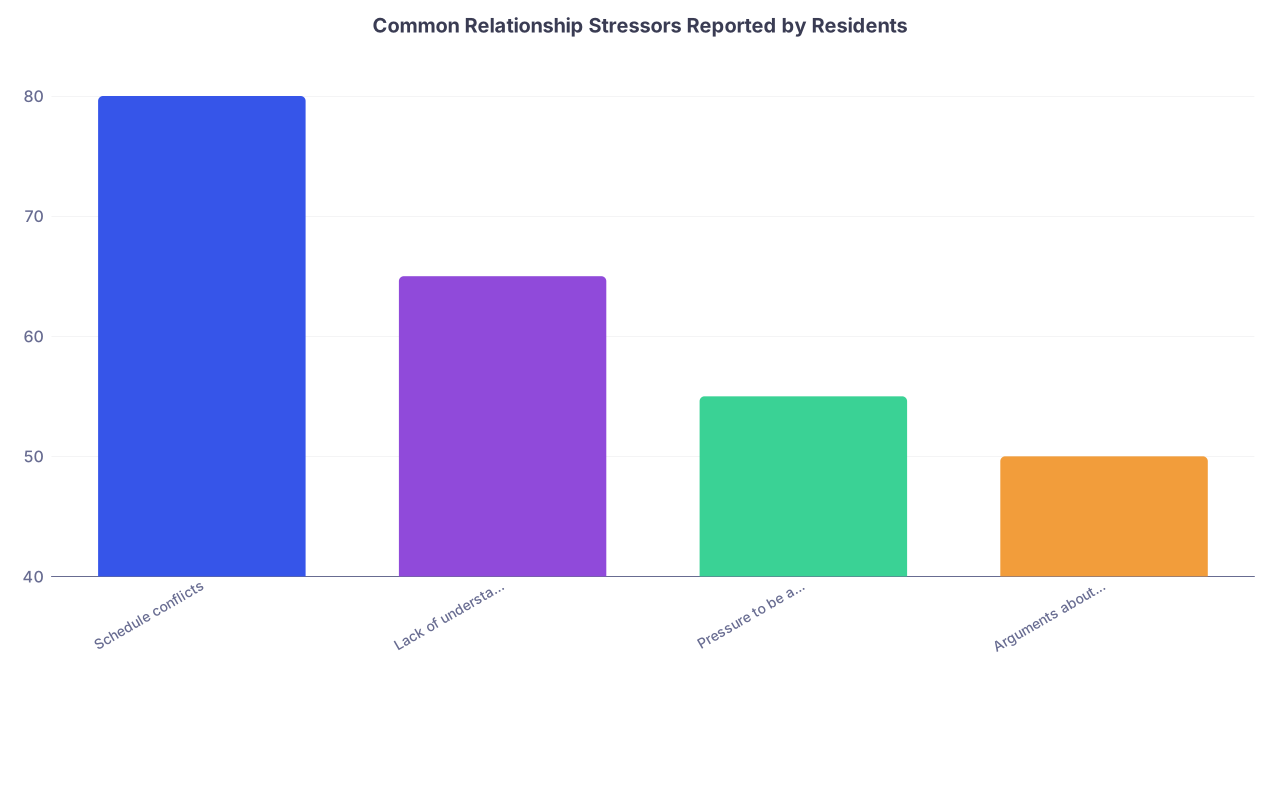
| Category | Value |
|---|---|
| Schedule conflicts | 80 |
| Lack of understanding | 65 |
| Pressure to be available | 55 |
| Arguments about work hours | 50 |
Why this intensifies burnout:
- You start hiding your actual schedule to avoid fights.
- You pick up extra emotional labor—comforting them about your absence—on top of patient care.
- You sacrifice sleep, workouts, or studying just to keep them “happy.”
- Home stops feeling like recovery and starts feeling like a second job.
The mistake: believing you can “love them hard enough” that they’ll accept medicine later.
If they don’t respect the training reality now, they usually don’t magically start at PGY-3.
Guardrail to set:
Have a blunt, explicit conversation early:
“This is what my schedule will realistically look like. I will miss weekends, holidays, birthdays. I cannot promise predictability. Can you live with that, without punishing me for it?”
If the answer is vague, defensive, or resentful, don’t ignore that. Walking away early hurts less than three years of chronic emotional warfare.
Mistake #2: Confusing Trauma Bonding With Real Connection
Residency is a pressure cooker. Trauma bonding is easy to mistake for “we’re meant to be.”
You know this one:
You’re on night float. It’s 3 a.m. Some disaster case rolls in. You and another resident or nurse grind through hell together. Adrenaline, shared suffering, dark jokes in the hallway. Next thing you know, you’re at someone’s apartment at 7 a.m. “just talking” over coffee.
Fast-forward 3 weeks: now you’re in a situationship fueled by:
- Vents about attendings who humiliate you.
- War stories about codes and near-misses.
- Shared sleep deprivation and gallows humor.
It feels so validating. So seen. But here’s the trap:
The relationship becomes an extension of work stress, not a sanctuary from it.
Signs you’ve fallen into this:
- 80–90% of conversations are about residency, co-residents, or hospital drama.
- You only see each other post-call, half-conscious, or after brutal shifts.
- Sex, alcohol, or venting are the only coping tools you use together.
- You feel worse after being with them, not calmer.
Over time, that constant re-activation of work stress outside the hospital shreds your reserves. You never mentally clock out.
The fix is not “don’t date anyone in medicine.” It’s this:
Ask yourself honestly:
“If residency ended tomorrow, would this relationship still make sense? Or is it just a life raft in a storm we’re both drowning in?”
If the answer is “storm-only relationship,” be cautious. At minimum, you need non-hospital topics and non-self-destructive coping strategies built into your time together.
Mistake #3: Trying to Maintain Pre-Residency Relationship Rules
You enter intern year thinking, “We’ll keep it the same. Date night every Friday, long calls every night, vacations like before.”
That fantasy dies by week two of wards.
The mistake here is relationship inertia—running residency with pre-residency expectations. That gap punishes both of you.
Common self-sabotaging promises:
- “I’ll always text you back between patients.”
- “I’ll call you every night before bed.”
- “I’ll never miss anniversaries or holidays.”
You mean well. But you’re setting yourself up to fail—and training your partner to expect things that residency will rip away.
What happens next:
- You break “promises” that never should’ve been made.
- They interpret that as “you don’t care anymore,” not “I’m drowning on nights.”
- You feel like a bad partner, on top of feeling like an inadequate resident.
- Shame compounds burnout.
A healthier approach is to renegotiate the rules up front and explicitly.

| Step | Description |
|---|---|
| Step 1 | Start Residency |
| Step 2 | Review Old Expectations |
| Step 3 | Discuss schedule honestly |
| Step 4 | Set new minimums |
| Step 5 | Plan check in every month |
| Step 6 | Keep but confirm |
| Step 7 | Adjust as rotations change |
| Step 8 | Still realistic? |
Concrete example of sane expectations:
- “I may not reply during the day at all. Assume I’m busy, not ignoring you.”
- “I can promise you this: real time off I get, I will prioritize you in it. But I cannot promise specific days.”
- “We’ll schedule one meaningful connection time weekly. That might be breakfast, not dinner.”
If they can’t tolerate that level of unpredictability, the relationship itself becomes a constant stressor. That’s not you failing. It’s misalignment.
Mistake #4: Using Relationships to Avoid Being Alone With Yourself
Residency exposes every crack you’ve been hiding from:
- Impostor syndrome.
- Old trauma.
- Family expectations.
- Fear you chose the wrong specialty.
A tempting move is to drown all that out with constant relationship noise—romantic or sexual.
Patterns that scream avoidance:
- You jump from relationship to relationship with zero downtime.
- You can’t tolerate a free evening without texting, scrolling, or seeking company.
- You over-invest early (“We’ve only been dating 3 weeks but you’re my safe place”).
- You stay in a bad relationship because being alone feels scarier.
Why this ramps burnout:
- You never build your own internal coping skills.
- You outsource emotional regulation to another overworked human.
- You tolerate mistreatment because you’re terrified of being alone with your thoughts.
This is how people end up in controlling, emotionally abusive, or just deeply draining relationships during one of the most vulnerable phases of their life.
Ask this hard question:
“If this relationship disappeared tomorrow, do I have anything—hobbies, friendships, therapy, journaling, exercise—that helps me process my life? Or would I be completely emotionally naked?”
If the answer is “I have nothing,” your burnout risk is already high, and a relationship won’t fix that. It’ll mask it until it explodes.
Start small instead of jumping into dependence:
- One solo activity per week (walk, coffee, journaling, reading).
- One non-romantic support (friend, co-resident, therapist).
That creates an emotional backbone that doesn’t crumble the second a relationship wobbles.
Mistake #5: Blurring Boundaries With Co-Residents and Attendings
This is the messy one nobody likes to talk about, but it nukes burnout resilience fast.
I’ve watched this play out:
- Co-residents hook up on night float, thinking it’s “no big deal.”
- Someone starts a secret relationship with a fellow or attending.
- A resident starts emotionally relying on their senior like a partner.
Here’s why this is dangerous:
- Power dynamics (attendings/fellows) make it hard to set limits or leave.
- Breakups or conflicts spill into work—scheduling, evals, recommendations.
- Gossip and whispers add a constant layer of anxiety.
- Your one safe place (home post-call) now carries work drama in your head.
Ask yourself honestly:
“If this thing ended badly, would work become tense, awkward, or unsafe for me?”
If the answer is yes, and that person controls your schedule, evals, letters, or reputation, you’re gambling with your future and your mental health.
Burnout doesn’t just come from workload. It comes from feeling trapped. An entangled, unequal relationship at work can create that trapped feeling faster than any q4 call night.
I’m not saying “never date at work.” I’m saying:
- Avoid large power differentials.
- Avoid secrets.
- Assume word will get out.
- Ask: “Will my day-to-day life get harder if this detonates?”
If you’re already in this situation, your best burnout-prevention move may be to create clean boundaries ASAP. That might mean ending it, disclosing it appropriately, or at least separating work processes from personal contact.
Mistake #6: Staying in Relationships Out of Guilt or Sunk Cost
“You were there for me through Step 1.”
“We’ve been together since M1, I can’t leave now.”
“They moved here for my residency; I’d be a monster to break up with them.”
So you stay. Even though:
- They resent your schedule.
- You’re constantly fighting.
- You dread going home more than staying at work.
- You fantasize about single life more than you admit.
Residency magnifies whatever was already cracked. Staying purely out of guilt is like training with a weighted vest made of resentment.
Here’s the harsh truth:
Staying in the wrong relationship to protect someone else’s feelings is not noble if it destroys you.
Burnout is not just “being tired.” It’s losing empathy, losing joy, and sometimes losing the will to keep going. If your relationship is pulling you in that direction, you are allowed to prioritize survival.
That doesn’t mean ghosting or cruelty. It means honest timelines:
“I care about you deeply. But this version of us is not sustainable for me, and residency is exposing that. We need to either drastically rework this or step back.”
Will it hurt them? Yes. But stringing someone along while you grow more distant and numb is its own kind of cruelty.
Mistake #7: Letting Relationship Conflict Eat Your Recovery Time
Your only actual protection against burnout is your recovery time—those scraps of hours when your cortisol drops and your nervous system stops being on high alert.
Now imagine those scraps being eaten by:
- Long, late-night arguments about your “lack of effort.”
- Being interrogated about who you were with, which nurse, which co-resident.
- Silent treatment that leaves you anxious through your next shift.
- Replaying fights in your head during rounds.
Residency will already take:
- Sleep
- Exercise
- Time with friends
- Family events
If your partner takes the rest with chronic conflict, what’s left?
| Time Block | Ideal Use (Recovery) | High-Risk Use (Burnout Fuel) |
|---|---|---|
| Post-call day | Sleep, light meals | Arguing about missed texts |
| Commute | Music, silence | Stress calls with partner |
| Pre-bed 30 min | Wind-down routine | Heavy relationship talks |
| One free weekend | Rest, friends, hobbies | Emotional warfare or guilt trips |
You cannot fully avoid conflict. But you can refuse to let it colonize every margin of your life.
Reasonable, protective boundaries:
- “I can’t have heavy emotional conversations after 9 p.m. on work nights. My sleep is not optional.”
- “If we’re fighting, I still need to be able to sleep before call. We can pause and return to it when I’m off.”
- “If every free day becomes an argument about my absence, we’re going to burn this relationship to the ground.”
Someone who cares about your well-being will adjust. Someone who doesn’t will insist that their emotional urgency outranks your physical survival. That’s your sign.
Protecting Yourself: Smarter Relationship Standards in Residency
Let’s be clear: Healthy relationships can absolutely buffer burnout. The mistake is assuming any relationship is better than none.
You’re looking for a partner (or situation) that:
- Understands you may be unavailable unpredictably.
- Doesn’t make your worst days about them.
- Respects your sleep as medical equipment, not a luxury.
- Can self-soothe sometimes instead of always leaning on you.
- Has their own life, friends, and interests.
And you need to show up with:
- Honest expectations, not fantasy promises.
- Willingness to say “no, I can’t talk about this right now, I have to sleep.”
- Courage to leave relationships that are actively harming you.
- Some independent coping mechanisms that don’t involve another person.
Healthy resident relationships share one thing:
They reduce the total emotional load you carry, or at least don’t increase it much. They are not perfect. But they’re not an additional ICU in your living room.
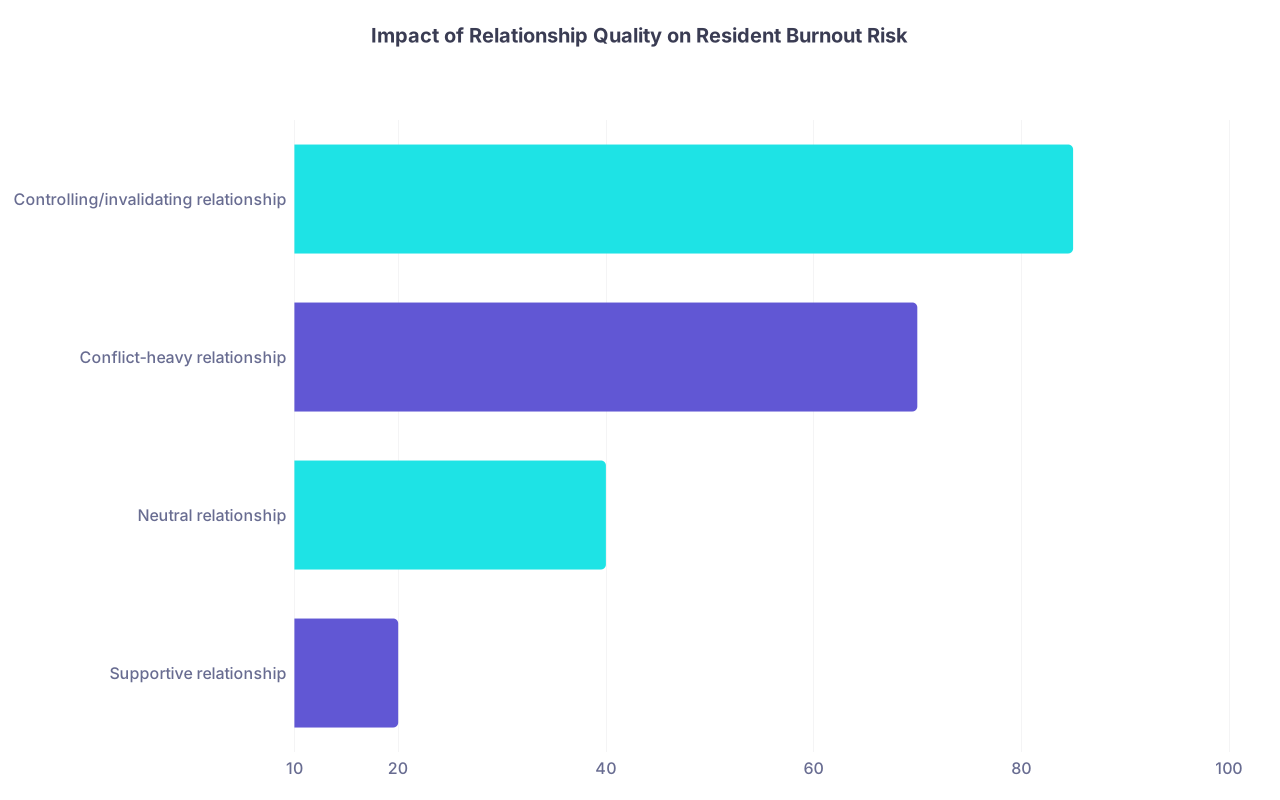
| Category | Value |
|---|---|
| Supportive relationship | 20 |
| Neutral relationship | 40 |
| Conflict-heavy relationship | 70 |
| Controlling/invalidating relationship | 85 |
A Quick Self-Audit: Is This Relationship Fueling Burnout?
Run your current (or potential) relationship through these questions:
- Do I feel more rested or more drained after spending time with them?
- Do they get angry at things I truly cannot control (pages, emergencies, late discharges)?
- Do I routinely sacrifice sleep, meals, or basic health needs to avoid upsetting them?
- Have I started dreading seeing them because I expect conflict or guilt?
- If an intern told me this same story, would I tell them to stay—or to get out?
If more than two answers make your stomach clench, stop telling yourself “it’s just a rough patch.” Residency is a rough patch by design. The relationship either helps you weather it or shoves you closer to the edge.
FAQs
1. Is it safer to just avoid relationships completely during residency?
No. Avoiding all relationships is its own risk. Social isolation is a major driver of depression and burnout. The goal is not “no relationships”; the goal is low-drama, reality-based ones. If you’re prone to losing yourself in relationships, it might be wise to stay single early on while you build solid solo coping skills and low-stakes friendships.
2. What if my partner means well but keeps making the same mistakes?
Intention matters less than impact when you’re sleep-deprived and responsible for lives. Spell out your limits clearly: “When you do X, I feel Y, and it affects my ability to function at work.” Give them a chance to adapt. If, over time, their behavior doesn’t change, you have your answer: good intentions, bad fit. Do not burn out defending their “good heart” while your mental health collapses.
3. How do I even bring this up without starting a fight?
Blame residency, not them, as the enemy. Start with, “This schedule is breaking me, and I want us to be on the same team against it.” Then lay out specific needs: protected sleep time, less guilt around missed events, understanding about delayed replies. If their first response is to center their hurt instead of your survival, pay close attention. That reaction tells you exactly how much they’re willing to help you avoid burnout.
Today, do one concrete thing:
Think of the person closest to you romantically (current partner or person you’re considering). Write down three specific ways that relationship either supports your recovery—or quietly drains it. Circle the biggest drain. Then decide one boundary or conversation you will start this week to address that one thing.


