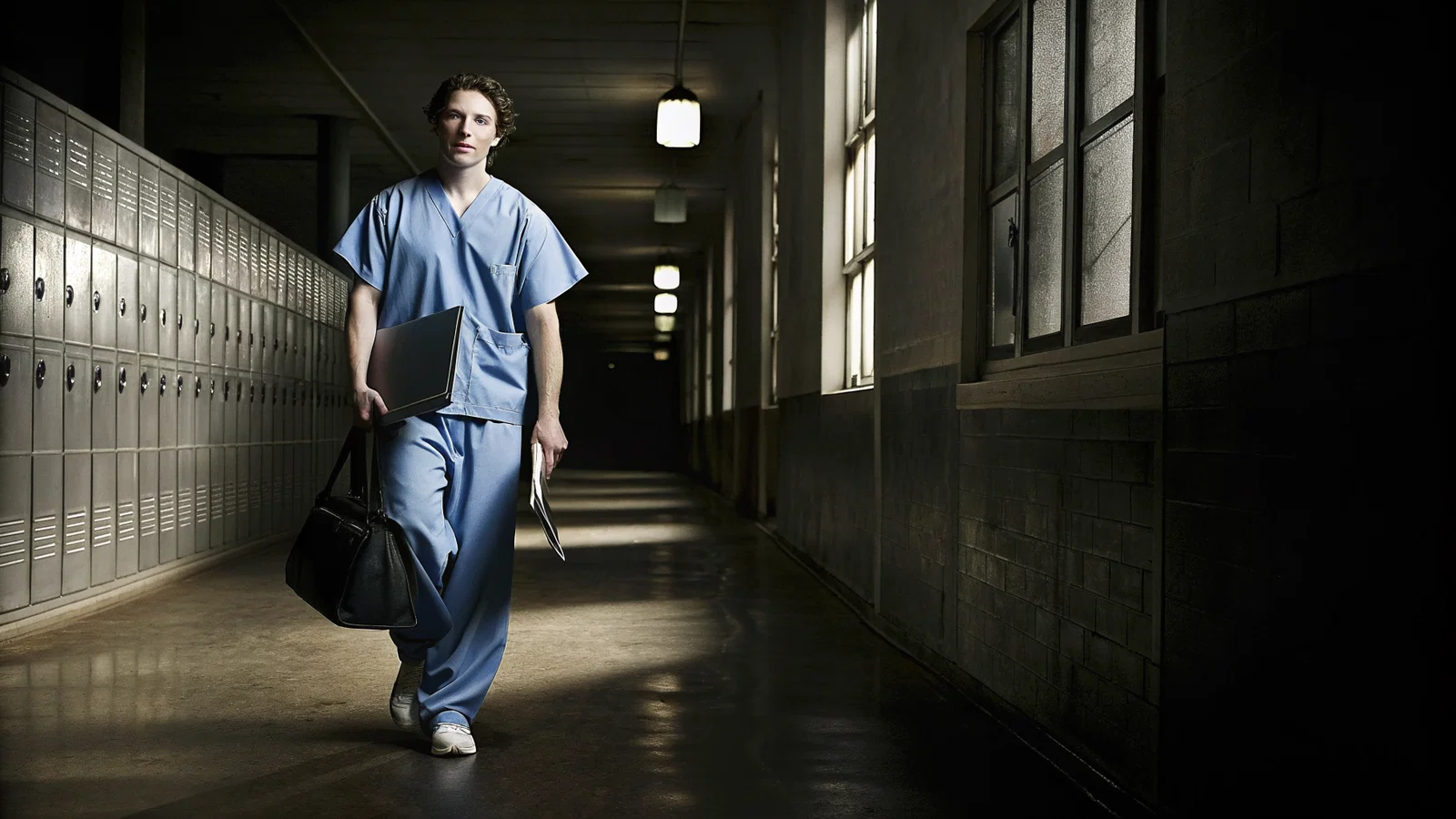
You're scrubbing out of a case that ran long. The attending is still talking about the patient's labs. Your phone buzzes in your pocket, reminder: residency interview in 48 minutes. Your Sub-I officially ends at 5. The Zoom link goes live at 6. You're still in OR shoes, your hair smells like antiseptic, and you haven't eaten since 11 a.m.
This exact bind hits more fourth-years than programs admit. I've watched residents-to-be white-knuckle this transition every interview season. The stakes feel nuclear, your Sub-I eval can make or break a letter, and ghosting an interview is career self-sabotage. But you can pull it off cleanly if you treat the hour between 5 and 6 like a procedure with its own checklist. Three pillars keep you from melting down: early communication, brutal logistics, and pre-loaded backups.
This article is for educational purposes only. It is not financial advice, not legal advice, and not tax advice. Figures vary by individual circumstances, so consult a qualified professional before acting.
The Clock Is Ticking: Your Sub-I Just Ended, and Your Interview Starts in One Hour
You're not the first person to schedule an interview the same afternoon a busy Sub-I wraps. Programs know students are still on rotations; most will cut you slack if you handle it like a professional instead of a last-minute fire drill. The panic is real, though. One missed handoff and your attending writes "left early without covering patients." One frozen Zoom screen and the program director thinks you're disorganized.
Here's the reality check: you can protect both the eval and the interview. You just refuse to wing it. Communication buys you the early exit. Logistics turns sixty minutes into enough time. Backup planning keeps a code blue or dead Wi-Fi from torpedoing everything. Miss any one of those and the hour collapses. Nail them and you walk into the interview looking composed instead of like you just sprinted out of the ED.
Step 1: Communicate Early, Like, Yesterday
Waiting until the morning of the interview to mention you need to leave is how you earn side-eye and a mediocre evaluation. I've seen students do this and then act shocked when the team is short-staffed and annoyed. Don't be that person.
On day one of the Sub-I, or at latest the first Monday, you email the supervising attending and the program coordinator. Subject line: "Interview Schedule, Request for Early Release on [Date]." Keep it short and specific:
"I have a residency interview scheduled for 6 PM on [date]. Would it be possible to be excused by 4:30 PM that afternoon so I can transition cleanly? I'm happy to come in early, stay late other days, or arrange coverage for any pending tasks."
Frame it as a prior commitment, not a favor. Attendings respond better to "I have a fixed obligation" than "Can I please leave early for my interview?" The second version sounds optional; the first sounds non-negotiable but respectful.
Same email goes to the coordinator so the whole team isn't blindsided. Then you confirm coverage: who takes your patients, who you sign out to, what notes still need finishing. Day before the interview you send a one-line reminder: "Just confirming I'm cleared to step out at 4:30 tomorrow, thanks again."
Do this and most teams will actively help you leave on time. Skip it and you're negotiating while a patient is crashing. Bad trade.
Step 2: The 60-Minute Liberation Plan
Four-thirty hits. You still have sixty minutes before the interview starts. That window is not cushion, it's the entire operation. Waste fifteen minutes hunting for a clean shirt and you're already late.
Build the buffer into the clinical day itself. When you present patients that morning, tighten your assessments. Finish notes before noon if the census allows. Offer to take the early admissions so someone else can cover the late ones. Your goal is wheels-up by 4:30, not 5:00 on the dot.
Your "interview kit" lives in your car or locker starting the night before: blazer, collared shirt, simple jewelry if you wear it, laptop or tablet fully charged, charger, portable hotspot, headphones, water, protein bar, and a small mirror. No hunting. No "I think it's in my bag somewhere."
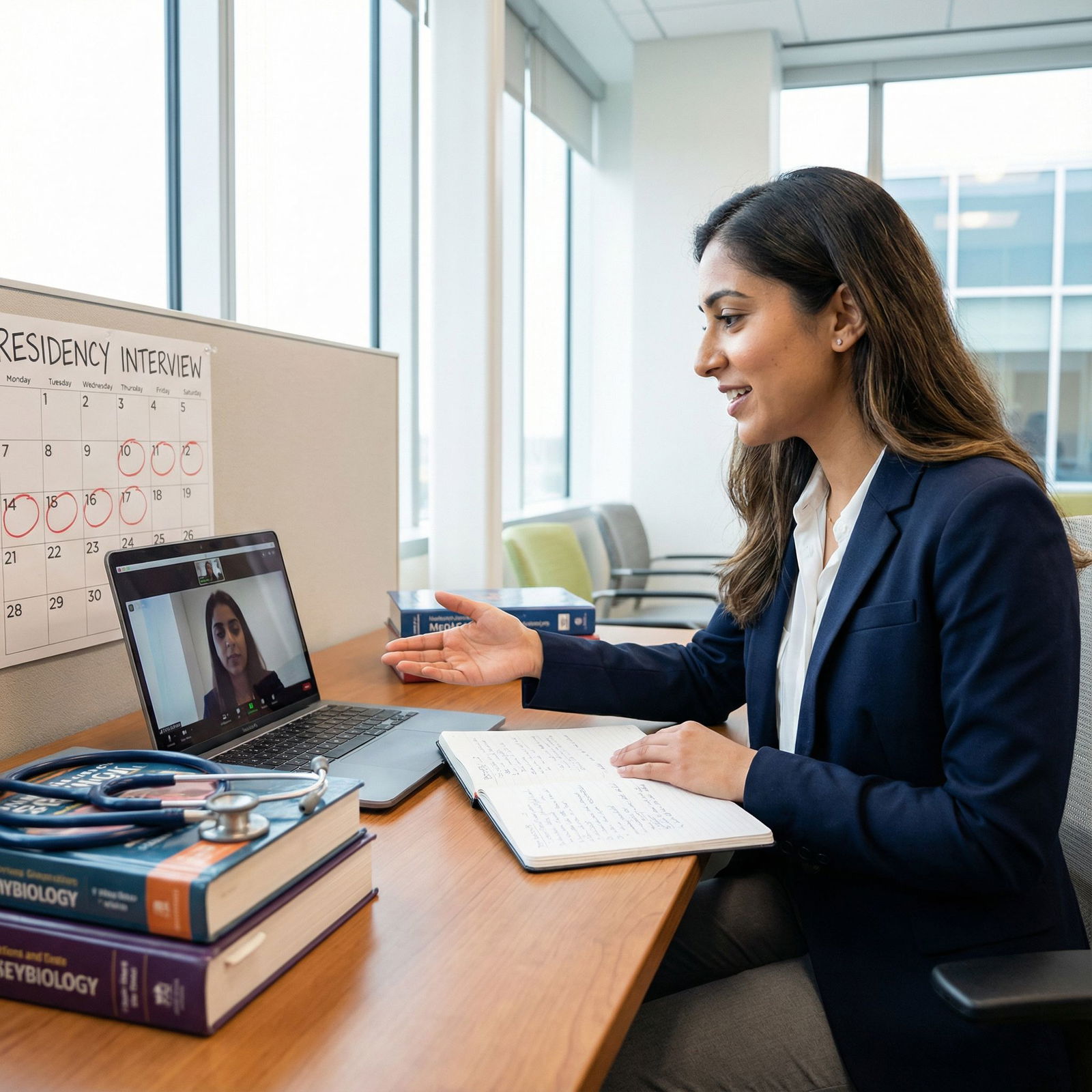
Know your landing zone cold. Hospital chapel, empty call room, your car in the parking garage, a quiet corner of the medical library, pick one and test the Wi-Fi and lighting the day prior. Virtual interviews demand a stable connection; have your phone hotspot already paired and tested. In-person interviews require mapped driving time plus parking plus the walk from the lot. Add ten minutes you think you don't need. You'll need them.
Here's how the sixty minutes actually break down when it works:
Patient handoff and sign-out: ten minutes max. Change and wipe the OR smell off: five. Move to your spot: fifteen. Tech check, water, three deep breaths, open the Zoom link early: twenty. Ten minutes left for the universe to throw something stupid at you. Stick to the numbers and you log in looking like a human instead of a fugitive.
Step 3: Managing the 'What Ifs'
Patients crash. Wi-Fi dies. Elevators stall. You plan for the failures or they own you.
If a code or rapid response lands on your patient at 4:45, you do not abandon the team. You text the program coordinator immediately: "Unavoidable clinical emergency on Sub-I, may be 10-15 minutes late or need to switch to phone. Apologies." Most programs would rather you stay for the code than watch you bolt. Have the interview phone number saved so you can join by cell if the laptop is impossible. I've seen applicants do the first fifteen minutes of an interview from a call-room landline and still match there. Own the situation fast and move on.
Tech fails more often than people admit. Always keep a phone-based backup: the Zoom or Teams app already logged in, camera tested, headset ready. If the laptop freezes, you flip to the phone in under thirty seconds and keep talking. Running late? Join muted at 5:55, camera off for ten seconds while you settle, then come on with a crisp "Apologies for the slight delay, ready when you are." Do not launch into a three-minute saga about traffic or the attending who wouldn't stop talking. One sentence. Then interview.
Protect the Sub-I relationship above any single interview slot. Burning a bridge with your attending for a 6 PM Zoom is short-sighted. That letter of recommendation travels farther than one program's impression of your punctuality. If the conflict is truly impossible, reschedule the interview. Programs expect a certain amount of this during peak season.
Step 4: The Professional Exit, Make It Count
4:55. Notes are done. Patients signed out. You stand up.
Look at the residents and attending. "Thanks everyone, I have a prior commitment and need to head out. I'll check the list tonight and finish anything still open." That's the entire speech. No monologue about how important the interview is or how stressed you are. They already know. Oversharing makes it about you; a clean exit makes it about the team.
If something is truly unfinished, name it and assign it: "The BMP on bed 7 is pending, I'll text you when it results if you want." Then you leave. Two or three minutes, maximum. Lingering to be polite actually creates awkwardness.
Within twenty-four hours you send the attending a short thank-you email. "Appreciate you letting me step out yesterday for the interview. Happy to make up any time or tasks this week." It closes the loop and reminds them you take the rotation seriously. That email has saved more evals than people realize.
Action Steps: Your Pre-Interview Playbook
Stop treating this like a surprise. Run the playbook on rails.
Week 1 of the Sub-I: send the email with every known interview date. Get the early-release agreement in writing if possible. Identify your coverage person.
Night before: test the full tech stack on the exact network you'll use. Lay out the kit. Confirm the quiet location and the backup phone plan. Charge everything twice.
Day of: front-load the work. Aim to be functionally done by 4:30. Keep the attending updated if the day is running hot. At 5:00 execute the exit script, move, change, log in early.
After the interview: send the thank-you to the program and the separate thank-you to your Sub-I attending. Finish any leftover scut that night so no one can say you left them hanging.
Do the above and the 5-to-6 crunch stops being a crisis. It becomes just another tight handoff, the kind you'll do every day as a resident. You've already practiced under pressure. Now go collect the interview.