It's early November. You’ve got your first few interview invitations sitting in your inbox. The dates overlap, flights are expensive, and your sub-I attending just reminded you your eval “depends on you being present and prepared.” You’re staring at Google Calendar trying to stack three cities in five days without missing a single pre-interview dinner.
This is the point where people either get organized or get steamrolled.
Let’s walk it week by week and then down to the day-by-day during heavy travel. I’ll assume a “classic” timeline:
- ERAS submitted in September
- Invitations rolling in October–January
- Peak travel weeks: mid-November through late January
You can adjust a few weeks earlier or later depending on specialty, but the structure holds.
4–6 Weeks Before Your First Interview: Set Up Your System
At this point you should not be guessing. You’re building the infrastructure that will keep you from double-booking flights or showing up to a Zoom in the wrong time zone.
Step 1: Build a Master Interview Tracker (Day 1–2)
Do this before your first invite hits.
Use a spreadsheet or Notion/OneNote. Include at least:
- Program name and specialty
- City / time zone
- Interview date(s) and format (in‑person vs virtual)
- Pre‑interview social date/time
- Contact person + phone/email
- Travel details (flight #, hotel, transportation)
- Notes: red flags, strengths, faculty names, resident names
- Status: invite received / scheduled / thank-you sent / ranked
| Column | Example Entry |
|---|---|
| Program | University of Michigan IM |
| City / Time Zone | Ann Arbor / ET |
| Interview Date | 12/05 (in-person) |
| Pre-Interview Social | 12/04 7–9 PM (Zoom) |
| Travel Details | Delta 2543 DTW; Marriott Downtown |
| Contact | Jane Doe, [email protected] |
| Notes | PD: Dr. Smith; strong cardiology |
Do not rely on your email inbox as your “system.” That’s how you end up discovering a missed social 30 minutes after it ends.
Step 2: Block Out “Protected” Time Windows (Day 2–3)
Before peak invites:
- Add exam dates, mandatory rotations, weddings, family stuff into your calendar now.
- Mark any days you absolutely cannot travel or interview.
- For ICU, surgery, and night float rotations, be stricter. If you’re on nights starting Monday, you shouldn’t be flying back late Sunday.
Then:
- Create “travel possible” windows: e.g., “Thu–Sun available for in-person travel” during lighter rotations.
- Share your constraints early with rotation directors if needed:
“I anticipate needing 4–6 interview days in November/December; I’ll give as much advance notice as possible.”
This makes the later “Can I have this specific day off?” emails much smoother.
Step 3: Decide Your Travel Strategy (Week 1)
At this point you should choose how aggressive you’re going to be with in‑person interviews.
Three main strategies:
- Cluster Strategy (best for busy rotations / budget):
Group geographically: e.g., schedule Boston interviews in one 4–5 day block. - First-Come-First-Serve (worst strategy):
Accept whatever date you’re offered without looking at the big picture. Do not do this. - Priority-Weighted:
You bend your schedule for top‑tier programs and fill the rest around them.
Pick one. My bias: priority‑weighted with clustering when possible.
2–3 Weeks Before Your First Interview: Build the Macro Calendar
By now, you probably have 3–8 interviews scheduled and more pending. This is where time management starts to matter.
Week 1–2 Before: The “Macro Map” (1–2 Hours)
Sit down with your calendar, your rotation schedule, and the spreadsheet.
At this point you should:
Lay out all confirmed interviews on a monthly view.
Color code:- Blue: in-person interviews
- Green: virtual interviews
- Orange: pre-interview socials
- Purple: travel days
Identify heavy travel weeks early.
For example:- Week of Dec 5: Boston → New York → Philly
- Week of Jan 9: 3 virtual interviews
Set “no more than X per week” rules.
Reasonable caps:- 2 in-person interviews in a week
- 3 total interviews (mix of virtual and in-person)
More than that and your performance starts dropping. I’ve seen people do 4 in-person interviews in 7 days and by #4 they’re repeating the same canned answers and blanking on program names.
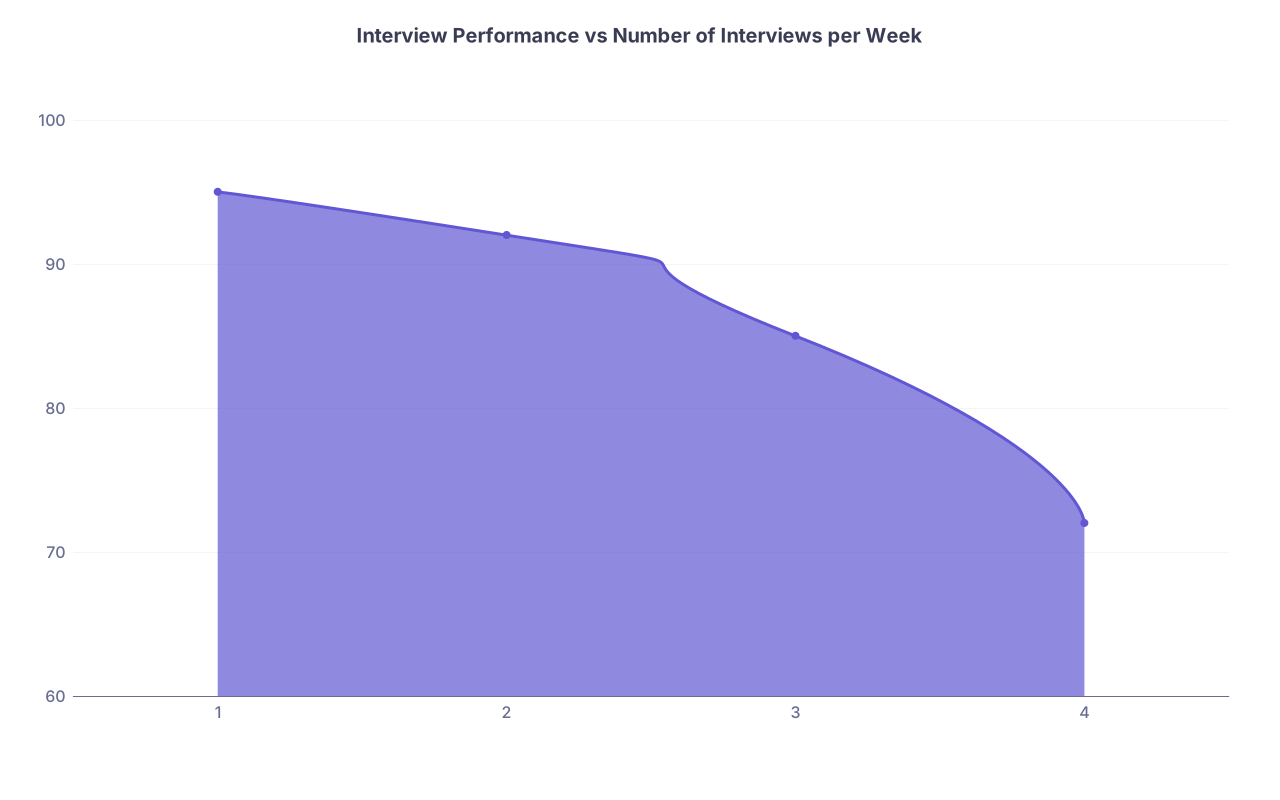
| Category | Value |
|---|---|
| 1 | 95 |
| 2 | 92 |
| 3 | 85 |
| 4 | 72 |
10–14 Days Before: Lock Travel for In-Person Interviews
Once a date is firm for a high-priority program:
- Book flights, hotels, and ground transport in one sitting.
- Aim for:
- Arrival: evening before the pre‑interview social or interview
- Departure: evening of interview or next morning if weather/connection risk is high
Time‑management tip: use one airline and one hotel chain if you can. Not for the points (though that’s nice), but for streamlined apps and predictable workflows. You know exactly where your boarding pass and hotel confirmation live.
7–10 Days Before a Heavy Travel Week: Pre-Load the Work
This is where people either stay afloat or start doing H&Ps in airport lounges at 1 AM.
Academic / Clinical Work (1–2 Evenings)
At this point you should:
- Skim the rotation syllabus and identify anything that could ambush you:
- Required presentations
- Shelf exams
- Mandatory conferences
- Pre‑load work:
- Get notes done the same day for the next week; leave no backlog.
- Draft presentations / handouts earlier.
Tell your resident or attending early:
“I’ll be out for residency interviews on Dec 5 and 7. I’ll front-load my work and make sure sign-outs are clean.”
(See also: Timeline for Obtaining and Using Mock Interviews Before the Real Thing for more.)
Not the morning of your flight. A week before.
Program Prep (3–4 Programs, 1–2 Hours Total)
For each upcoming program in that travel block:
- 10–15 minutes of focused research:
- 2–3 unique things you can mention (specific clinic, research track, call schedule feature).
- Names of PD, APD, chief residents.
- Create a one-page reference sheet per program:
- Top 5 reasons you might rank them
- 3–4 thoughtful questions
- Any “need to ask” items: visa issues, couples match logistics, maternity/paternity, etc.
Keep these in a folder (digital or printed) you can flip through on the plane.
2–3 Days Before a Travel Week: Micro-Planning Each Day
Now you zoom down from weeks to days.
Build a Day-by-Day Plan for the Entire Week
Take a single sheet (or one screen) and outline:
- Wake-up time
- Travel blocks
- Interview blocks
- Work blocks (emails, notes, prep)
- Non-negotiables (sleep, showers, meals, commuting)
For a heavy 4-day run, it might look like:
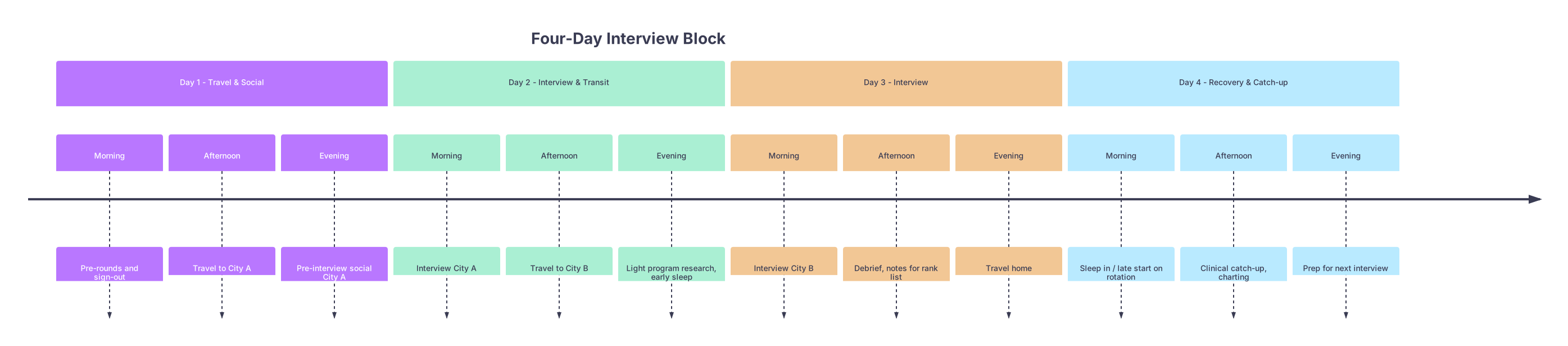
| Period | Event |
|---|---|
| Day 1 - Travel & Social - Morning | Pre-rounds and sign-out |
| Day 1 - Travel & Social - Afternoon | Travel to City A |
| Day 1 - Travel & Social - Evening | Pre-interview social City A |
| Day 2 - Interview & Transit - Morning | Interview City A |
| Day 2 - Interview & Transit - Afternoon | Travel to City B |
| Day 2 - Interview & Transit - Evening | Light program research, early sleep |
| Day 3 - Interview - Morning | Interview City B |
| Day 3 - Interview - Afternoon | Debrief, notes for rank list |
| Day 3 - Interview - Evening | Travel home |
| Day 4 - Recovery & Catch-up - Morning | Sleep in / late start on rotation |
| Day 4 - Recovery & Catch-up - Afternoon | Clinical catch-up, charting |
| Day 4 - Recovery & Catch-up - Evening | Prep for next interview |
The point is: you shouldn’t be deciding “when am I going to review my answers” at 11:30 PM in a hotel room. Decide that now.
Pack with a Standardized Checklist (Night Before Travel)
Have a single pack list you reuse every time. Do not reinvent it.
Core items:
- Interview clothes (full outfit + backup tie/blouse)
- Shoes you can actually walk in
- Printed schedule / program info (or downloaded offline)
- Laptop + charger
- Phone + charger + battery pack
- Headphones (for virtual socials in noisy places)
- Travel-size steamer or wrinkle-release spray
- Granola bars / nuts for days with poor food timing
Throw this in your notes app and run through it before every trip.
The Night Before Each Interview: 60-Minute Routine
At this point you should stop traveling, stop emailing, and start performing.
Break it down:
Minute 0–15: Logistics Check
- Confirm:
- Interview time and time zone
- Platform (Zoom, Thalamus, proprietary website)
- Backup contact method if tech fails
- Lay out:
- Suit, socks, shoes, badge (if on-hospital interview), portfolio or folder
- Set:
- 2 alarms + hotel wake-up call if you do not trust yourself
Minute 15–35: Program Quick-Review
- Re-read your one-page program sheet
- Memorize PD name and 1–2 faculty names
- Pick 2–3 questions you’re likely to ask
You’re not cramming here. You’re refreshing.
Minute 35–50: Answer Rehearsal
Out loud, once each:
- “Tell me about yourself.”
- “Why this specialty?”
- “Why our program?”
- One challenging scenario (conflict, mistake, weakness)
Time yourself — you want 60–90 second answers. Not 4-minute rambles.
Minute 50–60: Shutdown
- Put phone on Do Not Disturb
- Decide when you’ll check email next (hint: not during interview blocks)
- Wind down — short walk, shower, whatever calms your brain
Then sleep. Scrolling Reddit’s “Residency” thread will not help you.
Interview Day: Hour-by-Hour Time Management
Different format, same structure.
Morning (2–3 Hours Before Start)
At this point you should:
- Wake up at least 2 hours before your first session. 3 is better if your brain takes time to boot.
- Hydrate and eat something with actual protein. You might not see food for a while.
- Do a 5–10 minute voice and face warm-up:
- Read a paragraph out loud
- Smile at yourself in the mirror (yes, it feels dumb; it works)
If it’s virtual:
- Log into the platform 20–30 minutes early. Test:
- Camera framing
- Mic levels
- Background (no unmade beds, please)
- Close everything except:
- Interview platform
- Your one-page program notes
- Maybe a blank document for jotting down names
During the Interview Blocks
(Related: How to Evolve Your Interview Answers Mid-Season Based on Feedback)
Time management here is about mental pacing:
- Between sessions (5–10 minute breaks):
- Quickly jot down interviewer names and 1 key detail.
- Stand up, stretch, sip water. Do not reflexively check your phone.
- Lunch/networking:
- Eat, listen, ask 1–2 thoughtful, short questions.
- You’re not running a podcast. Keep it concise.
Post-Interview: 30-Minute Debrief Rule
You have 30 minutes after the day ends to capture your real impression before it fades or gets contaminated by other people’s takes.
At this point you should:
Minute 0–10: Raw Impressions
Write quickly (don’t edit):
- Gut feeling (1–10)
- What I liked most
- What bothered me
- “If this were my only option, how would I feel?”
Minute 10–20: Structured Notes
Fill in your tracker:
- Call schedule, clinic details, didactics structure
- Research opportunities, fellowships, geographic pros/cons
- Names of people you clicked with
Minute 20–30: Thank-You Infrastructure
If you’re sending thank-you notes:
- Draft a quick template you can customize per person.
- Jot down:
- Interviewer name
- 1 thing you discussed
- Email address (if provided)
Send them within 24–48 hours. Set a 15-minute task slot the next morning if you’re flying that night.
Managing Back-to-Back Travel Weeks Without Burning Out
Peak season: you might have heavy weeks stacked. This is where real time management shows up.
Weekly Reset (Once per Week, 45–60 Minutes)
Pick a consistent time. Sunday evening works for most.
At this point you should:
- Review the next 14 days:
- Interviews
- Flights
- Rotations
- Personal obligations
- Identify:
- 2–3 “protected” blocks (no interviews, no travel) of at least 3–4 hours for:
- Sleep
- Exercise
- Life tasks (laundry, bills, food)
- 2–3 “protected” blocks (no interviews, no travel) of at least 3–4 hours for:
- Move anything unnecessary out of heavy weeks:
- Optional meetings
- Extra shifts where you have flexibility
You’re not trying to be a hero. You’re trying to still have a functioning brain in January.
Energy Budget, Not Just Time Budget
Time management here is about prioritizing what keeps you performing:
- Protect sleep. 6 hours is your floor; 7–8 is actually realistic if you’re intentional.
- Avoid red-eye flights unless absolutely necessary. They waste the next day.
- Have a standard low-effort meal plan:
- Same breakfast daily
- Simple, predictable options (hotel oatmeal, yogurt, nuts, protein bar)
You can make complex recipes again after rank list submission.
Handling Last-Minute Changes Without Blowing Up Your Week
Programs will send:
- “Can you move from Dec 12 to Dec 8?”
- “We’ve moved our interview day earlier by 30 minutes due to weather.”
- “A spot opened up this Friday, are you available?”
At this point you should have a decision framework:
Check your macro calendar first, not your feelings.
- Will saying yes break your 2-interview-per-week rule?
- Does it force a red-eye or a post-call flight?
Prioritize based on your personal tier list.
- Tier 1: Dream programs or major geographic preferences
- Tier 2: Solid fits
- Tier 3: Backup safety
Use canned email responses to save time.
Draft templates for:- Accepting an offered date
- Asking to switch to a different date window
- Declining with professionalism when your schedule is maxed
Quick Visual: Typical November–January Interview Load
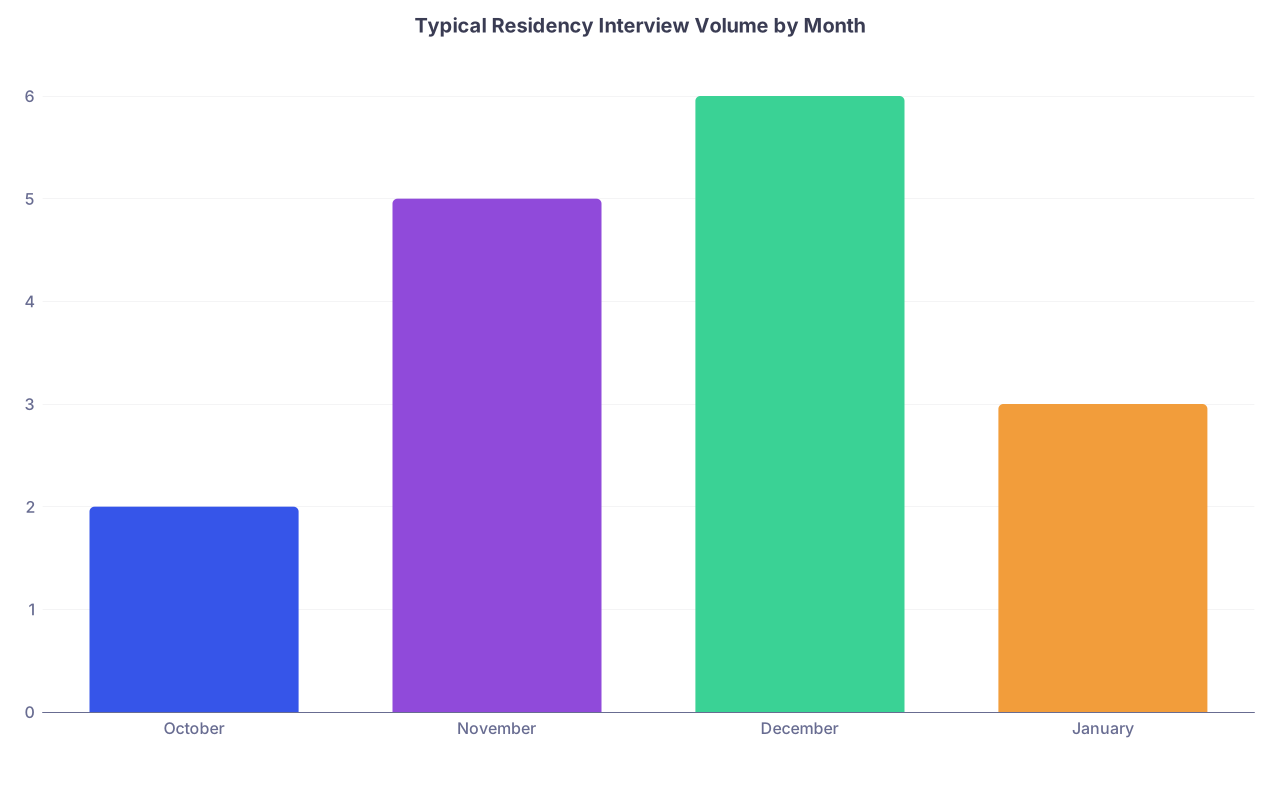
| Category | Value |
|---|---|
| October | 2 |
| November | 5 |
| December | 6 |
| January | 3 |
You can see why December is where people crack if they’re not deliberate.
Example: One Fully Planned Heavy Week
To make this concrete, here’s a realistic structure.
You’re on a light outpatient rotation. You have:
- Mon: Virtual interview
- Wed: In-person interview in Chicago
- Fri: In-person interview in St. Louis
Previous Friday
- Confirm all three schedules and travel
- Pack for both trips (carry-on only)
- Do 30–60 minutes of prep for each program
Sunday
- Weekly reset (60 minutes)
- Early bedtime
Monday
- 7:00–8:30: Virtual interview
- 9:00–11:00: Debrief + thank-yous for Mon program
- 11:00–17:00: Clinic
- 17:00–18:00: Review Chicago program notes, print or download boarding pass
- 22:00: Sleep
Tuesday
- 7:00–12:00: Clinic (front-load work, tie up notes)
- 13:00–16:00: Flight to Chicago
- 17:00–18:00: Check in, quick walk, decompress
- 18:30–20:30: Pre-interview social
- 21:00–21:30: Jot quick notes on people and vibe
- 22:30: Sleep
Wednesday
- 6:30: Wake up, breakfast, dress
- 8:00–14:00: Interview day
- 14:30–15:00: Debrief notes
- 16:30–18:30: Flight home
- 19:30–20:00: Light review for Friday program, set alarms
- 21:30: Sleep
Thursday
- Clinical work only, no new prep after 18:00
- Pack for St. Louis
- Early night
Friday
- 6:00–7:00: Travel to airport
- 9:00–15:00: St. Louis interview
- 15:30–16:00: Debrief notes at airport
- Evening: Fly home, do nothing productive after landing
This is what “planned” looks like. Notice there’s no 1 AM reading of program websites.
Two Things People Get Wrong

They underestimate transition time.
It’s not just flight time. It’s security, transit to the hotel, check‑in, finding food, opening your laptop, and realizing the Wi-Fi is garbage. Protect bigger blocks than you think you need.They treat interviews like isolated events.
They’re not. They’re a multi‑month performance. Every decision you make about sleep, travel, and workload in November affects how sharp you are for that surprise January invite from a program you love.
Final 3 Takeaways
- Build the system before interview season hits: master tracker, macro calendar, and a standard pack/prep routine.
- Plan at three levels: season (how many per week), week (which days are heavy), and day (hour-by-hour on travel and interview days).
- Guard sleep and energy as aggressively as you guard interview slots; both determine how you actually perform when you’re in the chair.