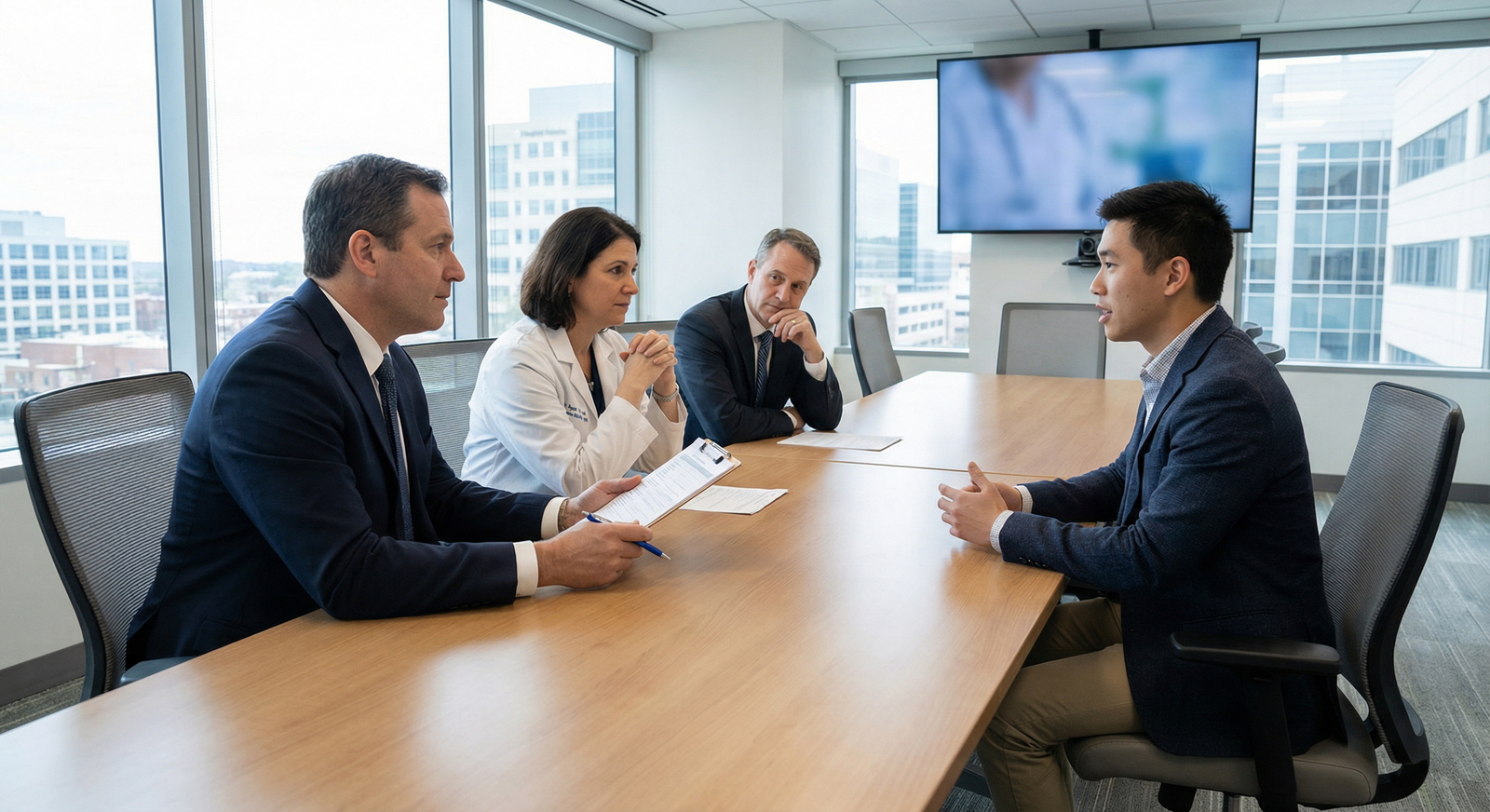
Neurology residency interviews are not just about how programs evaluate you—they’re equally about how you evaluate them. The questions you ask tell programs what you value, and they give you essential data to decide where you’ll thrive for the next 3–4 years.
This guide focuses specifically on questions to ask programs in neurology—including what to ask residents, what to ask program leadership, and how to tailor your questions to different types of programs. You’ll also find sample phrasing and strategy so you don’t sound scripted.
Why Your Questions Matter in the Neuro Match
Well-crafted questions help you:
- Distinguish between programs that look similar on paper
- Reveal the true culture behind polished websites and slide decks
- Clarify whether a program fits your career goals (academic, private practice, subspecialty)
- Show that you’re prepared, engaged, and genuinely interested
In the neurology residency neuro match, most programs have:
- Comparable ACGME requirements
- Strong subspecialty exposure
- Similar core rotations
What sets them apart are culture, support, flexibility, and alignment with your goals. Your questions should be designed to uncover those differences.
General Strategy for Asking Smart Questions
Avoid questions easily answered online
Don’t ask, “How long is your program?” or “What subspecialties do you have?” if it’s on their website. Instead, ask for clarification or lived experience:- “I saw you have strong stroke and epilepsy services—how does that shape residents’ day-to-day experience?”
Use open-ended questions
Ask questions that start with “How,” “What,” or “Can you tell me about…” rather than yes/no prompts.Ask the same core questions across programs
This helps you compare programs objectively when ranking.Tailor a few questions to each program
Mention something specific you noticed on their website, in their research output, or during the info session.Prioritize your questions
Time is limited. Identify your top 3–5 “must-know” areas (e.g., mentorship, fellowship match, call, wellness) and ask those first when you get a chance.
Key Domains: What You Should Be Trying to Learn
Before building a list of specific questions, think in terms of domains you need information about. For neurology residency, these domains typically include:
- Clinical Training & Autonomy
- Subspecialty Exposure & Fellowship Preparation
- Education, Mentorship & Feedback
- Resident Culture, Wellness & Support
- Schedule, Call, and Workload
- Research Opportunities & Career Development
- Program Leadership & Vision
- Location, Lifestyle & Logistics
In the sections below, you’ll find targeted questions to ask residency programs in each domain, along with who to direct them to: residents, program directors, or both.
Questions to Ask Residents: Real-Life Experience on the Ground
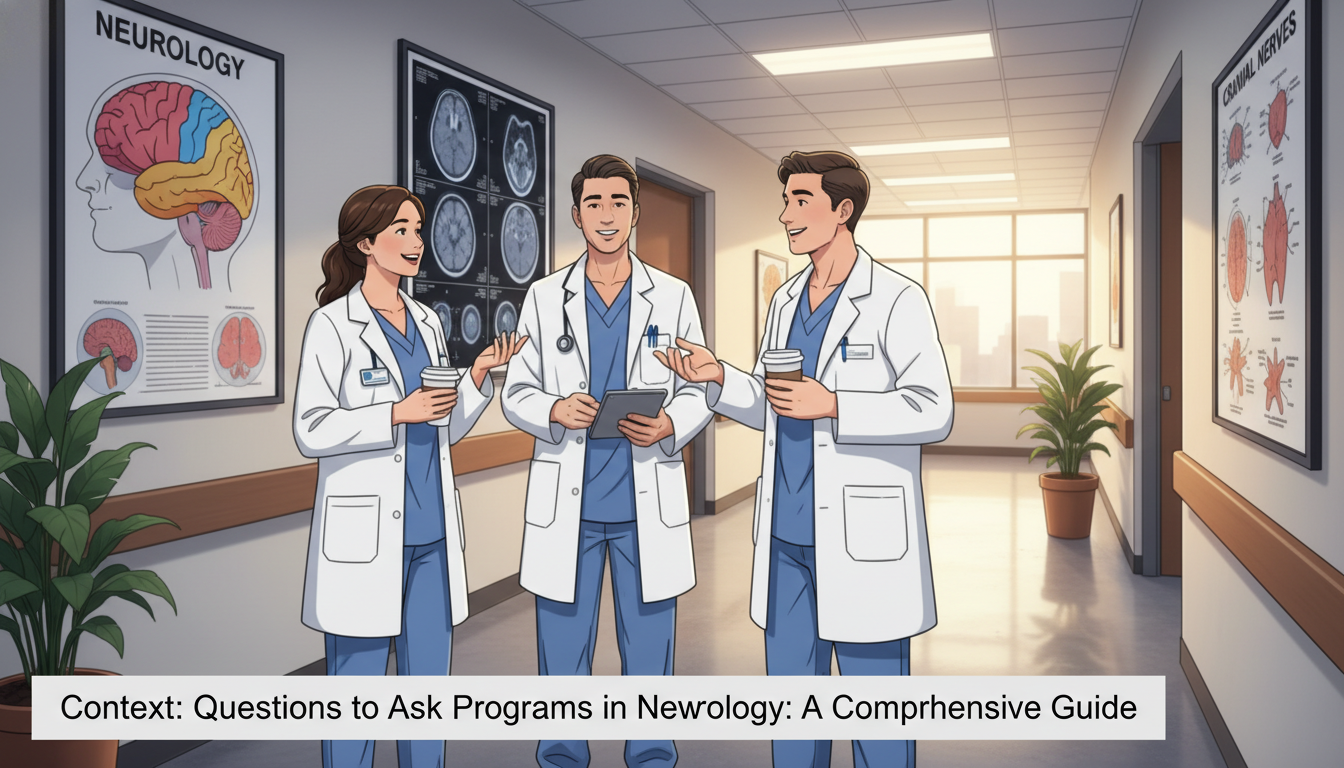
Residents are usually your most honest window into what the program is really like. When you think about interview questions for them, aim to uncover their daily life, stressors, and support systems.
A. Clinical Training, Autonomy, and Supervision
- “On a typical busy inpatient neurology day, what does your workflow look like from start to finish?”
- “How does resident autonomy evolve from PGY-1 to your senior year? At what point did you feel like the neurologist ‘in charge’ of the service?”
- “Do you feel adequately supervised without being micromanaged? Can you give an example?”
- “How comfortable do you feel managing stroke calls, status epilepticus, or neuromuscular crises at your level of training?”
What to listen for:
- Clear progression in responsibility
- Balance between independence and backup
- Whether residents feel safe handling high-acuity neuro cases
B. Subspecialty Exposure and Fellowship Preparation
- “If someone is undecided about subspecialty, how easy is it to explore different areas (stroke, epilepsy, movement disorders, neuromuscular, neurocritical care, behavioral neurology, etc.)?”
- “Do you feel you get enough exposure to outpatient neurology clinics, or is it heavily skewed toward inpatient?”
- “For people interested in competitive fellowships (e.g., epilepsy, movement, neuromuscular, neurocritical care), how has the program supported them?”
- “Where did recent graduates match for fellowship?”
What to listen for:
- Breadth of exposure early in training
- Mentorship toward subspecialty choices
- Real track record of fellowship placement
C. Education and Teaching Culture
- “How protected is your didactic time? Are you often pulled out for clinical duties?”
- “Are the weekly lectures and conferences actually high-yield for boards and real practice?”
- “How approachable are attendings for bedside teaching or quick questions?”
- “Do seniors enjoy teaching juniors, or does everyone just seem too busy?”
You’re trying to gauge:
- Whether education is truly prioritized
- The tone of teaching (supportive vs. punitive)
D. Workload, Call, and Burnout
- “How would you describe your workload on your toughest rotations? Is it sustainable?”
- “What is the hardest part of call here (night float, home call for stroke, in-house ICU coverage)?”
- “Are duty-hour violations rare, or do they happen regularly?”
- “Do you feel comfortable calling for help at 2 a.m., and do attendings respond supportively?”
Red flags:
- Chronic duty-hour violations
- Residents normalizing unsafe or brutal schedules
- Descriptions of punitive or shaming responses to needing help
E. Culture, Wellness, and Support
- “How would you describe the resident culture in one word? Why?”
- “What happens when someone has a personal crisis or health issue—how flexible has the program been?”
- “Do residents spend time together outside of work, or is everyone just exhausted?”
- “Have you ever felt unsupported or dismissed when raising concerns?”
You want to know:
- Whether the environment is collaborative or competitive
- How leadership responds when residents struggle
F. Honest Questions That Reveal Red Flags
These can feel bold, but phrasing them respectfully gives you valuable insight:
- “If you could change one thing about this program, what would it be?”
- “Is there anything you wish you had known about this program before ranking it?”
- “Some programs talk about wellness but don’t back it up—how does this program actually support wellness in a meaningful way?”
Ask these toward the end of a resident-only session, when trust is higher. Often, the most important information appears here.
Questions to Ask Program Directors & Leadership: Vision, Structure, and Outcomes
When you’re thinking about what to ask program director and leadership, focus on the big picture: structure, values, and where the program is headed.

A. Program Philosophy, Vision, and Changes
- “How would you describe your ideal neurology resident, beyond board scores and CV?”
- “What are the top 2–3 priorities or changes you’re focusing on for the neurology residency over the next few years?”
- “How has the program evolved in response to resident feedback in the last 3–5 years?”
- “Where do you see this program in five years in terms of clinical volume, fellowship growth, and research?”
What you’re looking for:
- Evidence of responsiveness and improvement
- A clear, thoughtful vision—not vague marketing language
B. Clinical Training & Case Mix
- “How does your program ensure residents see a broad mix of neurologic disease—both bread-and-butter and rare or complex cases?”
- “How do you balance inpatient-heavy training (stroke, neuro ICU, consults) with sufficient outpatient and continuity clinic exposure?”
- “Are there significant changes anticipated in the hospital system (mergers, new stroke center, new neuro ICU) that may impact resident experience?”
This helps you understand:
- Whether your training will prepare you for both academic and community practice
- Stability and trajectory of the clinical environment
C. Autonomy and Supervision
- “How do you think about balancing patient safety with graduated autonomy for residents?”
- “Can you give an example of how the role of a PGY-4 on services differs from a PGY-2, in terms of decision-making?”
- “How do you support residents the first time they, for example, manage a thrombolysis decision independently or run a code stroke?”
Strong answers will:
- Emphasize structured independence
- Highlight a culture of backup and debriefing
D. Education and Evaluation
- “What do you consider the strongest aspects of your educational curriculum? What are you actively working to improve?”
- “How is feedback delivered to residents—both formative (day to day) and summative (milestone assessments)?”
- “How do you identify residents who are struggling, and what kind of remediation or support is available?”
- “How do your graduates perform on the neurology board exams? What resources exist for board preparation?”
You want to see:
- Transparent board performance
- A structured approach to feedback and remediation
E. Fellowship, Careers, and Alumni Outcomes
- “Where have your graduates gone in the last 3–5 years—both in terms of fellowships and first jobs?”
- “If a resident is interested in a competitive academic fellowship, how do you help them position themselves?”
- “How does the program support residents who want to go directly into community practice instead of fellowship?”
- “Is there formal career advising, and at what point in residency does it begin?”
Programs committed to your future will:
- Know their graduates’ trajectories
- Have clear systems for letters, networking, and mentorship
F. Support, Wellness, and DEI
- “What concrete steps has the program taken recently to address resident well-being (beyond just saying wellness is important)?”
- “How does the program support residents facing personal or health challenges, including mental health needs?”
- “How does your program approach diversity, equity, and inclusion in recruitment and daily training?”
- “Can you describe the relationship between residents and faculty—are residents involved in committees or program decisions?”
Listen for:
- Specific initiatives, not generic statements
- Ongoing conversations, not one-time projects
Questions to Ask About Specific Neurology Experiences
Neurology has unique aspects—stroke codes, EEG, EMG, neuro ICU, subspecialty clinics—that merit targeted questions to ask residency programs.
A. Stroke and Neurocritical Care
- “What is the resident’s role in code stroke evaluations—are we leading the evaluation, or mainly assisting?”
- “How much direct exposure do residents get to mechanical thrombectomy cases and post-thrombectomy management?”
- “Is there a dedicated neuro ICU rotation? Who runs that unit (neurology vs. anesthesia vs. critical care)?”
- “How are night stroke calls structured, and what backup is available?”
These questions clarify:
- Your real responsibility vs. observer status
- Comfort you’ll develop in acute neurologic emergencies
B. EEG, EMG, and Procedures
- “How much hands-on experience do residents get with EEG interpretation and EMG/NCS? Is this enough to be at least competent as a general neurologist?”
- “Do residents perform lumbar punctures routinely? Are there opportunities for botulinum toxin injections, nerve blocks, or other neurology procedures?”
- “Is there flexibility to get extra time in EEG/EMG if you’re interested in epilepsy or neuromuscular fellowship?”
If you’re fellowship-inclined, this matters for your readiness and fellowship applications.
C. Outpatient Clinics and Continuity of Care
- “How is continuity clinic structured—one half-day weekly, more, less? Do we follow our own panel over several years?”
- “Do residents get exposure to sub-specialty clinics like movement disorders, MS, neuromuscular, neuroimmunology, headache, and behavioral neurology?”
- “Is there a risk of being too inpatient-heavy and underprepared for outpatient neurology practice?”
Strong outpatient training helps you:
- Feel confident in community or private practice
- Experience diverse subspecialties before choosing a fellowship
D. Electives and Customization
- “How much elective time is available, and in which years?”
- “How flexible is elective time—can residents do away rotations, research blocks, or customize subspecialty experiences?”
- “How supportive is the program if a resident wants to explore non-traditional interests, like neuro-palliative care, neuro-hospitalist tracks, or global neurology?”
Elective flexibility is especially important if your interests are evolving.
How to Adapt Your Questions by Interview Setting
Different parts of interview day call for different types of questions.
A. During Program Director/Chair Sessions
Focus on:
- Vision and philosophy
- Structural aspects (curriculum, evaluation, major changes)
- Outcomes (board pass rates, fellowships, jobs)
Examples:
- “What do you see as this program’s unique strengths compared with other neurology residencies?”
- “How has the program adapted to evolving trends in neurology, such as increasing stroke volumes and expanding neuroimmunology?”
B. During Faculty Interviews
Target:
- Their area of expertise (stroke, epilepsy, movement, etc.)
- Mentorship, research, and clinical teaching
Examples:
- “Within stroke/epilepsy/movement disorders here, how do residents typically get involved in research or scholarly projects?”
- “How do you involve residents in your outpatient clinics—do they see patients independently first and then present, or do you see patients together?”
C. During Resident-Only Sessions
This is where you ask:
- Workload, call, and wellness
- Red-flag and “real talk” questions
- What life is actually like inside and outside the hospital
Examples:
- “How comfortable would you feel having a co-resident or loved one treated here for a major neurologic issue?”
- “What are the unsaid expectations (charts, notes, pre-rounding times) that no one puts in the brochure?”
Practical Tips for Using Your Questions Effectively
1. Prepare a Core List—But Don’t Sound Scripted
Create a short list (8–12) of high-priority questions spanning multiple domains. For each program, star your top 3–4 “must-ask” items. Practice paraphrasing them so they feel natural.
2. Use Program Materials to Refine Your Questions
If a program advertises a “strong neuro ICU” or “cutting-edge epilepsy center,” ask:
- “You mentioned a robust neuro ICU—how does that translate into the resident’s day-to-day experience and level of responsibility?”
This shows you paid attention and want specifics, not slogans.
3. Take Structured Notes After Each Interview
Immediately after each day, jot down:
- Direct answers that stood out (good or bad)
- Your impressions of resident happiness and cohesion
- Any concerns that remained unaddressed
Consider creating a simple table with key domains (education, culture, workload, support, subspecialty exposure) and rating each program 1–5 based on your conversations.
4. Be Mindful of Tone
Even when asking about sensitive topics, maintain a respectful, curious tone:
- “I know every program has challenges—what do you see as the main areas for growth here, and how are you approaching them?”
Programs notice when applicants can ask critical questions professionally.
5. Adjust for Virtual vs. In-Person Interviews
- Virtual:
- Be concise; others are waiting to ask questions.
- Use the chat if permitted.
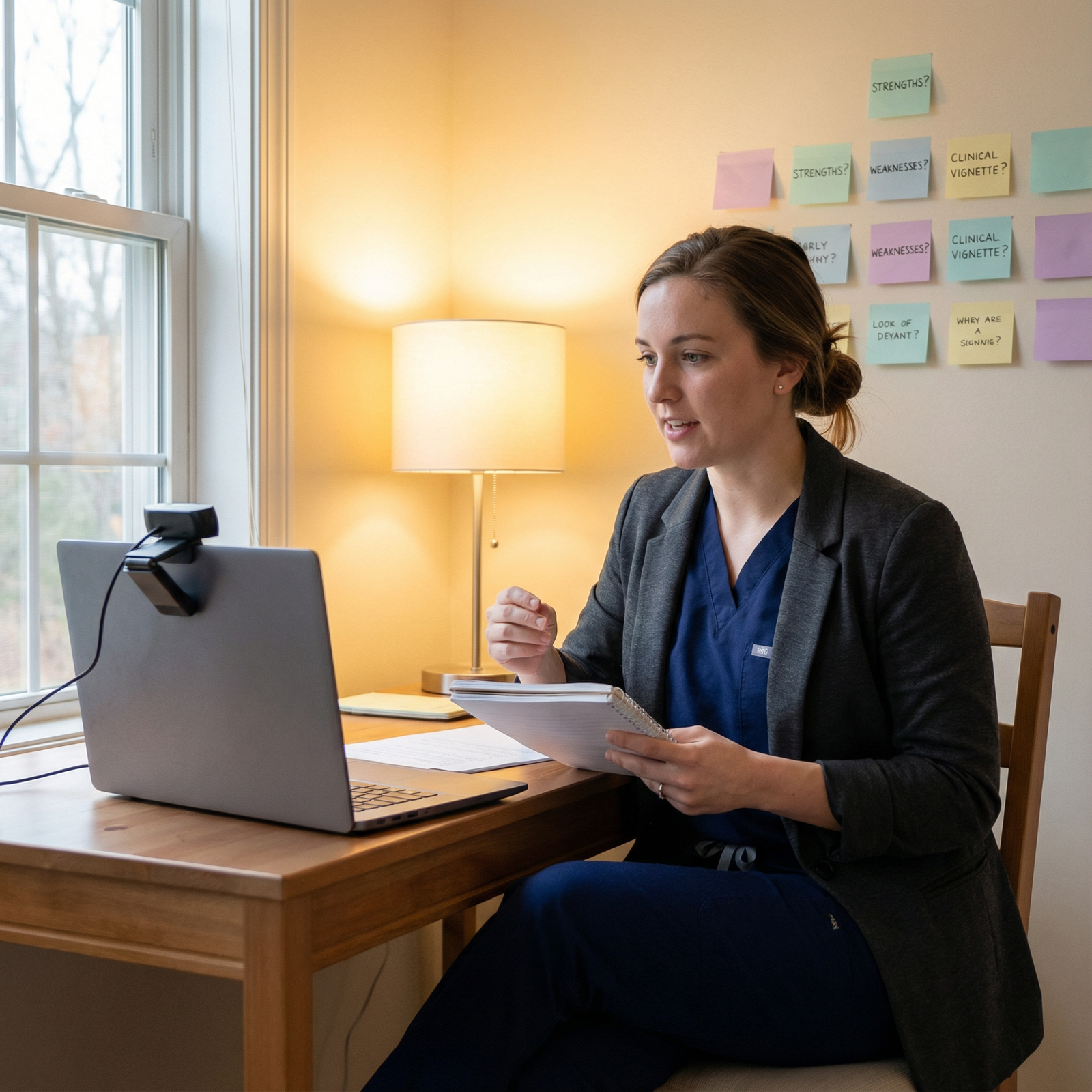
- Have your questions visible next to your screen so you’re not looking away.
- In-Person:
- Use hallway walks and informal meals for more candid, culture-focused questions.
- Observe non-verbal cues among residents and faculty when discussing workload and leadership.
Sample Question Sets You Can Customize
To make this as actionable as possible, here are sample “ready-to-use” sets you can adapt during your neurology residency interview season.
Core Questions for Any Neurology Program
Ask these (or variations) at most programs:
- “How would you describe the culture of this neurology residency among residents and between residents and faculty?”
- “How do you balance inpatient and outpatient neurology training, and do graduates feel prepared for both academic and community practice?”
- “What concrete changes have you made in the last few years in response to resident feedback?”
- “Where have your graduates gone recently in terms of fellowships and first jobs?”
- “If you had to name one area where the program is still actively working to improve, what would it be?”
For Programs Strong in a Particular Subspecialty
If a program is known for stroke, epilepsy, or movement disorders:
- “How does the strength of [stroke/epilepsy/movement] shape the overall resident experience?”
- “Is there a risk of being too heavily concentrated in this area, or do residents still get broad general neurology exposure?”
- “For residents not planning to specialize in [that area], how do you ensure their needs and interests are also met?”
For Programs You’re Highly Interested In
If you’re considering ranking a program near the top, ask deeper, future-oriented questions:
- “If I were to match here, what steps would you recommend I take early in residency to maximize my experience and position myself well for [fellowship/career goal]?”
- “What qualities have you seen in your most successful residents, and how does the program nurture those qualities?”
- “How do you see the relationship between this program and the surrounding community evolving, particularly regarding stroke systems of care or outpatient neurology access?”
FAQs: Questions About Questions
1. How many questions should I ask during a neurology residency interview?
Aim for 2–3 thoughtful questions per interview (faculty or PD) and 3–5 during resident-only sessions. Having 8–12 prepared across domains is reasonable. Quality matters more than quantity—avoid asking just to fill silence.
2. Is it okay to ask about salary, moonlighting, and vacation?
Yes—but be tactful and time it well. These are often better for:
- Resident-only sessions
- Coordinator or chief resident Q&A
You might phrase it as: - “How does moonlighting work here, and at what point are residents typically eligible?”
- “Do residents feel they’re able to use their full vacation time without difficulty?”
3. Can asking critical questions hurt my chances in the neuro match?
If asked respectfully and constructively, critical questions rarely hurt you. Programs appreciate applicants who are thoughtful and realistic. Avoid aggressive or accusatory tones. Frame questions around curiosity and growth:
- “I noticed [X]; can you help me understand how the program is thinking about that?”
4. Should I ask the same question to both residents and the program director?
Sometimes this is very useful. Hearing both perspectives on topics like workload, wellness, or autonomy can be revealing. If you do, don’t say, “Residents told me X—why is that?” Instead, ask similar questions independently and compare the tone and content of responses in your own notes afterward.
As you prepare for the neurology residency interview season, treat your questions as a key tool—not an afterthought. Thoughtful, well-phrased interview questions for them help you identify programs where you’ll grow, be supported, and develop into the neurologist you want to become. By planning ahead, prioritizing what matters to you, and listening carefully to the answers, you’ll navigate the neuro match with clarity and confidence.